Camouflaging Dirt

Photo courtesy of morguefile.com

Photo courtesy of morguefile.com

Years ago when my youngest was still a baby and we were moving to another state, a house we looked at had all white cabinets, flooring, and appliances in the kitchen. I thought to myself, “This will never work with three boys.” But that is the house we ended up buying, and a funny thing happened. Because everything was white. I noticed streaks and smudges right away and cleaned them up as I noticed them. That kitchen was probably cleaner than any of my kitchens with darker floors and wooden cabinets mainly because I don’t notice dirt and smears against the wood as easily as against white. I was shocked recently to open a wooden cabinet door and notice when the light hit it just right that it was covered in dust that I had been totally unaware of. Sometimes I think I have dusted the wooden end tables or swept the parquet floor thoroughly — until the sunlight comes through the windows at just the right angle, and then I see spots I missed.

We used to have stovetops that had metal (aluminum, I think) removable burner pans that would catch all the gunk and spills, which would then get encrusted and hardened with the heat from cooking. I tried to keep on top of the spills, but eventually I had to do something with the burner pans. When I could find cheap replacements, I’d just buy those and toss the old ones. When the replacements got too expensive, I came across a tip to put the burner pans in a big pan of water with some baking soda, bring it to a boil, and then just let them sit in the hot water for a while. Somehow that did make them easier to clean even the caked-on stuff. But it was tedious. My stovetop now is totally while and doesn’t have removable burner pans, so, because the spills are more obvious, I clean them as I go and rarely have to do a major cleaning there.

Sometimes when we’re looking for furniture, appliances, or flooring, we want something that doesn’t show dirt. I still think that way in some areas. I wouldn’t want a totally black or white car: the black shows up pollen and dust, the white shows up everything else.

But I’ve come to prefer white in a kitchen, partially because it makes the room lighter, brighter, and more open and airy, but also because I like to be able to see and keep on top of the dirty stuff rather than wonder what I am going to discover with a closer look.

One church we were in had flooring in the kitchen/fellowship area that looked dirty all the time. It wasn’t unclean: it was just that the color and pattern made it look grimy. Recently we went looking for flooring for our bathroom, which came with carpeting, which is gross in a bathroom. A lot of the vinyl flooring we looked at had the same feature: a swirly pattern looked to me like smudges, and dots looked like something had spilled that needed to be cleaned up. I guess the designers figured that’s one way to hide dirtiness: camouflage it so it always looks dirty anyway.

And then sometimes we can’t see dirt when our eyesight fails. I was cleaning a windowsill recently and thought I was done until I put on my reading glasses, and then the windowsill didn’t look very clean at all. One of the signs of my mother-in-law’s aging was that she didn’t see things that weren’t clean. She had always been very industrious, but the older she got, the more we found areas that were sticky or covered in dog hair that she would have clean if she had realized, but she just didn’t see it.

I’ve often thought, when I see sunlight showing up the dust I missed, that I should probably dust or sweep at that time of day so I can see better and do a better job in that light. I’ve also thought that it was a good analogy of the need to shine the light of God’s Word on my life. Everything may look okay to me, but my spiritual sight may need adjustment. My human dimness may have camouflaged an unkind thought as justifiable or missed a selfish motive. And I need to compare myself not to my fellow creatures with their own smudges, but to the blazing holiness of the Son of God. Why would we do that when none of us can come close at all, when we look so shabby and dingy in that light? Because that’s the best way to see what needs to be taken care of. And instead of fearing to come to that light, we can have confidence that “If we confess our sins, he is faithful and just to forgive us our sins, and to cleanse us from all unrighteousness” (1 John 1:9) and we can have assurance that we can “come boldly unto the throne of grace, that we may obtain mercy, and find grace to help in time of need” (Hebrews 4:16).

One of our sons, when he was very little, used to have a hard time admitting he had done anything wrong. Often we took him to Proverbs 28:13: “Whoever conceals his transgressions will not prosper, but he who confesses and forsakes them will obtain mercy.” “If we say that we have no sin, we deceive ourselves” (I John 1:8a). As long as we cover, camouflage, excuse, or miss seeing our sins, faults, and flaws, we’re stuck with them. But if we see, acknowledge, confess our sins to the Lord and forsake them, He will cleanse us.

Sometimes when we discover a mess we had missed, we can be discouraged at the work needed to clean it up. Sometimes when I start to clean one area, I notice five others that need work, and it can be discouraging. But spiritually, Jesus has done all the work. He took all of our sin and all of God’s wrath towards it on Himself on the cross. When we believe on Him, our sinfulness is exchanged for His righteousness. Though we still have to battle sin in this life, we can be cleansed, and in heaven we’re given white robes, the Bible says. I sometimes joke that I can’t wear white til I get to heaven because of my propensity to spill or brush against something messy and end up with a spotted garment. What a joy it will be in that day to have sin totally removed so it can’t touch us any more. But what a joy in our day that though our “sins be as scarlet, they shall be as white as snow” (Isaiah 1:18).

Search me, O God, and know my heart: try me, and know my thoughts: And see if there be any wicked way in me, and lead me in the way everlasting. Psalm 139: 23-24

Create in me a clean heart, O God; and renew a right spirit within me. Psalm 51:10

Who Is He?

Who is He in yonder stall
At Whose feet the shepherds fall?
Who is He in deep distress,
Fasting in the wilderness?

Refrain:

’Tis the Lord! O wondrous story!
’Tis the Lord! the King of glory!
At His feet we humbly fall,
Crown Him! crown Him, Lord of all!

Who is He the people bless
For His words of gentleness?
Who is He to Whom they bring
All the sick and sorrowing?

Refrain

Who is He that stands and weeps
At the grave where Lazarus sleeps?
Who is He the gathering throng
Greet with loud triumphant song?

Refrain

Lo! at midnight, who is He
Prays in dark Gethsemane?
Who is He on yonder tree
Dies in grief and agony?

Refrain

Who is He that from the grave
Comes to heal and help and save?
Who is He that from His throne
Rules through all the world alone?

’Tis the Lord! O wondrous story!
’Tis the Lord! the King of glory!
At His feet we humbly fall,
Crown Him! crown Him, Lord of all!

~ Ben­ja­min R. Han­by, 1866

31 Days of Inspirational Biography: A Devout Muslim Encounters Christianity

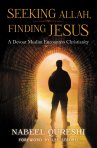
SeekingIn Seeking Allah, Finding Jesus: A Devout Muslim Encounters Christianity Nabeel Qureshi first gives a window into a loving and devout Muslim home, with all its practices, disciplines, and teachings, as well as a peek into the perspective of growing up Muslim in a non-Muslim culture.  Wanting to be a faithful representative of Islam, having been taught critical thinking in school and having a mind geared for it, he often turned the arguments of some of his Christian classmates on their heads, bringing up aspects they had not thought about before and were not ready to defend.

In college God brought to him “an intelligent, uncompromising, Non-Muslim friend who would be willing to challenge” him, someone who was “bold and stubborn enough” to deal with him but also someone he could trust “enough to dialogue…about the things that mattered to [him] the most.” Nabeel and his friend, David, were both on the forensics team and knew how to get to the heart of an argument and draw out and refute key points. For the most part they did this with each other’s worldviews good-naturedly, but when a given topic became too heated, they’d table it for a while. Muslims particularly have trouble with the reliability of the Bible, the deity of Christ, the Trinity, and the connection between Christ’s death on the cross and how it atoned for others’ sins. For three years Nabeel studied the Bible and its claims and others’ claims about it, fully confident that he’d be able to disprove those claims, and then to study the history of Mohamed and the claims of the Quran, fully confident that Islam would be justified. Though he was obviously biased toward the Quran, he really wanted to know the truth. He discovered the Bible’s claims were justified and Islam’s to be on shaky ground.

For some time he resisted acting on this knowledge. Being a Muslim was a matter of identity as well as religion: his whole life, everything he had always believed, his relationship with his family and community, everything would be turned upside down if he became a Christian. Yet he could not continue on, knowing what he now knew. In one of the most beautiful and touching passages in the book, he was seeking time to mourn before making the decision he knew he had to, and he opened the Bible for guidance this time, not simply to look for information to refute. He came to Matthew 5:4, 6:

Blessed are they that mourn: for they shall be comforted.

 Blessed are they which do hunger and thirst after righteousness: for they shall be filled.

Nabeel writes further:

There are costs Muslims must calculate when considering the gospel: losing the relationships they have built in this life, potentially losing this life, and if they are wrong, losing their afterlife. It is no understatement to say that Muslims often risk everything to embrace the cross.

But then again, it is the cross. There is a reason Jesus said, “Whoever wants to be my disciple must deny themselves and take up their cross and follow me. For whoever wants to save their life will lose it, but whoever loses their life for me and for the gospel will save it” (Mark 8:34-35).

Would it be worth it to pick up my cross and be crucified next to Jesus? If He is not God, then, no. Lose everything I love to worship a false God? A million times over, no!

But if He is God, then yes. Being forever bonded to my Lord by suffering alongside Him? A million times over, yes!

All suffering is worth it to follow Jesus. He is that amazing.

I feel I must comment on one aspect of the story that I questioned at first and I am sure other readers might as well: When Nabeel mentioned early on being “called to Jesus through visions and dreams,” I admit I inwardly winced and wondered what kind of story I’d be reading. For reasons too long to go into here, I am of those who believe that once God gave us His completed Word in writing, then dreams, visions, tongues, and the like fell away as unneeded.  The few modern instances I have ever heard or read of that seemed most in line with Bible truth were in cultures which didn’t have the Bible, often didn’t have a written language at all. Another problem with relying on dreams Nabeel discovered himself: one questions what it really means (his Muslim mother and Christian friend had completely opposite interpretations for what Nabeel’s dreams meant), wonders how much was due to wishful thinking, asks “Could I really hinge my life and eternal destiny on a dream?” etc. If that’s all he had to go on to become a believer, I would question what he was really trusting, but these dreams came after years of intense searching and study. In an appendix by Josh McDowell on this topic, he states, “Dreams and visions do not convert people; the gospel does,” but he explains, “In many Muslim cultures, dreams and visions play a strong role in people’s lives. Muslims rarely have access to the scriptures or interactions with Christian missionaries.” As in Nabeel’s case, “the dreams lead them to the scriptures and to believers who can share Jesus with them. It is the gospel through the Holy Spirit that converts people.”

One of many passages that stood out to me was in the chapter “Muslims in the West,” which described how Muslims view the West and Christians and, because they think both have corrupting influences and Westerners they are against Islam, they tend to keep to themselves. “On the rare occasion that someone does invite a Muslim to his or her home, differences in culture and hospitality may make the Muslim feel uncomfortable, and the host must be willing to ask, learn, and adapt to overcome this. There are simply too many  barriers for Muslim immigrants to understand Christians and the West by sheer circumstance. Only the exceptional blend of love, humility, hospitality, and persistence can overcome these barriers, and not enough people make the effort.”

I didn’t agree with everything Nabeel’s Christian friend said in the section about the Bible, in regard to believing some sections in the Bible were added later and not part of the original canon, but I do acknowledge that some do believe that.

There are multiple good aspects of this book: the window into another culture and mindset and the understanding of the difficulties a Muslim would have in coming to Christianity; the example of David and other friends who shared truth kindly and politely rather than belligerently or condescendingly, who genuinely cared about Nabeel as a friend rather than a “project”; the  wealth of information Nabeel found and shared from his studies which give a valuable apologetic (supplemented by several appendices>); and the touching yet agonizing conversion of a soul truly hungering and thirsting after the one true God.

(Reprinted from the archives. I hope regular readers will forgive my doing so with so recent a post. I was going to just summarize but then didn’t feel I could leave anything here out.)

photo 3(2)

For the 31 Days writing challenge, I am sharing 31 Days of Inspirational Biography. You can find others in the series here.

31 Days of Inspirational Biography: Corrie Ten Boom Repurposes a Concentration Camp

I saw this on the Corrie Ten Boom Facebook page.

Corrie Ten Boom

I have not read the book mentioned, but I have read The Hiding Place by Corrie and have an audiobook copy to listen to sometimes. It is amazing and convicting the grace God gave Corrie and her sister for all that He had them go through.

photo 3(2)

For the 31 Days writing challenge, I am sharing 31 Days of Inspirational Biography. You can find others in the series here.


31 Days of Inspirational Biography: Rosaria Butterfield

I don’t know when 148 pages of someone’s life story has impacted me more. There are sections where I have sticky tabs and markings on several pages in a row.

Unlikely ConvertThe Secret Thoughts of an Unlikely Convert: An English Professor’s Journey Into Christian Faith is Rosaria Champagne Butterfield’s story of how she, as an atheist, leftist, feminist, lesbian professor specializing Critical Theory, or postmodernism, and whose specialty was Queer Theory, who hated Christians, encountered and embraced the truths of Christianity in what she calls a “train wreck” of a conversion.

After a few pages detailing how she came to her professorship and worldview, she describes a kind and inquiring letter from a pastor in response to an article she had written.

The Bible makes it clear that reason is not the front door of faith. It takes spiritual eyes to discern spiritual matters. But how do we develop spiritual eyes unless Christians engage the culture with those questions and paradigms of mindfulness out of which spiritual logic flows? That’s exactly what Ken’s letter did for me – invited me to think in ways I hadn’t before (pp. 8-9).

The letter had invited her to call him, and after a week, she did. He invited her to have dinner with him and his wife at their home, and she accepted. She was also at this time doing research for a book on the Religious Right and figured he could answer some of her questions. “Even though obviously these Christians and I were very different, they seemed to know that I wasn’t just a blank slate, that I had values and opinions too, and they talked with me in a way that didn’t make me feel erased” (p. 10). Thus began two years of regular meetings and studying Scripture before she ever set foot in a church, which Ken and his wife knew would probably be “too threatening, too weird, too much” (p. 11) for her. “Good teachers make it possible for people to change their positions without shame. Even as Ken prayed for my soul, he did it in a way that welcomed me into the church rather than made me a scapegoat of Christian fear or an example of what not to become,” (p. 14.)

Gradually she came to believe, but she knew it would cost her. “I clung to Matthew 16:24, remembering that every believer had to at some point in life take the step I was taking: giving up the right to myself, taking up his Cross (i.e., the historicity of the resurrection, not masochism endured to please others), and following Jesus.” “I learned that we must obey in faith before we feel better or different. At this time, though, obeying in faith, to me, felt like throwing myself off a cliff” (p. 22). “One doesn’t repent for a sin of identity in one session. Sins of identity have multiple dimensions, and throughout this journey, I have come to my pastor and his wife, friends in the Lord, and always the Lord himself with different facets of my sin” (p. 23).

She tells of a woman she knew and counseled who was in a Bible-believing church but was in a secret lesbian relationship. Her secret denied her the help and prayers of other believers and only resulted in shame and pretense. When Rosaria asked why she didn’t share her struggle with anyone in her church, she replied, “If people in my church really believed that gay people could be transformed by Christ, they wouldn’t talk about us or pray about us in the hateful way they do” (p. 25). Rosaria then asks readers, “Do your prayers rise no higher than your prejudice? I think that churches would be places of greater intimacy and growth in Christ if people stopped lying about what we need, what we fear, where we fail, and how we sin” (p. 25).

Rosaria was a tenured professor in subjects that would now radically change because of her conversion. When she let it be known that she was now a Christian, both she and her gay friends felt she had betrayed them and turned traitor. “I…was alert to the reality that God had ministry waiting for me. I prayed that I would be strong for the task at hand. Yes, I was still a laughing stock in the gay community. Yes, I was still a traitor and an example of what not to be. But so too was Paul the Apostle shamed among Pharisees, and I trusted that God would take my life and make a place for me” (p. 50).

The rest of the book tells how God did just that, both in her career and ministry to others, leading her to marry a pastor, to eventually adopt four biracial children, and to become a homeschooling mom.

Along the way, she shares an eye-opening perspective of what Christianity looks like to others. For instance, when she moved to a community where there were Bible verses on bumper stickers and placards, instead of it looking like people were sharing a bit of light, it looked to her like the community was for “insiders” only. Christians seemed like “bad thinkers” or even anti-intellectual to her before this journey, using Scripture to shut down conversations rather than to shed light. Unfortunately, that is too often true: instead of truly discussing what the Bible has to say and being “ready always to give an answer to every man that asketh you a reason of the hope that is in you with meekness and fear” (I Peter 3:15b), some Christians take offense at being asked and use Scripture to bludgeon. I’ve known some who have been turned off, not so much to all Christian truth, but to Christian community because of this experience.

One theme that comes out throughout the book is the willingness to engage people who are different from us in any way. Thank God the pastor and wife who first shared Christ with her looked past her butch haircut and gay and pro-choice bumper stickers to the need of her heart. But even after she became a Christian, she ran into this phenomenon in various churches. When her husband was the guest speaker at a church and she was getting out of the car holding one of her adopted children while the other was asleep in the car seat, a man said to her, “So, is it chic for white women to adopt black kids these days?” After asking him if he was a Christian, she said, “So, did God save you because it was chic?” When her husband started pastoring a small church plant made up mostly of college students, families would come for a month or so and then leave because of a “lack of fellowship” with people just like themselves. I could step on a small soapbox here: I get so discouraged when people within the same church only want to fellowship with people just like themselves — same age bracket, same marital or parental status, same way of educating or disciplining children, etc., etc.

If I shared everything else I marked, I’d be nearly rewriting the book here, so I can’t do that. But here are just a few more things that grabbed me:

“Since all major U. S. universities had Christian roots, too many Christians thought that they could rest in Christian tradition, not Christian relevance” (p. 7).

“When we read in the book of Romans, “And we know that God causes all things to work together for good to those who love God, to those who are the called according to His purpose” (8:28), we are not to be Pollyanna about this. Many of the ‘things’ we will face come with the razor edges of a fallen and broken world. You can’t play poker with God’s mercy – if you want the sweet mercy then you must also swallow the bitter mercy. And what is the difference between sweet and bitter? Only this: your critical perspective, your worldview. One of God’s greatest gifts is the ability to see and appreciate the world from points of view foreign to your own, points of view that exceed your personal experience”  (p. 125).

“Many people in our community protect themselves from inconvenience as though inconvenience is deadly. We have decided that we are not inconvenienced by inconvenience. The needs of children come up unexpectedly. We are sure that the Good Samaritan had other plans that fateful day. Our plans are not sacred” (p. 126).

When a teenage girl in foster care with mental illness heard a pastor speaking about God’s call, afterward she “approached Pastor Steve and said, ‘Steve, I hear voices all the time. How do I know the difference between hearing the voice of God and hearing the voices of my own sick mind?’ Pastor Steve said, ‘Dear one, we all have the check the voices of our own sick mind with the Bible. Daily. You are no different’” (p. 128).

One thought that came to mind while reading the book was, “Why don’t we see this happening more often?” If the gospel is the power of God unto salvation, and it is, then why don’t we see such transformative conversions more often, and why are those raised in Christian culture often so anemic? Sometimes I long with the Psalmist “To see thy power and thy glory, so as I have seen thee in the sanctuary” (Psalm 63:2). Is it because we don’t share the gospel in a kind and loving way enough? Or is it because not many people are truly willing to examine the claims of the Bible and bring themselves under its authority? Maybe both. I’ve seen online encounters where non-Christians have as much of a “smackdown” way of encountering Christians as Christians do encountering them. I know I would have been scared to death to engage someone like Rosaria before she was saved: I’d have been afraid that I wouldn’t be able to answer her questions and she’d be able to run rings around me with her reasoning ability. But I have to remind myself that those whom God brought across her path with just the right thing to say at the right time were operating under the leadership of the Holy Spirit, not their own wisdom and insight. Sometimes we look for a formula: we see articles or pamphlets about “How to witness to atheists” or whomever else, and those can have some helpful points, but we can’t memorize a script and then present it to people. We need to share a Person and show His love to others and trust Him for the right words to say and pray for His working in hearts.

Rosaria writes now from a Reformed Presbyterian perspective, and since I am not from that perspective, I’d disagree with a few minor points here and there, but I am not going to nitpick about them. I do believe Christians can agree on the big issues and agree to disagree about smaller ones.

There is a condensed version of her testimony here, but I do encourage you to read the book as well. I was one of my top ten books read in 2013, and it is one of my top ten of all time.

And if you think of it, you might pray for her ministry now. I’ve caught a few news items since reading this book where she has gone to speak at a university and faced student protests from those who are close-minded about her message. She understands where they are coming from because she used to think the same way. May the light of God’s truth open many more hearts.

(Reposted from the archives. I was just going to post a quick summary – but I couldn’t. 🙂 )

photo 3(2)

For the 31 Days writing challenge, I am sharing 31 Days of Inspirational Biography. You can find others in the series here.

Book Review: Seeking Allah, Finding Jesus

SeekingIn Seeking Allah, Finding Jesus: A Devout Muslim Encounters Christianity Nabeel Qureshi first gives a window into a loving and devout Muslim home, with all its practices, disciplines, and teachings, as well as a peek into the perspective of growing up Muslim in a non-Muslim culture.  Wanting to be a faithful representative of Islam, having been taught critical thinking in school and having a mind geared for it, he often turned the arguments of some of his Christian classmates on their heads, bringing up aspects they had not thought about before and were not ready to defend.

In college God brought to him “an intelligent, uncompromising, Non-Muslim friend who would be willing to challenge” him, someone who was “bold and stubborn enough” to deal with him but also someone he could trust “enough to dialogue…about the things that mattered to [him] the most.” Nabeel and his friend, David, were both on the forensics team and knew how to get to the heart of an argument and draw out and refute key points. For the most part they did this with each other’s worldviews good-naturedly, but when a given topic became too heated, they’d table it for a while. Muslims particularly have trouble with the reliability of the Bible, the deity of Christ, the Trinity, and the connection between Christ’s death on the cross and how it atoned for others’ sins. For three years Nabeel studied the Bible and its claims and others’ claims about it, fully confident that he’d be able to disprove those claims, and then to study the history of Mohamed and the claims of the Quran, fully confident that Islam would be justified. Though he was obviously biased toward the Quran, he really wanted to know the truth. He discovered the Bible’s claims were justified and Islam’s to be on shaky ground.

For some time he resisted acting on this knowledge. Being a Muslim was a matter of identity as well as religion: his whole life, everything he had always believed, his relationship with his family and community, everything would be turned upside down if he became a Christian. Yet he could not continue on, knowing what he now knew. In one of the most beautiful and touching passages in the book, he was seeking time to mourn before making the decision he knew he had to, and he opened the Bible for guidance this time, not simply to look for information to refute. He came to Matthew 5:4, 6:

Blessed are they that mourn: for they shall be comforted.

 Blessed are they which do hunger and thirst after righteousness: for they shall be filled.

Nabeel writes further:

There are costs Muslims must calculate when considering the gospel: losing the relationships they have built in this life, potentially losing this life, and if they are wrong, losing their afterlife. It is no understatement to say that Muslims often risk everything to embrace the cross.

But then again, it is the cross. There is a reason Jesus said, “Whoever wants to be my disciple must deny themselves and take up their cross and follow me. For whoever wants to save their life will lose it, but whoever loses their life for me and for the gospel will save it” (Mark 8:34-35).

Would it be worth it to pick up my cross and be crucified next to Jesus? If He is not God, then, no. Lose everything I love to worship a false God? A million times over, no!

But if He is God, then yes. Being forever bonded to my Lord by suffering alongside Him? A million times over, yes!

All suffering is worth it to follow Jesus. He is that amazing.

I feel I must comment on one aspect of the story that I questioned at first and I am sure other readers might as well: When Nabeel mentioned early on being “called to Jesus through visions and dreams,” I admit I inwardly winced and wondered what kind of story I’d be reading. For reasons too long to go into here, I am of those who believe that once God gave us His completed Word in writing, then dreams, visions, tongues, and the like fell away as unneeded.  The few modern instances I have ever heard or read of that seemed most in line with Bible truth were in cultures which didn’t have the Bible, often didn’t have a written language at all. Another problem with relying on dreams Nabeel discovered himself: one questions what it really means (his Muslim mother and Christian friend had completely opposite interpretations for what Nabeel’s dreams meant), wonders how much was due to wishful thinking, asks “Could I really hinge my life and eternal destiny on a dream?” etc. If that’s all he had to go on to become a believer, I would question what he was really trusting, but these dreams came after years of intense searching and study. In an appendix by Josh McDowell on this topic, he states, “Dreams and visions do not convert people; the gospel does,” but he explains, “In many Muslim cultures, dreams and visions play a strong role in people’s lives. Muslims rarely have access to the scriptures or interactions with Christian missionaries.” As in Nabeel’s case, “the dreams lead them to the scriptures and to believers who can share Jesus with them. It is the gospel through the Holy Spirit that converts people.”

One of many passages that stood out to me was in the chapter “Muslims in the West,” which described how Muslims view the West and Christians and, because they think both have corrupting influences and Westerners they are against Islam, they tend to keep to themselves. “On the rare occasion that someone does invite a Muslim to his or her home, differences in culture and hospitality may make the Muslim feel uncomfortable, and the host must be willing to ask, learn, and adapt to overcome this. There are simply too many  barriers for Muslim immigrants to understand Christians and the West by sheer circumstance. Only the exceptional blend of love, humility, hospitality, and persistence can overcome these barriers, and not enough people make the effort.”

I didn’t agree with everything Nabeel’s Christian friend said in the section about the Bible, in regard to believing some sections in the Bible were added later and not part of the original canon, but I do acknowledge that some do believe that.

There are multiple good aspects of this book: the window into another culture and mindset and the understanding of the difficulties a Muslim would have in coming to Christianity; the example of David and other friends who shared truth kindly and politely rather than belligerently or condescendingly, who genuinely cared about Nabeel as a friend rather than a “project”; the  wealth of information Nabeel found and shared from his studies which give a valuable apologetic (supplemented by several appendices>); and the touching yet agonizing conversion of a soul truly hungering and thirsting after the one true God.

This will also be linked to Semicolon‘s Saturday Review of Books.)

Is This the Right Road Home?

dark_forest_path_shadows_m44453

Is this the right road home, O Lord?
The clouds are dark and still,
The stony path is hard to tread,
Each step brings some fresh ill.
I thought the way would brighter grow,
And that the sun with warmth would glow,
And joyous songs from free hearts flow.
Is this the right road home?

Yes, child, this very path I trod,
The clouds were dark for Me,
The stony path was sharp and hard.
Not sight but faith, could see
That at the end the sun shines bright,
Forever where there is no night,
And glad hearts rest from earth’s fierce fight,
It IS the Right Road Home!

I don’t know the author to this little poem. I rediscovered it in a devotional book yesterday, and when I looked it up online today, found this neat story of God’s using it in the life of Rosalind Goforth. That’s probably where I had seen it before, in one of her books.  That link goes on to tell about its inspiring a song, which I’ve not heard.

But we have this treasure in earthen vessels, that the excellency of the power may be of God, and not of us. We are troubled on every side, yet not distressed; we are perplexed, but not in despair; Persecuted, but not forsaken; cast down, but not destroyed; Always bearing about in the body the dying of the Lord Jesus, that the life also of Jesus might be made manifest in our body. For we which live are always delivered unto death for Jesus’ sake, that the life also of Jesus might be made manifest in our mortal flesh…

For which cause we faint not; but though our outward man perish, yet the inward man is renewed day by day. For our light affliction, which is but for a moment, worketh for us a far more exceeding and eternal weight of glory; While we look not at the things which are seen, but at the things which are not seen: for the things which are seen are temporal; but the things which are not seen are eternal. II Corinthians 4:7-11, 16-18.

Book Review: The Knowledge of the Holy

Knowledge of the HolyI read The Knowledge of the Holy by A. W. Tozer some years decades ago, but The Cloud of Witnesses Challenge inspired me to pick it up again, and I am so glad I did.

“True religion confronts earth with heaven and brings eternity to bear upon time,” Tozer begins. He writes that the church has lost its view of the majesty of God and their awe of Him, and that in turn is having an effect on what kinds of Christians it is producing (if that was true at the time of the book’s publication in 1961, how much more is is true now!) “No people has ever risen above its religion…no religion has ever been greater than its idea of God. Worship is pure or base as the worshiper entertains high or low thoughts of God” (p. 1).

“A right conception of God is basic not only to systematic theology but to practical Christian living as well. It is to worship what the foundation is to the temple; where it is inadequate or out of plumb the whole structure must sooner or later collapse. I believe there is scarcely an error in doctrine or a failure in applying Christian ethics that cannot be traced finally to imperfect and ignoble thoughts about God” (p. 3).

“The one mighty single burden of eternity begins to press down upon him with a weight more crushing than all the woes of the world piled one upon another. That mighty burden is his obligation to God. It includes an instant and lifelong duty to love God with every power of mind and soul, to obey Him perfectly, and to worship Him acceptably. And when the man’s laboring conscience tells him that he has done none of these things, but has from childhood been guilty of foul revolts against the Majesty in the heavens, the inner pressure of self-accusation may become too heavy to bear.

The gospel can lift this destroying burden from the mind, give beauty for ashes, and the garment of praise for the spirit of heaviness. But unless the weight of the burden is felt, the gospel can mean nothing to the man; and until he sees a vision of God high and lifted up, there will be no woe and no burden. Low views of God destroy the gospel for all who hold them” (p. 4).

Tozer’s purpose, then is to help people think about God “as He is in Himself, and not as…imagination says He is” (p. 16), at least as much as we can know about Him from His Word, for we could never comprehend Him totally. He does so in readable everyday language rather than that of a theologian.

“The study of the attributes of God, far from being dull and heavy, may for the enlightened Christian be a sweet and absorbing spiritual exercise. To the soul that is athirst for God, nothing could be more delightful” (p. 19).

After a chapter on the Trinity and on what an attribute is, Tozer then discusses some of God’s attributes one by one, from omniscience, self-sufficiency, and self-existence to His justice, love, mercy, grace and several others. As He discusses each one, he also discusses how they relate to each other.

“I think it might be demonstrated that almost every heresy that has afflicted the church through the years has arisen from believing about God things that are not true, or from over emphasizing certain true things so as to obscure other things equally true. To magnify any attribute to the exclusion of another is to head straight for one of the dismal swamps of theology; and yet we are all constantly tempted to do just that” (p. 123).

“We can hold a correct view of truth only by daring to believe everything God has said about Himself. It is a grave responsibility that a man takes upon himself when he seeks to edit out of God’s self-revelation such features as he in his ignorance deems objectionable. Blindness in part must surely fall upon any of us presumptuous enough to attempt such a thing. And it is wholly uncalled for. We need not fear to let the truth stand as it is written. There is no conflict among the divine attributes. God’s being is unitary. He cannot divide Himself and act at a given time from one of His attributes while the rest remain inactive. All that God is must accord with all that God does. Justice must be present in mercy, and love in judgment. And so with all the divine attributes” (p. 124).

“God is never at cross-purposes with Himself. No attribute of God is in conflict with another” (p. 136).

“Both the Old and the New Testaments proclaim the mercy of God, but the Old has more than four times as much to say about it as the New” (p. 140). (Interesting! Especially as people seem to think the NT is more “merciful” than the Old.)

“When viewed from the perspective of eternity, the most critical need of this hour may well be that the Church should be brought back from its long Babylonian captivity and the name of God be glorified in it again as of old. Yet we must not think of the Church as an anonymous body, a mystical religious abstraction. We Christians are the Church, and whatever we do is what the Church is doing. The matter, therefore, is for each of us a personal one. Any forward step in the Church must begin with the individual” (p. 180).

It’s not unusual for me to think of God as He is or to think high thoughts of Him: that comes with having regular times in the Word of God and hearing His Word proclaimed by faithful preachers. Yet too often my response is something like “Wow, that’s neat!” or a quick prayer of thanks as I go on to the next verse or go about the tasks for the day. Having this sustained time of focusing on what He says about Himself and Who He is has been both humbling and uplifting. I highly recommend this book to everyone.

I wanted to say just a word about reading what some friends have called “deep” books. It’s actually been a long time since I’ve read this kind of book, and I’m thankful to the The Cloud of Witnesses Challenge for encouraging me to get back into them. It works best for me to read a little bit from a book like this after my regular devotional time. It’s not that I couldn’t pick it up at odd times during the day and get something out of it, but personally I just get more out of it by regularly plodding through in the morning before my attention is diverted. For some people other times of day work best. Mere Christianity was a little easier to do this with because the chapters were very short: the chapters here were longer, so some days I was only able to read a few pages at a time. Someone encouraged me once that just fifteen minutes a day in a book will eventually get you through it, and get you through more in a year than you’d think. Neither of these books was hard to read or understand.

I’ll close as Tozer does:

Thus far we have considered the individual’s personal relation to God, but like the ointment of a man’s right hand, which by its fragrance “betrayeth itself,” any intensified knowledge of God will soon begin to affect those around us in the Christian community. And we must seek purposefully to share our increasing light with the fellow members of the household of God.

This we can best do by keeping the majesty of God in full focus in all our public services. Not only our private prayers should be filled with God, but our witnessing, our singing, our preaching, our writing should center around the Person of our holy, holy Lord and extol continually the greatness of His dignity and power. There is a glorified Man on the right hand of the Majesty in heaven faithfully representing us there. We are left for a season among men; let us faithfully represent Him here (pp. 183-184).

(This will also be linked to Semicolon‘s Saturday Review of Books.)

Repost: God Does So Much More Than Just “Show Up”

(With different circumstances in my life right now, I am finding it a little difficult to have my brain working on all cylinders and be awake and alert when I have time to spend at the computer. I have a few posts percolating on the back burner that I hope to get a chance to work through soon. But I thought in the meantime maybe once a week or so I’d repost something from my archives here. I thought about making it a series and calling it “The Summer of Reruns.” 🙂 Seriously, though, sometimes going back over something God has taught or encouraged me with in the past makes for fresh blessings. I hope some of these will bless you as well, whether you saw them the first time or not.)

From October, 2009:

I have seen a particular phraseology going around recently that really bothers me:

“God really showed up.” “Pray that God shows up in a big way.” “I hope God shows up for this event.”

If you have said or written this, please don’t take offense or think I am fussing at you. I can’t remember for sure where all I have seen it. I’m speaking in generalities because I am starting to see this more and more and I want people to realize what it sounds like.

It bothers me for a few reasons.

1. God does not “show up.” He is omnipresent. (See Psalm 139:5-12, Jeremiah 23:23-24.)

2. Making our plans and then hoping God “shows up” is going about things backwardly. We should be seeking His guidance beforehand and all along the way.

3. The phrase “show up” seems to indicate the person wasn’t really expected, or at least his attendance was iffy. “I invited Tom, but I am not sure he’ll show up.”

4. The phrase also seems to indicate the person showing up took the invitation casually and just decided to “show up” — maybe on a whim, maybe because he couldn’t find any better options.

5. When I posted this the first time, someone commented that sometimes we say God “showed up” in a meeting when things got exciting. Sometimes we have more of a sense of His working or we’re touched in a special way, but that’s not to say He is not always meeting with us. Jesus said, “Where two or three are gathered together in my name, there am I in the midst of them” (Matthew 18:20). We know He is present by faith, not when we “feel” it or when the bells and whistles go off.

I think I know what people mean when they want God to “show up”:

“I hope God really blesses this event/situation in such a way that people see it was something only He could do.”

“I want God’s presence to be manifested in a way that touches people’s hearts and draws them to Him.”

“I pray God’s power will be evident.”

Why not say it that way? It’s more accurate, more reverential, and more glorifying to God.

Here are some Scriptural examples of those desires:

“Help me, O LORD my God: O save me according to thy mercy:That they may know that this is thy hand; that thou, LORD, hast done it.” Psalm 109:26-27.

“O God, thou art my God; early will I seek thee: my soul thirsteth for thee, my flesh longeth for thee in a dry and thirsty land, where no water is; To see thy power and thy glory, so as I have seen thee in the sanctuary.” Psalm 63:1-2.

“This beginning of miracles did Jesus in Cana of Galilee, and manifested forth his glory; and his disciples believed on him.” John 2:11.

“Jesus answered, Neither hath this man sinned, nor his parents: but that the works of God should be made manifest in him.” John 9:3.

“And [Moses] said, I beseech thee, shew me thy glory.” Exodus 33:18.

“That all the people of the earth might know the hand of the LORD, that it is mighty: that ye might fear the LORD your God for ever.” Joshua 4:24.

“And it came to pass at the time of the offering of the evening sacrifice, that Elijah the prophet came near, and said, LORD God of Abraham, Isaac, and of Israel, let it be known this day that thou art God in Israel, and that I am thy servant, and that I have done all these things at thy word.Hear me, O LORD, hear me, that this people may know that thou art the LORD God, and that thou hast turned their heart back again.” I Kings 18:36-37.

Book Review: Mere Christianity

Mere ChristianityI first read Mere Christianity by C. S. Lewis some seven or so years ago and tried to write a review, but ended up mainly just listing quotes, which is not a review. It wasn’t hard to read or to follow — for the most part Lewis’s thinking was actually pretty easy to track, and he writes in a logical, almost conversational style rather than like a theology textbook. It was more a matter of there being too much to take in and process and too many goods things to share to reduce it to anything like a review. I read a quote by Elisabeth Elliot (which I neglected to keep track of) something to the effect that she could understand Lewis by reading him through the first time, but needed to read him again to be able reconstruct his arguments. I feel the same way. I’m thankful The Cloud of Witnesses Challenge sponsored by Becky at Operation Actually Read Bible spurred me to pick this up again. I feel I got much more from it this time, maybe just because of a second reading, maybe because of several years of (hopefully) maturing in the meantime, maybe because our church has been talking about “Coffee Shop Apologetics” on Wednesday nights using some of Lewis’s material here and there.

It is interesting to read how Lewis came from an atheistic background and what the Lord used to convince him that Christianity was the truth. Although this book is not his “testimony” per se, he does touch on his own personal journey to faith.

The book is divided into four sections: “Right and Wrong as a Clue to Meaning in the Universe,” in which he argues for Christianity and why it is the best solution to universal moral and logical dilemmas, then “What Christians Believe,” “Christian Behavior,” and “Beyond Personality: Or First Steps in the Doctrine of the Trinity.” Originally the various segments were radio talks in the 1940s which were then tweaked to better fit written form.

I have many more places marked than I can possibly share here. Goodreads has a list of several quotes from the book, some you’ll recognize as classic Lewis. One of my favorite quotes about love comes from this book. Here are a few others hat stood out to me:

From the chapter “We Have Cause to Be Uneasy”:

For the trouble is that one part of you is on His side and really agrees with his disapproval of human greed and trickery and exploitation. You may want Him to make an exception in your own case, to let you off this one time; but you know at bottom that unless the power behind the world really and unalterably detests that sort of behaviour, then He cannot be good. On the other hand, we know that if there does exist an absolute goodness it must hate most of what we do. This is the terrible fix we are in. If the universe is not governed by an absolute goodness, then all our efforts are in the long run hopeless. But if it is, then we are making ourselves enemies to that goodness every day, and are not in the least likely to do any better tomorrow, and so our case is hopeless again. We cannot do without it, and we cannot do with it. God is the only comfort, He is also the supreme terror: the thing we must need and the thing we most want to hide from. He is our only possible ally, and we have made ourselves His enemies. Some people talk as if meeting the gaze of absolute goodness would be fun. They need to think again. They are still only playing with religion. Goodness is either the great safety or the great danger -according to the way you react to it. And we have reacted the wrong way.

From the chapter “The Practical Conclusion”:

[The Christian] does not think God will love us because we are good, but that God will make us good because he loves us.

From the chapter “Social Morality”:

I may repeat “Do as you would be done by” till I am black in the face, but I cannot really carry it out till I love my neighbor as myself: and I cannot learn to love my neighbor as myself until I learn to love God.

From the chapter “Sexual Morality”:

We may, indeed, be sure that perfect chastity-like perfect charity-will not be attained by any merely human efforts. You must ask for God’s help. Even when you have done so, it may seem to you for a long time that no help, or less help than you need, is being given. Never mind. After each failure, ask forgiveness, pick yourself up and try again. Very often what God first helps us towards is not the virtue itself but just this power of always trying again. For however important chastity (or courage, or truthfulness, or any other virtue) may be, this process trains us in habits of the soul which are more important still. It cures our illusions about ourselves and teaches us to depend on God. We learn, on the one hand, that we cannot trust ourselves even in our best moments, and, on the other, that we need not despair even in our worst, for our failures are forgiven. The only fatal thing is to sit down content with anything less than perfection.

From the chapter “The Great Sin”:

Pleasure in being praised is not Pride. The child who is patted on the back for doing a lesson well, the woman whose beauty is praised by her lover, the saved soul to whom Christ says, “Well done,” are all pleased and ought to be. For here the pleasure lies not in what you are but in the fact that you have pleased someone you wanted (and rightly wanted) to please. The trouble begins when you pass from thinking, “I have pleased him; all is well,” to thinking, “What a fine person I must be to have done it.”

That was immensely helpful to me. I don’t know if anyone else experiences this, but sometimes when you receive a compliment, then you feel a rush of pleasure, that feel guilty for that pleasure and feel you need to redirect the attention to the Lord, and in trying to do so sound awkward and overly pious. For that reason, when someone, say, sings a solo in church that I enjoyed, I try to tell them it blessed my heart rather than just “I enjoyed your song this morning.” Though I mean the same thing by both sentences, the second one makes people feel awkward and self-conscious. This thought did help me to understand it’s not wrong to feel pleasure in pleasing someone else or accepting a compliment.

From the same chapter:

Do not imagine that if you meet a really humble man he will be what most people call “humble” nowadays: he will not be a sort of greasy smarmy person, who is always telling you that, of course, he is a nobody. Probably all you will think about him is that he seemed a cheerful, intelligent chap who tool a real interest in what you said to him….He will not be thinking about humility: he will not be thinking about himself at all.

From the chapter “Charity”:

Good and evil both increase at compound interest. That is why the little decisions you and I make every day are of such infinite importance. The smallest good act to-day is the capture of a strategic point from which, a few months later, you may be able to go on to victories you never dreamed of. An apparently trivial indulgence in lust or, anger to-day is the loss of a ridge or railway line or bridgehead from which the enemy may launch an attack otherwise impossible.

From the same chapter:

Nobody can always have devout feelings: and even if we could, feelings are not what God principally cares about. Christian Love, either towards God or towards man, is an affair of the will. If we are trying to do His will we are obeying the commandment, ‘Thou shalt love the Lord thy God.’ He will give us feelings of love if He pleases. We cannot create them for ourselves, and we must not demand them as a right. But the great thing to remember is that, though our feelings come and go, His love for us does not. It is not wearied by our sins, or our indifference; and, therefore, it is quite relentless in its determination that we shall be cured of those sins, at whatever cost to us, at whatever cost to Him.

From the chapter “Hope”:

If I find in myself a desire which no experience in this world can satisfy, the most probable explanation is that I was made for another world. If none of my earthly pleasures satisfy it, that does not prove that the universe is a fraud. Probably earthly pleasures were never meant to satisfy it, but only to arouse it, to suggest the real thing. If that is so, I must take care, on the one hand, never to despise, or be unthankful for, these earthly blessings, and on the other, never to mistake them for the something else of which they are only a kind of copy, or echo, or mirage. I must keep alive in myself the desire for my true country, which I shall not find till after death; I must never let it get snowed under or turned aside; I must make it the main object of life to press on to that other country and to help others to do the same.

From the chapter “Faith”:

But supposing a man’s reason once decides that the weight of the evidence is for [Christianity]. I can tell that man what is going to happen to him in the next few weeks. There will come a moment when there is bad news, or he is in trouble, or is living among a lot of other people who do not believe it, and all at once his emotions will rise up and carry out a sort of blitz on his belief. Or else there will come a moment when he wants a woman, or wants to tell a lie, or feels very pleased with himself, or sees a chance of making a little money in some way that is not perfectly fair: some moment, in fact, at which it would be very convenient if Christianity were not true. And once again his wishes and desires will carry out a blitz. I am not talking of moments at which any real new reasons against Christianity turn up. Those have to be faced and that is a different matter. I am talking about moments when a mere mood rises up against it.

Now Faith, in the sense in which I am here using the word, is the art of holding on to things your reason has once accepted in spite of your changing moods. For moods will change, whatever view your reason takes. I know that by experience. Now that I am a Christian I do have moods in which the whole thing looks very improbable: but when I was an atheist I had moods in which Christianity looked terribly probable. This rebellion of your moods against your real self is going to come anyway. That is why Faith is such a necessary virtue unless you teach your moods ‘where they get off,’ you can never be either a sound Christian or even a sound atheist, but just a creature dithering to and fro, with its beliefs really dependent on the weather and the state of its digestion. Consequently one must train the habit of Faith.

From a second chapter titles “Faith”:

And, in yet another sense, handing everything over to Christ does not, of course, mean that you stop trying. To trust Him means, of course, trying to do all that He says. There would be no sense in saying you trusted a person if you would not take his advice. Thus if you have really handed yourself over to Him, it must follow that you are trying to obey Him. But trying in a new way, a less worried way. Not doing these things in order to be saved, but because He has begun to save you already. Not hoping to get to Heaven as a reward for your actions, but inevitably wanting to act in a certain way because a first faint gleam of Heaven is already inside you (emphasis mine).

From the chapter “Nice People or New Men”:

But we must not suppose that even if we succeeded in making everyone nice we should have saved their souls. A world of nice people, content in their own niceness, looking no further, turned away from God, would be just as desperately in need of salvation as a miserable world – and might even be more difficult to save.

For mere improvement is not redemption, though redemption always improves people even here and now and will, in the end, improve them to a degree we cannot yet imagine. God became man to turn creatures into sons: not simply to produce better men of the old kind but to produce a new kind of man…

If what you want is an argument against Christianity (and I well remember how eagerly I looked for such arguments when I began to be afraid it was true) you can easily find some stupid and unsatisfactory Christian and say, ‘So there’s your boasted new man I Give me the old kind.’ But if once you have begun to see that Christianity is on other grounds probable, you will know in your heart that this is only evading the issue. What can you ever really know of other people’s souls-of their temptations, their opportunities, their struggles? One soul in the whole creation you do know: and it is the only one whose fate is placed in your hands. If there is a God, you are, in a sense, alone with Him. You cannot put Him off with speculations about your next door neighbours or memories of what you have read in books. What will all that chatter and hearsay count (will you even be able to remember it?) when the anaesthetic fog which we call ‘nature’ or `the real world’ fades away and the Presence in which you have always stood becomes palpable, immediate, and unavoidable?

There were a very few places I disagreed with him. In “The Perfect Penitent” he thinks the theory “about our being let off because Christ had volunteered to bear a punishment instead of us” is a silly one and says he doesn’t understand the point of punishing an innocent person for a guilty one, though he says he can understand it better in terms of paying a debt. I’m not sure how he could have missed the teaching that God’s just letting us off the hook would be a violation of His justice and righteousness, and Christ’s innocent death satisfied that justice (Romans 3:24-26). In “The Practical Conclusion” he says “a Christian can lose the Christ-life which has been put into him, and he has to make efforts to keep it,” which I would disagree with very much. When we’re saved we are born again: we don’t get unborn. Our spiritual life may get weak and sickly with neglect, and we do need to nurture that life and mature in it, but we don’t lose it. Then in “Counting the Cost” he says that God said in the Bible that we are “gods” and “He will make the feeblest and filthiest of us into a god or goddess, dazzling, radiant, immortal creature…which reflects back to God perfectly (though, of course, on a smaller scale) His own boundless power and delight and goodness)”. I’m not quite sure how to take him there. Both Psalm 82:6-7 and John 10:34-36 have the term “You are gods,” and, frankly, I am not quite sure what is meant in those cases, either. The Bible talks about us becoming one with the Father and Son and becoming partakers of the divine nature, but we don’t become Deity like Christ is. I don’t think Lewis is saying that we do – I am just not sure what he is saying. If you’ve read his Space Trilogy, you know he portrays the mythical gods and goddesses as some kind of created being more powerful than humans but not like angels, either. Perhaps all he is talking about it what we’ll be like in glory: perfected yet still less than God the Father and Jesus Christ. And in “The Practical Conclusion,” he says that three things that spread the “Christ-life” to us are baptism, belief, and communion (the Lord’s Supper). I would say only faith does: the others are matters of obedience and blessing, but they are symbolic and not life-giving in themselves (see the outline for “Why We Know Baptism Does Not Save.”)

Much more could be discussed, on these points or others in the book. Despite those few caveats mentioned, I feel this is a valuable book and one of those Christian classics that everyone should read at least once, probably several times over.

(This will also be linked to Semicolon‘s Saturday Review of Books.)