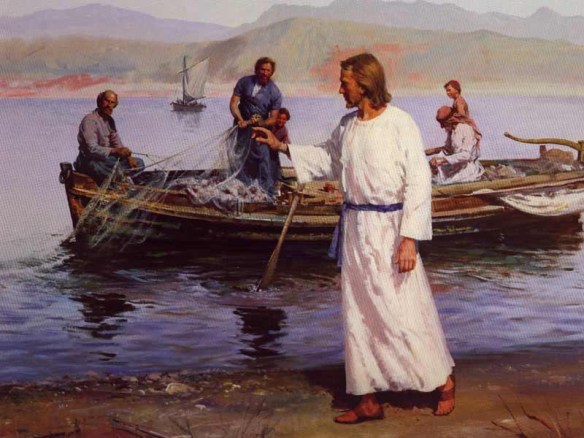
Ashamed of Jesus!

Jesus, and shall it ever be,
A mortal man, ashamed of Thee?
Ashamed of Thee, whom angels praise,
Whose glories shine through endless days?

Ashamed of Jesus! sooner far
Let evening blush to own a star.
’Tis midnight with my soul, till He,
Bright Morning Star, bid darkness flee.

Ashamed of Jesus! that dear Friend
On Whom my hopes of Heav’n depend!
No; when I blush, be this my shame,
That I no more revere His Name.

Ashamed of Jesus! yes, I may
When I’ve no guilt to wash away;
No tear to wipe, no good to crave,
No fears to quell, no soul to save.

Till then (nor is the boasting vain),
Till then I boast a Saviour slain:
And, oh, may this my portion be,
That Saviour not ashamed of me!

— Joseph Grigg

In Ike’s Way

I have several family members in the Houston area hunkered down bracing for Hurricane Ike. They are not in an area that was asked to evacuate, but they are still likely to get a lot of strong wind and rain through the night. I’d appreciate your prayers for them. Some are saved, most are not.

This afternoon this verse came to mind before I even connected it to thoughts of Ike. For those who know the Lord, this is a comfort:

Isaiah 43:2a: When thou passest through the waters, I will be with thee.

Taking every thought captive

I found this very helpful and practical thought in the September 6 reading of Joy and Strength, compiled by Mary Tileston:

Bringing into captivity every thought to the obedience of Christ. 2 Corinthians 10:5

Some have found it a useful thing when their minds have wandered off from devotion and been snared by some good but irrelevant consideration, not to cast away the offending thought as the eyes are again lifted to the Divine Face, but to take it captive, carry it into the presence of God and weave it into a prayer before putting it aside and resuming the original topic. This is to lead captivity captive.
~ Charles Brent

Jesus, I Am Resting

One of my favorite hymns:

Jesus, I am resting, resting,
In the joy of what Thou art;
I am finding out the greatness
Of Thy loving heart.
Thou hast bid me gaze upon Thee,
And Thy beauty fills my soul,
For by Thy transforming power,
Thou hast made me whole.

O, how great Thy loving kindness,
Vaster, broader than the sea!
O, how marvelous Thy goodness,
Lavished all on me!
Yes, I rest in Thee, Belovèd,
Know what wealth of grace is Thine,
Know Thy certainty of promise,
And have made it mine.

Simply trusting Thee, Lord Jesus,
I behold Thee as Thou art,
And Thy love, so pure, so changeless,
Satisfies my heart;
Satisfies its deepest longings,
Meets, supplies its every need,
Compasseth me round with blessings:
Thine is love indeed!

Ever lift Thy face upon me
As I work and wait for Thee;
Resting ’neath Thy smile, Lord Jesus,
Earth’s dark shadows flee.
Brightness of my Father’s glory,
Sunshine of my Father’s face,
Keep me ever trusting, resting,
Fill me with Thy grace.

~ Jean S. Pig­ott, 1876.

Poetry Friday: John Greenleaf Whittier

Years ago when I was in college, someone jotted these lines across the back of an envelope of a note sent to me:

Drop Thy still dews of quietness,
Till all our strivings cease;
Take from our souls the strain and stress,
And let our ordered lives confess
The beauty of Thy peace.

I thought it was lovely, but I didn’t know where it came from (funny the difference the Internet makes in our lives with the ability to look these things up immediately!) Then some years later I found the same lines quoted and attributed to John Greenleaf Whittier in something Elisabeth Elliot wrote, though now I don’t remember what. Later still I heard it on the radio as a hymn. I don’t remember if I have ever sung it in church — I may have. But just recently I found it from from a much longer poem.

A few of the other verses are:

Dear Lord and Father of mankind,
Forgive our foolish ways;
Reclothe us in our rightful mind,
In purer lives Thy service find,
In deeper reverence, praise.

With that deep hush subduing all
Our words and works that drown
The tender whisper of Thy call,
As noiseless let Thy blessing fall
As fell Thy manna down.

Drop Thy still dews of quietness,
Till all our strivings cease;
Take from our souls the strain and stress,
And let our ordered lives confess
The beauty of Thy peace.

Breathe through the heats of our desire
Thy coolness and Thy balm;
Let sense be dumb, let flesh retire;
Speak through the earthquake, wind, and fire,
O still, small voice of calm.

More can be found under the hymn titled “Dear Lord and Father of Mankind” at Cyberhymnal. I am not as familiar with either of the tunes listed there: I have always heard it more often to the melody of the Navy Hymn, Eternal Father Strong to Save.

Whittier was a Quaker, which had a whole philosophy called “quietism” that I don’t ascribe to. But the Bible speaks of a “meek and quiet spirit, which is in the sight of God of great price” (I Peter 3:4a) and says in one of my favorite verses “For thus saith the Lord GOD, the Holy One of Israel; In returning and rest shall ye be saved; in quietness and in confidence shall be your strength” (Isaiah 30:15). David asks himself repeatedly in Psalm 42 and 43, “Why art thou cast down, O my soul? and why art thou disquieted within me?” The quietness in these verses is not a mystical state, but rather just a a peace of spirit resting on and trusting in the Lord. As David says in answer to his own question, “hope thou in God: for I shall yet praise him, who is the health of my countenance, and my God” (Psalm 42:11b). Psalm 46:10 a says, “Be still, and know that I am God.” Psalm 112:7 says, “He shall not be afraid of evil tidings: his heart is fixed, trusting in the LORD.” Psalm 46:1-3 says, “God is our refuge and strength, a very present help in trouble. Therefore will not we fear, though the earth be removed, and though the mountains be carried into the midst of the sea; Though the waters thereof roar and be troubled, though the mountains shake with the swelling thereof.” I have reminded myself at times that if I can trust God to carry me through those circumstances, I can trust Him for whatever more minor problems I am facing.

The last two lines are an allusion to Elijah’s encounter with the Lord in I Kings 19: “And he said, Go forth, and stand upon the mount before the LORD. And, behold, the LORD passed by, and a great and strong wind rent the mountains, and brake in pieces the rocks before the LORD; but the LORD was not in the wind: and after the wind an earthquake; but the LORD was not in the earthquake: And after the earthquake a fire; but the LORD was not in the fire: and after the fire a still small voice” (verses 11-12). I thought it odd that Whittier would say, ” Speak through the earthquake, wind, and fire,” when this passage says God did not speak through those means. Then it occurred to me he probably meant “through” not as in using those means to express Himself, but rather Whittier is asking God to speak to him in the midst of turmoil, to let him hear God’s still small voice over all the other clamor.

I found this lovely version on YouTube.

The Poetry Friday Round-Up can be found at Wild Rose Reader today.

Two helpful sermon outlines

I mentioned in yesterday’s post a couple of helpful sermon outlines in the flyleaves of an old Bible. I wanted to share them because they are so helpful and practical. Unfortunately I did not date them, but they were from sermons by Dr. Mark Minnick, whose ministry we sat under and were blessed by from about 1979 to 1993 or so. These are just the “bare bones” of the messages. One explains why baptism does not save us, and the other is about confession of sin.

Neither of these is meant to be an exhaustive study of every verse on the topic. If anything doesn’t make sense or sound right, it is most likely due to my faulty note-taking.

Why We Know Baptism Does Not Save

1. Paul makes a distinction between baptism and the gospel:

I Corinthians 1:14-17: “I thank God that I baptized none of you, but Crispus and Gaius; Lest any should say that I had baptized in mine own name. And I baptized also the household of Stephanas: besides, I know not whether I baptized any other. For Christ sent me not to baptize, but to preach the gospel: not with wisdom of words, lest the cross of Christ should be made of none effect.”

2. Baptism isn’t included in the definition of the gospel:

I Corinthians 15:3-4: “For I delivered unto you first of all that which I also received, how that Christ died for our sins according to the scriptures; And that he was buried, and that he rose again the third day according to the scriptures…”

3. The condition for baptism is belief: belief comes first:

Acts 8:36: “And as they went on their way, they came unto a certain water: and the eunuch said, See, here is water; what doth hinder me to be baptized?

37 And Philip said, If thou believest with all thine heart, thou mayest. And he answered and said, I believe that Jesus Christ is the Son of God.”

4. I Peter 3: 20 says that baptism is “not the putting away of the filth of the flesh, but the answer of a good conscience toward God.” In itself it doesn’t cleanse us: it is usually just the first act of obedience after salvation.

5. Our salvation is by grace, through faith, not through any works of ours.

Ephesians 2:8-9: “For by grace are ye saved through faith; and that not of yourselves: it is the gift of God: Not of works, lest any man should boast.”

Isaiah 64:6: “But we are all as an unclean thing, and all our righteousnesses are as filthy rags; and we all do fade as a leaf; and our iniquities, like the wind, have taken us away.”

Galatians 2:16: “Knowing that a man is not justified by the works of the law, but by the faith of Jesus Christ, even we have believed in Jesus Christ, that we might be justified by the faith of Christ, and not by the works of the law: for by the works of the law shall no flesh be justified.”

Titus 3:5: “Not by works of righteousness which we have done, but according to his mercy he saved us, by the washing of regeneration, and renewing of the Holy Ghost.”

Baptism is immensely important as a symbol of our identification with Christ, but it is symbolic. (For more on this subject, this is an excellent explanation).

Confession of Sin

What is sin?

1. Failure to glorify God

2. Failure to believe God

Hebrews 11:6: “But without faith it is impossible to please him: for he that cometh to God must believe that he is, and that he is a rewarder of them that diligently seek him.”

Romans 14:23b: “Whatsoever is not of faith is sin.”

— Making decisions out of a faithless heart.

— Acting apart from faith.

— Letting fears keep us from doing what we ought to do.

3. Failure to do good.

James 4:17: “Therefore to him that knoweth to do good, and doeth it not, to him it is sin.”

4. Failure to do righteousness.

I John 5:17a: “All unrighteousness is sin.”

5. Acting against conscience.

–Offending the conscience of self or others.

— An act not done on good faith before God.

Romans 14:22-23: “Hast thou faith? have it to thyself before God. Happy is he that condemneth not himself in that thing which he alloweth. And he that doubteth is damned if he eat, because he eateth not of faith: for whatsoever is not of faith is sin.”

I Corinthians 8:12: “But when ye sin so against the brethren, and wound their weak conscience, ye sin against Christ.”

6. Offense against the law.

I John 3:4: “Whosoever committeth sin transgresseth also the law: for sin is the transgression of the law.”

Consequences of sin and failure to confess

1. Broken fellowship.

2. Lost prosperity: Proverbs 28:13: “He that covereth his sins shall not prosper: but whoso confesseth and forsaketh them shall have mercy.” (See also Psalm 38, I Corinthians 11:23-32, James 5:14-20.) (My aside: this isn’t saying all trouble is a result of sin in the life of the person experiencing the trouble [e.g., Job] but all sin in the life will bring trouble.)

3. Irremedial chastisement: II Chronicles 36:16: “But they mocked the messengers of God, and despised his words, and misused his prophets, until the wrath of the LORD arose against his people, till there was no remedy.”

Why people do not confess sin

1. They reject God’s definitions.

2. They rationalize away their guilt.

Psalm 50:21

— They don’t “feel convicted,” they think they’re a special case, they were born with the problem. The point is, what does God’s Word say about it?

— They’ve shut their ears from hearing Him for so long that they don’t hear Him any more.

Romans 2:1-5: They have experienced His goodness and forbearance and therefore think they are all right instead of realizing He is being gracious.

3. Pride

— Proverbs 16:18: “Pride goeth before destruction, and an haughty spirit before a fall.”

Luke 18:9-14: the publican and the Pharisee. “Every one that exalteth himself shall be abased; and he that humbleth himself shall be exalted.”

4. Fear of consequences

— Leviticus 26:40-42: “If they shall confess their iniquity, and the iniquity of their fathers, with their trespass which they trespassed against me, and that also they have walked contrary unto me; And that I also have walked contrary unto them, and have brought them into the land of their enemies; if then their uncircumcised hearts be humbled, and they then accept of the punishment of their iniquity: Then will I remember my covenant with Jacob, and also my covenant with Isaac, and also my covenant with Abraham will I remember; and I will remember the land.”

Remedy

Proverbs 28:13: “He that covereth his sins shall not prosper: but whoso confesseth and forsaketh them shall have mercy.”

I John 1:9: “If we confess our sins, he is faithful and just to forgive us our sins, and to cleanse us from all unrighteousness.”

This isn’t in these notes, but I have heard many times over that to confess here means to say the same thing about our sin that God does: not to sugarcoat it, make excuses, downplay it, but to acknowledge that what we did was a sin against God.

Flyleaf favorites

My alarm clock didn’t go off Sunday afternoon, so I woke up from my nap about an hour later than usual, about 20 minutes before church was due to start. Needless to say, I was late. Jim and the boys went on ahead while I finished getting ready. He had my Bible, but I grabbed another, older one because sometimes if I am very late I stay in the lounge in the ladies’ room, where there are some chairs and couches, or on a bench in the lobby so as not to distract from the preaching.

This older Bible was on the verge of falling apart, but it was a treasured friend for several years. I began looking at notes I had jotted on the front and back flyleaf pages — in fact there were several blank pages in the back for just that purpose. It was a blessing to go over some of those quotes and notes I hadn’t thought about for years.

One near the front is Jonathan Goforth’s Seven Rules for Daily Living, which, according to this note, he wrote in the flyleaf of his Bible in 1894.

1. Seek to give much — expect nothing.
2. Put the very best construction on the actions of others.
3. Never let a day pass without at least a quarter of an hour spent in the study of the Bible.
4. Never omit daily morning and evening private prayer and devotion.
5. In all things seek to know God’s Will and when known obey at any cost.
6. Seek to cultivate a quiet prayerful spirit.
7. Seek each day to do or say something to further Christianity among the heathen.

All worth remembering!

Here is something from a beloved former pastor, Jesse Boyd, now with the Lord, for whom our Jesse was named:

Worship without service is a hollow farce.
Service without worship is a hectic fervor.
But worship which issues in service is a holy force.

That says so much so succinctly.

There are places in the back where I put a topic heading and then added pertinent verses as I found them. There are verses to help when afraid, verses that showed the Trinity, verses about the Deity of Christ, and verses that refute hyper-Calvinism. There are sermon notes about the baptism of the Holy Spirit, confession of sin (this one is really enlightening: I might make it a separate post one day), what kind of healing is meant in Isa. 53 when it says, “By His stripes we are healed,” and why baptism does not save. The last one was really helpful to me because there are a couple of verses that almost make it sound like baptism saves. I am debating with myself as to whether to make that a separate post or to include it here. I don’t want it to get lost down here, so I think I will post it separately one day this week.

There are multitudes of little notes and quotes from sermons or from study throughout this Bible, too, but many are squished into teeny spaces and margins with not the best handwriting in the first place. But the ones on the flyleaves have been standout for many years and I have referred to them often. Jesse even told me that when he used this Bible for a while, Jonathan Goforth’s rules spoke to him.

The only note I have on the flyleaf of my current Bible is a list of verses dealing with assurance of salvation from a sermon or a study of I John.

How about you? Any inspirational quotes or sermon notes on your Bible flyleaves?

The King of Love

One of my favorite hymns:

The King of love my Shepherd is,
Whose goodness faileth never,
I nothing lack if I am His
And He is mine forever.

Where streams of living water flow
My ransomed soul He leadeth,
And where the verdant pastures grow,
With food celestial feedeth.

Perverse and foolish oft I strayed,
But yet in love He sought me,
And on His shoulder gently laid,
And home, rejoicing, brought me.

In death’s dark vale I fear no ill
With Thee, dear Lord, beside me;
Thy rod and staff my comfort still,
Thy cross before to guide me.

Thou spread’st a table in my sight;
Thy unction grace bestoweth;
And O what transport of delight
From Thy pure chalice floweth!

And so through all the length of days
Thy goodness faileth never;
Good Shepherd, may I sing Thy praise
Within Thy house forever.

~ Henry W. Baker

A beautiful rendition of it is here.

Poetry Friday

Seeing Poetry Friday around the Internet has revived my love of poetry. I never really stopped loving it, but I stopped exploring it, content when a gem was found in my path. But now I am going back to old favorites and finding new ones.

One of the poets I most enjoyed learning about while I was in college was John Donne, an Anglican priest converted from Roman Catholicism, who is known as a metaphysical poet. According to this article that simply means he compared “two vastly unlike ideas into a single idea, often using imagery,” as opposed to “the conceits found in other Elizabethan poetry, most notably Petrarchan conceits, which formed clichéd comparisons between more closely related objects (such as a rose and love).” Most of his poems focus on love, death, or religion, the last “a matter of great importance to Donne. Donne argued that it was better carefully to examine one’s religious convictions than blindly to follow any established tradition, for none would be saved at the Final Judgment by claiming ‘a Philip, or a Gregory, A Harry, or a Martin taught [them] this‘” (Greenblatt, Stephen. The Norton anthology of English literature Eighth edition. W. W. Norton and Company, 2006. pp. 600–602.)

I enjoyed reading several of Donne’s poems, but the one I wanted to share today is “A Hymn to God the Father”:

Wilt thou forgive that sin, where I begun,
which is my sin, though it were done before?
Wilt thou forgive those sins through which I run,
and do run still, though still I do deplore?
When thou hast done, thou hast not done,
for I have more.

Wilt thou forgive that sin, by which I won
others to sin, and made my sin their door?
Wilt thou forgive that sin which I did not shun
a year or two, but wallowed in a score?
When thou hast done, thou hast not done,
for I have more.

I have a sin of fear that when I’ve spun
my last thread, I shall perish on the shore;
swear by thyself, that at my death thy Son
shall shine as he shines now, and heretofore.
And having done that, thou hast done,
I fear no more.

According to this source, the multiple use of the word “done” was a play on his own name, which was pronounced the same way. I think many Christians have gone through this process of confessing sin only to realize “I have more,” but thank God “where sin abounded, grace did much more abound: That as sin hath reigned unto death, even so might grace reign through righteousness unto eternal life by Jesus Christ our Lord” (Romans 5: 20b-21.)

Poetry Friday is hosted at Charlotte’s Library today.

By the way, Poetry Friday participants are very careful about copyright restrictions: if I refer to a modern poem and would deprive the author of potential income by copying his poem, I would only quote a few lines and link back to his site. But with older poems like this, they are quoted in multiple places on the Internet and in textbooks, and the copyrights involved, as far as I can tell, apply to the text about the poem rather than the original poem (and if I quote any of their comments I link back to them as well). Someone please correct me if I am wrong on that understanding.

Poetry Friday: Anne Bradstreet

Anne Bradstreet has been one of my favorite poets since I first “discovered” her in my college sophomore American literature class. The heart and spirit that shines through her poems belies the premise that the Puritans were dour and humorless. She was one of America’s first poets and one of the first women to have a book published.

Probably one of her most well-known and favorite poems is To My Dear and Loving Husband, which begins with the lines, “If ever two were one, then surely we. If ever man were lov’d by wife, then thee.” Another of my favorites is The Author To Her Book, which begins, “Thou ill-formed offspring of my feeble brain…” I just love the way that sounds! By Night While Others Soundly Slept touched my heart with her seeking communion with her Lord late at night.

But my friend Bet pointed me to one of Anne’s poems with which I was not familiar, Verses Upon the Burning of Our House. The title clearly states the subject. The first lines describe the surprise and fear of finding her home in flames with earnest prayer for the Lord’s comfort. Job-like, “I blest his grace that gave and took,” and she acknowledges God’s ownership of all she has and His right to do with it as He will.

Yet she begins to grieve for the special, precious things lost, the particular familiar and treasured bits of a woman’s nesting instinct.

My sorrowing eyes aside did cast
And here and there the places spy
Where oft I sate and long did lie.
Here stood that Trunk, and there that chest,
There lay that store I counted best,
My pleasant things in ashes lie
And them behold no more shall I.

Then she reminds herself of the impermanence of treasures here on earrth and “sets her affection of things above“:

Then straight I ‘gin my heart to chide:
And did thy wealth on earth abide,
Didst fix thy hope on mouldring dust,
The arm of flesh didst make thy trust?
Raise up thy thoughts above the sky
That dunghill mists away may fly.
Thou hast a house on high erect
Fram’d by that mighty Architect,
With glory richly furnished
Stands permanent, though this be fled.
It’s purchased and paid for too
By him who hath enough to do.
A price so vast as is unknown,
Yet by his gift is made thine own.
There’s wealth enough; I need no more.
Farewell, my pelf; farewell, my store.
The world no longer let me love;
My hope and Treasure lies above.

Often as I have read older stories and biographies I’ve been struck by how closely they lived with loss. We have fires, floods, and such now, too, of course, but such catastrophes happen much less often now due to safety factors implemented as a result of previous disasters. Yet even though materials things may last longer now, they still won’t last forever, and our treasures are best laid up in heaven.

Poetry Friday is at Read Imagine Talk today.