What God Tells Us to Remember

Many of us spend the last days of the year looking back at it. Maybe that reminiscence is sparked by the Christmas letters we wrote loved ones, or by the pause before putting up our shiny new calendars for the new year.

There used to be a saying on memes that went something like, “Don’t look back—you’re not going that way.” However, though we shouldn’t live in the past, we benefit from considering it at times.

I jotted down for my own remembrance the ESV Study Bible note for Isaiah 44:21, where God pointed out the futility of idols and told Israel to remember certain things:

Remember. God calls his people to focused thought, in contrast to the muddled delusions described in vv. 9-20 about “these things,” both the all-sufficiency of the God who makes true promises to his people and the emptiness of the false gods with their lies (p. 1321).

The note on Isaiah 46:8 says something similar:

Mental focus on who God is must be renewed, for the idolatrous culture of the world erodes clarity (p. 1326).

God calls us to remember, to exercise “focused thought.” Verses came floating to mind about what God tells us to remember. So I did a quick word study, which resulted in four pages of references. I can’t put all of them here, but I’ll share several.

“Remember all the commandments of the Lord, to do them, not to follow after your own heart and your own eyes, which you are inclined to whore after. So you shall remember and do all my commandments, and be holy to your God.” (Numbers 15:39-40)

“Remember the whole way that the Lord your God has led you these forty years in the wilderness, that he might humble you, testing you to know what was in your heart, whether you would keep his commandments or not.” (Deuteronomy 8:2)

“Remember also your Creator in the days of your youth, before the evil days come and the years draw near of which you will say, ‘I have no pleasure in them’” (Ecclesiastes 12:1)

“Remember the days of old; consider the years of many generations; ask your father, and he will show you, your elders, and they will tell you”. (Deuteronomy 32:7). (The rest of the chapter details God’s gracious dealings in Israel’s history.)

Remember God’s provision: “Beware lest you say in your heart, ‘My power and the might of my hand have gotten me this wealth.’ You shall remember the Lord your God, for it is he who gives you power to get wealth, that he may confirm his covenant that he swore to your fathers, as it is this day.” (Deuteronomy 8:17-18) (Jesus reminded his disciples, when they discussed having no bread, about his past provision of loaves and fishes. Matthew 16:5-12.)

“Remember the wondrous works that he has done, his miracles and the judgments he uttered.” (1 Chronicles 16:12)

“Remember and do not forget how you provoked the Lord your God to wrath in the wilderness. From the day you came out of the land of Egypt until you came to this place, you have been rebellious against the Lord.” (Deuteronomy 9:7). (It’s not that God wanted to hold their past rebellion over their heads forever, but they needed to remember their tendency to sin so that they might be humbled and appreciative of His grace.)

Remember how God dealt with other people’s sin, to learn from their example. “Remember what the Lord your God did to Miriam on the way as you came out of Egypt” (Deuteronomy 24:9); “Remember Lot’s wife” (Luke 17:32).

“Remember therefore from where you have fallen; repent, and do the works you did at first. If not, I will come to you and remove your lampstand from its place, unless you repent.” (Revelation 2:5)

Remember his Word:

“Remember his covenant forever, the word that he commanded, for a thousand generations.” (1 Chronicles 16:15)

“This is now the second letter that I am writing to you, beloved. In both of them I am stirring up your sincere mind by way of reminder, that you should remember the predictions of the holy prophets and the commandment of the Lord and Savior through your apostles.” (2 Peter 3:1-2)

“But you must remember, beloved, the predictions of the apostles of our Lord Jesus Christ.” (Jude 17)

“Remember, then, what you received and heard. Keep it, and repent. If you will not wake up, I will come like a thief, and you will not know at what hour I will come against you.” (Revelation 3:3)

Remember the nothingness of idols and the greatness of his salvation (Isaiah 44:9-26, “Remember these things,” v. 21; Isaiah 46, “Remember this and stand firm, recall it to mind, you transgressors, remember the former things of old; for I am God, and there is no other; I am God, and there is none like me,” vv. 8-9).

“Remember those who are in prison, as though in prison with them, and those who are mistreated, since you also are in the body.” (Hebrews 13:3)

“Remember your leaders, those who spoke to you the word of God. Consider the outcome of their way of life, and imitate their faith.” (Hebrews 13:7)

Besides imperative sentences, I noticed some sweet examples of focused remembrance about God, his truth, his ways, his past provision, and the effect of this remembrance. Some were in Psalm 77, Psalm 78, and Isaiah 63. One was in Psalm 63:5-7:

“My soul will be satisfied as with fat and rich food, and my mouth will praise you with joyful lips, when I remember you upon my bed, and meditate on you in the watches of the night; for you have been my help, and in the shadow of your wings I will sing for joy.” 

Another is in Psalm 143:3-6:

“For the enemy has pursued my soul; he has crushed my life to the ground; he has made me sit in darkness like those long dead. Therefore my spirit faints within me; my heart within me is appalled.

“I remember the days of old; I meditate on all that you have done; I ponder the work of your hands. I stretch out my hands to you; my soul thirsts for you like a parched land.”

One more in Lamentations 3:19-26:

Remember my affliction and my wanderings, the wormwood and the gall! My soul continually remembers it and is bowed down within me. But this I call to mind, and therefore I have hope:

The steadfast love of the Lord never ceases; his mercies never come to an end; they are new every morning; great is your faithfulness. “The Lord is my portion,” says my soul,  “therefore I will hope in him.”

The Lord is good to those who wait for him, to the soul who seeks him. It is good that one should wait quietly for the salvation of the Lord.

Any time is a good time to remember God’s character and dealings with us. But I hope that before the year ends, you’re able to have some “focused thought” on his particular provision and expressions of love in your life.

(Sharing with Inspire Me Monday, Hearth and Soul, Selah, Scripture and a Snapshot, Remember Me Monday, InstaEncouragement, Recharge Wednesday, Let’s Have Coffee, Grace and Truth)

Merry Christmas! Come Behold the Wondrous Mystery

I wish for you and yours a special time of wonder remembering God’s love for us and showing His love to each other.

Come behold the wondrous mystery
In the dawning of the King
He the theme of heaven’s praises
Robed in frail humanity

In our longing, in our darkness
Now the light of life has come
Look to Christ, who condescended
Took on flesh to ransom us

From “Come Behold the Wondrous Mystery” by Matt Papa, Matt Boswell, Michael Bleecker

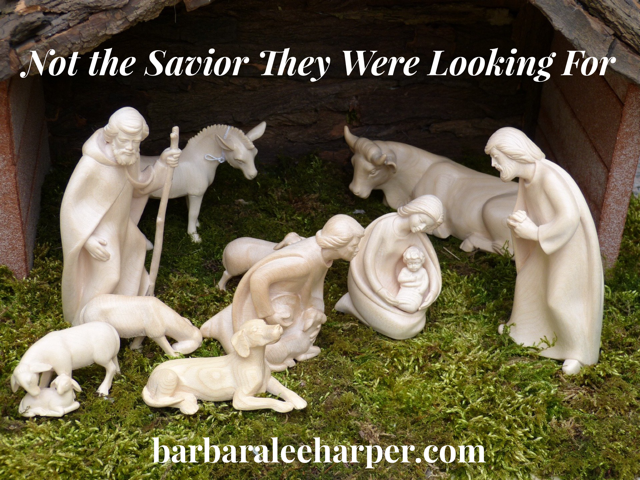
Not the Savior They Were Looking For

From the first book of the Bible, from the first instance of sin, God promised that some day a Redeemer would come. God repeated and expanded on the promise all through the Old Testament. The coming One, the promised One, the Messiah, would be a perfect prophet, priest, king. He would overthrow evil, rule in justice, defeat all Israel’s enemies. Though he was particularly given so the Jews, he was also promised to the Gentiles.

And in that day there shall be a root of Jesse, which shall stand for an ensign of the people; to it shall the Gentiles seek: and his rest shall be glorious. (Isaiah 11:10)

And he said, It is a light thing that thou shouldest be my servant to raise up the tribes of Jacob, and to restore the preserved of Israel: I will also give thee for a light to the Gentiles, that thou mayest be my salvation unto the end of the earth. (Isaiah 49:6)

Multiple prophecies foretold his coming. Multiple images depicted him: the Passover lamb, the scapegoat, sacrifice for sin, the suffering servant.

But when he came, when he claimed to be the Messiah, his people did not recognize him. “He came to his own, and his own people did not receive him” (John 1:11). The Jews of New Testament times looked for a warrior king who would overthrow Roman oppression and establish his physical kingdom. When he pointed out their errors and sins, they had him killed.

People today make a similar mistake. They want a particular kind of Savior:

One who will solve their problems but never require anything of them.

One who will align with and carry out their political aspirations.

One who will increase their health and wealth.

One who will smile indulgently at their sin and never chasten.

One who would never let anything unpleasant happen.

One who will never require anything difficult.

One who never says no to their desires and plans.

Instead of worshiping the Savior as he is, they’ve created one from the own imagination. And when He doesn’t perform according to expectations, well, then, who needs Him?

We all need Him. But we need Him as He truly is, not as we think He should be. Even those of us who have been Christians  for a long time still have to continually “renew our minds” and adjust our thinking according to truth. We come to know Him as Savior and Lord, but then we spend the rest of our lives getting to know Him better and adjusting ourselves away from our preconceived notions and expectations and toward who He really is. And we’re not disappointed, because in the end He’s a much better Savior than we could ever have imagined.

Do you know Him today as He truly is? Get to know Him through His Word. If you’re new to the Bible, start reading the gospel of John. See what He does and what He says about Himself.

And if you’ve known Him for years, keep getting to know Him better. Keep learning more and more what a wonderful Savior He is.

(Revised from the archives)

(Sharing with Hearth and Soul, Senior Salon, Remember Me Monday, InstaEncouragement, Recharge Wednesday, Grace and Truth)

Christmas Lights

symbolism of Christmas lights

Christmas lights are my favorite holiday decorations. Just when the landscape becomes bare and dreary and the nights are longest, cheery lights go up inside and outside. I miss them when we take them down at the end of the month.

I don’t know if I did a good job teaching my children the symbolism behind many of our Christmas customs. But the symbolism behind Christmas lights is a favorite.

God began creation by saying “Let there be light”. But He soon saw His world engulfed in darkness when sin came in. Nevertheless, He promised light would shine again.

“I am the LORD; I have called you in righteousness; I will take you by the hand and keep you; I will give you as a covenant for the people, a light for the nations, to open the eyes that are blind, to bring out the prisoners from the dungeon, from the prison those who sit in darkness (Isaiah 42:6-7).

“But for you who fear my name, the sun of righteousness shall rise with healing in its wings. You shall go out leaping like calves from the stall” (Malachi 4:2).

The Isaiah passage that foretells of the child born, the son given who will take David’s throne, rule in righteousness, whose “name shall be called Wonderful Counselor, Mighty God, Everlasting Father, Prince of Peace” begins with “The people who walked in darkness have seen a great light; those who dwelt in a land of deep darkness, on them has light shone” (Isaiah 9:2).

Scripture points repeatedly to Jesus as the light.

Jesus said, “ “I am the light of the world. Whoever follows me will not walk in darkness, but will have the light of life.” (John 8:12).

In him was life, and the life was the light of men. The light shines in the darkness, and the darkness has not overcome it (John 1:4-5).

When we believe on the Lord, His light shines through us:

At one time you were darkness, but now you are light in the Lord. Walk as children of light (for the fruit of light is found in all that is good and right and true), and try to discern what is pleasing to the Lord. Take no part in the unfruitful works of darkness, but instead expose them. For it is shameful even to speak of the things that they do in secret. But when anything is exposed by the light, it becomes visible, for anything that becomes visible is light (Ephesians 5:8-14a).

The NKJV renders that last phrase “But all things that are exposed are made manifest by the light, for whatever makes manifest is light.”

This is the message we have heard from him and proclaim to you, that God is light, and in him is no darkness at all. If we say we have fellowship with him while we walk in darkness, we lie and do not practice the truth. But if we walk in the light, as he is in the light, we have fellowship with one another, and the blood of Jesus his Son cleanses us from all sin (1 John 1: 5-7).

Someday, for God’s children, “night will be no more. They will need no light of lamp or sun, for the Lord God will be their light, and they will reign forever and ever” (Revelation 22:5). How desperately we need to choose light now, because those who don’t will be “thrown into the outer darkness. In that place there will be weeping and gnashing of teeth” (Matthew 8:12).

For now, though we have the light, we live in a dark world.

Who among you fears the Lord and obeys the voice of his servant? Let him who walks in darkness and has no light trust in the name of the Lord and rely on his God (Isaiah 50:10).

Keep looking to the light!

In your light we see light. Psalm 36:9

(Sharing with Hearth and Soul, Inspire Me Monday, Senior Salon, Remember Me Monday, Selah, Scripture and a Snapshot, Tell His Story, InstaEncouragement, Recharge Wednesday, Let’s Have Coffee, Grace and Truth, Faith on Fire, Blogger Voices Network)

God with Us

The guest speaker was pointing out bad prayer habits. One, he said, was asking God to be with us or another Christian. God is with believers all the time; He has promised never to leave us forsake us. So we don’t need to ask Him to be with us.

That made sense to me. So I tried to eliminate the phrase “be with” from my prayers. I’d get a little irritated when someone else said it. (Isn’t it sad how easily self-righteousness creeps in?)

Then a few days ago, I read Exodus 3 about God’s call to Moses. Moses had tried to help his brethren, the Israelites, forty years earlier. But his efforts had not been received, and he ended up fleeing for his life from Egypt. No wonder he didn’t jump at the chance to go back. His first objection to God’s call was, “Who am I?”

God answered, “I will be with you.” The ESV Study Bible‘s notes on this verse say:

Moses’ initial question is surely sensible, and God does not reprove him for asking it (v. 11). However, God does not answer Moses’ question in the way that he asks it, but instead says, “I will be with you,” indicating that his presence with Moses is essential to the call (v. 12). When the OT says that God is “with” someone, it stresses God’s power that enables a person to carry out his calling” (p. 148, emphasis mine).

The thought of God being with us in our calling was totally new to me, but this note brought it out in a way I hadn’t thought about it before. I recalled how God expressed this same promise to others when He called them: Isaac, Jacob, Joshua, Gideon, Jeremiah, Mary, Paul, and others.

I’ve often thought of God’s presence with us in terms of fellowship, comfort, and help. One of my favorite verses in Isaiah 41:10: “Fear not, for I am with you; be not dismayed, for I am your God; I will strengthen you, I will help you, I will uphold you with my righteous right hand.”

And this passage from Exodus almost always brings me to tears. Israel had sinned in worshiping the golden calf, and God told Moses He would send the people on to the promised land, but He would not go with them (Exodus 33:1-3).

 Moses said to the Lord, “See, you say to me, ‘Bring up this people,’ but you have not let me know whom you will send with me. Yet you have said, ‘I know you by name, and you have also found favor in my sight.’ Now therefore, if I have found favor in your sight, please show me now your ways, that I may know you in order to find favor in your sight. Consider too that this nation is your people.”

And he said, “My presence will go with you, and I will give you rest.”

 And he said to him, “If your presence will not go with me, do not bring us up from here. For how shall it be known that I have found favor in your sight, I and your people? Is it not in your going with us, so that we are distinct, I and your people, from every other people on the face of the earth?” (Exodus 33:12-16)

In another favorite passage, God promises to be with us when—not if, but when trouble comes:

When you pass through the waters, I will be with you; and through the rivers, they shall not overwhelm you; when you walk through fire you shall not be burned, and the flame shall not consume you. (Isaiah 43:2)

Matthew shares in the first chapter of his gospel that an angel visited Joseph and told him that his betrothed was to be the mother of the Messiah, the one promised all through the Old Testament. The angel quoted a prophecy: “Behold, the virgin shall conceive and bear a son, and they shall call his name Immanuel, (which means, God with us)” (Matthew 1:23). Though God has always been omniscient and omnipresent, He was going to be with His people in a special way through this promised child.

Then Matthew closed His book with that child grown, crucified, and risen again, promising His disciples, “All authority in heaven and on earth has been given to me. Go therefore and make disciples of all nations, baptizing them in the name of the Father and of the Son and of the Holy Spirit, teaching them to observe all that I have commanded you. And behold, I am with you always, to the end of the age” (Matthew 28:18-20).

Does that mean we don’t need to ask God to be with us or our loved ones? I’m still inclined to pray that God will help someone know or rest in His presence rather than just that he will be with them. But I am not going to fuss with anyone about the phrasing. As I studied this concept, I noticed that Paul closed many of his epistles with a phrase similar to Romans 15:33: “May the God of peace be with you all.” Did that mean God had not been with them, and Paul was praying that He would be? No, not in the context of all he had written before. I think he means it in the same sense as when he said “that I may know him and the power of his resurrection, and may share his sufferings” in Philippians 3:8-11. Paul already knew Him. But He wanted to know Him better, to grow in his experience of Him. So when he says, “God be with you,” perhaps he is emphasizing that he hopes they know His presence in a fuller way.

The more I looked up passages about God being with us, the more I found—much more than will fit in one blog post. This would make for a rich study some day.

But as I considered them in light of our calling, I realized they are all bound up in our calling. When God calls us to Himself, He promises to take care of us. We have His fellowship, comfort, help, and whatever else we need.

Whatever God has called us to do—pick up and go to another location, teach our children at home, work in a busy office or store, or any other task—He has promised Himself. And with Him, we can do anything.

(Sharing with Sunday Scripture Blessings, Selah, Hearth and Soul,
Scripture and a Snapshot, Inspire Me Monday, Senior Salon, Tell His Story, InstaEncouragement, Recharge Wednesday, Share a Link Wednesday,
Let’s Have Coffee, Heart Encouragement, Grace and Truth, Blogger Voices Network)

The Sacrifice of Praise

Some days it’s easy to thank and praise God. A prayer is answered just the way we wanted, an unexpected gift arrives, a loved one recovers from an illness. When God does something obvious for us, we respond in praise to Him.

But other times, praise is hard. The prayer is answered “No.” A loved one does not recover. Needs and hardships abound with no relief in sight.

Psalm 116:17 speaks of offering “the sacrifice of thanksgiving.” After speaking of the sacrifice Jesus made of His own blood so that we could be saved. Hebrews 13:15 says, “Through him then let us continually offer up a sacrifice of praise to God, that is, the fruit of lips that acknowledge his name.”

Why would it be called a sacrifice to praise God?

Sacrifices cost something. They acknowledge the worthiness of the one sacrificed to. They encourage faith even as they express faith.

Why does God want our praise? Everyone appreciates a “thank you.” But God doesn’t need praise from us. He is totally self-sufficient. He asks for our praise because we need it. He lifts our chin upwards so our gaze rests on Him. When times are hard, looking to Him reminds us that He is sovereign, wise, powerful, loving, kind. When we praise Him, we acknowledge His greatness for our own hearts as well as others. We remind ourselves that all our answers and provisions come from Him. We don’t ignore the pain or heartache, but we acknowledge God in them.

As Nancy Guthrie shares in Hoping for Something Better: Refusing to Settle for Life as Usual:

When we choose to praise God for His goodness, despite His allowing what we would nor describe as good into our lives, that is a sacrifice of praise. When we praise Him for His sovereignty, even though we don’t understand the whys of His plans, that is a sacrifice of praise (p. 177).

In On Asking God Why, Elisabeth Elliot wrote of finding help to praise when she wasn’t feeling particularly thankful:

When I stumble out of bed in the morning, put on a robe, and go into my study, words do not spring spontaneously to my lips–other than words like, “Lord, here I am again to talk to you. It’s cold. I’m not feeling terribly spiritual….” Who can go on and on like that morning after morning, and who can bear to listen to it day after day?

I need help in order to worship God. Nothing helps me more than the Psalms. Here we find human cries–of praise, adoration, anguish, complaint, petition. There is an immediacy, an authenticity, about those cries. They speak for me to God–that is, they say what I often want to say, but for which I cannot find words.

Surely the Holy Spirit preserved those Psalms in order that we might have paradigms of prayer and of our individual dealings with God. It is immensely comforting to find that even David, the great king, wailed about his loneliness, his enemies, his pains, his sorrows, and his fears. But then he turned from them to God in paeans of praise.

He found expression for praise far beyond my poor powers, so I use his and am lifted out of myself, up into heights of adoration, even though I’m still the same ordinary woman alone in the same little room.

She goes on to tell how hymns also help her find words with which to praise:

By putting into words things on earth for which we thank him, we are training ourselves to be ever more aware of such things as we live our lives. It is easy otherwise to be oblivious of the thousand evidences of his care.

This year has been full of various hardships. Thanksgiving may not hold its usual luster. In fact, it might be hard to find something to thank God for. But I have found those times when I have to search for God’s blessings to be especially meaningful. He always leaves evidence of His care, and sometimes we miss them unless we’ve especially tuned our hearts to see them. 

One hymn which helps me praise is “O God, Beyond All Praising” by Michael Perry. A few lines express the truths discussed here:

And whether our tomorrows
Be filled with good or ill,
We’II triumph through our sorrows
And rise to bless you still:
To marvel at your beauty
And glory in your ways,
And make a joyful duty
Our sacrifice of praise.

(Sharing with Hearth and Soul, Selah, Scripture and a Snapshot, Inspire Me Monday,
Senior Salon, Remember Me Monday, Tell His Story, InstaEncouragement,
Let’s Have Coffee, Faith and Worship Weekend, Grace and Truth,
Blogger Voices Network)

Do We Have to Choose Between Nice and Right?

I often see little memes extolling the virtues of being nice rather than right. And I wonder why we set up such a false dichotomy. Why does it have to be either/or? Why can’t it be both/and?

Most of us want to be right. No one wants to be misinformed or hold opinions that are known to be wrong or foolish. But most of us have at least enough humility to realize that we might unwittingly be wrong sometimes.

But we all know people who, no matter what topic you bring up, have a better idea or a superior way of doing things than what you just expressed. And there are some who have to have everything their own way because of course that’s the only right way. They can make everyone else miserable over the way the toilet paper is put on the roll or the way the toothpaste tube is squeezed. We each have our little idiosyncrasies and preferences for how certain things are done, but we need to learn to compromise and to be less self-centered.

However, in some cases, being wrong can be deadly. The wrong wire cut on the bomb. The wrong medical procedure or medicine. The wrong path to a broken bridge. The wrong opinion about who Jesus is or how one can know Him.

Unfortunately, people can sometimes use truth like a steamroller or bullhorn or club. Arrogance does not make the gospel winsome or inviting; harshness can turn people off to the truth. “The wisdom that is from above,” James says, “is first pure, then peaceable, gentle, open to reason, full of mercy and good fruits, impartial and sincere” (James 3:17).

There are scores, maybe hundreds of issues where Christians can give each other grace, where they don’t have to agree on every little factor. Unfortunately, we waste a lot of time arguing over those issues, hotly defending them, stirring up discord and strife. “One who sows discord among brothers” is in the list of things God hates in Proverbs 6:16-19. Paul lists among the works of the flesh “enmity, strife, jealousy, fits of anger, rivalries, dissensions, divisions” (Galatians 5:19-26).

It’s okay to talk about them, if we can do so without heat. It helps sometimes to probe others’ minds as we think through an issue. But sometimes it’s best to let them go. Romans 14 says especially of “one who is weak in faith, welcome him, but not to quarrel over opinions.” Paul then gives some classic guidelines for handling some of those issues: don’t despise or judge the person with a different opinion (verse 3); .be fully convinced in your own mind (verse 5); do whatever you do as unto the Lord (verses 6-9); remember the other person is your brother (verse 10); remember we will all give an account to God (verses 10-12); don’t “put a stumbling block or hindrance in the way of a brother”—walk in love (verses 13-15, 21); “pursue what makes for peace and for mutual upbuilding.” (verse 19); do whatever you do in faith (verses 22-23).

There are biblical issues, however, where a line is drawn in the sand and crossing it leads to heresy. Jesus corrected people’s grave errors in theology all the time. The apostles had to deal firmly and sharply with errors in the early churches in the epistles. Paul says at least three times (2 Thess. 3:6, 2 Thess. 3:14-15, 1 Cor. 5:9-11) that there are spiritual issues worth separating over. Paul tells the Corinthains to deliver one unrepentant member in serious sin (incest), “to Satan for the destruction of the flesh, so that his spirit may be saved in the day of the Lord” (1 Corinthians 5:5). The end he wanted was not the man’s destruction, but his eventual salvation. To avoid showing someone where their beliefs don’t line up with Scripture, to the point that their soul is in danger, is not the nice or loving thing to do.

Also, Jesus rebuked the disciples for being fearful and not having faith in a situation where fear would seem like a natural response: being in a boat in a storm at sea. Through Old and New Testaments, God is longsuffering and patient. But at times He had to deal firmly—sometimes seemingly harshly—when His people had long instruction and opportunity to do right but kept clinging to their own stubborn way.

The apostles could also seem harsh in their warnings against false teachers, but the truth in question was so vital, and error in its regard so eternally deadly, that strong warnings were needed.

Likewise, human authorities aren’t being kind by avoiding correction that might help one of their charges.

Sometimes Jesus shared truth that the other person did not receive, and He let him walk away, like the “rich young ruler.” He didn’t call him back, soften the message, or backtrack so the relationship could continue. When God brings a person to confront their dearest idol, it’s a crisis, and He wants them to see it for what it is and repent. Thankfully in His grace He’ll often bring a person to that point a number of times (I’ve always hoped that that man came back to the Lord at another time). Chris Anderson makes the point that in our day, there is a rush to get such a person to the “sinner’s prayer” and gloss over their heart issues: “How many such men have been led in a sinner’s prayer that salved their consciences but didn’t save their souls? How many have thus been unwittingly inoculated against the truth? How many have left churches lost and relieved rather than lost and sorrowful?” We need to allow time for godly sorrow to do its work toward repentance unto salvation.

So is it more important to be nice or to be right? It depends on the issue in question and the needs of the people involved. It’s best to be both if possible. The Bible speaks often of God’s kindness and admonishes us in many places to be kind. In interpersonal relationships, especially, we’re to “Put on therefore, as the elect of God, holy and beloved, bowels of mercies, kindness, humbleness of mind, meekness, longsuffering; Forbearing one another, and forgiving one another, if any man have a quarrel against any: even as Christ forgave you, so also do ye” (Colossians 3: 12-13). When a right view is essential, we don’t need to convey or defend truth in an unnecessarily harsh, negative, gripy, or cynical way. But cutting corners on the truth in an effort to be nice is neither kind nor loving.

How we need God’s discernment and wisdom to know when to speak up, when to be silent, when to take a stand, when to let something go, when to rebuke or warn, when to cover someone’s foibles in love. How we need to soak our minds in Scripture to be guided His truth. How we need His discipline to deal with the logs in our own eyes before attempting to deal with the specks in others. How we need His love to look on others’ needs before our own. How we need His grace to speak the truth, yes, but in love.

(Revised from the archives)

(Sharing with Hearth and Home, Sunday Scripture Blessings, Selah,
Scripture and a Snapshot, Inspire Me Monday, Senior Salon,
Remember Me Monday, Tell His Story, InstaEncouragment,
Recharge Wednesday, Let’s Have Coffee, Heart Encouragement,
Grace and Truth, Faith on Fire, Blogger Voices Network,
Faith and Worship Christian Weekend)

Things That Will Still Be True After Election Day

Things that will still be true after Election Day. God rules.

Vitriol and mud-slinging are not new to politics, but the last two presidential elections have been the worst in my memory. Emotions and tension are high on both sides.

But no matter what the outcome is on Tuesday, several things will still be true.

God reigns. “God reigns over the nations; God sits on his holy throne” (Psalm 47:8). Our church has read through large chunks of the Old Testament over the last year. No matter who was in charge of what earthly kingdom, God was always at work, sometimes overtly, sometimes “behind the scenes.” “The Lord has established his throne in the heavens, and his kingdom rules over all” (Psalm 103:19).

This doesn’t mean we don’t vote. God often uses means and circumstances, and voting is the means by which rulers are elected here

Authorities come from God, even when they are not godly, even when we don’t agree with everything they do.

For there is no authority except from God, and those that exist have been instituted by God. Therefore whoever resists the authorities resists what God has appointed, and those who resist will incur judgment. (Romans 13:1b-2)

He changes times and seasons; he removes kings and sets up kings; he gives wisdom to the wise and knowledge to those who have understanding. (Daniel 2:21)

The Most High rules the kingdom of men and gives it to whom he will and sets over it the lowliest of men. (Daniel 4:17b)

We’re responsible to pray. “First of all, then, I urge that supplications, prayers, intercessions, and thanksgivings be made for all people, for kings and all who are in high positions, that we may lead a peaceful and quiet life, godly and dignified in every way” (1 Timothy 2:1-2).

We’re to respect our leaders. Peter instructed, “Honor everyone. Love the brotherhood. Fear God. Honor the emperor” 1 Peter 2:17). He wrote that, inspired by the Holy Spirit, when one of the worst rulers ever was on the throne: Nero. That doesn’t mean he obeyed authorities who told him not to do what God told him to do. That doesn’t mean we never speak up when a ruler is in the wrong: John the Baptist did, as did Daniel and many of the OT prophets (though they also faced consequences for speaking out and disobeying). Paul said the same thing: “Pay to all what is owed to them: taxes to whom taxes are owed, revenue to whom revenue is owed, respect to whom respect is owed, honor to whom honor is owed” (Romans 13:7), echoing what Jesus said: “Render to Caesar the things that are Caesar’s, and to God the things that are God’s” (Mark 12:17).

We’re to be subject to authorities. “Be subject for the Lord’s sake to every human institution, whether it be to the emperor as supreme, or to governors as sent by him to punish those who do evil and to praise those who do good. For this is the will of God, that by doing good you should put to silence the ignorance of foolish people” (1 Peter 2:13-15). The only exception is when the government tells us to do something wrong. The Hebrew midwives didn’t kill Jewish babies as instructed. The disciples still preached in the name of Jesus when told not to. People hid and helped Jews during WWII. People still printed Bibles behind the Iron Curtain.

Our responsibilities are not over. Very early in my first voting forays, some people seemed to breathe a sigh of relief and then sit back when their candidate was elected, as if to say, “Whew! That’s done. We’re okay for four more years.” But, we still need to be aware and use the voice we have, because . . .

No ruler is perfect. Some are better than others, but we can’t put our total hope in any of them. They may not see all sides of an issue or may be getting bad advice, so it’s important to be aware of issues and communicate our concerns and preferences.

We still have a voice. In this country, we have the right and responsibility to let our voice be heard, to vote, to write our representatives. No ruler has carte blanche.

Government can’t meet all our needs. It was never meant to. It has taken on responsibilities the church and others are supposed to bear. And while we need it to do what it’s designed for, ultimately our hope is in God. “Put not your trust in princes, in a son of man, in whom there is no salvation. When his breath departs, he returns to the earth; on that very day his plans perish. Blessed is he whose help is the God of Jacob, whose hope is in the Lord his God, who made heaven and earth, the sea, and all that is in them, who keeps faith forever” (Psalm 146:3-6).

God’s promises are still true. He has promised to supply our needs, answer prayer, never leave us or forsake us. God’s power and wisdom and love are not limited by earthly rulers.

I have preferences, hopes, and fears for this election. I know God doesn’t always answer prayer the way we think is best, but I am sure hoping He does this time. I’m praying, and I’ve voted. My responsibilities are the same: pray, trust, do His will moment by moment, love my neighbor, let my light shine. But ultimately, He is on the throne working out His perfect will. My hope is in Him.

This is my Father’s world:
O let me ne’er forget
That though the wrong seems oft so strong,
God is the Ruler yet.
This is my Father’s world:
Why should my heart be sad?
The Lord is King: let the heavens ring!
God reigns; let earth be glad!

Maltbie D. Babcock, This Is My Father’s World

The Most High rules

(Sharing with Sunday Scripture, Selah, Scripture and a Snapshot, Inspire Me Monday,
Hearth and Soul, Senior Salon, Remember Me Monday, Tell His Story, Purposeful Faith, InstaEncouragement, Recharge Wednesday, Let’s Have Coffee, Heart Encouragement), Grace and Truth, Faith on Fire, Blogger Voices Network)

A Christian Philosophy of Things

My daughter-in-law recently shared a scenario I remember occurring with my own children. Her son, my grandson, accidentally broke something and was upset. In an effort to comfort him, his parents assured him it was all right, it was just a thing, it could be replaced.

Then the next time something broke, he nonchalantly said, “It’s okay, we can get another one.”

It’s been a couple of decades since my own were very young, and I can’t remember how I handled this with them. I think over time and experience, they learned that accidents are ok, but deliberate destruction is not; some things can be replaced easily, some things cannot.

I’m not prone to watch talk shows, but I caught part of one years ago in which a child said that when he got into trouble for jumping on the couch, it made him feel like his parents loved the couch more than him. I remember thinking, “It’s not unloving to teach a child to take care of property.” But perhaps the way the situation was handled added fuel to the fire. I remember a song my parents used to listen to told a story about a man getting after his daughter about not messing up the grass in the yard that he had worked so hard to maintain. Now he had a beautiful yard, but he was estranged from his daughter.

It’s possible to love our “stuff” more than we love people, or at least to give them the impression that we do. But teaching a child to take care of things in itself is not putting the things above the child. I’ve known adults with an “Oh, well” attitude towards things which they probably think is non-materialistic, but which seems careless.

How do we find that balance between not esteeming things too highly or too carelessly?

Here are some principles that help me.

Everything we have belongs to God. We don’t have anything that didn’t ultimately come from God. We’re just stewards of our possessions.

“The earth is the Lord’s and the fullness thereof, the world and those who dwell therein” (Psalm 24:1).

Who has first given to me, that I should repay him? Whatever is under the whole heaven is mine. (Job 41:11)

“All things were made through him, and without him was not any thing made that was made” (John 1:3). Even if we grew, carved, crafted, or assembled something, the raw materials as well as the ability to do anything with them came from God.

We can’t take it with us. “As he came from his mother’s womb he shall go again, naked as he came, and shall take nothing for his toil that he may carry away in his hand (Ecclesiastes 5:15). Ecclesiastes speaks often of the vanity of working for things and then leaving them behind to someone else.

We’re accountable for what we do with our things. “One who is faithful in a very little is also faithful in much, and one who is dishonest in a very little is also dishonest in much. If then you have not been faithful in the unrighteous wealth, who will entrust to you the true riches? And if you have not been faithful in that which is another’s, who will give you that which is your own?” (Luke 16:10-12). “Moreover, it is required of stewards that they be found trustworthy” (1 Corinthians 4:2).

Good stewardship includes careful use of things. This verse always convicts me, and I like the way the KJV puts it: “The slothful man roasteth not that which he took in hunting: but the substance of a diligent man is precious (Proverbs 12:27). According to the Pulpit Commentary at the bottom of this page, this could refer to someone who caught game but was too lazy to roast it, so it went bad (that’s the part that convicts me when I clean rotted stuff out of the refrigerator), or someone who catches game but then doesn’t attend to it, so it escapes. Either way, the slothful, or lazy person, doesn’t attend to what he has, but “the substance of a diligent man is precious” (some translations say “prized.”)

I hate to see people throw out perfectly good items just because they don’t need or want them anymore. Sometimes people will come by and take for themselves anything you have on the streets to be thrown out. Some people like to “dumpster dive” for treasures. So maybe people who take their unwanted stuff to dumps figure someone might find it there. But our local recycling and trash center doesn’t allow anything to be taken out, probably for safety purposes. I don’t like to mess with sales, but I like to take any unused items in good condition to the local thrift store.

Possessions are not wrong. I fear that some in the minimalist camp equate what they consider excess as sin. There’s nothing in the Bible that says we have to live as starkly as possible. We shouldn’t be covetous, and we have to understand that things cost money and take up space and time to maintain. But different people have different tolerance levels for “stuff.” I used to wonder whether it was wrong to want to wear pretty clothes or decorate my home. But I realized that God could have made the world just utilitarian, yet He didn’t. He created a wonderful variety of vibrant colors, animals, flora, etc. Edith Schaeffer made a strong case for this in a chapter on Interior Decorating in The Hidden Art of Homemaking. One of her quotes there:

If you have been afraid that your love of beautiful flowers and the flickering flame of the candle is somehow less spiritual than living in starkness and ugliness, remember that He who created you to be creative gave you the things with which to make beauty and the sensitivity to appreciate and respond to His creation (p. 109).

Possessions are temporary. “Do not lay up for yourselves treasures on earth, where moth and rust destroy and where thieves break in and steal, but lay up for yourselves treasures in heaven, where neither moth nor rust destroys and where thieves do not break in and steal. For where your treasure is, there your heart will be also.(Matthew 6:19-21). 

Possessions can be idols. Jesus called one man who laid up many goods but did not prepare for eternity a “rich fool.” He reminded His listeners “one’s life does not consist in the abundance of his possessions” (Luke 12:15). The “rich young ruler” came to Jesus once to ask what he needed to do to get to heaven. Jesus told him to sell all he had and give it to the poor. Note: this is not something He says to everyone, but He knew that this man’s riches were an idol to him. The man “went away sorrowful, for he had great possessions” (Matthew 19:22). Jesus went onto say that it is “only with difficulty will a rich person enter the kingdom of heaven” (Matthew 19:23). Paul writes to Timothy:

 As for the rich in this present age, charge them not to be haughty, nor to set their hopes on the uncertainty of riches, but on God, who richly provides us with everything to enjoy. They are to do good, to be rich in good works, to be generous and ready to share, thus storing up treasure for themselves as a good foundation for the future, so that they may take hold of that which is truly life. (1 Timothy 6:17-19).

Possessions can be a distraction. Amy Carmichael told of a woman she was trying to share the gospel with in Japan. The weather was cold and Amy suffered from neuralgia, so she wore some fur-lined gloves. The women listened and seemed to be just about to turn to God when she noticed Amy’s gloves and asked about them.

She was old and ill and easily distracted. I cannot remember whether or not we were able to recall her to what mattered so much more than gloves. But this I do remember. I went home, took off my English clothes, put on my Japanese kimono, and never again, I trust, risked so much for the sake of so little (Frank Houghton, Amy Carmichael of Dohnavur, p. 59).

Similarly, in Isobel Kuhn‘s early ministry in China, she was a newlywed taking joy in setting up housekeeping. When a couple of Chinese women came to visit, she was thrilled to receive them. They were among the poorest people, and their culture was very different. One of the women blew her nose in her hands and wiped them on Isobel’s rug. The other held her child apart from her while the child wet on the rug. The women had dirt floors in their homes, so they were unaware they had done anything “wrong.” Isobel “managed to remain courteous” while the women were there. But once they left, “Hot resentment rose in my heart, and then there followed my first battle over things.” She concluded:

If your finery hinders your testimony throw it out. In our Lord’s own words, if thine hand offend thee, cut it off; He was not against our possessing hands, but against our using
them to hold on to sinful or hindering things.

So I faced my choice. In our first home—what was to come first? An attractive sitting-room just for ourselves? Or a room suited to share with the local Chinese?

Our engagement motto hung silently on the wall—God first. Mentally I offered that pretty rattan furniture to the Lord to be wrecked by the country peasants if they chose (Isobel Kuhn, Whom God Has Joined, pp. 21-22).

When they moved to their next station, she sold these items and bought easily washable furnishings like the Chinese had.

We’re commanded to be generous. It’s easy to look at millionaires and think, “Yeah, those rich people need to be generous!” But the Macedonians were commended for giving “according to their means” out of “extreme poverty” (2 Corinthians 8:1-5). We’re all richer than someone. What’s considered poor these days would be considered quite rich by people in some other countries or by people from a hundred years ago.

We only give back to God what is His. David and other leaders donated materials for Solomon to build the temple. David prayed before the assembly, acknowledging “all that is in the heavens and in the earth is yours” (1 Chronicles 29:11-13)(See point 1). Then he said:

But who am I, and what is my people, that we should be able thus to offer willingly? For all things come from you, and of your own have we given you . . . O Lord our God, all this abundance that we have provided for building you a house for your holy name comes from your hand and is all your own. (1 Chronicles 29:14, 16)

We hold possessions loosely. Rosalind and Jonathan Goforth’s lost nearly everything not once, but four times in their missionary experience: through fire, flood, the Boxer rebellion when they fled for their lives, and damage when they were on furlough and others moved their things to a leaky storage shed. Rosalind found this fourth loss “the hardest to bear,” possibly since it came about “because ‘someone had blundered'” (Rosalind Goforth, Goforth of China, p. 210).

When, in the privacy of their own room, the “weaker vessel” broke down and wept bitter, rebellious tears, Goforth sought to comfort her by saying, “My dear, after all, they’re only things and the Word say, ‘Take joyfully the spoiling of your goods!’ Cheer up, we’ll get along somehow” (p. 211).

Jonathan quotes there from Hebrews 10:32-35, where the writer recalls some of the sufferings the Hebrews had endured:

But recall the former days when, after you were enlightened, you endured a hard struggle with sufferings, sometimes being publicly exposed to reproach and affliction, and sometimes being partners with those so treated. For you had compassion on those in prison, and you joyfully accepted the plundering of your property, since you knew that you yourselves had a better possession and an abiding one. Therefore do not throw away your confidence, which has a great reward.

We trust God for things we need. “Daily bread” is one of the things Jesus instructs us to pray for (Matthew 6:11). He also said, “Do not be anxious about your life, what you will eat or what you will drink, nor about your body, what you will put on. Is not life more than food, and the body more than clothing?” (Matthew 6:25). He pointed out the birds and flowers that our heavenly Father feeds and cares for. Then He reminded His listeners, “Your heavenly Father knows that you need them all. But seek first the kingdom of God and his righteousness, and all these things will be added to you” (verses 32b-33).

God often provides through honest work: Proverbs and Ecclesiastes say much about diligence, hard work, and reward. The New Testament condemns “idleness” (2 Thessalonians 3:6-10) and commends work:

If anyone is not willing to work, let him not eat. For we hear that some among you walk in idleness, not busy at work, but busybodies. Now such persons we command and encourage in the Lord Jesus Christ to do their work quietly and to earn their own living. (2 Thessalonians 3:10-12)

We not only work for our needs, but to provide for our families. In the context of the church providing for destitute widows, Paul writes, “But if anyone does not provide for his relatives, and especially for members of his household, he has denied the faith and is worse than an unbeliever” (1 Timothy 5:8).

So, though God usually meets our needs through providing opportunity and strength to work, when no work is available, or it’s not enough for the needs, we’re not to worry. We seek Him and trust Him to provide. I heard one preacher say that when his car had a problem and he didn’t have the money to fix it, remembering that all we have belongs to God, he prayed, “God, Your car needs work.”

It seems the more I search, the more I find in the Bible concerning how we should think about things. Other aspects include not stealing other people’s things, covetousness, and contentment.

But these prevailing truths help me. Everything we have comes from God and belongs to Him. Some day we’ll give an account of how we handled what He gave us. Therefore we take care of them, use them wisely, hold them loosely, give generously to others, and trust Him to provide. He “richly provides us with everything to enjoy” (1 Timothy 6:17). It’s okay to enjoy the material blessings He provides. But we don’t set our hearts on them or esteem them more highly than we should. We understand that God, people, and eternal truths are more important.

(Sharing with Sunday Scripture Blessings, Selah, Scripture and a Snapshot, Hearth and Soul, Senior Salon, Inspire Me Monday, Tell His Story, Purposeful Faith, InstaEncouragement, Recharge Wednesday, Worth Beyond Rubies, Share a Link Wednesday, Let’s Have Coffee, Heart Encouragement, Grace and Truth, Faith on Fire, Blogger Voices Network)

Alone with God

Community is a great gift. Many of us have come to appreciate it now more than ever, since gathering with others has been restricted for several months. There’s nothing like being with, singing with, exercising the “one anothers” of the Bible, encouraging and being encouraged by God’s people.

So many have fallen away from regular church attendance, leaders have stressed the importance and benefits of Christian community in the last several years. But as often happens, the pendulum sometimes swings too far the other way. Some admonishments have overstated the importance of community. In one tweet I saw, some advocated changing the pronouns in hymnbooks from singular to plural!

I believe strongly in Christian community, in gathering regularly together as believers. I wrote about it here and here and here and here.

But some of the most poignant moments of life occur between the individual and God alone.

Joseph spent years isolated from a believing community after he was sold into slavery before his family came. If he had not known how to walk with God alone, his story would have come out very differently.

Two of the major events in Jacob’s life occurred when God met with him alone. One was in a dream on his journey to his uncle’s house; the other occurred when he wrestled with the angel of the Lord on the way back home to face Esau.

Daniel had three friends, but he faced the lion’s den alone, received visions from God alone, and prayed for his nation alone.

David spent much time alone and used much of it to write psalms.

The psalmists speak of remembering God’s word, work, and character and communing with Him alone in the middle of the night.

Elijah met with God alone after the great victory over Jezebel’s priests.

Paul traveled and ministered with companions, at times he had to stand alone.

Jesus ministered to crowds, small groups, and individuals, but sought time with His Father alone.

One of the blessings of the Christian life is that we have access to God directly. “For through him we both have access in one Spirit to the Father” (Ephesians 2:18). We don’t have to go through a priest or anyone else to get to Him. And, though sometimes we come with others, there are times we interact with Him alone.

God formed us individually. Psalm 139:13-16 tells about God forming us, knitting us together in our mother’s wombs, making us in secret.

We’re born again individually. Someone might be with us; someone might have explained what salvation meant and prayed with us. But we’re saved when we individually believe on Christ. No one can do that for us.

We’ll give account of ourselves. “For we must all appear before the judgment seat of Christ, so that each one may receive what is due for what he has done in the body, whether good or evil.” (2 Corinthians 5:10)

We have our own relationship with God. I wrote recently that the Christian life is a relationship with God, not a set of rules and rituals. We have a relationship all together as a family. But most families don’t relate to each other just as a group all the time. Each individual child has a relationship with the Father.

We meet with God individually. As vital as it is to meet together to hear God’s Word preached and explained, we need to partake of it on our own. Many verses compare God’s Word to food. We don’t eat just one or two times a week. We’d be pretty malnourished spiritually if we did. When I attended a Christian college, students were often reminded that it was an easy place to get away from the Lord. It was easy to coast on the atmosphere, to read the Bible for class assignments, to attend many Christian meetings, etc., without personally meeting with the Lord.

We walk with God individually. Just as we’re saved in a one-on-one exchange with God, so also our obedience, growth, and sanctification occur between us and God. Again, others help, teach, encourage. But they can’t obey and grow for us. They might help us resist temptation, but we need to apply the Word of God and yield to Him in our own hearts.

We encourage ourselves in the Lord. Other Christians are a great source of encouragement, and I have leaned on them many times. Yet sometimes we have to stand alone. David experienced one such instance when everyone was against him, even threatening to stone him. But David “encouraged himself in the Lord” (1 Samuel 30:6). So many of his psalms were written when he was alone, or at least they were written about being alone. Yes, the psalms were sung congregationally. Some dealt with God’s people as a whole. But many of the situations written about were experienced individually, written down, and sung with the congregation so that they then could individually be encouraged and apply the truth of them.

We can pray individually. Yes, Jesus said, “For where two or three are gathered in my name, there am I among them.” (Matthew 18:20). But He also said, “But when you pray, go into your room and shut the door and pray to your Father who is in secret (Matthew 6:6a). He’s not forbidding public prayer in the latter verse, but illustrating that it’s not something we do for “show” (compare with verses 1-5). I’ve often requested prayer from the whole church body or texted a Christian friend with an urgent prayer request. But have you ever noticed how many times in the Bible people prayed alone? Take as just one example Elijah, of whom James says “Elijah was a man with a nature like ours, and he prayed fervently that it might not rain, and for three years and six months it did not rain on the earth. Then he prayed again, and heaven gave rain, and the earth bore its fruit” (James 5:17-18). Kevin Schaal says in This Is No Time for Timid Prayers:

Sometimes we minimize the power of the prayer of a Christian individual. We tend to view prayers like votes—ours is only one among many millions and God somehow looks at the collection of prayers before Him instead of the heartfelt cry of an individual. The Bible never presents prayer like that. James 5 does not say “the effectual fervent prayers of a large group of righteous people accomplishes a lot.” The individual prayer of one righteous person can change the world.

I’ve read in some missionary biographies of great victories that were followed a few weeks later by a note from some faithful supporter saying, “I felt strongly led to pray for you on this date. Was anything in particular going on?”

We worship God individually. Even when we’re worshiping with a congregation, we worship and praise in our own hearts. And we can and should worship and praise when we meet with God alone.

Meeting with God isn’t meant to happen either alone or with a group. We need both. Our time alone with God will inform and enrich our time with each other, and our time with each other should do the same for our individual walk with God.

I’ve appreciated the creative ways people have developed to keep in touch with each other through this pandemic. Let’s use all of those ways as much as possible. But be encouraged: you can pray, worship, serve, and walk with God in any circumstance, alone or with a group.

I could not do without Thee,
I cannot stand alone,
I have no strength or goodness,
No wisdom of my own;
But Thou, belovèd Savior,
Art all in all to me,
And perfect strength in weakness
Is theirs who lean on Thee.

I could not do without Thee!
No other friend can read
The spirit’s strange deep longings,
Interpreting its need;
No human heart could enter
Each dim recess of mine,
And soothe, and hush, and calm it,
O blessèd Lord, but Thine.

I could not do without Thee,
For years are fleeting fast,
And soon in solemn loneness
The river must be passed;
But Thou wilt never leave me,
And though the waves roll high,
I know Thou wilt be near me,
And whisper, It is I.

From “I Could Not Do Without Thee” by Frances Ridley Havergal

Psalm 62 God alone

(Sharing with Hearth and Soul, Selah, Sunday Scripture Blessings, Scripture and a Snapshot, Inspire Me Monday, Senior Salon, Remember Me Monday, Tell His Story, Purposeful Faith, InstaEncouragement, Recharge Wednesday, Share a Link Wednesday, Let’s Have Coffee, Heart Encouragement, Grace and Truth, Blogger Voices Network)