Reading Challenge Wrap-Ups

It’s that time of year–time to close and report the results of the different reading challenges I participated in this year.

I finished the the Back to the Classics Challenge early this year! I completed all twelve categories, and I posted what I read for each here.
The Nonfiction Reading Challenge hosted by Shelly Rae at Book’d Out encourages us to read nonfiction in particular categories. The categories and the books I read for them:

1.Biography: Becoming Elisabeth Elliot by Ellen Vaughn
2. Travel: EPIC: An Around-the-World Journey Through Christian History by Tim Challies
3. Self-help: Don’t Overthink It by Anne Bogel
4. Essay Collection: Christian Reflections by C. S. Lewis
5. Disease
6. Oceanography: Gift From the Sea by Anne Morrow Lindbergh
7. Hobbies: How to Read a Book by Mortimer J. Adler and Charles Van Doren
8. Indigenous Cultures
9. Food
10. Wartime Experiences: Woman Heroes of World War II: 26 Stories of Espionage, Sabotage, Resistance, and Rescue by Kathryn J. Atwood
11.Inventions: The Secret War of Charles Fraser-Smith, the “Q” Gadget Wizard of World War II by Charles Fraser-Smith.
12. Published in 2021: Ten Words to Live By: Delighting In and Doing What God Commands by Jen Wilkin.

My post listing all the book I read this year shows I competed 38 nonfiction books. But they didn’t all fit these categories, so I only reached “Nonfiction nibbler” status as far as this challenge goes.

Bev at My Reader’s Block hosts the Mount TBR Challenge to encourage us to read the books we already own.. Every 12 books read is another level or “mountain” climbed.

The Backlist Reader Challenge hosted by The Bookwyrm’s Hoard has the same idea as Mt. TBR.

I used to list all of the previously-owned books I read for this challenge, but that’s not a requirement, and seems redundant after listing all the titles I read this year. But I completed 48 books from my own shelves and Kindle app, reaching Mt. Ararat for the Mount TBR challenge. That feels like an accomplishment!

I enjoy reading Christmas books after Thanksgiving through the end of the year. Tarissa at In the Bookcase hosts a Literary Christmas Reading Challenge for that purpose each year. This year, my Christmas reading included:

  • Expecting Christmas, a 40-day devotional by multiple authors
  • A Quilt for Christmas by Sandra Dallas, a Civil war-era novel. A woman makes a quilt for her soldier husband. When he dies, she assumes the quilt was buried with him. But the quilt shows up again in a surprising way. Meanwhile, she has to determine how far her beliefs go when she is asked to shelter a runaway slave wanted for murder.
  • Last Christmas in Paris: A Novel of World War I by Hazel Gaynor and Heather Webb. An epistolary novel set during WWI. Four friends plan to meet in Paris for Christmas the year WWI starts, thinking it will be over by then. Obviously, it wasn’t, and they don’t make that date. The last of them goes to Paris for Christmas in the 1960s to read the last unopened letter. So good.
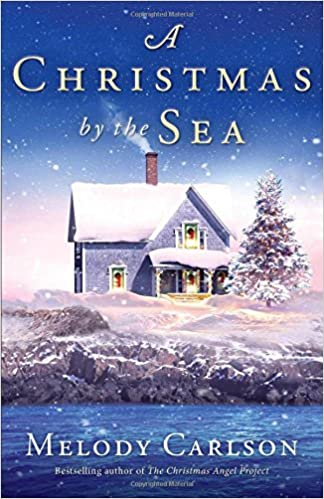
  • A Christmas by the Sea by Melody Carlson. A woman and her son travel to the beach house she has inherited. She plans to fix it up and sell it to replenish their resources after her husband’s long illness. But her son thrives in the new town and wants to stay.
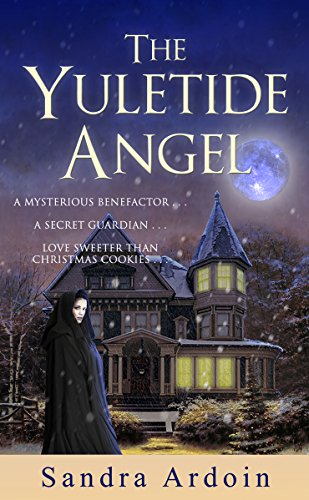
  • The Yuletide Angel by Sandra Ardoin. A Victorian-era novel in which an anonymous donor, dubbed the Yuletide Angel, gifts needy families with supplies in the middle of the night. Only one person knows the benefactor’s identity is female, and he follows her unseen to insure her safety. But soon someone else stalks her in the darkness.
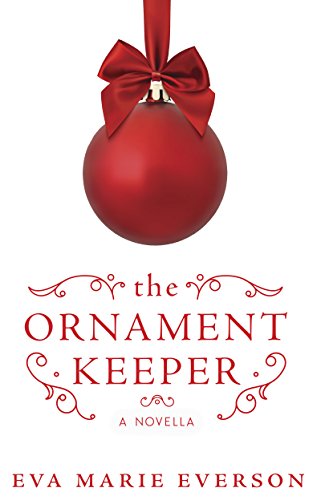
  • The Ornament Keeper by Eva Marie Everson. A woman unpacks the special ornaments her husband has given her each of their twenty years together. But now they have separated due to festering anger and unforgiveness. Can they find their way back to each other before it’s too late?
  • Letters from Father Christmas by J. R. R. Tolkien. Tolkien wrote letters to his children as Father Christmas for several years, complete with disasters set off by the kind but bumbling North Polar Bear. Delightful.

Letters from Father Christmas and Last Christmas in Paris weren’t on my radar when I started the challenge, but I am so glad I found them. Otherwise, I did read all I set out to read for the challenge this year.

I also listened to a Christmas story laid out as a podcast series by Audible, The Cinnamon Bear: A Holiday Adventure. It was styled like a modern version of old radio serials. It was a little bizarre in places, kind of a conflation of Candy Land and Oz. But it had some clever writing here and there.

We watched a couple of Christmas movies, but not our usual White Christmas and It’s a Wonderful Life. We saw A Castle for Christmas, in which an author running from her problems visits a castle in Scotland where her father worked as a child. She learns the castle is for sale, but the curmudgeonly owner doesn’t really want to let go of it. It’s a pretty cute movie. One not-good part, but nothing explicit is shown. And we also watched Elf, which was a lot of fun.

And that wraps up for reading challenges for this year! I’ll hammer out my reading plans for next year next week. I’ll probably participate in each of these again. They all enhance my reading and broaden my horizons.
Three Christmas Reads

I thought I’d group together short reviews of three books I enjoyed this December.

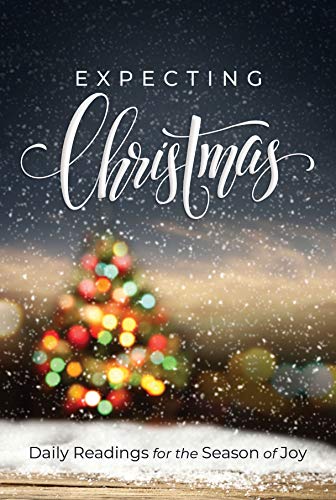
Expecting Christmas is a 40-day devotional book by multiple authors. I didn’t know any of the author names except one (Jennifer Dukes Lee). It’s put out by New Hope Publishers.

The selections are short, which is appreciated in a month like December. Each began with a verse or two of Scripture, a page and a half to two pages (at least in the Kindle version) of text, then three questions for refection.

The readings cover a variety of Christmas topics, though several deal with light.

A couple of samples: Day 15 talks about how horses in past years were seen as “labor animals, forms of transportation, and even weapons of war” (p. 44). After describing war horses, the writer points out Zechariah 9:9-10: Jesus did not come as an overthrowing conqueror, at least as the kind of conqueror society expected. His second coming will be more like that. But this time, He came humbly on a donkey. The author concludes, “Take time now to thank the Lord for being both just and humble, for bringing salvation instead of condemnation, for riding peacefully on a colt rather than on a warhorse. Ask Him to help you trust Him, especially when you don’t understand His ways. When you find yourself confused by His methods, remember the salvation He brought and the joys of that great gift” (p. 46).

In mediating on Jesus being given “the tongue of the learned” (Isaiah 40:4-5), another writer says, “Jesus didn’t use His deep knowledge and gift for oratory to make a name for Himself or climb social ladders. Rather, as seen in the Gospel accounts of His ministry, Jesus used His words to unburden people, free minds from the lies they had learned from false religions, and draw weary hearts closer to the Living God” (p. 54).

Another points out that people responded differently in praise and worship of the Savior, and that’s okay. “Mary’s response was one of quiet introspection as she treasured the good news of the gospel in her heart. The shepherds, on the other hand, left young Jesus, glorifying God and praising Him with outward enthusiasm and passion. People celebrate the gospel in different ways” (p. 77).

I only wish this book was 25 or 31 days so it would fit within the month of December. I didn’t get started 40 days ahead, so I have a bit yet to finish up. But I wanted to mention it before the month was over. Overall, I enjoyed it.

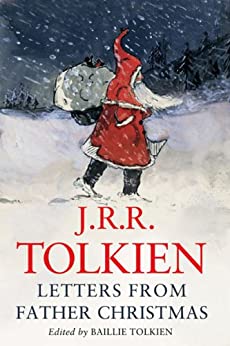
The second book I mentioned in my top twelve post yesterday. I had never heard of Letters From Father Christmas by J. R. R. Tolkien. I discovered it while looking for a short Christmas audiobook to finish out the year. This fit the bill nicely.

Tolkien sent letters and drawings as if from Father Christmas to his children from 1920 to 1943. He wrote with a shaky script because he was so old, he said (probably also to disguise his handwriting). The letters would comment on happenings in the children’s lives as well as at the North Pole. The North Polar Bear was Father Christmas’s helper and companion, a cheerful but bumbling fellow who unwittingly caused a lot of accidents. Polar Bear adds his own commentaries with a thick script because of his paws. Later an elf named Ilbereth acts as Father Christmas’s secretary. The last few letters mention “this horrible war” (WWII) and the people displaced, the shortage of supplies even at the North Pole, etc.

I got the audiobook superbly narrated by Derek Jacobi as Father Christmas and a couple of others for the infrequent voices of the bear and elf. But when I realized the book had photos of the letters and drawings, I had to get the Kindle version, too.

I thought in passing of Tolkien’s penchant for languages but figured that wouldn’t have a place in this book. But he did come up with a made-up language called Arktic that is spoken at the North Pole, and Polar Bear shares a few lines of it.

He also included some battles with goblins, who at times liked to raid Father Christmas’s supplies.

These letters are wonderfully imaginative. I especially loved the banter between Father Christmas, Polar Bear, and Ilbereth.

My last Christmas book this year is The Ornament Keeper, a contemporary fiction novella by Eva Marie Everson.

It’s Felicia Morgan’s custom to begin decorating the Christmas tree with the special, customized ornaments her husband has given her, one each year except for the last year. Each represented something special about their year: their first Christmas together, their children, her job advancement, etc.

This year, though, Felicia is dragging her feet. She and Jackson have separated after twenty years of marriage. Her daughter convinces Felicia to put up decorations as usual, but the memories are painful.

As Felicia hangs each ornament, we see a flashback to the circumstances surrounding each of them. Felicia’s marriage began with a mistake which has haunted the couple’s twenty years. Though God has redeemed and worked together for good their indiscretion, seeds of resentment and unforgiveness threaten to destroy what they have. Can they find their way back to each other before it’s too late?

I enjoyed the story and the truths brought out. I appreciated that the book wasn’t superficial or treacly.

Have you read any of these? Did you read any Christmas books this year?

My Top 12 Favorite Books Read in 2021

I posted all the books I read this year, but I also like to share my top ten or so favorites. (Forgive me for doubling posts today—I’m trying to fit a few things in before year’s end. Plus I don’t know how many people are interested in the list of every book read this year. 🙂 )

It’s hard to narrow the list down, but I came up with twelve favorites. A few were published this year, but most were just discovered this year. I had an even list of fiction and nonfiction this year. The titles link to my reviews.

Favorite Nonfiction Read in 2021:

  1. Ten Words to Live By: Delighting In and Doing What God Commands by Jen Wilkin. This is my overall top favorite this year. Jen deals with the Ten Commandments overall and individually, what they meant to the original audience, and how they apply today.

2. The Good Portion: Scripture: The Doctrine of Scripture for Every Woman by Keri Folmar. As I said in my review, most of us don’t get excited about doctrine. But right doctrine is our bedrock. Knowing what we believe and why comforts us and keeps us on course. This book was written “to shed light on the treasure and sweetness of the sacred Scriptures. The book attempts to summarize the doctrine of the Word of God in a way that keeps the relational nature of the Bible at the forefront. After all, the Bible is God speaking to us. It is God revealing Himself with words and calling us into relationship with Him.”

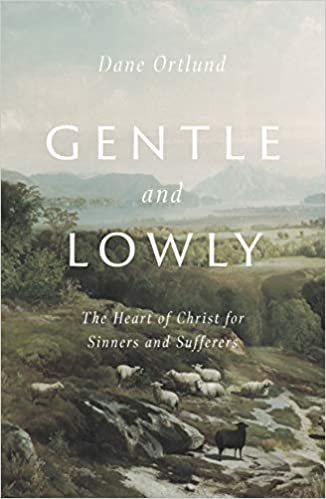
3. Gentle and Lowly: The Heart of Christ for Sinners and Sufferers by Dane Ortlund.

I wasn’t familiar with Dane Ortlund before reading this, and I was a little wary. Some who emphasize the gentleness and meekness of Christ de-emphasize His other qualities, such as righteousness and holiness and purity.

Yes, he is the fulfillment of the Old Testament hopes and longings (Matt. 5: 17). Yes, he is one whose holiness causes even his friends to fall down in fear, aware of their sinfulness (Luke 5: 8). Yes, he is a mighty teacher, one whose authority outstripped even that of the religious PhDs of the day (Mark 1: 22). To diminish any of these is to step outside of vital historic orthodoxy. But the dominant note left ringing in our ears after reading the Gospels, the most vivid and arresting element of the portrait, is the way the Holy Son of God moves toward, touches, heals, embraces, and forgives those who least deserve it yet truly desire it (p. 27).

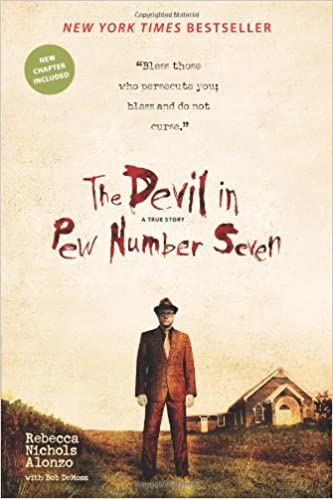
.4. The Devil in Pew Number Seven by Rebecca Nichols Alonzo. This is a true story that reads like a novel. A man in Rebecca’s father’s congregation disagreed with him and began terrorizing the pastor’s family in unbelievable ways, leading to tragedy. Though that makes the book sound depressing, Rebecca’s journey to forgiveness and the aftermath are quite inspiring.

true story of reigious persecution and forgiveness

5. The Secret War of Charles Fraser-Smith, the “Q” Gadget Wizard of World War II by Charles Fraser-Smith. A missionary with a penchant for thinking outside the box and rigging up what he needed was tapped to design or find items soldiers and spies needed during WWII. He needed not only to provide gadgets, tools, and maps, but he had to come up with ingenious ways to conceal them from enemy searches. This was a thoroughly fascinating book.

6. Write Better: A Lifelong Editor on Craft, Art, and Spirituality by Andrew T. Le Peau. I try to read at least one book on writing each year, and this was my choice this year. It catapulted to my top favorite writing book, one I need to reread regularly.

Favorite Fiction Books Read in 2021:

1. Catching the Wind by Melanie Dobson. In this time-slip novel, two children escape Nazi Germany but then get separated. The one has spent his life trying to find the other. He enlists the help of a reporter because of the heart revealed in her stories.

2. Memories of Glass by Melanie Dobson. Another WWII time-slip novel, but with different characters and settings. Four friends in Amsterdam face different fates as the war escalates. Some fight secretly for the resistance. One, a Jewess, is caught in an impossible situation, but rises above her fears to help as much as she can. In modern times, a woman who was reunited with family she didn’t know she had after her mother died looks into history the family tries to keep hidden. One thread of the storyline was based on true events.

3. Sons of Blackbird Mountain by Joanne Bischof. This post-Civil War story involves a widow who goes to help her husband’s cousins thinking they were children. But they are grown men. One is deaf. Two are attracted to her, causing strife, but she had not planned to remarry. The men strive to keep the farm going, protect escaped slaves, and battle the Klan. There were a lot of interesting layers to this book. I had not read this author before, but I look forward to reading more from her.

4. The Orchard House by Heidi Chiavaroli. Another time-slip novel, this one involves Louisa May Alcott and her home along with two modern women who work there and investigate a packet of letters they found there.

5. Last Christmas in Paris: A Novel of World War I by Hazel Gaynor and Heather Webb. This story is made up of letters, mainly between two childhood friends. Two brothers and a sister and her friend make plans to meet in Paris for Christmas, thinking the war will be done by then. Of course, that doesn’t happen because the war wears on for years. The book opens and closes with one of the men at the end of his life going to Paris for Christmas to read the last letter from his friend’s sister. This was so poignant and beautifully written.

6. Letters From Father Christmas by J. R. R. Tolkien (not reviewed yet). Tolkien wrote letters to his children as Father Christmas for several years. He wrote in a wobbly script because Father Christmas was so old (and probably to disguise his handwriting. Sometimes he would include drawings of happenings at the North Pole. North Polar Bear would add a few lines sometimes. The poor bear was the accidental cause of a lot of mischief. Of course, this being Tolkien, there are battles with goblins and a little dabbling in made-up languages. I loved the delightful imagination in these letters. Plus it was interesting learning differences between a British Father Christmas in that time and our modern American version (fourteen reindeer, two white ones for when he was in a special hurry). The audiobook narrated by Derek Jacobi is delightful, but the Kindle or paper version is a must-have for copies of the letters and pictures themselves.

It’s been fun reminiscing over my reading year. What were some of your favorite books read this year?

(I often link up with some of these bloggers.)

Happy Christmas!

Matthew 1:21, Christmas, Jesus our Savior

I wish all of you a wonderful Christmas resting in the greatest gift of all,
the Savior who provided for our salvation.

“She will bear a son, and you shall call his name Jesus,
for he will save his people from their sins.”

All this took place to fulfill what the Lord had spoken by the prophet:

“Behold, the virgin shall conceive and bear a son,
    and they shall call his name Immanuel”

(which means, God with us).

Matthew 1:21-23

The Yuletide Angel

In The Yuletide Angel by Sandra Ardoin, someone mysteriously leaves gifts at the homes of the needy during Christmas season nights in the 1890s. The town dubs the mysterious visitor the Yuletide Angel.

No one knows that the Yuletide Angel is shy, timid Violet Madison.

No one except her neighbor, Hugh Barnes. Hugh had seen Violet on her mission one night, and ever since he has followed her at a discreet distance to protect her.

When Violet learns her brother is planning to marry soon, she begins to worry. Her brother inherited the family home and plans to bring his bride there. They plan for Violet to live with them, but she would feel like she’s intruding on their lives. Her father did not leave her much because he assumed she would marry. But she is plain and not well-spoken, and no one has shown an interest. What could she do to make her own way that would be socially acceptable? She has some ideas of things she could sell in the Hugh the grocer’s shop.

Hugh has been fond of Violet for a long time. He speaks cheerfully to her and tries to gently draw her out. He enthusiastically endorses her plan for selling her baked goods in his store.

Just when it seems their relationship is unfolding well, Hugh’s ne’er-do-well brother, Kit, shows up. When Hugh sees Violet and Kit together, he feels betrayed.

And on top of everything else, an unseen stalker is following Violet on her nightly rounds and stealing her gifts.

This was an enjoyable story. I appreciate that as a Christian author, Sandra is not afraid to deal with Christian issues outright rather than just hinting at them. Yet her style is not heavy or preachy.

As a novella, this was a quick read. But the characters and story arc were well-developed. All in all, a good quick read.

Last Christmas in Paris

Last Christmas in Paris: A Novel of World War I by Hazel Gaynor and Heather Webb opens with the beginning of WWI. Two friends from childhood, Will Elliott and Thomas Harding, head out for France to fight, enthusiastically expecting the war to be over by Christmas. Then they plan to meet Will’s sister, Evie, and her friend, Alice, in Paris for Christmas to celebrate.

But of course the war drags on much longer than the few months til Christmas.

Evie writes Will and Thomas with all the support and hope she can send. Will is not much of a writer, so Evie gets most of her news about him from Tom.

Over time, enthusiasm and naiveté wanes and the realities of war weigh them all down. Tom gets more discouraged by what he has seen and has to do.

Tom also faces pressure from his father’s illness and business troubles. His father owns and operates the London Daily Times and always planned for Tom to follow in his footsteps. Tom’s interests fall more into a literary and scholarly vein, and he has no interest in the newspaper, which causes tension with his father. But when his father falls ill, Tom is consulted. He can’t do much from France, so he asks his cousin, John, to step in. There has been some longstanding feud between Tom’s and John’s families, but Tom never knew what it was all about, and he has to hope John will keep the paper’s best interests in mind.

Evie, meanwhile, chafes at home. She wants to do something to help, but her mother insists that for girls in her class, the only acceptable activity is aiding her mother with her charities and looking for a suitable husband. But Evie branches out from her protective gilded cage. Though she puts herself at risk, she also grows through her efforts.

The book opens with an aged and ill Thomas planning to go to Paris for Christmas in 1968 to read one last letter from Evie. Most of the book is made up of letters, mostly between Tom and Evie, but also with Will, Alice, their parents, and Tom’s contacts at his father’s business. At different places throughout the novel, the scene switches back to Tom and his current situation and reflections over his life.

This book was not in my Christmas reading plans, not even on my radar until Becky mentioned it. It sounded interesting, and I needed a new audiobook, so I got it. Epistolary novels are not my favorite style of writing, but I have enjoyed some.

I am so glad I listened to this book. I enjoy historical fiction, and not as many books are written about the first world war. I like how this one shared details of everyday life in England as well as on the front.

But mostly I enjoyed the growth of Evie and Tom’s characters and their relationship with each other. From lighthearted banter to lifting each other up from the deepest discouragement, from heartbreak to hope, from misunderstanding to shared poetry, they get to know one another better than they ever had before but almost miss each other in the end.

Though there is some mention of God and prayer, this is a secular book. It has maybe three bad words, but is remarkably clean.

The audiobook is excellently done, with different narrators for the different characters.

This is a beautiful book, and I am so glad I listened to it.

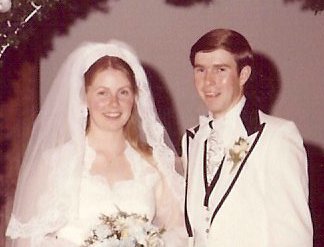
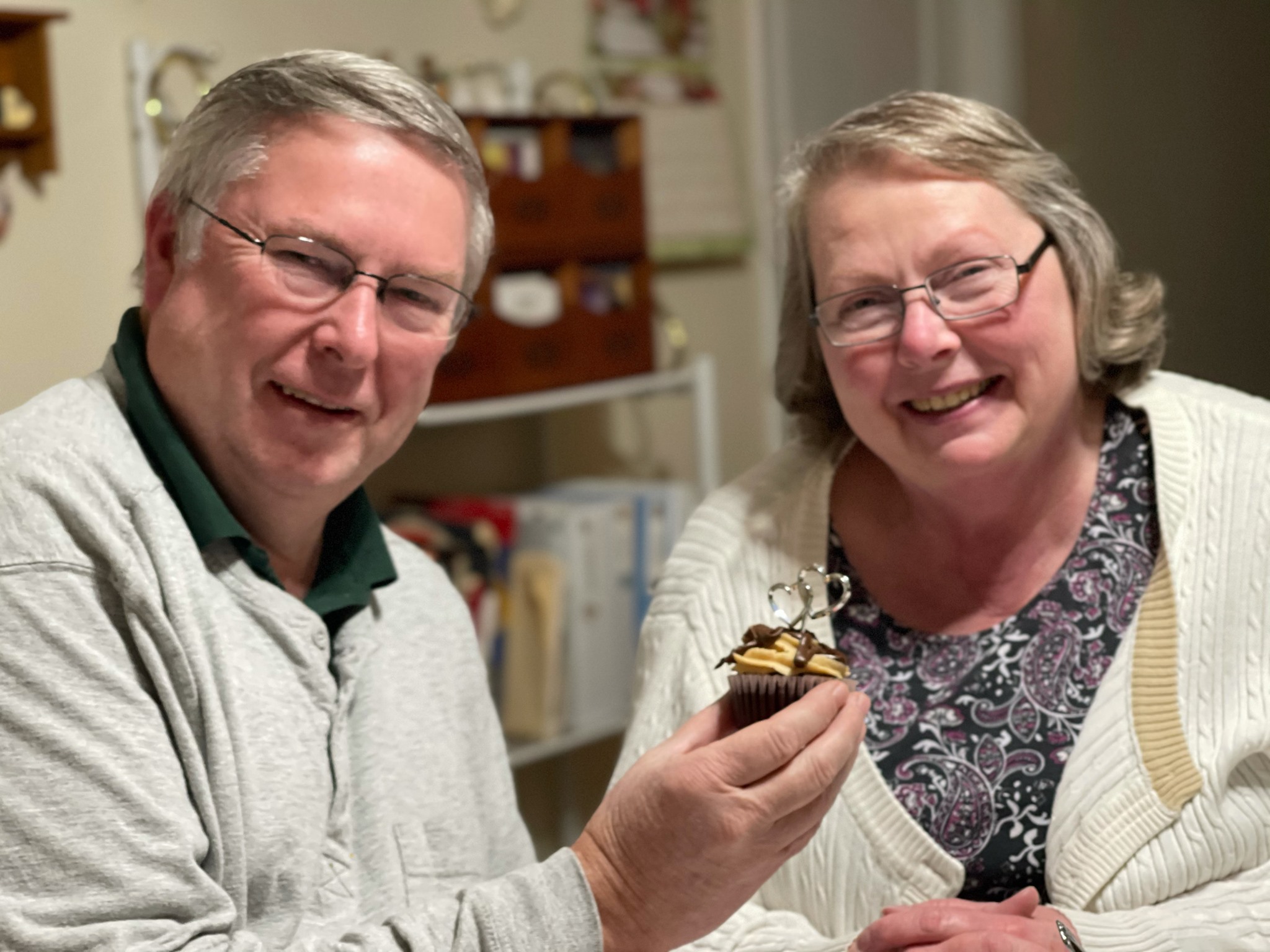
Happy 42nd Anniversary with My Love

Today, my husband and I have been married 42 years!

180921_1832848657987_428678_n

Happy anniversary, hon! Love you much.

Why Does God Make Us Wait?

When our children were little, my husband and I learned that it wasn’t always a good idea to tell them about an upcoming event until it was nearly time for it.

If the event was a happy one, we’d get dozens of questions a day. How many days? What will we do? Can’t we do it sooner?

If the event was not one they were looking forward to, we’d get questions as well. Do we have to? Can’t we put it off?

With that in mind, I wondered why God promised Abraham a son without telling him the promise would be so long coming to fruition. Or why He had David anointed king so long before David came to the throne. Or why He told Adam and Eve about a coming Redeemer without letting them know He wasn’t coming for a few millennia. Or why we have no idea when His promised return will occur.

Doesn’t God know how torturous it is for us to wait? Besides the big-picture waiting, we often have to wait for a mate, financial provision, test results at the doctor’s office, and so one. How do we navigate waiting on a large or small scale?

I think first of all, God wants to grow our faith by our waiting. He doesn’t delight in torturing us. “He knows our frame; he remembers that we are dust” (Psalm 103:14). But we need to trust in His timing. He sent the promised Messiah “in the fullness of time.” Hundreds of threads came together to form the perfect time and setting for Jesus to be born. We don’t always know the details behind a wait, but we can trust God has good reason for it. One reason for the wait for Jesus to return is found in 2 Peter 3:9: “The Lord is not slow to fulfill his promise as some count slowness, but is patient toward you, not wishing that any should perish, but that all should reach repentance.”

I think God also wants to grow our patience. As a parent, I can’t hide all coming events from my children until I am ready for them to know. Waiting for Christmas or a birthday or a special occasion can stretch a child’s limits, but they need to be stretched. They need to learn delayed gratification and patience in waiting. So do we.

I think God also wants to teach us to live in light of His promise. When we know someone is coming or something is going to happen, we plan for it and around it. For example, Abraham’s expectation of Isaac shaped his decisions. Abraham sometimes made wrong decisions, trying to manipulate circumstances to accomplish God’s will instead of waiting for God’s timing. Mary and Joseph’s lives were changed forever by the news that Mary would bear Jesus. 2 Peter 3:11 says, “Since all these things are thus to be dissolved, what sort of people ought you to be in lives of holiness and godliness.”

God also wants us to wait in readiness. When I was old enough to babysit my siblings, my parents would give us an expectation of when they’d return. If they planned to be home by 5, guess when we’d start getting the house picked up and in order? Around 4:45. If we knew exactly when Jesus was going to return, imagine how many people would live for self all their lives and “get right” just before He came. Jesus told His disciples to “be like men who are waiting for their master to come home from the wedding feast, so that they may open the door to him at once when he comes and knocks” (Luke 12:36). Jesus promised, “Blessed is that servant whom his master will find so doing when he comes” (verse 43). But the servant who lived self-indulgently and mistreated others would be severely punished (verses 45-48). Peter tells us. “The end of all things is at hand; therefore be self-controlled and sober-minded for the sake of your prayers” (1 Peter 4:7).

God also wants to give us hope. 1 Thessalonians 4:13-18 tells us to encourage (some translations say comfort) each other with the hope that He will someday come for us. That hope isn’t a flimsy wish, but a confident expectation. When we get discouraged with our world, it helps to know this isn’t all there is.

Waiting also creates anticipation. Half the fun of Christmas is getting ready for it. Graduation, wedding days, having children all come with years of excited anticipation before them. There is an almost delicious joy when something you’re waiting for finally comes to fruition, a joy that wouldn’t have been quite the same without the wait. And when the wait is for something less joyful, the time can be used in preparation as well. Before I had surgery a few years ago, I read a book about fear and anxiety in the days leading up to it. Though the time was difficult and challenging, it increased my faith and dependence on God.

God knows just what to tell us about upcoming events, good or bad. As one old song says:

If we could see, if we could know, we often say,
But God in love a veil doth throw
Across our way;
We cannot see what lies before,
And so we cling to Him the more,
He leads us till this life is o’er;
Trust and obey.

That first Christmas, “the hopes and fears of all the years are met in Thee tonight (“O Little Town of Bethlehem” by Phillips Brooks). Finally, the “fullness of time” came at just the right moment. Now we wait for His second return, and Peter tells us. “Therefore, beloved, since you are waiting for these, be diligent to be found by him without spot or blemish, and at peace. And count the patience of our Lord as salvation” (2 Peter 3:14-15a).

How does God want us to wait? Not like Abraham, manipulating circumstances. Not like those who forgot or denied His promise or did their own thing. But like Anna and Simeon, in hope, expectation, anticipation, relying on His promises, busy about His business.

The Lord is good to those who wait for him, to the soul who seeks him (Lamentations 3:25).

I wait for the Lord, my soul waits, and in his word I hope (Psalm 130:5).

(I often link up with some of these bloggers.)

Christmas By the Sea

In A Christmas by the Sea by Melody Carlson, Wendy Harper and her son, Jackson, are in the midst of hard times. Wendy’s husband passed away, and she is left with a mountain of medical bills.

Then she learns that she has inherited her grandparents’ cottage by the sea. She had visited them several summers as she grew up. Though she loves the cottage, she knows she has to sell it to get back on her feet financially. So she and Jackson drive down to spend a few days fixing the cottage up.

Jackson, who has been having a hard time since his father died, is renewed by the town and the cottage. He thinks they are going to stay. Wendy doesn’t want to disappoint him, so she puts off telling him that they have to sell the place.

When Wendy goes shopping for supplies, she meets a helpful man, Caleb, who she takes to be store employee. Later she discovers he is a local craftsman who owns his own store, while his mother owns the tourist shop Wendy remembers from her childhood.

Wendy faces challenges in her renovations, her need to tell Jackson her plans for the house, her deciding what to do next in life, and her growing relationship with Caleb.

I loved the nontraditional setting for a Christmas story. As I’ve mentioned before, I grew up on the coast of southern Texas, so my early Christmases didn’t contain snow and sledding and such.

My one complaint is that the story wrapped up awfully quickly and a bit unrealistically. But otherwise, I thought it was a nice book.

Friday’s Fave Five

It’s Friday, time to look back over the blessings of the week
with Susanne at Living to Tell the Story and other friends.

Another week has gone by, and we’re another week closer to Christmas. Here are some favorites from this busy week:

1. A 35% off coupon code. I needed more long-sleeved clothes, and visited the site of an online store where I have gotten things I liked before. They had a banner across the top of their web page advertising a 35%-off coupon, applicable to your entire purchase. That was a big help: their prices are a bit more than I usually like to pay, but their quality is much better as well. I know, I know—you get what you pay for. But it was nice to have this opportunity to pay a little less.

2. A 5%-off coupon. I rotate between three grocery stores—each has some things the others don’t. I don’t go to all three in one day, but which one I go to depends on what I need. The store where I usually buy our Christmas ham, and where I planned to get our weekly groceries plus supplies for our Christmas meal, sent though the mail a 5%-off coupon for an entire order.

3. A mailing envelope. I had to mail some packages this week, and I needed a 9×12 manila envelope for one of them. But I didn’t have any: I used the last one last week. There is a store near the post office, but it’s not one of my regular stops and I wasn’t sure whether it had mailing supplies. All the other stores were a distance away. I thought about saving that mailing until after I had gone to the store, but I really didn’t want to make another trip to the Post Office, especially during this season. I checked an old cabinet where I used to keep mailing supplies, and voila, there was one lone bent but unused 9×12 envelope. A small blessing, but it really helped simplify my schedule on a busy day/week.

4. Moderate temperatures. We’ve had some icy-cold days this month, but this week the daytime temperatures have been in the 60s.

5. Christmas cards and letters, though we’ve only received three so far this year. I understand some families have foregone Christmas cards in an effort to simplify the extra tasks this time of year. And maybe they are not as needed since so many are connected more online through the year. But I still enjoy them.

We won’t have FFF next week, with it being Christmas Eve. So I’ll wish you a wonderful, meaningful Christmas. I hope you’ll be able to spend it with those you love.