Review: Mildred Budge in Cloverdale

Mildred Budge in Cloverdale

Mildred Budge in Cloverdale by Daphne Simpkins is the first of several books about retired schoolteacher Mildred Budge. Mildred retired a little on the early side, but we’re not told why until a few chapters in.

Mildred is finding retired life anything but peaceful. Her best friend, Fran, has set them up in booth for the Emporium to sell off some of their used furniture. A young couple across the street wants her help with their son, who doesn’t talk. And Sam at church wants her to host a young couple coming for the missionary conference.

Mildred is somewhat set in her ways, but is pressured to take the young couple in. She finds herself actually enjoying them and joins in with some of their activities.

But trouble comes when suspicious “serial widow” Liz makes moves towards Fran’s boyfriend and when Mildred is betrayed by someone she tried to help.

I liked that Mildred loosened up a bit over the course of the book and had a heart to help people.

But I’m sorry to say I did not care for this book very much. The author’s writing and style of humor didn’t gel with me. Plus there were many statements about what “church ladies” do and think (as if they all think and do the same) that rubbed me the wrong way–although those statements may have been meant as humorous. Also, a lot of lines of dialogue sounded stilted because of several paragraphs of extraneous information between each speaker’s lines.

Some of the spiritual content was a little wonky, like this: “Salvation is an old-timey word that simply means you don’t have to live out this life alone. You are not created to live like that” (p. 55, Kindle version). This was from a preacher at a funeral service. Salvation isn’t that old-timey a word, and it’s much more than not living alone. Later, when a young woman says she might be interested in having Jesus in her life, Mildred “felt an urgency” to ask her just to say His name. But the conversation (and any explanation) never went further. In the excerpt from the next book at the end, one man says a pastoral candidate at the church “preached grace, which means he wasn’t willing to preach Jesus front and center”—which doesn’t make sense.

I found very few negative reviews on Amazon or Goodreads for this book, so lots of other people liked it. I got it when Paula mentioned enjoying it. At that time, it was free for both the Kindle and Audible versions, so I got both. However, the Audible version was narrated by a “Virtual Voice,” which was not very good. It sounded human rather than robotic and had a bit of conversational flow to it, but it did not do inflections well and stumbled over words like “Tsk.”

Have you read Mildred Budge books? Have you ever disliked a book other people loved?

What If You Have Good Reason to Fear?

What if you have good reason to fear?

I was sure a headhunter watched me while I slept.

As a child, I woke up one night to see a rounded shape beside my pillow on the top bunk. I was convinced a headhunter was standing by my bed, looking at me. I’m not sure why—headhunters weren’t known to roam southern Texas in the mid-1960s. Perhaps I had recently read a book or watched a program that included headhunters.

I decided to handle the situation by shutting my eyes tight. Perhaps if he thought I was asleep, he would go away. But if I tried to get past him, I was sure to be no match for him.

Somehow I did go to sleep. When I woke up the next morning in the full light of day, I saw the rounded shape by my head was my teddy bear.

I felt foolish, but relieved.

Since then, I’ve wrestled with many unreasonable fears.

What if:

  • No one chooses me for their team?
  • I get lost?
  • I stand up in front of my speech class and my mind goes blank?
  • My husband is late from work and might have had an accident?
  • Something might be wrong with my unborn child?
  • My husband loses his job?
  • One of us gets cancer?
  • He dies before I do?

. . . and more. I have an uncanny knack to imagine all the ways in which something could go wrong.

There’s some chance that any of these things could happen. But there’s no sense worrying about what might happen. If what we’re worried about doesn’t occur, we’ve wasted all that time and energy and angst. And if it does come to pass, we’ve doubled our pain by adding worry to it beforehand.

But what if what we fear is a very real possibility?

Almost thirty years ago, I woke up one morning with my left hand feeling funny. Thinking I had just slept on it wrong, I went about my morning routine. But that numbish feeling grew in area and intensity. Within three hours, my whole left arm, both legs, and my lower torso were numb. I couldn’t walk on my own.

The eventual diagnosis was transverse myelitis, an autoimmune response to a virus that attacks the spine. The body attacks the myelin sheath around the nerves of the spine as well as the virus.

I’ve told that story in more detail elsewhere. Thank God, I was able to walk again after a lot of physical therapy and prayer. Most of the feeling came back to my limbs, but my left hand still feels like I have a glove on, and my lower legs don’t have full feeling. My biggest after-effect has been trouble with balance.

Like many illnesses, healing from TM is not a straight, steady upward path. Sometimes the numbness and tingling were worse than others. In addition, sometimes I felt odd sensations in other parts of my body–a buzzing feeling, or involuntary movement, or a feeling like something was touching me when nothing was.

When symptoms escalated, especially that “slept on it wrong” feeling anywhere, I’d panic that I was having another TM attack. TM doesn’t often occur twice, but it can. If it does, the doctors begin to suspect multiple sclerosis rather than TM. The “multiple” in MS means these kinds of attacks could occur throughout life.

I wondered how people who had heart disease lived, knowing they could have another heart attack at any time. Or how people who had recovered from cancer coped, knowing their cancer could return. These issues felt like living with a medical sword of Damocles hanging over people’s heads.

I had to remind myself that, if God allowed another episode of TM, or if I was diagnosed with MS, He would be with me and help me through it just as He did the first time.

A passage I pondered with amazement in my early Christian life was Psalm 46:2-3: “Therefore we will not fear though the earth gives way, though the mountains be moved into the heart of the sea, though its waters roar and foam, though the mountains tremble at its swelling.”

I’ve been in a couple of very minor earthquakes, and even those mild tremors were quite disconcerting. I can hardly fathom something of this magnitude. Mountains falling into the sea? That sounds like good reason to be scared.

But this passage says, even in that scenario, “Therefore we will not fear. . . ” What’s the “therefore” that causes the writer not to fear?

Verse 1: “God is our refuge and strength, a very present help in trouble.”

You know what comes later in this psalm?

Verses 10-11: “‘Be still, and know that I am God.’ I will be exalted among the nations,
I will be exalted in the earth! The Lord of hosts is with us; the God of Jacob is our fortress.”

Whatever our fears, real or imagined, unlikely or plausible, God is with us. He is our refuge, strength, and help. In Isaiah 41:10, He promises: “Fear not, for I am with you; be not dismayed, for I am your God; I will strengthen you, I will help you, I will uphold you with my righteous right hand.”

In Running Scared: Fear, Worry, and the God of Rest, Edward T. Welch says:

The sheer number of times He speaks to your fears says that He cares much more than you know…The way He repeats Himself suggests that He understands how intractable fears and anxieties can be. He knows that a simple word will not banish our fears.

Search Scripture and find that our fears are not trivial to God. ‘Do not be afraid’ are not the words of a flesh-and-blood friend, a mere human like yourself. They are not the words of a fellow passenger on a sinking ship, who had no experience in shipwrecks, can’t swim, and has no plan. These words are more like those of a captain who says, ‘Don’t be afraid. I know what to do.’ When the right person speaks these words you might be comforted.

Another verse that comforted me during my TM recovery was Lamentations 3:32-33: “Though he cause grief, he will have compassion according to the abundance of his steadfast love; for he does not afflict from his heart or grieve the children of men.” He’s not capricious. Whatever He allows is for a purpose.

Trusting God’s presence and purpose in whatever He allows, trusting His ability to sustain and assist us through any situation, trusting His character and love for us, will all help us deal with any fear, real or imagined.

Psalm 46:1-2

(I often link up with some of these bloggers.)

Laudable Linkage

Laudable Linkage

I’m still behind on my blog reading, but found some great posts in what I did read:

8 Ways We Normalize the Abnormal by Paul Tripp, HT to Proclaim and Defend. “God has made it clear that the norm for his children should be love. It is the thing that the listening and watching world should know us for. We should be recognized not only for the purity of our theology but also for the consistency of our love. This love is the new commandment that Jesus left with his disciples in his final days with them: ‘that you love one another: just as I have loved you, you also are to love one another’ (John 13:34).” Because love should be our normal response, Tripp lists eight responses that should not be normal for us: those that are driven by emotional, anger, disrespect, and more.

Do You Really Know How to Live by the Golden Rule? “The Golden Rule as Jesus has phrased it is one more example of Jesus’s rejection of bare-minimum obedience. Jesus has called us to a deeper obedience whose focus is character and motive—not simply actions.”

Does Bach’s Music Prove the Existence of God? HT to Challies. “Music isn’t just something physical and material. There’s something beyond the notes on the page. In great works of art, we touch the edges of the transcendent because the best of our human creations are consciously or unconsciously reaching for the true, good, and beautiful.” Interesting to think about! I have been moved to thank and worship God by the beauty and artistry of secular music, whether the artist believes in Him or not.

The Awesome Privilege of Praying to God as a Father. “In Matthew 5–7 the Lord Jesus introduced the ‘platform’ of His kingdom. He didn’t speak of defense, or taxation, or healthcare. He spoke against hypocrisy (‘be not as the hypocrites’) and in favor of private piety (‘go into your closet’). He spoke against religious formalism (‘you have heard’) and in favor of heart righteousness (‘but I say unto you’). He spoke against materialism (‘you cannot serve God and money’) and in favor of spiritual investment (‘seek first the kingdom of God’). All the while, again and again and again (sixteen times in the three chapters), He pointed His hearers to God as their heavenly Father, especially in His instructions about prayer.”

Let’s Stop Hyper-Spiritualising Christian Counseling, HT to Challies. “When Christians really struggle—and all of us will, at different times—it seems that it’s automatically assumed the fundamental problem is a spiritual one. We conclude that something must be wrong in our relationship with God. Our Christian counselling tends to be over-spiritualised. Thus our solutions are merely spiritual, believing the struggles to be spiritual. But that’s hopelessly reductionistic. It’s also dangerously simplistic.”

Why Hardship May Show God’s Love. “I’ve noticed that God didn’t shelter His young heroes from hardship. Neither did He wrap His own Son in bubble wrap.” We try to make things easy on our kids, but God trains us through hardship.

How to Become a Better Reader, HT to Steve Laube. “Anyone can be a good reader, even in the Internet Age. Reading better means reading more slowly. The Net tells us to consume words in small, easy bites, as we dart from one webpage to another. But slow reading demands time and practice.”

I mentioned this yesterday, but for those who didn’t see it, I had a radio interview earlier this week with Kurt and Kate Mornings on Moody Radio Florida to discuss my blog post Life Doesn’t Always Turn Out Like We Thought It Would. My son recorded that interview for me and made it linkable. You can listen to it here if you’re interested.

Spurgeon: My faith rests on Christ

My hope lives not because I am not a sinner, but because I am a sinner for whom Christ died; my trust is not that I am holy, but that being unholy, He is my righteousness. My faith rests not upon what I am, or shall be, or feel, or know, but in what Christ is, in what He has done, and in what He is now doing for me.
From the September 25 reading from Morning and Evening by Charles Spurgeon

Friday’s Fave Five

Friday's fave five

This has been one hectic week. The last two, in fact, have been busier than usual. It’s good to stop and take a breath and remember God’s blessings scattered through the days. I’m sharing with Susanne and friends at Living to Tell the Story.

1. Getting through. I’m thankful for God’s faithfulness in getting me through the last couple of weeks and various answers to prayer along the way. I have a couple of things on the agenda next week, but then July looks like a more normal schedule.

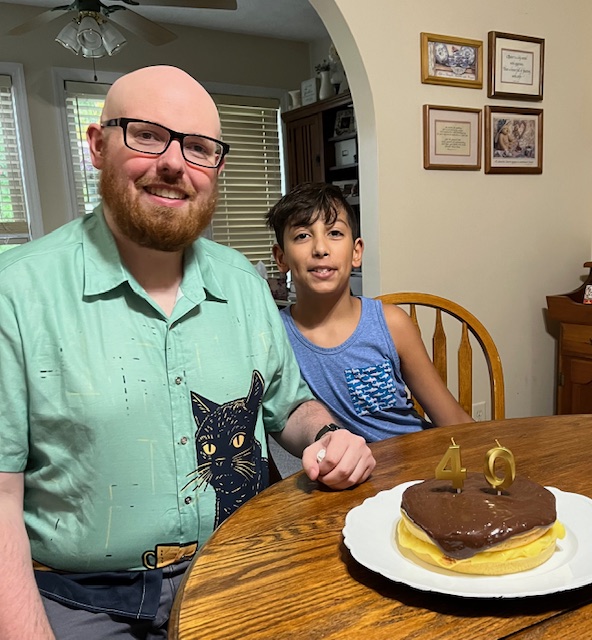
2. Father’s Day. We enjoyed celebrating Jim and Jason with stroganoff, and a Chantilly cake Mittu made with berries on top and between layers.

Chantilly cake

We got a few photos–unfortunately, Jesse had already left by the time we took them, and of course Jeremy was in RI.

Three generations
Us

3. A gastroenterology visit went well. The things they gave me to try last time seem to be helping.

4. Ruby Tuesday BOGO. When we get take-out, it’s usually fast food. Last weekend, we wanted something a little more upscale. I checked my “Sales” email folder and found a buy one entree/get one free offer from Ruby Tuesdays–and it was only good for last weekend. Good timing! We has Crispy Shrimp and Ribs along with a baked potato. Jim grabbed a bagged salad from the grocery store on his way to pick up the take-out.

5. Radio Interview. I had an interview Wednesday with Kurt and Kate Mornings on Moody Radio Florida. They wanted to discuss my post Life Doesn’t Always Turn Out Like We Thought It Would. We had a technical glitch at the beginning, with a delay in my responses getting to them. So they switched to using my phone. The sound is a little fuzzy, but at least it worked. My oldest son recorded it for me and made a link for the interview. You can listen to it here if you like. There are some commercials and a weather report in the middle. I cringed a little as I listened to it yesterday, noticing the “ums” and “you knows” and the dead air space as I pondered the answer to some of their questions. I don’t usually think “on my feet” very well—I guess that’s one reason I like to write: I can take time to process. But I prayed for the words God wanted me to say before and during the interview, so I trust it was helpful to listeners.

The eggs in our flower arrangement have hatched!

Hatched eggs

Have a great weekend!

Apologies and a Correction

I’m so sorry—When I posted yesterday about an upcoming radio interview with Kurt and Kate Mornings on Moody Radio Florida, I mistakenly put the wrong month. It’s this coming Wednesday, June 19, at about 8:10 a.m. or so ET (after their traffic and weather reports at 8).

I’ve corrected the original post, but wanted to let folks know who have already seen it.

My apologies for the confusion.

A Radio Interview This Week

Radio interview coming up

I received an invitation for a radio interview Wednesday, June 19, with Kurt and Kate Mornings on Moody Radio Florida. They want to discuss my post Life Doesn’t Always Turn Out Like We Thought It Would.

My segment will probably be around 8:15 a.m. ET, after their news and traffic report at 8.

The top of their program page has a “Listen Live” button. I’d love to have you tune in if you’re able and interested. I know some of you work then, and it’s early for those west of me.

Most of all, I’d appreciate your prayers that all would go well: that the technology would work with no glitches, that there won’t be any health issues, that God would give me what He wants me to say and help me not to blank out, and that He would be glorified and listeners would be ministered to.

Updated to add: my son recorded that interview for me and made it linkable. You can listen to it here if you’d like to.

Honoring Fathers

Honor your father and mother. Exodus 20:12

It’s not easy to be a father.

TV comedies portray most fathers as bumbling fools.

Society argues about what is masculine or feminine and whether masculinity is “toxic.”

Pressures arise from different fronts: how to provide for the family yet have time to spend with them; deal with disciplinary issues; keep up home and yard maintenance; answer questions, guide children, and point them to God.

No father is perfect, of course. Some fathers are very far from it. Only God is all a Father should be. But the best fathers seek His help to try to show in some measure what He is like. Some have fatherly hearts and mentor others when they have no children of their own.

We don’t thank fathers and father figures nearly enough. Today we honor fathers, though most of them would be embarrassed and not want a fuss made.

Our thanks, O God, for fathers who follow in Your way,
And who, with glad and trusting hearts, exalt You ev’ry day.

Our thanks, O God, for fathers who show, by word and deed,
Commitment to Your will and plan, and Your commandments heed.

Our thanks, O God, for fathers who meet You oft in prayer,
And who, for all life’s toil and care, find strength and wisdom there.

How blessed are the children who in their fathers see
The tender Father-love of God, and find their way to Thee.

Author unknown

(I often link up with some of these bloggers.)
Laudable Linkage

Laudable Linkage

Even though I’m a little behind on my blog-reading, I found some great articles in the time I did read:

God . . . the Father? “As a dad, I don’t want my presentation of fatherhood to hurt my kids’ ability to see God as their heavenly Father. But it’s perhaps more important that we help our children recognize the foundational truth here: that God, in all His power and glory, is best understood as a loving, intimate Father.”

Don’t Give Up Dad. “‘Don’t give up dad.’ I remember looking into the mirror and saying those words to myself one dark Father’s Day, years ago. And I was about to give up.”

Fighting for Faith When Doubts Abound, HT to Challies. “There’s a pervasive belief that subtly infiltrates my thought life. One that, deep down, still believes God would keep me from harm and rescue me from pain if he truly loved me. And if he’s truly in control, and a good, loving Father, why does he answer other’s prayers, but continue to seem silent to ours?”

God’s Heart for the Elderly and Infirm Reminds us of the Sanctity of Senior Life. “One of the many problems facing Western society is that we worship youth and make the elderly disposable. Euthanasia, which is legal in my home state of Oregon, is simply abortion of the elderly, disabled, and terminally ill. The same logic and arguments and appeals to ‘compassion’ and quality of life and financial concerns are used for both. God’s perspective on the elderly is vastly different.”

The Incredible Blessing of My Father’s Difficult Final Months, HT to Challies. “The agony of watching Dad suffer like that was unbearable. I begged God to give him a quick end. But Dad was otherwise robust and exhibited a fierce will to live. The doctor said that death did not look imminent. I absolutely did not want to hear that. How could someone live in such a state? But God had an important lesson in store for me. Dad lived for nine more months, and we would have missed an incredible blessing had he died when I wanted.”

Antihistamines for Your Soul. “You don’t HAVE to memorize or read this much to follow Jesus. It’s also true that you can be in the Word every day and still not be anything like Jesus. But the subtle lie underneath is that you can ever have ‘too much’ Scripture in your life. Friends, you CANNOT overdo it on God’s Word and fellowship with him.”

Observation: The First Step in Bible Study. “The first step in studying God’s Word is to carefully observe what the passage is saying. In the observation stage, we give our complete attention to the text to find out what’s there. We must investigate the passage in the same way that a detective investigates a crime scene. How do we do that? Get the “big picture” and then discover the little details. Ask questions… lots of them! Look for certain key clues to discover meaning. See how the little details relate to the big picture.”

Use Discretion (& a Bucket). We’re told to be discerning and compare what is taught with Scripture. But no writer or speaker will be completely without sin. God works through fallen people, and we miss a lot of goodness if all we can see are the flaws.

Paul’s Shocking Ideas About Marriage. “In the typically patriarchal culture of Paul’s day, what he says to wives may not sound that new except for the key point he emphasizes—the motivation and means for being a wife is centered on Christ. Everything Paul says to husbands, however, is very different from what they would have heard from their society. So Paul needs extra time to impress these differences on them.”

A Christian perspective on the new Twitter / X adult content policy changes, HT to Redeeming Productivity. “In May 2024, there was a policy change on adult content, making it acceptable to share adult content. . . . So, with these recent Twitter policy changes, what should we do as Christians?”

Happy Father’s Day to the dads tomorrow!

quote about fathers

“To be popular at home is a great achievement. The man who is loved by the house cat, by the dog, by the neighbor’s children, and by his own wife, is a great man, even if he has never had his name in Who’s Who.” Thomas Dreier

Friday’s Fave Five

Friday's Fave Five

I know it sounds cliche to talk about how fast time passes every week—but it does seem to keep going faster. All the more reason to pause and reflect once in a while. I do that on Fridays with Susanne and friends at Living to Tell the Story. Here are five favorites from the week:

1. An impromptu get-together. Sunday afternoon, Jason asked if we minded if they invited themselves over. They are always welcome, of course. We hadn’t seem them much the previous week because Timothy was in VBS and Mittu was helping with a class. We didn’t have an organized dinner—we rummaged around for leftovers or heat-and-eat things in the freezer. We enjoyed time with them, as we always do.

2. Feeling better. I had a routine cardiologist visit this week—nothing new to report, EKG went well. But that evening and through the next two days, my heart was more fluttery than usual. It wasn’t full-fledged afib. It’s not unusual to have little flutters or abnormal beats every now and then–they say that’s nothing to worry about. But I don’t normally have that many that close together. I was just on the verge of calling the cardiologist back when everything went back to normal.

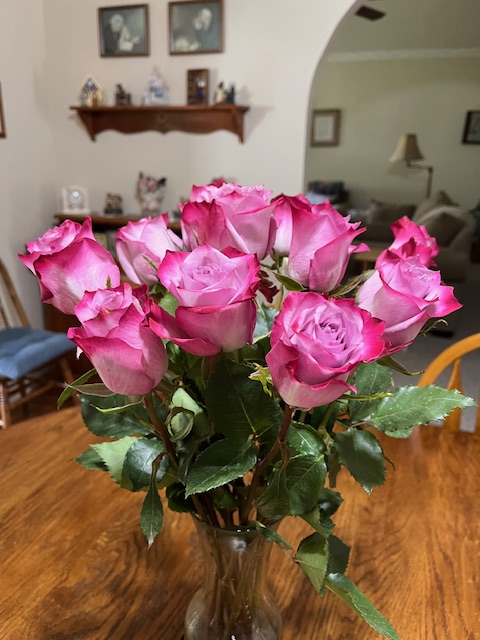
3. Dinner and flowers. One of the nights I wasn’t feeling well, Jason and Mittu brought dinner and flowers. Timothy either made or helped make cupcakes.

Roses

4. VBS, or Vacation Bible School. Some of the FFF friends are from other countries, and I don’t know if they have VBS everywhere. Here, many churches host a week-long Vacation Bible School for kids to have fun, get together, and most importantly learn about God. We weren’t involved this year except to pray and donate supplies. Sunday morning, the kids sang a song they learned and the director told about some things that happened that week. The decorations were amazing. I’m so thankful for the people who pour themselves into that ministry and for the opportunity to share truth with kids. I pray that the seeds planted will be watered and come to fruition. I saw one sweet photo on FaceBook with a little girl who fell asleep holding the Bible she had received that week. This was Timothy’s first time to attend, and he enjoyed it.

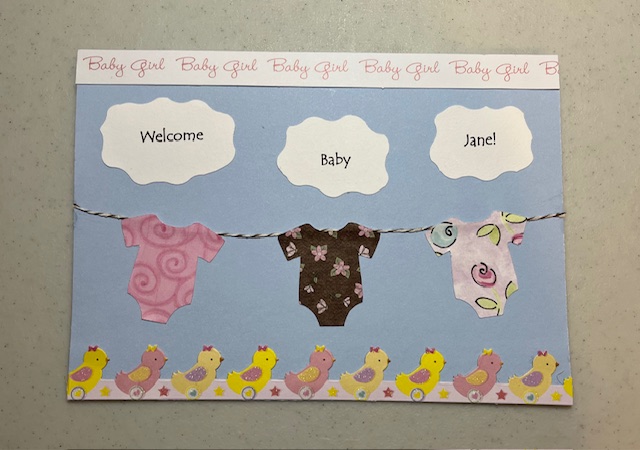
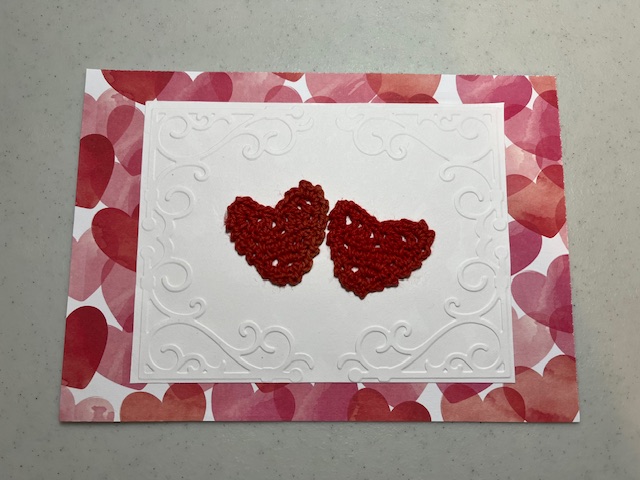
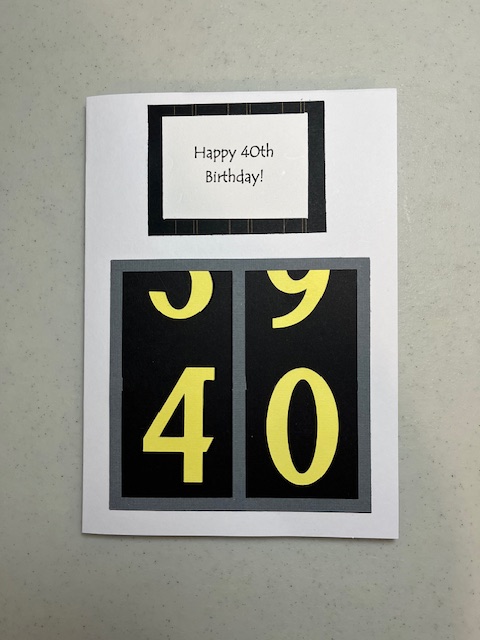
5. Machine recovery. I was using the Cricut machine to make a card this week that was rather involved. I usually go for simple designs, but I liked this one so much, I decided to go for it. It had multiple parts to be cut out. On the next to last one, the lights that indicate when to load the machine and when to start cutting stopped working and the machine stopped responding. So frustrating! The power light was still on, so it hadn’t died completely. I tried turning it off and back on and various other things, then looked up online what to do. Nothing was working, and I stated filling out a customer service form on their site. I tried one more thing–and that worked, for which I was extremely thankful. I had to do it for each step, but I was able to complete my project. I’m hoping it just got a little confused with the complicated project and this isn’t a regular thing.

Bonus: a new old song. I was looking for something else on YouTube when one of their suggested videos caught my eye, a song titled “Dear Refuge of My Weary Soul.” I saw it was written by Anne Steele, a hymnwriter from the 18th century known as “the Baptist equivalent of Isaac Watts.” I listened, and have listened many times since then. The words are here.

Also, the nest in the flower arrangement I mentioned last week has two more eggs in it. They came two at a time, which I was surprised at. But the birds are so small, it makes sense that she couldn’t lay all those at once. We caught a glimpse of the mama bird–she’s reddish but not a cardinal. Since this is right by the front door, she startles and flies away every time we open it. So we’re trying to use other doors as much as possible.

Nest with eggs in a flower arrangement

That’s our week. How was yours?

Review: Everything Sad Is Untrue

Everything Sad Is Untrue (A True Story) by Daniel Nayeri is, on one level, a story about a boy who came to America as a refugee from Iran. Besides encountering a different language, different ways of doing things, even different kinds of toilets, Daniel has to deal with losses.

First he lost his name, Khosrou, because no one could pronounce it. He lost the presence of his father, who stayed behind in Iran. He lost his language and culture. He lost his position in society: his mother had been a doctor in Iran but worked cutting cardboard in a company that made business cards in the US. And he lost his connection with his extended family, his memories of them in fragments. “A patchwork memory is the shame of a refugee” is something he says often.

That was when I realized I had to write down the memories and myths and the legends—and even the phrases and jokes. Or I’d lose everything. Maybe even the recipes (p. 235, Kindle version).

Another layer of the story is the sad human tendency not only not to welcome anyone “different,” but to actively persecute them.

Yet another major facet is Daniel’s mother’s conversion to Christianity and the fatwa that was placed on her head, which led to her fleeing Iran with her two children. They ended up in a refugee camp in Italy for three years before finally making it to the US.

Sima, my mom, read about him and became a Christian too. Not just a regular one, who keeps it in their pocket. She fell in love. She wanted everybody to have what she had, to be free, to realize that in other religions you have rules and codes and obligations to follow to earn good things, but all you had to do with Jesus was believe he was the one who died for you (p. 195).

How can you explain why you believe anything? So I just say what my mom says when people ask her. She looks them in the eye with the begging hope that they’ll hear her and she says, “Because it’s true.” Why else would she believe it? It’s true and it’s more valuable than seven million dollars in gold coins, and thousands of acres of Persian countryside, and ten years of education to get a medical degree, and all your family, and a home, and the best cream puffs of Jolfa, and even maybe your life. My mom wouldn’t have made the trade otherwise (p. 196).

If you believe it’s true, that there is a God and He wants you to believe in Him and He sent His Son to die for you—then it has to take over your life. It has to be worth more than everything else, because heaven’s waiting on the other side. That or Sima is insane (pp. 196-197).

Daniel tells his story from his viewpoint as a twelve-year-old boy in the style of Scheherazade, the storyteller in One Thousand and One Nights. Sometimes he addresses the reader directly. Sometimes he addresses his teacher as if what he is writing is for an assignment.

If you listen, I’ll tell you a story. We can know and be known to each other, and then we’re not enemies anymore (p. 1).

The point of the Nights is that if you spend time with each other—if we really listen in the parlors of our minds and look at each other as we were meant to be seen—then we would fall in love. We would marvel at how beautifully we were made. We would never think to be villain kings, and we would never kill each other. Just the opposite. The stories aren’t the thing. The thing is the story of the story. The spending of the time. The falling in love. All the good stuff is between and around the things that happen (p. 299).

Being a Persian/Eastern tale, it isn’t told in a way we’re used to.

Mrs. Miller says I have “lost the plot,” and am now just making lists of things that happened to fill space. But I replied that she is beholden to a Western mode of storytelling that I do not accept and that the 1,001 Nights are basically Scheherazade stalling for time, so I don’t see the difference. She laughed when I said this (p. 299).

I had heard marvelous things about the book, but was confused when I started reading it. It jumps from a scene at school to a story about Daniel’s ancestors to a story about his mother or something that happened on their journey here. At first I thought this was because the narrator is a twelve-year-old boy. Then I realized it was a different style. I don’t often do this with fiction, but when I finished the book, I immediately started rereading it. I understood it much better the second time–I felt I had all the pieces, so I wasn’t confused. Plus, I just wasn’t ready to let go of the book yet.

I hadn’t paid much attention to the cover until another reviewer mentioned the tornado (which is in the book) is swirling around various things Nayeri mentions throughout his story. Plus, his style of storytelling is cyclical, like the tornado. That helped things click into place for me, plus it made me think the cover designer was a genius.

The title of the book comes from a scene in The Lord of the Rings when Samwise Gamgee “sees Gandalf come back and it’s like seeing his grandpa return from the land of death and memories.” “And Sam thinks maybe all the sad parts of the adventure will come untrue, now that this one has. And the beautiful part is that they do” (p. 232).

Though the story stops at a sad place, it seems a turning point towards hope.

Daniel makes his mother the heroine of story, the one who always had hope, who was unstoppable. “What you believe about the future will change how you live in the present” (p. 347).

The legend of my mom is that she can’t be stopped. Not when you hit her. Not when a whole country full of goons puts her in a cage. Not even if you make her poor and try to kill her slowly in the little-by-little poison of sadness. And the legend is true. I think because she’s fixed her eyes on something beyond the rivers of blood, to a beautiful place on the other side (p. 213).

Once I got into the book, I totally loved it. Well—almost totally. There were a lot of poop stories—maybe because the narrator is a twelve-year-old boy. But there were such poignant moments as well as many funny ones. I couldn’t help but admire and connect with Daniel’s mother. But my eyes were also opened to what refugees experience and to Persian culture.

Some of my other favorite quotes from the book:

I am ugly and I speak funny. I am poor. My clothes are used and my food smells bad. I pick my nose. I don’t know the jokes and stories you like, or the rules to the games. I don’t know what anybody wants from me. But like you, I was made carefully, by a God who loved what He saw. Like you, I want a friend (p. 2).

To lose something you never had can be just as painful—because it is the hope of having it that you lose (p. 51).

The lesson here is that people have scales in their heads and they measure other people for their value and ugly refugee boys are near the bottom and pretty blond girls are at the top. This is not a happy lesson. But you either get the truth, or you get good news—you don’t often get both (p. 80).

Does writing poetry make you brave? It is a good question to ask. I think making anything is a brave thing to do. Not like fighting brave, obviously. But a kind that looks at a horrible situation and doesn’t crumble. Making anything assumes there’s a world worth making it for . . . making something is a hopeful thing to do. And being hopeful in a world of pain is either brave or crazy (p. 122).

My mom comes home exhausted every night. I have never seen her not exhausted. And also, I have never seen her not working (p. 154).

Love is empty without justice. Justice is cruel without love (p. 217).

I found this video of the author and his mother making cream puffs, which I thought was really sweet. I had almost finished my second reading of the book when I saw this, and it was neat to actually see Daniel and his mother

I loved what Kathryn Butler said in her review of this book: “He weaves fragments of myth and personal history into his story, with threads intricately looping like the magnificent Persian rugs he describes (some of them studded with jewels, as can also be said of his prose).”

I’m sure this will be one of my favorite books of the year . . . and of all time.