Laudable Linkage

Here are some good reads found this week:

He Gives to His Beloved Sleep, HT to Challies. “It was two o’clock in the morning and my newborn was asleep in the bassinet next to me. Most of the time, a newborn sleeping is cause for celebration and slumber but on this particular night, fears about my son’s life plagued my mind.”

The Character of Revival. “Apparently, the essential ingredients of revival are not sincerity, passion, zeal, emotion, organization, expense, unity, sacrifice, effort. Apparently, you can have all that, and yet not have revival.”

When Healing Hurts. “In my life, I’ve had to trust God to heal many things. It’s been painful as He’s had to break me and allow me to hurt to remove sins of pride and addiction from my life. Do I trust him still? Absolutely. In fact, because He has healed me from mental, physical, and spiritual needs, I trust Him more.”

Another Great Consequence. Dan Olinger has been working his way through the consequences of God’s work in us, and this week details why we can have joy in trials.

Humble Words, HT to Challies. “Articles, blogs, and books give us great encouragement, but we cheat ourselves out of so much encouragement when we expect the same kind of counsel from every saint around us. Most often the answers we seek can’t be summed up in key takeaways anyway. Our lives are so much more complicated than that.”

Hospitality Is an Everyday Endeavor. “When we think of hospitality as an event, we lose a lot of the meaning behind its purpose. Hospitality is about showing kindness to others, whether we know them well or not, without grumbling or complaining. (1 Peter 4:9) It’s more than an event. Practicing hospitality is cultivating a spirit that is generous, welcoming, and warm, and its purpose is to show what the love of Jesus is like.”

Angry and Holy: How Your Anger Can Be Righteous. “When I started therapy, however, I was taught that anger isn’t an enemy to squash. As I, in turn, searched Scripture, the Holy Spirit guided me to see that he’s not anti-anger either. All anger isn’t sin. Rather, anger is a good emotion when rightly used. As a professional emotion-stuffer, this has been a hard lesson to learn and one that God, in his good patience, is teaching me over and over again as I parent my children and re-teach myself.”

Going to Church Is Hard but Worth It, HT to Challies. “Sundays never fail to be tough. The plan is always to have the house clean and organized on Saturday, to do family devotionals, to set out and iron clothes for the morning, to go to bed early, and have a big happy breakfast together Sunday morning. Things never go according to plan.”

When You Don’t Like Your Wife, Love Your Wife. “The thing about love is that it is more likely to grow cold when you fail to give it than when you fail to receive it. The one sure way to fall out of love with your wife is to stop loving her—to stop doing deeds of love and speaking words of love and otherwise displaying a heart of love. Love is like a muscle that atrophies with disuse and that strengthens with exercise.” These things are true for wives with their husbands as well.

Is Manifestation a Worthwhile Pursuit? (Short answer: No.) I’ve seen manifestation pop up in conversations here and there. Lauren explains what it is, what’s wrong with it, and a better way to think.

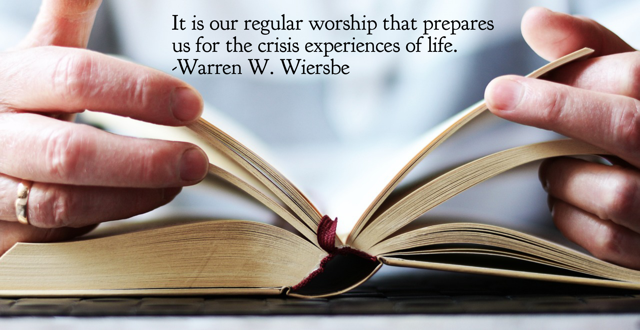
Worship prepares us for crises.

Friday’s Fave Five

We’re almost halfway through July already. I’m not sure how that happened so quickly, but it’s time once again for a break to remember the best parts of the week with Susanne and friends at Living to Tell the Story.

1. Job provision. I mentioned a couple of weeks ago that the particular service desk where my youngest son, Jesse, worked was closing. But the company felt they had places for everyone at other desks. (Same company, same location, but they do IT work for a variety of businesses.) He got confirmation just yesterday that he was hired for another desk, pending a security check–which should not be a problem since he cleared security before. There was no reason to think it wouldn’t all work out, but it’s a joy and relief to know it did and his immediate work future isn’t in question.

2. Recipe updates. A few years ago, I organized notebooks for recipes I had cut from newspapers and magazines and, more recently, printed out from the Internet. For some time now, I’ve wanted to go through those, pull out what I didn’t want any more, and add in some new ones. I had a strong desire earlier this week to accomplish something that did not involve the computer, so I spent a few evenings sorting, culling, adding, and rearranging the recipes in the notebooks. I still have a couple of small notebooks to do, but I went through the biggest ones. It felt quite good to do so! And as an added bonus, we had a few laughs over “What was I thinking when I cut this out?” recipes, like this one:

Mock Apple Pie
“Mock Pecan Pie”

Jim said, “Yep, that makes a mockery of pecan pie.” I like pinto beans, but not masquerading as pecan pie filling.

3. A successful new recipe. Oddly, after all that recipe shuffling, I was uninspired to cook this week. But I pulled out one recipe I’d wanted to try for a while, Asian Lettuce Wraps. I didn’t have some of the ingredients on hand, so I made a simplified version using ground turkey instead of chicken. It was really good. We had some romaine leaves on hand that Jim uses in place of tortillas for tacos and hamburger buns to try to reduce his carbs, so we used those. I think I might try Bibb lettuce next. This is a versatile recipe that can be adjusted for various substitutes, so I am sure we’ll be using it again.

4. Chung’s Mini Frozen Egg Rolls. These are very good and do surprisingly well in the microwave. They made a nice supplement to the Asian wraps for both dinner and lunch the next day.

5. Good toilet paper. 🙂 When TP was in short supply during the pandemic, we got some of the lowest bargain basement brands as “extras.” We hadn’t had to use them much. But this week I missed going to the store at my usual time, and we ran out of TP. I opened one of the individually wrapped store brands–and I was never so glad to finish a roll of toilet paper in my life. Think the worst public gas station TP. Yuck. This may sound silly, but since we use TP every day, and it affects our hygiene and comfort level, I’m happy our regular brand is readily available these days.

How are you this week?

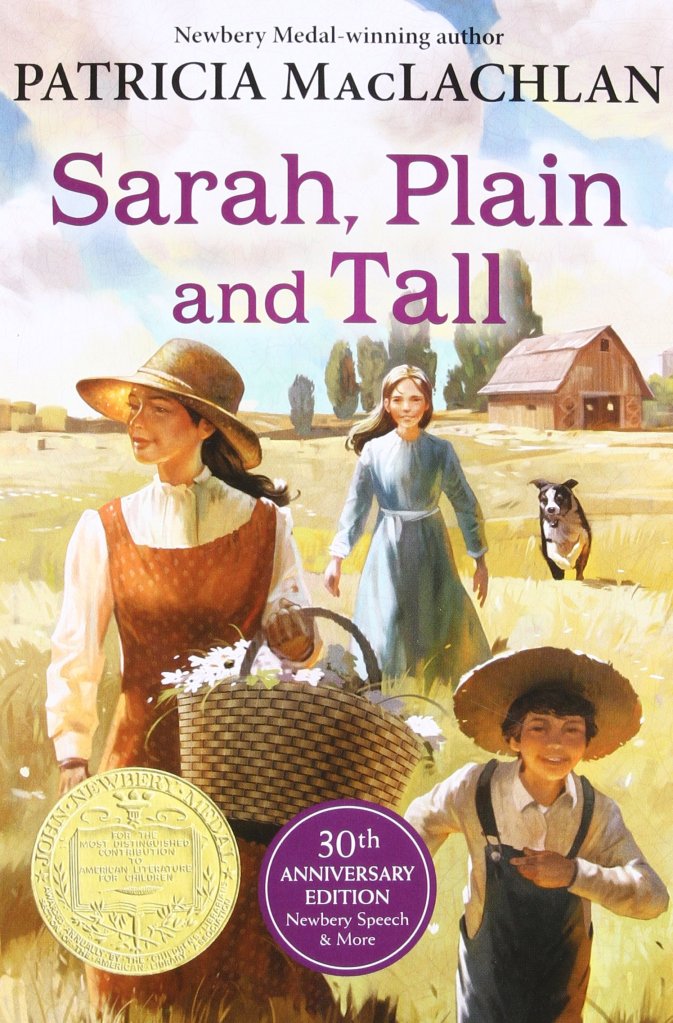
Sarah, Plain and Tall

I saw the film version of Sarah, Plain and Tall with Glenn Close several years ago and loved it. I hadn’t known then that it was based on a children’s book by Patricia MacLachlan. I just recently read the Kindle version.

The story opens with Anna, her younger brother Caleb, and their widowed father living on the prairie in the late 19th century. Written from Anna’s point of view, she notes that her parents used to sing all the time, but her Papa never does any more.

Papa tells the children he has placed an advertisement for a wife and received a reply from Sarah, a woman in Maine. She lives with her brother, but he is getting married. She’s concerned she will miss the sea, but she’s willing to come out by train to the prairie and meet the family.

Sarah exchanges letters with papa, Anna, and Caleb until she arrives. Sarah is different and does unusual things. They all like each other, but the children are afraid Sarah misses the sea too much to stay.

This was a lovely story written in a simple yet beautiful style.

A few of my favorite quotes:

Outside, the prairie reached out and touched the places where the sky came down.

My brother William is a fisherman, and he tells me that when he is in the middle of a fog-bound sea the water is a color for which there is no name.

There is no sea here. But the land rolls a little like the sea.

I shook my head, turning the white stone over and over in my hand. I wished everything was as perfect as the stone. I wished that Papa and Caleb and I were perfect for Sarah. I wished we had a sea of our own.

This book won a Newberry Medal, and the Kindle version I read included the author’s speech upon receiving it. She said the story was based on a real Sarah from Maine who had traveled to the prairie to become the wife and mother of a friend of the author’s mother. This speech contained a couple more favorite quotes:

Every writer should have a loving reader who has the courage to write both “I love this” and “Ugh” on the same page.

When Julius Lester praises children’s literature as the “literature that gives full attention to the ordinary,” he echoes my parents’ belief that it is the daily grace and dignity with which we survive that children most need and wish to know about in books.

My parents believed in the truths of literature, and it was my mother who urged me to “read a book and find out who you are,” for there are those of us who read or write to slip happily into the characters of those we’d like to be. It is, I believe, our way of getting to know the good and bad of us, rehearsing to be more humane, “revising our lives in our books,” as John Gardner wrote, “so that we won’t have to make the same mistakes again.”

I knew there was one sequel to the book, Skylark. But I hadn’t known there were three more. The Kindle version contains the first chapter of each of the books. Someday I hope to read the rest.

I wanted to rewatch the videos of both Sarah, Plain and Tall and Skylark, but they don’t appear to be available to stream from anywhere. I might see if the library has the DVDs.

Have you read or watched Sarah, Plain and Tall? What did you think?

Review: When the Day Comes

When the Day Comes by Gabrielle Meyer has an intriguing and unique premise for a novel.

Libby Conant is a time crosser. She lives in 1774 Williamsburg with her widowed mother and two sisters. She and her mother took over the printing of the Virginia Gazette after her father died, but they are barely making ends meet. Creditors threaten prison. Then the Conants are awarded the public printing contract from the House of Burgesses. They print Thomas Jefferson’s pamphlets as well as public notices. The Revolutionary War is about to break out, and tensions run high between rebels and loyalists.

Libby has loved Henry Montgomery since they were both children. She thinks he has feelings for her as well, but they move in different social circles. Plus he has secrets of his own. Whose side is he really on?

When Libby goes to sleep in Williamsburg, she wakes up as Anna Elisabeth Wells, only daughter to a prominent, wealthy family in 1914 New York. Her father’s fortune was self-made, which is not enough for her mother’s ambition for rank which values “old money.” Her mother has paraded Libby around for two seasons in New York, and now they are going to London to see what the titled male population is like there.

Libby does not want to marry, at least not before her twenty-first birthday. She enjoys working with the suffragette movement, which her mother disdains. Mother Wells is one of the most manipulative women ever and overrides Libby’s wishes and protests in her pursuit of the right suitor.

War is looming on this timeline as well, though no one knows it yet. Libby only knows because her mother in 1774 was a time crosser as well who lived in the twenty-first century.

When Libby goes to sleep in New York, she wakes up in Williamsburg again, with no loss of time in either place. Thus has it been since she was born and thus it will be until she turns twenty-one. Then she will have to choose which path she wants to live in permanently. Her body will die in the path she does not choose, but she will retain her memories of that time. If she tries to knowingly alter history in either path, she’ll forfeit her life in that path.

Libby is sure which path she will choose. She likes the conveniences of the Gilded Age in 1914, but she’s not interested in status and wealth. She’s needed in 1774 to help her family and the cause of freedom. And even if her love for Henry can never come to fruition, she wants to be where he is.

But unexpected circumstances may force her into a different choice.

This book came out last year, and I kept seeing it favorably mentioned among bloggers I follow. I still wasn’t quite sure I’d be interested, but I decided to give the audiobook a try. And . . . wow. This book was fascinating. The characters are well-drawn. It was fun seeing a few historical figures in the story. The plot kept a good pace, even with the intricacies of two timelines. I loved the eventual emphasis on the need to trust God rather than strive after our own way. I didn’t see the ending coming at all, but it was supremely satisfying.

As usual, the audiobook did not contain the author’s notes. I was curious about how she got and developed the idea for this book and found an interview with her about it here.

I enjoyed this book so much, I immediately started the sequel, In this Moment. Highly recommended.

Devotional Time in Different Seasons of Life

Good routines help us establish good habits.

Reading the Bible is not just a good habit to get into: the Bible is our food, our letter from God. But sometimes it takes implementing a good routine to make time to read Scripture.

But then we have another problem: when our routine is upset, our good habits fly away.

My best time to read the Bible and pray is in the morning, before my mind gets cluttered with a thousand other things. Having my devotions, or quiet time, first thing helps set my heart in the right position and fortifies me for the day ahead.

But if I oversleep, have to get up early for an appointment, travel, have company, or get sick, my routine is disrupted. It’s not impossible to come back to a quiet time later in the day, but it’s much harder for me.

I imagine the same is true for you as well, whether your best time is in the morning, or right before bed, or somewhere between.

And then some disruptions occur not just in one day, but in a whole season of life.

What are the difficulties peculiar to each phase of life?

Childhood and teen years. I didn’t grow up in a Bible-reading home and didn’t hear about the importance of reading the Bible until I was around sixteen. I was busy with studies, a part-time job, and responsibilities at home. But my biggest hurdle was just getting a regular routine established. I had to start over many times. Eventually, devotional time became a matter of “want to” rather than “supposed to,” though that struggle pops up again and again.

My second big problem was understanding what I read. I had not grown up in church, and I was a new Christian. It didn’t occur to me to ask someone for help when I came to difficult passages. I just shrugged my shoulders and kept going until I came to something that spoke to my heart. But because most of it was new to me, I got plenty to “feed” on and to grow. I wasn’t aware of study Bibles then which contained explanatory notes, but that would have helped.

Early adult years. College was one of my busiest times of life. I was always an eager student, but college life was harder and more time-consuming than I expected.

In a Christian college, it’s easy to just ride on the spiritual atmosphere. We had chapel most days, prayer groups and devotions in the dorms, Bible reading and prayer at the beginning of most classes, and Bible classes themselves. Those are all beneficial, but none of them is the same as meeting with the Lord alone in a personal way.

Even if one does not attend college, life as a new adult has challenges. Working a full-time job is an adjustment. All the responsibilities of adulthood, like cooking, cleaning, grocery-shopping, are now on your shoulders. You may scramble to get going in the morning, spend time with friends or take care of responsibilities after work, and then fall into bed at night.

Then when you get married, you have all of that plus the adjustments of getting used to living with another person. Though marriage has lovely moments, there are small irritations with someone else’s routines conflicting with yours.

However, this period of time was actually the easiest for me in regard to devotional routine. Life was certainly busy. But college life was very structured and scheduled. It was easy to schedule the time to spend with the Lord. And with dorm roommates or early marriage, some discussion and flexibility helped work around each other.

Parenthood. This stage of life was hardest for me to maintain a quiet time, especially after my second child was born. Schedules evaporated. What I called the zombie weeks of disrupted sleep and nighttime feeding made me groggy. During the baby’s nap time, I had to choose between cleaning, sleeping, or reading my Bible. Usually sleep won out.

Then during the second child’s nap times, I had a preschooler who needed attention.

Getting up early—if I even could—would often result in the kids waking up, too.

I listened to Christian radio more then, but like chapel services and Bible classes, that didn’t take the place of one-on-one time with the Lord.

Don’t get me wrong–I loved my children and enjoyed them. But having solitude and quiet time was hard these years. I’d get to the end of the day and pray tearfully, “Lord, I don’t know when I could have had time with you today.”

It finally occurred to me to ask Him at the beginning of the day to help me be alert to opportunities to read for a bit. I couldn’t have a big, sit-down meal spiritually. But I could snack throughout the day. I wrote more about this in Encouragement for Mothers of Young Children.

The Taxi Years. That’s what I called the era when it seemed like we spent more time in the car than anywhere else, driving the kids to school, piano lessons, sports practices, friend’s houses, church events. I had quiet time at home during the day, but I also had to run errands, clean, and grocery shop. And at this time I was also the most active volunteering for church and school.

When we homeschooled for four years, solitude during the day was at a premium. We always had a quiet time in the afternoons when everyone was expected to read quietly or do something in their rooms, if they were too old for naps. That was my devotional time if I hadn’t had it earlier.

Empty Nest and Senior years. You’d think this stage of life would be the greatest time for Bible reading and prayer. And in some ways it is. But new challenges arrive in the form of physical issues or sleep problems. When one spouse retires and is suddenly home all day, the other’s routine needs adjusting. Often one parent or the other requires extra help, if not full time caregiving. Adult children have needs we like to be able to help with.

Illness. At any stage of life, an unexpected accident or illness can disrupt life for weeks, months, or even years. Some may think that extra time resting would allow for even more prayer or Bible reading time. But you’ve probably experienced being fuzzy-headed when you have a bad cold for a few days. Imagine that feeling over the course of a long-term illness. Amy Carmichael wrote in Rose from Brier, after being an invalid for a few years:

I have not found myself that illness makes prayer easier, nor do any of our family who have been ill tell me that they have found it so. Prayerfulness does not seem to be a flower of the spirit that grows of itself. When we are well perhaps we rather take it for granted that it does, as though what is sometimes called a “sick-bed” offered natural soil for that precious flower. I do not think that it does. A bed can be a place of dullness of spirit as well as of body, and prayer is, after all, work—the most strenuous work in all the world. And yet it is our only way of joining the fighting force. . .  So what can we do about it? (p. 199).

One night, in severe pain, when she could “no more gather myself up to pray than I could turn in bed without . . .help,” she came to Psalm 109:21: “But do thou for me, O GOD the Lord.”

And soon the prayer passed into the most restful kind of intercession, the only kind the ill can attain unto, for they cannot pray in detail and they may know little or nothing about the needs of their dearest. But He knows all, down to the smallest wish of the heart. So we do not need to coin our gold in words, we could not if we tried: we are far too tired for that, and He who knows our frame does not ask us to do anything so arduous. Do Thou for her, do Thou for him, do Thou for them, O God the Lord (p. 200).

In any stage, the first necessity is to make time with the Lord a priority. Other duties and distractions will always pull us.

In my early married years, our senior pastor was an older man and our associate pastor was perhaps in his early thirties. They were discussing with someone else the struggles to keep a consistent quiet time. The younger man looked to the older pastor and said, “I’m sure this isn’t a problem for you.” Surely a dedicated man of God who had walked with Him for decades didn’t have to wrestle with time or interruptions or his own flesh to make time to spend with God.

The older man just laughed. Of course he still struggled. As long as we have an old nature pulling against our best intentions and an active enemy trying to trip us up, we’ll struggle.

But we remind ourselves that time in the Bible in prayer is not just one more thing to do. We greatly need to fellowship with our Father, to draw grace and help and strength from Him.

The second necessity is flexibility. I don’t like a rigid schedule, but I like a certain amount of structure and predictability to my days. When interruptions or distractions come, I need to look for other ways and times to meet with the Lord. Sometimes that means setting aside other reading or pleasurable activities. I admit I don’t always feel like switching gears if I sit down to read or watch something or scroll through my phone and I remember I haven’t met with the Lord that day. But when I set aside what I was doing to spend time with Him, I am always blessed.

The third thing we need to do: rely on God’s grace. God isn’t going to zap us with a bad day for punishment if we miss meeting with Him. The Bible doesn’t tell us to read a certain amount of time or verses every day. But it does tell us to meditate on God’s Word day and night. This is one area where previous memorization comes in handy.

Some days or seasons of life are busier or more exhausting than others. A. W. Tozer said, “We must not select a few favorite passages to the exclusion of others. Nothing less than a whole Bible can make a whole Christian.” We need times to dig deep and soak long in God’s truth. If we only read a verse a day or stayed in the Psalms over the course of a lifetime, we’d be pretty weak. But during busy or exhausting days or seasons of life, when we can truly only read a verse or two, God will feed us.

Have you had to change your devotional routine in different stages of life? What helped you?

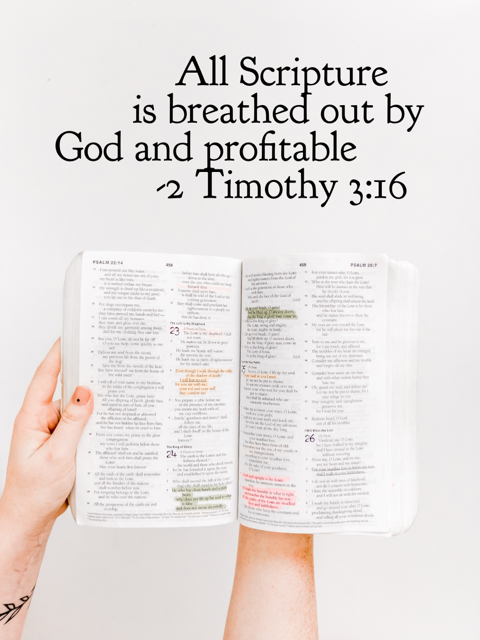
All Scripture is breathed out by God and profitable. @ Timothy 3:16

(I often link up with some of these bloggers.)

Laudable Linkage

Here are some of the thought-provoking blogs discovered this week:

If You Don’t Believe in Hell, HT to Challies. “Beliefs ripple. But we make a concerted effort to ignore that. Especially within the system of Christian faith, people can be tempted to pick and choose which doctrines they are “okay with” and which ones they leave behind. The problem lies in the ripples. Christians don’t always see how disbelief in one thing affects belief in another.”

Learning to Forgive Family, HT to Challies. First what forgiveness is and is not, and then why it is crucial.

The Glory of Godliness. “Frequently, I hear Christians talk about being more faithful, loving, or active in church. But I can’t remember the last time I heard someone say, ‘I want to be more godly.’ Why is there so little interest in godliness? Perhaps it’s because we don’t understand what it is.”

Don’t Fail to Capture the Train of Thought. “One of our greatest failures in Bible study is our tendency to treat the text atomistically. We look for inspirational words or sayings, while failing to grasp how the author used those words or sayings to persuade his audience of a message.”

I’ll Be More Faithful When I’m Older. “It’s folly to expect to wake up faithful twenty years from now if you’re not feeding your faithfulness today. If you desire to walk with Jesus more ten years from now, twenty years from now, or thirty years from now, you need to be feeding your faithfulness today.”

Slogging Blogging. This is an older post that Tim Challies recently linked back to, but it resonates with me. “I have little capacity to predict which articles will fall flat and which will make an impact on myself and others. I have trouble knowing in advance which are excellent and which are drab, which ones will somehow serve or challenge people and which will only irritate or confuse them. So all I can do is slog. All I can do is keep going and trust that the long effort will be rewarded with occasional success—the success of knowing that I’ve been able to bless or encourage or equip another person.”

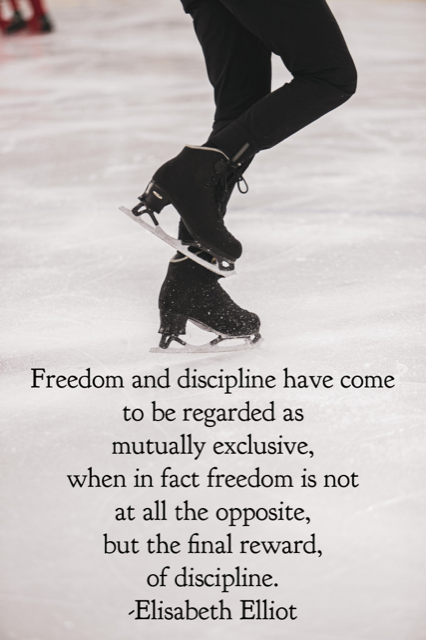
Elisabeth Elliot quote

Friday’s Fave Five

Here we are at another Friday, time to pause with Susanne and friends at Living to Tell the Story to stop and count our blessing.

1. Gifts from the garden. Our neighbors have a sizeable garden and bring us some of their excess throughout the summer. They just gave us some fresh zucchini last week.

2. Independence Day. We’re thankful for the freedoms we enjoy in this country that so many fought so hard for. We had grilled burgers and hot dogs for dinner along with several sides and a banana cream pie that Mittu made. Jim had bought some small fireworks and Jason had bought sparklers and “pop-its” that you throw on the ground to make a popping sound. From our lawn chairs in the front yard, we could see over the trees a bit of larger fireworks displays in other areas. It was a fun day!

3. Lunch out together Sunday. Jason, Mittu, and Timothy had joined us for church Sunday. Afterward, we proposed going to eat somewhere. After a lot of looking at apps to see what was nearby, we ended up at a Mexican food place near our house. Jim had not been terribly impressed with it the last time we ate there together, but he enjoyed the meal Sunday. So maybe we can go back some time. 🙂 As it stood, I would sometimes get takeout from there when Jim was away. I grew up in southern TX, where Mexican food was a staple!

On a side note, the restaurant had several TV screens on around the room. They were showing, of all things, a hot dog eating contest. It was pretty disgusting to watch.

4. Hours of reading. After coming home Sunday and taking a nap, I spent most of the evening reading. I fit most of my reading in here and there, so reading for hours felt so luxurious and restful.

5. Not getting thunderstorms. My weather app showed the possibility of thunderstorms for several days this week. I don’t think we got any, though we did get some rain here and there. Thunderstorms always include the possibility of losing power, so I am thankful we didn’t have to deal with any of that this week.

How was your week? Good, I hope.

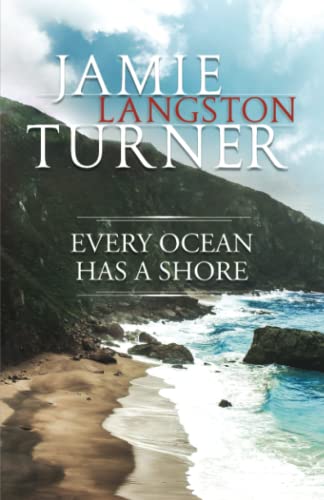
Every Ocean Has a Shore

Every Ocean Has a Shore, a novel by Jamie Langston Turner, opens with a few people in a small diner in Chicago. Suddenly a young man with a gun comes in, locks the door, and starts barking orders.

Tragedy is averted, but everyone is shaken. The three adults in the main dining room don’t know it yet, but they are bonded together even after they go their separate ways.

The only customers in the diner at the time were an older woman, Alice, and a young boy. Alice had been estranged from her daughter for years before her daughter died. Alice just found out that her daughter left behind a young son, Ian, who had been cared or by his father. But now the father is dying, and someone finds Alice’s contact information. Alice flew from South Carolina to Chicago to pick up five-year-old Ian, who doesn’t speak. They’ve just stopped at the diner for lunch when the incident occurred.

Gary is the owner of the diner. He was always a quiet man, but became quieter still after his wife died. He’s intelligent, but it takes him a while to think through things. His loneliness and the crime in the city cause him to consider moving, but he doesn’t know where or what he would do with himself. He has a sister in Vermont who needs help fixing up her home. Maybe he’ll start there.

Fawna is the waitress, a college dropout with a birthmark on her cheek in the shape of Borneo and a penchant for saying weird things. She rents a room from a crotchety old woman named Mrs. Welborn and helps her out. Her parents died, leaving her with money to live on. She’s drifted around for the past eight or nine years, but thinks she might like to settle down somewhere. The problem is, she doesn’t know where to go or what she wants to do.

The point of view switches between these three as they go on with their lives but keep in touch. We learn some of their background and issues. Fawna discovers C. S. Lewis and begins to wonder if, as Lewis suggests, someone has been orchestrating all the events of their lives.

Fans of Jamie Langston Turner will welcome this, her first new book in nine years. A few characters from her earlier books make an appearance, particularly Eldeen, the larger-than-life older woman from Jamie’s first book, Suncatchers. But this is a stand-alone novel that can be enjoyed even if you haven’t read the previous books.

Jamie’s books are character-driven, not plot-driven. This isn’t an edge-of-your-seat kind of story. In fact, the story seems pretty slow in places. But as we learn more about each character and see how everything is woven together, we find great depth. I’ve seen many people who don’t normally like Christian fiction say that they like Jamie’s books.

Do You Want to Be Free?

I did not start going to church regularly until my mid-teens. It seems like we sang a lot of songs then about being free from sin.

One our youth choir sang was called “Set Me Free.” That’s the only place I ever heard this particular song. I haven’t been able to remember enough of the words to look it up.

One we sang often in my early married years was “Free From the Law.”

Then there was, “Power in the Blood“:

Would you be free from the burden of sin?
There’s pow’r in the blood, pow’r in the blood;
Would you o’er evil a victory win?
There’s wonderful pow’r in the blood.

Would you be free from your passion and pride?
There’s pow’r in the blood, pow’r in the blood;
Come for a cleansing to Calvary’s tide–
There’s wonderful pow’r in the blood.

There is pow’r, pow’r, wonder-working pow’r
In the blood of the Lamb;
There is pow’r, pow’r, wonder-working pow’r
In the precious blood of the Lamb.
– Lewis E. Jones

And “I Will Sing the Wondrous Story“:

I was bruised, but Jesus healed me;
Faint was I from many a fall;
Sight was gone, and fears possessed me,
But He freed me from them all.
– Francis H. Rowley

There are a couple I haven’t heard in church, like “For Freedom, Christ Has Set Us Free” and “Glorious Freedom.”

It occurred to me that I don’t hear these kinds of songs, or the theme of freedom from sin in Christ, much any more.

Jesus once said “if the Son sets you free, you will be free indeed” (John 8:36). I wonder if the world doesn’t appreciate the impact of that statement because they don’t understand that they’re not free.

They think they are.

2 Peter warns of false prophets and teachers who use false words to entice people. They appeal to greed and lust to deceive. “They promise them freedom, but they themselves are slaves of corruption. For whatever overcomes a person, to that he is enslaved” (verse 19).

Their chains are so pleasurable, they don’t realize they are bound. They’re so comfortable and having such fun, they don’t want to be free.

But the pleasures of sin, Hebrews 11:25 says, are only for a short season.

Jesus also said that He is the light of the world. We need to pray that He will shine in people’s hearts and show them their need of Him and His love for them.

Jesus said He is the bread of life. He invites, “If anyone thirsts, let him come to me and drink” (John 7:37). We need to pray God would create in hearts hunger and thirst for Him greater than what the world has to offer.

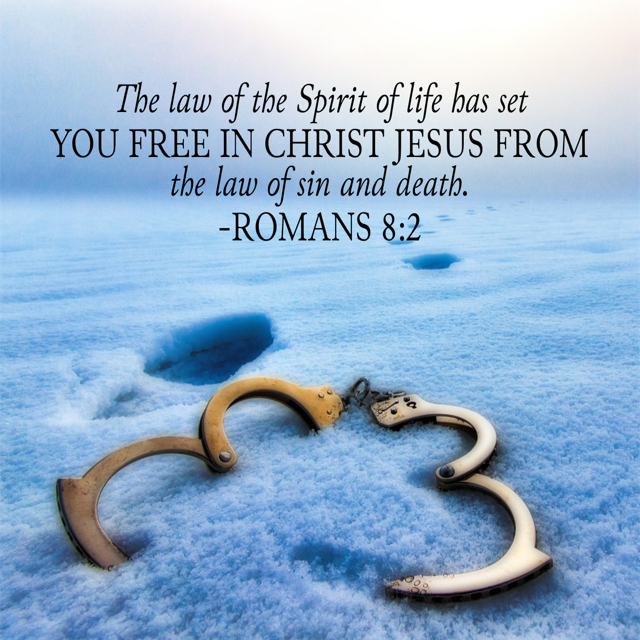
And we need to tell them about Him. May they find that “the law of the Spirit of life has set you free in Christ Jesus from the law of sin and death” (Romans 8:2).

The whole world was lost in the darkness of sin,
The Light of the world is Jesus!
Like sunshine at noonday, His glory shone in;
The Light of the world is Jesus!

No darkness have we who in Jesus abide;
The Light of the world is Jesus!
We walk in the light when we follow our Guide!
The Light of the world is Jesus!

Ye dwellers in darkness with sin-blinded eyes,
The Light of the world is Jesus!
Go, wash at His bidding, and light will arise;
The Light of the world is Jesus!

Come to the light, ’tis shining for thee;
Sweetly the light has dawned upon me;
Once I was blind, but now I can see:
The Light of the world is Jesus!
– P. P. Bliss

(I often link up with some of these bloggers.)

Laudable Linkage

Here are some of the good reads found this week:

The Myth of a Balanced Life. “Are we looking for some perfect equilibrium—the precisely right amount of sleep, exercise, and time with family, work, and church? And if we found that perfect formula, is that then supposed to become the norm for every day of the week? What about when you have kids? What about when you’re traveling? What about the weekend?” I appreciate the better perspective presented here.

Is There a Danger of Worshiping the Bible Instead of God? HT to Challies. “I agree that there is a danger of having our faith in the wrong object. And there have been some people who seemingly hold the Bible in higher esteem than they do Jesus. But seen properly, the Bible is not a competitor with God; on the contrary, it is our God-given means of knowing Him through His revealed truth.

A Pastor’s Journey with Anxiety, HT to Challies. A pastor shares his own experience, what he has learned, and shares how to walk alongside others who are struggling.

The Psalms: A Tool for Cultivating Godly Emotions, HT to Knowable Word. “The Psalms not only help us know what we can say in prayer (often one of our biggest struggles), they help us know what to feel. They . . . share all shades of human emotion from deepest despair to exuberant praise. We find saints processing the good and bad of life in a godly way. Reading and praying the Psalms takes us into their emotional world, how they wrestled with God and eventually found hope.”

When the Sermon Fizzles Instead of Sizzles. It may or may not be the pastor’s fault. It may be ours.

Becoming Writers Who Write the Truth Beautifully, HT to Challies. “To be published doesn’t mean you’re a good writer. There are many books out there; some contain the most beautifully written heresies while others contain solid truths slapped together with cringe-worthy analogies and dense, dry paragraphs. As believers, we want to be not just published writers but good writers. Someone who brings truth and beauty together in the written word.”

Beautiful Hand-Painted Bookmarks, HT to the Story Warren. This touched my heart. A 100-year-old housebound woman has found a unique way to share God’s love with others.