Friday’s Fave Five

As June winds down to a close, it’s time to pause and consider the blessings of the past week with Susanne and friends at Living to Tell the Story.

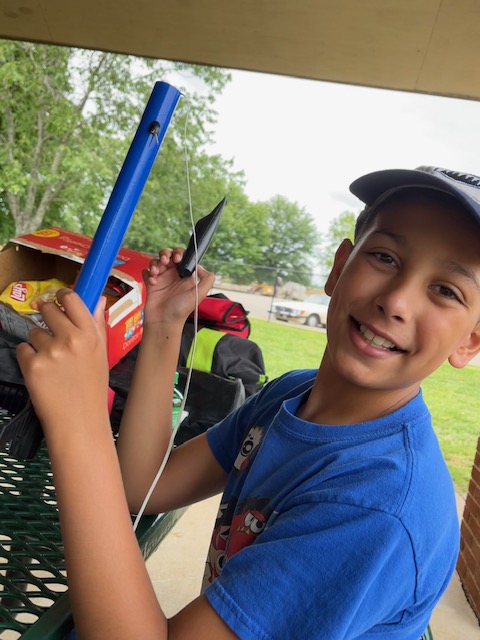
1. Model rocket adventures. When our boys were younger, they had fun putting together and launching model rockets. My husband found one of our old rockets from those days and supplemented it with some new items from Hobby Lobby. We invited Jason, Mittu, and Timothy to meet at a park to launch them, and Mittu made us a picnic lunch. Unfortunately, though, she wasn’t feeling well and ended up not coming.

We had a great time, and Timothy was impressed and excited. 🙂 I wish I could put a video here of his reaction.

Putting the rocket together
Countdown to liftoff!

2. Bad news/good news. My youngest son, Jesse, works for a company that does out-service tech support for various other companies. They’re divided up into different service desks for each company. He got word this week that the service desk he has worked in for years will be closing. The good news is, his company thinks they they have places on other service desks for all the employees.

3. A benign test result. Jim had a biopsy this week and got good results back. It was expected that the results would be benign, but it’s great to get that confirmation.

4. Good feedback. It was my turn to present a chapter for our critique group, and the feedback was so encouraging and helpful. If you’re thinking of writing for publication, I can’t recommend a critique group highly enough. It helps to know where you’re on the right track and where you need more clarity, or to have a perfect suggestion for wording or arrangement.

5. Fifteen minutes extra. Our critique group has added fifteen minutes extra to our meeting time for whoever can stay, just for some open discussion time. Sometimes someone will have a specific question about their own work or a general question about writing or publishing. Not only has this time been helpful, but it’s been fun to get to know the ladies more.

And that’s a wrap. How was your week?

June Reflections

I don’t know how a month can simultaneously feel long and yet seem to have sped by, but June was like that to me.

I count summer from June 1, though summer only officially began last week. Heat and humidity keep me mostly inside with the AC on and a cold drink at hand.

But we had a couple of outings involving a picnic lunch. We went with Jason, Mittu, and Timothy to a park at Douglas Dam and enjoyed some games as well as exploring the tailwater area with Timothy.

Then last week we went to a different park to eat lunch and shoot model rockets, something we did when our boys were small. More on that at this week’s Friday’s Fave Five.

We enjoyed Father’s Day and other family dinners and quiet evenings in-between.

Creating

Somehow Father’s Day caught me off guard—I thought I had another week. So I ended up using stickers I had on hand to make Jim’s and Jason’s cards.

The card I was trying to make for my step-father didn’t come out like I had hoped. His had to be sent early through the mail, so I ended up buying one for him.

Here is Jim’s with a camping theme:

This is Jason’s:

Jason used to make cards or notes divided into four, and that seemed like a good layout for this one. Fun fact: I accidentally had the card upside-down and didn’t realize it til the front was finished. I’ve done that once or twice before and rectified it by cutting off the whole front and gluing it to another card. I decided to leave it this time, figuring it would give the family a laugh. I wrote “OOPS!” on the inside front cover.

Watching

There’s not much on in the summer, so we’ve streamed a few more programs than usual.

We watched the four-part Shiny Happy People on Amazon Prime. The subtitle is “Duggar Family Secrets,” but it’s about more than the Duggars: it’s a kind of exposé of Bill Gothard and his teachings. I already knew much of the information from reading Jill Duggar Vuolo’s book, Becoming Free Indeed: My Story of Disentangling Faith from Fear (linked to my review).

Though there were serious problems with Gothard’s teachings and practices that needed to come to light, the series grouped all fundamentalists and almost all homeschoolers and conservative Christians under the same umbrella, which was not correct. This article from WORLD magazine, Shiny Happy People is Both True and False, delineates some of the faulty conflation.

One night when Jim was away, I watched Babette’s Feast, a1987 film based on a short story by Isak Dinesen. That led to reading the story and discussing both the story and film here.

We watched Jesus Revolution together with mixed emotions.

We watched The Battle of Britain, a WWII film made in 1969. We were expecting it to be good since it had an all-star cast, but we were disappointed.

Another pretty bad movie was God and Spies. It was a poorly written, mostly poorly acted Christian film, but it was based on a true story Operation Ivy Bells during the Cold War. The Navy, CIA, and NSA worked together to tap the USSR’s underwater cables. Garry Matheny, one of the divers, is the main character (and I think writer/producer). A few slides with photos and more information at the end made me wonder if this would have been better done as a documentary.

Finally, we saw a good one called Greater:The Brandon Burlsworth Story, also based on a true story. Brandon was an unlikely football player who was a walk-on for the Arkansas Razorbacks, but then excelled, became an All-American, and was signed to the Indianapolis Colts shorty before he died in a car accident. This was not presented as a Christian film, but Brandon’s faith was a big part of his life and was well-displayed here. We’re not big into sports films, but we enjoyed this.

Reading

Since last time I completed (linked to my reviews):

  • The Two Mrs. Abbots by D. E. Stevenson, audiobook. This is the third Barbara Buncle book, though Barbara is Mrs. Abbot now. The other Mrs. Abbott is a young woman who married Barbara’s husband’s nephew, who was like a son to them. This story takes place during WWII, with a number of subplots intertwining, including a runaway girl, an incognito author, and a spy.
  • The Four Graces by D. E. Stevenson, audiobook. The four Graces are adult daughters of the village vicar. This story continues with some of the characters from The Two Mrs. Abbotts, though Barbara is only in the first chapter. This was a sweet story as the young women face various trials.
  • A Place to Hang the Moon by Kate Albus, audiobook. I dearly loved this book. Three orphaned children are included by their family’s solicitor with child evacuees sent from London to the countryside during WWII. The hope was that their foster family might be willing to keep them permanently. Though this book was written a few years ago, it reads like a classic children’s novel–and references many classic children’s novels.
  • The Nature of Fragile Things by Susan Meissner, audiobook. I didn’t review it here, but did at GoodReads. Set during the 1906 San Francisco Earthquake, this was an intriguing story about an immigrant who answers an ad for essentially a mail-order bride. Everything goes well until she finds he is married to someone else as well as her. Though the writing was well-done, some objectionable elements turned me off.
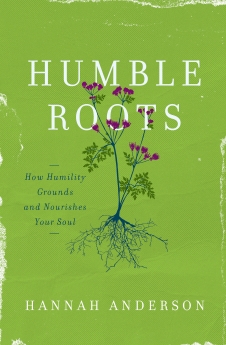
  • Humble Roots: How Humility Grounds and Nourishes Your Soul by Hannah Anderson. Excellent. I’m rereading it, after just finishing it, to try to soak in more of it.
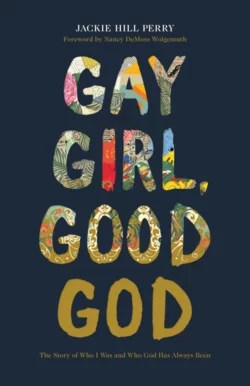
  • Gay Girl, Good God: The Story of Who I Was and Who God Has Always Been by Jackie Hill Perry, audiobook and Kindle. Jackie’s remarkable story of becoming a Christian out of a life of drug addiction and homosexuality.

I’m currently reading:

  • Be Worshipful (Psalms 1-89): Glorifying God for Who He Is by Warren W. Wiersbe
  • Blogging for God’s Glory in a Clickbait World by Benjamin Vrbicek and John Beeson
  • The Dwelling Place by Elizabeth Musser
  • When the Day Comes by Gabrielle Meyer
  • Every Ocean Has a Shore by Jamie Langston Turner

Blogging

Besides the weekly Friday Fave Fives, Saturday Laudable Linkage, and book reviews, I’ve posted these since last time:

  • Unseen Hurts. Parallels between wounds of the flesh and spirit.
  • Why Doesn’t God Make Everything Clear? It seems like that would prevent a lot of debating. But perhaps God wants our hearts and dependence and grace in ways we might not yield them otherwise.
  • Fathers and Children. We’re not doomed by a bad father or saved by a good father.
  • A Steady Soul. Just as a firm handrail helps me when I feel unsteady, God’s Word is a firm guide and aide to keep us steady spiritually.

Writing

I completed my first draft some time ago, so now I am revising chapters. I just completed my third one–actually combining the next two chapters— for our critique group. I received helpful and encouraging feedback.

As I told the group, whenever it is my turn to present, I am excited to get back into it—but then real life kicks in, and I don’t get as much done until my next turn.

However, I discovered something that I think will be helpful. I keep thinking I need a big block of time before I can even get started writing. But in this revising stage, I can only think through so much about arranging and rearranging and whether I need to add here or cut there before my brain can’t process any more. So, realizing I can make a dent in a shorter time period will hopefully help me do so more often. Plus, the more often I work on my draft, the less time I need to reorient myself from where I left off.

Looking ahead

I’m always glad to get past the summer solstice and know the days will start shortening from here on. I like having more light in the evenings this time of year . . . but maybe not quite as late. We’re looking forward to the Fourth of July with the family next week, Jason’s birthday later, and lots of everyday life throughout.

How was your June? Looking forward to anything in July?

Review: Gay Girl, Good God

I think I first came across Jackie Hill Perry on Twitter. I wasn’t familiar with her work, but somehow I saw things that she had tweeted. I liked what she said, so I followed her. Unfortunately, she’s not on Twitter any more.

I don’t know at what point I learned that Jackie had written a book, Gay Girl, Good God: The Story of Who I Was and Who God Has Always Been. I saw some good reviews and put it on my To Be Read list.

Jackie grew up with a single mother and a father who breezed in and out of her life. Her father once told her that he loved her, but it wouldn’t bother him if she never wanted to see him again. His absence and lack of love plus Jackie’s being sexually abused by a boy at a young age were major factors in Jackie’s gender confusion, which then led to her becoming a lesbian.

Jackie had attended church and knew that Christians believed homosexuality was wrong. She fully believed she was going to hell. But she didn’t care.

Yet she felt God’s pursuit of her. She felt Him calling her, “haunting” her.

The only thing that made sense was that someone had obviously been talking to God about me and it was the reason why God wouldn’t leave me alone. Obviously, whatever was being asked of Him, regarding me, was making my little sinful world spin. It was dizzying to live on now-a-days. Trying to stand up straight (or should I say, queer), made everything I loved, mainly myself and my girlfriend, blurry. Nothing was clear except God’s loud voice saying, “Come.” (p. 50, Kindle version).

Eventually, Jackie did come. Yet life was not then miraculously easy. She wasn’t just saved from homosexuality. She was saved from sin, any and all sin. And like every other new believer, she learned that discipleship consists of taking up one’s cross daily and following Jesus, just as He said it would.

In the last section of her book, Jackie deals with Biblical truths like our identity in Christ and some common misconceptions, especially of what she calls the “heterosexual gospel.” In witnessing to homosexuals, well-meaning Christians sometimes promise or emphasize things which the Bible does not.

A few quotes that stood out to me:

Why hadn’t they ever mentioned the place happiness had within righteousness, or how the taking up of the cross would be a practice of obtaining delight? Delight in all that God is? Even their Savior had this kind of joy in mind as He endured His cross. So why hadn’t they set their focus on the same? In their defense, they were not to blame for my unbelief. I just wonder if they would’ve told me about the beauty of God just as much, if not more, than they told me about the horridness of hell, if I would’ve burned my idols at a faster pace (p. 64).

Because a good God made the woman, then being a woman was a good thing (p. 87).

Our sexuality is not our soul, marriage is not heaven, and singleness is not hell (p. 139).

To tell you about what God has done for my soul is to invite you into my worship (p. 140).

Do you know why we have a hard time believing that a gay girl can become a completely different creature? Because, we have a hard time believing God. The Pharisees saw the man born blind, heard his testimony, heard about his past and how it was completely different from the present one, and refused to believe the miracle because of Who the miracle pointed to. They were skeptical of the miracle because they didn’t have a real faith in the God who’d done it. The miracle was less about the blind man and more about a good God. It showed Him off. His power. His ability to do what He wants. How He wants, when He wants, and to whomever He chooses (p. 107).

I especially loved this, in telling about the man who had been born blind whom Jesus healed by combing His spit with dirt, rubbing the mixture on the man’s eyes, then telling hm to go wash in the pool of Siloam: “Using his palms to brush the stubborn sections away from his eyelids, light startled him. As more mud fell, more sight came. Until at once, he could see” (p. 106).

I looked at Goodreads yesterday to see what some of the reviews said. Not surprisingly, I saw review after review with one star scathingly critical of Jackie’s story. I thought, how sad it is that her book is rated so low just because people disagree with her. But then I scrolled up and saw that only three percent of the reviews were one star. 83% were four and five stars. Yet of the ten reviews Goodreads showed on the first page, seven were one-star.

I would love to say to those who discount Jackie’s story (one review accused her and her husband of pretending to be heterosexual)—if, according to the world, life is all supposed to be about choice these days, why would anyone argue with Jackie’s choices? If everyone’s supposed to have their own truth (which I disagree with, and Jackie would, too), why would you discount the truth of her experience? Why is it that if someone has lived a heterosexual lifestyle but then thinks they might be gay, that determination is supposed to be the real, lifelong one and there’s no turning back? Why can one supposedly only turn one way, and not the other?

One can, of course. But Satan wants to blind and deceive people.

I enjoyed Jackie’s story of God’s grace. I have not heard or read her poetry, but she has a poet’s heart and her expressiveness shines through here. Her knowledge of Biblical truth is solid.

I’d recommend her books to anyone, gay or straight, Christian or not. I think it would be particularly eye-opening to Christians who can sometimes come across as glib in their witness or opinions.

I listened to the audiobook, read by Jackie. At the moment, it’s free to those with an Audible subscription. Then I bought the Kindle version so I could keep this book on hand.

A Steady Soul

One September morning almost twenty-eight years ago, my left hand started feeling a little funny, like I’d slept on it wrong. I shook and flexed it while I continued packing my husband’s lunch for the day.

After a while, I realized that numbish feeling was spreading up my arm.

Then it started in both feet, spreading upward.

Within three hours, my left arm, both legs, and my lower torso were numb. I couldn’t walk on my own. I developed a laundry list of other symptoms.

After multitudes of tests and blood draws over eight days in the hospital, I was diagnosed with transverse myelitis.

Transverse Myelitis occurs when a virus hits the spine, triggering an autoimmune response which causes the body to attack the myelin sheath around the nerves as well as the virus. Symptoms vary depending on where along the spine the attack occurred. If the lower spine is affected, one might experience numbness and tingling. An attack high on the spine, however, could result in losing the ability to breathe, requiring a ventilator.

My spine was affected in the thoracic region. With much prayer and months of physical therapy, I progressed from a wheelchair to a walker to a cane to wobbly steps on my own.

I still have numb areas and odd sensations. But my biggest problem is balance.

I can walk in a straight line on level ground without problems most days. But uneven ground, slopes, and stairs are a challenge.

Sometimes people will offer me an arm for support, which helps. But what helps the most is a handrail, something solid and unmovable.

Oddly, though, I have the most trouble with balance when standing still.

Proprioreception has to do with knowing where your body is in space. Some people might not know where their hands and feet are without looking at them. I don’t have that problem, but if I stand still for more than a few minutes I lose balance. Usually I’ll inch towards a chair or wall to touch as a reference point to reset my bearings.

I told you all of that to tell you this:

A few years ago when I read 2 Peter 2 in a new-to-me translation, the word “unsteady” jumped out at me because I well knew what being unsteady felt like.

Peter talks in this chapter about those with unsteady souls. Other translations say unstable, unestablished, unsettled. These souls are easily enticed by false teachers (verse 14).

How do false teachers entice these souls? 1 Peter speaks of the false prophets’ sensuality, lust, greed, passion, so they “entice by sensual passions” (verse 18). James 1:14 uses the same Greek word for “entice,” which carries the idea of baiting, alluring, deceiving, when it says, “But each person is tempted when he is lured and enticed by his own desire.” They “despise authority” (verse 10). “They promise them freedom, but they themselves are slaves of corruption” (verse 19). They “exploit you with false words” (verse 3). They’re blasphemous (verses 10-13).

Probably many of the people who fall away to false teachers are not saved in the first place, but weak or new believers are susceptible as well. A true Christian can’t lose his or her salvation, but a believer can get tangled in false doctrines to their own confusion as well as that of everyone in their sphere of influence. But even those of us who think we’re strong need to “take heed lest we fall.” (1 Corinthians 10:12).

How can we make sure we’re not unsteady or unstable spiritually?

By orienting ourselves with the solid, unchanging Word of God.

Rest on the Bible’s sure foundation. Earlier in his letter, Peter told his readers that God’s Word was more sure than even his experience watching Jesus’ transfiguration (2 Peter 1:16-19, KJV).

Know that Scripture comes from God. Peter assured that that “no prophecy of Scripture comes from someone’s own interpretation. For no prophecy was ever produced by the will of man, but men spoke from God as they were carried along by the Holy Spirit” (2 Peter 1:20-21).

Know God Through His Word. Peter said “His divine power has granted to us everything pertaining to life and godliness, through the true knowledge of Him who called us by His own glory and excellence,” which we learn about from “His precious and magnificent promises, so that by them you may become partakers of the divine nature, having escaped the corruption that is in the world on account of lust.” (1:3-4, NASB). Everything pertaining to life and godliness! The first time this verse impacted me, I was nearly bowled over. There may be many things we don’t comprehend about God, but He’s given us everything we need to live for Him through knowing Him through His Word.

Don’t twist the Scriptures as the unstable do. “There are some things in them that are hard to understand, which the ignorant and unstable twist to their own destruction, as they do the other Scriptures” (2 Peter 3:15-16). The unsteady twist (wrest in the KJV) the very thing which could stabilize them. We read it in context so we understand its meaning. We don’t wrangle it to make it say what we want it to say. We don’t adjust it to us: we adjust ourselves to it.

Be watchful. “Take care that you are not carried away with the error of lawless people and lose your own stability (2 Peter 3:17).

Keep growing “in the grace and knowledge of our Lord and Savior Jesus Christ” (3:18).

Listen to sound teaching. Contrast the characteristics Peter lists of false teachers in 2 Peter to what he says about godly shepherds in 1 Peter 5. Paul tells Timothy in 2 Timothy 4: “preach the word; be ready in season and out of season; reprove, rebuke, and exhort, with complete patience and teaching. For the time is coming when people will not endure sound teaching, but having itching ears they will accumulate for themselves teachers to suit their own passions, and will turn away from listening to the truth and wander off into myths.” We seek to feed our souls His truth rather than feeding our own desires.

Jesus said the one who hears his words and does them is like a man who built his house on a rock which was unshaken by winds and flood waters.

So we watch ourselves, that we’re not being led away of wrong desires. We read and listen to God’s Word as it’s written, in context, not trying to twist it. We listen to pastors and teachers who faithfully proclaim God’s Word. We we obey it. We get to know our Savior better and better and remind ourselves of His truth. and we keep growing spiritually. Doing all of these things might bring persecution, which Peter discusses often in both of his letters. But we can trust God to keep us and deliver us. Then we can say, “My steps have held to Your paths; my feet have not slipped” (Psalm 17:5).

Keep steady my steps according to your promise,
and let no iniquity get dominion over me (Psalm 119:133).

Revised from the archives.

(I often link up with some of these bloggers.)

Laudable Linkage

Here are some good reads found this week:

The Day I Told God No, HT to Challies. “I was free to say it, and free to live it, but I was not free to control the consequences of that one little word. There in my room I was sitting at a crossroads. I could continue with the “no”, or I could continue with God. I could not continue with both. If I wanted God in my life, I could only have him one way: as my King. He would not accept a position as my consultant.”

What If I Don’t Know When I Believed in Christ? HT to Challies. “I spiraled into a season of doubting my salvation in Christ. This severe doubt led me to sit in my pastor’s office where I heard an analogy from Spurgeon that continues to comfort me. And if you struggle with doubt and assurance, I trust this will aid you as it did me.”

How Do You Plan on Fighting Sin? HT to Challies. Each of us has besetting sins that we deal with constantly. This article has some good steps to consider and implement in fighting sin.

The Problem Is Your Worship, HT to Challies. “Your life may have you feeling stressed and burdened. You are surprised by feeling anxious over the smallest disruption in your schedule. A dark cloud of depression seems to consume your days. You try every problem-solving solution you know to shake the feelings of overwhelm and despair—better planning, networking, self-improvement classes, changing your diet and exercise, staying busy. The gripping fear that nothing is working has you running scared.”

Motherhood Isn’t Martyrdom, HT to Challies. “Many of our taglines overemphasize the pain of motherhood to the exclusion of the delight. We stress how being a mom is so hard, overwhelming, frustrating, and painful. If we’re not careful, we can begin to sound like we’re equating motherhood with martyrdom. But the Bible speaks of motherhood as a gift, a crown, and a joy.”

Your Short-Term Mission Trip Should Be About You (and That’s not a Bad Thing), HT to Challies. “I’m still a fan of short-term missions. This is not an anti-missions-trip article. Those are out there. This is not one of them. So why do I still encourage these trips? Because I believe God can use them to transform lives. Not necessarily the lives of the people you are serving. But your life? Yes!”

If a Vacation Is Worth Planning and Anticipating, How Much More Should We Anticipate Life in Heaven? Randy Alcorn: “There’s a great deal I don’t know, but one thing I do know is what people think about Heaven. And frankly, I’m alarmed.”

Sin has been pardoned at such a price that we cannot henceforth trifle with it. Spurgeon

Friday’s Fave Five

June is flying by quickly, and it’s Friday once again. Time to gather with Susanne and friends at Living to Tell the Story to think back through the best parts of the week.

1. Father’s Day. I felt bad about Jim grilling on the day set aside to honor him. It seemed like I should have cooked something while he sat with his feet up. But grilling is what he wanted to do, and we all love his burgers. 🙂 It was actually a group effort, with different ones contributing food or tasks. Mittu made a tasty spice cheesecake. We FaceTimed with Jeremy while Jim opened presents from us all. It was a great day.

2. Four solid hours of sleep. I wake up several times at night due to various physical issues. Once I’m awake, I have to get up and go to the bathroom. I usually get back to sleep pretty easily. But one night last week, I slept over four hours without interruption. It was lovely and refreshing. I wish I knew what made the difference so I could try to replicate the conditions.

3. Zaxby’s ice. I love their food, too. But I also look forward to their munchy crunchy ice. Along with my meal, I get a cup of just ice and bring it home to pour my own decaf tea over it. I usually have more than half a cup of ice left, which keeps well overnight in their insulated cup in the refrigerator so I can do it again the next day. A simple but much-enjoyed pleasure.

4. Planters filling out. I didn’t take a picture when we first planted these in May, because they looked pretty sparse then. But they grew quickly. The only disappointment was that I had a few pink petunias there that didn’t make it for some reason. But the purple ones really took off.

flowers

5. Unexpected Take-out. I was at the computer yesterday afternoon when Jim came in to get a cup of coffee. He asked if I had any dinner plans and whether I’d want to order something out—not from our usual fast-food places, but from a restaurant. Yes!

I’m also thankful for safety this week as Jim traveled out-of-town, partly in the rain, and I was home during thunder storms. The power blinked a couple of times, but, thankfully, did not go out.

How was your week?

Humble Roots

If people think about humility at all these days, they usually envision self-deprecation, playing down one’s attributes, talents, or accomplishments, or, at the very least, not bragging.

In Humble Roots: How Humility Grounds and Nourishes Your Soul, Hannah Anderson explores humility from a Biblical angle. Instead of viewing humility as a club or prod when we’re feeling too proud, humility frees us and leads us to rest.

I defined humility as a correct sense of self, as understanding where you come from and where you belong in this world (p. 64, Kindle version).

Theologically speaking, humility is a proper understanding of who God is and who we are as a result (p. 102).

I would describe it as a creaturely dependence. We’re “made in His image, but we are made nonetheless (p. 11)—made originally from dirt, to which our bodies return. As Paul reminds Timothy, “we brought nothing into the world, and we cannot take anything out of the world” (1 Timothy 6:7). Everything we are and everything we have comes from God.

The problem is our obsession with ourselves. With our need to fix things, our need to make ourselves better, our need to be approved by God and others, our need to “count for something.”

But this is also why Jesus calls us to come to Him. By coming to Jesus, we remember who we are and who we are not. By coming to Him, we come face to face with God and with ourselves. “It is only in our encounter with a personal God,” writes philosopher Dietrich von Hildebrand, “that we become fully aware of our condition as creatures, and fling from us the last particle of self-glory” (p. 55).

If I can’t handle little things, what can I handle? Failure at small things reminds us of how helpless we are in this great, wide world. When little things spiral out of control, they remind us that even they were never within our control in the first place (p. 26).

Humility, instead of being a negative concept, frees us:

to be the people God created us to be (p. 11).

from the cycle of stress, performance, and competition (p. 12).

from our burdens . . . by calling us to rely less on ourselves and more on Him (p. 32).

to redirect our energies toward God and those whom He has given us to love (p. 3).

from the condemnation of others, . . . from self-condemnation and unnecessary guilt (p. 108).

to hear God’s call and leads you to a place of both rest and flourishing (p. 110).

from the oppression of our emotions, when we finally learn that “God is greater than our heart (p. 114).

from the responsibility of feeling like you have to “do it all.” You are free to do only what you have been made to do (p. 163)

. . . and so much more.

Hannah follows Jesus’ admonition to consider birds and flowers by grounding each chapter in something from the garden or nature. For instance, the chapter “Vine-Ripened” begins with all the work that goes into growing garden tomatoes, then being fooled every year into thinking the ones gassed for redness in stores will be the same. That leads into a discussion of wisdom being rooted not in acquiring facts, but in submitting to the source of wisdom–the fear of the Lord. Then an 1800 court case over whether tomatoes are vegetables or fruit is tied in, along with our relentless desire to be “right.” “Humility simply leaves room that my understanding of a situation could be wrong” (p. 124). We may not have all the facts or may be influenced by culture. Because we’re limited, “my faith cannot rest on my own knowledge . . . or ability to understand . . . humility leaves room for grace” (p. 124). How unlike most social media discussions, where everyone is right in their own eyes. Hannah then refers to an Isaac Watts book which discusses a “dogmatical spirit.” Our wisdom and safety come not from our being right, but from Jesus being right. Then the chapter goes back to the process of creating store-bought tomatoes, compares that with our search for wisdom, and extols the wisdom of waiting: “Humility teaches us to let knowledge ripen on the vine” (p. 129). The chapter is much more beautifully woven together than my cobbled summation here.

Hannah points us to Jesus, “who, though he was in the form of God, did not count equality with God a thing to be grasped, but emptied himself, by taking the form of a servant, being born in the likeness of men. And being found in human form, he humbled himself by becoming obedient to the point of death, even death on a cross (Philippians 2:6-8) and who invites us to “Take my yoke upon you, and learn from me, for I am gentle and lowly in heart, and you will find rest for your souls” (Matthew 11:20).

Besides benefiting from the truths Hannah shares, I marvel at the way she is able to weave together facts from nature, literature, Scripture, and personal example seamlessly into each chapter. I don’t know how she accomplishes this without time to just sit and think, but as a busy pastor’s wife and mom, I’m sure such time is at a premium. I first read one of her books during Advent and have been working my way through her others. She has quickly become one of my favorite authors.

Even though I just finished this book, reading one chapter a week, I am thinking about going through it again. I need to soak in its truths more.

(I often link up with some of these bloggers.)

Fathers and Children

Fathers have a tremendous impact on their children, for good or bad. We need God’s grace to overcome the effects of a bad father and not lose the benefits of a good father.

In Keep a Quiet Heart, Elisabeth Elliot shared an excerpt from a book titled Fathers and Sons written by Phillip Howard, her grandfather:

Do you remember that encouraging word of Thomas Fuller’s, a chaplain of Oliver Cromwell’s time? It’s a good passage for a father in all humility and gratitude to tuck away in his memory treasures:

“’Lord, I find the genealogy of my Savior strangely checkered with four remarkable changes in four immediate generations.

Rehoboam begat Abijah; that is, a bad father begat a bad son.
Abijah begat Asa; that is, a bad father begat a good son.
Asa begat Jehoshaphat; that is, a good father begat a good son.
Jehoshaphat begat Joram; that is, a good father begat a bad son.

I see, Lord, from hence that my father’s piety cannot be entailed; that is bad news for me. But I see also that actual impiety is not always hereditary; that is good news for my son.”

We’re not doomed by a bad father. We may have to overcome what we learned from him. We may have long-lasting wounds of spirit by how he treated us. But we don’t have to follow in his footsteps. When we turn from our own way in repentance and faith and follow Christ, we have a new, perfect, kind Father. The better we know Him, the more He changes us to be more like Himself. What we missed in our earthly father we can find in our heavenly one.

He came to his own, and his own people did not receive him. But to all who did receive him, who believed in his name, he gave the right to become children of God (John 1:11-12).

See what kind of love the Father has given to us, that we should be called children of God (1 John 3:1).

Similarly, we’re not saved by a good father. His teaching may help us on the road of life. His example may be the highest we have to follow. His love and care may settle deep in our hearts and give us needed security and confidence. But his faith is not automatically passed down to us. We each have to choose to believe in, follow, and obey God personally. Our earthly father can’t be to us everything our heavenly Father is, but he can point us to Him.

And you, Solomon my son, know the God of your father and serve him with a whole heart and with a willing mind, for the LORD searches all hearts and understands every plan and thought. If you seek him, he will be found by you, but if you forsake him, he will cast you off forever (1 Chronicles 28:9).

The LORD is my strength and my song, and he has become my salvation; this is my God, and I will praise him, my father’s God, and I will exalt him. (Exodus 15:2).

Of course, most fathers are a mixture of good and bad. They’ll have some habits we want to emulate and others we want to avoid.

It’s natural for children to want to forge their own paths, make their own decisions, follow their own way as they mature. We become independent of our earthly fathers. But we should become ever more dependent on our heavenly Father. He can take us farther than our earthly father can.

There’s no greater example of parenthood than our heavenly Father. As we spend time with Him and behold Him, we become more like Him.

Fatherlike He tends and spares us;
Well our feeble frame He Knows.
In His hands He gently bears us,
Rescues us from all our foes.
Alleluia!
Alleluia!
Widely yet His mercy flows!

Henry Lyte, “Praise My Soul, the King of Heaven”

(I often link up with some of these bloggers.)
Laudable Linkage

Here are some of the good reads found this week:

To the Older Woman in the Church: You Are NOT Obsolete. “Older women in the Body of Christ are not obsolete, and ‘so we do not lose heart.’ Though our outer self may be forgetful, less agile, and plumper than we’d like, our inner self is on duty, continuing in service to our God.”

Potential Dangers of “Applying Scripture to My Life,” HT to Knowable Word. “Imagine asking a friend how her day was and two minutes into her summary interjecting, ‘Wait, tell me how this applies to me?’ We’d never do this. And yet we do it to God. We exchange the feast of relational intimacy and holistic formation for the porridge of minor behavioral change and practical nuggets for our optimized life.”

What We Regard as Little, HT to Challies. “The lack of obedience in small things would always eventually lead Israel to idolatry, to drifting from the God who rescued them and made them His own people. We like the dramatic stories of walls falling and dry river crossings but deemphasize the daily obedience to God’s Word because that’s not as gripping or faith-growing.”

Obituary for a Quiet Life, HT to Susan. “When the notable figures of our day pass away, they wind up on our screens, short clips documenting their achievements, talking heads discussing their influence. The quiet lives, though, pass on soundlessly in the background. And yet those are the lives in our skin, guiding us from breakfast to bed. They’re the lives that have made us, that keep the world turning.”

At the Center of All Things. “Christians are prone to take a relatively minor point of doctrine, one we might identify as second- or third-order, and set it like the earth at the pivot point of Ptolemy’s universe. Their love of this doctrine and their conviction that it is key to a right understanding and practice of the Christian faith means that soon everything begins to orbit around it. It becomes the center of their beliefs in such a way that any other point of doctrine is understood only in relation to it.” Tim shares a better way.

The Danger of Playing God. I caught part of this from Stephen Davey’s Wisdom for the Heart program on the radio then skimmed through the transcript online.The part that grabbed my attention was the difference between critical thinking and judgmentalism. “The Christian is actually told, and I quote, to judge all things (1 Corinthians 2:15) – the same root word for judge that James uses here when he obviously tells us not to judge. So is the Bible confused? Not if you understand the context of this prohibition. What James is forbidding here is judgmentalism – a critical spirit that judges everyone and everything and runs everyone down. / Hughes, p. 196. There is a difference between making a discerning judgment and having a judgmental spirit. There is a difference between judging and judgmentalism.  There is a difference between thinking critically and being critical.”

The Assignment I Wasn’t Expecting, HT to Challies. “I once was an eager college student flush with conviction, laying my life out for Jesus. His love had captured and transformed me, and I was driven by the wonder of it. I would go anywhere, do anything, I vowed. And I did. It was difficult and painful and exhilarating and beautiful, while it lasted. But somehow I didn’t expect it all to come down to this.”

Why We Should Read Poetry, although the piece talks about literature, not just poetry. HT to the Story Warren. “Reading literature offers us profound solidarity with an author and admits us to a broader human community but it also holds up a mirror that allows us to see aspects of ourselves more clearly than we could have before.”

Why Build a Personal Library? HT to Linda.”Writing in the Guardian, Rhiannon Lucy Cosslett recently took aim at ‘everything that is smug and middle class about the cult of book ownership.’ She clarified, ‘I don’t mean reading. . . . No, I specifically mean having a lot of books and boasting about it, treating having a lot of books as a stand-in for your personality, or believing that simply owning a lot of books makes one ‘know things.’ But, seriously: Who does that?” Joel J. Miller shares some good reasons *for* a personal library.

I enjoyed looking through several illustrations by Liz Fosslien, many about time management, HT to Redeeming Productivity. I especially liked this one about having a bad day and breaking the cycle.

It’s a good time for my occasional reminder that links do not mean 100% endorsement of everything on these sites.

Our Father refreshes us on the journey with some pleasant inns, but will not encourage us to mistake them for home.  C. S. Lewis

Friday’s Fave Five

This was a week when it was hard to come up with five favorites. It wasn’t a bad week, but nothing stood out as worth mentioning. But that’s one reason I love this exercise with Susanne and friends at Living to Tell the Story. When I look and consider, the blessings are there. Here are a few:

1. Impromptu family dinner. We’ve had a pork loin in the freezer for a while, and Jim decided he wanted to cook it Tuesday. He cuts it up and marinates it in the sous vide cooker Jeremy made for him, then finishes it off on the grill. As he cut the meat up, I thought, that’s much more than the two of us can deal with. I texted the kids to see if they wanted to come over, and they were all free.

2. A cool summer evening. Summer hasn’t officially started, but the temperature and humidity feel like it. I ran errands Tuesday afternoon, and by the time I navigated the grocery store and lugged groceries in and put them away, I was red-faced, hot, and sweaty–and, I am sorry to say, a little irritable. I bumped the AC down and turned on the ceiling fan while preparing dinner, and finally cooled off. I wasn’t excited when everyone congregated outside, but I was pleasantly surprised that it felt really nice as we sat and talked and watched Timothy play.

3. A good meeting. Jim met with the pastor of the church that we’ve been visiting the last several weeks to ask several questions.

4. Good answers to a couple of specific prayers this week.

5. A productive week after a couple where I felt like I was spinning my wheels.

Happy Father’s Day to all the fathers out there this weekend!