Laudable Linkage

IMG_0195

Welcome to my almost weekly list of good reads found around the Web.

This Dying Young Woman Has a Message for Us, HT to Challies. “Brooklyn may face dark moments, but they are never so dark that the light of Christ does not breakthrough. Along with telling her story, she wants to speak directly to us, and even when she wants to tell us hard truths, her sense of humor steps in to help us swallow the medicine. ‘I’m sick. Soon to die. But so are you. I’m just doing it faster.'” Brooklyn did pass away March 1.

Truth in Small Bites Is Truth Nonetheless. “When life takes a turn, most of us tend to push Bible reading aside until our circumstances return to normal. If you’re not able to sit down at your kitchen table for a quiet hour of in-depth study, you don’t even crack open God’s Word. Somewhere along the way, you’ve told yourself that if you’re not able to feast, you shouldn’t eat at all, not realizing that a handful of almonds in the middle of the night is far better than allowing your soul to starve.

Sexual Sin Is Not Inevitable, HT to Challies. “God never commands us to do anything without providing the resources to obey by the power of the Holy Spirit.”

Death, Miracles, and Tears from a missionary in Cameroon, HT to Challies. “About three years ago I took a girl in our village named Mami to get an ultrasound. At the clinic I met her boyfriend named Koo who was visibly concerned about her pregnancy. So much so that he made a deal with God: if his baby survived, he would dedicate his life to the Lord.”

The Friend Who Sharpens Me, HT to Challies. “While it’s great to have friends we agree with theologically and mentors who can teach us more about the historical faith we hold to, I’m learning that it’s important to make friends with those I disagree with. It’s important to learn from those with a different viewpoint than me.”

Tell Me a Story? “There are many nights when both Dan and I draw a complete blank. Four sets of eyes stare at us longingly as we frantically rake our minds for something to say, only to come up as empty as one of Pooh’s honey jars. Over the years we have developed a strategy for handling situations like this. It’s easy to implement, and it has never failed.”

This is a good reason to get those dust bunnies when they’re small and few. 🙂

Happy Saturday!

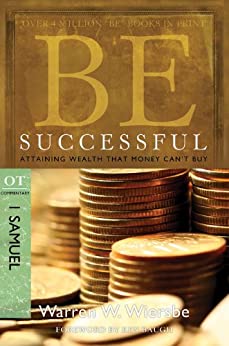
Be Successful: 1 Samuel

The book of 1 Samuel in the Bible is something of a bridge between eras in Israel’s history. Samuel himself is something of a bridge. He’s the last of the judges. He’s a prophet. He anoints two different kings. He oversaw the transition between Israel as a group of tribes in which everyone “did that which was right in his own eyes” (the theme of Judges) to Israel as a unified nation under a king.

But the transition was not a smooth one. In desiring a king, Israel had rejected the Lord’s leadership. The first king, Saul, had much to recommend him, but he failed spectacularly. David was anointed king, but didn’t come to the throne for several years, and he was on the run from Saul much of that time.

Perhaps the contrast between David and Saul is why Warren W. Wiersbe titled his commentary on 1 Samuel Be Successful: Attaining the Wealth that Money Can’t Buy. But other characters in 1 Samuel have varying degrees of success in following and serving the Lord as well.

The book begins with a childless woman with a longing. Hannah had no children, and she pleaded with the Lord to grant her a son. She promised that she would give the child back to the Lord.

There’s so much treachery, bloodshed, and confusion recorded in 1 Samuel that it’s refreshing to meet at the very beginning of the book a woman who represents the very best that God has to give. The leaders of Israel had failed, so God sought out a woman He could use to help bring truth, peace, and order to His people. She served God simply by being a woman and doing what only a woman could do—give birth to a baby and dedicate that child to the Lord (p. 194).

It’s an awesome fact that, humanly speaking, the future of the nation rested with this godly woman’s prayers, and yet, how much in history has depended on the prayers of suffering and sacrificing people, especially mothers (p. 20).

Eli was a priest whose sons committed awful atrocities in their offices as priests. Eli knew what they were doing and rebuked them, but didn’t restrain them. When Hannah weaned Samuel, the child the Lord had given her, she brought him to Eli’s care in the tabernacle.Somehow Eli protected Samuel from the corruption of Eli’s sons.

The Bible says that during this time, “the word of the Lord was rare in those days” (1 Samuel 3:1). Wiersbe comments, “It was a tragic day in the nation of Israel when the living God no longer sent His people signs and prophetic messages (Ps. 74: 9; Ezek. 7: 26; Amos 8: 11–12; Mic. 3: 6). The silence of God was the judgment of God” (p. 32).

Yet at this time, God spoke to Samuel, and Eli taught Samuel to listen and respond, “Speak, Lord, for your servant hears” (1 Samuel 3:4-18). And “the Lord revealed himself to Samuel at Shiloh by the word of the Lord” (1 Samuel 3:21).

Blessed are those older saints who help the new generation know God and live for Him! However Eli may have failed with his own sons, he helped to point Samuel in the right direction, and the whole nation benefited from it. . . . Eli hadn’t been a great spiritual leader, but he was one small link in the chain that led to the anointing of David and eventually the birth of the Redeemer (pp. 195-196).

Samuel became a godly man who followed the Lord all his life and led the people faithfully. The one spot on his record is that his sons also abused their ministry. We don’t know the circumstances, but Samuel isn’t blamed for his sons’ behavior as Eli had been. Wiersbe offers some possibilities as to what could have gone wrong with Samuel’s sons, but ultimately we just don’t know. Samuel repeatedly pointed the people to the Lord.

Samuel is an example to all older believers who are prone to glorify the past, resist change in the present, and lose hope in the future. Without abandoning the past, Samuel accepted change, did all he could to make things work, and when they didn’t work, trusted God for a brighter future. God didn’t abandon the kingdom; He just chose a better man to be in charge, and Samuel helped to mentor that man. Every leader needs a Samuel, a person in touch with God, appreciative of the past (p. 197).

Saul started out well. He seemed humble in the beginning. But there doesn’t seem to have been much of a personal relationship between him and the Lord. Wiesrbe says, “His was the shallow heart of our Lord’s parable of the sower. There was no depth, the tears were temporary, and no lasting fruit ever appeared” (p. 195). Saul began taking matters into his own hands instead of waiting on God and following His directions. “Serving God acceptably involves doing the will of God in the right way, at the right time, and for the right motive” (p. 92). “To know God’s will and deliberately disobey it is to put ourselves above God and therefore become our own god. This is the vilest form of idolatry” (p. 95). Then Saul began to be jealous of David’s fame, then became murderous and unstable. His decline is one of the saddest parts of Scripture.

When Saul was chosen king, he was given authority from God and from the nation, but when he won this great victory, he gained stature before the people. It takes both to be an effective leader. The difficulties began later when Saul’s pride inflated his authority and began to destroy his character and his stature. David was humbled by his success, but Saul became more and more proud and abusive (p. 65).

Jonathan was Saul’s son and heir to the throne, yet Jonathan recognized his own father’s instability and David’s call. He was a true friend to David.

Jonathan leaves behind a beautiful example of what true friendship should be: honest, loving, sacrificing, seeking the welfare of others, and always bringing hope and encouragement when the situation is difficult. Jonathan never achieved a crown on earth, but he certainly received one in heaven. “Be thou faithful unto death, and I will give thee the crown of life” (Rev. 2: 10) (p. 200).

David was a “man after God’s own heart.” As I mentioned in an earlier post, pastor Stephen Davey says this doesn’t mean David was perfect, but his priority was God and His will and his relationship with God. Much could be said about David. He’s one of my favorite Bible characters, though I’ve grieved over the fall to come in the next book.

David was a unique blending of soldier and shepherd, musician and military tactician, commander and commoner. In spite of his sins and failures—and we all have them—he was Israel’s greatest king, and always will be until King Jesus reigns on David’s throne as Prince of Peace. The next time we’re tempted to emphasize the negative things in David’s life, let’s remember that Jesus wasn’t ashamed to be called “the son of David” (p. 200).

Finally, 1 Samuel isn’t just a book of exciting stories, downfalls and successes, battles and failures. “The Lord is mentioned over sixty times in 1 Samuel 1—3, for He is the chief actor in this drama” (p. 17). Throughout the book, God orchestrated His will to be done and His coming Messiah’s preparation.

Laudable Linkage

Here are some good reads found this week:

Evaluating Evangelistic Phrases. “Sadly, much of what is called evangelism today lacks gospel clarity. Repentance and faith are often missing or muddied in many of our evangelistic endeavors. Over the years, a number of popular phrases, terms, and shorthand expressions have either watered down or replaced the Biblical response to the gospel.”

What Is the Gospel? HT to the above article. “What exactly do Christians mean when they talk about the ‘gospel of Jesus Christ’?” I especially like the definition of repentance: “To repent of our sins means to turn away from our rebellion against God. Repentance doesn’t mean we’ll bring an immediate end to our sinning. It does mean, though, that we’ll never again live at peace with our sins.”

How Valuable to Me Is My Bible Today? “What would it feel like today not to own a Bible? What if I knew hardly anyone who did? What would I be willing to do to have one for myself?” Written by our beloved former pastor.

The Paradox of Parenting and How to Trust God More, HT to Challies. “From the moment our babies leave the safety and protection of the womb, we are literally and figuratively pushing them out. They can’t stay in the nest forever, and this brings us joy and sorrow. Isn’t this the paradox of parenting? The more we want to hold on to them, the more time reveals we have to keep letting them go, little by little.”

A Common Face, HT to Challies. “One of the best things my church’s women’s ministry does is to have someone share their testimony at our events. I am often stunned at what I hear from the ordinary women around me – women who quietly go about their everyday lives while harboring beautiful, compelling stories of God’s mercy. Why do we pander and scramble to hear the famous, successful and beautiful people speak, when God’s glory is just waiting to be displayed by the sisters and brothers around us?”

Sending Love, HT to Challies. “Sending Christ-like love means moving from the busy lane of one’s own life to enter the path of another, just as Jesus did when God sent Him to earth. It’s a selfless kind of love, not one from which the giver seeks to gain. And when such love is given, it brings blessed relief, casts hope over despair, and offers a glimpse of Christ.”

Church Membership–The Biblical Basis for It and Benefits of It. I enjoyed this creative look at what the church is and does and why we need to be a part of it.

A Message for Young Women. “Somewhere out there in the great, wide world, someone is praying for you. She probably doesn’t know you and you probably don’t know her. You may not meet one another for many more years. But she’s praying for you nonetheless and has been for a very long time. She is the mother of a son.”

Resources for Bible Study and Teaching. I came to this through a link from another post on the Knowable Word site.

Incredible performance. An annual meeting of high school choirs in KY led to a wonderful tradition.

I enjoy listening to parts of Stephen Davey’s sermons on the radio while my oatmeal is bubbling. I’m thankful he puts the transcripts online so I can catch the rest. He had a series of messages about David that I particularly loved. This section from last Tuesday (Feb 8) struck me:

And as we’ve already learned, being a man or woman after God’s own heart doesn’t mean you’re sinless. David was guilty of great sin against God and others.

Why could David be called a man after God’s own heart? Was it because David was perfect? No; it was because God was David’s priority.

Being a man or woman or a young person who pursues after the heart of God doesn’t have anything to do with your perfection – it has everything to do with your priority.

And that is exactly the priority that David wants to ring in Solomon’s ears for the rest of his life.

That’s what I want to ring in my children’s hearts as well. I think I put this verse somewhere in their graduation paraphernalia for each of them: “And you, Solomon my son, know the God of your father and serve him with a whole heart and with a willing mind, for the Lord searches all hearts and understands every plan and thought. If you seek him, he will be found by you, but if you forsake him, he will cast you off forever” (1 Chronicles 28:9).

Laudable Linkage

Here are some of the thought-provoking reads found this week:

Bible Contradictions? A Response to Bart Ehrman, HT to Challies. “So, I did read the text. And, what I found is that Bart Ehrman puts forward some difficult passages for believers. But what I also found is that a moment or two of thinking erased many of the contradictions.”

Three Prayer Requests for a Heart on Life Support (about prodigals, not end-of-life decisions). “In the letter to the church of Sardis (Rev. 3:1–6), Christ addressed a church that had a ‘reputation for being alive,’ but was full of ‘dead’ people, or as we might term them, prodigals. Christ then gives the church a series of commands, which will make helpful prayers as we intercede for the prodigals in our own lives.”

Instant Coffee, Instant Faith. “It is not the massive floods that cause a tree to grow; it’s the steady stream of water day after day, month after month, year after year. The Christian life does not consist only of great breakthroughs; it consists mainly in mundane, steady obedience. Like David prayed, it is the pursuit of ‘one thing . . . to gaze upon the beauty of the LORD and to inquire in his temple’” (Psalm 27:4).”

Bible Study Is Hard Work (And That Is OK). HT to Challies. “So, are you struggling in your reading of God’s Word? That’s OK. You’re supposed to. The Bible is deep, rich, and ancient.” But there’s reward on the other side of it.

About Those Sparrows, HT to Challies. “Five sparrows. Two pennies. Bought, crushed, ground into stew, discarded, their life snuffed out just like that. Not forgotten by God. If God ‘remembered the sparrow’…if his eye was on the sparrow wouldn’t they not be bought and sold like this?” I confess, I have wondered this. I like this perspective.

Fear of Being Labeled a “White Savior,” HT to Challies. “Whereas I cannot speak to the motives of every white person working in a third world environment, I can with confidence say that this mentality is not compatible with Christian missions. I propose that the Christian missionary is not a ‘white savior’ for the following reasons.”

Writing on The Dawn Treader. “Show, don’t tell” has been the primary instruction for writers of fiction and narrative nonfiction for years. This article explores how C. S. Lewis gave us a clear idea of the kind of boy Eustace Scrub was without a single adjective.

A Grandma Scams a Scammer. Loved this story.

I was looking for a “prayer for the middle-aged” that Elisabeth Elliot recently quoted on her radio program when I discovered this. It’s not the one I was looking for, but this lady’s delivery is so funny.

Happy Saturday!

Books Shape Our Thinking

A couple of times in our lives, my husband and I attended churches where we didn’t quite agree with everything, but we felt these churches were the closest we could find to our own understanding of Scripture. The differences weren’t a matter of false teaching or heresy: they were areas where good people could differ and should be able to give each other grace. We felt as long as the Bible was preached and taught rather than a particular system, then everything would be okay.

In one church, over time, we began to notice that everyone from the pastor to Sunday School teachers to lay leaders began quoting the same authors. Then their vocabulary began changing to match the authors they revered. Concepts that used to be alluded to were now main points. Sermons and lessons changed emphasis to feature points from these authors, and Bible passages were viewed through their lens. When one man spoke about this belief system as being “in the club,” it almost seemed a little cultish.

In another church, the issue wasn’t a particular belief system. But every Christian bestseller that came along was eventually taught in our church. When we moved, I found sermon notes from our first year there which were rich and meaty and directly from the Bible. Later sermons were second- or third-hand thoughts from popular books.

One of my favorite writers reads and quotes authors that I am uncomfortable with because their view of Scriptural truth seems a little skewed to me. Instead of following standard hermeneutics, principles for interpreting Scripture, they twist things a little to get a different outcome more in line with popular culture. They are not quite heretical yet, but this subtle shift will lead that way if continued. This lovely author, with so much talent and potential, is getting more entrenched in this kind of thinking every year. It grieves me to see it.

We’ve seen a couple of young men we’ve known get caught up in belief systems that, again, I don’t think are heretical, but I don’t agree with. It wouldn’t be a problem except that these belief systems now dominate their conversation and online presence. They like to bait and argue over their points of belief. Even though they are not being heretical, their ministry and outreach has been hijacked into debating rather than gently persuading people of God’s truth.

We observed over the course of years a definite shift in thinking and beliefs in each of these cases. The speaker or writer didn’t come to their new views from their Bible reading, but from the books they read. Those books then colored their view of Scripture.

One of our former pastors used to frequently quote Charlie “Tremendous” Jones as saying, “You will be the same person in five years as you are today except for the people you meet and the books you read.

If that’s true, and I think it may be, we need to be watchful about what we read. Of course, these days many people read online articles and listen to podcasts as well.

Does this mean we should only read books where we know we’ll agree with everything? Not necessarily. It’s good to exercise discernment. Sometimes when we are entrenched in our own tenets and lingo, we can get a little myopic.

But we should filter everything we read through the Scriptures. The Bible tells us to “test everything; hold fast what is good” (1 Thessalonians 5:21). Early Christians were called noble because they checked everything even the apostle Paul said against the Scriptures.

We need to be careful not to swallow everything an author says just because they use Scripture or religious talk. The devil does that. “Satan disguises himself as an angel of light. So it is no surprise if his servants, also, disguise themselves as servants of righteousness. Their end will correspond to their deeds” (2 Corinthians 11:14-15). With Eve, Satan questioned what God said and then skewed His meaning. He quoted and misapplied Scripture when tempting Jesus. Peter said of Paul’s writing:

There are some things in them that are hard to understand, which the ignorant and unstable twist to their own destruction, as they do the other Scriptures. You therefore, beloved, knowing this beforehand, take care that you are not carried away with the error of lawless people and lose your own stability. But grow in the grace and knowledge of our Lord and Savior Jesus Christ.(2 Peter 3:16-18).

Some writers don’t go that far–they are not exactly heretical. But a subtle shift in emphasis can skew their teaching, and therefore our thinking. Then a particular facet of their understanding becomes a hobbyhorse. So we need to be discerning not just with writing we might be prepared to be on guard with, but also with popular writing.

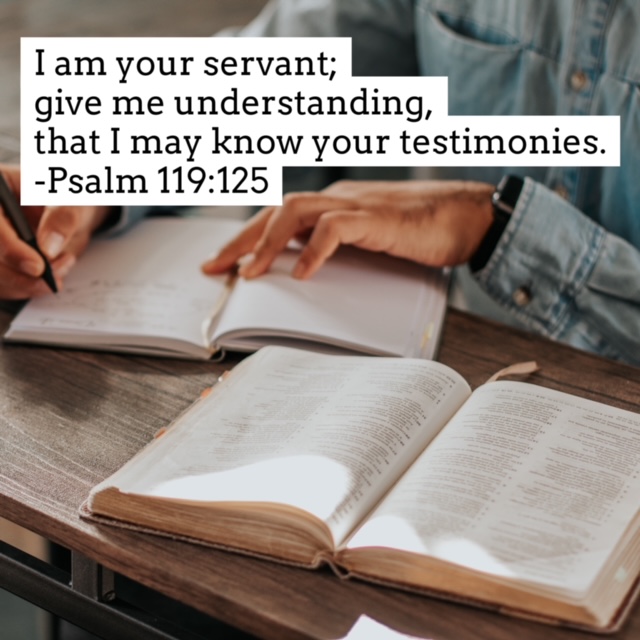
We need to make sure we are spending more time with the Bible itself than even books about the Bible. If we’re spending thirty minutes a day in a theological book and ten minutes in the Bible, we’re off balance. One former pastor used to say that bank tellers were instructed in discerning counterfeit money not by studying counterfeits, but by studying the real thing. The more familiar they were with legal money, the more easily they could tell when something was a little off with money they were handling. “Do your best to present yourself to God as one approved, a worker who has no need to be ashamed, rightly handling the word of truth” (2 Timothy 2:15). As we read and study, we need to pray with the psalmist, “I am your servant; give me understanding, that I may know your testimonies!” (Psalm 119:125). Then our “powers of discernment” will be “trained by constant practice to distinguish good from evil” (Hebrews 5:14).

We need to ask God to search our hearts, show us our blind spots, and “Open my eyes, that I may behold wondrous things out of your law” (Psalm 119:18).

I love good books. I’ve had my thinking shaped in good ways by authors who faithfully studied and represented God’s truth shared in His Word. I especially love writers and teachers who, like the Levites in Nehemiah’s time, “read from the book, from the Law of God, clearly, and they gave the sense, so that the people understood the reading” (Nehemiah 8:8).

But we need discernment to know when a teacher is giving the sense of the Word itself or twisting it a bit for their own purposes or from their own mistaken understanding.

And we need to be careful that our thoughts, understanding, and resulting actions are shaped by the Bible itself.

(I often link up with some of these bloggers.)

Book Review: Be Available

The book of Judges is one of the oddest in Scripture. The phrases “There was no king in Israel” and “Everyone did what was right in his own eyes” are repeated. In the preceding book, Joshua was the nation’s leader who had followed Moses. Now there was no national leader and Israel had by and large fallen away from following God as they had promised. The behavior in the book dramatically shows the need for godly leadership and personal righteousness.

Warren Wiersbe helps readers navigate through the book of Judges in Be Available: Accepting the Challenge to Confront the Enemy.

Wiersbe points out that, ““Deuteronomy 6 outlined the nation’s basic responsibilities: Love and obey Jehovah as the only true God (vv. 1–5); teach your children God’s laws (vv. 6–9); be thankful for God’s blessings (vv. 10–15); and separate yourself from the worship of the pagan gods in the land of Canaan (vv. 16–25). “Unfortunately, the new generation failed in each of those responsibilities” (p. 18, Kindle version). “The sin in our lives we refuse to conquer will eventually conquer us” (p. 26).

“The first step the new generation took toward defeat and slavery was neglecting the Word of God, and generations ever since have made that same mistake” (p. 23). Wiersbe applies this across the ages: “I fear that too many believers today are trying to live on religious fast food dispensed for easy consumption (no chewing necessary) by entertaining teachers who give people what they want, not what they need” (p. 23).

Wiersbe makes this interesting observation: “Whether in a nation or a local church, the absence of qualified leaders is often a judgment of God and evidence of the low spiritual level of the people” (p. 112).

By the time of the Judges, ““Unfortunately, God’s people aren’t working together to defeat the enemy, but here and there, God is raising up men and women of faith who are experiencing His blessing and power and are leading His people to victory” (p. 20, Kindle version).

Sometimes those leaders were a surprise: ““When God goes to war, He usually chooses the most unlikely soldiers, hands them the most unusual weapons, and accomplishes through them the most unpredictable results” (p. 31). “Never underestimate the good that one person can do who is filled with the Spirit of God and obedient to the will of God” (p. 36). Others were a disappointment: though they yielded to God and were used by Him, at other times they yielded to the flesh.

The last few chapters show the low level Israel sank to and set us up for the monarchy to come. But even though some of the future kings were godly and inspiring, all of them failed in various points. One of my former pastors used to say that throughout the OT, we see the best of the judges and kings, but we also see the worst. These point us to the only completely righteous and perfect King, the Lord Jesus Christ.

Be Right (Romans): How to Be Right with God, Yourself, and Others

Warren W. Wiersbe sheds some light on the book of Romans in Be Right (Romans): How to Be Right with God, Yourself, and Others. The title comes from the fact that some form of the word “righteousness” is used over sixty times in Romans. Also, the most important pursuits in the world are being right with God and our fellow humans.

Romans has some of the most familiar verses in the Bible, but also many difficult passages.

We typically use verses from Romans when sharing the gospel with others.

“For all have sinned and fall short of the glory of God” (Romans 3:23).

For the wages of sin is death, but the free gift of God is eternal life in Christ Jesus our Lord” (Romans 6:23).

God shows his love for us in that while we were still sinners, Christ died for us” (Romans 5:8)

“If you confess with your mouth that Jesus is Lord and believe in your heart that God raised him from the dead, you will be saved. 10 For with the heart one believes and is justified, and with the mouth one confesses and is saved” (Romans 10:9-10).

But these are not isolated verses. They come from a context of Paul’s detailed explanation of man’s sin, Christ’s sacrifice, and more.

Chapters 6-8 detail the struggle between the flesh and Spirit.

Romans also discusses God’s plan for Jews and Gentiles. He has not forsaken the Jews, but he has “grafted in” the Gentiles (chapters 9-11). Paul shows that this was God’s plan all along. The section about election and free will from Romans 9 was very helpful to me.

Then chapters 12-14 are full of practical instructions. Paul often deals with the doctrinal first, then shows how doctrine manifests itself in everyday lives. Romans 14:1-15:7 particularly deal with disagreements among Christians over what we call “debatable” matters.

Romans ends with Paul’s warm greetings to several individuals.

As always, I have several passages marked. Here are a couple that stood out to me:

In the Christian life, doctrine and duty always go together. What we believe helps to determine how we behave. It is not enough for us to understand Paul’s doctrinal explanations. We must translate our learning into living and show by our daily lives that we trust God’s Word.

Christian living depends on Christian learning; duty is always founded on doctrine. If Satan can keep a Christian ignorant, he can keep him impotent.

The law was a signpost, pointing the way. But it could never take them to their destination. The law cannot give righteousness; it only leads the sinner to the Savior who can give righteousness.

Does a strong Christian think he is making a great sacrifice by giving up some food or drink [for the sake of a weaker believer]? Then let him measure his sacrifice by the sacrifice of Christ. No sacrifice we could ever make could match Calvary.

A person’s spiritual maturity is revealed by his discernment. He is willing to give up his rights that others might be helped. He does this, not as a burden, but as a blessing. Just as loving parents make sacrifices for their children, so the mature believer sacrifices to help younger Christians grow in the faith.

Spiritual gifts are tools to build with, not toys to play with or weapons to fight with. In the church at Corinth, the believers were tearing down the ministry because they were abusing spiritual gifts. They were using their gifts as ends in themselves and not as a means toward the end of building up the church. They so emphasized their spiritual gifts that they lost their spiritual graces! They had the gifts of the Spirit but were lacking in the fruit of the Spirit—love, joy, peace, etc. (Gal. 5: 22–23)

This is a fairly short commentary, so Wiersbe didn’t go into as much detail as he could have in some sections. But I think this is a good book for those who want more insight from Romans without slogging through a massive volume.

Laudable Linkage

IMG_0195

Here are some noteworthy reads found this week.

From Meat to Meta: Facebook’s Disincarnate Dreamworld, HT to Challies. “For those who labour under the Enlightenment (and latterly Zuckerbergian) prejudice that ideal reality is immaterial and universal, the notion that God could have a body is quite a scandal. But it is deeply, deeply good news that the Word ‘became’ flesh.”

Life Beyond the Spiritual Shallows. “There is a depth to God’s character that cannot be assessed with quick glances and fleeting thoughts. We will never become the kind of women who face the lion’s den without a deep understanding of God’s character. We will never know that depth if we cannot find ways to circumnavigate our brain’s wiring and study God’s Word for longer than eight second bursts.”

Should We Pursue Self-Love? HT to Challies. “God acknowledges the reality of self-love, but He certainly does not teach it as a Christian virtue to be cultivated. Rather, it is an existing reality, necessary for our survival, in some respects healthy, but in other ways very much tainted by our sin. Our instinct to take care of ourselves is something we are to extend to others, that we might lovingly take care of them.”

When You Are Wrongly Accused: 5 Things to Do. “What can we do when we are wrongly accused? Either directly or indirectly? When someone we know is telling us we are a bad person, exhibiting bad behavior that we are not responsible for, have ruined something way beyond our control, or have a pattern of wrong deeds and we feel it simply is not true. Before you start responding to their accusations, you want to ask yourself a few questions.”

Two Important Principles for Trusting God: Commas and Periods. “Clearly, punctuation matters when giving instructions. It’s even more important when it comes to trusting God. Understanding and embracing the principles of God’s punctuation can give us peace—and even joy—in the waiting.”

Night Watch, HT to Challies. “Night watch. Our God neither slumbers nor sleeps (Psalm 121). And sometimes He wakes us in the night. To watch and pray. I remember when the two emails arrived. One after the other. To our inbox in Karachi. Same time. Same message. Traveling across the world. From opposite sides of the United States.”

Dividing Lines: Beware of “Us vs. Them.” “The Bible separates people into just two categories as well: those who are in Christ and those who aren’t. But this important distinction does not give us permission to attack people who don’t agree with us. In fact, Jesus told a parable about a religious person who did just that.”

This moving video, shared by Lisa, is titled Before You Call the Cops. This man had an experience when, just seeing him, a woman reacted in fear. He encourages us to get to know each other and not fit everyone into stereotypes.

Be Strong: Study of Joshua

Our church has been reading through the book of Joshua the last few weeks. I read Be Strong (Joshua): Putting God’s Power to Work in Your Life by Warren W. Wiersbe along with our daily Bible reading.

Joshua marks two major transitions in Israel’s history. First, Moses, their leader of over forty years, had just passed away. Then the Israelites had just finished forty years of wandering and were about to enter the land God had promised their ancestors long ago.

Either situation would be daunting to a new leader. So God encourages Joshua right off the bat:

No man shall be able to stand before you all the days of your life. Just as I was with Moses, so I will be with you. I will not leave you or forsake you. Be strong and courageous, for you shall cause this people to inherit the land that I swore to their fathers to give them (Joshua 1:5-6).

God also gives Joshua vital instruction:

Only be strong and very courageous, being careful to do according to all the law that Moses my servant commanded you. Do not turn from it to the right hand or to the left, that you may have good success wherever you go. This Book of the Law shall not depart from your mouth, but you shall meditate on it day and night, so that you may be careful to do according to all that is written in it. For then you will make your way prosperous, and then you will have good success. Have I not commanded you? Be strong and courageous. Do not be frightened, and do not be dismayed, for the Lord your God is with you wherever you go (Joshua 1:7-9).

Joshua seems to have followed God’s instruction faithfully throughout the rest of his life. He made a couple of costly mistakes: going up to Ai and making a pact with the Gibeonites without seeking counsel of the Lord. But Wiersbe spends a lot of time pointing out that when we err, we don’t give up: we confess our sins, pick up again, and get back on the right path.

Wiersbe discusses the difficulty of God having His people slaughter the nations in Canaan. He points out that the Canaanites weren’t innocent: they were known for cruel acts like sacrificing their children to their gods and vile sexual acts in the name of worship. And he reminds that God gave them plenty of space to repent. Rahab was one who heard of the God of Israel and turned to Him in faith (eventually becoming an ancestor of the Messiah).

Some hymns have portrayed the promised land as symbolic of heaven. But Wiersbe repeatably points out that the symbolism doesn’t fit: we don’t battle our way either into heaven or after we get there. He says that entering the promised land symbolizes our maturity in Christ. God often said that He was the one driving out the nations before Israel, yet they had to pick up their swords and fight (most of the time. Jericho and some of the other cities had different battle plans). So with us: we’re saved by grace through faith plus nothing. And we’re sanctified by grace as well. Yet we only become mature Christians as we pick up our “sword of the Spirit,” God’s Word, and believe it and apply it. We can and should pray for God’s grace and help in taking temptation away and helping us overcome, but He expects us to read and apply the Word He gave us. “What Paul’s letter to the Ephesians explains doctrinally, the book of Joshua illustrates practically. It shows us how to claim our riches in Christ. But it also shows us how to claim our rest in Christ (p. 22, Kindle version). Wiersbe discusses briefly the different kinds of rest Hebrews 4 and 5 tell about, then says, “This ‘Canaan rest’ is a picture of the rest that Christian believers experience when they yield their all to Christ and claim their inheritance by faith” (p. 22).

The victorious Christian life isn’t a once-for-all triumph that ends all our problems. As pictured by Israel in the book of Joshua, the victorious Christian life is a series of conflicts and victories as we defeat one enemy after another and claim more of our inheritance to the glory of God (p. 23).

The main point of Joshua is that God kept His promises to His people. Not only did He give them the land He originally promised Abraham, but He provided for each of the tribes. At the end of the book, Joshua tells the people, “You know in your hearts and souls, all of you, that not one word has failed of all the good things that the Lord your God promised concerning you. All have come to pass for you; not one of them has failed” (Joshua 23:14). He encourages them to “cling to the Lord your God just as you have done to this day” (23:8) and warns that just as God kept His promises to give them the land, He’ll keep His promise to punish them if they go after other gods.

Wiersbe has a closing chapter of the example of Joshua himself in his following the Lord and leading the people.

As always, I appreciate Dr. Wiersbe’s insights into this book of the Bible.


Laudable Linkage

A collection of good reading online

Here are some of the most noteworthy reads discovered recently:

Be a Peacemaker, Not a Peacekeeper. “For a long time, I thought that working for peace meant staying quiet – withdrawing from conflict, brushing aside whatever was bothering me, ignoring my own feelings and opinions to appease someone else, doing anything to avoid rocking the boat. It seemed like the nice thing to do, even the Christian thing to do. But then I realised that it is not really peacemaking, but peacekeeping.”

Things Revealed, HT to Challies. I was pondering this very concept recently. “A lot of us spend our time trying to read that book called ‘The Secret Things’ while all the time the book called ‘The Things Revealed’ is sitting right in front of us. God has given it to us and it belongs to us and to our children so we won’t just read it but also obey it.”

9 Wrong Ways to Read the Bible (And One Better Way). “When we yawn over the Bible, that’s like a severe asthmatic yawning over the free offer of a ventilator while gasping for air. Read the Bible asking not mainly whom to imitate and how to live but what it shows us about a God who loves to save and about sinners who need saving.”

Fading Joy: Am I Seeking an Experience or a Relationship? “Too often we value a feeling over the reality that would produce that feeling. We want to feel close to God without actually drawing close to God. We want the benefits of a close walk with God without the heart change required to walk with God. Many times, we want the outward trappings without the inward transformation. Our need for an experience can become an idol that dethrones God in our lives.”

Teach What the Bible Says First, HT to Knowable Word. “Sometimes, people who are teaching the Bible try much too hard to be brilliant, giving us their own insights into life rather than letting the brilliance of the Bible speak for itself. Let the Bible speak! I would rather hear one halting, inexperienced speaker show me God in a text of the Bible than hear 1,000 polished pastors give me their three-point, alliterated instructions for life, which are often only loosely based on the actual text.”

The Sin of Provoking. “It’s one thing, as Proverbs cautions, to recognize an angry person and beware; it’s quite another thing to provoke to the point of an angry response an individual who is seeking to do right (and then condemning the person for their angry response).” Yes! I am glad to see this addressed.

Bitter Roots, HT to Challies. “At some time each of us is affected by unfairness and hurt. Each of our stories would be, could be, maybe even should be different had people or situations not altered our path. . . . We can choose to replay wrong and rewind hurt. But when I read God’s Word, I come back time and time again to this.”

A Diligent Wife, HT to Challies. “So, I began to pray. For my marriage, yes. But, more than my marriage, I began to pray for my heart. The kids weren’t going to stop needing me. Giving up my role as a Mom wasn’t an option. But neither was quitting on my marriage. How could I be a wife and a Mom? Was it possible to be both? What could this look like, and where was I to start? What needed to change in me in order to invest more fully in my marriage?” This is the first of a 31-day series that looks great so far.

Wanted: Spiritual Mothers. HT to Challies. “The truth is, you’re never too old to no longer want your mom—the mom you may or may not have ever had. One who not only cares for you physically, but also speaks into your life with spiritual wisdom and comfort, who prays for you and builds you up with words of experience and knowledge, who reminds you of how much God loves you and desires a relationship with you.”

Fall color video, HT to Story Warren. If you need a dose of fall color, these drone shots of gorgeous autumn trees will feed your spirit.

Finally, these ceramic masters are amazing, HT to Steve Laube. They make it look so easy. Some years ago, a man demonstrated to our church what was involved in throwing and shaping clay. He and his wife were going as artists to a country that did not welcome missionaries. As he worked, he pointed our various parallels between what he was doing and what God does for us. Though the whole demonstration was wonderful, the one thing that stood out to me was the intimacy of what he was doing. The wheel is almost in the potter’s lap. He’s bent over it, his arms around it. That picture of God as being over us, surrounding us, carefully watching and shaping us, has stayed with me for years.

Something secondary came to mind as I watched this video: creating art is messy before it is beautiful. The artists aren’t bothered by getting their hands dirty or brushing away shavings. They have the finished project in mind.

Hope you have a lovely weekend!