Laudable Linkage

I’m here again today with my almost weekly round-up of interesting reads from the last week or so:

Gospel-Centered Reduction: Slighting the Spirit. There has been something bothering me about the term “gospel-centered” being used as an adjective on just about everything in Christianity in recent years, but I couldn’t quite articulate why. This article touches on some of the reasons.

Coffee With Facepalm Jesus Calling, HT to Bobbi. The various problems with portraying Jesus as saying things He wouldn’t say, from memes to cartoons to Jesus Calling.

Fred Phelps and the Anti-Gospel of Hate.

9 Things We Should Get Rid of to Help Our Kids.

31 Days of Purity: The Throne of Grace. I especially appreciated the paragraph by Lambert in the middle about the difference between condemning self-talk and confession.

This Mother Tore Off labels and Nurtured Her Son’s Hidden Genius.

Soldier Finds Lifeline in Letter Exchange With Vermont Author, HT to Sherry. I have never read either of these authors but want to now. I espcially liked this: “I needed that reminder that there was still hope and still beauty in the world. At that time in my life there was none. There was nothing except guns and fear. I was really not at all sure that I was ever going to get out of that place. This book gave me a little bit of beauty at that time, and I needed it. Not the way I need a new app for my iPad. I needed it to keep my soul alive.”

Threads: Loved this: “Every great story tells in some part The Great Story. Each truth revealed helps us make sense of our world. And through each tragedy, comedy, and fairy tale, the Truth is woven through the fabric of our being.” I don’t know that I’d say that about every story – I’ve read some awful ones with little redeeming value – but overall, yes, truth even in fiction points us to the ultimate Author of truth.

Happy Saturday!

Booking Through Thursday: Rereading

btt  button Booking Through Thursday is a weekly meme which poses a question or a thought for participants to discuss centering on the subject of books or reading.

Today’s question has to do with rereading:

I’ve asked before if you re-read your books (feel free to recap), but right now I want to know if that habit has changed? Did you, for example, reread more as a child and your access to new books was limited by how often you could convince your mother to take you to the library? Has the economy affected your access so that you’re forced to reread more often now? Have you grown to look at old books as old friends so that you’re happy to spend time with them rather than rushing the next new thing?

I don’t remember whether I reread much as a child, though I imagine I did with a few favorite books. I don’t think the economy has had much effect on rereading: if I couldn’t afford new books, there are hundreds through the library. But I do reread some books, for several reasons:

1. It is like a visit with an old friend, much like listening to the same music, rewatching a movie, telling the same stories at family gatherings. It’s cozy, comfortable, and familiar.

2. It’s hard to get everything from most books the first time through. To me the best books are those I can revisit many times and still gain something from.

3. It’s hard to remember everything we got from the first read, especially (for me) with nonfiction.

4. It reinforces what I learned from the book before.

5. I identify with different characters or parts of the book differently at different stages. Little Women is a classic example: I identified with different ones of the girls as a child and young teenager; as a young wife I identified with Meg; as an older mom I saw Marmee through new eyes (and the girls, too, for that matter, looking on them from a mother’s point of view rather than as friends.)

6. It can be just plain fun to revisit a story.

The problem is that there are so many enticing new books to choose from that it is hard to make the decision to reread an old one. Sometimes with nonfiction I choose to reread because I need those lessons or that information again. But with fiction, audiobooks are a great way to revisit books. Although I do listen to new books that way, I can tend to miss something from them if I can’t hit the replay button (like when I am driving or cooking). But that’s not so much an issue with a familiar book. Plus by listening I don’t feel like the old book, especially if it is an old, longer classic, is monopolizing so much of my reading time. And hearing it read can bring out facets I may have missed in my own reading.

Here is a list I made a few years ago of books I have reread and would like to reread. I’m happy to say I have reread many from the latter list since then, most via audiobook.

Book Review: Walking From East to West: God in the Shadows

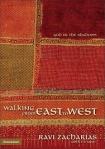
Walking From East to WestWalking From East to West: God in the Shadows by Ravi Zacharias first came to my attention when Sherry recommended it to me. I had heard Ravi speak on the radio several times and appreciated his ministry and his way of thinking, and I generally like biographies and memoirs, so I was glad to pick this up.

The book came about when his publishers asked him to write his memoirs “in the simplest terms, with your heart on your sleeve.” In the beginning of the book, Ravi shares these lines from James Russell Lowell’s “The Present Crisis“:

Truth forever on the scaffold, Wrong forever on the throne,—
Yet that scaffold sways the future, and, behind the dim unknown,
Standeth God within the shadow, keeping watch above his own.

Ravi shapes his story by pointing out God “in the shadows,” God at work throughout his life even when he did not perceive Him.

Ravi’s story begins in the East, in Chennai (formerly Madras) in India. His earliest religious associations were bound by fear but also by the rich heritage of the cultural stories, myths, and celebrations. His mother was spiritual but also superstitious. They even had an astrologist do readings of the family once, revealing a “cultural mix of religion, superstition, and ‘cover all bases’ mentality with regard to the supernatural.” A couple of Jehovah’s Witnesses were allowed to teach the children to read, especially the Bible, and the children were awed until they got to their teaching that only 144,000 were going to make it to Paradise. When Ravi realized that there were more than 144,000 Jehovah’s Witnesses worldwide, so that not even all of their people were going to make it, much less the people they were teaching, he rejected their study as well as Christianity. He didn’t know then that there were differences between different sects, and between sects and cults.

His father had a powerful position in the government, and his siblings all seemed to have leadership personalities. Being successful professionally and influentially was one of the highest values of his culture. For various reasons, Ravi’s father did not seem to have the same esteem for him that he did his other children. He had names of endearment for the others, but not for Ravi, and Ravi was “consistently on the receiving end of his rather violent temper.” This, of course, made him even more hesitant around his father than he already was naturally, and made his father react against him further. His father told Ravi he was a failure and repeatedly told him in so many words that he would never amount to anything. Ravi felt the same way: even the astrologer mentioned gave him a disappointing reading. He felt an intense loneliness and inferiority even with friends, because they were all “either rich or brilliant, and I was neither. While they were always at the top of the class, I never did well in studies.” They always had money to spend, and he didn’t: he could only participate in what they did if they paid his way. No one “bared their heartaches or inner struggles” in his culture, so he kept it all inside.

He found something of an escape in sports, where he did excel, especially in cricket, though his father never came to any of his matches. He thought about playing professionally, but even the professional cricket players could not make a living at it and worked at other jobs. Ravi had been so poor at his studies that by his teens, when he was supposed to be finding his way in life, he had no idea what to do, and his father’s consistent belittling and his increasing sense of loneliness were all coming to a head.

About this time his sister started attending Youth For Christ rallies and invited him along. He was bored at first but came again when his sister was singing with a group that night. Then he heard a message on John 3:16 that spoke to his heart, and he responded to the invitation and prayed to receive Christ. Things were still vague and fuzzy for him for a long while.

Ravi went on to college but fell into his old habits of not studying and began to fail. His lack of purpose and sense of shame and failure finally led him to attempt to take his own life. As he recovered in the hospital over several days, a Youth For Christ leader brought his mother a Bible with a passage marked for Ravi. This leader had not known of the suicide attempt (no one did), but the passage he marked was John 14:19: “Because I live, you will also live.” When Ravi was well enough to receive it, “the words hit [him] like a ton of bricks.” He grasped at the hope in it and prayed that if God would get him well, he “would leave no stone unturned in [his] pursuit of truth.”

God continued to work in his heart, and he began to attend Youth For Christ functions more  often. He had never been a reader, but now he began to devour Christian biographies and Bible commentaries. “For the first time, I felt my mind being stretched – and I loved it. I realized that thinking could be fun, and with that simple realization I was sent headlong into the lifelong discipline of reading.”

A friend of his father’s was a hotel manager and great chef, and Ravi admired him and decided he wanted to follow in his footsteps. His father pulled some strings to get him into the Institute of Hotel Management. He excelled and now felt he had a purpose, both life and in a profession.

As he continued to grow spiritually, reading, attending Youth For Christ and a new church, eventually he went with a team to a Youth Congress, part of which was a preaching contest. His friend who was designated to preach could not due to a conflict, so Ravi was asked to fill in with only three hours notice. Some of the men in that assembly recognized God’s hand on him and encouraged him. He still didn’t think that was what God was calling him to do, but he went on more preaching ministries and teams with Youth For Christ.

His family moved to Canada after his father’s retirement, and God continued to lead Ravi to people, churches, and organizations that helped him grow, and where he met his future wife. He continued studying and working in hotel management, but began to sense that “[his] priorities and [his] ‘heartbeat’ were changing toward other things.”

One thing that stood out to me was the encouragement from older Christians that God used in his life. He writes, “I don’t think older Christians can ever fully know what an important role they play in the affirmation of younger believers. When you’re just a youth, it means so much to have someone who’s farther along the road say to you, ‘I see something in you, and I want you to be encouraged in it.'”
As he continued preaching as opportunities came, many people told him they felt he was gifted with evangelism. He was encouraged but didn’t know the difference then between being an evangelist and “just preaching.” But he knew that “a special sensation rose up in me as I preached. I had an intense urge to persuade….I knew I wanted to preach to people who were on a quest, people whose minds were challenging what they saw around them, who were hurting on the inside, and who needed someone to speak to those issues.”

Eventually God led him to become a full-time preacher, to overseas opportunities to preach, and eventually into apologetics. Of the last, he said that people talk about truth having to get from the head to the heart for one to be converted, and that was true, but after he was converted, the truth traveled from his heart back to his head again, and he developed a “hunger to know the great depths of truth behind my faith.” He wanted to understand all the whys and wherefores of the faith, and his reading and study helped him find answers. “Most of the preaching in evangelism was geared to the ‘unhappy pagan.’ What about the ‘happy pagan, I thought, ‘the one who has no qualms about his life?’ Life was about to change for me in my heartfelt desire to preach to the skeptic” and intellectuals.

Eventually God led him (and provided in a miraculous way!) to form “a ministry that would communicate the gospel effectively within the context of the prevailing skepticism. It would seek to reach the thinker and to clear all obstacles in his path so that he or she could see the cross, clearly and unhindered…I wanted to address those struggling people – the Thomases of the world –  who saw life as not making sense. If the church didn’t place a value on a person’s questioning, then we were effectively absolving ourselves of any responsibility to that person. At the same time, if the skeptic’s questions weren’t honest, we had to address them in ways that exposed his or her dishonesty. Apologetics had to be about much more than answering questions – it had to focus on questioning the questions and clarifying truth claims.” “It is up to the thinking Christian to train the mind, take seriously the questioner, and respond with intelligence and relevance.”

I know some people demean apologetics, since it’s not the gospel, which is the power of God unto salvation (Romans 1:16), but I’ve always agreed with Ravi’s thought here that it can help prepare the way for the gospel plus it can help clarify truth for the believer as well.

The ministry borne out of all this was Ravi Zacharias International Ministries (RZIM). Ravi had another name in mind, but the others involved felt the ministry should have his name and “stand up behind your integrity, or fall with the lack of it,” a scary proposition indeed.

Regarding some of the dangers that came about in his ministry (including death threats), he says, “You have to learn that you cannot claim a path just because it is less intimidating. You must keep in mind that God does have an appointment with you, that there is a cost to serving Him. At the same time, you have to be wise and not careless. To deny the reality that there are some places where you cannot go is to play the fool. More important, if you have not learned to pay the smaller prices of following Christ in your daily life, you will not be prepared to pay the ultimate price in God’s calling.”

A few more quotes that stood out:

“Successes are hollow if you do not know the author of life and His purpose.”

After telling the United Nations that there are four absolutes that we all agree to, love, justice, evil, and forgiveness: “Only on the cross of Jesus do love, justice, evil, and forgiveness converge. Evil, in the heart of man, shown in the crucifixion; love, in the heart of God who gave His Son; forgiveness, because of the grace of Christ; and justice, because of the law of God revealed.”

“There are some wonderful things from your painful past, things with a beauty you may not have realized at the time.”

“Caution laced with wisdom and commitment must always be the key to the onward step.”

“Jesus wasn’t just the best option to me; He was the only option. He provided the skin of reason to the flesh and bones of reality. His answers to life’s questions were both unique and true. No one else answered the deepest questions of the soul the way He did.”

“Sometimes in the shadows of one’s self lie the problems, and in the shadows of one’s shaping lie the answers.”

A lot of the explanation behind the differences in Eastern vs. Western thinking was quite interesting.  There is a plethora of fascinating information here, including various testimonies of God at work (including Ravi’s own father’s salvation) and how we led in Ravi’s personal life, family, and ministry.

I know some of my readers would wonder, so I’ll have to say here that, no, I wouldn’t endorse every single person and ministry mentioned in the book, but there is no denying the hand of God in the life and ministry of Ravi Zacharias. I loved reading this book and highly recommend it to you.

(This will also be linked to Semicolon‘s Saturday Review of Books.)

Reading Challenge Update

2014tbrbuttonRoof Beam Reader, who hosts the 2014 TBR Pile Challenge, has check-in points around the 15th of each month so we can summarize how we’re doing.

Of the 12 books I’ve listed here, since last month I’ve finished Made to CraveSatisfying Your Deepest Desire with God, Not Food by Lisa TerKeurst, The House Is Quiet, Now WhatRediscovering Life and Adventure As a Empty Nester by Janice Hanna and Kathleen Y’Barbo, both linked to my reviews, and just this morning I finished Walking From East to West: God in the Shadows by Ravi Zacharias. Reviewing it is next on my agenda. Combined with the one I finished last time, Ida Scudder, I’ve completed 4 out of the 12, so I am pretty much on target for this point in the year. I’m more than halfway through Crowded to Christ, reading a chapter a day 4 or 5 days a week.

classics2014For the Back to the Classics Challenge, I’ve completed The Woman in White and Farmer Boy. That brings to completion 3 of the 6 required categories and 2 of the 5 optional categories. I’m over halfway through Bleak House, so I’m feeling pretty good about this list as well.

Crowded to Christ is also part of the The Cloud of Witnesses Challenge. And Crowded to Christ, Made to Crave, Ida Scudder, The House Is Quiet, Now What? and Walking From East to West are all eligible for the Nonfiction Reading Challenge in which I am aiming to read 11-15  nonfiction books.

So I am pretty much on target all around, thankfully. Yay!

Booking Through Thursday: YA Censorship

btt  button Booking Through Thursday is a weekly meme which poses a question or a thought for participants to discuss centering on the subject of books or reading.

I have not done one of these in over a year, though I do look at the questions every week. I have been pondering today’s question ever since looking at it earlier this morning, so I thought I’d jot some of those thoughts down here.

The question had to do with censorship of YA (young adult) literature: “Do you think it should vary depending on the impressionable age of the readers? Or is it always wrong? How about the difference between ‘official’ censorship by a government or a school system, as opposed to a parent saying No to a specific book for their child?”

It depends on what you mean by censorship. I would have a problem with the government banning certain books, except maybe pornography. (Has that kind of publication ever done anyone any good except to increase the finances of those involved in producing it?)  But one problem with banning books is that no one would be able to agree on what should be banned. After all, even the Bible has been banned in certain times and places. And I do have a problem with turning government officials into thought police.

I don’t think I would agree with public libraries banning certain books, but I would like them to keep “mature” books away from children’s and teen’s areas. Those who are concerned about what their children read should not be letting them loose unsupervised in a public library anyway.

I do think school libraries have a right and even a responsibility to keep certain books out. Books with filthy language or illicit sexuality do not need to be in a school setting. And of course, ultimate responsibility rests with parents, who do indeed have a right to filter their children’s reading material.

The BTT site linked to an YA author’s blog post wondering why some of her own books were censored (“quietly” rather than officially). I am not linking to the author’s post because of the vulgar language in it, but after perusing it I have to ask, “Seriously?” When she writes like that, how can she wonder why some parents and teachers would object?

I do think filthy language is a reason to restrict some books. There are some books where it is minor and can be overlooked (for instance, the Dickens book I am listening to uses “Damn,” and Unbroken has a smattering of objectionable language in it, but it is understandable that there would be such in a prisoner of war camp). Though I’d rather not read those words, I can understand their being included in some cases. But there are some words that really don’t need to be in YA lit, if anywhere. Yes, some people do use them in real life, but that doesn’t justify a plethora of vulgarity in the name of intellectual freedom.

I don’t think explicit sexuality needs to be a part of YA lit, either (or any fiction, for that matter). Yes, even the Bible talks about adultery and other kinds of sexual sin and how it affects people, but not in a way that would cause arousal on the part of the reader.

Violence is harder to set parameters around. Obviously a book about war is going to have violent scenes, a book that discusses bullying is going to show instances of it, etc. Reality is one thing; gratuitousness is another.

When my kids were younger, I did censor books with New Age and certain other philosophies. I believe in talking about such things, but I didn’t want them presented in a positive and favorable way to an impressionable young mind before we’d had a chance to talk about it.

There are a few reasons for setting some restrictions in reading. Generally I don’t want to read bad language or sexual scenes or put them before my children because of the garbage in/garbage out principle. If we fill our minds with such things, they’re going to become part of our thoughts and may even come back out in our words and actions. There is a phrase going around now that once you see something, you can’t unsee it. Often it is said humorously, but it is true principle both in viewing and reading.

Even though YA stands for young adults, YA books are usually marketed to teens, and these objectionable elements don’t need to be placed in young, impressionable minds.

Despite everything I have said, I do not mean that I wanted my kids only to read things that reinforced our own views and that we agreed with 100%. I am working on a post about reasons for reading, but one major one is to experience other viewpoints and test one’s own thoughts against those of others. However, I did want to be careful with how those thoughts were presented while they were still young.

Sometimes when a controversial book is making the rounds of discussion, some people (even Christians) will say exasperatedly, “It’s just a book.” But books are powerful things. What we read affects how we think. Jesus told stories to illustrate spiritual truth, and I have often said that the best of Christian fiction is like an extended parable or illustration of truth. A principle I have read in a story takes root and stays with me much longer than when I read it in an instructional format. But the same power than can be used for good can also be used for evil. I regret to say that off-color things I read in an unsaved home as a young person have also stayed with me much longer than I would have liked, often popping into mind at the most inopportune times, like while trying to pray or listen to a sermon.

Most of what I have said so far is applicable to anyone, but as a Christian, my guidelines come from verses like these:

Philippians 4:8: Finally, brethren, whatsoever things are true, whatsoever things are honest, whatsoever things are just, whatsoever things are pure, whatsoever things are lovely, whatsoever things are of good report; if there be any virtue, and if there be any praise, think on these things.

I Corinthians 6:12: All things are lawful unto me, but all things are not expedient: all things are lawful for me, but I will not be brought under the power of any.

I Corinthians 10:23: All things are lawful for me, but all things are not expedient: all things are lawful for me, but all things edify not.

The Philippians passage focuses on the positive things we should be filling our minds with. The two verses from I Corinthians indicate that while all things are “lawful,” some things are not expedient (“tending to promote some proposed or desired object; fit or suitable for the purpose; proper under the circumstances” according to Dictionary.com), I shouldn’t allow things to exercise more power over me than they should, and some things are not edifying. Galatians 5:17 says, “For the flesh lusteth against the Spirit, and the Spirit against the flesh: and these are contrary the one to the other: so that ye cannot do the things that ye would” and chapters 6-8 go on to describe the battle between and spiritual and fleshly natures. It is going to be even more of a battle if we’re feeding our fleshly natures. II Corinthians 10:5 says, “Casting down imaginations, and every high thing that exalteth itself against the knowledge of God, and bringing into captivity every thought to the obedience of Christ.”

I don’t think that necessarily means we should read only Christian books. Truth and beauty can be illustrated even in secular works. And I don’t think it means everything we read should have a “Pollyanna” viewpoint. Even the Bible deals with sexuality, but not in a way that inspires lust. It also contains violent encounters, but David says in Psalm 11:5, “The LORD trieth the righteous: but the wicked and him that loveth violence his soul hateth” (emphasis mine) — gratuitous violence is different from a battle scene. It discusses different philosophies, but not in a way that leaves you confused about what’s right.

It is honestly hard to know exactly where to draw the lines sometimes, as I mentioned when I discussed To Kill a Mockingbird. There are books I might read for information that I would not endorse wholeheartedly. Wisdom and discernment are needed when reading Christian books as well as secular ones: not everything that calls itself Christian accurately reflects Biblical truth.

Of course, the world will not have the same standards in most instances, and we can’t fence off every area of temptation and evil influence. Ultimately what people need are hearts changed by the gospel. While we try to take some kind of stand lest explicit books become ever more blatant, we need to remember our main purpose as Christians is to share Christ both in our lifestyles and character as well as with our verbal testimony.

(Some of the above is taken from a previous post titled Book Banning and Censorship.)

Michelle at As4Me has some well-articulated thoughts on Censorship, Schools, and Children, Is Good Censorship an Oxymoron? and some other posts on censorship and banned books here.

Book Review: Made to Crave

Made to CraveMade to Crave by Lysa TerKeurst caught my eye a couple of years ago when a numbers of bloggers spoke highly of it. I was interested, but I thought from the title that it probably focused more on the emotional side of eating, like another book I read. I knew that was one factor in my problem with weight, but it wasn’t the only factor. I forgot about it until the e-reader version showed up either free or just a couple of dollars for the Kindle app last year. I got it then, but still didn’t crack it open. Then I saw on one of my friend Kim‘s posts that the Proverbs 31 Ministries, was hosting a six-week Bible study using Made to Crave, so I thought this would be an ideal time to read the book. The study just concluded last week. I’ve been jotting chapter notes here.

The book chronicles Lysa’s journey from being almost 200 lbs. down to a healthier weight. She discovered along the way that losing weight is not just a physical issue, but also a spiritual and mental one. The subtitle of the book is Satisfying Your Deepest Desire with God, Not Food. She explains that the Greek word translated “seek” in Matthew 6:33 is the word for “crave.” She says of the rich young ruler, who wanted to follow Jesus until Jesus asked him to sell his possessions and give to the poor. “Jesus didn’t mean this as a sweeping command for everyone who has a lot of money. Jesus meant this for any of us who wallow in whatever abundance we have. I imagine Jesus looked straight into this young man’s soul and said, ‘I want you to give up the one thing you crave more than me. Then come, follow me.'”

“When Jesus says, ‘Follow me,’ it’s not an invitation to drag our divided heart alongside us as we attempt to follow hard after God. When Jesus wants us to follow Him – really follow Him – it’s serious business. Here’s how Jesus describes it: ‘If anyone would come after me, he must deny himself and take up his cross and follow me’ (Mark 8:34).”

“God never intended us to want anything more than we want Him. Just the slightest glimpse into His Word proves that, Look at what the Bible says about God’s chosen people, the Israelites, when they wanted food more than they wanted God: ‘They willfully put God to the test by demanding the food they craved’ (Psalm 78:18). Yikes” (p. 28K). Those who did so never made it to the Promised Land, but wandered in the wilderness the rest of their lives.

There are multitudes of spiritual principles discussed throughout the book, but there are physical ones as well, such as the fact (proven through research) that junk foods are addicting and do make one feel less full. Some people seem to be able to eat them with no problems – some people seem to be able to eat an abundance of foods with no problem – and we struggle with that feeling unfair, but we can’t compare ourselves to others and think, “If they can eat it, I should be able to as well.” If “they” don’t have issues with food, they have issues with something.

She gives mental tips, too (which overlap somewhat with the spiritual), such as have go-to scripts for certain situations to change the mental processes we’re used to and concentrating on what we’re gaining while going through this process rather than what we’re giving up.

Something that really stood out to me from the first chapter was the observation that Eve fell while surrounded by plenty: Jesus stood strong while in a deprived state of having fasted 40 days and nights. When I feel “deprived,” that’s no excuse to give way to temptation. “He quoted God’s Word. And so can we. When we feel deprived and frustrated and consumed with wanting unhealthy choices, we too can rely on God’s Word to help us.”

Another standout (among many) was the application of I Corinthians 10:12-13: “Wherefore let him that thinketh he standeth take heed lest he fall. There hath no temptation taken you but such as is common to man: but God is faithful, who will not suffer you to be tempted above that ye are able; but will with the temptation also make a way to escape, that ye may be able to bear it.” The “way out” the Lord provided for Lysa, she says, was deciding in advance what she will and won’t have that day. I have to admit, when I think of the “way out,” I think more of God coming to my rescue with supernatural strength and reminders of His truth rather than this kind of thing, but He does also say “Casting down imaginations, and every high thing that exalteth itself against the knowledge of God, and bringing into captivity every thought to the obedience of Christ” (I Corinthians 10:5), and planning is part of doing that. In Israel’s battles, sometimes God supernaturally intervened, and sometimes they had to take up their swords and fight in reliance on Him. When God gives me that “sword” with His promise of help and grace, I’m to use it while relying on His grace and strength, not wait for Him to do the battle for me.

I didn’t quite agree with every little application or illustration (the most serious disagreement was when she was asked how to grow close to God and she replied, “By making the choice to deny ourselves something that is permissible but not beneficial. And making this intentional sacrifice for the sole purpose of growing closer to God. After all, Jesus Himself said, “If anyone would come after me, he must deny himself and take up his cross daily and follow me’ (Luke 9:23).” I don’t think that’s what I would answer if someone asked me how to draw close to God. I think I would have encouraged being in the Word and praying as well as dealing with any sin in the life and yielding our wills to His. I can see people taking this premise of denying something permissible and running with it beyond anything God intended). But overall I benefited greatly from the book and would highly recommend it to anyone.

This will also be linked to Semicolon‘s Saturday Review of Books.)

Laura Ingalls Wilder Reading Challenge Wrap-Up

Laura Ingalls Wilder Reading Challenge

Wow, the month of February has really flown! How did you do with your LIW reading? I’m looking forward to hearing about it.

If you’ve read anything by, about, or related to Laura this month, please share it with us in the comments. You can share a link back to your book reviews, or if you’ve written a wrap-up post, you can link back to that (the latter might be preferable if you’ve written more than one review — the WordPress spam filter tends to send comments with more than one link to the spam folder. But I’ll try to keep a watch out for them.) We’d also love to hear if you’ve done any “Little House” related activities.

And, if you’ve participated this month and leave a comment on this post, you’re eligible for the drawing for a copy of The Little House Cookbook, compiled by Barbara M. Walker and illustrated by Garth Williams (the same illustrator for my set of Little House books). I’ll choose a name through random.org. a week from today to give everyone time to get their last books and posts finished. You’re eligible even if you don’t have a blog: just share with us in the comments what you read and a few of your thoughts about it. If you already have this book, I can substitute a similarly-priced Laura book of your choice. (Note: the drawing is closed and the winner is Susan!)

For myself, I read and enjoyed Farmer Boy this year (linked to my review), the story of Almanzo’s childhood. I’m already looking forward to getting back to Laura’s story next year and exploring a couple of other Laura-related books I just heard about this month.

Thank you all for participating! That’s what makes this challenge so fun. I’m looking forward to your thoughts on what you’ve read!

Book Review: Farmer Boy

Farmer BoyFarmer Boy by Laura Ingalls Wilder is the second book published in her Little House series and deals with the childhood of her husband, Almanzo. If I remember correctly, I think I read that  Little House in the Big Woods and this book were all that were planned originally, and when they became so popular, then Laura went on to write other books about her growing up. Since Almanzo doesn’t appear in the rest of the series until a few books later, his story can really be read just about anywhere along the way.

The book covers a little over a year, beginning when Almanzo was almost nine years old. His father was a farmer and his family more prosperous than the Ingalls’ family, but they were very frugal as well. In this book Almanzo was the youngest of four children, though another boy was born to the family some years later.

Farming at this time involved the whole family. Almanzo and his brother Royal helped their father with the everyday chores like milking and cleaning out the animal stalls, and his sisters Eliza Jane and Alice helped their mother in the house, though Alice sometimes helped outside with planting and harvesting (in hoop skirts!) and Almanzo had to help inside sometimes during spring cleaning or other busy times.

Farmers were not busy just in planting and harvesting, though those, especially the latter, might be the most pressured times. They also made repairs, made equipment, broke horses, trained cattle, sheared sheep, cut ice, and many other tasks, while their wives spun thread, wove fabric, sewed, knitted, made hats, made (and sold) butter, etc. etc.

And the children were to participate in it all, both to learn by doing and to learn to pull together as a family. But the children had plenty of fun times as well. They attended school, though the boys could stay home when needed for certain tasks (which Almanzo preferred).

The children were no angels, but I’d say they were pretty normal. When their parents went away for a week, they slacked off on what they were supposed to do and ate a horrendous amount of sweets, then had to scramble to catch up the day before their parents were to come home. Almanzo got into a fight with his cousin (from a literary point of view, he had it coming for a long time: from a Christian and moral point of view, no, that’s not what he should have done) and threw a blacking brush (used on the stove) at his sister, which left a black splotch on the wallpapered wall of Mother’s for-company-only pristine parlor.

I mentioned before that Almanzo’s parents were frugal even though they were considered pretty well off. I remember when I had a job for a while cleaning in the home of a lady whose husband was the vice president of a large company. One day she fussed at me for washing the whole glass door when there was only one spot that needed to be taken care of. Inwardly I kind of rolled my eyes and thought, “As if you need to worry about a few cents worth of cleaner being wasted!” But then I thought, prosperous people don’t get where they are by being wasteful. At an Independence Day celebration, Almanzo was goaded by his cousin into asking his father for a nickel for lemonade. Almanzo was nine and had never asked his father for such a thing before. His father pulled out a half-dollar and asked Almanzo what it was. When all Almanzo could identify it as was a half-dollar, his father said, “It’s work, son. That’s what money is; it’s hard work.” He asked Almanzo a series of questions about growing, harvesting, and selling potatoes, remarked that half a bushel sold for a half-dollar, held up the coin, and then said, “That’s what’s in this half-dollar, Almanzo. The work that raised half a bushel of potatoes is in it.” Then he gave it to him and told him he could either spend it in lemonade or, he suggested, he could buy a little pig and raise it to have more pigs to sell for 4 or 5 dollars apiece. I’ll let you guess which Almanzo did.

One of the major take-aways from this book is what a tremendous lot of work such a life was. It sounds almost idyllic here, but it seemed almost constant. No one complained about it: that’s just how life was. There is something neat about knowing how to use all the parts of a butchered animal (some was frozen in the shed or attic for future use, some was saved for sausage, some parts were used in making soap and candles, the hide was saved for making shoe leather) and which trees were good for what (one kind was used for making sleds and carts, another kind for runners for the sled, another kind for withes or straps for baling hay, etc), and I admire it, but I don’t know that I’d want to go back to those days.

When Almanzo helped his father thresh wheat and asked why his father didn’t buy a threshing machine, his father said, “‘That’s a lazy man’s way to thresh. Haste makes waste, but a lazy man’d rather get his work done fast than do it himself. That machine chews up the straw til it’s not fit to feed stock, and it scatters grain around and wastes it. All it saves is time, son. And what good is time, with nothing to do? You want to sit and twiddle your thumbs, all these stormy winter days?’ ‘No!’ said Almanzo. He had enough of that on Sundays.” Yet they did use some machinery. I guess it depended on what the machine did and whether it helped or wasted goods.

There is a bit of contrast between the Almanzo’s family and his cousins, who live nearer town and wear store-bought clothes, and the shopkeepers who have to “cotton to people,” while farmers are considered (by the farmers, at least) to be “free and independent.” Almanzo’s parents dislike that Royal wants to be a storekeeper. I hadn’t thought of this aspect until I saw it mentioned in a couple of reviews I skimmed through, but town cousins and shopkeepers may have represented the changing society away from being farm-based to being more centered around towns and other goods and services.

Something else that stands out in the book is the way children were treated. It was definitely not a child-centered era. Some of it might come across as harsh by today’s standards, yet the parents were not unkind. Children were not to speak until spoken to at the table or when the parents were talking with other adults and, as I mentioned before, were expected to participate in most of the family work. I don’t think the latter is a bad thing, though these days we wouldn’t require quite so much of it. I don’t remember if I ever read this book to my boys – I should have –  but I do remember telling them, when they fussed over having to vacuum and dust every other Saturday, that there were some kids who had to milk cows and muck out barns every day. 🙂 I do think it is good for children to work around the house, for several reasons: they learn by doing, they learn to be givers and not just takers, they learn to pull together as a family, they learn responsibility and (hopefully) the value and satisfaction of a job well done which will carry through not just in their own homes but in their jobs as well. I get frustrated with sentimental poems that seem to indicate you can have a clean house or you can be a good mom, but not both, or that you’re a bad mom if you don’t stop what you’re doing every time your child wants you to play with him. We do get distracted, with both work and our own “play,” and we need to be reminded not to get caught up in all of that and neglect our children, but there is just as much value (maybe more) in working together with them as there is in playing together. And it doesn’t hurt children to learn to wait for things, either, whether it’s waiting for their parents to finish a conversation before asking them something, or waiting, as Almanzo did when he wanted a colt, for his parents to be sure he was really ready. Though I wouldn’t want to totally go back to how things were in that day, I think there is some good balance between that extreme and the mindset these days.

There were also interesting forays into how some things were done, such as having a cobbler come to the house for a week or two to make the family shoes, how they sheared sheep and made bobsleds and threshed wheat, etc. Sometimes there was a bit too much detail, but overall it was interesting.

I remember not liking this book as well as the others in the series in previous readings, but I liked it quite a lot this go-round.

I read this book for my Laura Ingalls Wilder Reading Challenge and for Carrie’s  Reading to Know Classics Book Club as well as the Back to the Classics Challenge.

(This will also be linked to Semicolon‘s Saturday Review of Books.)

This also completes one of my requirements for the  Back to the Classics Challenge hosted by Karen at Books and Chocolate.

classics2014

What’s On Your Nightstand: February 2014

What's On Your NightstandThe folks at 5 Minutes For Books host What’s On Your Nightstand? the fourth Tuesday of each month in which we can share about the books we have been reading and/or plan to read.

For a short month, this February sure has seemed like a long one! The Olympics impinged on my reading time a bit, but that’s okay.

Since last time I have completed:

Ida Scudder: Healing Bodies, Touching Hearts by Janet and Geoff Benge, reviewed here.

The Woman in White by Wilkie Collins, reviewed here.

I’m currently reading:

Made to Crave: Satisfying Your Deepest Desire With God, Not Food by Lisa TerKeurst along with a online Bible study using Made to Crave hosted by Proverbs 31 Ministries. Should be finished with that by the end of the week.

Walking From East to West: God in the Shadows by Ravi Zacharias

Crowded to Christ by L. E. Maxwell

Farmer Boy by Laura Ingalls Wilder for my Laura Ingalls Wilder Reading Challenge and for Carrie’s  Reading to Know Classics Book Club. Almost done!

Bleak House by Charles Dickens via audiobook.

Next up:

The Little White Horse by Elizabeth Goudge for Carrie’s  Reading to Know Classics Book Club. I have never read Goudge but have heard good things from those who have.

The House Is Quiet, Now What? Rediscovering Life and Adventure As a Empty Nester by Janice Hanna and Kathleen Y’Barbo.

The Great Divorce by C. S. Lewis

I’m longing for a couple of Christian fiction books waiting patiently for me on the book shelf, but I feel I should chip away at the books I’ve decided on for the various reading challenges I’ve signed up for first. But maybe, if I get all the ones listed here done, I’ll take a break with one of them.

Happy reading!

Book Review: The Woman in White

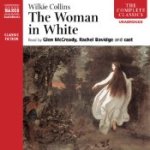
Woman in WhiteI had never heard of Wilkie Collins until a few years ago. When I first started listening to audiobooks, I’d scroll through the listing of classics, and his The Woman In White would come up often. I thought, “How can this be a classic if I have never heard of it?” 😳 I read the description, but it didn’t sound all that interesting. Then last year his book No Name was chosen as one of the books for Carrie’s Reading to Know Book Club. I looked at the description for it and wasn’t interested in it enough to commit the needed time to it, so I skipped that one as well. But then everyone who read it thought it was really good. So when I decided to participate in the Back to the Classics Challenge, one of the categories was “an author you’ve never read before,” and I thought this would be an opportune time to try out Mr. Collins and chose The Woman in White.

I am so glad I did. It was a totally enthralling story. I can understand now why there is not much description of his books on sites that sell them: you can’t tell much about the story without revealing surprises and clues it would be better for the reader to discover in context.

The story is laid out in a series of testimonies. Within them, at least that of the major characters, the narrative is in more of a story form, although one takes the form of a journal.

The story begins with Walter Hartwright, a drawing teacher who finds himself “out of health, out of spirits, and out of money.” A friend fortuitously comes across an opportunity for Walter to teach two young women from a prestigious family in the country, and though Walter has misgivings, he has no good reason to refuse and every reason to accept, so he does. On the eve of his departure, as he walks home from his mother’s house late one night, he is startled by a young woman totally dressed in white who asks him the way to London. There are several things strange about her manner and the whole situation, and most surprising of all is that as they discuss where Walter is headed, this woman knows the very family he is going to. Walter is at first unsure of what to do, but he not only points her in the right direction; he also escorts her to a cab and sees her off. Within minutes a carriage comes by containing two men who are looking for a woman in white.

Where they are from and why they are looking for her is a major factor in the story, so I won’t share it here and ruin the surprise, but as this woman is the title character, obviously her presence and influence will come up again.

The beginning of the book says it is a story of “what a Woman’s patience can endure, and what a Man’s resolution can achieve.” It’s noted as one of the first detective stories written as Walter, though not a professional detective, uses many such techniques to get at the truth of the conspiracy, deceit, and betrayal that arise later in the story.

Collins was a good friend of Charles Dickens, and this book was first printed in installments in one of Dickens’ magazines, but his style is quite different from Dickens’.

Though the story is perhaps a little more drawn out than a modern novel would be, I never felt the story got bogged down. I listened to it via audiobook with several narrators taking the different testimonies of the story, and by the last few chapters I was carrying my phone around with me everywhere to listen and find out how it was all going to end. I had an idea of a couple of things that were going to happen (the foreshadowing of a terrible event pointed to either one of a couple of people because those people hadn’t given any testimony yet), but I didn’t guess exactly how things would work out. I did get a library copy of the book as well to go back and look through some passages a little more closely, but there is a free (at this time) Kindle version of it. And, of course, if you’d like to know more of the plot, including a lot spoilers, there is always Wikipedia.

I’m definitely planning on exploring more of Collins’ books in the future.

Have you read The Woman in White? What did you think?

(This will also be linked to Semicolon‘s Saturday Review of Books.)

This also completes one of my requirements for the  Back to the Classics Challenge hosted by Karen at Books and Chocolate.

classics2014