Laura Ingalls Wilder Reading Challenge Wrap-Up

Laura Ingalls Wilder Reading Challenge
With the end of February, we come to the end of the Laura Ingalls Wilder reading Challenge for this year. If you’ve read anything by, about, or related to Laura this month, please share it with us in the comments. You can share a link back to your book reviews, or if you’ve written a wrap-up post, you can link back to that (the latter might be preferable if you’ve written more than one review — the WordPress spam filter tends to send comments with more than one link to the spam folder. But I’ll try to keep a watch out for them.) We’d also love to hear if you’ve done any “Little House” related activities.
And, if you’ve participated this month, you’re eligible for the drawing for a copy of The Little House Cookbook, compiled by Barbara M. Walker and illustrated by Garth Williams (the same illustrator for my set of Little House books). I’ll choose a name through random.org. a week from today to give everyone time to get their last books and posts finished. You’re eligible even if you don’t have a blog: just share with us in the comments what you read and a few of your thoughts about it. If you already have this book, I can substitute a similarly-priced Laura book of your choice. I’ve spent some time looking through it: it’s more than just recipes: it shares a lot of interesting information as well as excerpts about food and cooking from the books.
For myself, I had planned to make some items from it and have something of a birthday party for Laura on her birthday, the 7th, but that was when my mother-in-law was ill, and between that, moving her to a new place, and my husband’s surgery, I didn’t do any “Laura” activities, but I did manage to get a few books read. These link back to my reviews:
West From Home by Laura Ingalls Wilder, a compilation of letters Laura wrote to Almanzo while visiting their daughter, Rose, and Rose’s husband, and the World’s Fair.
Let the Hurricane Roar by Rose Wilder Lane. Laura’s daughter wrote a fictionalized account of some of her grandparent’s experiences.
On the Banks of Plum Creek by Laura Ingalls Wilder, covers the same events as Let the Hurricane Roar plus a few more: a grasshopper plague, blizzards, attending school for the first time, meeting Nellie Oleson.
I had originally planned to read Farmer Boy, about Almanzo’s childhood, but when I discovered the Plum Creek book covered some of the same events as Rose’s book, I wanted to go ahead and read it while the other was fresh in my mind. Farmer Boy was the second book written of the Little House books, but it can really be read at any point. I do want to read it before Almanzo shows up in Laura’s story, though!
Thank you all for participating! That’s what makes this challenge so fun. I’ve already come across a book or two I hadn’t known of before that I want to read next time through some of your reviews. I’m looking forward to your thoughts on what you’ve read!

What’s On Your Nightstand: February 2013

What's On Your NightstandThe folks at 5 Minutes For Books host What’s On Your Nightstand? the fourth Tuesday of each month in which we can share about the books we have been reading and/or plan to read.

February has seemed like a much longer month than 28 days this year. But I’ve managed to get some reading and audiobook-listening in.

Since last time I have finished:

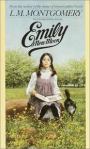
Emily of New Moon for Carrie’s Lucy Maud Montgomery Reading Challenge, reviewed here.

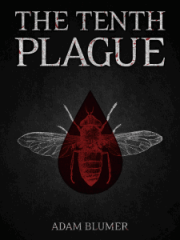
The Tenth Plague by Adam Blumer, reviewed here. Suspenseful Christian fiction about a warped man who uses the Biblical ten plagues of Egypt as a playbook to exact revenge, and the couple who is trying to find and stop him.

The Scarlet Letter by Nathaniel Hawthorne, reviewed here, for Carrie’s Reading to Know Book Club.

Let the Hurricane Roar by Rose Wilder Lane, reviewed here. Laura’s daughter wrote a fictionalized account of some of her grandparent’s experiences. This one and the next two were for the Laura Ingalls Wilder Reading Challenge which wraps up Thursday.

West From Home by Laura Ingalls Wilder, reviewed here, a compilation of letters Laura wrote to Almanzo while visiting their daughter, Rose, and Rose’s husband, and the World’s Fair.

On the Banks of Plum Creek by Laura Ingalls Wilder, reviewed here. It covers the same events as Let the Hurricane Roar plus a few more: a grasshopper plague, blizzards, attending school for the first time, meeting Nellie Oleson.

These High Green Hills (audiobook) by Jan Karon, Book 3 of the Mitford series, not reviewed. There is a lot in this book: dealing with a case of child abuse, an unidentified burn victim, and the death of a long-time Mitford resident, as well as the continuing adventures of Father Tim and the rest of Mitford.

I also wrote about books I remember reading as a child and my reading history here.

I’m currently reading:

Dreams in the Medina by Kati Woronka, courtesy of a free voucher Lisa graciously shared with me, a coming-of-age story about several girls in Syria.

Out to Canaan by Jan Karon (audiobook), Book 4 of the Mitford series.

Secret Thoughts of an Unlikely Convert by Rosaria Champagne Butterfield: a lesbian leftist professor who hates Christians….becomes one. Just started this one and can’t wait to dig in more.

Coming up next:

Introverts in the Church: Finding Our Place in an Extroverted Culture by Adam S. McHugh. I know it’s okay to be an introvert, but I struggle with whether I sometimes play the introvert card when I should be seeking God’s grace to extend myself. We all need to leave our comfort zones sometimes.

A New Song by Jan Karon.

A Maud Hart Lovelace book for Carrie’s Reading to Know Book Club for March. I’ve never read her: any suggestions?

I need to pick something from my multitude of Kindle app downloads! But I’ll decide that after I finish some of the above.

So what are you reading?

Update: I am linking this post up with

btt  button Booking Through Thursday, a weekly meme related to books. Today’s (2/28) question is “what are we reading,” which ties in nicely with this post. 🙂

What did you read as a kid?


Carrie had someone ask this question in her comments, and she answered yesterday. My response grew into several paragraphs, so I figured it would be better to form them into my own blog post rather than posting a full-fledged post in her comments.

Since I am in my mid-fifties, my childhood was a long time ago. I don’t remember whether my mom read to me, though I assume she did. I LOVED reading in school. The first book I remember reading from is A Child’s Garden of Verses by Robert Louis Stevenson. I must have read several Little Golden Books, because they were familiar to me when I started reading them to my kids. I remember checking out a biography of Martin Luther from the school library in maybe the second grade. My dad did not read much at that time (though he did after he retired), and he thought I was being lazy if I was sitting around reading much. I remember being admonished about that a number of times, so I must have been reading a lot, but it doesn’t seem to have dimmed my enthusiasm. Since I was the oldest of six kids, whatever children’s books we had did not survive the long run through everyone’s use.

I never heard of Anne of Green Gables until I was a young adult (when the Megan Follows films came out) or Narnia until less than 15 years ago. When someone in our church talked about acting in a local production of The Lion, the Witch, and the Wardrobe, I was suspect. 🙂 I think it was probably then that I checked the series out and loved it. I think it’s been in that time frame that I discovered The Hobbit and LOTR, too.

Somehow I even missed Nancy Drew and The Babysitters Club! I do remember reading Little Women  and its sequels many times, and I must have read some of the Little House books, because they were familiar to me later. Then in high school I discovered and loved Dickens with David Copperfield. Somewhere along the way I read Great Expectations and Oliver Twist and didn’t like those quite so well, and attempted A Tale of Two Cities several times over the years before finally getting through it and then instantly rereading it and deeming it my favorite novel. I remember some book from the Scholastic book paper about a girl getting pregnant (and my dad was very angry I was reading that) and one called The Endless Steppe about a girl in Russia

I remember studying a different Shakespeare play each year in high school but not getting much out of it. My sophomore English class was memorable because we made a film, but I don’t remember what we read. That was the early 70s, just coming off the hippie era, and my teacher that year “fit” into that era well.

It was in college that I first discovered missionary biographies, and that was nurtured by the church I attended for the first 14 yeas we were married which had in the monthly ladies’ meetings a librarian who talked briefly each meeting about a book and had them there to check out.

Early married years were when I first discovered Christian fiction with Janette Oke. In high school I had read Not My Will by Francena Arnold, which was kind of a precursor of modern Christian fiction, and it spoke to my heart.

I know we explored good literature in three of my college literature classics, but all I can remember is discovering and loving Anne Bradstreet and then Jane Austen’s Emma. A lady professor who attended my church taught a class on Shakespeare that I really wanted to take, but just couldn’t work it in.

Since I’ve started a blog I’ve purposed to read through some of the classics. I’ve read all of Austen’s books, Les Miserables, The Count of Monte Cristo, and many others. I’m enjoying discovering them as an adult, though I am sorry I missed being exposed to them at a younger age. I also enjoy rereading some of the ones I had read earlier, like Little Women and the Little House books and Dickens. I’ve had fun exploring children’s classics that I missed along the way, like all of the Anne books, Narnia, Caddie Woodlawn, Five Little Peppers and How They Grew (a favorite, though I need to reread it again). And I continue on with biographies, “real-life” stories, Christian fiction and non-fiction, and an occasional secular fiction or non-fiction.

Some favorites I read to my own kids when they were small were the Francis books, Curious George, Clifford, the Little Bear series by Else Holmelund Minark, the Jesse Bear series by Nancy White Carlstrom, Mike Mulligan, The Little Engine That Could, Robert McCloskey books (Make Way for Ducklings and Blueberries for Sal), Dr. Seuss, P. D. Eastman, Keep the Lights Burning, Abbie by Peter Roop one of my all-time favorites, about a girl who has to keep the lighthouse lamps burning when her father is delayed from getting back home due to a storm), The Puppy Who Wanted a Boy by Jane Thayer, the Snipp, Snapp, and Snurr books by Maj Lindman, and of course the Little Golden Books. One of their favorites was Gus the Bus, who goes frolicking off his usual route when his tires get overfilled. We kept that even though it is taped together.

So…what did you read when you were a kid?

(Graphic Courtesy of Grandma’s Graphics.)

Book Review: Let the Hurricane Roar

Let the Hurricane RoarLet the Hurricane Roar by Rose Wilder Lane, daughter of Laura Ingalls Wilder, is also published as Young Pioneers. In some versions the characters are named Molly and David: in others they are Charles and Caroline. The events are based on the same events covered in Laura’s book On the Banks of Plum Creek, though some details have been changed.

I had wondered about the title, since hurricanes don’t generally come to the prairie, but the title comes from a hymn.

Molly and David are very young newlyweds (16 and 18) who head west to claim a homestead. Though they live in a little sod house and don’t have many possessions, they are gloriously happy, especially when a good wheat crop grows and they have a baby son. But disaster strikes in the form of a grasshopper plague that destroys the crop. David had borrowed against the lost crop, so he must travel to look for work. Even though neighbors give up and leave in the face of similar difficulties, Molly stays on through a terrible winter so claim jumpers won’t steal their land.

A former pastor used to bestow high compliments on people when he called them “pioneer stock” — sturdy, dependable, strong, not easily swayed. David and Molly would both qualify for this compliment. I am sure I would not! At least not when it comes to living in a dirt house all alone through several blizzards. The book realistically portrays Molly struggle with being alone, wrestling with all of the “what ifs,” and David’s anger over his failure, poor choices (going into debt), and difficult circumstances, rather than portraying them as always smiling and unflappable.

Some of that “pioneer stock” is shown as well in Molly’s attitude when a neighbor complains about hardships, and Molly thinks to herself, “Well, the land isn’t going to feed you with a spoon!” Quite different from the attitude of many today.

I also liked the description at the beginning that Molly “never quite lost the wonder that she, quiet and shy and not very pretty, had won such a man as David. He was laughing and bold [and] daring.”

It’s obvious Rose loved and admired her grandparents, and I am glad she shared this part of their story with us. Part of her goal in writing it was to “inspire Depression-era readers with its themes of resilience in the face of hardship and the strength of the American character” (The Wilder Life by Wendy McClure, p. 168).

Carrie and Amy both reviewed this book last year — in fact, Carrie’s review is where I think I first heard of it. They both focus more on the relationship between Molly and David than I did, but after rereading their reviews as I came to the end of mine, I do remember that that’s part of what drew me to this book, besides its relationship to Laura. Though the book is not written as a romance per se, and as Amy said, Rose writes with restraint, the realities as true love as opposed to “romance novel fiction” shine through it.

The only blight on this novel is that Rose used this information from her mother’s material without her mother’s knowledge or permission. Laura was understandably upset, and they eventually came to terms with it and moved on.

I was originally going to read Farmer Boy next for the Laura Ingalls Wilder Reading Challenge, but since it is Almanzo’s childhood story and doesn’t need to be read in order, I think I am going to read On the Banks of Plum Creek for Laura’s version of the events in this story while this book is still fresh in my mind.

Laura Ingalls Wilder Reading Challenge

(This will also be linked to Semicolon‘s Saturday Review of Books.)

Save

Book Review: West From Home by Laura Ingalls Wilder.

West From HomeWest From Home is a compilation of letters Laura Ingalls Wilder wrote home to her husband, Almanzo, while she was in San Francisco visiting her daughter and the 1915 World’s Fair, also called the Panama-Pacific International Exposition in celebration of the completion of the Panama Canal, which opened trade with other countries. Her daughter, Rose Wilder Lane, had kept the letters in a box after her mother’s death, and they were among other possessions passed along to her heir, Roger Lea McBride. When he discovered them, he decided to publish them in a book for Laura fans.

Laura spent about two months with Rose and her husband. She was 48; Rose was 29. Besides all the sights and wonder of the Exposition, Laura got a glimpse of San Francisco, Rose’s work, different ways business was done, and the ocean. I love the description of Laura and Rose taking their shoes off and running in the water.

She visited to a cannery, and “her doubts about the cleanness of canned goods from a large plant are removed” (p. 54). She was intrigued by the different nationalities of people she saw. She was enthralled by the light show in the evenings. And she took in a great deal from the city and the Exposition and tried to describe it in great detail to Almanzo.

Though there are photos included in the book of some of the sights around the time she was there, they are not hers. I don’t know if they did not have a camera, or if it was just inconvenient or expensive to shoot many photos. But Laura tried to describe with as much detail as she could what she was seeing so Almanzo can experience it as much as possible, too.

Almanzo couldn’t leave the farm, and it is clear in several of the letters that Laura feels conflicted about leaving him with all the work herself. A number of things I read last year about her showed that she was an integral part of the farm work.

Her letters are quite practical, not romantic or even affectionate much at all. That may have been due to the era, but overall she was a very practically-minded person, so that may just be how she expressed herself.

In several places it is mentioned that Rose was trying to persuade her parents to move near her, and Laura (actually called Bessie by Almanzo because he had a sister named Laura and called Mama Bess by Rose) explored the costs and details involved in moving some of their ventures to CA. But ultimately she felt, “There is no place like the country to live and I have not heard of anything so far that would lead me to give up Rocky Ridge [their home] for any other place” (p. 89).

Laura was also writing her farm-paper columns at this time, and Rose had several writing assignments, but there was talk of wanting Rose to help her block out a story. I’m assuming these were some of the first efforts towards what would eventually become the Little House stories.

One of the reasons I especially wanted to read this book was for a glimpse into Laura’s relationship with Rose. I had read mixed reports about how well they got along. There is nothing in these letters to indicate they didn’t get along, and if they didn’t, it would seem Rose wouldn’t be so keen on wanting them to move near her. There are indications that Rose was more emotional and Laura more practical and down-to-earth, so I am sure that caused some misunderstandings sometimes. Of course, these cover just a short period in their lives, so they are not the whole story.

There are some family glimpses as well, in Laura’s concern about whether they’d get back $250 they had loaned to Rose and her husband, and Rose’s note to her father with concerns that Laura was getting too fat (!!!)

All in all it was a fairly quick (171 pages, if you count some recipes at the end) and enjoyable read. It wasn’t riveting, but it was an interesting peek into Laura’s real life.

Laura Ingalls Wilder Reading Challenge

The Laura Ingalls Wilder Reading Challenge 2013

Laura Ingalls Wilder Reading Challenge

Welcome to this year’s Laura Ingalls Wilder Reading Challenge! Since February is the month of her birth and her death, it seemed a good time to read anything related to her. Any of the Little House books are fine, but if you’d like to read something other than those, I listed a few books related to Laura Ingalls Wilder here, and of course I’m sure there are several biographies and such that I don’t know about.

Let us know in the comments below what you’re planning to read pertaining to Laura this month, and at the end of the month I’ll have another post where we can share how we’ve done and what we’ve thought about what we read. You can join in at any time during the month and you don’t have to have a blog to participate. And there just may be a prize of some kind for those participating.

If you do anything else Laura-related, we’d love to hear about that, too: last year Bekah tried some prairie-type crafts, foods, and activities, and a while back Annette hosted a Little House-themed birthday party for her daughter.

For myself, I plan to read:

West From Home, Laura’s letters back to Almanzo when she went to visit her daughter and the World’s Fair in San Francisco.

Let the Hurricane Roar by Rose Wilder Lane, Laura’s daughter, about her grandparents early years on the prairie, written before the Little House books.

Farmer Boy by Laura Ingalls Wilder.

If I have time before the end of the month, I may go on in the Little House books. But it’s a short month, so we’ll see!

I got the Little House cookbook last year, so I may try some dishes from that as well.

Happy reading!

Feel free to grab the button for the challenge to use in your post:

Laura Ingalls Wilder Reading Challenge
<div align="center"><a href="https://barbarah.wordpress.com/2013/01/02/announcing-the-second-annual-laura-ingalls-wilder-reading-challenge/" title="Laura Ingalls Wilder Reading Challenge"><img src="https://barbaraleeharper.com/wp-content/uploads/2011/11/liw.jpg"   alt="" width="144" height="184""" alt="Laura Ingalls Wilder Reading Challenge" style="border:none;" /></a></div>

Book Review: Emily of New Moon

L. M. Montgomery Reading Challenge Reading to Know - Book Club

I read Emily of New Moon by L. M. Montgomery for Carrie‘s Lucy Maud Montgomery Reading Challenge. and Reading to Know Book Club for the month of January.

EmilyEmily is similar to LMM’s Anne of Green Gables in many ways: both are orphans and come to live with stern older women. Both are highly imaginative and high-strung. But Emily’s world is harsher, darker, at least at first, whereas Anne’s is more charming and optimistic.

Emily’s mother had died years ago, and Emily lives alone with her beloved father, who is dying of consumption. They had had no contact with her mother’s people, the proud Murrays of New Moon, because her mother had run away and eloped with her father, to the severe disapproval of the Murrays. But “Murray pride” insures they will do their duty by Emily, and the various family members draw lots to see who will take her. The lot falls to Aunt Elisabeth (who is much harsher than Anne’s Marilla, who, though she was not warm, was not unkind.) The blow is softened for Emily a bit by the fact that her Aunt Laura and Cousin Jimmy (who “may not be all there, but what is there is very nice” p. 209) also live with Elisabeth, and they both love Emily, though they don’t “cross” Elisabeth.

It was astounding to me that no one understood either Emily’s grief in the loss of her father nor the jolt it would have been to leave all she had known to live with strangers. But with the resilience of childhood she soon learns the ways of the household and soon learns to love much about New Moon. Starting school is another trial by fire, but she makes dear friends with a girl named Ilse, who has been allowed to run rather wild by her inattentive father, Teddy, a quiet classmate who draws exceptionally well but whose mother is somewhat disturbed, and Perry, who has never been to school but has sailed hither and yon with his father.

Emily’s outlet is writing. She loves “the magic…made when the right words are wedded” (p. 273). She has a vivid imagination and writes fanciful stories and poems and pours out her heart about her trials and tribulations in letters to her father.

I wasn’t sure how well I really liked this book until about the last third of it, when Emily and Aunt Elisabeth have their ‘breakthrough” (and I loved that everything wasn’t all “happily ever after” that, but their different personalities and views still caused them to clash sometimes.) And then the chapter “When the Curtain Lifted” was the best in the book, I think. I also enjoyed Emily’s growth through the book, both in her personalty, as she “learns to mingle serpent’s wisdom and dove’s harmlessness in practical proportions” (p. 314), and in her writing, as she begins to realize that much of her early work is fanciful trash but is encouraged by the glimmers of talent a few others see.

This book is said to be more autobiographical than Anne, with some of the events in Emily’s life taken from LMM’s. It was interesting that a poem someone sent to encourage Emily about the Alpine path was one that also encouraged LMM: her autobiography takes its title from the same poem.

There is also a television series based on Emily, but I have not seen it.

I had hoped to read all three Emily books, but I only got through the first one, so I’ll probably save the next two for next year’s LMM challenge. The book for February’s Reading to Know Book Club. (which is all classics this year: take a peek here and see if you’d like to join in for any of them) is The Scarlet Letter, which I’ll probably listen to via audiobook.

And if anyone is looking for another challenge for February, I invite you to check out the Laura Ingalls Wilder Reading Challenge which starts tomorrow!

Laura Ingalls Wilder Reading Challenge

My past readings for the LMM Reading Challenge are (all linked to my thoughts on them):

Anne of Green Gables
Anne of Avonlea
Anne of the Island
Anne of Windy Poplars
Anne’s House of Dreams
Anne of Ingleside
Rainbow Valley
Rilla of Ingleside
Looking for Anne of Green Gables: The Story of L. M. Montgomery and Her Literary Classic by Irene Gammel

(This will also be linked to Semicolon‘s Saturday Review of Books.)

The Tenth Plague: Book Review and Author Interview

The-Tenth-PlagueIn The Tenth Plague by Adam Blumer, Marc and Jillian Thayer have just adopted a new baby boy, and a friend has invited them to  a Christian-themed resort for some rest and time together as a new family.

When they arrive, however, the retreat is in upheaval. A company planning a new Bible translation is having meetings at the resort, and a throng has arrived to protest. Someone rigged the water system to dispense what appears to be blood from the faucets. What seems an odd prank is soon discovered to be the first in a series of events based on the Biblical ten plagues of Egypt, some of them resulting in fatalities. Marc calls on a friend, a retired homicide detective, to help with the investigation as the plagues escalate.

Gillian, meanwhile, runs into someone who has hurt her deeply in the past. She thought she had put it all behind her, but the old anger and hurt rush back in like a flood,  and she wrestles with the need to extend forgiveness.

The Tenth Plague is a sequel to Fatal Illusions, Adam’s first book (which I reviewed here), but you don’t have to have read the first book to understand and enjoy the second. Both books are tremendously suspenseful and feature realistic, everyday Christian people trying to discern and apply God’s will in their circumstances. I enjoyed them both very much!

Here is an interview with Adam:

blumer_adam_portrait

What was your inspiration behind The Tenth Plague?

 One day I was reading the book of Revelation and came across 22:18–19. “I warn everyone who hears the words of the prophecy of this book: if anyone adds to them, God will add to him the plagues described in this book, and if anyone takes away from the words of the book of this prophecy, God will take away his share in the tree of life and in the holy city, which are described in this book” (ESV). My mind began playing the “what if” game. Would God really bring a biblical plague on someone who tampered with His Word? I chatted with a few theologian friends, and the plot emerged from there.

How does this novel compare with your first novel, Fatal Illusions?

Though the plot, of course, is different, the two novels share a number of similarities. Both are set in Michigan’s Upper Peninsula, where I live. I like to write about average folks like Marc and Gillian Thayer, a pastor and his wife who face unexpected, even threatening, events. Of course, there’s another really bad killer who wants to do them harm, and their retired homicide detective friend, Chuck Riley, once again comes out of retirement to help them. I also like to weave in a historical event that somehow relates to the present day. In Fatal Illusions, it was the killer’s obsession with Houdini; in The Tenth Plague, an old mine disaster plays an important role. The past always plays an important role in the present—a running theme in my novels. Overall, I like to write about redemption: how biblical truth offers the answers to the complicated issues of life. Stories, like parables, present some of the best ways to illustrate biblical truths.

 What was one of the most important lessons you learned during the writing of this novel?

The power of the collaborative process. I had a fairly strong first draft, but I was stuck. A novel editor provided a creative springboard and helped me see where my true story lay. Without her help, I doubt this story would have seen the light of day.

 What part of writing this novel took the most work?

 This novel required a ton of research. From an old mining tragedy to autism, from adoption law to anthrax, from pheromones to the Oklahoma City bombing, the research for this one required much more than I ever expected. I’m so thankful for technology and ease of access, thanks to the Internet. Without Google and so many resources at my fingertips, I’d probably still be researching this story.

 So far, what has been your favorite work experience in life?

 During one summer between years in high school, I worked at a library, a book lover’s paradise. Granted, a lot of the work involved stocking shelves, but being surrounded by so many fascinating books and interesting authors was pure heaven. I was born a die-hard book lover, and I’ll probably die one too.

Consider the qualities that make you unique. How do these qualities come out in your writing?

 I love suspense fiction and history, so a blending of the two always seems to come out in my writing. In high school, I won awards in calligraphy; Gillian Thayer, my female lead, is into calligraphy in a big way (it’s her job). I’ve always been intrigued with how one’s past impacts his or her present and future. This is a recurring theme in my novels because it’s part of who I am. Now that I think about it, what I write is inseparable to some degree from who I am.

 Introduce your plot summary and main characters. What is your favorite part of the story?

Water turns to blood. Flies and gnats attack the innocent. Marc and Gillian Thayer’s vacation resort becomes a grisly murder scene, with a killer using the ten plagues of Egypt as his playbook for revenge.

When their friend turns up dead, Marc and Gillian put their vacation on hold, enlist the help of a retired homicide detective, and take a closer look at the bizarre plagues as they escalate in intensity. Meanwhile, a stranger is after the Thayers’ newly adopted baby. Will they uncover the truth behind the bitter agenda before the tenth plague, the death of the firstborn son?

 My favorite part is when the firstborn son is revealed and the novel culminates in the tenth plague. This is the most suspenseful and action-packed part of the story, with several key characters in jeopardy. I had a blast writing it.

 One of the main themes of The Tenth Plague is confronting and dealing with your past. What can readers take away from this theme, especially in a novel that deals with religion and death?

 Both the villain and my heroine, Gillian Thayer, grapple with heartbreaking real-life issues from their past. But how they respond shows two very different paths. My hope is that readers will see the stark contrast in the context of biblical truth presented in the story. The bottom line is that God is enough, and He offers the solution to every problem of life. This is another repeated theme in my stories. Thank you for the opportunity to talk about my latest project.

Some content used by permission of Kirkdale Press

Tenth Plague Forgiveness

The Tenth Plague is available in e-book format only from Amazon and Vyrso. You can read an excerpt here.

Thanks to Adam for sending me a copy in exchange for my honest review.

(This will also be linked to Semicolon‘s Saturday Review of Books.)
Book Giveaways

Author Adam Blumer writes edge-of-your-seat suspense infused with Biblical principles. His new book, The Tenth Plague, will be released as an e-book on January 29. I’ll have more to say about it then, but meanwhile, if you’d like to have a chance to win a copy of The Tenth Plague or a physical copy of his first book, Fatal Illusions (linked to my review), go here or click on the graphic.

10th Plague Giveaway

Adam discusses the book here, and you can read an excerpt of The Tenth Plague here.

A few quick book reviews

I finished a few books fairly close together so I thought I’d review them all at once.

Journey Into ChristmasJourney Into Christmas by Bess Streeter Aldrich was recommended on someone’s blog, but I forget whose. The book is a collection of short stories, all, of course, having something to do with Christmas, in different times and settings. Some are sweet, some are poignant, none are frothy. Probably my favorite was an excerpt from her novel A Lantern in Her Hand (which I think I’d like to read some time). In the short story from it, times have been extremely hard for folks on the frontier, with no good crops for several years in a row. Most aren’t in the mood to celebrate Christmas and have little with which to celebrate anyway. Abbie, a young wife and mother, starts out feeling the same way, despairing at first, but then decides to do what she can, even as others scoff. Her husband gets into the Christmas spirit as well, and soon they both have stayed up late or stolen moments to make little gifts for the children, and that Christmas goes down as one that remains most in their memories. Abbie’s efforts remind me of a quote I once saw from a pioneer woman that went something like, “I make my quilts well to keep my family warm; I make them beautiful to keep my heart from breaking.”

I did find, however, that it is hard for me to get into short stories. You’d think they’d be easy to pick up and put down, especially during a busy time like Christmas, but without the momentum of one chapter carrying over to the next, for me it was harder to stay with it. But overall it was a good book.

100-Pound-Loser100 Pound Loser: How I Ate What I Wanted, Had Four Babies, & Still Took Control Of My Weight – And You Can Too! by Jessica Heights of Muthering Heights is an e-book available in a Kindle format or as a PDF file. I don’t remember how I became aware of this, but the title is certainly an attention grabber, especially for anyone who needs to lose weight.

What was there was good and inspirational: I just wish there was more of it. When anyone has successfully lost weight, the first thing everyone wonders is “How did you do it?!?!” The author shares some of the details, but not as much as I would have liked.

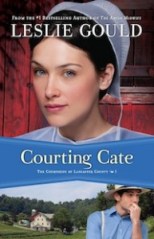
Courting-CateI won Courting Cate from its author, Leslie Gould, through a fun Fall Scavenger Hunt involving several Christian fiction authors. I had never read Leslie before, and though I don’t read a great deal of Amish fiction, this title intrigued me because it is based on Shakespeare’s Taming of the Shrew. That is one of his plays I have never seen or read, but I knew the basic gist of it. I was glad I didn’t know the plot details, though, because then much of the book was a surprise to me, and afterward it was fun to find out more about Shrew through Wikipedia and SparkNotes and compare.

Cate, in this story, is a sharp-tongued, short-tempered Amish young woman who works in her father’s shop, loves to read, is not handy in the kitchen, and has decided she will never marry. Her sister, Betsy, seems to attract potential suitors like flies, but not Cate: she seems to repel them. When Pete Treger comes to town, she’s strangely attracted to him, but as the sparks fly even with him, she knows they have no future. But then her father makes an edict that Betsy can’t marry until Cate does, and since Betsy wants to marry, she and her cohorts conspire to bring Pete and Cate together.

I was expecting this book to be lighthearted and comedic, and it is in some places, but I was surprised and touched at the poignancy of Cate’s feeling unloved and unlovable and her wrestling with God when she finds herself stuck in very hard circumstances. I ended up loving this book and looking forward to reading more from Leslie.

(This will also be linked to Semicolon‘s Saturday Review of Books.)