The L. M. Montgomery Reading Challenge

L. M. Montgomery Reading Challenge Every January Carrie‘s hosts a Lucy Maud Montgomery Reading Challenge.

Last year for the challenge I finished rereading all of the Anne books, so I’ve been looking forward to exploring new-to-me L. M. M. territory. I decided to go with the Emily books: Emily of New Moon, Emily’s Quest, and Emily’s Climb, partly because they were the next ones she published, partly because I think I have heard more about them than some of the others.

I am going to commit to reading at least the first one. I’d like to read all of them, but so far the library has on hold for me only the last two: if it can get the first one in in time for me to read all of them, I’d like to do that and complete the set this month. The Anne books went fairly quickly, so I am trusting these will, too.

If you’d like to fins out more about the challenge or see what others plan to read for it, you can check out Carrie’s post about it here.

This challenge dovetails with Carrie’s Reading to Know Book Club for the month of January, which focuses classics this year, and we are invited to read any L.M. Montgomery title of our choosing.
Reading to Know - Book Club

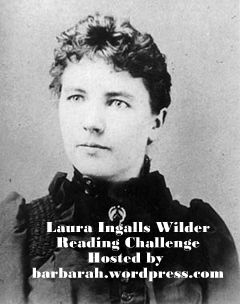
Announcing the Second Annual Laura Ingalls Wilder Reading Challenge

I had such a good time at last year’s Laura Ingall’s Wilder Reading Challenge that I wanted to do it again!

Laura was born February 7, 1867 and died February 10, 1957, so February seemed a fitting month to honor her. Many of us grew up reading the Little House books, and interest was renewed several years ago when the TV series was popular. I don’t know if there has ever been a time when there wasn’t interest in the Little House series since it first came out. They are enjoyable as children’s books, but they are enjoyable for adults as well. It’s fascinating to explore real pioneer roots and heartening to read of the family relationships and values.

For the reading challenge in February, you can read anything Laura has written or anything written about Laura. You can read alone or with your children or a friend. You can read just one book or several throughout the month — whatever works with your schedule. If you’d like to prepare some food or crafts somehow relating to Laura or her books, that would be really neat too.

On Feb 1 I’ll have a post up where you can sign in and let us know you’ll be participating and what you think you’d like to read that month. That way we can peek in on each other through the month and see how it’s going (that’s half the fun of a reading challenge). On Feb. 28, I’ll have another post where you can share with us links to your wrap-up post. Of course if you want to post through the month as you read, as well, that would be great, and I might share those from time to time. You don’t have to have a blog to participate: you can just leave your impressions in the comments if you like.

So, what do you think? Anyone interested? Make plans now to join us this February — I’m looking forward to seeing you then!

Feel free to grab the button for the challenge to use in your post:

Laura Ingalls Wilder Reading Challenge
<div align="center"><a href="https://barbarah.wordpress.com/2013/01/02/announcing-the-second-annual-laura-ingalls-wilder-reading-challenge/" title="Laura Ingalls Wilder Reading Challenge"><img src="https://barbaraleeharper.com/wp-content/uploads/2011/11/liw.jpg"   alt="" width="144" height="184""" alt="Laura Ingalls Wilder Reading Challenge" style="border:none;" /></a></div>

Book Review: Unless It Moves the Human Heart

Unless it Moves the Human HeartI’ve hadn’t read anything of Roger Rosenblatt’s before, but somehow the name sounded a little familiar when I first saw the book Unless It Moves the Human Heart: The Craft and Art of Writing. The title grabbed me. Anyone who has any aspirations to write has, I think, the desire to touch someone else in some way; otherwise we’d just keep private journals.

Rosenblatt has written and won awards for columns, essays, books, and novels. He styled this book as one of his writing classes. These particular students and conversations are fictitious, but I am sure they are drawn from classes he has taught over the years. Neither the book nor the classes are very systematic: he says later in the book what I had already figured out, that he will come to class with a plan but a question from a student will carry the lesson into another direction. The interchanges do seem more like conversations than lessons, but that probably keeps them more interesting. “I may permanently forget whatever it was I originally planned to say. But it is much more exciting to allow oneself to be swung into a new and foreign path, just as in writing when you find yourself in the midst of the strangest sentence, and wonder how you got there” (p. 116).

He does work various principles into the conversations, the main one being restraint (“if you have the goods, there’s no need to dress them up,” p. 88) and “the preference of the noun to the adjective and the verb to the adverb” (p. 148), but even there he admits that “if I had foisted my preference on Keats, there would have been no Keats. And ‘rosy-fingered dawn’ is a …lot more beautiful than ‘dawn'” (p. 131).

The first part of the book had me thinking, “Wow, this is neat! I’d love to attend a class like this.” The second part had me disagreeing with him in spots.

Some of the parts I especially liked:

In a section on short stories, he says, “You know the character and his or her situation from the opening. You even know what’s likely to happen. The story is about why what you know matters” (p. 12). It struck me that in a sense that’s true of even longer stories and books. Something may be completely predictable and yet still be enjoyed because of what matters in the story.

“If we look like we’re trying to change the world, the writing will sink from the weight of its own piety. But in the best of our work, the idealism is there, like trout below the surface of the water. Of course you want to try to change the world. You just don’t want to show your cards. But look at the world. Who would not want to change it? Books count. They disturb people” (p. 59).

“There’s no purpose to writing unless you believe in significant things — right over wrong, good over evil. Your writing may deal with the gray areas between the absolutes, and all the relativities that life requires. But you still need to acknowledge that the absolutes exist, and that you are on the side of the angels” (p. 60).

“Writing is the cure for the disease of living. Doing it may sometimes feel like an escape from the world, but at its best moments it is an act of rescue. Each of you has his own way of seeing into suffering and error. But you share the desire to save the world from its blights by going deeper into them until they lie exposed. You show up the imperfections of living for what they are. You hope to write them out of existence” (p. 60).

Reading good writers “is like hanging around with a superior mind. You can never equal that mind, but you strive to do your best, and not to embarrass yourself in his presence” (p. 92).

Then there were things I wasn’t sure that I agreed with, like the following:

In contrasting writers to journalists, who have to clearly communicate, the author says “There’s a mystery to the art of writing. You write, yet you don’t always understand what you’ve written. And you’re not always understood. And you’re never fully understood. And this is a good thing– dwelling in and creating mysteries” (p. 74). I can see that to some extent, but I’d think even fiction writers want readers to understand what they’re trying to convey. Some of this kind of philosophizing got a little too metaphysical for me.

Likewise he says of a memoir, “A pure memoir meanders without achieving meaning. It avoids meaning — more like fiction that is real” (p. 88). If he means there’s no symbolism, ulterior motives or infused meaning of the writer, etc., I can agree with that. Yet I wouldn’t say there is no meaning, else no one would read it. There has to be some meaning to the life written about, the things the character did and learned. Personally I’ve drawn a lot of meaning — or maybe a better word would be inspiration — from reading biographies.

“A poet tries to identify a situation or an emotion as accurately as possible…At the same time, the poet knows that perfect identification is impossible, I think that’s where imperfection is the same thing as divine” (p. 129-130). Saying that imperfection is divine seems oxymoronic to me.

This a short book at 155 pages and reads easily. I liked the banter between Rosenblatt and his students and the fact that his representative students were a variety of ages, some even older than myself, rather than just college age. It is a secular book, so there are a few words and illustrations that I would personally find offensive but understand their being in a book like this. I enjoyed the variety of other writings that he referred to, some of which I want to explore further. Overall I found some good instruction and a lot of inspiration and food for thought in this book.

(This review will also be linked to Semicolon‘s Saturday Review of Books.)

Book Review: At Home in Mitford

MitfordI first encountered Jan Karon in the pages of Victoria magazine some years ago. Victoria chooses a “Writer-in-residence” whose work they showcase in each issue throughout the year, and Jan was featured one year. I loved her warmth and hominess and clear faith depicted — in fact, I was surprised and pleased that a secular magazine would feature a writer whose faith was integral to her stories. I believe it was there I also first heard of and then sought out Mitford.

At Home in Mitford is the story of Father Tim Cavanaugh, a nearly 60 year old single Episcopal priest ministering in a fictional small town in NC which is replete with colorful and sometimes eccentric characters. He is so busy with his parish that he hasn’t been on a vacation in years and can’t seem to get away for more than a day or two, and the strain is starting to show.

Then unexpectedly a dog “as big as a Buick” comes bounding into his life, an untamed, neglected boy comes into his care, and a new enchanting neighbor “pops through the hedge” to visit. The discovery of stolen jewels weighs heavily on him, he’s asked to bear burdens and secrets of his people, and a condition of his own begins to manifest itself.

I strongly disagree with this assessment that Karon “satirizes Father Tim and the citizens of Mitford.” I see no satire here at all but rather realism, warmth, humor, and pathos. The characters are clearly and lovingly drawn with flaws, quirks, and endearing features intertwined realistically. As I mentioned earlier, there is a warmth, a hominess, a coziness in Karon’s stories. Here is one example when Father Tim goes to the home of good friends for dinner:

In the center of the kitchen was a large pine table, bleached by age, with benches on either side. A mason jar of early wildflowers sat in the center, along with a deep-dish apple pie, fresh from the oven. A dazzling beam of light fell through the windows that looked out to the stables.

Their guest stood transfixed. “A foretaste of heaven!” he said, feeling an instant freshness of spirit.

And then follows gently irony as he muses on the fact that everything is calm and peaceful and nothing dramatic or surprising happens there just before he’s blindsided by major news (good news this time.)

I enjoyed as well the beginnings of a “older” romance later in the book. It’s nice to see love stories aren’t just for the young. 🙂

Karon also weaves quotes from various authors, poets, and preachers throughout the book. She must be widely read but does not come across as pretentious at all.

I don’t know if her books would be classified as Christian fiction: I don’t think so. But faith is integral to the story. I had not know much about Episcopalianism before reading this book and I don’t know all the fine points of their beliefs, but the gospel is quite clearly and naturally presented.

Later books were a bit too ecumenical for me, but I could read them as a continuing part of the story, acknowledging but not agreeing with some of the happenings. The one thing that particularly bugged me was that many characters have a tendency to say “Good Lord!” or “Oh Lord,” which I perceive as taking the Lord’s name in vain, using something holy and glorious as an empty epithet. It was often said that Father Tim used such phrases as a prayer, though.

I was surprised to learn recently that this book started out as a weekly newspaper column and was begun when Jan was nearly 50 (that gives me hope that there may be a story in me yet!)

When I first read the books however many years ago, I borrowed them from the library. This time I listened to the audiobook read by stage actor John McDonough. It took me a while to get into his style. He seemed a little ponderous at first, but in some parts he reminded me of a beloved pastor from my teen and college years, and once I got into the story I enjoyed his rendition very much. Mitford is not a place to rush through, but to sit down, relax, and take your time.

I thoroughly enjoyed this revisit. the only problem now is that I want to sit down and devour the rest of the books in the series. But I’ll look forward to delving into a few more of them next year.

(This review will also be linked to Semicolon‘s Saturday Review of Books.)

What’s On Your Nightstand: November 2012

What's On Your NightstandThe folks at 5 Minutes For Books host What’s On Your Nightstand? the fourth Tuesday of each month in which we can share about the books we have been reading and/or plan to read.

It seems so long since the last Nightstand, though it has only been the usual time frame. It’s been a busy month.

Here’s what I finished since last time:

The Discipline of Grace by Jerry Bridges with Challies‘ “Reading Classics Together” group. I didn’t review the book as a whole since I discussed it chapter by chapter (you can find those discussions here if you like.) Overall a great book. I appreciated the balance.

Uncle Tom’s Cabin for Carrie‘s Book Club October pick, reviewed here. A thought-provoking classic.

Wildflowers of Terezin by Robert Elmer, reviewed here. Loved this one. A WWII story set in Denmark, involving a secular Jewish nurse and a Lutheran priest reluctant to fight against oppression until he sees its human face.

Allerednic: A Regency Cinderella Tale–In Reverse by Chautona Havig, not reviewed. I had great expectations for this one, but I found it a little boring.

The Hobbit (audiobook), reviewed here. Loved the story and the audiobook.

C. S. Lewis’s Space Trilogy: Out of the Silent Planet, Perelandra, and That Hideous Strength, reviewed all together here. I listened to these via audiobook but had to get the books from the library and go over certain sections again. Maybe not quite as loveable a series as Narnia, but it makes some excellent points.

Thriving at College: Make Great Friends, Keep Your Faith, and Get Ready for the Real World! by Alex Chediak. Just finished last night; review is hot off the press here.

I’m currently reading/listening to:

Unless It Moves the Human Heart: The Craft and Art of Writing by Roger Rosenblatt. Twenty pages last night went by in a flash: looking forward to reading more.

At Home in Mitford by Jan Karon (audiobook). I read this years ago and I am enjoying going over it again via audiobook. A very cozy book.

Next up:

The Bridge by Karen Kingsbury

The Christmas Dog by Melody Carlson

A Christmas Carol by Charles Dickens for Carrie‘s Book Club December pick. I have a whole book of Dickens’ Christmas stories…I may or may not peruse more of them if I have time.

I also have my last Fall Into Reading book,  The Christian Imagination by Leland Ryken. I’m not sure I will get to it between Christmas activities and wanting to get a couple of Christmas reads in. I should know better than to leave nonfiction last. I want to — I like to complete my lists! — but if I don’t read it this month it will still be there in January. It’s not something I want to rush through just to complete by a deadline.

What are you reading? Got any special books lined up for December?

Book Review: The Hobbit

I wasn’t originally planning to review The Hobbit by J. R. R. Tolkien. It seems so well known, what could I possibly say that hasn’t already been said? But I couldn’t resist.

I first read it some time after the Lord of the Rings films came out several years ago: The Hobbit comes before those books but I can’t remember if I read it before or after the others. With a new film of The Hobbit coming out in December, I wanted to reacquaint myself with the book before seeing the movie.

Bilbo Baggins is a respectable hobbit who loves food, his home, and his quiet routine. Adventure is frowned on among hobbits and Bilbo has no intention of having any.

But then the wizard Gandalf arrives and coerces an unwitting and unwilling Bilbo into hosting 13 dwarves for a confab. It seems the dwarves want to reclaim their ancient treasure which is being guarded by a dragon, and somehow Gandalf thinks Bilbo is the one to help them. The dwarfs and Bilbo are incredulous at this, but Gandalf insists, “There is a lot more in him than you guess, and a deal more than he has any idea of himself. You may (possibly) all live to thank me yet.”

Thus Bilbo sets off, wishing many times over the course of his quest that he was back home. He encounters elves, trolls, goblins, wolves, giant eagles and a giant spider, a dragon, and a weird creature called Gollum. He obtains a sword and a magic ring. He gets lost alone, he gets captured with others, another time he rescues others, he fights battles, he becomes a peacemaker. Victory in one particular conflict “made a great difference to Mr. Baggins. He felt a different person, and much fiercer and bolder in spite of an empty stomach, as he wiped his sword on the grass and put it back into its sheath. ‘I will give you a name,’ he said to it, ‘and I shall call you Sting.’ ”

I love this kind of story, where a character is called on to do what they don’t think they can, and along the way either develop or learn what they need to know to accomplish it, and they persevere even though they feel stretched beyond their limits. And Middle Earth is a delight. Tolkien provides enough description of the place and creatures to make the reader feel a part of the story but not so much description as to bog a reader down.

I had wondered if the whole Lord of the Rings story arc had been conceived before this book was written, because not much is made of the ring and it doesn’t seem to have the negative effects on its wearer as it does in the later books. According to the Wikipedia entry for The Hobbit, this story was written alone and then sequels were requested. The next three books have a darker tone though they do contain some humorous moments: this book is a little more lighthearted though there are many moments of peril and danger.

There is some debate on whether the book is allegorical or symbolic: Wikipedia and SparkNotes differ on this. It seems to be primarily just a fairy tale, but themes of heroism and bravery, respect for nature, and the dangers of covetousness are clear. A quote I had seen many places before is one I had aways pictured as coming from a merry banquet: “If more of us valued food and cheer and song above hoarded gold, it would be a merrier world.” But it is more of a lament, occurring after a dreadful battle when a character is dying.

I listened to the audiobook version of this book narrated by Rob Inglis, who did a marvelous job with all the voices and even sang rather than recited the songs in the book. His rich timbre and characterizations greatly enhanced the books: he sounds like he could have come straight from the set of the films. I had looked for an unabridged audiobook for a long time: at first all I could find were dramatizations, so I was thrilled to see this.

Here are a couple of trailers for the new film. It looks like they are combining a few elements from the films that were not in The Hobbit (Galadriel wasn’t in this first book), but otherwise they look great and I can’t wait to see the film!

(This review will also be linked to Semicolon‘s Saturday Review of Books.)

Book Review: Wildflowers of Terezin

Steffen Petersen pastors a Lutheran church in 1943 Denmark. He likes safety and predictability and thinks if everyone just lays low and cooperates with the German occupiers, everything will blow over soon.

A bicycle accident lands him in the hospital under the care of Jewish nurse Hanne Abrahamsen who mistakenly thinks he is part of the Danish resistance movement and protects him from the questions of a German officer. Steffen’s brother is a part of the Resistance and comes to take his brother out of the hospital. They have many arguments about the right way to respond to the troubles in their country.

But when Steffen comes face to face with the need to smuggle Jewish citizens out of the country before the Germans whisk them off to camps or worse, he cannot help but aid them.

Hanne is instrumental in aiding them as well but stays behind to help at the hospital. But with an ambitious German officer in charge in the town, can Hanne remain undetected, and can Steffen help her if she is captured?

I first came across Wildflowers of Terezin by Robert Elmer when the Kindle version came up for free. I’ve often said that those free Kindle app books are a great way to try new authors, and this is one case when reading one book through that route led me to exploring the author’s other books and wanting to put many of them on my wish list.

I liked many aspects of this book. I’ve read many WWII-era novels and biographies, but never one set in Denmark as this one is. That added a fresh perspective. The author shares at the end that many of the details and incidents are based on real-life happenings. There is humor sprinkled throughout which counterbalances the grimness of the circumstances. The deepening relationship between Hanne and Steffen, her growing attraction to his Savior, their individual personal growth, the new vibrancy that comes into his own life and ministry, are all unfolded and blended very nicely. There is a sweetness to all of it amidst the danger — not saccharin, not overly done, but the same effect as….finding lovely wildflowers in a prison camp.

(This review will also be linked to Semicolon‘s Saturday Review of Books.)

Book Review: In Trouble and In Joy

In trouble and in joy_dpThe first part of the title of In Trouble and In Joy: Four Women Who Lived for God by Sharon James comes from a line in a hymn by Nahum Tate and Nicholas Brady:

Through all the changing scenes of life,
In trouble and in joy,
The praises of my God shall still
My heart and tongue employ.

The four women Sharon James writes about in this book exemplify that truth: in varying degrees of trouble and joy, they lived for God.

Margaret Baxter was a rebellious, glamorous, well-to-do teen-ager who became a Christian under the preaching of her Puritan pastor, Richard Baxter. Though he was twice her age, Margaret fell in love with him, and in time her feelings were reciprocated, and they married. The union was a step down for Margaret financially (Richard took care to arrange their finances in such a way that he did not have access to her money so it would not be thought he married her for her money) and socially, but  she had found her purpose in life and blossomed. This was a time when “Non-conformists” were persecuted, and when Richard was imprisoned for a while, Margaret voluntarily joined him. Both were, like all the rest of us, very human. Margaret was known for being generous, cheerful (Mrs. James notes, “It is simply not true that the Puritans went around looking miserable. Indeed, Richard Baxter wrote, “Keep company with the more cheerful sort of the godly; there is no mirth like the mirth of believers'” [p. 49]), industrious, competent, capable, patient, supportive — and anxious, fearful, perfectionist, and over-zealous. Yet she was aware of and grieved by her faults, and it was her desire to live a holy life for God.

Sarah Edwards had eleven children as the wife of Jonathan Edwards in the early 1700s. The Edwards were known for their “uncommon union,” their great love and respect for each other, and Sarah’s hospitality. Sarah thrived as a wife and mother, but the Edwards’ faced their share of difficulty as well when Jonathan was dismissed from the church where he pastored and some of their children died.

Anne Steele lived in a small English village in the 1700s, never married, suffered from poor health most of her life (with what is thought now to have been malaria), published two volumes of hymns and poems, and was known for her cheerfulness and faith. It was expected at that time that young women would marry and have a family, and there is some correspondence of teasing between Anne and her sister about Anne’s unmarried state even though the sister admitted her life was not all rosy.

Frances Ridley Havergal lived in the Victorian 1800s and is best known as the writer of hymns such as “Take My Life and Let It Be” and “Like a River Glorious.” Her father was a pastor and she was very active in the ministry of the church, thriving in personal work, one-on-one discussions with others about the gospel and spiritual truth. When her father died, her step-mother made unusual demands and seemed to even be mentally unstable, but Frances did her best to honor her. She did travel a lot and kept running, amusing accounts of her experiences: letters from her travels to Switzerland were gathered together in a book titled Swiss Letters.  She turned down several proposals of marriage, though she “once wrote of the sense of ‘general heart-loneliness and need of a one and special love…and the belief that my life is to be a lonely one in that respect…I do so long for the love of Jesus to be poured in, as a real and satisfying compensation'” (pp. 193-194). She was a prolific writer of hymns and books. She “loved life, enjoyed people, revelled in nature, and laughed a lot” (p. 200).

The book deals with each woman individually, detailing her historical setting, the story of her life, her character and significance, and excerpts from her writing. Mrs. James’ style of writing is somewhat academic, more like teaching a class than telling a story: that’s not a bad thing, but I had picked up this book because I had read and enjoyed her earlier one, My Heart In His Hands about Ann Judson, and I don’t remember it being quite that way, though it has been years since I read it.

I didn’t agree with all of Mrs. James’ conclusions about why the women did what they did or the few things for which she criticized them: for example, she faults some of the women for not being more socially active. She wrote of Frances: “Although she was always ready to give benevolent help on an individual level, there is little evidence that Frances had strong feelings about the blatant social and political inequalities of that time” (p. 201). Some of us feel that dealing with individual hearts, resulting in a true heart change, will take care of the larger issues, and that Christians are called to share the gospel and make disciples, not necessarily battle the culture itself (though it’s not wrong to fight social ills). Mrs. James does go on to say of Frances, “And yet the ‘limiting’ of her vision to gospel issues meant that she was extraordinarily focused. Her mental and spiritual energies were not diffused into many different areas,” allowing a greater concentration on vital issues of “salvation, consecration, and worship” (p. 201). These women had their hands full enough with what they did do to warrant criticism for what they didn’t do.

I did appreciate Mrs. James research, insight, and masterful compilation of the details of these women’s lives. There is much about each woman’s  life to instruct Christian women. To give just one example, one of Frances’s letters tells of the hostility and “appalling service” she received at an inn in Switzerland. Where most of us would be fuming and calling for the manager, Frances reacted patiently and finally said to the angry, spiteful woman, “You are not happy. I know that you’re not.” the woman was startled, “tamed…made a desperate effort not to cry” and listened while Frances spoke to her “quite plainly and solemnly about Jesus.” She received a tract, promised to read it, and thanked Frances over and over. Frances concluded, “Was it not worth getting out of the groove of one’s usual comforts and civilities?” (pp. 250-251). I have to confess that was a rebuke to me: I rarely think of such situations as a means of service to others.

Mrs. James concludes:

They had different personalities and varied situations, but each of these four women lived focused lives, wanting to praise God through days of trouble as well as joy. As is true of many women, they had to juggle all sorts of responsibilities. Pursuing holiness did not mean running away from these responsibilities: it involved living every day wholeheartedly for God (p. 253).

(This review will be linked to Semicolon’s Saturday Review of books and Callapidder Days’ Spring Reading Thing Reviews.)

Book Review: Dawn’s Light

Dawn’s Light is the fourth and, I believe, final installment of the Restoration series by Terri Blackstock which focuses on the effects of a global blackout on one community and particularly one family.

The subject matter of this series normally would not have drawn me to it, because I am afraid I like my creature comforts all too well, and I know how I am after even a few hours of no electricity. But, this is Terri Blackstock. And I love Terri Blackstock. I think I have read every novel she has written. So I knew it would be good, suspenseful, and convicting. And it was.

I am not going to say much about the plot beyond what you would find on the first few pages so as not to spoil it, but I can’t say the same for the comments. If you’ve read the book, let me know what you think — I’d love to discuss it.

In the previous books we’ve seen the struggle and growth of various members of the Branning family. Thirteen year old Beth has witnessed a lot of trauma which has caused her to be fearful of “The Next Big Thing.” So when she begins to exhibit even more fearful behavior, her family thinks she is just having further trouble handling everything that has happened emotionally. She won’t open up to them or to a counselor. What no one knows is that she has witnessed a double murder: she got away from the scene, but the killer saw her and threatened her and her family.

Meanwhile the pulses from a dying star which caused the blackout have finally stopped, and the massive effort to get electricity flowing again begins. Terri did a lot of research into the technology behind what this would mean and does a good job giving enough information to make it plausible yet not so much that the book gets bogged down.

Oldest daughter Deni had left her high-powered Washington career and fiance behind and fallen in love with a friend she had known for years, but her fiance comes back into town, not only to help with the electrical situation but to win Deni back.

One of the things I love best about Terri is that her characters are so real, so genuine, you feel like they are your personal friends, and they struggle with exactly the same issues I would in their place. When a family tragedy occurs, they wrestle with all the questions and issues almost any Christian would in the face of seemingly unanswered prayer.

A blurb on the front page says, “Terri Blackstock weaves a masterful what-if series in which global catastrophe reveals the darkness in human hearts — and lights the way to restoration for a self-centered world.” I am embarrassed to say that it wasn’t until I read that sentence that I “got” the symbolism of the darkness and the restoration — not just of electricity, but more importantly, in hearts. Though perhaps much of what I have said about it focuses on the “darkness,” the series ends with restoration and hope.

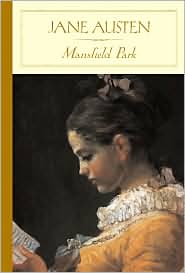
Book Review: Mansfield Park

In Mansfield Park, Fanny Price is the “poor relation” who helps to relieve her family’s financial woes by going to live with a more prosperous aunt and uncle, the Bertrams, when she is ten. Her other aunt, widowed Mrs. Norris, lives near the Bertrams and has more influence with the family than Lady Bertram. Sir Thomas Bertram is imposing and, though not unkind, neither is he warm. Mrs. Norris feels it her duty to constantly keep Fanny in her “place.” Fanny’s female cousins, Mariah and Julia, are selfish, spoiled, and vain and interact little with her. Her oldest cousin Tom takes little notice, but cousin Edmund sympathizes with her and helps her find ways to learn and to interact. Fanny is quiet, shy, “finding something to fear in every person and place,” but eventually the family decides that, “though far from clever, she showed a tractable disposition, and seemed likely to give them little trouble.”

The family continues on this way for years until their neighbor’s younger sister and brother, Henry and Mary Crawford, come to town for an extended visit. Both are bright, witty, vivacious, and personable, and the young people –except for Fanny — soon become best friends. Fanny’s high regard for Edmund has become secret love over the years, but Edmund, who is planning to join the clergy, begins to fall for Mary, who has no use for the clergy and tries to talk him into changing to a profession where he can “distinguish” himself. Fanny begins to see some of Mary’s flaws, but Edmund is willing to excuse them. Meanwhile Henry, who has been showering attention on both the Bertram sisters, begins to show a decided favor not towards unattached Julia, but rather to her engaged sister. Thus the stage is set for the character of each one to be displayed in the ensuing conflicts.

I’ll leave the plot there for the discovery of those who have not yet read the book, but I did want to discuss a few other aspects of the book.

In the introductory notes of this edition as well as the introduction to the recent Masterpiece Classic version on PBS, there seemed to be an almost apologetic tone that shy, quiet Fanny is the hero of the story rather than vivacious and witty Mary. Amanda Claybaugh, who wrote the introductory notes, writes that “Fanny differs not merely from Mary, but also from our most basic expectations of what a novel’s protagonist should do and be. In Fanny, we have a heroine who seldom moves and seldom speaks, and never errs or alters.” I am not the expert Ms. Claybaugh is, but that is not my impression at all. We’re shown many of Fanny’s inner thoughts, and I find the conflict is in Fanny’s staying true to her moral core despite everyone else’s failure to varying degrees. Edmund says of Fanny at one point that she “is the only one who has judged rightly throughout; who has been consistent.” She is far from self-righteous and ungracious, however, and though morally she does not change, she does mature and grow. Though her nature remains shy and reticent and fearful, she begins to overcome it or act in spite of it in situations like heading a ball in her cousins’ absence and standing up to Sir Thomas when he wants her to marry someone whom she not only does not love but in whom she sees moral flaws that she cannot expound on.

In almost all of Jane Austen’s books, she subtly points out the ironies of life in her time. Perhaps the irony here is the truth that though Fanny lacks the characteristics that are highly valued in her setting — wit, wealth, and worldliness — she possesses qualities far more valuable in her moral goodness, graciousness, insight, and steadfastness.

I enjoyed this book very much and found it very readable. I highly recommend it.

This completes my reading Jane Austen’s novels. I had read Emma back in college and would love to revisit her, but all of the rest I have read over the last couple of years in a quest to catch up on some of the classics I somehow missed along the way. I know I will enjoy reading these books again in the future.