Book Review: Emma’s Gift

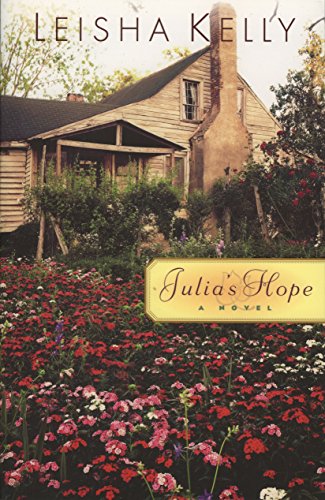
Emma's gift Emma’s Gift is the sequel to Julia’s Hope by Leisha Kelly. I think you could read and understand the second book without the first one, but you’d get much more out of the story with both of them. Plus, since Julia’s Hope will probably be one of my favorite books read this year, I encourage you to read it, too.

In Julia’s Hope, Julia and her husband, Samuel Wortham, and their two children lost everything during the Depression. They were hitchhiking east to get a job with Samuel’s cousin when they got word that the job fell through. Totally alone and with no hopes, they find shelter in an abandoned farmhouse. Then Julia gets the idea that perhaps the owner would let them stay in return for fixing up the place. They find the owner, Emma, who is an elderly amputee who can no longer live alone. She agrees to the arrangement, much to the consternation of some of her friends who think the Worthams are taking advantage of her. Before long the Worthams suggest that Emma come back to the farmhouse and stay with them, which she agrees to do, and they become something of an adopted family for each other.

Emma’s Gift picks up the story several months later. Emma was not in good health in the last book and knew her time was soon coming to an end. She passes away near the beginning of this story. It’s not unexpected, yet it’s still a blow to the family. But then their neighbor, a mother of ten children, passes away the same night, totally unexpectedly. The Worthams take in the children while the woman’s husband, George, deals with his grief. While glad to help, and, really, having no choice, an addition of ten children, one a newborn, weighs heavily. Helping the children through their grief while dealing with their own is a challenge.

Uncertainty also weighs on both families as their houses and land were owned by Emma. Emma had tried to give the Worthams the deed to the house they were in, but Samuel refused at the time. George has been unable to make any payments for months, if not years, and Emma wanted to forgive the debt. But now her affairs are in the hands of her nephew, so everyone has to wait to see whether he’ll abide by Emma’s wishes or take the property as his own.

Some of the townspeople bring food out and stay to help with the children, which helps Julia to feel that they are finally accepted. Some of the men help Samuel deal with George, who is on the verge of doing something stupid.

Even though the first part of the book is heavy with grief, please don’t let that deter you. The light does break through in the end, and it’s heartwarming to see the progression.

The point of view switches back and forth between Julia and Samuel. Two themes emerged for me: that everyone has something to give to help others no matter how much or little they have, and when you’re weighed down almost to the breaking point, God’s grace sufficient.

A few favorite quotes:

It made me feel good inside to love her right over top all the rough edges.

Kissing cheeks, passing plates, even listening to George pour out his woes one more time over a late cup of root coffee—it was all the work of God. Because people need each other. And sometimes we don’t realize how much we have to give until we’ve started giving it.

It doesn’t take away the pain of this world. But just knowing the outcome can stop the ache that comes in the middle of some lonely night, or can give you words to make a crying child smile again. God is faithful. Our shelter in the time of trouble. Our refuge in the time of storm. We don’t always know what he’s given us. When we’re deep in the hurt of some awful moment, we don’t always know what good things God has prepared for the days ahead. But we do know so much of himself has been given to our hands. To cherish. To rest in. And especially to share.

These two books are all I have, but there is another sequel, and then another three-book series with some of the same characters as well as a Christmas story. I’d like to get to the rest of them some day. In looking up Leisha Kelly after reading the last book, I was sad to discover that she and her teenage son had died in a car accident some years ago. But I am glad she left this legacy behind.

(Sharing with Carole’s Books You Loved, Semicolon‘s Saturday Review of Books, Literary Musing Monday)

What’s On Your Nightstand: September 2018

Nightstand82The folks at 5 Minutes For Books host What’s On Your Nightstand the last Tuesday of each month in which we can share about the books we have been reading and/or plan to read.

I checked my calendar yesterday morning, but I somehow got my weeks mixed up and thought I had another week before the Nightstand post! Instead, I am a day late. Oh, well…

Since last time I have completed:

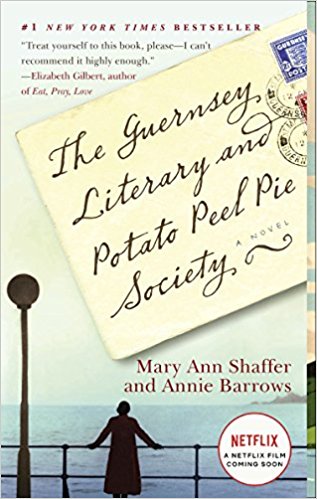
The Guernsey Literary and Potato Peel Pie Society By Mary Ann Shaffer and Annie Barrows, reviewed here. Loved this! And the movie was wonderful, too, despite a few changes to the plot.

Julia’s Hope by Leisha Kelly, reviewed here. Loved this story about a family struggling during the Depression who ends up sharing a house with an elderly amputee.

Tea With Emma by Diane Moody, reviewed here. Something of a modern take on Jane Austen’s Emma. It was…okay.

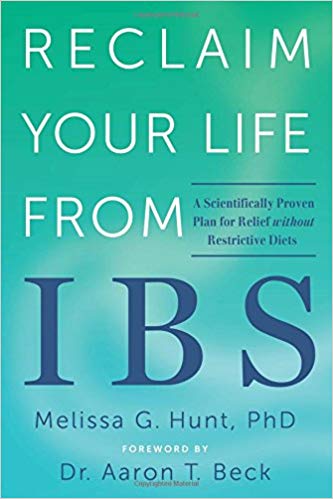
Reclaim Your Life from IBS: A Scientifically Proven Plan for Relief without Restrictive Diets by Melissa G. Hunt, reviewed here. Both practical and helpful.

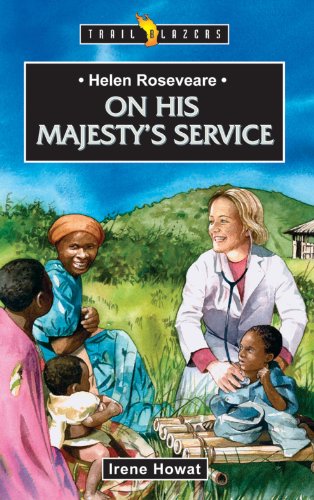
Helen Roseveare: On His Majesty’s Service by Irene Howat, reviewed here.

The Scars That Have Shaped Me: How God Meets Us in Suffering by Vaneetha Rendall Risner, reviewed here. Excellent. Deep. Convicting.

I’m currently reading:

Emma’s Gift by Leisha Kelly

The Lost Castle by Kristy Cambron

Rereading Women of the Word by Jen Wilkin

I’ve been using my normal audiobook time to listen to a series of lectures on Classics of British Literature by John Sutherland.

I’m also reading parts of The Elements of Style by William Strunk and E. B. White, but it’s more of a reference book than one to read straight through.

Up Next:

Reading the Bible for Life: Your Guide to Understanding and Living God’s Word by George Guthrie. Some of his blog posts have been very helpful to me, so I am looking forward to his book.

There’s a Reason They Call It GRANDparenting by Michele Howe, recommended by Michele Morin.

I am trying to decide whether my next audiobook with be Amazing Grace: William Wilberforce and the Heroic Campaign to End Slavery by Eric Metaxas or Alvin York: A New Biography of the Hero of the Argonne by Douglas V. Mastriano. I know a little of both men’s stories and would like to learn more.

I have all kinds of Christian fiction in my Kindle app and on my shelf, but I am not sure which one will be next.

I think that wraps up by reading activity for this month! Are you reading anything good?

Book Review: Julia’s Hope

JuliaIn Julia’s Hope by Leisha Kelly,  Samuel Wortham is out of a job, like so many others in the early 1930s. Not only did his business close, but the investment he financed with money from his wife’s inheritance failed. The family has just a few dollars. Sam’s cousin says there’s work for Sam in Illinois, so the family is going to hitchhike from Pennsylvania.

Julia, Sam’s wife, is understandably angry with Sam over the lost investment, but she tries to keep a brave face for the children and make the trip an adventure.

It occurred to me then that I ought to pray for help in getting over the anger I felt towards Sam. But I didn’t do it. I guess it was easier to think that I’d forgiven him already and was just entitled to my feelings beyond that.

A few days into the trip, with money gone and the family eating in soup kitchens and sleeping wherever they can, Sam calls his cousin to tell him where they are. He’s told the job fell through and the cousin himself is looking for work.

But when Samuel stepped out of that office, looking like a stormy wind had dashed him against a wall of stone, the clouds descended over me and I turned away. I knew by his face. Dewey wouldn’t be coming. Dewey couldn’t carry all the hopes we’d pinned on him. We were alone.

One day, caught by a sudden downpour, the family takes refuge in an abandoned farm house. Something about it appeals to Julia and the children, so she proposes they find the owner and see if they might be allowed to stay in return for working on the place. Sam thinks the idea is crazy, but Julia is so set, he humors her.

They discover the homeowner is an elderly lady named Emma. She loves the house, but due to a heart condition and the loss of  leg, she can’t live there alone any more, so she has been living in a boarding house in town. Though what the Worthams propose is unconventional, she agrees to let them stay at her house so that it doesn’t deteriorate further.

The Worthams feel like they are taking unfair advantage, though. So within a few days they propose a new situation: that Emma come out and live with them at the house. She agrees.

Emma and Julia both know how to live off the land – what greens are good for food or tea, how to plant seeds and cultivate vegetables etc. But Sam is totally out of his element. He has never farmed and he’s worried about Emma’s care. But there doesn’t seem to be anything else he can do, so he puts forth his best effort.

Emma is a town treasure, so many of her friends check on her and the Worthams. Some of her friends, however, suspect the Worthams have “sweet-talked” her and are out to milk her out of her property, and they make no end of trouble despite Emma’s assurances. One in particular “was a difficult sort, one who was pleased to be displeased.”

My thoughts:

I loved this story. Its main appeal to me is how clearly Leisha communicates the character’s feelings. I ached along with Sam in his financial predicament, his guilty feelings, and his loss of self-respect. I understood Julia’s struggle to put aside her anger,  forgive, and attend to her children in a way that kept them hopeful, rather than afraid. I felt Emma’s joy at being home again.

But I also enjoyed reading about this time era, not one that I can remember seeing much in fiction. I enjoyed the gelling of a new family group. And I appreciate the way the people in the community helped each other though most of them didn’t have a lot themselves.

We all need each other, and that’s how the good Lord intended things to be.

“You think when that boy come bringin’ the Lord bread and fish, that the Lord shoulda just sat an’ ate it all his own self?”

“Well, no, he couldn’t. He fed the five thousand.”

“That’s right,” she said with a smile. “Didn’t look like it, but God’s got plenty for ever’body. So it don’t hurt me none to share.”

The point of view switches between Sam, Julia, and Emma, so we see their different perspectives. The faith element is woven in naturally.

This is the first book in a long time that I stayed up too late to read and had a hard time putting down. I immediately started reading the sequel, and I am looking forward to more with the Wortham family.

(Sharing With Literary Musing Monday, Carole’s Books You Loved, Semicolon‘s Saturday Review of Books)

Book Review: Tea With Emma

 Tea With Emma by Diane Moody is a story within a story.

The outer story has writer Lucy Alexander with writer’s block ever since her beloved aunt died. When Lucy’s father sends her the teacup collection that her aunt had willed to her, Lucy is reminded of their special times together and of the Jane Austen book her aunt had bought for her.

Then Lucy is inspired: she can write a series of stories based on each of the cups. The first one is loosely based on Jane Austen’s Emma.

Next comes the first story, Tea With Emma.

Two lifelong friends, Maddie and Lanie, are just returning from a trip to England. Maddie is inspired to open an English tea shop, and Lanie has agreed to help her. Their giggling and carrying on in the plane annoys the seatmate in front of them, an English professor. In a comedy or errors, the girls and the professor keep running into each other, with near-disastrous results.

When Maddie goes home to her grandmother in Texas, whom she has taken care of since the latter had a stroke, she lays out her plans for the tea room and gets her grandmother’s blessing. She soon discovers that the grumpy professor lives across the street. She tries to befriend him, but he rejects her efforts.

Inspired by Jane Austen’s Emma, but evidently missing what Emma had learned by the end, Maddie feels God’s mission for her life is to be a matchmaker. She encourages Lanie towards the contractor and away from an online computer geek. It does not go well.

Meanwhile the professor has to come to grips with the issues in his life which have made him so cranky.

My thoughts:

I thought the premise would make for a fun, touching story, but I just didn’t connect any of the characters, except maybe the grandmother and the computer guy. Maddie and Lanie seemed juvenile, Maddie seemed pushy, and the professor was just a grouch, at least until he got his heart right. And the transformation from irritation with Maddie to falling in love with her just seemed too quick and unrealistic. Of course, this is a novella, so things had to happen a little faster than they would have in a longer novel.

I enjoyed the theme of letting God have control and following His direction. Both Maddie and the professor became more likeable by the end of the story. I know Jane Austen’s Emma goes through a similar learning curve, but I always found Emma sophisticated and likeable even while I disliked her actions and motivations at the beginning.

Reviews on Amazon were mixed, with some people loving the story and others not, so it may just be a matter of personalities not appealing to everyone. It’s a sweet, clean story. So don’t let me discourage you from trying the book, especially as it’s free for the Kindle at the moment.  I’d love to hear what you thought of it.

(Sharing with Semicolon‘s Saturday Review of Books, Literary Musing Monday)


Book Review: The Scars That Have Shaped Me

ScarsWhen Vaneetha Rendall Risner was a baby in India, she contracted polio before her inoculation. The doctor had never seen a case of polio before, misdiagnosed it, and prescribed a wrong treatment which left Vaneetha paralyzed. Vaneetha had twenty-one operations from age two to thirteen. She spent much of her young life in the hospital and felt safe there and at home,  but was “openly picked on at school.”

She wanted “nothing to do with God because he had allowed all this to happen,” but when she was a teenager, He drew her to Himself.

Vaneetha’s trials weren’t over, though. After her first daughter was born, she had three miscarriages. Her son was born with a heart defect which surgery corrected, but a doctor’s mistake led to her baby’s death at the age of two. Then she contracted post-polio syndrome,  which causes “increasing pain and weakness, which could potentially result in quadriplegia.” There is no cure. Then her husband left her.

The magnitude of any of one of those trials weighs heavy, but all of them together are crushing. How does a person cope with all of that?

Vaneetha tells her story in short order in The Scars That Have Shaped Me: How God Meets Us in Suffering and then spends the rest of the book  sharing what God has taught her through her trials. Her words, like Joni Earecksn Tada’s, carry weight because they are based on Scripture and they’ve been tried in the trenches.

It’s hard to summarize a book like this, so I’ll just share a few quotes:

Our faith is not a facade we erect to convince ourselves and others that pain doesn’t hurt—it is an oak tree that can withstand the storms of doubt and pain in our lives, and grow stronger through them.

I’ve often been devastated when he tells me no, but as I submit to his will in those situations—even with disappointment and tears—he assures me he’s working for my good. I see only part of the picture. He has a purpose in his denials. The Father said no to the Son [in Gethsemane]. And that no brought about the greatest good in all of history. God is not capricious. If he says no to our requests, he has a reason—perhaps ten thousand. We may never know the reasons in this life, but one day we’ll see them all. For now, we must trust that his refusals are always his mercies to us (emphasis mine).

In this life, I may never see how God is using my trials. But one day I will be grateful for them. All I can do now is trust that he who made the lame walk and the blind see, who died on a cross so I could spend eternity with him, is going to do the very best thing for me.

This is the most precious answer God can give us: wait. It makes us cling to him rather than to an outcome. God knows what I need; I do not. He sees the future; I cannot. His perspective is eternal; mine is not. He will give me what is best for me when it is best for me (emphases mine).

Replacing “what if ” with “even if ” in our mental vocabulary is one of the most liberating exchanges we can ever make. We trade our irrational fears of an uncertain future for the loving assurance of an unchanging God. We see that even if the very worst happens, God will carry us. He will still be good. And he will never leave us.

So what do we do when we feel drained and empty? When no one understands our suffering and no one seems to care? When we feel discouraged and tired and unbearably lonely? Read the Bible and pray. Read the Bible even when it feels like eating cardboard. And pray even when it feels like talking to a wall. Does it sound simple? It is. Does it also sound exceedingly hard? It is that as well. But reading the Bible and praying is the only way I have ever found out of my grief. There are no shortcuts to healing.

When I say read, I don’t mean just reading words for a specific amount of time. I mean meditating on them. Writing down what God is saying to me. Asking God to reveal himself to me. Believing God uses Scripture to teach and to comfort me. To teach me wonderful things in his law (Ps. 119:18). To comfort me with his promises (Ps. 119:76). Reading this way changes cardboard into manna. I echo Jeremiah who said, “Your words were found, and I ate them, and your words became to me a joy and the delight of my heart” ( Jer. 15:16).

I mentioned yesterday the concept she brought out that what we think of as the lowest points of our lives are actually the highest, from God’s viewpoint, because that’s often where the most change and growth occurs in our lives. Another concept she described was that we often feel our prayers have not been answered when God doesn’t deliver us out of a situation, but His grace sustaining us through a trial is just as much an evidence of His power as a miraculous deliverance.

In waiting for the huge, monumental deliverance—the kind where I can put my issue to bed and never have to pray about it again—I’ve overlooked the grace that keeps drawing me to him. The prayers that may appear unanswered, but actually are fulfilled in ways that keep me dependent, tethered, needy.

I’ve often wondered about the difference between Biblical lament, such as what we see in the Psalms and other places in the Bible, and complaining. These thoughts helped:

Scripture never mandates that we constantly act upbeat. God wants us to come to him in truth. And so the Bible doesn’t whitewash the raw emotions of its writers as they cry out to God in anguish, fear, and frustration when life ceases to make sense. People like Jeremiah and Job, Habakkuk and David have all poured out their honest feelings of sadness and disappointment to God.

The Bible is shockingly honest. And because of that, I can be honest as well. I can both complain and cry, knowing that God can handle anything I say. The Lord wants me to talk to him, to pour out my heart and my thoughts unedited because he knows them already.

This conversation is different than the grumbling of the children of Israel. They complained about God and Moses to each other. I am talking directly to God. Telling him my doubts. Asking him to help me see. These saints I quoted all talked directly to God, which was the first step to healing. They named their disappointments and voiced their struggles before him. They needed to know that God understood them. And that they could be truthful with him. No pretense or platitudes. Just raw honesty, acknowledging their pain before God.

Like most of us, I would rather learn from others about suffering than have to go through it myself. But some portion of suffering is allotted to all of us, and I am so thankful for a godly example like Vaneetha’s. Much of what she said spoke to my heart even though my trials have been different.

(Sharing with Semicolon‘s Saturday Review of Books, Literary Musing Monday, Carole’s Books You Loved)

Book Review: The Guernsey Literary and Potato Peel Pie Society

GuernseyIn the novel The Guernsey Literary and Potato Peel Pie Society By Mary Ann Shaffer and Annie Barrows, Juliet Ashton had begun writing a lighthearted newspaper column during WWII under the name Izzy Bickertstaff. Her editors thought the country needed a bit of humor and uplift. After the war, the columns were collected and published as a book, making Juliet and her publishers a lot of money.

But now the war is over, and Juliet wants to write something more meaningful under her own name. She’s not sure what, though, until she receives a note from someone on Guernsey named Dawsey who had somehow ended up with a book she had given away about Charles Lamb. During WWII, Guernsey and surrounding Channel islands were occupied by the Germans. Most of the children were evacuated off the island, and for five years the island didn’t have contact with the outside world. As the island had been isolated during the war and no booksellers had come back yet, Dawsey can’t find other books by or about Lamb, and he  wonders if she might have access to some. In their correspondence, he mentions the Guernsey Literary and Potato Peel Pie Society.

Understandably curious, Juliet asks to know more about the society. It was invented one night when a few neighbors out after curfew were stopped and questioned by a guard (why they were out was another interesting story). One of them made up on the spot the literary society that they had supposedly just come from and even mentioned a German book. Thankfully the guard was a literary type and let them go. But now they had to implement such a society to avoid suspicion, so they began to meet regularly to discuss books they were reading. Some of the members were not avid readers, but they found at least one book to read and talk about.

The more Juliet hears, the more she feels maybe this is what she needs to write about. The book is made of of correspondence mostly between Juliet and her publisher, a few friends, and the various members of the society.

Some of their stories are comical, some are poignant, others are quite sad. Some were helped by the books they read; others were helped more by the camaraderie and community. And a fair bit of drama occurs in Juliet’s life as well, and her life changes in several ways she could not have predicted.

It seemed like everyone was talking about this book a few years ago, and I had always intended to read it “someday.” When I saw a film was being made of the book, I decided now was the time. I have not seen the film yet, but I knew I wanted to read the book first.

Epistolary novels are not my favorite form of story, but it works for this novel. You would have thought that it would be hard to “show rather than tell” through letters, which are a way of telling. But Mary Ann Shaffer and her niece, Annie Barrows, do this masterfully.

Unfortunately there is a smattering of bad words, including the Lord’s name taken in vain. There are no sexual scenes, but one woman has a baby out of wedlock, a couple of men are characterized as homosexual, and mention is made of women who fraternize with the Germans sexually.

But the characters are charming, and I love the way the story unfolds. I hated to see the story come to an end.

I’ve read much WWII fiction, but nothing that I can recall from this period of recovery just after the war. Amid the joy and relief of the war ending and the Germans retreating, there were still shortages, missing people who had been sent off to camps, buildings defaced or marred by Germans who had taken them over, not to mention the emotional trauma many carried with them for a long while afterward.

I listened to the audiobook wonderfully read by a number of people. At first it was a little hard to distinguish between some of the characters, but after a while I got them straight. I ordered the book as well, and it contains a wonderful afterword by Annie Barrows. Most of the book was written by Mary Ann Shaffer, but her health began to fail during the rewrites, and she asked Annie to step in. Evidently Mary Ann had always been a wonderful storyteller, and the family was so pleased that her work was received so well.

I’ll close with a few of my favorite quotes:

That’s what I love about reading: one tiny thing will interest you in a book, and that tiny thing will lead you to another book, and another bit there will lead you onto a third book. It’s geometrically progressive – all with no end in sight, and for no other reason than sheer enjoyment.

Perhaps there is some secret sort of homing instinct in books that brings them to their perfect readers. How delightful if that were true.

All my life I thought that the story was over when the hero and heroine were safely engaged — after all, what’s good enough for Jane Austen ought to be good enough for anyone. But it’s a lie. The story is about to begin, and every day will be a new piece of the plot.

Because there is nothing I would rather do than rummage through bookshops, I went at once to Hastings & Sons Bookshop upon receiving your letter. I have gone to them for years, always finding the one book I wanted – and then three more I hadn’t known I wanted.

Your questions regarding that gentleman are very delicate, very subtle, very much like being smacked in the head with a mallet…it’s a tuba among the flutes.

Reading good books ruins you for enjoying bad books.

(Sharing with Semicolon‘s Saturday Review of Books, Carole’s Books You Loved)

Book Review: Reclaim Your Life From IBS

I hadn’t planned to review this book at first, but then I thought it might be helpful to others.

IBS stands for irritable bowel syndrome. I’ll let you look up the symptoms elsewhere if you don’t know them. But the bathroom-related issues of IBS can cause anxiety (about being able to find a bathroom when you need one, having issues at an inopportune time, etc.) That anxiety can in turn exacerbate IBS symptoms. It’s not that IBS is a disease of the mind, but our thoughts and anxieties can make it worse, creating more anxiety which creates worse symptoms, creating a vicious cycle.

IBSReclaim Your Life from IBS: A Scientifically Proven Plan for Relief without Restrictive Diets by Melissa G. Hunt deals primarily with the cognitive aspect of IBS, the way we think about it.

Dr. Hunt begins with other diseases of what she calls the “gut” which have to be ruled out before an IBS diagnosis can be made. Someone who thinks they might have IBS might actually have something else which has a specific treatment, so it’s important to be checked out. Then she describes the processes involved in digestive issues, from the nervous system to gut bacteria.

Dr. Hunt shares some relaxation techniques to help us dial back from panic mode. Then she explains the “cognitive model of stress management.” Basically, what and how we believe and think influences us one way or another. She gives the example of seeing a friend across the street and waving at her, but receiving no response. Our minds can take off imagining scenarios – that our friend is mad at us for something, that she’s snubbing us., etc., when probably she just didn’t see us. Applying that to IBS, when we experience gut twinges or gurgles when we’re out or preparing to go out, we can panic, thinking we need to get to a bathroom fast. But every twinge and gurgle doesn’t mean an attack is coming on. Or we can panic about the possibility of needing to step out to go to the bathroom during a work meeting, thinking everyone will think less of us and we might even be jeopardizing future promotions, when in reality no one will think anything of it (plus everyone probably has to do that at some time).

Dr Hunt also shares ways to eliminate avoidance: people with IBS can become experts in avoiding situations where they think they might have problems. Some of what Dr. Hunt shares here is the same process as overcoming phobias: exposing ourselves to whatever we’re fearful of a little bit at a time as we become more comfortable. One example she gives is that of someone who avoids commuter trains because they don’t have bathrooms.  First she suggests just visiting the train station for a while until that nervousness we get just from being there subsides (which might take multiple attempts). Then, we might get on the train just until the next stop. Once we can do that without nervousness, then we might go two stops, etc.

Finally she discusses some of the dietary and medicinal approaches to IBS. She stresses that there is no one IBS diet that works for everyone or particular foods that everyone must avoid. She discusses some of the most common foods that might give IBS patients trouble.

I hope I never have to see a therapist, but I hope that if I do, I can find one as practical and down to earth as Dr. Hunt rather the ethereal and New Age-y kinds I have read elsewhere. Much of what she has to say, especially about our thoughts, can be applied to many situations beyond IBS:

Cognitive interventions are not about “pretending” that things are going well if they’re not. In fact, this wouldn’t help even if you tried it, because you wouldn’t believe it. Rather, cognitive interventions are about helping you see the world as accurately and objectively as possible. The problem is that many, many people do have negative biases or filters that they use to interpret situations in their lives. If you do this routinely and without realizing it, you will be a lot more stressed than you need to be. If you have been entertaining lots of negatively biased automatic thoughts, then seeing the world more accurately should bring about a great deal of relief. In other words: Don’t believe everything you think (p. 66).

Dr. Hunt’s style is easy to read and understand. I am happy to recommend this book.

(Sharing with Semicolon‘s Saturday Review of Books, Literary Musing Monday, Carole’s Books You Loved)


Book Review: Helen Roseveare: On His Majesty’s Service

Roseveare Helen Roseveare was a missionary to the Belgian Congo in Africa, later named Zaire, from 1953-1973. I first became aware of her through Faithful Women and Their Extraordinary God by Noel Piper several years ago. I wanted to read more about her, so when I saw Helen Roseveare: On His Majesty’s Service by Irene Howat on sale for the Kindle app, I decided to try it, even though it was part of the Trailblazer series of biographies for children.

The first few chapters deal with Helen’s childhood in England: terrorizing nannies with her brother, moving several times due to her father’s job, going to boarding school in Wales. She had a strong desire to be first and best at as much as she could, and she didn’t make friends very easily. In a Sunday School class, she decided she wanted to be a missionary even before she became a Christian. Confirmation classes in her church caused her to take a more serious look at herself, but it was in a camp some years later that she became a believer. She became quite conscientious.

As a teenager during WWII, Helen wrestled with the devastation and unfairness of it all, especially the unfitness of young people losing their lives. Once when a German plane was shot down, Helen was horrified to learn that her mother was among the people trying to save the young man, though he later died. Her mother explained that he was just a boy fighting for his country, like their boys, and had a home and family.

Helen became involved in helping at camps and the GCU (Girl Crusader’s Union) while in college. She never lost her desire to be a missionary doctor, and soon after college she went through missionary training and then went to the Congo. She was plunged into medical service right away. From her earliest days she felt the need to train the national workers and open a nursing school. She had to set up a hospital from the ground up, with students and church members and even patients helping.

But civil unrest was rumbling in the distance and drawing ever closer. Helen had opportunity to leave many times, but she felt she should remain. Finally rebel soldiers did take over Helen’s area. Probably because this is a children’s book, the author did not go into much detail or mention the multiple rapes Helen endured. She sums it up this way:

Things too terrible to tell happened to her at the hands of Congolese rebel soldiers, things so horrible and shocking that she wished she were dead. In a way that we cannot understand they were part of God’s plan for her and she knew that, even at the time. With her body battered and broken and her back teeth kicked out, Helen survived when others did not. But she survived to endure further months of terror.

After several months of captivity and cruelty, Helen and a few others were released and sent back to England for a long recovery.

After fifteen months, went back to Africa, to Zaire, building more hospitals and training more medical workers.

When Helen went back to England years later, she stayed active speaking at schools, GCU gatherings, and churches. When someone wanted to make a film of her life, she traveled back to a warm welcome in Zaire and was thrilled to see how the work was progressing.

One of the most well-known stories of her life was one I had heard but didn’t realize happened to Helen until I read it in Faithful Women and Their Extraordinary God. It’s told in detail here. A woman had come to the hospital in labor with a premature baby. They could not save the woman, but the baby was safely delivered. Yet they had no way to keep the baby warm: they usually used hot water bottles, but were out. The baby also had a two-year-old sister. When Helen had prayer with the orphan children the next day, she told them of the little girl and baby and the need for hot water bottles. One ten-year-old girl named Ruth began to spontaneously pray:

God, please send a hot water bottle so that this little baby doesn’t die. And, God, it will be no use sending it tomorrow because we need it today. And, God, while you’re at it, will you send a dolly for the baby’s sister who is crying because her mummy has died.

Helen “didn’t think the Lord could do that.” But that very afternoon a truck delivered a parcel containing soap, bandages, babe sweaters…and a hot water bottle and a doll! Helen tells this story here:

Since this book was published in 2008, it doesn’t contain information about Helen’s death in 2016 at the age of 91. Zaire is now known as the Democratic Republic of the Congo.

The writing in this book is not the best: it’s a little choppy, with several odd scenes involving unnamed people that I think were made up in an effort to illustrate something in Helen’s life. But It’s still a good book overall, with a good overview of Helen’s life.

(Sharing with Semicolon‘s Saturday Review of Books,  Literary Musing Monday, Carole’s Books You Loved)


What’s On Your Nightstand: August 2018

Nightstand82The folks at 5 Minutes For Books host What’s On Your Nightstand the last Tuesday of each month in which we can share about the books we have been reading and/or plan to read.
As we near the end of another month, it’s time to recap what we’ve read.

Since last time I have completed:

The Hunchback of Notre Dame by Victor Hugo, reviewed here. Not my favorite classic or Hugo book, but I am glad to have read it. It kept me thinking for days afterward.

30 Days of Hope When Caring for Aging Parents  by Kathy Howard, reviewed here. Very good.

Full Assurance by Harry A. Ironside, reviewed here. Excellent study on what the Bible has to say about assurance of salvation.

The Pattern Artist by Nancy Moser, reviewed here. A maid from England accompanies her employers on a visit to America in 1911, then strikes out on her own. She lands a job in the sewing department of Macy’s and captures the attention of the Butterick Patterns salesman. Very good!

Back Home Again: Tales from the Grace Chapel Inn by Melody Carlson, reviewed here. Three sisters turn the old family home into a bed-and-breakfast, working through their own differences and town opposition. The first in a long series. Good.

Before We Were Yours by Lisa Wingate, reviewed here. Riveting historical fiction based on real circumstances concerning a woman who stole poor children and then placed them for adoption.

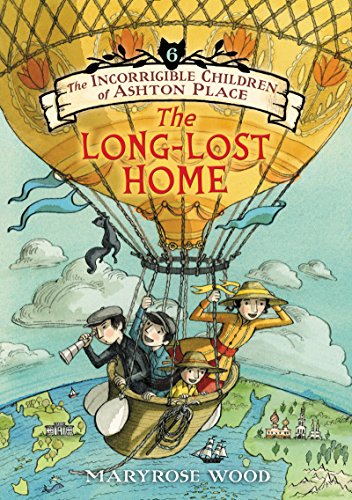
The Incorrigible Children of Ashton Place: Book VI: The Long-Lost Home by Maryrose Wood, reviewed here. A fun and satisfying wrap-up to this series.

Reshaping It All: Motivation for Physical and Spiritual Fitness by Candace Cameron Bure, reviewed here. Cameron’s journey from bulimia and excess weight to fitness, inside and out. Very good.

I’m currently reading:

The Guernsey Literary and Potato Peel Pie Society By Mary Ann Shaffer and Annie Barrows. Finally!

Helen Roseveare: On His Majesty’s Service by Irene Howat

Reclaim Your Life from IBS: A Scientifically Proven Plan for Relief without Restrictive Diets by Melissa G. Hunt
Up Next:

Christian Publishing 101 by Ann Byle

I’d like to reread, or at least look through again, Women of the Word by Jen Wilkin

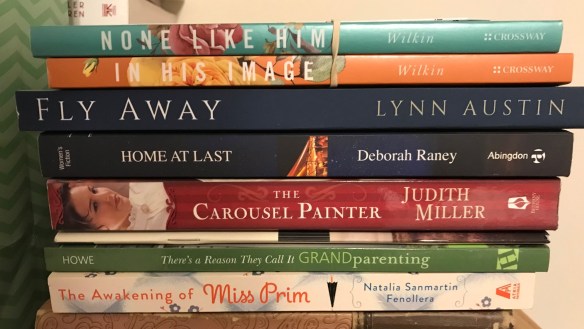
Something from this stack and my ever-increasing Kindle collection:

IMG_1115

Are you reading anything good now?

Book Review: The Incorrigible Children of Ashton Place: Book VI: The Long-Lost Home

Incorrigible The Incorrigible Children of Ashton Place: Book VI: the Long-Lost Home is the long-awaited finale to the Incorrigible Children series by Maryrose Wood.

If you’re not familiar with the series, it’s about three children raised by wolves whom Lord Frederick Ashton brings home after he discovered them on a hunting trip. Needing someone to teach and “tame” the children, Lord Ashton advertised for a governess. He was sent the plucky Miss Penelope Lumley, graduate of Agatha Swanburne’s Academy for Poor Bright Females.

A number of intriguing mysteries and connections have been traced through the first five books: the fact that Penelope’s hair is the exact same color as the Incorrigibles, that Frederick Ashton gets “wolfy” during full moons, that Frederick’s presumed-dead father is not really dead but has not revealed himself. Book V ended with Penelope separated from the Incorrigibles,  having been tricked into switching places with a tutor to the  Horrible Babushkinovs in Plinkst, Russia.

In this final book, the looming due date of Lady Constance Ashton’s baby means the family curse will come to a head, and one side or the other will be destroyed.  How can Penelope help them while so far away? How can she possibly get home with no resources?

All of the various threads are satisfactorily resolved in this final book. I’ve mentioned before that I don’t normally go for books about “curses” or ones that have soothsayers as recurring characters. Those weren’t elements in the first book that got me hooked on the series. The most objectionable element to me was a seance, I think in Book III. If you read this with your children, you’ll have to discuss these issues in concert with your beliefs.

I also don’t read all that many children’s books, and I am not sure what age level this book is intended for.

But what I love most about the series is the clever writing and the humor. Every book is sprinkled with Agatha Swanburne’s pithy sayings and includes explanations and references to a couple of classics (Hamlet and The Count of Monte Cristo, in this case). Values such as hard work, resourcefulness, basic decency, and loving family are emphasized in each book.

I loved the distinction between “Optoomuchism” – an overly optimistic and ultimately untenable outlook – and “pessimax” – pessimism to the extreme.

I happened to listen to the first book due to a free audio version, and I fell in love with Katherine Kellgren’s fantastic narration, character voices, and inflections. I chose to listen to all of the books via audio because she added so much to them. Sadly, she passed away before the final book was published. There is a very touching afterword in this book honoring Katherine and telling of the friendship that had arisen between the author and narrator. Audiobooks don’t always include forwards and afterwards, so I am glad this one did. This audiobook was ably narrated by Fiona Hardingham.

These are my reviews of the previous books:

The Incorrigible Children of Ashton Place, Book 1: The Mysterious Howling 

The Incorrigible Children of Ashton Place, Book II: The Hidden Gallery

The Incorrigible Children of Ashton Place, Book III: The Unseen Guest (for some reason did not review this one)

The Incorrigible Children of Ashton Place: Book IV: The Interrupted Tale

The Incorrigible Children of Ashton Place, Book V: The Unmapped Sea

(Sharing with Carole’s Books You Loved)