What’s On Your Nightstand: November 2017

Nightstand82The folks at 5 Minutes For Books host What’s On Your Nightstand the last Tuesday of each month in which we can share about the books we have been reading and/or plan to read.

It’s the end of another month, next to last one of 2017, and time to take stock of what we’ve been reading.

Since last time I have completed:

What Is the Gospel? by Greg Gilbert, reviewed here. Excellent.

Love in Hard Places by D. A. Carson, reviewed here. Convicting and thought-provoking.

To Be Where You Are by Jan Karon, reviewed here. Always a pleasure to visit Mitford.

A Little Salty to Cut the Sweet: Southern Stories of Faith, Family, and Fifteen Pounds of Bacon by Sophie Hudson, reviewed here. Very good.

Jayber Crow by Wendell Berry, reviewed here. Mixed emotions.

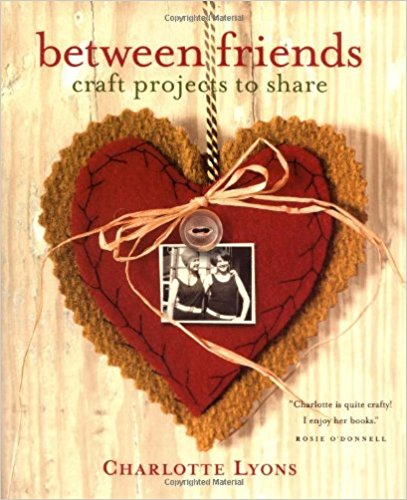
Between Friends: Craft Projects to Share by Charlotte Lyons, reviewed here. Very good.

Washington’s Lady by Nancy Moser. Fictionalized biography of our first First Lady. Very good – review coming hopefully tomorrow! here.

I’m currently reading:

What Is a Healthy Church? by Mark Dever.

French Women Don’t Get Fat: The Secret of Eating for Pleasure by Mireille Guiliano

Sarah’s Song by Karen Kingsbury

Gospel Meditations for Christmas by Chris Anderson, Joe Tyrpak, and Michael Barrett.

The Bronze Bow by Elizabeth George Speare

Up Next:

I’ve only gotten to one on my “up next” list from last month, and I laid that one aside due to bad language and suggestive content (A Bell for Adano by John Hersey for the prize-winning category of the Back to the Classics challenge). Plus I hadn’t taken into account that Christmas was coming, and I like to read a few Christmasy books during December. I’ve already started a couple and have a couple more in my Kindle, so we’ll see how that goes. The others are:

I’ll Be Home For Christmas, four novellas in one.

Silver Bells by Deborah Raney

Keeping Christmas by Dan Walsh

Besides those, I am planning on these:

Watership Down by Richard Adams, one of those books I have heard about for years but never got to. It’s not old enough to save for next year’s Back to the Classics challenge, so I’ll listen to it next.

Classics of British Literature by John Sutherland, a Great Courses series. Hope’s review convinced me to listen to it.

For those who like to plan ahead, I recently announced the Laura Ingalls Wilder Reading Challenge for February 2018 and listed a bunch of Laura-related books beyond the Little House series.

Happy Reading!

Laudable Linkage

IMG_0195

My latest round-up of newly discovered noteworthy posts:

Doing Spiritual Warfare Without All the Weirdness, HT to Challies.

Dear Mormon – I Can’t Call You a Brother in Christ, HT to Challies.

A Beautiful Table and a Bitter Heart, HT to Challies. Good not just for Thanksgiving!

What Is Thanksgiving Anyway?

Dr. Martyn Lloyd-Jones on Obsession With Polemics, HT to Challies. It’s necessary but shouldn’t be the main thing. Some helpful considerations.

Which Are Better: Old Books or New?

The Last of the Iron Lungs, HT to Challies. A handful of people with polio still rely on them, but they’re not sold or maintained by the the manufacturers any more. Fascinating article. And, though this is not the main point of it, I was inspired by those who are trying to make the best of their circumstances, like the man who took his iron lung to college, practiced law for the few hours a day he could go without the iron lung, until he started needing it almost 100%. Now he’s writing his memoirs while encased in it.

I don’t mean to toot my own horn, but in case you missed it, I announced the Laura Ingalls Wilder Reading Challenge for February 2018 and included a long list of related books to consider for those who might want to read beyond just the Little House series.

Finally, I didn’t listen to all this, but overheard a good bit while hubby was listening. Press Secretary Sarah Sanders began the last press briefing before Thanksgiving asking the reporters to share something they were thankful for before asking their questions. What we found amazing was the way they whole atmosphere changed by doing that, from confrontational and adversarial to convivial!

Happy Saturday! It’s Christmas decoration day for us!

Laura Ingalls Wilder Reading Challenge 2018 and Book List

I’ve noticed that a number of people are posting about next year’s reading challenges and plans already, so for those who like to plan ahead, I wanted to let you know that the Laura Ingalls Wilder reading Challenge will take place here next February. This will be our 6th year!

The idea is to read anything by or about Laura Ingalls Wilder during the month of February since her birth and death both occurred in February. Some have also incorporated some LIW activities during that month! It’s not required, but I love to see and hear about it.

I’ll have a sign-up post here on February 1st. You don’t have to have a blog to participate, but if you do, I welcome you to post about the books you read or any activities you might do, and/or post a wrap-up of your LIW reading at the end of the month and link to our wrap-up post here on Feb. 8. If you don’t have a blog, you can let us know in the comments on that post what you read.

A few years ago I posted a list of books that I had come across by or about Laura for those people who wanted to roam beyond just the Little House books. I’ve become aware of so many more, I thought it was time for an updated list. You’re not restricted to this list by any means – these are just some that I have read or heard of. I am sure there’s multitudes more I haven’t heard of yet. I’ve linked the ones I’ve read back to my reviews.

Books by Laura Ingalls Wilder:

  • The Little House books, of course
  • Little House in the Ozarks: the Rediscovered Writings of Laura Ingalls Wilder (linked to my review), compiled and edited by Stephen Hines, a collection of newspaper columns and magazine articles she wrote before starting the Little House books
  • Saving Graces: the Inspirational Writings of Laura Ingalls Wilder (linked to my review), a collection of inspirational or faith-based writings pulled from the columns in Little House in the Ozarks.
  • Writings to Young Women from Laura Ingalls Wilder (3 volumes) I’ve not read this yet, but it appears to be the same type of thing: some of the columns from the first book sorted into different categories.
  • On the Way Home, a diary of her move with her husband and daughter in a covered wagon from South Dakota to Missouri.
  • West From Home (linked to my review), letters Laura wrote to Almanzo while visiting their daughter in San Francisco, where she visited the World’s Fair.
  • A Little House Traveler contains the above two books plus the previously unpublished The Road Back, about the first trip she and Almonzo took back to De Smet, where Laura grew up and where they met.
  • A Little House Sampler, stories and writings of Laura as well as of Rose Wilder Lane, compiled by William T. Anderson.
  • Pioneer Girl (linked to my review), the script of Laura’s first draft of what was to become the Little House books, wonderfully and thoroughly annotated by Pamela Smith Hill.

Biographies of Laura:

  • I Remember Laura by Stephen W. Hines (linked to my review), a collection of articles and interviews of people who actually knew Laura.
  • There are several, William Anderson’s perhaps the most well known. More on Anderson’s work, and some information on MacBride, is here.

Books about the family by Laura’s daughter, Rose Wilder Lane:

  • Let the Hurricane Roar (also known as Young Pioneers)(linked to my review), a fictionalized novel about her grandparents’ “prairie life,” written without her mother’s permission or knowledge
  • Free Land: I don’t know if this is about any particular family members, but it is about the same times and situations.

Books about the rest of the family. I have not read any of these, so I don’t know about their authenticity, ow close or far they are from the facts:

  • Roger Lea MacBride, Rose’s sole heir and the co-creator and co-producer of the Little House on the Prairie TV series, published a series of books based on Rose’s childhood.
  • Little House: The Martha Years by Melissa Wiley, a series of books about Martha Morse, Laura’s great-grandmother
  • A series of books about Charlotte Tucker, Laura’s grandmother, also by Melissa Wiley: Little House by Boston Bay, On Tide Mill Lane, The Road from Roxbury, Across the Puddingstone Dam
  • Books about Caroline Quiner Ingalls, Laura’s mother, by Maria Wilkes
    Little House in Brookfield
    Little Town at the Crossroads
    Little Clearing in the Woods
    On Top of Concord Hill
    Across the Rolling River
    Little City by the Lake
    A Little House of Their Own
  • Old Town in the Green Groves (Little House) by Cynthia Rylant
  • Nellie Oleson Meets Laura Ingalls (Little House) by Heather Williams
  • Mary Ingalls on Her Own (Little House Sequel) by Elizabeth Cody Kimmel.
  • (Thanks to Sherry for several of these!)

For the younger set:

Modern books related to Laura:

Others:

Music related to Laura:

The following are not books, but rather blog posts or sites related to Laura:

I have plans for a couple this February, but I see many more I’d like to get to! I hope you do, too!

(Update: Be sure to check the comments for suggestions others have added.)

(Sharing with Semicolon‘s Saturday Review of Books, Literary Musing Monday, Carole’s Books You Loved)


Book Review: A Little Salty to Cut the Sweet

Salty Boomama is a popular blog by Sophie Hudson that I’ve read off and on through the years, so I was happy to find a book of hers on sale for the Kindle a while back: A Little Salty to Cut the Sweet: Southern Stories of Faith, Family, and Fifteen Pounds of Bacon.

The book mainly is anecdotes about Sophie’s real life extended family and their quirks, interactions, and funny moments, undergirded with faith and life lessons.

As she says in her introduction:

We’re no strangers to the drama. I will say, however, that my grandparents set a high standard in terms of how they expected us to treat each other, so even when we’re aggravated, we’re much more apt to talk about it than to storm out of a room. On top of that, this book is not meant to be An Airing of the Grievances; it’s meant to be a celebration of family.”

The best way to express the flavor of the book is to give you a few excerpts. Some of her chapter titles are:

Not to Mention That Her Apple Tarts Would Change Your Whole Life

The Saga of the Homemade Biscuits

A Denominational Showdown in the Frozen Foods Aisle

For Better, For Worse, and in the Increasingly Likely Chance of Heatstroke

Because Nothing Says “Welcome” Like Rifling Through a Handbag

Saturday Lunch and the Fine Art of Funeral Planning

Because Nothing Says “Happy Anniversary” like Eight Pounds of Bacon

Some other sections I particularly enjoyed:

As we share our stories with those people God has specifically ordained to walk with us on this side of eternity—and as they share their stories with us—we see the sacred in the ordinary. We see the profound in the mundane. We see the joy in the day to day. We see the hand of God writing a much bigger story—a story of rescue and redemption and hope and glory. Right here in the middle of the hilarious and the tragic and the sublime and the sad.

Watching and learning from Mama and the other women in my family gave me a deep love for home and hearth and taking care of people. I knew from a young age that there was eternal value in those things.

Like Scout Finch in To Kill a Mockingbird, I saw the effortless grace and elegance of the women around me and realized that “there was some skill involved in being a girl,” and I knew I didn’t just want to grow up and be a woman. I wanted to grow up and be a lady.

I think it’s safe to say that I spent a significant portion of third grade standing at the intersection of Nerdy and Oblivious.

I loaded two carts to overflowing before you could say, “This celebratory meal appears to be somewhat high in trans fats.”

Family life isn’t always easy, and complications are inevitable, and whether you like it or not, sometimes you’re going to get your feelings hurt. Sometimes you may even be the one who does the hurting. But you stay with it, and you get after it, and you love each other, and you forgive each other, and you keep coming back to the table. No matter what. You keep coming back to the table. And once you’re there, you sit down, and you settle in, and you remember. You share your stories.

I’m glad the editors let Sophie’s penchant for ALL CAPS and multiple parentheses remain, because they’re just so characteristically her.

I’ll admit that every now and then I felt a little like a guest at someone else’s family reunion, but that quickly faded as I got into the stories. Overall a very pleasant read.

(Sharing with Semicolon‘s Saturday Review of Books, Literary Musing Monday, Carole’s Books You Loved)

Book Review: To Be Where You Are

To Be Where You AreI don’t often read books “hot off the press.”  Usually I have so many stacked up from my last birthday, Christmas, etc., that anything new goes behind them. But Jan Karon’s books are an exception: they go straight to the front of the queue! To Be Where You Are is her newest, and its action starts right on the heels of Come Rain or Come Shine, in which Father Tim’s adopted son, Dooley, married his fiance, Lace.

In this book, Dooley and Lace have been fostering a four-year-old boy named Jack, and they’re making plans for a big celebration on what they call Name Day, when their adoption becomes final. That’s probably the major plot line, but as always in Mitford, there are multiple things, large and small, going on at any one time. Some of the other happenings in this book, just to name a few: one long-time Mitford resident passes away; another faces a serious illness and others offer to pitch in at his place of business; major plumbing problems wreak havoc at Dooley’s practice; Lace is offered a major art project which would take care of the plumbing bills, but it’s in California; a number of romances are blossoming; another Mitford resident is looking for ways to spice up his marriage; another is considering running for mayor; another is writing a book (not Cynthia!).

A few favorite spots:

She thought that one of the hardest parts of marriage was being loving when both partners were exhausted or wounded at the same time. When you had the least strength, that’s when you had to dig beyond your limits and grab whatever could be found and give it away.

She needed complete solitude to do this huge thing. No music, no interruptions, just the work. But that was not going to happen, and she had to get used to it.

Lights on in the town at the foot of the hill. Stars on in the great bowl above.

How could he do possibly want to do this fool thing?…Maybe it wasn’t about wanting or not wanting. Though he was beyond serving the mission field, wasn’t his own town a mission field?…And didn’t charity begin at home?

Once in a blue moon they got an October morning like this. It was a day when he could almost smell the ocean, when a gull might wing overhead. He wasn’t the biggest fan of sand and sea, but occasionally some hungering gnawed at him for the visual feast of the Atlantic plain and the knowledge – more like a secret revealed only to Tim Kavanaugh – that over there were Ireland and England and Scotland and Italy and…

His sermon had been preached 24/7 on the floor of The Local for more than three and a half decades.

Reading the Mitford books is like coming home for an extended visit. It was fun seeing how things had changed and yet stayed the same. The same warmth, gentle humor, and undercurrent of truth pervades this book just as it has the others. I don’t know how long Jan will continue writing Mitford books, but I’ll keep reading as many as she wants to write!

Another nice plus to reading this volume now is that the book started in October, and I also started reading (or listening) to it in October, so there were parallels in the setting to what I was experiencing personally.

I listened to the audiobook, wonderfully read, as the other Mitford books have been, by John McDonough.

(Sharing with Semicolon‘s Saturday Review of Books, Literary Musing Monday, Carole’s Books You Loved)

Save

Save

Discussion of Jayber Crow

I had seen Wendell Berry recommended here and there, but hadn’t gotten around to him yet. When I saw Michele was hosting a read-along and discussion of Berry’s Jayber Crow on Thursdays, I decided it would be a good time to read him. I titled this post a discussion rather than a review because I’m still processing what I read and will probably go into things I might not in an ordinary review.

JayberA cursory review of Jayber Crow would mention that he is the barber of a small community called Port William in Kentucky. He’s the narrator, as a man in his seventies looking back on his life and the changes in the community since his birth in 1914.

But to expand a bit:

His parents had died when he was young, and he was taken in by elderly relatives, who also died after a few years. He was sent to an orphanage at the age of ten. The orphanage director had an odd custom of changing each child’s name to their first initial and last name, leaving the orphans “not quite nameless, but also not quite named.”. Jayber’s given name was Jonah Crow, so he was called J. Crow, which eventually became Jay, then Jaybird, then Jayber.

The orphanage was religiously based, and “turned inward, trying to be a world unto itself” (p. 40) with “a set of rules tightly strung between ourselves and the supposed disorder and wickedness of the world” (p. 33). While others, “[hungering] for the world outside” (p. 40), rebelled by escaping and partaking in forbidden activities, Jayber developed his own inner life, looked out the window instead of listening in class, spent a lot of time on the library, took long walks alone. Much was preached about “the call” to be a preacher or missionary. Fearing the consequences of disobeying “the call” (like an earlier Jonah) and in case he might have missed hearing it, he decided to “give [God] the benefit of the doubt” and “accept the call that had not come” (p. 43).

That led him to a scholarship and part-time job at a Christian college. He enjoyed fewer rules, more freedom and independence, and earning some spending money. But he began to have questions about what he saw as conflicts in the Bible, so much so that, after talking to a number of professors who didn’t help him, he finally went to the one he was “afraid to go to…because I knew he was going to tell me the truth” (p. 53). As he spilled forth his questions, Dr. Ardmire asked, “Do you have any answers?” When Jayber said he did not, but didn’t feel he could preach without them, the professor agreed. When Jayber said he had had a feeling he was “called,” the professor answered,

“And you might have been right. But not to what you thought. Not to what you think. You have been given questions to which you cannot be given answers. You will have to live them out–perhaps a little at a time.”

“And how long is that going to take?”

“I don’t know. As long as you live, perhaps.”

“That could be a long time.”

“I will tell you a further mystery. It may take longer” (p. 54).

In one way I found this section somewhat maddening, not because Jayber had unanswered questions regarding the Bible. We all have them, and some won’t be resolved this side of heaven. But there are answers to some of Jayber’s questions and I was frustrated that the professor didn’t deal with any of them. But perhaps what the professor meant by saying that Jayber could not be given answers was that intellectual arguments wouldn’t suffice, at least for him. Whatever questions he had and answers he needed would have to be wrestled with through faith.

So Jayber left school, found work, started barbering, started school again, not for a major but just to take literature classes. But finally he felt a pull to his roots, and he headed back to Port William and spent the rest of his life there, opening a barber shop and living alone. He describes various people of the town, some a great deal, and the changes over the years. He eventually comes back to a type of faith, though with many of his questions unanswered.

A couple of people he talks about at length are Athey Keith and Troy Chatham. Athey was a quiet, salt of the earth farmer. Troy was the son-in-law of which he did not approve but had to accept to preserve the relationship with his only daughter. Athey used the land with wisdom and care and benefited from it, but not in a way that depleted it. He worked to “[improve] his land; he was going to leave it better than he found it” (p. 179). Troy was the high school star athlete who seemed never to get over the need to “show off” and be admired, and in his mind, the way to succeed was to go bigger – plant more, buy more equipment, etc. until “he had no margins.” “He had, in fact, plenty of intelligence–plenty more than he ever used” (p. 177), but he was totally uninterested in anything Athey tried to teach him and “asked of the land all it had (p. 181).” Their whole story seemed to be almost a parable of what Jayber (and/or Berry) thought was wrong with the way the agriculture industry was going. Michele remarked once that sometimes in the book it seemed as though Berry stepped in front of the mic rather than Jayber, and that seemed to be the case especially here. I don’t think he was saying that farmers should never have bought tractors and should have continued to use mules, but he points out a number of problems with the industrialization of the farm and the difference between using the land and using up the land.

One oddity in the book is that Jayber falls in love with a woman he can never have, because she is married. He never crosses any lines, mainly because he realizes that if she had that kind of a relationship with him, it would fundamentally change who she was. But he loves her from afar and helps her out when he can.

One nice article I came across posited that it was, in fact, Jayber’s love for Mattie that “converted” him from being “so independent that he doesn’t fully know his place, doesn’t know the people in it, and doesn’t love them as he ought. What’s more, it has made him, like Troy, a danger to that place due to his refusal to give himself to it while taking a great deal from it.”

The love Jayber learns to practice is an extremely physical love grounded in practical acts of devotion that sometimes by their very nature require that he not do things he deeply desires to do. Learning to love Port William and the people in it did not consist of an emotional attachment to it or in being authentic about his feelings toward it. It meant disciplining himself in such a way that promoted the health and life of Port William.

This reminded me of Sydney Carton in A Tale of Two Cities in the sense that his pure but unrequited love for Lucie changed him into one of the greatest examples of Biblical love in literature. Another recent find, Suffering Unto Salvation, compares Jayber’s love for Mattie to Dante’s for Beatrice in Commedia, and demonstrates effectively how romantic love can waken and feed spiritual love.

One of themes in Jayber Crow is that of belonging. From what Michele called his “unnaming” at the orphanage, until some time after he got back to Port William, he didn’t have a sense of belonging anywhere or to anyone. Even once he claimed Port William as his own, he still held himself somewhat aloof from it, remaining “sort of bystander a lot longer than I remained a stranger” – maybe because he was a classic introvert, maybe due to habits and how he grew up. But one thing that stood out to me was that people who seem to be on the fringes of a community can sometimes paradoxically be the ones who most fiercely care about it. Michele shared an article recommending Jayber as a study for pastors. I don’t know that I would go that far, both because of his theological oddities and because he did hold himself back from people, but in his caring of the community and most of the individuals in it, he’s a good example.

He mentioned throughout the novel the thought that he should “make something of himself,” until he finally comes to accept his place in the community, and that compulsion goes away. This seems to be a nod to what his professor told him, that what we’re “called” to may not be “the” ministry, but caring for those under our influence in the best way we know how is a calling and ministry itself (something I’ve ascended the soapbox for before).

I’ve thought about writing a separate post dealing with Jayber’s theological issues. He does admit having “been in the dark wood of error many times,” but that doesn’t include the errors he doesn’t admit to. I don’t know if these are also Berry’s. Maybe I still will do that at some point, but suffice it to say that I had problems with that aspect of the book, though occasionally he would express something I agreed with, like “The Resurrection is more real to me than most things I have not yet seen” (p. 157). One beautiful passage after Athey died mentioned heaven as “an unimaginable thought of something I could almost imagine, of a sound I could not imagine but could almost hear. I don’t speak of this because I ‘know’ it. What I know is that shout of limitless joy, love unbound at last, our only native tongue” (p. 268).

I was also dismayed by a smattering of bad language, a few vulgar references, and Jayber’s sexual activities in another town with “certain women I had encountered out in the great world [who] would not be available unless paid” and a longer-term intimate relationship with one woman (not described explicitly but referred to). I thought it odd that Jayber’s religious feelings never touched his sexual activities: it’s his love for Mattie that causes a change in that department. Even Bernie, his closest friend, has a “might as well be wife” and a son with her.

But otherwise I thought Berry’s writing was rich, especially the drawing of his characters that I feel I know better than my own neighbors, the laying out of the story, his descriptiveness, and his phrasing, some of it wry, some of it almost lyrical. Some passages just made you stop, sit, and think for a while. Some of my favorite lines in the book:

Aunt Beulah could hear the dust moats collide in a sunbeam (p. 173).

I have books to read, and much to sit and watch. I try not to let good things go by unnoticed.

Telling a story is like reaching into a granary full of wheat and drawing out a handful. There is always more to tell than can be told.

After a while, though the grief did not go away from us, it grew quiet. What had seemed a storm wailing through the entire darkness seemed to come in at last and lie down.

If the devil doesn’t exist… how do you explain that some people are a lot worse than they’re smart enough to be?

He never complained. He seemed to have no instinct for the making much of oneself that complaining requires.

[After Troy’s son died in Viet Nam] It seemed for a while that Troy had been almost unmade by his grief, but then, having nobody else to be, he became himself again and continued on (p. 293).

We discussed for a while at Michele’s place the thought in that last quote, that sometimes we need to let the circumstances of life “unmake” us in order to effect change instead of just going back to what we were before.

It was uncanny that the book intersected my own life at points. I was in the section where Jayber is trying to cross a flooded river to get back to Port William when my own loved ones were experiencing flooding in TX (that was almost too intense to take in at that time). When he discusses change after having to close down his shop, we were just embarking on a couple of major changes in our family. And not long after he expressed trouble with the idea or war conflicting with Jesus’ command to love our enemies, I came across a lengthy section dealing with that very issue in Love in Hard Places by D. A. Carson.

I listened to the audiobook wonderfully read by Paul Michael. His voice will forever be Jayber’s voice to me. I also checked out the hardback copy from the library both to facilitate the discussions at Michele’s by being able to review the section under discussion each week and just to go over some things again myself.

I thoroughly enjoyed reading this along with Michele and others – I gleaned so much more from it than I would have alone. It was fun to toss around ideas in the comments there. Michele once described Jayber as an “odd, errant brother who never quite lived up to his potential, BUT could explain every turn in the road to his own satisfaction, so was just fine in his own skin, thank you very much.” I think that pretty well sums him up! Sometimes maddening, sometimes endearing, often insightful, his story was a thought-provoking read.

(Sharing with Semicolon‘s Saturday Review of Books)

Save

Save

Book Review: Between Friends

Some years ago, when my oldest two were in school but my third had not yet been born, a friend mentioned a group she got together with to work on craft projects and invited me to join them. I’m not sure how all the ladies knew each other or how the group started, but at the time I attended, it was maybe 5-8 or so ladies at a time. They took turns meeting at each other’s homes and bringing snacks, everyone would bring whatever craft project they were currently working on, and we had quite an enjoyable time talking while making progress on our projects. It always reminded me a bit of the old quilting bees or the sisters from Louisa May Alcott’s Little Women who, in later books when they were grown and had their own families, would meet together periodically to visit while doing their mending. The only other experience similar to this I’ve had since was when ladies’ groups at church would gather to work on something to send our missionaries, our college students, or for an upcoming event. I always enjoyed the fellowship with hearts and mouths while our hands were working and the inspiration gleaned from each other’s ideas.

Between FriendsI recently rediscovered a book on my shelf called Between Friends: Craft Projects to Share by Charlotte Lyons. She begins with a story of her family having moved to Chicago and, during a walk, her children spotted a group of other children playing and ran up to them. Her daughter noticed one of the moms nearby, sewing, and said, “My mom does that too. Will you talk to her so we can play with your little kids?” And that, says Charlotte, is how she met “one of [her] best and dearest friends” (p. 10). That led to a group of women meeting like those I described in my first paragraph, and Charlotte goes on to tell how sometimes something handmade would spark a conversation with new friends or lead to new endeavors together.

Between Friends explores the bond that exists between women as friends–a bond that is richly intensified by creative endeavors. Whether a project is made for a friend or with a friend, the joy in doing so gives resonance and inspiration to an ordinary hour, day, or weekend (p. 11).

Charlotte has grouped the craft projects and instructions in the book into categories based on how long they take – an hour, half a day or so, all day, a weekend, or “as long as it takes.” Every chapter also contains a vignette about a particular real-life friendship as well as activities and suggestions for forming a club around a particular type of craft. Sprinkled at the bottom of several pages are a variety of quotes, like “Happiness is a by-product of an effort to make someone else happy. – Gretta Brooker Palmer” and “Happiness walks on busy feet. – Kittie Turmell” and “Little house, you are so small, Just big enough for love, that’s all. – Anonymous.” There are even a few recipes here and there.

This is a delightful book, both for the craft ideas and the exploration of friendship.

(Sharing with Semicolon‘s Saturday Review of Books, Literary Musing Monday, Carole’s Books You Loved)

Book Review: Love in Hard Places

Love in Hard PlacesIn  Love in Hard Places, D. A Carson is “not attempting a full-orbed and comprehensive survey of Christian love.” That would be a longer and different book. Rather, he’s particularly focusing on “those aspects of Christian love that are not easy and may be painful as well as difficult” and the truth that, living in a “fallen and broken world” as we do, “we are unwise to retreat too quickly to merely sentimental notions of love” (p. 18). He argues that Christian love is not just a vague “niceness” or a “committed altruism” (p. 21). He warns us “to avoid distortion…[pitting] one attribute of God” against the others. “All of God’s perfections,” love, holiness, sovereignty, omniscience, even His wrath, “work together” (p. 17).

He discusses at length what Jesus called the most important commandments, loving God with all our heart, soul, mind, and strength, and loving our neighbors as ourselves, and what they mean and do not mean. He also discusses passages that talk about loving our enemies, both “big” (persecutors, people who hate God and His ways) and “small” (people who are irritating, bitter, arrogant, etc., who rub you the wrong way). Within that discussion he explores what Jesus did and did not mean by his command to “turn the other cheek.” That leads to a chapter on forgiveness and all that it involves and the tension between it and a passion for justice, both of which are characteristic of God. He explores in depth two “hard cases”: racism and people like Osama bin Laden (and Hitler and Pol Pot and the like). Within the latter he covers the “just war” theory and pacifism. He goes on to explain what tolerance means and does not mean and how the meaning of it has changed over the years and shows that love does mean tolerating evil or never rebuking anyone for it. He delves into a case study of Paul’s rebuke of Peter in Galatians 2:11-14 and shows that it is “entirely within the constraints of Christian love. Indeed, at one level, it is motivated by Christian love” (p. 150). He discusses church discipline and defending the gospel. Finally he examines the church at Ephesus in Revelation which, though it had many commendable qualities, had “left its first love.” Finally he discusses how our love should be reflective of God’s love (which has also been referred to throughout the book).

One section I especially appreciated discussed something I have pondered for years. People tend to say today that love is not an emotion, it’s a verb: it’s a self-sacrificing desire to meet the needs of the loved one. And that’s true in some respects. When a tired mother is awakened at 2 a.m. by a crying baby, her immediate response is probably not going to be warm and loving. But by the time she gets up, changes, and starts feeding the baby, usually those warm feelings return. Likewise, I don’t always feel loving when I am interrupted or someone wants me to do something I don’t want to do, but when I respond rightly, usually the feelings change. On the other hand, the first few verses of 1 Corinthians 13 say that without love, the height of self-sacrifice – giving all my goods away or giving my body to be burned – is nothing. Carson notes both of these and says Christian love is more than “committed altruism,” and “the command to love must not be stripped of affective content” (p. 21). But I wish he had expanded on that last point a little further.

A few of the quotes that stood out to me:

So with the demise of Bible reading, what teaches us how to think God’s thoughts after Him? How on earth shall we love Him with heart and mind if we do not increasingly know Him, know what He likes and what He loathes, know what He has disclosed, know what He commands and what He forbids? (p. 32).

Christians do not restrict their moral horizons to immediate results; they make their ethical decisions from an eternal perspective (p. 52).

Forbearance and genuine tenderheartedness are much tougher than niceness, and sometimes…tough love is confrontational (p. 54).

The Bible itself recognizes that unity is not an intrinsic good. There is good unity, and there is bad unity. [Among the bad he cites the tower of Babylon in Gen. 11 and that imposed by the “beasts” in Revelation 11; the good, that for which Jesus prays for His disciples in John 17 and that which will occur around God’s throne with people “bought by the blood of the Lamb of God, people drawn ‘from every tribe and language and people and nation’ (Rev. 5:9).”] … There is both good and bad division. The same Jesus who prayed that His disciples might be one also said, rather shockingly, [that He came to bring division (Luke 165:51-52)] (pp 62-63).

Persecution helps Christians see what their priorities are and can foster a deeply spiritual faithfulness grounded in the ever-present prospect of eternity (p. 66).

Emotional and intellectual persecution, coupled perhaps with subtle exclusions…often seduces [believers]. For the sake of gaining plaudits, it is easy to trim one’s theology or keep silent about the bits that we know will cause umbrage, in the hope of gaining the approval we crave. Alternatively, some believers fight back with a nasty anti-intellectualism, a “circle-the-wagons” mentality that is neither loving nor evangelistic but merely defensive. Ironically, Christians who adopt these postures become just as scurrilously condescending as those who are attacking them (p. 66).

Moral indignation, even moral outrage, may on occasion be proof of love–love for the victim, love for the church of God, love for the truth, love for God and His glory. Not to be outraged may in such cases be evidence, not of gentleness and love, but of a failure of love. This is where our motives can become thoroughly confused, not to say corrupted. For the line between moral outrage for the sake of God and His people, and immoral outrage because I am on the opposite side of a debate, is painfully thin. On the issue I may even be right; in my heart I may be terribly wrong, precisely because I am less motivated by a passion for the glory of God and the good of His people than for vindication in a wretched squabble with a few individuals (p. 85).

The New Testament writers, even while writing the texts on love and forbearance that we are trying to understand and obey, condemn false prophets, expel the man who is sleeping with his step-mother, declare that it would be better for Judas Iscariot if he had not been born, assure readers that the evil of Alexander the metal-worker will be required of him, and solemnly warn of eternal judgement to come. Sometimes, of course, churches with right-wing passions use these same texts to bully their members unto unflagging submission to the local dictator. The threat of church discipline can degenerate into a form of manipulation, of spiritual abuse. Where, then, is the line to be drawn? To a postmodern relativist, any form of confessional discipline will seem nothing more than intolerant, manipulative abuse. From a Christian perspective, what lines must be drawn and why? How does Christian love work itself out in such cases? (p. 149).

Where there is flagrant disavowal of the truths essential to the gospel, where there is persistent and high-handed disobedience to the commands of Jesus, or where there is chronic, selfish lovelessness, there, John insists, we find no authentic Christianity (p. 170).

To appeal…to some ill-defined and sentimental notion of love as the ground for contravening Scripture may be a lot of things, but it is not Christian love (p. 174).

This book is densely packed. I could generally read and process only 2-4 pages at a time. Though the style of Carson’s writing (at least in this book; I’ve not read anything else by him) is more like a college lecture than a cozy devotional, it’s not hard to understand, but I did have a little trouble maintaining the thread of his argument over a chapter sometimes. If I had it to do over again, I’d jot down the outline of the chapters as I read.

The one thing I wish he had added was a little summary at the end and even a working definition of Biblical love. The one thing I want to know is how to be more loving, because I fail in it all too often. It’s a fruit of the Spirit, so it’s not something I “work up” in myself. Yet it is also a command, so it is something I must obey. He does acknowledge that our failure to love is evidence of our fallen nature, redeemed by Christ’s death, yet imperfect til we get to heaven, but something in which we can grow. So in the meantime I remind myself of something I have shared here before, a story from a missionary who grieved because of her lack of love. Telling herself every day “I need to be more loving” did not increase her love but did increase her sorrow. Finally she focused instead on God’s love for her, undeserved, forgiving, longsuffering, and without even realizing it, she was slowly changed. We are changed into His likeness by beholding Him. And I pray that my “love may abound more and more, with knowledge and all discernment” and that the Lord would make to “increase and abound in love for one another and for all.”

Nevertheless, I did find this book a worthy and deeply thought-provoking read, and I much appreciated the author’s thoroughness, carefulness, and balance.

(Sharing with Semicolon‘s Saturday Review of Books, Literary Musing Monday, Carole’s Books You Loved)

Save

Save

What’s On Your Nightstand: October 2017

Nightstand82The folks at 5 Minutes For Books host What’s On Your Nightstand? the last Tuesday of each month in which we can share about the books we have been reading and/or plan to read.

I love when the last Tuesday of the month is the actual last day of the month! And I love talking about books, so I’ll get to it!

Since last time I have completed:

God Is Just Not Fair: Finding Hope When Life Doesn’t Make Sense by Jennifer Rothschild, reviewed here. The author lost her sight as a young women and shares wrestling with doubting God’s goodness, wondering why He didn’t heal her when He did heal others, etc. Very good.

Jane Austen: Christian Encounter Series by Peter Leithart, reviewed here. I’m sorry to say that I did not enjoy this book, but I did gain a few insights into Austen’s faith, which was my main reason for reading the book.

Me, Myself, and Bob: A True Story About Dreams, God, and Talking Vegetables by Phil Vischer, reviewed here. The creator of Veggie Tales shares how they came about, the rise and fall of his company, and what he learned from the death of a seemingly God-given dream. Excellent.

The Sandcastle Sister by Lisa Wingate, a novella sequel to The Story Keeper, reviewed here.

The Sea Keeper’s Daughters by Lisa Wingate, the end (I think) of the Carolina Heirlooms series, reviewed here. A woman sorting through the things left in a historic hotel handed down through her family finds an unusual necklace and a collection of torn-up letters from a great-aunt she never knew she had who had been part of FDR’s Federal Writer’s Project. Very good!

Jayber Crow by Wendell Berry along with a group led by Michele on Thursdays. I haven’t quite decided whether to go ahead and review it or wait for the online discussions to conclude in a few weeks. I am enjoying and gaining from those discussions so much. I will have a review up at some point in the next few weeks.

I mentioned last time finishing the ESV MacArthur Study Bible and shared some thoughts about it here.

I’m currently reading:

Love in Hard Places by D. A. Carson

To Be Where You Are, Jan Karon’s newest!

A Little Salty to Cut the Sweet: Southern Stories of Faith, Family, and Fifteen Pounds of Bacon by Sophie Hudson

French Women Don’t Get Fat: The Secret of Eating for Pleasure by Mireille Guiliano

Up Next:

A Bell for Adano by John Hersey to finish out my Back to the Classics challenge

The Illusionist’s Apprentice by Kristy Cambron

My Father’s House by Rose Chandler Johnson

Drawing Near to the Heart of God: Encouragement For Your Lifetime Journey by Cynthia Heald

Going Like Sixty: A Lighthearted Look at the Later Years by Richard Armour. I’ve been telling myself for some time that I would read this book after this year’s birthday. I was just reminded of it lately.

And that’s it for this month! What are you reading?

Save

Book Review: The Sea Keeper’s Daughters

Sea Keeper DaughterIn The Sea Keeper’s Daughters by Lisa Wingate, Whitney Monroe has successfully opened, run, and sold several restaurants, but now she’s run into big trouble. She has one successful restaurant in Michigan, but their second location is near failure due to a constant “war against crooked county commissioners, building inspectors taking backroom payoffs, deceptive construction contractors, and a fire marshal who was a notorious good ol’ boy,” all in “cahoots” with a local business enemy who wants their location and doesn’t want their competition.

Right in the middle of this crisis, Whitney learns that her estranged step-father has fallen ill. They’ve not spoken since he raved at her after her mother’s funeral years earlier. He lives in an old historic hotel on the North Carolina coast that had been passed down from her formidable grandmother. She doesn’t want to go to him, but his sons won’t go, so she decides to make the trip and see if she can gather up some family mementos to keep as well as anything of value to sell to help out her restaurant.

The first floor of the hotel is occupied by a variety of businesses, and one of the business owners in particular gets off on the wrong foot with Whitney, thinking she has come to sell the building and boot them all out. Her reunion with her step-father doesn’t fare any better.

As Whitney starts to sort through items that have been collecting dust on the second floor, she makes a couple of interesting discoveries: an unusual necklace, and a number of letters torn in pieces from her grandmother’s twin sister, which Whitney never knew existed. Piecing the letters together, Whitney discovers that her grandmother’s sister, Alice, was a widow with a young child who started working as a writer for FDR’s Federal Writer’s Project, which sent people through the US to write about different areas and the people who lived in them. Among the people Alice discovered was a young pregnant mixed-race Melungeon girl who needed a safe place to stay, and though they encounter racial opposition along the way, Alice determines to see the girl to safety. But Whitney was mystified as to why the letters were in pieces, and why had Whitney never heard of Alice.

The unique necklace and Melungeons appeared in the previous novels in Lisa’s Carolina Heirloom series, and I enjoyed seeing how the story all came together and how it impacted Whitney’s own story. It was also quite interesting to learn about the Federal Writer’s Project.

There seems to be a theme of sisterhood as well throughout the series: several of the major characters have one or more sisters who play pivotal roles, and Sandy (based on Lisa’s real Aunt Sandy) of Sandy’s Seashell Shop (which shows up in several of the books) forms a “sisterhood” of friends.

The series has novels and novellas, but each of the novels involves a woman with problems of some kind coming back to a place from her childhood and finding writings of someone from the past which impact her present life in some way. At first I was confused about which story came when. Lisa has them in order now on her web site, but I don’t know if they were configured that way when I was first trying to figure it out – when I first looked, some of them were in a Carolina Chronicles series but it looks like they’ve all been compiled in the Carolina Heirlooms one (much less confusing now!) I think the fact that some were novellas, sequels, and prequels confused me further, so early on I made a list of the publication date of each so I could read them in order (and even then I mixed up the last two, but it all worked out in the end). I’ve linked the titles to my reviews.

Sea Glass Sisters (novella prequel to The Prayer Box): July 2013
The Prayer Box: August 2013
Tidewater Sisters (novella sequel to The Prayer Box): June 2014
The Story Keeper: Aug. 2014
Sandy’s Sea Shell Shop Christmas (novella): Dec. 2014
The Sandcastle Sister (novella sequel to The Story Keeper): May 2015
The Sea Keeper’s Daughters (September 2015)

I read the first two out of order as well, and read the Christmas one during the Christmas season, but none of that hindered my understanding of the story line. I think any of the books could be read as a stand-alone novel, but the unfolding of the overarching story line makes the most sense if at least the three novels are read in order.

Overall I thought the series was very good and enjoyed it quite a lot.

(Sharing with Semicolon‘s Saturday Review of Books,
Literary Musing Monday, Carole’s Books You Loved)

Save

Save