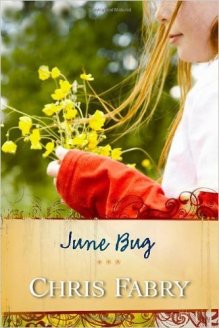
Book Review: June Bug

june-bug June Bug by Chris Fabry caught my eye both because I have enjoyed others of his books, plus this one was said to be based on Victor Hugo’s Les Miserables, one of my top two all-time favorite novels.

It begins with 9 year old June traveling around the country with her father,  John Johnson, in an old RV. It’s the only life she has ever known. They home school (or RV school, as they like to joke) and have seen much of the country. But one day a part in the RV breaks down, and they park in a Wal-mart parking lot waiting for it to come in. When June goes into the store one day, she sees her picture on a bulletin board of missing children. It says she is Natalie Edwards and she has been missing since she was 2 from Dogwood, WV. The age progression technology forms a pretty accurate representation, and a birthmark is a key identifying factor. June doesn’t tell her father, or supposed father, this right away, though. He’s been a good dad, though quiet and not wanting to stay in one place for long.

Meanwhile, back in Dogwood, Mae Edwards is the only one who believes her granddaughter is still alive. Her daughter, Dana, said her car was abducted with the baby still in it, and neither was ever seen again. Until now: someone has discovered an old car in the lake, and Sheriff Hadley Preston presides as it is extricated from the lake. When he investigates, he finds it is the missing car, but there is no child’s body in it, and the strap on the car seat has been cut.

The story started out a little slowly for me, but picked up in the latter half as all the pieces started coming together.

Also, at first, I was expecting it to be more of a parallel to Les Mis than it was based on some of the blurbs I had seen about it. I know remakes or retellings of favorite stories never match point for point, but once I stopped trying to compare and contrast it to Les Mis and just enjoyed it for the story itself, I got a lot more out of it plus enjoyed the throwbacks to it I did see.

Probably the most disappointing comparison was with the mother of the girl. In Les Mis, Fantine was something of a tragic victim. She made some wrong choices, but she was taken advantage of first by the man who got her pregnant, then the couple who were taking care of her child and inventing stories about her needs to get more money out of her, then she ran into hard luck when she was fired after it was discovered she had a child out of wedlock. Desperate to get the money she thought her child needed, she sold everything she had, including her hair and teeth, and finally ended up in prostitution. I read somewhere that author Victor Hugo considered prostitution was a form of slavery. When her path crossed Valjean’s and he realized that being fired from his factory had contributed to her situation, he helped her and took care of her child when she died, and the grace shown between the two is one of the best parts of the story. However, the mother in June Bug, Dana, comes across as just a bad, selfish person. I guess you could say she is a victim of her addictions, and we’ve had extended family members in the same boat and know what drugs can do to a person’s perspective. But there’s nothing about Dana that makes the reader sympathetic to her.

The most exciting surprise, though, was in the character who turned out to be Johnson’s benefactor, the part taken in Les Mis by the bishop who shows Valjean a kindness that changes his life and helps him both spiritually and practically. I don’t want to spoil it, so I won’t say more about it, but it totally caught me by surprise and I was delighted by how that played out.

As a story on its own merits, I ended up liking it and enjoying it much more near the end than I did at the beginning. Fabry’s characters are well drawn, and I liked the journey they went through.

Looking around Chris Fabry’s blog a little bit for more information on June Bug, I found this fun entry on How to Get Your Book Mentioned on Jeopardy, which tells some of the background and progression of writing the book and how it really did end up being a clue of Jeopardy.

Genre: Christian fiction
My rating: 8 out of 10

(Sharing with Semicolon‘s Saturday Review of Books and Carole’s Books You Loved)

Books you loved 4


Save

Save

Save

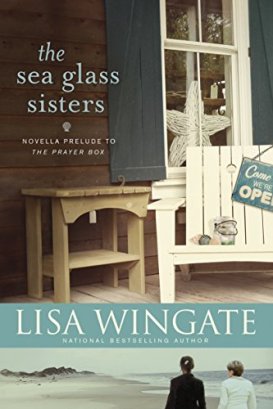
Book Review: The Sea Glass Sisters

sea-glass-ssiters The Sea Glass Sisters by Lisa Wingate is an novella prequel to The Prayer Box, which I read and reviewed last year. A major character in that book is Sandy, owner of Sandy’s Sea Shell Shop on North Carolina’s Outer Banks, who has a significant influence on the life of main character Tandi. The Sea Glass Sisters  shares some of Sandy’s background and the circumstances involving the hurricane that hit the area just prior to The Prayer Box.

The main character in this story, however, is Sandy’s niece, Elizabeth Gallagher. Her life is coming unraveled: pressures on her job as a 911 dispatcher, distance in her relationships with her husband and children, problems piling up she doesn’t know what to do about. Just as she is riddled with guilt that a mistake she made on a call may have cost a young girl her life, her mother recruits her for a multi-state drive to Hatteras Island, NC. Her mother and Sandy are sisters, and her mother wants to “talk some sense” into Sandy and get her to move back. All the rest of the relatives live on properties all touching each other. Sandy, seemingly on a whim, went to NC and opened this shop, and now wants to sell her property in Michigan. Besides wanting to keep the family properties together and have Sandy back, she is worried about hurricanes and Sandy’s neglected health.

In fact, as Elizabeth and her mother drive to NC, a hurricane is on its way to the area. But her mother is convinced she can persuade Sandy to come back with them before they’re in danger. When they arrive, they can understand what attracted Sandy to the area, but they still want her to come home. When the hurricane presses toward them, they ride out the storm together and get to know each other better in the process.

Some standout quotes:

I decipher the brewing machine because I am, after all, trained to save lives, and this is a life-or-death situation. We need coffee. Now. Or heads will roll.

Every decision you make in life has benefits and consequences. Sometimes you just have to go on faith, and even that comes at a price. It means you have to give up the idea that you’re the one in charge of the universe.

No way out but through the storm now.

That’s the only thing you can do with a mess. Start cleaning it up, a little at a time.

The shadow of the highest evil intermingled with the light of the highest good. Maybe all lives are filled with this. Maybe it is always a choice between embracing the darkness of one or the saving grace of the other.

We’ve tried to set her straight, but you don’t set that woman anywhere. She’s like the value of pi. She just is.

Maybe life is a series of little deaths and rebirths, of passages and rites of passage, of God teaching you to stop clinging to one thing so you can reach for another.

Lisa packed quite a lot into this little book. I loved what Elizabeth learned along the way and the sense of place or setting Lisa created in the book. I love that cover! It looks like a shop I would want to visit. I enjoyed my second visit to the outer Banks via Lisa’s books – or third, actually, including A Sandy’s Seashell Shop Christmas – and look forward to more.

Genre: Christian fiction
Objectionable elements: None.
My rating: 10 out of 10

(Sharing with Semicolon‘s Saturday Review of Books and Carole’s Books You Loved)

Books you loved 4


Save

Save

Save

Book Review: The Magnolia Story

I don’t actually watch too many home flipping and fixing shows because we don’t get HGTV on our main TV, connected to Tivo (though we do get it on the TVs in my mother-in-law’s room and our bedroom, which aren’t connected to Tivo). But we watched a few through Netflix. last summer when nothing else was on. I enjoyed them, but some of the renovations were too sleek and modern for my tastes. Then I found “Fixer Upper” with Chip and Joanna Gaines. I liked the warmth of the show and Joanna’s style. So, even though I’d only seen a handful of episodes, I was excited to see that they were coming out with a book, The Magnolia Story, by Chip and Joanna with Mark Dagostino.

magnoliaThe book starts with the offer they received to have someone come out and do some filming with the idea of developing a reality show, how it almost bombed out before it even got going, and what turned the tide. Then they backtrack to how they first met, their backgrounds, what led to their business and the TV offer, and then shoot ahead to how they got to where they are today.

The book is written in a conversational style with different fonts for the two of them.

They’re a definite case of opposites attracting, but they’ve learned to work with each other’s differences and draw out the best in each other.

Chip seems always to have had a bent toward entrepreneurship. Joanna was actually a communications major with no background in design, but while doing an internship in New York City, she came across some warm and cozy little shops and wanted to start a similar one in Waco, TX. That led to helping customers find just the right accents for their homes, and eventually she got involved in Chip’s house-flipping business. They both learned along the  way by doing, and the success they’ve had indicates they’ve obviously learned well.

They talk candidly about their faith, though they don’t really define it or tell how they came to it. Joanna mentioned her faith becoming more personal while in college. But they do credit God with guiding and providing for them.

Here are a few things that stood out to me:

It seemed as if every homeless guy in Waco knew Chip Gaines. On the flip side, every baker in Waco knew Chip, too. And he talked to those very different groups of people exactly the same way (p. 19).

I realized that my determination to make things perfect meant I was chasing an empty obsession all day long. Nothing was ever going to be perfect the way I had envisioned it in the past. Did I want to keep spending my energy on that effort, or did I want to step out of that obsession and to enjoy my kids, maybe allowing myself to get messy right along with them in the process? I chose the latter – and that made all the difference.

It’s up to us to choose contentment and thankfulness now—and to stop imagining that we have to have everything perfect before we’ll be happy.

Most people think that you start off not thriving. Then you get a TV show or some other amazing opportunity, you get fame, you get fortune, and then you thrive…I always thought that the “thriving” would come when everything was perfect, and what I learned is that it’s actually down in the mess that things get good (pp. 167-168).

They share why they use the magnolia as a symbol, what landed Chip in jail once, the business venture that almost ruined them, how they got their farm, and pictures!

I very much enjoyed reading their story.

Genre: Non-fiction
Objectionable elements: None
My rating: 9 out of 10

(Sharing with Semicolon‘s Saturday Review of Books and Carole’s Books You Loved)

Books you loved 4


Save

Save

Save

Book Review: The Silent Songbird

silent-songbird The Silent Songbird by Melanie Dickerson is a Christian fiction retelling loosely based on “The Little Mermaid.” It’s book 7 of the Hagenheim/ Fairy Tale Romance Series, so some other characters in the other books appear here, mainly from The Merchant’s Daughter, as the hero here is the son of the couple there. But it could be read as a stand-alone book.

In this book, Evangeline is the ward of her cousin, King Richard II. When he plans for her to marry Lord Shively, a much older man whom she finds disgusting, she decides to escape. Her maid, and older woman named Muriel, finds out and, not being able to stop her, comes with her.

Evangeline is known for her beauitful singing voice, so she decides to act as if she is mute as part of her disguise. She and Muriel travel with a group going away from the castle back to their home village. Right away Evangeline notices that the apparent leader, Wesley le Wyse, is both handsome and kind. He notices her as well, and feels sorry for her when Muriel tells him that Eva (as she’s known now) lost her voice when her master beat her. Eva and Westley find ways to communicate, and as she comes to know him better, she regrets deceiving him. She wants to tell him the truth but is afraid of how he might react to her deception.

When they get to Westley’s village, he gets Eva and Muriel jobs at his family’s home. But Eva has never been trained to do menial labor and either injures herself or someone else at everything she tries. Muriel is more capable but also more miserable, longing for home and a special someone there.

Eventually Westley catches on the Eva is not who she seems to be, learns of her deception, and is understandably angry. Just then Eva learns that Westley’s life is in danger, as is the king’s safety, but will anyone believe her now? And can she ever be forgiven, not only by other people, but by God?

“Losing everything is sometimes the price one must pay for doing the right thing.”

I wasn’t sure if perhaps Westley’s name was a nod to The Princess Bride, but when “As you wish” was said a couple of times, it seemed so.

This series is labeled as Young Adult, and I mentioned last time that most of them didn’t read that way to me. This one did seem meant for a younger audience, but I generally enjoyed it.

Genre: Christian fiction fairy tale
Objectionable elements: None
My rating: 8 out of 10

(Sharing with Semicolon‘s Saturday Review of Books and Carole’s Books You Loved)
Books you loved 4


Save

Save

Book Review: The Golden Braid

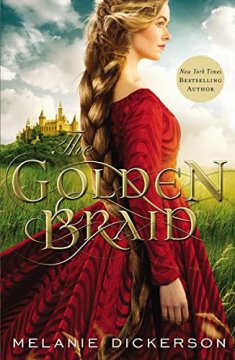
Melanie Dickerson’s Hagenheim/ Fairy Tale Romance Series retells familiar old stories and sets them in medieval Germany and England with no magic or fairy godmothers coming to the rescue. The sixth book in the series is The Golden Braid, based on Rapunzel.

golden-braidRapunzel’s mother has her locked up, not in a stone tower (at least at first), but in a prison of fear. She’s told Rapunzel all her life that other people are not to be trusted, men especially, and to keep to herself. They move frequently, which, combined with her mother’s warnings, makes it hard for Rapunzel to ever make any connections or feel like she belongs anywhere. At 17 she’s beginning to wonder if her life is normal.

Her mother is a midwife who found Rapunzel when she was 3 and has raised her ever since. Rapunzel has no memory of her life before and feels abandoned by her family.

As the two are traveling to a new location one day, they’re attacked by robbers. One of Duke Wilheim’s knights, Sir Gerek, happens to be nearby and comes to their rescue. But instead of being grateful, Rapunzel’s mother, Gothel, wants to be rid of him as soon as possible and Rapunzel is distant. He insists on accompanying them to Hagenheim, however, for their protection.

Meanwhile the robber turns the tables and comes after Gerek, and Rapunzel comes to his aid. Years ago she had some boys teach her how to throw knives, and she disables the attacker. But Gerek’s horse has thrown and and landed on top of him, breaking his arm and leg. Rapunzel feels compelled to help him, so they care for him until they come to a monastery where they leave Gerek to recover while they travel on to Hagenheim.

Rapunzel has always wanted to learn how to read, and sneaks away back to the monastery to ask if they will teach her in exchange for her working there cleaning. They agree and assign Gerek the task – since he’s not doing anything but recovering anyway. Neither of them is pleased with the arrangement, but they carry on anyway. Rapunzel finds Gerek haughty and grouchy. He thinks she’s pretty, but would never marry a peasant: he wants to marry a wealthy widow with land since he has none of his own.

Eventually life with Gothel becomes so precarious that Rapunzel wonders about her mother’s sanity, and she runs away to the castle in Hagenheim. With Gerek’s references, she is able to work as a maid. As she gets to know him in a different setting, she finds much to admire, but knows he would never consider her. But she when uncovers the mystery to her own identity, she struggles with the best way to handle it. And with the castle coming under attack by an enemy, that will have to wait anyway.

The action in the book, especially after Rapunzel comes to the castle, overlaps with that in the previous book, The Princess Spy, but I don’t think you’d have to have read that book to enjoy this one. I like how each book in the series can be read alone yet connects with the others and how characters we’ve met before show up again. I was delighted by who Rapunzel’s parents turned out to be.

I love a Christian fiction book that’s not ashamed to be Christian. Melanie weaves the faith element in quite naturally.

This series is listed a Young Adult, but to me they don’t read that way (except perhaps for The Princess Spy). It got a little too romance-y for me in places (shivers running up their spines when they accidentally brushed against each other’s fingers while handing something to the other and that kind of thing). But otherwise I enjoyed it very much, not just for the story, but also for the spiritual steps each character needed to take.

Others in the series, linked to my reviews:

Book 1: The Healer’s Apprentice based on Sleeping Beauty
Book 2: The Merchant’s Daughter, based on Beauty and the Beast
Book 3: The Fairest Beauty, based on Snow White
Book 4: The Captive Maiden, based on Cinderella
Book 5: The Princess Spy, based on The Frog Prince

This book and The Merchant’s Daughter have been my favorites. I’m reading the seventh, The Silent Songbird based on The Little Mermaid, now.

If you like fairy tale retellings, medieval stories, or clean romances, you will probably like The Golden Braid.

Genre: Christian fiction fairy tale
Objectionable elements: None
My rating: 9 out of 10

(Sharing with Semicolon‘s Saturday Review of Books and Carole’s Books You Loved)

Books you loved 4


Save

Save

Book Review: A Fall of Marigolds

marigoldsIn A Fall of Marigolds by Susan Meissner, Clara Woods is a nurse on Ellis Island in September of 1911. She describes it as something of an in-between place. Immigrants who come in are kept on the island for a time if they have been exposed to any kind of contagious disease. Clara is in her own in-between place as well. Some months earlier she had worked in Manhattan and encountered a man named Edward every day on the elevator. Their relationship had never progressed beyond mutual attraction, but she felt certain they were going to know each other better. But she lost him in the Triangle Factory Shirtwaist Fire.  She moved to Ellis Island to work and hasn’t set foot in Manhattan since. She does her work well and is friends with her roommate, but never goes out, never pursues other friendships, has no future plans.

One day she notices one of the incoming immigrants has a colorful scarf, a woman’s scarf, around his neck. She learns that he lost his wife to scarlet fever on the voyage to America. Since he has been exposed, he is detained, and he indeed comes down with the fever. Clara is drawn to him in their mutual grief, and in trying to help him, gets herself embroiled in a dilemma that causes a crisis of conscious.

In September 2001, that same marigold scarf is brought into the heirloom fabric shop where Taryn Michaels works. It has been passed down through the customer’s family, and she and her sister both like it and wanted to see if the print could be found to make another one. Taryn is delayed in meeting her husband by the customer, but that ends up saving her life, as the 9/11 attacks occur while she is on her way. Unfortunately, her husband was in the Towers and could not escape. So for ten years she has been in her own in-between place, until the tenth anniversary of 9/11 causes a resurgence of photos from the event, one of which shows her with the scarf, the beginning of a chain of events

The author goes back and forth between the two women’s timelines to unfold their stories, their similarities, the history of the scarf, and how the women get out of their in-between places.

I loved the historical aspect of this book. I hadn’t known much about Ellis Island and nothing about the Triangle Shirtwaist fire. Taryn’s experiences on the streets of NYC just after the 9/11 attacks were gripping.

The two women’s journeys toward moving on were compelling and empathetic as well, except it was a little hard to account for the depth of Clara’s grief given that she had known Edward for only two weeks and only on the surface at that. Of course, she was dealing with not just the loss of the relationship, but the potential as well. There is an interview with the author at the end of the book in which she says, “I really do believe that the capacity to love is what gives meaning to our lives, even though we are never more vulnerable than when we let down our guard and trust our hearts to others. The world isn’t perfect; nor are other people. It’s quite possible that loving flawed people in an equally flawed world is going to subject you to the worst kind of heartache. But I like to think that the heart is capable of surviving the costs of loving because it was meant to. The heart is made of muscle; we are meant to exercise it. This is what Taryn and Clara come to realize. It seems to me the best kind of takeaway I could hope for.”

A few of my favorite quotes:

The person who completes your life is not so much the person who shares all the years of your existence, but rather the person who made your life worth living, no matter how long or short a time you were given to spend with them.

It should always make us happy to say that loving someone and being loved by someone is worth whatever price paid.

Everything beautiful has a story it wants to tell. But not every story is beautiful.

If the book was meant to be Christian fiction, I found it a little lacking in that department: I didn’t find much distinctly Christian about it except that the characters wonder sometimes whether God is at work behind their circumstances. But if it was meant as a clean, historical, inspirational novel, then it was very good.

Genre: Historical inspirational fiction
Objectionable elements: A couple of “damns”; God’s name used carelessly a few times.
My rating: 8 out of 10

(Sharing with Semicolon‘s Saturday Review of Books and Carole’s Books You Loved)
Books you loved 4


Save

Save

Book Review: A Patchwork Christmas Collection

patchwork-christmasWhen I saw A Patchwork Christmas Collection by Judith Miller, Nancy Moser, and Stephanie Grace Whitson mentioned at Monica‘s, I thought I might like it as a Christmas read, partly because I had read and enjoyed the first two authors before.

The book is made up up three different stories:

“Seams Like Love” by Judith Miller.Karla Stuke lives in the Amana colonies in Iowa with her family in the 1890s. She was engaged, but her fiance jilted her for another. Feeling she can never trust her heart to any man again, she puts all thoughts of love and marriage away and helps her family provide communal meals in the hotel. Then suddenly her old childhood friend, Frank, returns. He has trained as a pharmacist’s apprentice and been assigned to her village. He hopes to renew their friendship, but finds her distant. When he learns that she is no longer engaged, he wonders if he can ever convince her that all men are not as faithless as the one who hurt her.

I had never heard of the Amana colonies before and found a bit of their history here. The Inspirationists began in Germany, migrated to New York, and eventually established a communal colony of six villages in Iowa. From what this page says of their beliefs, they sound somewhat similar to Quakers, and the returning pharmacist in the book mentioned he was often mistaken for Amish. The “brethren,” or leaders, directed much, choosing who was going to live where and what their vocation or contribution to the community should be.I thought in the book they seemed awfully blunt with each other: I am not sure if that was characteristic of them or the author’s interpretation.

But I enjoyed the story, earning about this group, Karla and Frank’s journey, and especially Karla’s needing to overcome a perception of herself unwittingly planted by her sister years before.

“A Patchwork Love” by Stephanie Grace Whitson. In Nebraska in 1875, Jane McClure finds herself in dire straits when she is not only widowed, but near penniless due to her late husband’s bad investments. A man she met once in another town, Mr. Huggins, has tentatively offered to pursue the possibility of marriage, not as a love match, but to help each other. He provides for Jane and her daughter to come by train to spend Christmas with him to get to know one another better. But on the way the train is stopped by a severe snowstorm and drifts. A man and his mother living nearby come to the train to offer food to the workers and shelter for Jane and her daughter until the train gets moving again. Jane’s daughter has become very sick, so everyone focuses at first on tending to her. But in the process Jane notices that the man, Peter Gruber, whose soul is as wounded as his damaged face, also has a tender heart and ways. As circumstances keep coming up to prevent them from leaving, Jane worries that her one opportunity to save her family with Mr. Huggins is slipping away. But will she recognize the opportunity right before her?

“The Bridal Quilt” by Nancy Moser. New York society couple Ada Wallace and Samuel Alcott are on the verge on engagement: in fact, everyone expects that to happen at Christmas. But one evening when Samuel goes “slumming” in a poor side of town with friends at their insistence, he rescues a young girl from being beaten in the street. When he takes her back to the foundling home where she stays, he is struck with the need of the children, and his life and outlook are forever changed. He tries to reconcile what he feels he is called to do with his life with Ada, and they don’t seem to fit together, bringing him to the point of a major decision that will affect them all.

I enjoyed all the stories, but especially the last one. Each occurs during the Christmas season and involves a quilt and a “second chance at love.” Each chapter ends with discussion questions, a crochet or quilting project, and a recipe.

I had wanted to finish it before the end of the year, but, life being what it is, that did not happen. But I didn’t mind extending the season a bit with this nice, cozy Christmas read.

Genre: Christmas inspirational fiction
Objectionable elements: None.
My rating: 9 out of 10

(Sharing with Semicolon‘s Saturday Review of Books)

Save

Reading Plans for 2017

We no sooner post our favorite books or reading challenge wrap-ups from last year, and it is time to plan new ones for the new year. Such is the life of a book lover. 🙂

I like reading challenges for spurring me on to read things I might not or to be a little more intentional in my reading, but I’ve found I have to have some breathing space in my reading plans to pick up something else along the way if I feel so led. Too many reading plans or challenges leave me feeling constricted and constrained. The two that seemed to work best for me last year were the Back to the Classics Challenge and the Mount TBR (To Be Read) Challenge. Sometimes there are one or two more small ones through the year, but these are the major ones for me.

First, though, I’ll be hosting the Laura Ingalls Wilder reading challenge in February. I’m especially looking forward to it this year since this Feb. 7 is her 150th birthday. Hope you can join in!


On to the other challenges.

L. M. Montgomery Reading ChallengeEvery January Carrie hosts an L. M. Montgomery Reading Challenge. This year I’ll be reading Story Girl. which I haven’t encountered before but have heard good things about. You can find more information here.

back-to-the-classics-2017Karen at Books and Chocolate hosts the Back to the Classics Challenge, in which she comes up with different categories for us to choose from, and we earn prize entries for completing six, nine, or twelve categories. This will be my fourth year participating in this challenge, and I really enjoy it. I’ve mentioned before that somehow I was not exposed to many classics growing up, and I’ve been trying to rectify that as an adult. It’s nice, after reading one, to think, “So that’s what that one was all about.”

As it stand now, my choices for this year are:

1.  A 19th Century Classic. The Pickwick Papers by Charles Dickens

2.  A 20th Century Classic. The Thirty-Nine Steps by John Buchan

3.  A classic by a woman author. Middlemarch by George Eliot (Mary Ann Evans)

4.  A classic in translation.  Any book originally written or published in a language other than your native language. Cyrano de Bergerac by Edmond Rostand

5.  A classic published before 1800. Either Don Quixote (1600s) or The Confessions of St. Augustine (400s).

6.  A romance classic. Lavender and Old Lace by Myrtle Read

7.  A Gothic or horror classic. Frankenstein by Mary Shelley

8.  A classic with a number in the title. 12 Years a Slave by Solomon Northup

9.  A classic about an animal or which includes the name of an animal in the title.  Old Yeller by Fred Gipson

10. A classic set in a place you’d like to visit. No Name by Wilkie Collins. I don’t have a burning desire to visit any place, but if I did, it would probably be England or Ireland. I do have a desire to read more of Collins.

11. An award-winning classic.Possibly either The Bronze Bow by Elizabeth George  Speare (Newberry Medal, 1962) or A Bell for Adano by John Hersey (Pulitzer, 1945)

12. A Russian Classic.Either Resurrection or The Death of Ivan Ilych, both by Tolstoy

mount-tbr-2017The purpose of the Mount TBR Challenge is to have us read as many books as we already owned before 2017. There are various levels to strive for, in 12 book increments. Last year, my first to participate, I only committed myself to the first level of 12 (Pike’s Peak) and got to the third (36 books, or Mt. Vancouver) without much trouble. But I think I am just going to commit to the second level (24 books, Mount Blanc) just to be safe and may add more later. Bev posts a monthly place for reviews and optional checkpoints once a quarter. More information, rules, and a sign-up page are here.

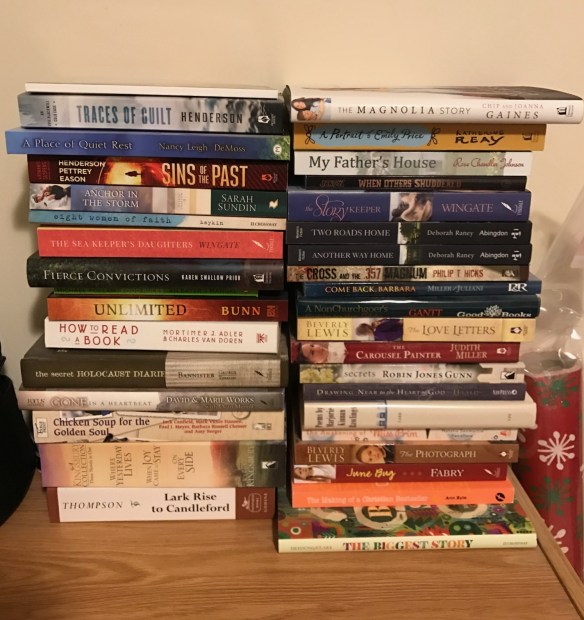
I’m not going to post a list of planned books this year like I did last year, preferring to just tally as I go. But I’ll show you my TBR stack, compiled of Christmas gifts, birthday gifts, and Mother’s Day gifts from the last year (and before!). In addition to these, I have a handful in my Audible library (mostly classics bought on sale in anticipation of the above challenge) and who knows how many in my Kindle app.

img_0005

Some of you who have been reading here a while have seen some of these before – which underscores just how much I need to work on them! 🙂

Are you participating in these or any other reading challenges?

(Sharing with Semicolon‘s Saturday Review of Books)

Save

Save

Save

Save

Save

Laura Ingalls Wilder Reading Challenge 2017

I hope you’ll forgive multiple posts in a day. The first two were reading challenge wrap-ups, required for the challenge but probably not of interest generally to anyone else, especially since I’ve already posted books read in 2016 and my favorites thereof. 🙂 And I did want to get information posted about the Laura Ingalls Wilder Reading Challenge for this year.

The month of February contains the dates of Laura Ingalls Wilder’s birth and death, so it seems a fitting month to focus on her life and writings, especially this year, which marks her 150th birthday. This is our sixth year to host this challenge, and I have enjoyed it each time. Many of us grew up reading the Little House books. I don’t know if there has ever been a time when there wasn’t interest in the Little House series since it first came out. They are enjoyable as children’s books, but they are enjoyable for adults as well. It’s fascinating to explore real pioneer roots and heartening to read of the family relationships and values.

On Feb. 1 I’ll have a sign-up post where you can let us know if you’ll be participating and what you’d like to read. That way we can peek in on each other through the month and see how it’s going (that’s half the fun of a reading challenge). You can read anything by or about Laura. You can read alone or with your children or a friend. You can read just one book or several throughout the month — whatever works with your schedule. If you’d like to prepare some food or crafts or activities somehow relating to Laura or her books, that would be really neat too. Annette at the Little House Companion blog has some neat ideas for Laura-related activities. You do not have to have a blog to participate: if you don’t, you can just share with us in the comments on the sign-up post Feb. 1 that you’ll be participating.

On Feb 28 I’ll have a wrap-up post so you can link back to any posts you’ve written for the challenge or to a wrap-up post.

Need some ideas beyond the Little House books themselves? Annette, as I mentioned, has shared several books for children here. I compiled a list of Books Related to Laura Ingalls Wilder, and some others are listed in the comments. Laura fan extraordinaire and historian Melanie Stringer has a treasure trove of information at Meet Laura Ingalls Wilder.

I don’t know how many more years I will continue to host this challenge -probably just one or two – so I encourage you to join in before it’s all over. Have fun gathering your materials and planning what to read and do, and I’ll see you at the sign-up post on Feb. 1!

I am having trouble making a code that you can use to put the button on your site, but in the meantime, you can right click on the button below, click on “Save as”, then save it to your computer to use in your post. I’d appreciate your linking back to this post if you participate in the challenge. Thanks!

Save

Save

Mount TBR Reading Challenge Wrap-up

Mount TBR 2016The Mount TBR Reading Challenge had the goal to read books that we already had on hand prior to 2016. For this challenge I completed (the first 12 are from my original list; the rest I added throughout the year in more or less the order I finished them.):

  1. True Woman 201: Interior Design by Mary Kassian and Nancy Leigh DeMoss (Finished 4/16/16)
  2. The Renewing of the Mind Project by Barb Raveling (2015) (Finished 5/23/16)
  3. Beyond Stateliest Marble: The Passionate Femininity of Anne Bradstreet by Douglas Wilson (2001) (Finished 5/1/16)
  4. Ten Fingers For God: The Life and Work of Dr. Paul Brand by Dorothy Clarke Wilson (Finished 8/26/16)
  5. What Are You Afraid Of? Facing Down Your Fears With Faith by David Jeremiah (Finished 2/22/16)
  6. Home to Chicory Lane by Deborah Raney (Finished 9/18/16)
  7. The Bronte Plot by Katherine Reay (Finished 2/2/16)
  8. Pride, Prejudice, and Cheese Grits by Mary Jane Hathaway (2014) (Finished 5/24/16)
  9. Searching for Eternity by Elizabeth Musser (Finished 1/16/16)
  10. Pioneer Girl: The Annotated Autobiography by Laura Ingalls Wilder and Pamela Smith Hill (Finished 7/11/16)
  11. Our Mutual Friend by Charles Dickens (Finished 2/22/16)
  12. A Connecticut Yankee in King Arthur’s Court by Mark Twain (Finished 3/8/16)
  13. Big Love: The Practice of Loving Beyond Your Limits by Kara Tippetts (Finished 2/14/16)
  14. Gilead by Marilynne Robinson (Finished 1/13/16)
  15. SEAL of God by Chad Williams and David Thomas (Finished 1/24/16)
  16. Not In the Heart by Chris Fabry (Finished 3/26/16)
  17. A Slender Thread by Tracie Peterson (Finished 4/6/16)
  18. The Reunion by Dan Walsh (Finished 4/10/16)
  19. What Follows After by Dan Walsh (Finished 4/23/16)
  20. The Hardest Peace: Expecting Grace in the Midst of Life’s Hard by Kara Tippetts (Finished 4/30/16)
  21. One Perfect Spring by Irene Hannon (Finished 5/11/16)
  22. Don’t Let the Goats Eat the Loquat Trees: The Adventures of an American Surgeon in Nepal by Thomas Hale (Finished 6/13/16)
  23. Chateau of Secrets by Melanie Dobson (Finished 6/18/16)
  24. Eight Twenty Eight: When Love Didn’t Give Up by Ian and Larissa Murphy (Finished 6/28/16)
  25. Thin Places: A Memoir by Mary DeMuth (Finished 7/12/16)
  26. The Methusaleh Project by Rick Barry (Finished 7/16/16)
  27. C. S. Lewis’ Letters to Children, edited by Lyle W. Dorsett and Marjorie Lamp Mead (Finished 7/23/16)
  28. I’m No Angel: From Victoria’s Secret Model to Role Model by Kylie Bisutti (Finished 9/6/16)
  29. Be Faithful (1 & 2 Timothy, Titus, Philemon): It’s Always Too Soon to Quit! by Warren Wiersbe
  30. Be Mature (James): Growing Up in Christ by Warren Wiersbe
  31. Be Hopeful (1 Peter): How to Make the Best Times Out of Your Worst Times by Warren Wiersbe
  32. Be Real (I John): Turning From Hypocrisy to Truth by Warren Wiersbe, not reviewed. (Not sure of the finish date for the above four – sometime in August or September)
  33. Give Them Grace: Dazzling Your Kids With the Love of Jesus by Elyse M. Fitzpatrick and Jessica Thompson (Finished 10/1/16)
  34. Knowable Word: Helping Ordinary People Learn to Study the Bible by Peter Krol
  35. Radical Womanhood: Feminine Faith in a Feminist World by Carolyn McCulley (Finished 11/20/16)
  36. The Princess Spy by Melanie Dickerson (Finished 11/15/16)
  37. The Messenger by Siri Mitchell (Finished 12/7/16)
  38. The Christmas Violin by Buffy Andrews (Finished 12/13/16)

The different levels of the challenge are represented by different mountains. I had originally planned to read at least 12 for “Pike’s Peak.” I’m happy I got to the third level, Mt. Vancouver!

Bev also added a fun activity linking the books from our list with familiar proverbs. Mine are:

A stitch in time…with A Slender Thread.
Don’t count your chickens…and Don’t Let the Goats Eat the Loquat Trees.
All good things must come…Home to Chicory Lane.
When in Rome…[see] Our Mutual Friend
A picture is worth…Eight Twenty Eight.
When the going gets tough, the tough get…The Hardest Peace
.
Two wrongs don’t make…One Perfect Spring.
The pen is mightier than…The Messenger.
The squeaky wheel gets…What Follows After.
Hope for the best, but prepare for…Thin Places.
All that glitters is not…Beyond Stateliest Marble.
Birds of a feather…[attend] The Reunion.

I enjoyed getting to so many of my books on hand (or in my Kindle app) yet allowing for some new reads along the way, too.