Book Review: Pioneer Girl

Pioneer Girl

Before Laura Ingalls Wilder wrote her first book in the Little House on the Prairie series, perhaps before she even thought of writing her story in that format, she wrote her family’s history out in a draft called Pioneer Girl on Big Chief tablets by hand. She gave it to her daughter, Rose Wilder Lane, an established, well-known author at the time, to edit and shape up for publication. They made several attempts to have it published as a non-fiction book for adults, with no success. But that’s just as well, because if it had been published as it was, we likely would not have the Little House series.

Laura could not have known, when her first book was published in 1932, that years later people would diligently seek out information about her family, visit her family homes, try to discern fact from fiction, and have debates over whether she or her daughter wrote most of the books. To deal with some of these issues and bring Laura’s first book to light, Pamela Smith Hill edited and annotated Pioneer Girl: The Annotated Autobiography, which I am sure will be the definitive source on everything Laura Ingalls Wilder for years to come.

Hill did an amazingly through job. There are footnotes concerning every single person mentioned in the book all the way down to the flowers Laura referred to and the kind of crabs that nipped at Nellie Oleson’s toes. But my favorite notes are the ones that cite correspondence between Laura and Rose about the book or tell how an incident was phrased or expanded upon in the different manuscripts and the Little House books.

I mentioned the debate about authorship: some scholars (both professional and armchair) feel that Laura wrote the text and Rose just edited it for print and used her contacts to get the first book published. Others feel that Rose was basically a ghost-writer for the series, and, though the main story is Laura’s, Rose was the real writer. I’ve always believed it was closer to the former situation myself, and I think this book and the annotations confirm that. Rose was more involved than the average editor, and there was some collaboration, but the voice is definitely Laura’s. In many of their cited letters where there was a difference of opinion about what to include or how to frame a scene, Laura’s reasoning won out most, perhaps all the time.

Hill begins with the history of how Pioneer Girl came to be written, its search for a publisher, Rose’s involvement, and the different manuscripts that developed from it at different times. Then the text of Pioneer Girl itself is presented, with multiple annotations,  photos, and maps. Finally, four appendices include a manuscript of “Juvenile Pioneer Girl” that Rose rewrote for children.

There is so much to this book and I have noted so many points of interest, it’s hard to narrow it all down and decide what to share. It’s a large book: 9 1/4″ wide, 10″ long, and 1 18″ thick. It’s a gorgeous book: the front cover is just lovely, and there are numerous photos of Laura’s family and the places and things she writes about. It’s a historic book not just about Laura’s family, but also about the times and culture in which she lived.

But I wouldn’t call it a page turner, except in parts. Obviously the final Little House books are much better because the book went through five different revisions even before being turned into what became the Little House novels, and an incident that may have taken a page or two in Pioneer Girl was often expanded into a chapter in the final novels. Some readers might not want to read every single footnote and annotation. I did want to, because I have read so much about Wilder in the last few years, but I’ll admit sometimes it was a little tedious, and some notes were much more interesting than others. But overall I really did enjoy delving into all the minutia as well as Laura’s first attempts at a book.

I think I’ll share some points of interest by way of list:

  • There is much made of the fact that Laura got dates, names, and even her age at certain times wrong occasionally. But she didn’t start writing this book until she was in her sixties. I’m only in my fifties, and I can’t say for sure I’d know what incident from my childhood happened what year and how old I was at the time. Plus she didn’t have the resources we have now, and many of her family members she would have conferred with had passed on. So that doesn’t bother me.
  • She did, however, deliberately fictionalize some sections by the time she got to the LH books. Hill cites the reasons why where known. Sometimes it’s because she felt it would make a better story. For instance, during The Long Winter (referred to as the Hard Winter here), there was actually another family living with the Ingalls, a young couple and baby. The man was evidently lazy and selfish, and though Laura wrote about them in this book, she decided to leave them out of the LH books as they would distract from rather than advance the story. Also, in the scene in By the Shores of Silver Lake where Pa takes Laura to see the men working on building the railroad never happened, but framing it through the fictional Laura’s eyes seemed the best way to tell it for young readers.
  • She left out some parts because they didn’t fit “in the picture I am making of the…family” (p. 95, note 99). Besides, probably no one tells all in an autobiography.
  • I’m sorry to say I have never liked Rose. Some years ago I picked up a book about her (I forget which one), not knowing anything about her except that she was Laura’s daughter, and found she was quite a different person from her mother. What I read about her here only confirmed my initial impressions. “Lane had built her professional career by fictionalizing what she published as non-fiction…[She] wrote what was presented to her audience as ‘true’ stories, but they were loosely based on interviews and factual material that Lane embellished or re-imagined to heighten their market appeal” (p. xxx). “Henry Ford repudiated the biography Lane wrote about him for its inaccuracies, and [Charlie] Chaplin was apparently so outraged at the literary liberties she had taken…that he threatened to bring legal action” (p. xxxi). “Her aim was to get ‘at the truth rather than at the facts'” – as if you can bring forth truth from falsehood (p. xxxi). Plus she took information from her mother’s material to write her own fictionalized novel, Let the Hurricane Roar – without her mother’s knowledge or consent.
  • It may seem inconsistent that I’m ok with Laura’s fictionalizing but not Rose’s. But Laura’s were minor for the most part, and she argued with Rose quite a bit about maintaining historical accuracy. And the LH books were presented as fictionalized accounts of her family, whereas PG was non-fiction. Rose took her fictionalizing way too far and presented it as fact..
  • It’s interesting that though Rose was the “famous author” then, she is nowhere nearly as well known as her mother now, and I think people who do read her now do so because of interest in her mother.
  • One of the reasons Laura wrote was to preserve her father’s stories (p. 37, note 42). Expanding on the details of how the family lived came after a suggestion from an editor (p. 31, note 26). But also, “As she told the Detroit Book Fair audience in 1937, ‘I realized that I had seen and lived it all–all the successive phases of the frontier, first the frontiersman then the pioneer, then the farmers and the towns. Then I understood that in my own life I represented a whole period of American history'” (p. liv).
  • Nellie Oleson was based on a composite of three different girls in Laura’s life.
  • Laura couldn’t spell very well — odd since she was a teacher and even wrote of competing well in spelling bees. Then again, this was a rough draft written by hand. Probably she was just getting the information out there to shape up later.
  • I’ve often wondered exactly what Laura’s religious beliefs were. I think you could safely say the family was God-fearing in the old sense that they believed in God and the Bible generally, but one can do that and still not have trusted Christ for salvation from one’s own sins. But she had a heightened sense that religion was a private matter, so she doesn’t spell it out: she speaks of someone who testified “at prayer meeting every Wednesday night. It someway offended my sense of privacy. It seemed to me that the things between one and God should be between him and God like loving ones [sic] mother. One didn’t go around saying, ‘I love my mother, she has been so good to me.’ One just loved her and did things she liked one to do” (p. 136). These days one might speak of one’s mother in such a way, but maybe it wasn’t done then. I’ve written and mused more about Laura’s faith at Saving Graces: The Inspirational Writings of Laura Ingalls Wilder.
  • One section that is troubling to modern readers in Little Town on the Prairie is when a group of men, including Pa, dress up in blackface and perform minstrel songs. Hill has a good section explaining how it was viewed at the time, saying that “Before the American Civil War, many abolitionists embraced minstrelsy as a way to reach a broader American audience, and some minstrel troupes performed songs with distinctly abolitionist themes” (p. 254, note 62). It was not considered offensive then, though it is now.
  • Laura’s a little slow to warm up to Almanzo’s overtures, but I love when she says that after he had been away for three months, “I hadn’t known that I missed him, but it was good to see him again, gave me a homelike feeling” (p. 297).
  • Laura seemed to share her father’s urge to go West, saying on one trip that they were “going in the direction which always brought the happiest changes” (p. 145). But one of the most touching parts of the book for me came at the end, just after Laura and Almanzo were married, when she concluded: “I was a little awed by my new estate, but I felt very much at home and very happy and among other causes for happiness was the thought that I would not again have to go and live with strangers in their houses. I had a house and a home of my own” (p. 324).

I’m very thankful to Pamela Smith Hill and the South Dakota State Historical Society for publishing this book with all of the historical information it contains. It is truly a treasure.

(Sharing at Semicolon‘s Saturday Review of Books)

Save

Save

Save

Save

Save

Save

Book Review: They Almost Always Come Home

RuchtiI picked up They Almost Always Come Home by Cynthia Ruchti when it came up on a Kindle sale because I had seen some favorable reviews for some of her books. I couldn’t remember if this was one I had seen reviewed, but I did remember Ruchti’s name being mentioned favorably.

Libby’s husband, Greg, has been on a solo two-week wilderness trek. He does these often, roughing it in the Canadian wilderness, canoeing, camping, fishing. But this is the first time he has gone completely alone. And now he’s late.

As Libby takes the initial steps to call Greg’s dad and notify the authorities, she also wrestles with her own heart. She had actually planned to leave Greg. Their marriage had been fairly empty since their young daughter died some time before, with Libby holding Greg responsible for what happened  to her. In fact, she wonders if perhaps he took this opportunity to leave her.

As Libby, her best friend Jen, and Greg’s father, Frank, embark on a trip of their own to look for Greg, Libby faces her own assumptions and realizes she might just be wrong in a few areas.

A little over half-way through, the point of view shifted from Libby’s first person to Greg’s third person. I was a little jarred at first, but after I finished the book, I agreed that was probably the best way to unfold the story of what happened to him.

There were a few too many…I don’t know whether to call them object lessons or simile moments or what:

[After wiping crumbs off the counter] How long will it take me to figure out what to do with the crumbs of my life?

I pick up my wide-toothed comb and tackle the tangles in my hair. Working at them little by little, from the bottom up, the knots soon turn to wet but smooth silk. Where can I find a wide-toothed comb for marital tangles?

[After putting her backpack on] How clumsy I am with all those pounds on my back. Like the weight of grief, it makes me stumble on simple motions.

[When biting ants attacked her father-in-law] A tiny intruder can create a great deal of turmoil. Under the microscope, the small choices in my marriage might have seemed insignificant, too.

I just encountered a lot of this in another recent book: Please, please tell me this is not a new trend!

The Kindle formatting is worse than I have seen in other books – first words in sentences not capitalized, words smushed together or unrecognizable.

But overall I really enjoyed the book. There were a number of humorous moments as well as heart-grabbing ones. I was touched by the faith journey each character took.I read that this is the author’s first faith-based novel. I was just a touch disappointed in the ending: I don’t require that every little thing be wrapped up in a tidy bow to be satisfied, but I felt a couple of areas were unresolved. I almost wondered if a sequel was planned, but it doesn’t appear so. Maybe the idea was that once the characters got their hearts right, the circumstances didn’t matter as much because then they could get through anything.

 (Sharing at Semicolon‘s Saturday Review of Books)


Save

Book Review: Great British Short Stories: A Vintage Collection of Classic Tales

Classic short storiesI’m not a big fan of short stories, so when I saw a book of short stories listed as one of the options for the Back to the Classics Challenge, I perused a few sources, didn’t see anything that interested me, and decided I’d skip that one. But then I finished all the other options for the challenge and didn’t want to leave that one undone. I finally found an audiobook of Great British Short Stories: A Vintage Collection of Classic Tales, with tales from familiar names like Charles Dickens, Elizabeth Gaskell, Arthur Conan Doyle, and Robert Louis Stevenson as well as unfamiliar ones like Barry Pain, James McGovan, and William J. Locke.

There are ten stories in all:

“The Dog” by Arnold Bennett: A man from one class of a family takes out a girl from another class, and, as luck would have it, they have an accident in a very public place, causing trouble in both families. The title and description of the man man throughout as a dog confused me – I wasn’t sure what that meant at the time and whether it was good or bad. The young man seems to think it’s good; the story itself seems to indicate otherwise.

“Not On The Passenger List” by Barry Pain: A widow on a ship to meet the man she is going to marry keeps seeing her dead jealous former husband on the ship.

“The Old Man’s Tale About The Queer Client” by Charles Dickens: The wife and son of a  man in debtor’s prison die, and he vows revenge on the man responsible for putting him there and contributing to their deaths. Not my favorite from Dickens, who didn’t end this on a note of hope and optimism as he usually does, but I was surprised by the twist in who the responsible party was.

“The Half Brothers” by Elizabeth Gaskell: A man marries a widow with a small son; they have another son; the wife dies shortly thereafter; the man blames his step-son. Though the story ends in a tragedy, it brings resolution. A little predictable, at least by today’s standards, but nicely told.

“The Veiled Portrait” by James McGovan: A physician treating an older woman asks to see the painting that she has veiled in her room. It’s a portrait of her wayward son when he was an innocent child. The doctor, who really wanted to be an artist but couldn’t make a living at it, wants to borrow the painting and copy it, or at least make a sketch of it, but she refuses all requests concerning it. He happens to hear of a skilled thief and decides to have him steal the portrait long enough for him to copy and then return it, but things go in a very unexpected way. This was one of my favorite stories in the book.

“Markheim” by  Robert Louis Stevenson: The title character kills a man in order to get to money he has hidden in his business and then is unexpectedly confronted by what he thinks is a demon offering to help him. Shocked, thinking he hasn’t fallen that far, he refuses its help and promises this will be the last bad thing he ever does. Though the first part of the story took much longer than needed to tell, what’s interesting in this one is the moral argument: the being shoots down all of Markheim’s arguments, resolutions, self-deceptions one by one. But there is a surprising twist at the end.

“The Bottle Imp” by Robert Louis Stevenson: A man tries to sell a bottle containing, not a genie, but an imp. The imp will help it’s owner in any way requested, with two caveats: if the bottle isn’t sold before the owner dies, the owner will go to hell, and it must be sold for less than it was bought for.

“The Adventures Of The Kind Mr. Smith” by  William J. Locke: A case of mistaken identity lands an ex-French teacher in the middle of a plan to commit fraud. He keeps up pretenses until the person he is supposed to be shows up. But from there on out, the plot takes continuous surprising turns. Loved this one!

“The Man Of Mystery” by Barry Pain: a butler who keeps his own confidences is dismissed by his employer, until she realizes she wrongly accused him and tries to rectify the situation. Would have liked this one except for someone getting away with and profiting from doing wrong.

“The Brazilian Cat” by Sir Arthur Conan Doyle: A man in financial straits seeks out the help of a cousin who is married to an unfriendly Brazilian woman and keeps a large puma-like Brazilian cat. This was the first non-Sherlock Holmes story I’ve read by Doyle, and it was easily the most suspenseful and exciting in the book.

So, though I am still not likely to seek out short stories in general, this was not an unpleasant excursion. I listened to the audiobook, though there is a print version that can be found through used book sellers. The narrator’s voice and style was a little grating at first, but before long I got used to it and it didn’t bother me any more.

(Sharing at Semicolon‘s Saturday Review of Books)

Save

Save

Save

Mount TBR Reading Challenge Checkpoint #2

Mount TBR 2016

The Mount TBR Reading Challenge (to read books one already owned) has checkpoints every quarter where we can report how we’re doing. I read 9 books for this challenge during the first quarter of the year (listed at the last checkpoint here). So far this quarter I have read (each title links back to my review of it):

  1. A Slender Thread by Tracie Peterson
  2. The Reunion by Dan Walsh
  3. True Woman 201: Interior Design: Ten Elements of Biblical Womanhood by Mary Kassian and Nancy Leigh DeMoss
  4. What Follows After by Dan Walsh
  5. The Hardest Peace: Expecting Grace in the Midst of Life’s Hard by Kara Tippetts
  6. Beyond Stateliest Marble: The Passionate Femininity of Anne Bradstreet by Douglas Wilson
  7. One Perfect Spring by Irene Hannon
  8. Pride, Prejudice, and Cheese Grits by Mary Jane Hathaway
  9. The Renewing of the Mind Project by Barb Raveling
  10. Don’t Let the Goats Eat the Loquat Trees: The Adventures of an American Surgeon in Nepal by Thomas Hale
  11. Chateau of Secrets by Melanie Dobson
  12. Eight Twenty Eight: When Love Didn’t Give Up by Ian and Larissa Murphy

That’s 21 books so far, taking me up to Mont Blanc, the second of Bev’s challenge levels. Four of them (True Woman, Stateliest Marble, P&P & Cheese Grits, and Renewing the Mind) are from my original list of goals for the challenge. Only two more from that list to go!

I had only signed up for the first level, but I think I’ll probably pretty easily make the third by the end of the year.

Bev also lists some fun questions for this checkpoint. We’re not required to do all of them – but I did because I thought they were fun:

A. Choose two titles from the books you’ve read so far that have a common link. Chateau of Secrets and Searching for Eternity are both set during WWII in both France and America.

B. Tell us about a book on the list that was new to you in some way–new author, about a place you’ve never been, a genre you don’t usually read…etc.  Irene Hannon and Thomas Hale (this quarter) and Marilynne Robinson, Chad Williams, and Chris Fabry (last quarter) were all new-to-me authors. I didn’t like Robinson’s Gilead as much as I had expected to but still want to try some of her other books. I love Chris Fabry’s Not In the Heart and have already read another book by him and bought one or two more.

C. Which book (read so far) has been on your TBR mountain the longest? Was it worth the wait? Or is it possible you should have tackled it back when you first put it on the pile? Or tossed it off the edge without reading it all? Of what I’ve read so far, that would be The Reunion by Dan Walsh, bought in October of 2012. It’s one of my favorites of his books, and I wish I had read it sooner!

My Life According to Books
1. My Ex is/was Our Mutual Friend (by Charles Dickens)
2.
My best friend isTrue Woman (by Mary Kassian and Nancy Leigh DeMoss)
3. Lately, at work [I’ve been waiting for] What Follows After (by Dan Walsh)
4.
If I won the lottery, I’d have One Perfect Spring (by Irene Hannon)
5. My fashion sense [hangs by] A Slender Thread (by Tracie Peterson
6. My next ride [will take me to the] Chateau of Secrets (by Melanie Dobson)
7. The one I love is [inspires] Big Love: The Practice of Loving Beyond Your Limits (by Kara Tippetts)
8. If I ruled the world, everyone would [be] (Searching for Eternity by Elizabeth Musser)
9. When I look out my window, I see The Goats Eat the Loquat Trees (by Thomas Hale)
10. The best things in life are Beyond Stateliest Marble (by Douglas Wilson)

Thanks, Bev, for the spur to get into some of the books that I have been wanting to read (for years in some cases!)

Book Review: Eight Twenty Eight: When Love Didn’t Give Up

828Ian and Larissa were like many college-age young couples, getting to know each other as friends, moving on to dating seriously, heading toward probable engagement. But then the unforeseen and unthinkable happened: Ian was in a car accident, receiving various injuries, but worst of all, damage to his brain. Larissa details their story from first meeting to eventual marriage, with the accident and all that it involved inbetween. Ian has come a long way but is still not fully recovered, so Larissa had to face whether her love was enough to handle being the wife of a man with serious needs. She’s fairly transparent about the struggle and difficulties involved, but both she and Ian have experienced God’s grace in their relationships with Him and each other.

I think I first became aware of their story through an article on the Desiring God Web site. and saw this video:

Just a few quotes from the book:

It’s good to have hope as long as we build the foundation correctly. This was a delicate balance for my young heart to make, believing that God could heal Ian, but knowing it wasn’t guaranteed. But I needed to learn God’s promises, trust that He would remain faithful, without knowing what His faithfulness would exactly look like. And I had to learn these things quickly, because fear was chasing closely behind e and constantly nipping at my heels.

I tried to dig myself into the Bible on my good days, and bury myself in Spurgeon on the bad ones. Because on the bad days, I simply couldn’t understand a God who was okay with shunts and feeding tubes, so I read the words of those who had Him more figured out than I did.

Yet I let myself focus on the giving up, the sacrificing, and didn’t see that Gd was caring for me as well. He had storehouses of riches at His feet if only I would see them, if only I would reach out and touch His garment. He wasn’t asking me to keep giving and giving and choosing the uncomfortable life of vulnerability without prefacing it with grace.

While waiting, we know, is a good thing — like the nine-month anticipation God creates inside the womb — the living of it is long and impatient. We were each being forced to learn that it’s inside the womb of waiting where beauty and character grows.

Isn’t this what I have been called to? This life of dependency on the One who made me? This life that doesn’t make me comfortable, because the discomfort is exactly what I need to make heaven more irresistible?

The title Eight Twenty Eight comes from three factors: Ian’s father, who developed a brain tumor and passed away during this time, had a birthday on 8/28; their wedding was on 8/28, and Romans 8:28: “And we know that for those who love God all things work together for good, for those who are called according to his purpose.”

Besides letting God’s grace shine through their journey, another aspect of the book that Larissa might not have had in mind is giving us a window inside the mind of a person whose loved one is severely injured. For instance, she wanted to be with Ian as much as possible, even moving in with his family to be part of his therapy. When she went anywhere else, her thoughts and heart were back with him. She writes of attending a conference after his injury that they had previously attended together, and how hard it was to be in such a setting without him. Her world basically shrunk to his room and whoever else was there. I think these things help us when we have friends going through similar trials, to understand some of what they’re thinking and to avoid well-meant but glib advice.

All in all, my heart was encouraged and blessed reading the truth and grace they experienced on this journey.

(Sharing at Semicolon‘s Saturday Review of Books)

Save

What’s On Your Nightstand: June 2016

What's On Your NightstandThe folks at 5 Minutes For Books host What’s On Your Nightstand? the last Tuesday of each month in which we can share about the books we have been reading and/or plan to read.

June has gone by so quickly! Here’s my reading activity for the month:

Since last time I have completed:

The Wind in the Willows by Kenneth Grahame, audiobook, reviewed here.

Gulliver’s Travels by Jonathan Swift, audiobook, reviewed here.

Don’t Let the Goats Eat the Loquat Trees: The Adventures of an American Surgeon in Nepal by Thomas Hale, reviewed here.

Chateau of Secrets by Melanie Dobson, reviewed here.

A Man Called Ove by Fredrik Backman, audiobook, reviewed here.

Be Faithful (1 & 2 Timothy, Titus, Philemon): It’s Always Too Soon to Quit! by Warren W. Wiersbe, not reviewed.

I’m currently reading:

Pioneer Girl: The Annotated Autobiography by Laura Ingalls Wilder and Pamela Smith Hill. Making steady progress!

Eight Twenty Eight: When Love Didn’t Give Up by Ian and Larissa Murphy

Great British Short Stories: A Vintage Collection of Classic Tales, audiobook.

Up Next:

Ten Fingers For God: The Life and Work of Dr. Paul Brand by Paul Brand. This will be a reread: I first read this in my 20s or early 30s.

Home to Chicory Lane by Deborah Raney

What are you reading these days?

Save

Book Review: Gulliver’s Travels

GulliverOne of the categories for the Back to the Classics challenge was a banned or censored book. After perusing several banned book lists, I thought I’d have to skip this category, because what few books I found interesting on the lists were ones I had already read. Then I spied Gulliver’s Travels on a couple of lists. I had heard of it, of course, but had never read it, so I decided to give it a try.

The full original title in 1726 was Travels into Several Remote Nations of the World. In Four Parts. By Lemuel Gulliver, First a Surgeon, and then a Captain of Several Ships. I’m thankful it was eventually shortened. 🙂 It was written by Jonathan Swift, an Irish Anglican clergyman, politician, and writer best known for his scathing satire.

I knew about Gulliver’s waking up on an island and finding himself tied down by 6-inch people called the Lilliputians, but I hadn’t known of his other travels. The book opens with a very short account of his background, and then launches into his first voyage as a ship’s surgeon. The book is divided into four parts:

Part 1: Lilliput. Gulliver’s boat is shipwrecked and he appears to be the lone survivor. He washes up on an island and wakes up realizing that he can’t move. Swift’s writing is nice here in that he gradually makes us aware through Gulliver’s eyes of what has happened, with the realization that his every limb and even his hair is tied down, to noticing a little person making his way up his body to speak to him. Gulliver and the Lilliputians can’t understand each other, but they are able to make signs to one another, and they eventually take him to their king. Gulliver has a facility for languages, thankfully, and soon can communicate easily. Once he assures the king that he will be loyal to him and careful of his subjects, he’s given free reign to go about the land. In a war with the Lilliputian’s enemies in Blefuscu, Gulliver saves the day by single-handedly capturing their fleet. The Lilliputian king wants Gulliver to help him subdue all his enemies, but Gulliver will not be persuaded to enslave a free people. The king says he understands, but things are not quite the same between them afterward. Then when the queen’s house catches fire, and  people are passing along these pitiful thimble-sized buckets of water to Gulliver to pour on the flames, he realizes he has a better way: he needs to urinate and voluminously does so on the queen’s house, putting out the fire, but seriously offending her. A friend at court alerts Gulliver that plans are being made to put out his eyes and starve him, so he escapes to Blefescu and eventually find an abandoned boat in his size and returns home.

Part 2: Brobdingnag. After a short while at home, Gulliver sets out on another voyage, wherein storms blow his ship off course, and they stop at an island to search for fresh water. Suddenly Gulliver notices that his boat is quickly making out for sea without him, and then notices there is a giant twelve times the size of an ordinary human wading out into the sea after the ship. Gulliver runs the other way and finds himself in a field, where one of the workers notices him and at first thinks he is a bug or animal. He is taken to a farmer and goes through the same method of first signing, then pointing to objects and asking their names, to eventually being able to communicate quite well. The farmer decides to charge to “show” Gulliver several times a day to people for a fee, exhausting him. Eventually he is given an audience with the queen, who buys him from the farmer. The queen treats him well but views him almost as a doll. He encounters problems with flies, rats, and even a monkey. When Gulliver complains of anything, he’s not taken seriously. The king discusses the politics and history of England with Gulliver but belittles them, saying, “I cannot but conclude that the Bulk of your Natives, to be the most pernicious Race of little odious Vermin that Nature ever suffered to crawl upon the Surface of the Earth.”  A search is made for a woman of Gulliver’s size for him to mate with, but he is thankful that none is found, for he would not want to produce a family just to be shown like circus animals. There seems to be no escape for him. But one day a servant takes him in a little box that the queen had made for him to the seashore, where a bird snatches up the box by the clasp on top. When the bird is attacked by other birds, it drops the box into the sea, where it floats until it is found by a ship of men Gulliver’s own size, and he is returned home.

Part 3: Laputa, Balnibarbi, Luggnagg,and Glubbdubdrib. Gulliver’s wife does not want him to sail again, but his love of travel and desire to see the world sets him out once more. This time pirates attack his ship, and he maroons an another island. He notices something in the sky and realizes it is a floating island. He gets the attention of the people on it, and they lower a chair to bring him up. The people are his own size, but their “heads were all reclined, either to the right, or the left; one of their eyes turned inward, and the other directly up.” They were all so absorbed in their own thoughts that they had to hire “flappers” to bop their ears when they needed to listen and their chins when they needed to answer. It took Gulliver a while to convince them he didn’t need that aid. The island was called Laputa, and the king lived there, ruling over the land of Balnibarbi below. The island moves by a magnetic lodestone, and one of the ways the king exerts pressure on his subjects is by centering the floating island above an area so that it receives neither sun nor rain until the people acquiesce. When Gulliver asks to visit the land below, he finds academies and labs full of ludicrous experiments, such as “an operation to reduce human excrement to its original food,” “a new method for building houses, by beginning at the roof, and working downward to the foundation,” using spider webs instead of silkworms, a method of language reduced to nouns and using objects instead of words. Yet in practical matters, their clothes weren’t measured to fit, their buildings were were not built well, their fields were barren (and one man who worked his fields in the ‘ancient’ manner and had them lush and green was looked down upon.) He eventually finds a voyage back home.

Part 4: The Country of the Houyhnhnms. Gulliver sets sail once again, this time as the captain of a vessel. Several of his men die en route, so he hires men from islands he comes across on the way. But the new hires had been buccaneers and soon persuaded his men to mutiny against him and leave him on the first bit of land they came to. As Gulliver tries to find people on the island to trade with for supplies, he discovers some hideous creatures with long hair on their heads and chest and claw-like nails. They block his path, and he swings his sword to try to fend them off without cutting them. He races to a tree, but they climb up it and defecate on him. Suddenly they all run away, and Gulliver sees a horse on the path, looking at him with wonder. Another horse comes along, and they seem to be conversing. Soon he discovers that horses called Houyhnhnms are the ruling animals here. He is startled and horrified to discover that the creatures he first encountered, called Yahoos, are actually human. The Houyhnhnms think he is  Yahoo as well, but agree that he has more reason than the others do. One takes him into his home. Gulliver admires the virtues and reasonableness of the Houyhnhnms so well that he is ashamed to be a lowly Yahoo. The Houyhnhnms are something like Vulcans: big on reason but short on emotion. When Gulliver is grieved at being expelled from the area because it’s not seemly for a Houyhnhnm to have a Yahoo in his home, and finds passage back to England, he can’t stand the sight and smell of other humans, associating them with Yahoos, even though they show great kindness, like the captain who finds and provides for him. He is repulsed by his wife and children, but buys a couple of horses and converses with them several hours a day.

Many points in this book would have been so recognized at the time that it was published anonymously and Swift’s publisher edited out some of the most offensive sections. In a later edition, Swift added a fictional letter as if from Gulliver to his cousin fussing about the alterations, saying. “I do hardly know mine own work.” Wikipedia, SparkNotes, Shmoop, and CliffsNotes all had good information about what the satire referred to, though they disagreed in a couple of particulars. Cliifsnotes was the most extensive, and their Philosophical and Political Background and Essay on Swift’s Satire and Gulliver as a Dramatis Persona were quite enlightening. Shmoop’s character list and analysis gave a fairly succinct explanation of who or what the different characters represented.

But Swift satirizes several things in this book that one can easily pick up on without knowing the references. Travel books, for one: he mentions several times that he is telling the “truth,” not like so many other travelogues that exaggerate and make up stories. He pokes fun at the fact that every government thinks it is the best form, at academia that is so wrapped up in the theoretical that it is impractical, at the bluster and self-importance of people like the Lilliputians, who could have been easily crushed if Gulliver had had a mind to, the arrogant exaltation of reason that lacks empathy and emotion, the tendency of “big government” to be so far removed from the needs of the “little people.” The silly rope dances that people who wanted to advance in the kingdom had to do easily makes fun of the hoops similar officials have to jump through that have little to do with skill. The conflicts between the Big Endians and Little Endians over the right way to break an egg and those who prefer high heels or low heels satirizes how ridiculous some conflicts between factions can be (as well as an heir to the crown who hobbles because he wears one big heel and one low heel to please both sides). And, finally, he satirizes man’s faults and foibles in general.

I can understand why the book has been censored, aside from the political views of its day. There’s quite a lot about bodily functions in addition to Gulliver’s urinating on the queen’s quarters to put out a fire. There are also some parts that would be considered risqué.

Excepting one particular section, I enjoyed the book and am glad to know some of these cultural references. I hadn’t realized that the term yahoo as “an uncultivated or boorish person” originated here.

I enjoyed the audiobook narrated by David Hyde Pierce, who did an excellent job. I especially liked how he pronounced Houyhnhnm and some of the Houyhnhnm words with a little whinny in his voice. I also reread some sections more closely in the Gutenberg version online.

(Sharing at Semicolon‘s Saturday Review of Books)

Save

Book Review: Chateau of Secrets

ChateauMelanie Dobson first came to my attention through Carrie. If you read Carrie much at all, you know that she does not like Christian fiction, yet she likes Melanie. Since I do like Christian fiction, I figured I would probably enjoy Melanie all the more. So when I saw her Chateau of Secrets come through on a Kindle sale last year, I snapped it up.

And indeed, I enjoyed it very much. Normally I read Kindle books on my iPad mini as I am getting ready to fall asleep and then when I have any waiting time away from home. But this one had me pulling my phone out several times during the day to read a few more paragraphs.

Gisèle Duchant lives with her father in their ancient chateau on Normandy before the onset of WWII. As Hitler’s forces come ever closer, they decide to leave. But Gisèle’s father is killed, and she then decides to stay. Her brother, Michel, is a leader in the underground resistance, and she has been helping him by secretly bringing food and supplies where he is hiding in the tunnels beneath their property.

Eventually the Nazis come to their area and take over the chateau for their local headquarters. They commandeer Gisèle to cook and keep house for them, so she’s walking a tightrope between doing what is required of her there yet still helping her brother and trying to keep the tunnels a secret.

The chapters alternate between her story in the 1940s and her granddaughter Chloe’s story in modern times. Chloe is a teacher engaged to Virginia gubernatorial candidate Austin Vale. Being the fiancee of a high-profile politician has its drawbacks, but their times alone convinces her that it’s worth it. Just a few weeks before her wedding, her parents ask her to go to France. A filmmaker is doing a documentary on the chateau and its role in the war, and Chloe seems to be the best person to go and be interviewed by him. Chloe doesn’t know much about the chateau, and her grandmother Gisèle’s dementia confuses or hides much of her memory, so she’s not able to give her much information. But when she tells her grandmother that she’s going to the chateau in Normandy, Gisèle urgently insists that she must find Adeline. Chloe has never heard of Adeline before. As she travels to France, stays in the chateau, and delves into her grandmother’s history, she uncovers a multitude of secrets, some of which will have an impact on her family now.

I enjoyed both Gisèle’s and Chloe’s story lines. I liked the way the author wove in much detail about France in that era without making it too heavy or encyclopedic. I had not known that Jews served in the German Wehrmacht. Some probably did so to hide their Jewishness, but some did so out of coercion to protect loved ones. I loved the mystery of the story and thought the author did an expert job at unfolding it.

The story is loosely based on the life of Genevieve Marie Josephe de Saint Pern Menke. She lived in a chateau in France during WWII which was taken over by the Germans, and “risked her life to hide downed Allied airmen and members of the French resistance in this tunnel underneath the chateau,” among many other things.

Gisèle is Catholic, and, not being Catholic myself, there were a few points here and there that I would disagree with, namely praying to Mary, St. Michel, and ever her dead mother (that’s not the biggest problem I have with Catholicism, but it’s the biggest one in this book, because nowhere in Scripture are we instructed or encouraged to pray to anyone but God Himself. Jesus said, “When ye pray, say, Our Father which art in heaven….” After all He did to create access for us to God, why would we try to go to Him through anyone else?) I don’t share what I disagree with in books just to be critical or contentious, but sometimes people tell me they read things I recommend, so I want to be careful that I don’t promote error. I would assume that Gisèle’s Catholicism is accurate to the time, place, and person her character is based on. And I did find much good spiritual truth in the book otherwise.

Overall I loved the book and will keep my eyes peeled for more of Melanie’s books in the future.

(Sharing at Semicolon‘s Saturday Review of Books)

Save

Save

Book Review: Don’t Let the Goats Eat the Loquat Trees

LoquatI saw Don’t Let the Goats Eat the Loquat Trees: The Adventures of an American Surgeon in Nepal by Thomas Hale mentioned at Lou Ann‘s, put it on my TBR list, and just finished it recently.

Thomas open his story with the realization of his need for Christ, even though he would have said he was a Christian before that. After truly believing on Jesus for salvation, he spent much time in the Bible as it opened up to him. He “asked God what He would have me do. I was disturbed by Jesus’ statement to His disciples: ‘If anyone would come after me, he must deny himself and take up his cross and follow me.’ I didn’t seem to be able to tone down that passage. It meant to me that if I was going to be a disciple of Jesus Christ, I had to go all the way, to hold nothing back, to give my entire life to God. That was a tall order, as I’ve found every day since.”

God eventually led him to prepare to go to Nepal as a surgeon, and along the way, led him to his wife, Cynthia, who was training to become a a medical missionary as a pediatrician.

Just two months before heading to Asia, their mission informed them that they were being sent not to the large hospital in Kathmandu that they had been expecting, but rather to a “small fifteen-bed hospital located out in the hills, a day’s journey from Kathmandu…still under construction…” without “even a road to it.” The change in situation would mean a completely different atmosphere: rather than a large, well-equipped hospital with culture and entertaining nearby, they’d be going to a “tiny, ill-equipped rural outpost” and a “crude, mud-walled house, where our neighbors would be illiterate and unkempt hill people.” “Cynthia made her biggest adjustment to life in Nepal right then and there.”

We might have been tempted to think how lucky Nepal was that we had come. After all, there couldn’t have been many fully trained surgeons and pediatricians in that little kingdom of twelve million people. That attitude, however, would have been the worst we could have harbored. Indeed, we had been warned of the harmfulness of such an attitude, warned that even a trace of superiority would create a barrier that would repel the friendliness and goodwill of any Nepali we met. At the same time we found that rooting out our deep and often hidden feelings of superiority–feelings of importance, of being advantaged on background and education, of having so much to offer–was no easy task.

One problem this entailed before they even left was the supply of surgical equipment that would normally be supplied by a hospital, but of course would be impossible for the small hospital they were going to. Hale details the miraculous way God provided for a multitude of equipment.

It’s fascinating reading of their trials in just getting to their hospital and home, landing on an “airstrip” that was not much more than a field, the difficulty of getting carriers for all of their things (including a piano, which the natives were not impressed by), accidentally killing a cow, which was considered the same as killing a man “and drew the same penalty–eighteen years in prison–if the crowd didn’t get you first,” adjusting to insects (“if you think you can kill ants faster than they can be hatched…don’t count on it”), learning to love the people, dealing with mistrust of the “foreign doctors” at first to eventually have the opposite problem of being overrun with people and needs. He shares many case studies and lively stories along the way. He shares, as well, many things he learned about himself and about living for God:

It took a mild-mannered and uncritical animal to make me see in myself those negative attributes that I had always attributed to other American surgeons. Facing two hundred angry men proved to be effective therapy for removing most traces of condescension with which I previously might have regarded them. It also improved my relations with missionary colleagues and with Nepali brothers and sisters in the church. I guess God had no gentler way of removing some of my imperfections; I only wish I could say, for His trouble, that He finished the job. But it was a start.

Much time and energy can be wasted on matters that are, at best, trivial.

The key to successful ministry will lie in their ability to assimilate that culture and to free themselves from the attitudes and prejudices of their own. They have been warned about the inevitable feeling of superiority, paternalism, disdain, impatience, and frustration that they are sure to experience and to which they previously may have considered themselves immune. Finally they have been told that the course of their entire missionary career will ultimately depend on one thing: their day-by-day, step-by-step walk with God.

Many times a worker arrives in a foreign land only to discover he doesn’t love the people quite as much as he thought. They are different; their ways are different. And the new missionary quickly learns that survival depends on his ability to adjust to the new people among whom he plans to live; he adjusts to them, not vice versa.

To give unwisely demeans and creates dependence; to give wisely takes time, which is scarce, and wisdom, which is scarcer.

When medicine is given free, patients often sell it instead of taking it themselves; they’d rather have the cash.

We find it comfortable to sit back, fold our arms, and mutter to one another, “All they have to do is repent.” But is that what Christ did when He rose from where He was and, with unfolded arms, came into the world to minister to us? Taking Christ’s example, we need to minister to the world in every way we can. Each Christian, before God, must find out where his or her duty lies.

Love is the one quality the world can discern that sets Christians apart and makes Christianity distinct from every other religion. If we fail to act on this truth, we will lose our right to be heard and will enter the post-Christian era for good.

The only way we know to help our Nepali friends in a lasting way is to put them in touch with the God who is the source of love and who sent His son Jesus into the world to demonstrate it.

Those early disciples had only two fish and a few loaves, but they gave Him all they had. Is this not His word to us today—to give Him all our loaves and fishes, to give Him everything we have? Then, who can say what He would be able to accomplish in our time through us?

Some of the hardest parts to read are those where the hospital had to cut corners because of the overwhelming demand on their time and resources. I don’t know if I could have made some of the decisions they did, but then, I’ve never been in that situation. They did rescind some of them after a time.

Though I wouldn’t agree with just every little point in the book, overall I found it quite an interesting and eye-opening account and really enjoyed it.

(Sharing at Semicolon‘s Saturday Review of Books)

Save

Save

Save

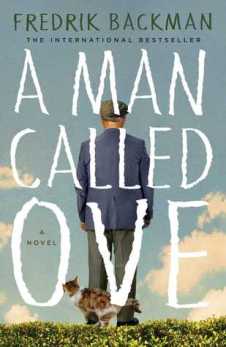
Book Review: A Man Called Ove

OveA Man Called Ove by Fredrik Backman first came to my attention, I believe, through Susanne’s review. When I first saw the name, I thought it was pronounced with a long O and A sound – Oh-vay. But the narrator of the audiobook I listened to pronounced it Oo-vuh. The book was written in Swedish and translated into several different languages.

Ove is only 59 years old, but seems older. He’s curmudgeonly, suspicious of anyone who drives anything other than a Saab and of salespeople trying to swindle him out of money. He is highly principled, performing daily inspections of the neighborhood to make sure no one is parked where they are not supposed to be (and taking down their license plates numbers if they are) and no one has violated any signs (which Ove himself put up).

Then his world is turned upside down when a new neighbor with a pregnant Iranian wife backs his trailer over Ove’s mailbox. He dubs them “the pregnant one” and “the lanky one,” and they continually and aggravatingly insert themselves into his life.

I mention this next part mainly because some might be sensitive to it: Ove is planning to take his life. His wife has died and he wants nothing more than to be with her again. He makes very detailed plans, and though he doesn’t believe in God, the universe, or destiny, every time he is about to end his life, something happens. Either someone needs his (unwilling) help, or something makes him angry enough that he has to deal with it first.

My favorite parts are the flashbacks describing how Ove went from the taciturn but dependable young man he was to the grumpy old man he became and detailing time with his father, his youth, his jobs, his hurts, but especially his wife.

People said Ove saw the world in black and white. But she was color. All the color he had.

But if anyone had asked, he would have told them that he never lived before he met her. And not after either.

She understood him as no one else had since his father. People questioned her choice when she married him, but no one else had ever looked at her like he had, “as though she were the only girl in the world.” And she understood when he did not share her love of Shakespeare but spent weeks making beautiful bookcases for her books. When he later meets a teenager who had been one of her pupils, and they talk of her,

And then they both stand there, the fifty-nine-year-old and the teenager, a few yards apart, kicking at the snow. As if they were kicking a memory back and forth, a memory of a woman who insisted on seeing more potential in certain men than they saw in themselves.

Overall the book is cleverly and wonderfully written, tender in some places, humorous in others, and the author has a nice way of setting seemingly opposite thoughts in juxtaposition (like Ove’s not believing in destiny when the way he met his future wife certainly seemed like Someone set up the situation).

The only major flaw is a smattering of bad language, including taking the Lord’s name in vain pretty badly and one incidence of the “F” word. Usually the latter is a deal-breaker for me, but as it happened towards the end of the book, I did finish it. I understand that a man like Ove who is not a Christian and is a curmudgeon is likely to talk like that. My own father talked like Ove, so it doesn’t shock me. But I don’t like to read books or watch movies with that kind of language because I don’t want those words floating around my head and possibly coming out accidentally. The F word, though, came from a different character who was particularly nasty. The thing is, I didn’t need that word to get that picture of her. The writing was clear enough that I got it without having to throw that word in there.

Sometimes I wonder if I need to give up on modern fiction all together, because it all seems to be spattered with bad language this way. I wish modern writers would get that they don’t need it.

I don’t know if it has been made into a movie, but it would be a good one – minus the bad language.

(Sharing at Semicolon‘s Saturday Review of Books)

Save

Save