What’s On Your Nightstand: February 2016

What's On Your NightstandThe folks at 5 Minutes For Books host What’s On Your Nightstand? the last Tuesday of each month in which we can share about the books we have been reading and/or plan to read.

I almost forgot today is the last Tuesday of February! Since this is a shorter month, we don’t get another Tuesday in which to wrap up our reading progress for the month. But even though this short month flew by, I was able to get some good reading in.

Since last time I have completed:

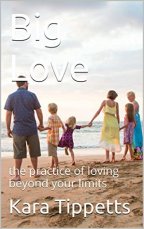
Big Love: The Practice of Loving Beyond Your Limits by Kara Tippetts, reviewed here.

Emily’s Quest for Carrie’s Lucy Maud Montgomery Reading Challenge last month, reviewed here.

The Bronte Plot by Katherine Reay, reviewed here. Loved it.

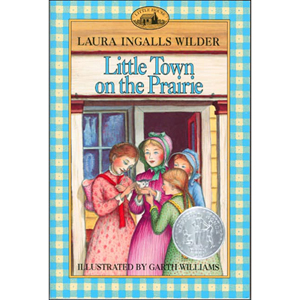
Little Town on the Prairie by Laura Ingalls Wilder for the Laura Ingalls Wilder Reading Challenge here this month, reviewed here. It’s kind of a bridge from Laura’s girlhood to the time she starts teaching school and Almanzo starts showing an interest in her.

What Are You Afraid Of: Facing Down Your Fears With Faith by David Jeremiah. I finished it several days ago, and there was so much I wanted to remember and reinforce that I outlined the chapters. Hope to review it in a day or two.

I’m currently reading:

Our Mutual Friend by Charles Dickens, audiobook. Nearly done!

Pioneer Girl: The Annotated Autobiography by Laura Ingalls Wilder and Pamela Smith Hill, also for the Laura Ingalls Wilder Reading Challenge. I don’t know if I will get it finished by the end of the challenge this month, but I’ll do my best.

True Woman 201: Interior Design by Mary Kassian and Nancy Leigh DeMoss.

Sweet Grace: How I Lost 250 Pounds And Stopped Trying To Earn God’s Favor by Teresa Shields Parker, recommended by Melanie.

Up Next:

Narrative of the Life of Frederick Douglass.

Beyond Stateliest Marble: The Passionate Femininity of Anne Bradstreet by Douglas Wilson

Pride, Prejudice, and Cheese Grits by Mary Jane Hathaway

What are you reading these days?


Book Review: Little Town on the Prairie

Little TownLittle Town on the Prairie is the seventh book in Laura Ingalls Wilder’s Little House series and takes place just after The Long Winter. Laura is 14 as the book opens. Her family is still working the claim her Pa has, but they move into town for the winter in case it’s as bad as the last one, both to be closer to what they need and because the claim isn’t sturdy enough to stay warm the whole winter yet.

As usual, the book tells about the joys and everyday experiences and chores of both of summer on the claim and then winter in the town.

One main focus of the family in this story is trying to earn money to send Mary to a college for the blind. Laura gets a temporary job sewing shirts for a seamstress in town (and sees interactions of a family very different from her own), but her main goal is to qualify for a teaching certificate at age 16, and then teach to earn money for Mary’s college, even though teaching doesn’t sound like a goal she would pursue otherwise.

Laura’s nemesis from an earlier book, Nellie Oleson, is back in this one. Though Nellie’s family is in reduced circumstances, she’s still the proud, scheming person she always was.

In town much of Laura’s time is spent at school. It doesn’t seem like there was a winter or Christmas break as we know them now – they went to school all through winter as long as the weather was good, except for the day of a holiday. One teacher Laura’s school had was Almanzo’s sister, who doesn’t have much control of the class, and the misbehavior escalates to extremes until the school board steps in. Laura doesn’t misbehave herself, but she feels guilty at smiling at (and thereby encouraging) some of the boys after she has a couple of negative interactions with Miss Wilder .

One difference in this book from the others is that the Ingalls’ family is seeming to settle down rather than moving from place to place. One highlight of the winter, when people couldn’t work outdoors, was the “Literaries” – evenings once a week where the townsfolk get together and do something for entertainment. One night it was a town-wide spelling bee, once it was people playing various musical instruments. One that is offensive to modern sensibilities is men (including Pa)  dressing in blackface paint and putting on a minstrel-type show.

One difference between the way they lived then and we live now (besides the obvious differences in technologies and living conditions, etc.) is the expectations of how people should act. For instance, after Pa’s visit with the school board to Laura’s school, at home Laura waits for him to talk to her about it, because”It was not her place to speak of what had happened, until he did” (p. 182). When Mary leaves for college, and little Grace starts crying, Laura hushes her with shame that such a big girl is crying. When the family walks into the church-wide Thanksgiving celebration, “Even Pa and Ma almost halted, though they were too grown-up to show surprise. A grown-up person must never let feelings be shown by voice or manner” (p. 228).

I’ve mentioned before that even when I am reading a book that is not necessarily written from a Christian viewpoint, I still read it with Christian eyes and try to discern where the people are coming from spiritually. I’ve never been quite able to figure that out with the Ingalls family. There was an era in our history when people were what we’d call God-fearing in the sense that they believed there was a God, that the Bible was His Word, that He punished or blessed people, that there was a heaven and hell, etc., yet weren’t truly believing on Christ as Savior (“Thou believest that there is one God; thou doest well: the devils also believe, and tremble” James 2:19). There are many Scriptural references and applications in the books. For instance, during the debacle at Laura’s school, she outwardly is the model student, but “she did not think then of the Bible verse that speaks of the cup and the platter that were clean only on the outside, but the truth is that she was like that cup and platter” (p. 167) because she resented, even hated Miss Wilder for her mistreatment of Laura’s sister, Carrie. She has a discussion with Mary about always feeling that Mary was good, but Mary says she wasn’t, confessing that even when she was trying to be as a child, much of the time it was from the motives of vanity and pride. She reminds Laura that the Bible says we’re “desperately wicked and inclined to evil” (p. 12) and says they shouldn’t think so much about whether they are good or bad, but instead should focus on “being sure of the goodness of God” (p. 13). Yet Laura admits to not listening at church beyond the text, since that’s the only thing Pa quizzes them on at home, and later on, when they attend a church revival, though what the preacher says is sound, it’s done in such a fiery way that it was “dark and frightening” to Laura. Her whole family confesses to preferring Rev. Alden’s more quiet style. I do get that. I prefer “quieter” preachers who speak in conversational tones than “ranting and raving” ones. But they only talk about the style rather than the substance of his message, so it’s not clear what they think of it. Laura does her best to act like she’s supposed to except against Nellie Oleson and Miss Wilder. I’m hoping The Pioneer Girl might shed more light on Laura’s personal beliefs.

This book also introduces Almanzo Wilder’s beginning interest in her when he asks to walk her home after some of the events in town. At first Laura is only confused – he’s 23, a homesteader, and her father’s friend. She doesn’t seem to be thinking romantically towards anyone yet. But she accepts his offers and gradually is able to talk normally with him. He shares here how he got his unusual name, something I had forgotten. I had thought this book went into their courtship and up to their engagement, but I guess that’s in the next book.

I don’t remember quite as much from these later books as I do from the earlier ones – maybe I read the earlier ones more often as a child. But I enjoyed this foray into the prairie again. It was nice to see the family settling down, the community growing, and Laura and her sisters maturing.

Laura Ingalls Wilder Reading Challenge

(Sharing at Semicolon‘s Saturday Review of Books)

Book Review: Big Love: The Practice of Loving Beyond Your Limits

Big LoveWhen Big Love: The Practice of Loving Beyond Your Limits by Kara Tippetts came through on sale for the Kindle app, I didn’t realize it was mainly about parenting. I probably would not have gotten it in that case since my kids are all grown. But I am glad I did, because the principles carry over into any relationship.

You might remember Kara’s name from her journey through cancer and death as shared on her blog, Mundane Faithfulness. I did not read there regularly but caught a few posts here and there when someone linked to them on Facebook. It was the urging of friends to share the contents of this book and the knowledge that her time was growing shorter that led her to write it.

The main theme of the book is Love is kind, from I Corinthians 13:4. The phrase impacted her in a big way when a preacher with a painful childhood shared them when speaking to the children at the school where she was teaching. She confesses she was “not naturally given to kindness,” preferring to feel “strong and successful” and “bent on winning.” She realized her love “was often self-serving, self-fulfilling, and self-centered.” This truth of God’s love “hit [her] at the perfect time and landed on soil that was ready to be planted with truth.”

She had not grown up in a family that practiced repentance, so the idea of walking in humility and confessing wrongs was new to her. She was married and expecting her first child at this time and wanted to interact with both husband and children in kindness and not have a home like the one she was raised in.

She shares a bit of her family background, how she came to believe on Jesus, how she met her husband, and how she was diagnosed with cancer. But for all that it’s a fairly short book. I read it in two sittings and probably could have in one, but wanted to stop and absorb before going on.

A few quotes from the book that stood out to me:

Competition among mothers kills community. I searched for ladies who were willing to be honest about faults. Honesty and a shared heart is such grace. Vulnerability and transparency encourage looking for grace.

Our kids are so often the reflection of sin that brings us to repentance. It was a beauitful, awful moment of light shining on my sin. I thought I was okay, so long as I wasn’t yelling. But what I saw in the face of my daughter was that I had sailed from the shore of kindness, and I needed Jesus to change my heart and return me to gentle kindness.

Discipline should never come as a surprise to a child. I think it is very important for children to always know what is expected of them. When discipline comes as a surprise, I typically find that I am parenting out of anger and not intentionally teaching and shepherding my children. If I know a child is entering a place where they struggle with obeying it is important to set clear boundaries.

That is our high calling as parents, to direct, train, nurture, love, and shepherd our children. It is important we move from irritation with our children and move toward opportunity for training. Whatever you choose to be your consequence, it must not be a surprise. Children should know clearly what is expected, and when they disobey, struggle, and sin, they need to be lovingly directed and disciplined. Disobedience is an opportunity. Children are not trying to embarrass you. Your children are not trying to create chaos in your life. Children need boundaries, direction, and limits that are all surrounded by a truckload of love. They do not come to us trained, obedient, and ready to listen. They need to know they are worth your time, your energy, and your strength to direct their hearts.

If I never point out the sin and struggle in the hearts of my children, and merely direct their behavior to please me, then when will they know they need a Savior?

I…follow through with the discipline and share honestly about my own struggle…I share my own need for forgiveness and grace. Empathy is a powerful tool in helping a child know you are FOR them. Letting your child know you understand their struggle and love them in the midst of it will help them be able to take an honest look at themselves. They will feel safe and not judged by you. They will know your heart is to direct them and not condemn them.

The Book of Romans tells us that it’s God’s kindness that leads us to repentance. I want to love with a kindness that nurtures a hard heart to desire to be soft. God is the only one able to transform someone else’s heart, but if I live a life submitted to Him, then His love will be reflected through me.

I longed to not withhold love when it was inconvenient to give it. Those faces [of her children] helped motivate me to want to know Jesus well, and to live near Him and listen to His Spirit as I walked in faith with my family.

When I am not drinking deeply from the inexhaustible well of love that is Jesus, it is impossible for me to share that love with the community behind closed doors as well as my greater community.

The heart of the gospel is lavish love being placed on me when I least deserved it.

The act of parenting isn’t excuses for bad behavior, it’s seeking reconciliation, redemption, and grace in our days.

The heart of being able to love big, BIG, BIG is being loved. Jesus loves you that big. He loved you so big he died a death He didn’t deserve to bring you to God. Admit you need Him, admit you don’t have it all figured out, and know His love. Quiet your heart enough to feel His love. Let Him teach you the beauty of sacrificial, humble love.

God’s nearness will be the strength to help you parent with kindness.

The sections I’ve emboldened are the ones that especially spoke to me in my current situation of life, including not just parenting but loving anyone I am called to love. Like Kara, too often I find that my love is “self-serving, self-fulfilling, and self-centered,” though that manifests itself a little differently for me than it did for her, as our personalities are very different. I guess the struggle to love as Jesus did will be a lifelong one, since we have our flesh to deal with. But by His grace, resting in His love for us and letting that overflow to others, we can grow.

There were a few formatting problems in the book – I wonder if that’s because it was designed for a different format than the one on which I read it. It was distracting just at first but then I was able to overlook it as I got into the story. I highly recommend the book especially to parents, but also to anyone seeking encouragement to love Biblically.

(Sharing at Literacy Musing Mondays.and at Semicolon‘s Saturday Review of Books)

Just a reminder about the Laura Ingalls Wilder Reading Challenge

Just wanted to send out a reminder about the Laura Ingalls Wilder Reading Challenge this month. You can get more information and sign up for it here. If you know what you’re planning to read, you can mention it when you sign up there, but it’s fine if plans change during the month. You can sign up any time this month but the challenge ends Monday, Feb. 29.

I’m going to close comments on this post so as to keep all the sign-ups on this post. Would love to have you join us!

Book Review: The Bronte Plot

Bronte PlotIn The Bronte Plot by Katherine Reay, Lucy Alling loves working in an antique store, specializing in the books section. But in order to make her beloved books more special and valuable to customers, she incorporates several questionable practices. Her boss has no idea and would not approve if he did know.

When a handsome customer, James, comes in the store to find a gift for his grandmother, they hit it off and begin dating. But he soon finds that Lucy often embellishes the truth. She explains that her father was a con man, and she grew up with his stories. He loved classic stories, but he also made up many of his own. She hasn’t seen him in years. She “promised never to be like him and now…I suddenly hear myself and I am like him,” and her stories don’t sound quite so good when she recounts them to James, yet she feels compelled to make up stories even for things like getting seated at a restaurant without a reservation or getting a needed item for the store. Later when he finds out that she “embellished” the book he had bought for his grandmother, he breaks up with Lucy.

Oddly, however, James’s grandmother, Helen, who was quite taken with Lucy, has decided, against her family’s wishes, to take a trip to London and asks Lucy to go with her as a consultant. Lucy is not excited about the idea but eventually agrees, especially when she realizes there is a possibility they might be traveling near the place where she believes her father is.

As Helen and Lucy travel and each share their stories, Lucy realizes Helen has secrets of her own and a wrong in her past that she is trying to make right. Part of their travel takes them to antique stores, part to places of literary value, like the Bronte sisters’ home, and part to take care of the issue Helen needs to deal with.

As Lucy searches for her father, it almost seems that she feels doomed to follow in his steps since she shares his genes. But she learns that she can make her choices despite what he does, and determines to make things right with her boss and customers as much as she can, despite the risk to her reputation and job.

Reay’s specialty in all her books so far is weaving a plethora of literary references into her stories. I’m sadly not as familiar with the Bronte’s works except for Jane Eyre (one of my favorites), but I enjoyed getting to know more of their background and plan to read more of them in the future. Reay also quotes Dickens, Austen, Gaskell, and Lewis here (and possibly others I am not remembering), but she doesn’t just quote them – she incorporates something of their stories into her heroine’s story. One of my favorite quotes from this book, referencing Jane Eyre, is:

Lucy reached in her bag and pulled out the book, knowing exactly where to search. “I thank my Maker, that, in the midst of judgment, he has remembered mercy. I humbly entreat my Redeemer to give me strength to lead henceforth a purer life than I have done hitherto.” There it was. Mercy. Grace. And just as she’d told James, fiction conveyed change and truth and was loved and digested again and again because it reflected the worst, the best, and all the moments in between of the human experience (p. 267).

A couple of other favorite quotes:

All real lives hold controversy, trials, mistakes, and regrets. What matters is what you do next.

All the books have it . . . That time when you don’t know where you’ll be, but you can’t stay as you are. In life or in literature, that time rarely feels good (p. 31).

I thought all the characters were richly drawn, even the secondary characters like Dillon, their driver in England or Sid, Lucy’s boss. Looking through a few reviews here and there, I saw that many said they didn’t like Lucy. I think that’s because, though all characters should be flawed because no one is perfect, we’re hit with hers right off the bat. But I did like her as a person and sympathized with her in her journey.

It’s kind of ironic that reviews by non-Christians criticized the Christian element and reviews by Christians criticized that there was not much of a faith element. At first I felt the faith element was lacking because I didn’t recall Lucy making changes due to anything like repentance or a regard for having sinned against God, but I had forgotten the quote above referring to mercy and grace. As I went back and looked it up, in context she’s pondering her actions and thinks of Rochester in Jane Eyre: “Rochester couldn’t move–could never move–forward because he hadn’t gone back. He hadn’t laid down his sin and accepted that there was an absolute right” (p. 267). Then comes the quote from Jane about mercy and grace. So I did feel it was there, though perhaps a little more subtle than much Christian fiction. As I’ve mentioned in The Gospel and Christian Fiction and Why Read Christian Fiction?, it’s understandable that the nature of some stories would require more nuance (after all, the book of Esther does not mention God at all, but alert readers will see His hand there). But my only criticism of this book was that I did feel it was a little light in this department.

Nevertheless, all in all I enjoyed it very much. To me one sign of a great book is when you keep thinking of it and uncovering things about it long after turning the last page, and I definitely experienced that with this book.

If you’ve got half an hour, this interview with Katherine Reay was fun to listen to. I really enjoyed it, especially hearing the symbolism behind a scene that I hadn’t caught when I read it and some of the background information behind each of her books.

(Sharing at Semicolon‘s Saturday Review of Books)

Book Review: Emily’s Quest

Emily's QuestI read Emily’s Quest for Carrie’s Lucy Maud Montgomery Reading Challenge this month. It’s the third book in the Emily trilogy, the first two being Emily of New Moon and Emily Climbs (linked to my reviews).

Emily has been raised by a strict maiden aunt since her father died when she was fairly young. In this book, she’s 17, has just finished high school, has just turned down the offer of a position in New York for a magazine publisher, and plans to spend her days at New Moon writing, first for magazines and perhaps later a book.

Life holds a certain loneliness, however, as all of her close friends have gone on to other studies in other places. Those circumstances are expected to be only temporary, and therefore manageable, but as it turns out, they end up spending most of their time away from home for the next few years. She had thought she and Teddy had a basic understanding, but she doesn’t hear from him much as he pursues his career, and subsequent visits find him rather cool toward her.

She throws herself into her work despite her friend Dean’s dislike of it and the townsfolk’s’ misunderstanding and gossip about it and her. She completes a novel but receives nothing but rejection in trying to get it published. When she asks Dean’s opinion, it’s not very high, so she burns the manuscript and looses her desire to write. She has a serious fall and injury resulting in blood poisoning and a long recovery. She accepts the proposal of a close friend, feeling that, since Teddy seems lost to her, the best she can hope for is a close companionship of a marriage rather than one of love. But in some kind of a dream or vision when she rescues Teddy from danger, she realizes she only loves him and breaks off her engagement with her friend even though there is little hope of Teddy loving her in return. She can’t tell her family this, so they are exasperated when she turns down (a ridiculous number of) marriage proposals from “good matches.”

In many ways this is kind of a depressing book (until the ending), but it describes a passage I think many people go through, especially young people in the changes between high school or college and coming into their own stride as an adult. Friendships, jobs, locations change, things sometimes don’t work out as they plan, a potential marriage partner seems nowhere in sight, they don’t know what the future will hold, or the future doesn’t look promising. In Emily’s case, though she loves writing and the place where she lives, with her friends and one true love away, the aunt who has cared for her getting older, and talk of a relative who will inherit their house already planning changes that she doesn’t like, the future looks pretty bleak. But it’s also a maturing, settling time that prepares one for the rest of life.

I’ve mentioned before not liking Emily very much, especially in the last book where I felt she was willful and disrespectful to her relatives (they were at fault as well, but I still felt she responded in a wrong way). There aren’t as many open clashes in this book, but that seems mostly because they’ve learned she is going to do her own thing, so it’s not any use, which is not necessarily as good characteristic. (I’m thinking, from what little I know of LMM’s life, that this might be what she wished she could do, but was not able to). But I did end up liking her better toward the end of the book as she displays restraint for others’ good, kindness, compassion, and maturity.

I’m afraid I liked her friend Ilse even less, though. She had been left to “grow up wild” by a father who has not really in touch for a long time, but some of her behavior here is pretty outrageous. But I found it interesting in one place where Ilse almost marries the wrong guy, that her description of how she felt was similar to what this article says LMM wrote in a journal of her own marriage: “I wanted to be free! I felt like a prisoner—a hopeless prisoner. … But it was too late—and the realization that it was too late fell over me like a black cloud of wretchedness. I sat at that gay bridal feast, in my white veil and orange blossoms, beside the man that I had married—and I was as unhappy as I had ever been in my life.” I think perhaps this series as a whole was somewhat cathartic for her.

There were a couple of places I had trouble with in this book, one being the vision/dream thing, the other being where a former teacher says, “Somehow one needs a spice of evil in every personality. It’s the pinch of salt that brings out the flavor” (p. 23). He says this after commenting negatively on someone who was “a good soul – so good she bores me – no evil in her.” We all do have a pinch (or more) of evil in us, but that’s not what makes us likable!

But even though I’ll never love this series like I do Anne, I felt it came to a fitting end, and Emily became a well-rounded and balanced adult after all.

L. M. Montgomery Reading Challenge

(Sharing at Semicolon‘s Saturday Review of Books)

The Laura Ingalls Wilder Reading Challenge 2016

Welcome to the fourth annual Laura Ingalls Wilder Reading Challenge! We hold it in February because her birthday  (February 7, 1867) and the day of her death (February 10, 1957) both occurred in February, so this seemed a fitting time to commemorate her.

Many of us grew up reading the Little House books. I don’t know if there has ever been a time when there wasn’t interest in the Little House series since it first came out. They are enjoyable as children’s books, but they are enjoyable for adults as well. It’s fascinating to explore real pioneer roots and heartening to read of the family relationships and values.

For the reading challenge in February, you can read anything by, about, or relating to Laura. You can read alone or with your children or a friend. You can read just one book or several throughout the month — whatever works with your schedule. If you’d like to prepare some food or crafts somehow relating to Laura or her books, that would be really neat too.

If you’d like to read something other than the Little House books, I’ve listed a few others under Books Related to Laura Ingalls Wilder, but that list is by no means exhaustive.

Let us know in the comments whether you’ll be participating and what you think you’d like to read this month. That way we can peek in on each other through the month and see how it’s going (that’s half the fun of a reading challenge). On Feb. 29, I’ll have another post where you can share with us links to your posts or let us know what you read for the month. Of course if you want to post through the month as you read, that would be great. You don’t have to have a blog to participate: you can just leave your impressions in the comments if you like. And I just may have a prize at the end of the month for one participant. 🙂

My own plans are to read Little Town on the Prairie by Laura and Pioneer Girl: The Annotated Autobiography by Laura Ingalls Wilder and Pamela Smith Hill.

I’m looking forward to reading everyone’s plans and impressions! Feel free to grab the button for the challenge to use in your post:

Laura Ingalls Wilder Reading Challenge

Bookish Questions

I just rediscovered a link I had kept on file where someone tagged me in a book-related meme. Thanks to Dancing Books for tagging me, and I apologize for taking so long to respond. I’m afraid I had totally forgotten about it.

According to her post, these are in conjunction with a Sisterhood of the World Bloggers award, and the rules for it are as follows:

  1. Thank the blogger who nominated you, linking back to their site.
  2. Put the award logo on your blog.
  3. Answer the ten questions sent to you.
  4. Make up ten new questions for your nominees to answer.
  5. Nominate ten blogs

sisterhood-of-the-world-bloggers-tag-image-014

I don’t usually do blog awards here any more, for various reasons, but I am doing these mainly for the bookish questions. Dancing Books’ questions for me were:

1. If you were stranded on a desert island with no hope of ever returning, which male or female character would you want to be stranded with?

That would be very hard to say, but off the top of my head, Elinor Dashwood of Sense and Sensibility comes to mind. She’s resourceful, knows how to economize, isn’t flighty, and we’re similar in personality.

2. Who is your favourite villain?

Inspector Javert from Les Miserables. He thinks he’s on the side of right. He stands for the good causes of righteousness and justice but forgets forgiveness and mercy and compassion. He reminds me somewhat of the apostle Paul who persecutes Christians because he thinks they are sinning against the God he thinks he is serving, yet unlike Paul, who is brought prostrate and converted when he is brought face to face with the truth, Javert can’t face it, can’t comprehend it, and sadly destroys himself.

3. Would you prefer to watch the TV show/movie or read the book?

Read the book. Most books take many more hours to complete than a movie, so there’s more time for plot and character development and nuance. The exception would be long classics. Sometimes they’re too daunting to read, or too wordy (by today’s standards), so sometimes a film can give you the essence of it and then help you know whether you’d want to explore the book further.

What’s your preference, eReader or physical books? Why?

Physical books – there’s so much more to the reading experience than just dragging eyes across words. However, now that I have gotten used to an eReader, I do like it a lot. I like the sheer number of books I can put on it, the free or cheap deals I can find for it, and the fact that I can search for a word or phrase. I also like that I can pull up a list of all the places I highlighted – nice for reviewing or reminding myself of them.

What is your all time favourite book? Why?

Oh, that’s such a hard question. As a Christian, naturally the Bible is my ultimate favorite – not just because it’s “supposed” to be. I love reading it and I love its effect in my life. But other than that, probably A Tale of Two Cities by Charles Dickens or Les Miserables by Victor Hugo. Though books set in France or around the French Revolution aren’t my favorites, both of these have a beautiful story line overall plus wonderful individual scenes.

Thinking about your all time favourite book, what would be good songs to listen to while reading it?

I can’t listen to music while reading, but music from the Les Miserables musical would go with either one.

Think about your favourite book again, if it was made into a movie, what character would you want to play?

I’d probably like to play Lucie Manette from Two Cities, but I’d “fit” Miss Pross better. 🙂

If you woke up and found an elephant in your back yard, what would you do?

OK, this is pretty random. 🙂 I’d call animal control and stay inside. Maybe fill up the kiddie pool with water so it would have something to drink.

What’s a funny joke related to books or reading?

Here are a few from Pinterest:

45be8c3e418ef55ee47b40be7a68a3e3

83bfa5d41238377150b3204960da08d5

24738c549b530bd4c4bd5bc66b1ab1e0

244481c192aef74c0102672a9f4a682d

bb2ed14012bc515886b370b3c853602f

c7b75f3aab78bd4037a8f8bb0ecebd4f

fb71e276c78987f4b274e25b640c8390

ce2d13a3cecdd254d693494074cbce67

mockingbird

Aside from reading, what else do you like to do in your spare time?

Write, make cards, cross stitch, organize, decorate, sew…there are too few hours in the day!

Here are my ten questions for others:

  1. Do you remember the first book you read or really liked?
  2. How did your love for reading come about (grew up in a reading family, a certain book captivated you, etc.)?
  3. What is your favorite genre to read?
  4. What genre do you avoid reading?
  5. What is your favorite movie based on a book?
  6. What’s your least favorite movie based on a book?
  7. What is your favorite time and place to read?
  8. Are you in any “real life” book clubs or discussion groups?
  9. How many bookcases do you have?
  10. What is a favorite quote about books or from a book?

My nominees are:

  1. Carrie at Reading to Know
  2. Monica at Adventures in Everyday Life
  3. Melanie at Simply Amazing Grace
  4. Lou Ann at In the Way
  5. Bekah at bekahcubed
  6. Susan at Girls in White Dresses
  7. Rbclibrary at By the Book
  8. Lisa at LisaNotes
  9. Susanne at Living to Tell the Story
  10. Tori at My Home Away From Home

If you don’t like to do these things, my feelings won’t be hurt. Some love them and some don’t. And if you’d like to and, due to the limit of ten, I didn’t name you, please feel free to do them anyway or answer them in the comments if you’d rather not on your blog. Hope you have fun with them. Let me know when and if you do these and I’ll be happy to come read your answers.

What’s On Your Nightstand: January 2016

What's On Your NightstandThe folks at 5 Minutes For Books host What’s On Your Nightstand? the last Tuesday of each month in which we can share about the books we have been reading and/or plan to read.
I always seem to start off Nightstand posts with a comment about how fast time has flown since the last one. I know that must get boring – but, wow, I can’t believe we’ve almost finished a month of 2016! I’m thankful to have had some good reading this month.

Since last time I have completed:

Gilead by Marilynne Robinson, reviewed here. As I have said the last couple of Nightstand posts, it was very hard for me to get into at first, but ultimately it was worth it.

Why Christ Came: 31 Meditations on the Incarnation by Joel R. Beeke, reviewed here.

A Prairie Christmas Collection: 9 Historical Christmas Romances from America’s Great Plains by several authors including Tracie Peterson and Deborah Raney, reviewed here.

SEAL of God by Chad Williams and David Thomas, reviewed here.

Searching for Eternity by Elizabeth Musser, reviewed here. Excellent. Will probably be one of my top ten of the year.

I’m currently reading:

Our Mutual Friend by Charles Dickens, audiobook.

What Are You Afraid Of: Facing Down Your Fears With Faith by David Jeremiah (excellent so far)

Emily’s Quest for Carrie’s Lucy Maud Montgomery Reading Challenge this month. I need to get cracking as this month is almost at an end. I’m afraid I just don’t like Emily very much, so I’m not always motivated except that I do want to complete the series.

The Bronte Plot by Katherine Reay. Love.

Up Next:

Little Town on the Prairie by Laura Ingalls Wilder and Pioneer Girl: The Annotated Autobiography by Laura Ingalls Wilder and Pamela Smith Hill for the Laura Ingalls Wilder Reading Challenge in February.

Narrative of the Life of Frederick Douglass.

Big Love: The Practice of Loving Beyond Your Limits by Kara Tippetts

If I get through all those, I’ll likely choose next something from my reading plans for the year or from the books I got for Christmas.

I want to invite you to join in the aforementioned Laura Ingalls Wilder Reading Challenge. More information is here, and I’ll have a sign-up post on February 1.

Happy Reading!

Book Review: SEAL of God

SEAL of GodI got SEAL of God by Chad Williams and David Thomas a few years ago when it came up on a Kindle app sale without really knowing much about it.

It’s the story of Chad Williams, who, as he was growing up, was talented athletically, played baseball, went on to skateboarding (even making commercials and receiving sponsorships), and then made a lot of money sport fishing, but his interest in each fizzled out after a time. He didn’t do well at school, not because he couldn’t, but because he didn’t like academic work. He was from a Christian home, but was not a believer (beyond the occasional prayer for help out of a jam) and got into drinking, doing drugs, and partying. He liked taking risks, pulling pranks, and doing crazy, senseless (to anyone else) stunts just for the thrill. But at a point in his freshman year of college when the thrill of everything else was gone, and desiring to do “something big,” he decided he wanted to be a Navy SEAL.

His parents were dismayed, not only because of the danger, but because nothing in his life indicated that being a SEAL would work out for him. But he was determined. They had numerous discussions and confrontations that ended in stalemates until his father hit on the idea to ask a former navy SEAL to put him through the toughest workout he could. But that backfired – the SEAL, Scott Helvenston, saw something in Chad and took him on to train him for SEAL tryouts. They developed a close friendship through their time together, and Chad looked on Scott as a mentor.

Before Chad left for the Navy, Scott accepted a contract with a security firm that aided the military to go to Iraq. Only nineteen days before leaving for boot camp, Chad learned that Scott had been one of four Americans killed when Iraqis ambushed their vehicle, beat them, dragged them through the streets, and then hung them upside down from a bridge. Chad was crushed, but his sorrow turned to rage and a desire for revenge.

A good chunk of the book tells of the SEAL training, beyond rigorous both physically and mentally.

Chad continued his drinking, partying, and drug use when he was away from the base. On one trip home, he placated his parents during an argument by agreeing to go to church with them and planning to go to a party afterward. He warned his girlfriend what the service would be like and cautioned her not to raise her hand during the service if the preacher asked if anyone wanted to get right with God because it was a trick – they would then ask anyone who raised their hands to come forward and go to a room and talk with someone. But as Chad listened to the message, something finally clicked. He ended up raising his hand, going forward, and trusting Christ as Savior.

Fairly soon afterward, he had a desire to be an evangelist. He tried to see if there was a way to leave the SEALs early, both because of this desire and because his becoming a Christian and not going with the guys to drink any more put a wedge between them: they thought he was diluting their camaraderie and even physically attacked him. He ended up having to stay but was transferred to another unit. He eventually was “one of only thirteen out of a class of 173 to make it through to graduation.”

The rest of the book tells of some of his missions, his first forays into ministry, and how God led in both his ministry and his personal life.

One aspect that surprised and greatly interested me was that this story touched on two other books I had read. In the Presence of My Enemies by Gracia Burnham tells of her and her husband’s experience being captured by the militant group Abu Sayyaf, and a couple of years after that, Chad’s SEAL group along with some Green Berets helped “lay the groundwork” to overcome them. Also his group almost was part of the SEAL group that rescued Captain Richard Phillips, whose ship was commandeered by Somali pirates.

There is a lot of good spiritual truth in this book, but one that stood out to me was his description of how, during his SEAL training, his instructors would push them to the brink of quitting – not because they wanted anyone to quit, but because they wanted the trainees to be able to resist that temptation when they were in adverse conditions on the field. Instructors would either berate them or tempt them with the nice warm bed and food that would be awaiting them if they quit. Whenever someone wanted to quit during what was called their BUD/S course (Basic Underwater Demolition SEAL) and Hell Week, they’d have to go ring a bell specifically designed for the purpose. One particularly hard night, “the bell kept ringing at the hands of guys who were walking out on their dream for just a little bit of comfort.” I can identify with that. I would not have lasted a day in SEAL training, but in other areas of life, it’s so tempting to go the easy route when God’s help is available for whatever He wants us to do.

I enjoyed the book, especially seeing how God radically changed Chad. There are people for whom I am praying for just such a radical change, and seeing it in Chad’s life when there was no previous inclination bolsters my hope for others.

(Sharing at Semicolon‘s Saturday Review of Books)