31 Days With Elisabeth Elliot: Book List and Memorial Video

Elisabeth Elliot2

Someone commented early on in this series that I should list some of Elisabeth’s books, particularly those that are autobiographical. I think all of her books are autobiographical to a degree, though there is not any one that tells her whole life story. I hope that someone will put all the pieces together in a biography of her someday soon. I’ve also had a few comments from people who had never heard of her or didn’t know much about her, so I thought a book list would be a good idea. I am using the original publication dates where I can find them: many of them have been reprinted multiple times, some with an update from Elisabeth in them, so on Amazon or other places the more recent date they show is that of the reprint.

Books by Elisabeth Elliot

Through Gates of Splendor (1957) was her first, in which she told the story of her husband and the four other missionaries who were killed by the Auca (now known as Waorani) Indians in the 1950s. I reviewed it here. This book started me on the path of reading missionary biographies and reading Elisabeth Elliot.

The Journals of Jim Elliot (1978) are, as the title says, the journals of her first husband, Jim, with some notes by Elisabeth here and there. I wrote about them here.

The Shadow of the Almighty: The Life and Testament of Jim Elliot (1958) is her biography of Jim. This and his journals were prime reading material among many students when I was in college.

The Savage My Kinsman (1961) tells of Elisabeth’s years working with the Aucas/Waorani after Jim’s death.

These Strange Ashes: Is God Still in Charge? is an account of her first year as a missionary, before her marriage to Jim, and if I remember correctly, contains the account of the murder of the man who was helping her translate the Colorado language and her wrestlings with why God allowed it to happen.

Passion and Purity: Learning to Bring Your Love Life Under Christ’s Control (1984) shares her love story with Jim, which was not a smooth one, as they both originally thought God wanted them to be single missionaries. They were willing for that, if that was what God wanted, though they did love each other. This book mainly talks about the need to put God first in one’s love life and to trust Him for the outcome.

Quest For Love: True Stories of Passion and Purity contains Elisabeth’s answers to questions people sent her after reading Passion and Purity.

Furnace of the Lord: Reflections on the Redemption of the Holy City (1969) contains some of her thoughts as she visited Israel (out of print).

Let Me Be a Woman (1977) was written not long before her daughter was married and discusses what the Bible has to say about Biblical womanhood.

Discipline: The Glad Surrender.

The Mark of a Man:Following Christ’s Example of Masculinity, originally written for a nephew.

Path Through Suffering: Discovering the Relationship Between God’s Mercy and Our Pain. Excellent – one of my top three favorite books on suffering.

The Path of Loneliness: Finding Your Way Through the Wilderness to God.

The Music of His Promises: Listening to God with Love, Trust, and Obedience.

The Shaping of a Christian Family. “Drawing from 40 years of observation and her own family experience, Elliot illustrates how we can create a fulfilling Christian home based on Scriptural principles and values.” (Out of print).

God’s Guidance: A Slow and Certain Light (Out of print)

Taking Flight: Wisdom for Your Journey, for graduates (out of print).

 A Chance to Die: The Life and Legacy of Amy Carmichael (1987), her only full biography other than Jim’s (out of print).

No Graven Image, 1966, is her only foray into fiction, but it is based somewhat on her first years as a missionary, also out of print.

All of the following are collections of her thoughts on a wide variety of topics, arising from her study of God’s Word: marriage, motherhood, singleness, abortion, as well as a gamut of aspects on the Christian life:

Twelve Baskets of Crumbs (1977) (out of print).

All That Was Ever Ours (1988)(out of print).

A Lamp Unto My Feet: The Bible’s Light For Your Daily Walk (1985).

Love Has a Price Tag

On Asking God Why: Reflections On Trusting God (1997)

Keep a Quiet Heart 

Be Still My Soul

Secure in the Everlasting Arms

I’ve read the majority of these, though it was some years ago for most of them. Most her books can be ordered on Amazon and other sites as well as her website, along with some CDs and DVDs. There are also a few videos of her speaking on YouTube. Many of her out of print books can still be found used on Amazon and other places.

In addition to her books, her newsletters, which were published every other month from 1982 to 2003, can be found here. Some of the material made its way into her books and vice versa. She also had a radio program called Gateway to Joy for almost 13 years, ending in 2001. Back to the Bible used to have transcripts of it on their site, but, sadly, they don’t any more. However, the Bible Broadcasting Network has started replaying them at 11:15 a.m. on BBN stations, or they can be listened to at that time through live streaming here or on their mobile app, or they can be listened to on demand here.

After Elisabeth Elliot passed away, I was glad to learn that her memorial service would be available online. It was rather long (2+ hours), so it took me a while to have the time to watch it, but I am glad I did. You can find the whole service here.

It looked like they cut out all but one of the grandchildren’s testimonies. I was sorry to see that. I am not sure whether it was because of the time factor or whether theirs would have been a bit too personal. But there were testimonies from a number of personal friends and family members.

It was wonderful both to be reminded of aspects of her life I was familiar with and to learn a few new things. Her daughter, Valerie Shephard, reads some excerpts from her mother’s journal. Elisabeth never tried to portray herself as perfect and was always honest about her shortcomings, but readings from her journal were raw, recounting grief over her impatience with the Indians (which touched me, having battled my own impatience lately – again), times she felt like a failure, her missing her husband in the days after his death, her frustration in dealing with some issues that he usually dealt with. Part of me hopes that some day they might publish her journals, but I would understand if they didn’t: she shared much of her life publicly already, and I would not be surprised if they might want to keep some things private. But that short glimpse helped me see her anew as a woman “of like passions as we are,” who had to deal with grief and frustrations and wrong attitudes and then adjust them in light of Scriptural teaching and what she knew about her Father’s character and workings.

Valerie’s segment as well as that of Joni Eareckson Tada were my favorite parts, though I enjoyed all the testimonies.

A few other observations: I enjoyed the majestic old hymns, something I knew Elisabeth appreciated and used in her devotional times. Evidently she taught them to her children and grandchildren as well. I love many new hymns, but some of these old ones I had not heard in a long time. At first I was going to try to skip through some of the singing to get to the speeches, but I am glad I didn’t.

I loved hearing about her humor. She doesn’t strike you as a funny person at first, but she enjoyed a good laugh.

I also enjoyed seeing photos I had not seen before, including some of places and people and even pets.

But the thing that struck me most was Elisabeth’s interest in and ministry to people. She wasn’t just off at a desk writing all the time. Honestly, that would be my own preference. I often don’t know what to say “in the moment.” That’s one reason I like writing and blogging – I can turn things over in my mind, write a bit, let it sit for a while and come back to it, and finally after days or months give you a fairly thorough answer or opinion on something. But that can’t substitute for an interest in and ministry to people in everyday moments, and one thing those testimonies did was to awaken and encourage that in me.

Though Elisabeth would never want to be out on a pedestal, as she once said of others in the faith whom we admire, so I think we can say this of her:

Pedestals are for statues. Usually statues commemorate people who have done something admirable. Is the deed worth imitating? Does it draw me out of myself, set my sights higher? Let me remember the Source of all strength (“The Lord is the strength of my life,” says Ps 27:1 AV) and, cheered by the image of a human being in whom that strength was shown, follow his example.

I have enjoyed this time over the past month reminding myself of things Elisabeth said. I hope you have as well. Thank you for your kind comments!

To see all the posts in this series, see the bottom of this post.

(Update: Since the time I wrote this, The Elisabeth Elliot Foundation was formed, and many of her articles and broadcasts are available here. In addition, transcripts from her talks from a conference were transcribed and published in Suffering Is Never for Nothing (linked to my review). Her daughter, Valerie Shephard, wrote of her parents’ love story and shared excerpts from some of their letters and journals in Devotedly. Ellen Vaughn published a biography of Elisabeth in Becoming Elisabeth Elliot, drawing largely on EE’s journals and letters. And recently Christianity Today reported that a lost manuscript of Elisabeth’s was found and will be published under the title Heart of God: 31 Days to Discover God’s Love for You.

What’s On Your Nightstand: October 2015

What's On Your NightstandThe folks at 5 Minutes For Books host What’s On Your Nightstand? the fourth Tuesday of each month in which we can share about the books we have been reading and/or plan to read.

I have been a little afraid that my book-related posts may have gotten lost in the shuffle of the 31 Days With Elisabeth Elliot posts, but I’ve enjoyed some good reading this month.

Since last time I have completed:

The Problem of Pain by C. S. Lewis, reviewed here. I was disappointed to find several areas where I disagreed with Lewis in this one, but aside from those, he had some very helpful things to say.

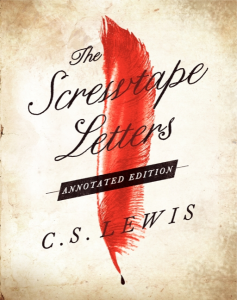
The Screwtape Letters by C.S. Lewis for Carrie‘s Reading to Know Classics Book Club for September, reviewed here. Glad I finally read this!

Things We Once Held Dear by Ann Tatlock, reviewed here. Took me a bit to get into it, bit I enjoyed it.

To Whisper Her Name by Tamera Alexander, reviewed here, reminded me that “romance” is not my favorite genre, but I really enjoyed the historical places and people and the setting of TN just after the Civil War ended.

I Dared to Call Him Father: The Miraculous Story of a Muslim Woman’s Encounter with God by Bilquis Sheikh, reviewed here. Fascinating.

The Girls of Atomic City: The Untold Story of the Women Who Helped Win World War II by Denise Kiernan, reviewed here, about a “secret city” that sprang up during WWII. Fascinating not only because of the subject but also because that city is not far from where I now live.

I’m currently reading:

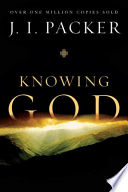
Knowing God by J. I. Packer along with Tim Challies’ Reading Classics Together Series. I’ve been sharing impressions of a couple of chapters at a time here. Only one week to go! I will probably write a regular shorter review of it when I am done.

The Dead Secret by Wilkie Collins, the last of my classics challenge books.

Come Rain or Come Shine, Jan Karon’s latest. Love.

Next Up:

Child of Mine by Beverly Lewis

Unlimited by David Bunn

Gilead by Marilynne Robinson Have heard great things about this and am looking forward to it.

What are you reading these days?

Book Review: The Girls of Atomic City

In the 1940s in eastern Tennessee, a complex and a community sprang up, unbeknownst to the rest of the world. At its zenith the town housed more than 75,00 people and “used more electricity than New York City,” but it wasn’t on maps at the time. Locals knew it was there: some had even had their land confiscated for it. They knew it was a governmental entity. But they didn’t know what went on in it.

Many of the people working there didn’t know much more about it themselves. Some worked in offices. Some watched dials and gauges and reported the numbers, not knowing what the numbers meant. Some sealed leaks in huge pipes. Some who worked in the labs knew a little more. Only the higher-ups knew they were enriching “Product” for use in a “Gadget” for a “Project.”The Product was uranium, also know as tubealloy; the Gadget was the atomic bomb; the place was one part of the Manhattan Project. The project director called it the “battle of the laboratories,” trying to put the pieces together before the enemies did.

Atomic CityIn The Girls of Atomic City: The Untold Story of the Women Who Helped Win World War II, Denise Kiernan traces the development of the discovery and implementation of atomic energy as well as the development of the plants and town that were unknown at the time and supposed to be temporary. Much of the latter is done through the viewpoints of several women who worked in various capacities. Kiernan notes that most historical events are told from the vantage point of those in charge, but she wanted to tell this one “from the perspective of those who were not a part of the decision, those who were not privy to all the facts, people who were just trying to do the best for themselves, their families, and their countries” (p. 384).

It’s hard to imagine pulling up stakes and moving to another state with no knowledge of what the job would entail or even where it would be, but many did just that. Some just needed work. Some saw it as a ticket out of their small hometowns. They were told their work would help end the war, and everyone was all for that.

Once they got to what would come to be known as Oak Ridge, they were shocked by the surroundings: there were no sidewalks and many shoes were lost to the mud until they learned to take their shoes off and walk barefoot. All the homes were prefab units (made of cemesto – cement and asbestos) hastily put together or trailers or “hutments,” all meant to be temporary. A pioneering spirit was definitely needed to thrive here.

The secrecy with which they began their jobs continued. They were all required not to talk about anything to do with their jobs to anyone, even to each other, even to spouses who also worked there. Too many questions or theorizing would cost a person their job, immediately. A staff psychologist was brought in to help people deal with the effects of not having the support system many of them had left behind plus the strain that the secrecy put on marriages and life in general.

Although the main focus was the work, no one could work 24 hours, and people needed recreation, so different groups and sites were organized. Many of the employees were young and single, so there was a lot of dating and eventually marriages.

Alongside the personal stories, the author tells how the first fragments of ideas that led to the study of atomic energy came together from different scientists and different countries and then the various attempts to find the best way to process the needed materials, all the way through the New Mexico testing, political processing (especially with the death of one president, FDR, and the need to bring Truman up to speed quickly with what was going on), then the dropping of the bomb and the aftermath.

Even though the secret was out about the bomb, the various sites in TN and other places working on it, and the “secret city” of Oak Ridge, not everything could be revealed. The powers that were did not want the science getting into the wrong hands, plus they wanted to explore its uses for other purposes as well.

After the war was over, many considered the area home, and the author tells about the process of going from a guarded military complex to an independent city.

There are some blots on the record, however. Besides the land confiscation previously mentioned, black workers were segregated and “were primarily laborers, janitors, and domestics” (p. 47) and black married couples had to live separately. In an unbelievably unconscionable act, one black man was injected with plutonium, without his knowledge or consent, so that the effects of it could be tested.

Kiernan notes in an interview at the end of the book that some readers of the book might not have ever read anything else about the Manhattan Project, so she felt she needed explain it as a whole to set the stories of these people in the times and unique situation they found themselves in. I am glad she did, because, although I knew vaguely what it was about, I really had no idea about many of the details.  Denise Kiernan has done a massive amount of research and and skillfully woven together historic, scientific, political, and personal elements to tell the story.

Some reviewers I glanced at on Goodreads felt the characters weren’t fleshed out enough, but I don’t think Kiernan’s goal was to relate full biographies of the women. I think rather she was trying to give a glimpse of different aspects of the experience from many women in different positions. True, she acknowledges that the information in the book is “compartmentalized as was much of life and work during the Manhattan Project” (p. xxi), and I lost track of which woman was which in some of the narrative (there’s a list of the main ones at the beginning, but I didn’t always feel like flipping back there), but overall I think for the purpose of the book, the way it is written is fine. I think if she had written it with each lady’s full story in a different chapter, we might have gotten to know them better, but there would have been a lot of overlap.

I have a personal interest in the story because we live not far from Oak Ridge and go to church there. In fact, several of our church members are employed at the Y-12 plant, which is still operational, and the Oak Ridge National Labs, which is what the X-10 plant became, and many still cannot talk about theirs jobs. In our early days here, I was following my GPS through Oak Ridge and accidentally came to the Y-12 gate (though I didn’t know that’s what it was then), and even though I had my GPS on and my destination address on the car seat beside me, and my GPS showed that where I needed to go seemed just beyond the gate, the guard said the GPS was wrong and they’d have to detain me a couple of minutes while they took a photo of me, my license plate, and my driver’s license. He was very cordial about it, but it was still nerve-wracking; even still, I am sure that’s very mild compared to the security the area used to have. When we first visited the area and were interviewing schools and looking at houses, we visited the American Museum of Science and Energy there, which is the first I heard about Oak Ridge’s previous status as a “Secret City.” I don’t know if they did not have bus tours then or if I just missed it, but I learned about them, ironically, from a blog friend named Susan (from Indiana, if I am remembering correctly?), who told about going on the tour here. That’s also where she mentioned this book, which I had not seen or heard of before (it was published after my visit to the museum), and I immediately put it on my TBR list, and we are planning to go on one of the tours they next time they coincide with my oldest son’s visit home. Susan’s review of the book is here.

Though this discussion is long already, I feel like I am just scratching the surface of the fascinating elements to this book. There is a web site with more details and photos here and additional photos here. I’ll close with Kiernan’s closing remarks in a highly interesting interview at the end of the book:

Whether or not you agree with the outcome, the tremendous amount that the Manhattan Project accomplished in such a short amount of time–just under three years–is astonishing. It makes you wonder what other kinds of things could be accomplished with that kind of determination, effort, and financial and political support. What if the kind of money, manpower, and resources that went into the Manhattan Project went into the fight against hunger? Cancer? Homelessness?

(This review will also be linked to Semicolon‘s Saturday Review of Books.)

Knowing God, Chapters 19 and 20: Adoption and Guidance

Knowing GodWe’re nearing the end of reading Knowing God by J. I. Packer along with Tim Challies’ Reading Classics Together Series. This week we are in chapters 19 and 20, and there is only one more week to go in this particular reading group.

The chapters in this last section have been very long, so in a sense there is proportionally less that I can say about them. One thing that has helped me this week is to remember to tie the individual chapters back to the main point of the book: knowing God. It’s easy to get occupied with the individual topics or chapters and forget that they are there in connection with how we know God. Thus studying the attributes that we’ve discussed (God’s love, grace, wrath, goodness, jealousy, unchangeableness and majesty) are a part of getting to know Him better, His Word is the main means by which we learn about Him, His propitiation of our sins is what makes it possible for us to know Him, and once we do know Him by faith, we become His children, the topic of chapter 19, and then we can trust Him to guide us, the topic of chapter 20.

Chapter 19 is “Sons of God,” and Packers says the most basic definition of a Christian is that he or she is a person who has God as Father. We are not all God’s children: we become His when we believe on Jesus Christ as our Lord and Savior.

Jesus said to him, “I am the way, and the truth, and the life. No one comes to the Father except through me.
 John 14:6

But to all who did receive him, who believed in his name, he gave the right to become children of God. John 1:12.

This chapter traces through Scripture what it means when it says we are “adopted” by God. Adoption in Rome in Biblical times wasn’t so much the modern conception of taking in of a child not born into a family and making them, by legality and love, a child of that family. It was more the idea of taking in a male heir, usually at adulthood (interestingly, this same concept was being taught on the BBN radio station by Dr. Donald R. Hubbard as I was cleaning up the kitchen after dinner last night. I am not usually still in the kitchen when this program comes on.) “God has so loved those whom he redeemed on the cross that he has adopted them all as his heirs, to see and share the glory into which his only begotten Son has already come” (p. 201). What an inheritance!

Our sonship changes everything. The emphasis in the Old Testament is on God’s holiness and our unfitness to be in His presence because we are so far from holy. Now we can run into His arms as trusting children. God’s fatherhood implies authority, affection, fellowship, and honor (p. 205). It affects our conduct, prayer, and how we live our lives: by faith, trusting in His care and provision. It shows us His love, provides a basis for hope, helps us understand the Holy Spirit’s ministry to us (making “Christians realize with increasing clarity the meaning of their filial relationship with God in Christ, and to lead them into an ever deeper response to God in this relationship,” Romans 8:15, Galatians 4:6 (p. 220), provides a different motivation for holiness (pleasing our Father), and is the basis for our assurance.

Chapter 20 is “Thou Our Guide.” Packer starts out by showing many instances in both Old and New Testaments that God had a specific plan for specific people at specific times. This is one of the main reasons I can’t subscribe to the idea that it doesn’t matter what we do (whom we marry, where we go to school, what our life’s work should be, even what our plans for the day should be). And the Bible in many places promises God’s guidance. But the main question then is how does God communicate that plan to us?

The first avenue is His Word. No, we won’t find the names of a future spouse or college or employer there. But we will get to know our Father and His character and preferences there and learn the many principles by which He wants us to live. Any seeming “leading” which contradicts a clear principle in His Word is not from Him.

When it comes to what Packer calls “vocational” decisions – the specifics about what God wants us to do, like marriage, etc. – he says, “The work of God in these cases is to incline first our judgment and then our whole being to the course which, of all the competing alternatives, he has marked our as best suited for us, and for His glory and the good of others through us” (p. 237).

As a personal illustration, I had a hard time coming to a decision about whether my husband was the man God wanted me to marry. My own parents had divorced, so I knew that just getting married didn’t insure a “happily ever after,” and I had been engaged before, in a relationship that had numerous red flags that I didn’t see until after it was broken off, so I knew it was possible to be deceived in matters of the heart. How to know if I was really on the right track? It was something I agonized over. Finally I reminded myself that I had asked God to guide me in this area, and when I told Him I didn’t want to play “dating games” any more and only wanted to date the guys He wanted me to date, Jim was the very next person to ask me out. There was no reason to doubt that he was God’s will for me. In making decisions about job changes and moves over the years, two verses that I especially relied on were Psalm 37:23 (The steps of a good man are ordered by the Lord: and he delighted in his way – prayed this esocially for my husband as the main family decision-maker), and Jeremiah 10:23 (I know, O LORD, that a man’s way is not in himself, Nor is it in a man who walks to direct his steps.)

Packer does point out, however, that we can be deceived. It’s sadly possible to quench or grieve God’s Holy Spirit. If we are out of fellowship with God, we can’t trust our sense of His leading: we need to confess any known sin, be willing to submit to His leadership, and renew spending time in His Word. Packer then gives six pitfalls that hinder our discernment of God’s will, but I am going to try to recast them into positives:

  1. Be willing to think. “God made us thinking beings, and he guides our minds as in his presence we think things out–not otherwise” (p. 237).
  2. Be willing to think ahead and weigh the long-term consequences of alternative courses of actions. “O that they were wise, that they understood this, that they would consider their latter end!” (Deuteronomy 32:9).
  3. Be willing to take advice. “The way of a fool is right in his own eyes, but a wise man listens to advice.” (Proverbs 12:15).
  4. Be willing to suspect oneself. Sometimes we don’t realize we are being unrealistic or rationalizing. We have a tendency to be self-serving. We need to ask God to “Search me, O God, and know my heart: try me, and know my thoughts: And see if there be any wicked way in me, and lead me in the way everlasting” (Psalm 139:23-24).
  5. Be willing to discount personal magnetism. Sometimes someone else’s personality or attraction (whether a personal friend or a teacher or leader) can pull us in certain directions. Some people use this magnetism on purpose to mislead: some do not but people idolize them. “Test everything; hold fast what is good” (1 Thessalonians 5:21).
  6. Be willing to wait. God does not often give guidance ahead of the time it is needed.

Even when we’ve prayerfully and carefully sought God’s guidance, “it does not follow that right guidance will be vindicated by a trouble-free course thereafter” (p. 239). Numerous examples in the Bible show people falling into trouble who were directly where God led them: the Israelites between Pharaoh and the Red Sea; the disciples in a boat in a storm, a boat that Jesus sent them off in; Paul in prison, Jesus Himself on the cross, just to name a few. An easy path doesn’t always mean we’re on the right road: a troubled path doesn’t necessarily mean we are on the wrong one.

Finally, Packer acknowledges that it is possible to miss the path sometimes, but we can trust our Father to let us know and to set us right again. “The Jesus who restored Peter after his denial and corrected his course more than once after that (see Acts 10; Gal. 2:11-14), is our Savior today and he has not changed” (p. 241).


Book Review: To Whisper Her Name

(For those looking for today’s 31 Days With Elisabeth Elliot post for #write31days, it is just below this post here.)

To Whisper Her NameI had not read Tamera Alexander before, but I have seen her blog posts at Inspired By Life..and Fiction, where ten or so inspirational fiction writers post regularly. So when one of her books happened to come up on an Audible sale, I got it.

To Whisper Her Name is set in the historic Belle Meade plantation near Nashville, TN, just after the end of the Civil War. Though the war has ended, thoughts and feeling for the most part have not changed. Olivia Aberdeen’s husband, Charles, had been a cruel man who was found to be a cheat and a traitor to the South and was violently killed by a mob in Nashville. People assumed Olivia was in on his schemes, and though she is not harmed physically, she is looked down on in society. Her husband’s brother takes over all her husband’s assets and sends her away. She has no living family members left and nowhere to go until Elizabeth Harding, her mother’s closest friend, invites her to live with her family at Belle Meade. Elizabeth’s husband, William Giles Harding, had been a general during the war and owned a thoroughbred farm that, though suffering financially after the war, was holding its own.

The same day Olivia arrives at Belle Meade, a stranger does as well: Ridley Cooper wants to travel west to start a new life in the Colorado Territory. But before he goes, he wants to learn how to handle horses the way Belle Meade’s head hostler, Bob Green, does, so he travels to Belle Meade to seek a temporary job. What no one except Bob knows is that Ridley, though from South Carolina, had fought for the Union because he was against slavery. At that time in history, his life would likely have been forfeit in the South if anyone found out, so he tries to keep a low profile.

Olivia and Ridley happen to meet under untoward circumstances on their first day at Belle Meade, and at first she is only aggravated by him. But over time their circumstances keep pushing them together, and they find things to appreciate about each other as they each grow in character and faith.

I very much enjoyed the consideration of what life would have been like in the South just after the Civil War and how changes were beginning to be implemented, slowly and with resistance at first. I had not known when I first listened to the book that Belle Meade was a real place and the Hardings were real historical people. Unfortunately the audio book did not include any preface or afterward the author may have had in the print book. Living in the Knoxville area now, I also enjoyed the descriptions of East Tennessee.

Though in the end I enjoyed the story, I have to admit this book reinforced to me why I don’t usually read “romance novels,” even Christian ones. It is hard to find a novel without some romance in it, and I don’t mind that as long as it fits within the plot and the basic story is good. But I don’t often read stories where the romance is the main plot. I hadn’t realized there was a distinction between romance and women’s fiction until reading this post, but after reading it, a light bulb came on in my brain, and I realized that’s the difference, and that I am definitely more comfortable with women’s fiction in general. I do enjoy hearing how couples (even fictional ones) come to love each other, but in a romance novel, there seems to be an excess of emphasis on the physical – how they feel when they touch, accidentally or on purpose, how his breath smells and how warm it is, how muscular he is, his appreciation of her various physical assets, etc., etc. There wasn’t anything explicit in this book — though there may have been a couple of instances of suggestiveness, depending on how one read the scene — but there was just so much of the “mushy stuff.” I know to a certain extent that’s normal when people are falling in love, but still…not something I want to spend much time reading. At a number of places in the book, I felt like I probably would not read another Alexander book, but then towards the end I was enjoying the rest of the story so much that I thought I probably would. I especially like that her Belmont Mansion series is based on another historical home and personality, so I may give the first of those a try.

(Updated to add: I just found a page on Tamera’s web site discussing this series and am enjoying some of the videos there, one of them about the actual people in the book.)

(This review will also be linked to Semicolon‘s Saturday Review of Books.)

Book Review: I Dared to Call Him Father

I Dared to Call Him FatherI Dared to Call Him Father: The Miraculous Story of a Muslim Woman’s Encounter with God by Bilquis Sheikh is, as the subtitle indicates, the story of how an aristocratic Pakistani woman, a lifelong Muslim, became a Christian in her fifties.

Bilquis’ family was well-known, hosting people from all over the world and often visiting London or Paris. Her husband was the Minister of the Interior, but they had divorced five years before, and feeling “the shame of rejection,” she secluded herself in her family’s ancestral home in the village of Wah. She lived with her servants and four-year-old grandson, and for the most part only visited with other family members.

After her grandson recovered from an illness, she started reading the Quran, not out of duty or obligation this time, but to see if it “would help explain the events and at the same time fill the emptiness within me.” She was “impressed by its many references to Jewish and Christian writings that preceded it” and wondered if it would be helpful to read them. Muslims believed that “the early Christians had falsified…much of” the Bible, but she felt compelled to obtain one and to read it. One of the first verses she came across was Romans 9:25-26: “I will call them my people, which were not my people; and her beloved, which was not beloved. And it shall come to pass, that in the place where it was said unto them, Ye are not my people; there shall they be called the children of the living God.” Somehow that passage gripped her heart and stayed with her for days. As she continued to read more, particularly about Jesus and His claims to be God and the way of salvation through Him, she was confused, because the Muslims believed that Jesus was only a prophet, not God. After more reading and two vivid dreams, Bilquis decided to visit Christian missionaries in the village to get more information. One of her questions was, “What has Jesus done for you?” After sharing and praying, the missionary, Synnove Mitchell, kept in touch with Bilquis.

Bilquis continued reading “the Quran because of the loyalty of a lifetime, delving into the Bible because of a strange inner hunger.” She knew “God couldn’t be in both books…because their messages were so different.” When her grandson experienced pain in his ear to the point that he needed to be hospitalized, someone at the hospital asked Bilquis about the Bible she was carrying. Bilquis answered that she was “earnestly searching for God,” told about her experience so far, and admitted, “I must find God, but I am confused about your faith.” This person suggested, “Why don’t you pray to the God you are searching for? Ask Him to show you His way. Talk to Him as if He were your friend. Talk to Him as if He were your father.”

“The thought shook my soul in the peculiar way truth has of being at once starling and comforting…No Muslim, I felt certain, ever thought of Allah as his father.” But thoughts of her loving earthly father encouraged her to think of God in the same way, so she prayed to Him. In part of her prayer, she confessed her confusion and asked whether the Bible or the Quran was His book. He seemed to answer in her heart, “In which book do you meet Me as your Father?” And “that’s all it took” to convince her. She shut herself in her room with the Bible, read, thought about the consequences to herself and her family if she became a Christian, and finally opened her heart to Him.

The rest of the book details her growth and experiences, including those consequences.

There were several things that impressed me about this book and Bilquis’ story: the power of the gospel to change a heart, the love and courage He gave her to withstand persecution, her reaching out to family members during times of grief, even though they had shunned her.

When I reviewed Nabeel Qureshi’s biography, I mentioned that at first I was troubled by the mention of God speaking to him through dreams, believing that God speaks primarily through His Word. As I said there, I do still believe that, but I have come to understand that many Muslims experience dreams that aid them along the way to the gospel. In an afterward, it is said of Bilquis that when others who had experienced dreams and visions came to her, she “carefully brought attention to Jesus by praying for them and claiming the promises He Himself had made, and applying those promises in simple faith to their specific needs. She was concerned not only to give her visitors truths about God, but to bring them into the presence of Jesus, the Truth.”

One aspect of Bilquis’ testimony that troubled me was her frequent reference to experiencing or losing God’s presence depending on what she did. Sometimes she said “the sense of His presence,” and that I would not have had as much of a problem with. But she goes so far as to say that “the Spirit left” or “His Presence would disappear” if she disobeyed in some way. God is omnipresent and He is with His children always: He doesn’t leave us ever. And He deals with us on the basis of His grace. Yet He does still require obedience, and, just as we experience an uneasiness and lack of peace when there is trouble in any of our relationships until we talk about it, confess whatever we need to confess, and make things right, so we can experience that with God. Yet one can be walking in perfect step with Him and not sense His presence (see Job and many of the Psalms.) In Evidence Not Seen, Darlene Deibler Rose wrote of the comforting sense of God’s presence when she was a POW. But one day that sense was gone, and she searched her heart and couldn’t find any offense she needed to confess, prayed for it to return, but it didn’t for a long time.She finally realized it was something she needed to take by faith even if she didn’t always “feel” it. Bilquis doesn’t sound like she understood this truth. Perhaps what she meant is what we would call today “feeling peace” about a decision or action (although that’s not a foolproof indication of God’s will, either).

Nevertheless, God clearly worked in and through her, and it warmed my heart to see how He did and how she responded. Her obedience to what she determined to be the will of God at any given time was a rebuke to me, and the way He sustained her through many trials encouraged and blessed me. I like what someone shared with her: “God is always stretching us…until we don’t have a safe handhold left except Him.”

This book was originally published in Bilquis’ lifetime in 1978. The version I read was a 2003 reprint, and I am very thankful it contains an epilogue in the back, telling about the end of Bilquis’ life, along with a couple of afterwards by Synnove Mitchell, one of the missionaries Bilquis became friends with. In one, she tells of Bilquis coming to see her from her vantage point, which was neat to read. Then in the final one, titled “Enriched by the East,” she shares some of the differences between Eastern and Western ways of thinking (group culture vs. individuality, hospitality vs. punctuality, indirectness vs. bluntness, etc.) and talks about how we need each other and how we can enrich each other instead of clashing with each other.

(This review will also be linked to Semicolon‘s Saturday Review of Books.)

Book Review: The Screwtape Letters

ScrewtapeThe idea for what would become The Screwtape Letters first came to C. S. Lewis in 1940, and, when they were completed, they first appeared one at a time in a weekly Anglican publication called The Guardian. The public response prompted publishers to make it into a book as soon as possible. It was first published in England in 1942 and in the USA shortly thereafter.

Lewis thought it might be both “entertaining and useful” to write a series of letters from an older devil to a younger apprentice in his work of tempting and tripping up a new “patient.” The type of approach, presenting “a negative point of view to lift up the positive,” was unusual for Lewis, but he felt it “would give a fresh, even comical perspective on the subject and might attract readers who might not normally think about such things.” Why a comical approach for such a serious subject, one that ended up being very difficult and unpleasant for Lewis to write about?” Partly to “[lure] the ordinary reader into a serious self-knowledge under pretense of being a kind of joke”* (McCusker’s preface) and because “humor involves a sense of proportion and a power of seeing yourself from the outside” (Lewis’s 1961 preface).

In his preface to the original edition, Lewis notes that “There are two equal and opposite errors into which our race can fall about the devils. One is to disbelieve in their existence. The other is to believe, and to feel an excessive and unhealthy interest in them. They themselves are equally pleased by both errors and hail a materialist or a magician with the same delight.” In the same preface he “[advises the reader] to remember that the devil is a liar. Not everything that Screwtape says should be assumed to be true even from his own angle.” He writes in the preface to the 1961 edition that “Satan, the leader or dictator of the devils, is the opposite, not of God, but of Michael,” an archangel, and “God has no opposite.”

At first it is a little hard to get used to the reverse thinking of the letters: Screwtape refers to God as “the Enemy,” to the devil as “Our Father Below,” to his position in the “Lowerachy” of hell, etc. It takes frequent mental adjustments throughout the book, and I can see at least partly how it could seem so oppressive for Lewis to try to express what a devil’s thoughts might be.

Screwtape’s nephew, Wormwood, is his apprentice and correspondent, and Wormwood, seems to want to come at the patient with a full-fledged attack and arguments. Screwtape counsels him that argument is not the answer, because by arguing, “you awake the patient’s reason, and once it is awake, who can foresee the result?” (Letter 1). Likewise, Wormwood wants to be able to “report spectacular wickedness. But do remember, the only thing that matters is the extent to which you separate the man from the Enemy. It does not matter how small the sins are provided their cumulative effect is to edge the man away from the Light and out into the Nothing…Indeed the safest road to Hell is the gradual one—the gentle slope, soft underfoot, without sudden turnings, without milestones, without signposts” (Letter 12). Thus, distracting someone on the verge of a spiritual crisis with thoughts about lunch proves quite effective.

When Wormwood’s patient becomes a Christian, Screwtape threatens “the usual penalties” but admits there is still plenty they can do, such as to “work hard, then, on the disappointment or anticlimax” that occurs a few weeks after his conversion, for “If once they get through this initial dryness successfully, they become much less dependent on emotion and therefore much harder to tempt.” Wormwood can also point out the flaws in the patient’s church and fellow churchmen, “[keeping] out of his mind the question ‘If I, being what I am, can consider that I am in some sense a Christian, why should the vices of those people in the next pew prove that their religion is mere hypocrisy and convention?'” (Letter 2).  He offers a few more suggestions, among them:

Whenever they are attending to the Enemy Himself we are defeated, but there are ways of preventing them from doing so. The simplest is to turn their gaze away from Him toward themselves. Keep them watching their own minds and trying to produce feelings there by the action of their own wills. (Letter 4).

[The Enemy] wants men to be concerned with what they do; our business is to keep them thinking about what will happen to them (Letter 5).

Provided that meetings, pamphlets, policies, movements, causes, and crusades, matter more to him than prayers and sacraments and charity, he is ours–and the more “religious” (on those terms) the more securely ours. I could show you a pretty cageful down here (Letter 7).

Never forget that when we are dealing with any pleasure in its healthy and normal and satisfying form, we are, in a sense, on the Enemy’s ground. I know we have won many a soul through pleasure. All the same, it is His invention, not ours. He made the pleasures: all our research so far has not enabled us to produce one. All we can do is to encourage the human to take the pleasure which our Enemy has produced, at times, or in ways, or in degrees, which He has forbidden. Hence we always try to work away from the natural condition of any pleasure to that in which it is least natural, least redolent of its Maker, and least pleasurable. An ever increasing craving for an ever diminishing pleasure is the formula (Letter 9).

A moderated religion is as good for us as no religion at all–and more amusing (Letter 9).

But flippancy is the best of all. In the first place it is very economical…If prolonged, the habit of Flippancy builds up around a man the finest armour plating against the Enemy that I know, and it is quite free from the dangers inherent in the other sources of laughter. It is a thousand miles away from joy; it deadens, instead of sharpening, the intellect; and it excites no affection between those who practise it (Letter 11).

Your patient has become humble; have you drawn his attention to the fact? (Letter 14).

Tortured fear and stupid confidence are both desirable states of mind (Letter 15).

The search for a “suitable” church makes the man a critic where the Enemy wants him to be a pupil (Letter 16).

Now you will have noticed that nothing throws him into a passion so easily as to find a tract of time which he reckoned on having at his own disposal unexpectedly taken from him…They anger him because he regards his time as his own and feels that it is being stolen. You must therefore zealously guard in his mind the curious assumption ‘My time is my own.’ (Letter 21) (Ouch! This one hit particularly home for me.)

That’s probably more than enough, but there is so much more. When the patient does begin to feel as if he has done something wrong, Screwtape advises trying to help him avoid “the explicit repentance of a definite, fully recognized, sin,” but rather to encourage a “vague, though uneasy feeling that he hasn’t been doing very well” (Letter 12). If the patient gets to the place of proclaiming “No more lavish promises of perpetual virtue…not even the expectation of an endowment of ‘grace’ for life, but only a hope for the daily and hourly pittance to meet the daily and hourly temptation! This is very bad” Letter 14).

The particular edition I read also included “Screwtape Proposes a Toast,” originally an article in the Saturday Evening Post in 1959. It’s written as Screwtape giving an after-dinner speech in hell at the annual dinner for new graduates of the Tempter’s Training College for Young Devils. Though it contains some general advice from Screwtape, a great deal of it involves politics and education and “devilish” tends on those fronts.

Lewis said in his preface to the 1961 edition that “Some have paid me an undeserved compliment by supposing that my Letters were the ripe fruit of many years’ study in moral and ascetic theology. They forgot that there is an equally reliable, though less creditable, way of learning how temptation works. ‘My heart’—I need no other’s—’showeth me the wickedness of the ungodly.’ ” Thus this isn’t an exhaustive study of every way we can be tempted. I was a little surprised at a few obvious things he didn’t cover (like trying to keep people away from Bible reading). Maybe he felt those were obvious enough that they didn’t need to be dealt with. He doesn’t really discuss spiritual warfare, either, or show how a “patient” can resist temptation except in a few passing observations. His main purpose was to show how Satan can so easily get us off course, sometimes by the merest step away from the way God intended things.

I won’t give away what ultimately happens to the patient or Wormwood, but I did enjoy this peek into the devices of the devil. As I said when I introduced this book for Carrie‘s Reading to Know Classics Book Club for this month, II Corinthians 2:11 was a motivating factor in reading this book: “Lest Satan should get an advantage of us: for we are not ignorant of his devices.”

There were a few little places where I didn’t agree with Lewis, most notably a mention of Limbo in Screwtape’s toast, a place for “creatures suitable neither for Heaven nor for Hell.” McCusker quotes a letter from Lewis in which he describes it as a place for the “virtuous unbeliever,” where it’s pleasant except for a “faint melancholy because you’ll all know that you missed the bus.” I don’t know where he got such an idea (it’s noted he explored it further in The Pilgrim’s Regress, which I have not read), but it is not a Biblical concept. McCusker also has a note from a chapter in Letters to Malcolm on a sentence where Screwtape mentions a “final cleansing” before death for humans that Lewis also believed in Purgatory, not as a Catholic doctrine so much as just a need for a final cleansing from whatever sin we were stained with when we get to heaven. I thought that was odd as well. When we repent and believe on Christ, all our sins, past, present, and future, are forgiven, and we’re seen through the righteousness of Christ, not our own. But otherwise, I thought he showed amazing insight and a great deal of cleverness in writing about such concepts in such a way.

The particular version I read was the e-book The Screwtape Letters: Annotated Edition by C. S. Lewis with preface and annotations by Paul McCusker. I found it on a great sale a few months before reading it. His preface and annotations were very helpful: the annotations included definitions of obscure words and explanations of some unfamiliar references as well as cross-references to some of Lewis’s other writings that expand on concepts mentioned here. Sometimes I wrestled with whether to chase down the references or just read the story, but most times it was rewarding to get that additional insight. I was grateful McCusker included both the preface to the original version and the 1961 version here as well.

Carrie will have a wrap-up post for discussion of this book tomorrow. If you’ve read it with her book club, you can link up your post there. I am looking forward to seeing what others thought of this book. It was my first time to read it, but I can tell it’s going to be one I come back to often.

By the way, Carrie shared in her review a clip of a play made from this book. I agree with her that it works better as a book than a play!
_________________________________
*It is difficult to put page numbers for quotes from an e-book, because they might vary on different devices or with different size fonts, so I just put what section or letter the reference is from.

Reading to Know - Book Club

(This review will also be linked to Semicolon‘s Saturday Review of Books.)

Knowing God, Chapters 11 and 12: God’s Word and His Love

Knowing GodWe’re continuing to read Knowing God by J. I. Packer along with Tim Challies’ Reading Classics Together Series. This week we are in chapters 11 and 12.

I believe chapter 11, Thy Word Is Truth, is one of the most important in the book, not because God’s Word is more important that His love or grace or the rest of His attributes we’ll be looking at, but because without His Word we wouldn’t know about the rest. At least, not as much. God’s Word is His revelation to us: as one pastor put it, it is divinely brief. It doesn’t tell us everything that ever happened or everything God is thinking or doing, but it does tell us what He most wants us to know about Himself and how He wants us to live.

God speaks to us through three different means in the Bible: law or instruction, promises, and testimony: “information give by God about Himself and people–their respective acts, purposes, nature, and prospects” (p. 110).

Though God is a great king, it is not his wish to live at a distance from his subjects, Rather the reverse: He made us with the intention that he and we might walk together forever in a love relationship. But such a relationship can only exist when the parties involved know something of each other…we can know nothing about Him [God] unless He tells us. Here, therefore, is a further reason why God speaks to us: not only to move us to do what He wants, but to enable us to know Him so that we may love Him. Therefore God sends His word to us in the character of both information and invitation. It comes to woo us as well as to instruct us; it not merely puts us in the picture of what God has done and is doing, but also calls us into personal communication with the loving Lord Himself (p. 110).

But the claim of the word of God upon us does not depend merely upon our relationship to him as creatures and subjects. We are to believe and obey it, not only because he tells us to, but also, and primarily, because it is a true word. Its author is “the God of truth” (Psalm 31:5; Isaiah 65:16), “abundant in … truth” (Exodus 34:6 KJV); his “truth reacheth unto the clouds” (Psalm 108:4 KJV; compare 57:10) – that is, it is universal and limitless. Therefore his “word is truth” (John 17:17). “All your words are true” (2 Samuel 7:28 RSV).

Truth in the Bible is a quality of persons primarily, and of propositions only secondarily. It means stability, reliability, firmness, trustworthiness, the quality of a person who is entirely self-consistent, sincere, realistic, undeceived. God is such a person: truth, in this sense, is his nature, and he has not got it in him to be anything else. That is why he cannot lie (Titus 1:2; Numbers 23:19; 1 Samuel 15:29; Hebrews 6:18). That is why his words to us are true, and cannot be other than true. They are the index of reality: they show us things as they really are, and as they will be for us in the future according to whether we heed God’s words to us or not (p. 113).

Chapter 12 discusses the wonderful truth of the love of God. Packer notes that a lot of false ideas have sprouted about what it means that “God is love” (1 John 4:5, 16), and we have to look at what God’s love is as revealed in His Word.

When Paul says, “ the love of God is shed abroad in our hearts by the Holy Ghost which is given unto us” (Rom 5:5 KJV), he means not love for God as Augustine thought, but knowledge of God’s love for us…Three points in Paul’s words deserve comment. First, notice the verb shed abroad. It means literally poured (or dumped) out. It is the word used of the “outpouring” of the Spirit himself in Acts 2:17-18, 33; 10:45; Titus 3:6. It suggests a free flow and a large quantity—in fact, an inundation. Hence the rendering of the NEB, “God’s love had flooded out inmost heart.” Paul is not talking of faint and fitful impressions, but of deep and overwhelming ones. Then, second, notice the tense verb. It is in the perfect, which implies a settled state consequent upon a completed action. The thought is that knowledge of the love of God, having flooded our hearts, fills them now, just as a valley once flooded remains full of water. Paul assumes that all his readers, like himself, will be living in the enjoyment of a strong and abiding sense of God’s love for them. Third, notice that the instilling of this knowledge is described as part of the regular ministry of the Spirit to those who receive him—to all, that is, who are born again, all who are true believers. One could wish that this aspect of his ministry was prized more highly than it is at the present time. With a perversity as pathetic as it is impoverishing, we have become preoccupied today with the extraordinary, sporadic, non-universal ministries of the Spirit to the neglect of the ordinary, general ones. Thus, we show a great deal more interest in the gifts of healing and tongues—gifts of which, as Paul pointed out, not all Christians are meant to partake anyway (1Cor. 12:28-30)—than in the Spirit’s ordinary work of giving peace, joy, hope and love, through shedding abroad in our hearts of knowledge of the love of God (p. 118).

God’s love does not contradict His holiness and justice:

“The God who is love is first and foremost light, and sentimental ideas of His love as an indulgent, benevolent softness, divorced from moral standards and concerns, must therefore be ruled out from the start. God’s love is a holy love. God…is not a God who is indifferent to moral distinctions, but a God who loves righteousness and hates iniquity, a God whose ideal for His children is that they should “be perfect…as your heavenly Father is perfect” (Mt. 5:48) (p. 122).

This goes along with much of what C. S. Lewis said in The Problem of Pain.

Packer describes or defines God’s love as follows: “God’s love is an exercise of his goodness toward individual sinners whereby, having identified himself with their welfare, he has given his Son to be their Savior, and now brings them to know and enjoy him in a covenant relation” (p. 123), then he expands in each phrase individually, a wonderful section in which to meditate on how great and full His love is.

One of the things I like best about reading a book together with others is that they bring out different emphases or even bring out points I missed. See Lisa’s post about God’s love and Tim’s about the Holy Spirit’s ministry of shedding God’s love abroad in our hearts for different perspectives of these chapters. I’m only able to keep up with these two with an occasional glance at the Facebook group for this project, but it’s enlightening to see what others got out of the same reading.

Book Review: The Problem of Pain

Problem of PainIn The Problem of Pain, C. S. Lewis sets out truths and speculations about why a wise, loving, kind, and omnipotent God would allow so much evil, suffering and pain in the world. It’s a question that troubles believers and unbelievers alike and one which was a major hindrance to Lewis’s own conversion.

Chapter 1, “Introductory,” traces three threads through human philosophy and development that lead to religion: an awe or dread of unseen beings, which Lewis calls the Numinous; a sense of some kind of morality; and the connection between the Numinous and morality. The Numinous is either “a mere twist in the human mind…or else it is a direct experience of the really supernatural, to which the name Revelation might properly be given” (p. 10). In Christianity there is one more thread: the historical event of the death and resurrection of Christ. Either Christ was “a raving lunatic of an unusually abominable type, or else He was, and is, precisely what He said. There is no middle way” (p. 13).

To ask whether the universe as we see it looks more like the work of a wise and good Creator or the work of chance, indifference, or malevolence, is to omit from the outset all the relevant factors in the religious problem. Christianity is not the conclusion of a philosophical debate on the origins of the universe: it is a catastrophic historical event following on the long spiritual preparation of humanity which I have described. It is not a system into which we have to fit the awkward fact of pain: it is itself one of the awkward facts which have to be fitted into any system we make. In a sense, it creates, rather than solves, the problem of pain, for pain would be no problem unless, side by side with our daily experience of this painful world, we had received what we think a good assurance that ultimate reality is righteous and loving (p. 14).

Mankind tends to think that “If God were good, He would wish to make His creatures perfectly happy, and if God were almighty He would be able to do what He wished. But the creatures are not happy. Therefore God lacks either goodness, or power, or both” (p. 16). Lewis spends the next couple of chapters talking about God’s omnipotence and goodness. Some pain is inherent in nature: fire warms when used rightly but burns when one gets too close to it. Some pain arises when individual beings assert their own wills which then clash with each other. God in His omnipotence could have made it impossible for people to sin against each other, but He made man with a free will and the ability to choose his actions.

You may attribute miracles to Him, but not nonsense. This is no limit to His power. If you choose to say ‘God can give a creature free will and at the same time withhold free will from it’, you have not succeeded in saying anything about God: meaningless combinations of words do not suddenly acquire meaning simply because we prefix to them the two other words ‘God can’. It remains true that all things are possible with God: the intrinsic impossibilities are not things but nonentities. It is no more possible for God than for the weakest of His creatures to carry out both of two mutually exclusive alternatives; not because His power meets an obstacle, but because nonsense remains nonsense even when we talk it about God (p. 18).

But “if the universe must, from the outset, admit the possibility of suffering, then” wouldn’t “absolute goodness…have left the universe uncreated”? Lewis “warn[s] the reader that I shall not attempt to prove that to create was better than not to create: I am aware of no human scales in which such a portentous question can be weighed” (p. 27). But he goes on to offer some thoughts about “how, perceiving a suffering world, and being assured, on quite different grounds, that God is good, we are to conceive that goodness and that suffering without contradiction” (p. 27).

What we mean by goodness is not always what true goodness actually is:

By the goodness of God we mean nowadays almost exclusively His lovingness; and in this we may be right. And by Love, in this context, most of us mean kindness – the desire to see others than the self happy; not happy in this way or in that, but just happy. What would really satisfy us would be a God who said of anything we happened to like doing, ‘What does it matter so long as they are contented?’ We want, in fact, not so much a Father in Heaven as a grandfather in heaven – a senile benevolence who, as they say, ‘liked to see young people enjoying themselves’, and whose plan for the universe was simply that it might be truly said at the end of each day, ‘a good time was had by all’. Not many people, I admit, would formulate a theology in precisely those terms: but a conception not very different lurks at the back of many minds. I do not claim to be an exception: I should very much like to live in a universe which was governed on such lines. But since it is abundantly clear that I don’t, and since I have reason to believe, nevertheless, that God is Love, I conclude that my conception of love needs correction (pp. 31-32).

Even humans don’t want friends and loved ones to continue in a course that makes them happy but is hurtful or destructive to themselves and others, so we can understand that Divine love, so much above ours, will need to correct, halt, or discipline individuals and attempt to bring them to repentance, which will involve some degree of pain.

“We are, not metaphorically but in very truth, a Divine work of art, something that God is making, and therefore something with which He will not be satisfied until it has a certain character.” As an artist erases and reworks a drawing until it becomes as perfect as possible, “One can imagine a sentient picture, after being rubbed and scraped and recommenced for the tenth time, wishing that it were only a thumbnail sketch whose making was over in a minute. In the same way, it is natural for us to wish that God had designed for us a less glorious and less arduous destiny; but then we are wishing not for more love but for less” (pp. 34-35).

Similarly, when a man has a dog, “man interferes with the dog and makes it more lovable than it was in mere nature. In it’s state of nature it has a smell, and habit’s, which frustrate man’s love: he washes it, house-trains it, teaches it not to steal, and is so enabled to love it completely. To the puppy the whole proceeding would seem, if it were a theologian, to cast grave doubts on the ‘goodness’ of man: but the full-grown and full-trained dog, larger, healthier, and longer-lived than the wild dog, and admitted, as it were by Grace, to a whole world of affections, loyalties, interests, and comforts entirely beyond it’s animal destiny, would have no such doubts” (p. 36). Man cares for animals he loves: he “does not house-train the earwig or give baths to centipedes. We may wish, indeed, that we were of so little account to God that He left us alone to follow our natural impulses – that He would give over trying to train us into something so unlike our natural selves: but once again, we are asking not for more love, but for less” (p. 36).

The parent-child analogy is a closer one to spiritual truth than man and art or man and dog, but no loving father says, “I love my son but don’t care how great a blackguard he is provided he has a good time” (p. 37).

When we want to be something other than the thing God wants us to be, we must be wanting what, in fact, will not make us happy. Those Divine demands which sound to our natural ears most like those of a despot and least like those of a lover, in fact marshal us where we should want to go if we knew what we wanted. He demands our worship, our obedience, our prostration. Do we suppose that they can do Him any good, or fear, like the chorus in Milton, that human irreverence can bring about ‘His glory’s diminution’? A man can no more diminish God’s glory by refusing to worship Him than a lunatic can put out the sun by scribbling the word ‘darkness’ on the walls of his cell. But God wills our good, and our good is to love Him (with that responsive love proper to creatures) and to love Him we must know Him: and if we know Him, we shall in fact fall on our faces (p. 46).

Lewis then goes on to explain why mankind needs such alteration in the first place. He asserts this is necessary because in his time there was not so much a sense of sin as people would have had in the times when the Bible was written, against which the gospel appeared as very good news indeed. He gives various reasons for that to show that “Christianity now has to preach the diagnosis – in itself very bad news – before it can win a hearing for the cure” (p. 48) and then goes on to show how pervasive and deceptive sin is in our hearts.

It’s when he discusses how man became sinful in the first place in his chapter on the fall of man that I have my first serious problems. He regards the first few books of the Bible (at least, maybe more of it) as mythic. He believes in the evolutionary view of man’s development and as such believes that the “first man” could not have sinned as Adam did because he would not have had the intelligence, self-awareness, or conscience to, since he was what we commonly think of as a prehistoric cave man. At some point in man’s continued evolution, mankind as whole sinned against God by somehow preferring its own way rather than His, of somehow rejecting His reign, and thus the rest of human race was born in sin. He rejects the idea that we are responsible or accountable for or being punished for Adam’s sin. He has problems coming to terms with the statement that “as in Adam all die, even so in Christ shall all be made alive” (1 Corinthians 15:22). Now, I don’t believe that believing in evolution disqualifies a man from salvation or heaven, but I think taking a great deal of the Bible as mythic is not only wrong, but creates new problems. It makes more sense to me that since Adam sinned and was corrupted, every ancestor of his was also corrupted, and thus we are all born sinners, than to try to imagine that the sin of a group of people somehow plunged the entire human race ever after into sin. I think it is quite dangerous to take plain statements of Scripture as mythic and symbolic. I have X marks (which I sometimes put next to statements I disagree with in a book) and question marks all through this chapter and can’t take the time or space here to delineate them all. I do understand that Lewis was speaking from the intellectual viewpoint of his day. He’s not afraid to contradict prevailing viewpoints with Scriptural truth where he see it clearly, but I assume he must not have heard a convincing argument in regard to creation and a literal interpretation of Genesis. He comes out at the right place in the end: “that man, as a species, spoiled himself, and that good, to us in our present state, must therefore mean primarily a remedial or corrective good” (p. 85), but the way he gets there is convoluted.

The next two chapters on human pain are the best, in my opinion. Lewis proposes that about four-fifths of the pain in the world arises from our own sinfulness, our bent as people created with choice and free will to use that will to sin against others.

“We are not merely imperfect creatures who must be improved: we are, as Newman said, rebels who must lay down our arms” (p. 88).

But there are other kinds of pain that do not come directly from other people’s sins against us.

The first answer, then, to the question why our cure should be painful, is that to render back the will which we have so long claimed for our own, is in itself, wherever and however it is done, a grievous pain… to surrender a self-will inflamed and swollen with years of usurpation is a kind of death (p. 89).

Hence the necessity to die daily: however often we think we have broken the rebellious self we shall still find it alive. That this process cannot be without pain is sufficiently witnessed by the very history of the word ‘Mortification’ (p. 89).

The human spirit will not even begin to try to surrender self-will as long as all seems to be well with it (p. 90).

If the first and lowest operation of pain shatters the illusion that all is well, the second shatters the illusion that what we have, whether good or bad in itself, is our own and enough for us. Everyone has noticed how hard it is to turn our thoughts to God when everything is going well with us. We ‘have all we want’ is a terrible saying when ‘all’ does not include God. We find God an interruption. As St Augustine says somewhere, ‘God wants to give us something, but cannot, because our hands are full – there’s nowhere for Him to put it.’ Or as a friend of mine said, ‘We regard God as an airman regards his parachute; it’s there for emergencies but he hopes he’ll never have to use it.’ Now God, who has made us, knows what we are and that our happiness lies in Him. Yet we will not seek it in Him as long as He leaves us any other resort where it can even plausibly be looked for. While what we call ‘our own life’ remains agreeable we will not surrender it to Him. What then can God do in our interests but make ‘our own life’ less agreeable to us, and take away the plausible source of false happiness? It is just here, where God’s providence seems at first to be most cruel, that the Divine humility, the stooping down of the Highest, most deserves praise (p. 94).

God, who made these deserving people, may really be right when He thinks that their modest prosperity and the happiness of their children are not enough to make them blessed: that all this must fall from them in the end, and that if they have not learned to know Him they will be wretched. And therefore He troubles them, warning them in advance of an insufficiency that one day they will have to discover. The life to themselves and their families stands between them and the recognition of their need; He makes that life less sweet to them. I call this a Divine humility because it is a poor thing to strike our colours to God when the ship is going down under us; a poor thing to come to Him as a last resort, to offer up ‘our own’ when it is no longer worth keeping. If God were proud He would hardly have us on such terms: but He is not proud, He stoops to conquer, He will have us even though we have shown that we prefer everything else to Him, and come to Him because there is ‘nothing better’ now to be had. The same humility is shown by all those Divine appeals to our fears which trouble high-minded readers of Scripture. It is hardly complimentary to God that we should choose Him as an alternative to Hell: yet even this He accepts. The creature’s illusion of self-sufficiency must, for the creature’s sake, be shattered; and by trouble or fear of trouble on earth, by crude fear of the eternal flames, God shatters it ‘unmindful of His glory’s diminution’ (pp 95-96).

Sometimes pain also serves as a reminder that this world is not all there is and isn’t meant to satisfy: when something painful happens – illness, bad news, etc. – “At first I am overwhelmed, and all my little happinesses look like broken toys. Then, slowly and reluctantly, bit by bit, I try to bring myself into the frame of mind that I should be in at all times. I remind myself that all these toys were never intended to possess my heart, that my true good is in another world and my only real treasure is Christ” (pp. 106-107). “Our Father refreshes us on the journey with some pleasant inns, but will not encourage us to mistake them for home” (p. 116).

And though he doesn’t mention Romans 5:3-5 (“And not only so, but we glory in tribulations also: knowing that tribulation worketh patience; And patience, experience; and experience, hope: And hope maketh not ashamed; because the love of God is shed abroad in our hearts by the Holy Ghost which is given unto us”), he does discuss the principle that suffering develops these things in us.

Lewis said near the beginning that he was writing merely to explain the problem of pain, not to necessarily tell how to deal with it. Yet he does say, “If pain sometimes shatters the creature’s false self-sufficiency, yet in supreme ‘Trial’ or ‘Sacrifice’ it teaches him the self-sufficiency which really ought to be his – the ‘strength, which, if Heaven gave it, may be called his own’: for then, in the absence of all merely natural motives and supports, he acts in that strength, and that alone, which God confers upon him through his subjected will. Human will becomes truly creative and truly our own when it is wholly God’s, and this is one of the many senses in which he that loses his soul shall find it.”

He discusses the moral objection to hell in another chapter and makes several good points. I’ll just share this one:

In the long run the answer to all those who object to the doctrine of hell, is itself a question: ‘What are you asking God to do?’ To wipe out their past sins and, at all costs, to give them a fresh start, smoothing every difficulty and offering every miraculous help? But He has done so, on Calvary. To forgive them? They will not be forgiven. To leave them alone? Alas, I am afraid that is what He does (p. 130).

Lewis has a chapter on animal pain, which he confesses is primarily speculation since the Bible says nothing about what animals feel and they can’t tell us. But here is another place where his evolutionary thought comes in and contradicts clear Biblical truth. He says earlier generations felt that suffering of animals and all creation came about as a result of Adam’s fall. We get that from a few places, among them that Genesis 3:17-19, where God said told Adam: “cursed is the ground for thy sake; in sorrow shalt thou eat of it all the days of thy life; Thorns also and thistles shall it bring forth to thee; and thou shalt eat the herb of the field; In the sweat of thy face shalt thou eat bread, till thou return unto the ground; for out of it wast thou taken: for dust thou art, and unto dust shalt thou return.” So apparently before this time there were no thorns and thistles and it wasn’t hard work to get something to eat. Then in the millennial kingdom, when Christ rules the earth, it is prophesied in Isaiah 11 that in that time:

The wolf also shall dwell with the lamb, and the leopard shall lie down with the kid; and the calf and the young lion and the fatling together; and a little child shall lead them.

And the cow and the bear shall feed; their young ones shall lie down together: and the lion shall eat straw like the ox.

And the sucking child shall play on the hole of the asp, and the weaned child shall put his hand on the cockatrice’ den.

They shall not hurt nor destroy in all my holy mountain: for the earth shall be full of the knowledge of the Lord, as the waters cover the sea.

So we assume from this that the harmful behaviors which shall no longer be were a part of the original fall and not part of animal’s original creation, since they are set right here. But Lewis says this “is now impossible, for we have good reason to believe that animals existed long before man. Carnivorousness, with all that it entails, is older than humanity (p. 137). I have an X by that statement as well as a few others in this chapter.

Even more alarming to me is his thought that “it might be argued that when He emptied Himself of His glory He also humbled Himself to share, as man, the current superstitions of His time. And I certainly think that Christ, in the flesh, was not omniscient – if only because a human brain could not, presumably, be the vehicle of omniscient consciousness, and to say that Our Lord’s thinking was not really conditioned by the size and shape of His brain might be to deny the real incarnation and become a Docetist. Thus, if Our Lord had committed Himself to any scientific or historical statement which we knew to be untrue, this would not disturb my faith in His deity” (p. 137). It would disturb mine, and I don’t believe for a moment that Christ believed “superstitions of His time”! There were multiple incidences of His displaying omniscience even while in human form. I just discussed this recently in a chapter from J. I. Packer’s book Knowing God in this post.

Lewis closes with a short chapter on pain which is mostly speculative but does include the theme present in The Last Battle in the Narnia series, that it’s the place we’ve been longing for our whole lives.

If you’ve read this far, you deserve a pat on the back. I am sorry this is so long, but when I write about a book, I want to convey not only a glimpse of what it is about to those reading, but I want to record the salient points as well as my own thoughts and impressions to remind myself of in the future.

I was a bit frustrated that Lewis didn’t go into more of the Biblical reasons for suffering, but then I reminded myself that it wasn’t his purpose to write such a treatise: he was merely wanting to address the problem of pain from a philosophical viewpoint couched mostly in Scripture. I remember reading somewhere which I can’t trace now that someone who read this book then approached Lewis about making the talks which eventually became Mere Christianity.

There are a lot of really good nuggets in this book. But there are enough questionable things that this would not be my first choice to recommend to someone on this topic. That would be When God Weeps by Joni Eareckson Tada and Steve Estes. But I would still recommend this with caution about some of the problem areas.

(This review will also be linked to Semicolon‘s Saturday Review of Books.)

What’s On Your Nightstand: September 2015

What's On Your NightstandThe folks at 5 Minutes For Books host What’s On Your Nightstand? the fourth Tuesday of each month in which we can share about the books we have been reading and/or plan to read.

I don’t know where this month has gone. Well, there is still a week of it left, so I guess I don’t have to lament its passing already. 🙂 But the fourth Tuesday is the day set aside for talking about what we’re reading. (Update: Or not….looks like the site has switched the Nightstand posts to next week. I don’t know if this is a permanent change to the last rather than fourth Tuesday of the month (which I would prefer) or if it just happened that way this time. But I am leaving this up since it has already been posted).

Since last time I have completed:

Everyday Grace: Infusing All Your Relationships With the Love of Jesus by Jessica Thompson, reviewed here. Very helpful.

Through Waters Deep by Sarah Sundin, reviewed here. Enjoyed it quite a lot!

Quo Vadis: A Narrative of the Time of Nero by Henryk Sienkiewicz, reviewed here. Epic.

The Problem of Pain by C. S. Lewis. Just finished it over the weekend: hope to review it in the next day or two. Honestly, this is my least favorite Lewis book so far, which is not what I had expected to say about it. Reviewed here.

I’m currently reading:

Knowing God by J. I. Packer along with Tim Challies’ Reading Classics Together Series. I’ve been sharing impressions of a couple of chapters at a time here. I can see why it is considered a classic.

The Screwtape Letters by C.S. Lewis for Carrie‘s Reading to Know Classics Book Club for this month. Should finish this soon.

The Girls of Atomic City: The Untold Story of the Women Who Helped Win World War II by Denise Kiernan, a true story set nearby during WWII. Pretty interesting!

Things We Once Held Dear by Ann Tatlock. Haven’t made much progress with this – I think I have had too many books going at the same time.

To Whisper Her Name by Tamera Alexander, my first by this author. Just started the audiobook.

Next Up:

Child of Mine by Beverly Lewis

Unlimited by David Bunn

I Dared to Call Him Father: The Miraculous Story of a Muslim Woman’s Encounter with God by Bilquis Sheikh

The Dead Secret by Wilkie Collins, the last of my classics challenge books.

In addition I have finished my TBR Challenge, am almost finished with my Back to the Classics Challenge, and shared some bookish questions.

What’s on your reading plate…er, nightstand these days?