The Laura Ingalls Wilder Reading Challenge 2015

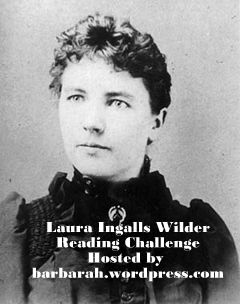
The month of February contains the dates of Laura Ingalls Wilder’s birth and death, so it seems a fitting month to focus on her life and writings. This is our fourth year to do so, and I have enjoyed it each time. Many of us grew up reading the Little House books. I don’t know if there has ever been a time when there wasn’t interest in the Little House series since it first came out. They are enjoyable as children’s books, but they are enjoyable for adults as well. It’s fascinating to explore real pioneer roots and heartening to read of the family relationships and values.

On Feb. 1 I’ll have a sign-up post where you can let us know if you’ll be participating and what you’d like to read. That way we can peek in on each other through the month and see how it’s going (that’s half the fun of a reading challenge). You can read anything by or about Laura. You can read alone or with your children or a friend. You can read just one book or several throughout the month — whatever works with your schedule. If you’d like to prepare some food or crafts or activities somehow relating to Laura or her books, that would be really neat too. In the past I think some have made food or clothing from the styles of the day: Annette even had a Little House-themed birthday party for one of her daughters, (and, unrelated to the challenge but just from her own interest she started the Little House Companion blog: you might find some neat ideas for activities and Laura-related books there.

On Feb 28 I’ll have a wrap-up post with a Mr. Linky so you can link back to any posts you’ve written for the challenge or to a wrap-up post. You do not have to have a blog to participate: if you don’t, you can just share with us in the comments that day what you’ve read.

Need some ideas beyond the Little House books themselves? Annette, as I mentioned, has shared several books for children here. I compiled a list of Books Related to Laura Ingalls Wilder, and some others are listed in the comments. Laura fan extraordinaire and historian Melanie Stringer has a treasure trove of information at Meet Laura Ingalls Wilder.

Have fun gathering your materials and planning what to read and do, and I’ll see you back here Feb. 1!

Here is a code for a button for the challenge:

Laura Ingalls Wilder Reading Challenge
<div align="center"><https://barbarah.wordpress.com/2015/01/19/the-laura-ingalls-wilder-reading-challenge-2015/" title="Laura Ingalls Wilder Reading Challenge"><img src="https://barbaraleeharper.com/wp-content/uploads/2011/11/liw.jpg"   alt="" width="144" height="184""" alt="Laura Ingalls Wilder Reading Challenge" style="border:none;" /></a></div>

Reading Plans

I’ve mentioned that, while I enjoyed the several reading challenges I participated in last year, I felt a little constricted and constrained by them, too. It’s hard to balance: I like some intentionality in my reading, and that brings some books into my planning that I might not otherwise get to, and a challenge is supposed to be challenging. 🙂 But I like a certain amount of freedom, too, to read on a whim or pick up something and start right in without thinking that I can’t because I have all these lists to finish. So this year I decided to think about what I wanted to read, and then if that happened to fit into any plan, fine, and if not, I’d make my own plan. As it turned out, I will be able to participate in a few challenges this year.

I know I’ll be participating in Carrie‘s Lucy Maud Montgomery Reading Challenge this month, reading the second and possibly the third in the Emily series.
Reading to Know - Book ClubI’ll also be reading a few from Carrie‘s Reading to Know Classics Book Club for the year: Christy by Catherine Marshall; The Little Prince by Antoine de Saint-Exupéry; probably one or two from Grimm’s Fairy Tales, maybe Laddie by Gene Stratton Porter, and then I’ll be hosting the September discussion on The Screwtape Letters. A couple on the list I just read last year, so it is a little too soon to reread them.

The Laura Ingalls Wilder Reading Challenge

In February I host the Laura Ingalls Wilder Reading Challenge (and I heartily invite you to as well! I’ll have more information about it soon and a sign-up post on Feb. 1), where we read anything by or about Laura. I am planning to read the next one or two in the series. The first couple of years I read a lot of books about Laura as well as some books of her magazine columns, and I think I’d like to just stick with her Little House series for now – though I am awfully tempted by decided to go ahead and read Pioneer Girl (especially after this review of it) since it fits a category in the classics challenge below.

The Back to the Classics Challenge:

backtotheclassics2015BUTTON

I didn’t grow up reading a lot of classics, and I have made a deliberate effort to catch up with some of them in the last few years.

Karen changed the format for the Back to the Classics Challenge 2015: readers can choose books within the 12 categories listed, and reading six, nine, or twelve will earn you entries in a drawing for a $30 Amazon or Book Depository gift card. More information is here. Books have to be at least 50 years old. Sign-up is open through March 31. We don’t have to declare which books we’ll be reading in order to sign up, and we can change our minds during the year, but so far I am planning on:

1.  A 19th Century Classic — any book published between 1800 and 1899: Little Dorrit by Charles Dickens (Finished 7/22/15)
2.  A 20th Century Classic — any book published between 1900 and 1965: The Masqueraders by Georgette Heyer, 1928 (Finished 1/19/15)
3.  A Classic by a Woman Author: Emily Climbs by L. M. Montgomery, second in the Emily of New Moon series. (Finished 2/4/15)
4.  A Classic in Translation. a book written originally in a language not your own: One Day in the Life of Ivan Denisovich by Aleksandr Solzhenitsyn, I set that one aside for Quo Vadis: A Narrative of the Time of Nero by Henryk Sienkiewicz (Finished 9/19/15)
5.  A Very Long Classic Novel — a single work of 500 pages or longer: War and Peace by Leo Tolstoy (Finished 4/20/15)
6.  A Classic Novella — any work shorter than 250 pages: The Little Prince by Antoine de Saint-Exupéry (Finished 6/22/15)
7.  A Classic with a Person’s Name in the Title: The Case-Book of Sherlock Holmes by Sir Arthur Conan Doyle (Finished 5/20/15).
8.  A Humorous or Satirical Classic. The Screwtape Letters by C. S. Lewis. Serious subject, but written in a satirical form. (Finished 9/26/15).
9.  A Forgotten Classic. This one is hard to evaluate – there are classics I have never heard of but ay be well known to others. But I am going to go with The Dead Secret by Wilkie Collins. It’s one of his earlier works and not one of his more well-known ones. (Finished 11/7/15).
10.  A Nonfiction Classic: Pioneer Girl by Laura Ingalls Wilder, published only recently but written in 1929 0r 1930. I wasn’t sure that would qualify since it was so recently published, so I chose instead The Problem of Pain by C. S. Lewis. (Finished 9/19/15)
11.  A Classic Children’s Book: By the Shores of Silver Lake by Laura Ingalls Wilder, 5th in her Little House series. (Finished 2/18/15)
12.  A Classic Play. I don’t have any ideas for this one yet. Suggestions? Decided on Pygmalion by George Bernard Shaw. (Finished 7/30/15)

TBR Pile Challenge:

2015tbrbuttonThe TBR Pile Challenge is for reading books we have on hand or have on a TBR list but haven’t gotten to yet. I really enjoyed the this challenge last year and like the idea of incorporating books I have on hand into my reading instead of just piling on new ones.  At first I wasn’t sure if I wanted to commit to reading twelve (though I have way more than that both in physical books and on my Kindle app) and thought about just choosing a smaller number – six or so – for my own purposes and not signing up for this official challenge. But once I started sorting through my books on hand (some even in a box in the closet!) and on my Kindle app, I found several I was excited about getting to, so here they are:

1. A Million Little Ways: Uncover the Art You Were Made to Live by Emily Freeman, 2013. I got this because I really liked her Grace For the Good Girl. I got it right at the beginning of last year but it got pushed aside for some of the other challenges. (Finished 3/30/15)

2. He Is There and He Is Not Silent by Francis Schaeffer, 1972. I can’t tell you how many years I have had this on my shelf, but I wouldn’t if I could because it would be too embarrassing. (Finished 4/22/15)

3. Gentle Savage Still Seeking the End of the Spear: The Autobiography of a Killer and the Oral History of the Waorani by Menkaye Aenkaedi with Kemo and Dyowe, 2013. Those who have been reading here a long time know that the whole story of the five missionaries who were killed trying to reach the Waorani, known then as Aucas, and the subsequent way God opened the hearts of this tribe to receive Jesus as Savior and Lord means a great deal to me and has impacted my life exponentially. This book was told by Menkaye, one of the killer of the missionaries who later became a father and grandfather figure to Steve Saint and his family, descendants of one of the five men. (Finished 5/24/15)

4. Strait of Hormuz by Davis Bunn. I like Bunn and his Marc Royce series, but this is another that kept getting pushed aside while I worked on other reading challenges.(Finished 6/9/15)

5. Better to Be Broken by Rick Huntress, 2012. (Finished 3/2/15)

6. The Fairest Beauty by Melanie Dickerson, 2013, a retelling of Snow White. (Finished 6/17/15)

7. My Emily by Matt Patterson, a family’s story of a young daughter born with Down’s Syndrome who is then diagnosed with leukemia. (Finished 3/4/15)

8. The Swan House by Elizabeth Musser, 2001. I really enjoyed her Words Unspoken (it was one of my top ten from 2010), so I wanted to read more from her. (Finished 4/18/15)

9. Out of a Far Country: A Gay Son’s Journey to God. A Broken Mother’s Search for Hope by Christopher & Angela Yuan, 2011, recommended by Tim Challies. (Finished 3/8/15)

10. Growing Up Amish: A Memoir by Ira Wagler. Saw this highly recommended by a number of people. (Finished 5/31/15)

11. Becoming More Than a Good Bible Study Girl by Lisa TerKeurst, 2009. Have had this on hand, meaning to get to it, for years. (Finished 2/1/15)

12. Either Live Like a Narnian by Joe Rigney, 2013, or The Narnian by Alan Jacobs, 2009, or both if I have time, for Carrie’s Chronicles of Narnia Reading Challenge in July. I have both already in my Kindle app – just have to decide which to start with. (Finished 7/24/15)

We’re allowed two alternates in case there is a book we just can’t get into, so I’ll choose The Captive Maiden by Melanie Dickerson, 2013 (a retelling of Cinderella) (Finished 6/28/15) and something by Ann Tatlock, if I can be that unspecific. I have six of her books in my Kindle app.

Sign-up for the TBR Challenge is open here through January 15, so you have time if you’d like to join in. The only stipulations are that the books on your list have to be ones you have never read before and have to have been published before January 1, 2014 (unfortunately! I had to cross two off my list because they were just published last year.). Those who complete the challenge by the end of the year are eligible for a drawing for a $50 Amazon or Book Depository gift card.

Non-fiction:

I think I will sign up again for the 2015 Non-fiction Reading Challenge, as I read a number of non-fiction books anyway. I will aim for the “Seeker” level, which is 11-15 books.

Nonfiction Reading Challenge hosted at The Introverted Reader
Image courtesy of Serge Bertasius Photographyat FreeDigitalPhotos.net

So…it looks like these will keep me busy for a while. 🙂 Do you have any reading plans for the year?

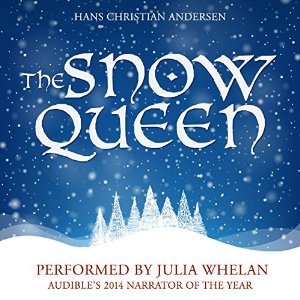
Book Review: The Snow Queen

Audible.com offers an end-of-year gift to its members in the way of a free short classic audiobook. Past offerings have been  A Christmas Carol,  The Wizard of Oz, and The Cricket on the Hearth: this past year it was The Snow Queen by Hans Christian Andersen (as of right now it is still free for members – don’t know how long it will be).

Snow QueenYou probably know that Frozen, Disney’s blockbuster movie last year, was supposedly based on The Snow Queen, but there is little resemblance besides a woman who “was beautiful but all made of ice: cold, blindingly glittering ice; and yet she was alive, for her eyes stared at Kai like two stars, but neither rest nor peace was to be found in her gaze,” an ice palace, and a talking reindeer (among other talking animals and even flowers) and some of the themes. All of the main characters’ names are different. But it is a pleasant story nonetheless, though maybe a little weird in places.

The tale is told in seven shorter stories. It begins with a troll (or sprite or hobgoblin or demon – different translations tell it a little differently) who made a mirror which causes those who look into it to see to see only the bad and nothing good or beautiful. In fact, the bad was magnified and the real distorted. After terrorizing everyone they could with the mirror, the fellow creatures of this being decided to take this mirror to heaven to “mock the angels,”  but in the process it fell and broke into millions of small pieces and splinters.

The next story tells of two childhood friend, Gerda and Kai (or Kay, depending again on which book you read), and their innocent play and love for each other, until one day Kai gets one of these splinters in his eye and heart, which changes him and makes him quite disagreeable. Then one day he sees the Snow Queen, mentioned already, whom Kai’s grandmother had told them of. He is frightened of her and draws back. But another day when all the boys are hooking their sledges up to carts and carriages to pull them, Kai ends up unknowingly fastening his to the Snow Queen’s vehicle. Too late he realizes who she is: she won’t stop, and she takes him to her palace far away. Her kiss numbs him and makes his heart grow colder.

Everyone in the village thinks he has died, but Gerda is convinced he has not, so she goes to look for him. Several more of the intervening stories tell of the people and creatures she meets along the way, some who help and some who hinder her.

There are vivid contrasts – light vs. darkness, warmth vs. coldness, innocence and purity vs. evil. In one segment it is said,

“I can give her no greater power than she has already”, said the woman; “Don’t you see how strong that is? How men and animals are obliged to serve her, and how well she has got through the world, barefooted as she is. She cannot receive any power from me greater than she now has, which consists in her own purity and innocence of heart. If she cannot herself obtain access to the Snow Queen, and remove the glass fragments from little Kai, we can do nothing to help her.”

I’ve wondered if the Snow Queen was inspiration for C. S. Lewis’s White Witch in Narnia. There are similarities, but the White Witch’s personality is much more developed – maybe because she spans several books whereas the Snow Queen is just in this one story – and she is more overtly evil. But the scene in which Edmund is taken into the White Witch’s sleigh and folded into her robes is very reminiscent of the Snow Queen doing the same with Kai.

There is also something of a religious element. I realized after reading this that I know very little about Andersen’s background, so I don’t know what he believed, but the children quote a fragment of a hymn which says, “Roses bloom and cease to be, But we shall the Christ-child see,” and later when Gerda is in trouble she prays the Lord’s Prayer, and angels come to help her. Near the end, “The grandmother sat in God’s bright sunshine, and she read aloud from the Bible, ‘Except ye become as little children, ye shall in no wise enter into the kingdom of God.’ And Kay and Gerda looked into each other’s eyes, and all at once understood the words of the old song, ‘Roses bloom and cease to be, But we shall the Christ-child see.'”

I found some of the intervening chapters, particularly one where Gerda is talking to flowers to see if they know anything about Kai, and they tell their stories, not only a little strange but also not really contributing much to the plot. But overall it is a sweet story of good triumphing over evil, of loyalty, of loving someone despite their flaws, of resilience when facing hardship and adversity. You can find the whole story online in various places with minor variations in the text (like the spelling of Kai/Kay’s name). Some day I’d like to read a nicely illustrated book version of the story.

(This will also be linked to Semicolon‘s Saturday Review of Books.)

Book Review: Let Every Heart Prepare Him Room

Let Every HeartForgive me for spending the first week of the year catching up with Christmas reviews. As I said yesterday, I don’t usually have the computer time when I finish these to talk about them, and when I do I feel it’s probably too far past Christmas. But Let Every Heart Prepare Him Room: Daily Family Devotions for Advent by Nancy Guthrie is another that I’ve read several times now and want to share more about with you.

This book is written in a much different style than her compilation of essays in Come Thou Long Expected Jesus that I discussed yesterday. It’s written for use as a family devotional, so the language is in a simper style that I think very young children could comprehend, but I enjoyed it even as an adult reading for myself. Each chapter ends with a prayer, some discussion questions, and a few more Scriptures on the topic of the chapter. There are 31 readings: I like that it doesn’t stop at Christmas but extends through the month. (I know I said I liked that Come Thou Long Expected Jesus only had 22 readings, but those in this book are short enough that I don’t think it would be a problem to keep up with all month). The sizing of the book, too, is small enough that I think children would be comfortable holding it and taking a turn at the family reading.

In addition, there are lined pages where you can jot down anything you want to remember about the discussions aroused from the readings and a few pages of Christmas songs with their history.

The readings cover several topics that you would expect, but also a few you might not have thought of, such as this quote:

When you look at something through a magnifying glass, it looks much bigger than it actually is. Is that what Mary meant when she said, “My soul magnifies the Lord”? Was she trying to make God look bigger than He actually is?

 We can never make God bigger or greater than He is. The truth is, we can never fully take in or understand God’s greatness. But we can magnify Him. We magnify God not by making Him bigger than He truly is, but by making Him greater in our thoughts, in our affections, in our memories, and in our expectations. We magnify Him by having higher, larger, and truer thoughts of Him. We magnify Him by praising Him and telling others about His greatness so they can have bigger thoughts about Him, too.

 Sometimes we wonder why we aren’t happy, why we make sinful choices, why we feel distant from God. Often it’s because we have small thoughts about God and magnified thoughts of ourselves, our wants, our rights, our accomplishments. Mary, the one God chose to be the mother of His Son, could have easily allowed thoughts of herself to become larger, even prideful. But instead of magnifying herself, she magnified the Lord (p. 29).

And this:

Sometimes we are given a gift that we think is not really useful to us, and therefore we never take it out of the box. We stash it away in a closet or on a shelf somewhere in case we need it someday. Sadly, that’s what some people do in regard to Jesus. They want to keep him handy for when something comes along that they can’t handle on their own, but for now they have no interest in making him part of their day-to-day lives, and so they put him on the shelf. They simply don’t believe he is as good as the Bible says he is, and so they have no real or lasting joy in having received this great gift (p. 79).

Day 17’s reading on “Glory Revealed” is one that especially stood out to me.

I appreciate Nancy’s thoughtfulness and depth in these devotionals, even couched as they are in simple language.

I’ve used this book several times, once with Jesse when he was younger and then on my own. It’s one I am sure I will use again, and I am happy to recommend it to you.

(This will also be linked to Semicolon‘s Saturday Review of Books.)


Book Review: Come Thou Long-Expected Jesus

Long Expected JesusI’ve read Come Thou Long Expected Jesus:Experiencing the Peace and Promise of Christmas, compiled by Nancy Guthrie, many times, but somehow I have never reviewed it. Probably because, like this year, I’ve finished it right in the busiest of the Christmas season, and by the time I had time to go over it, felt it was too far past Christmas to review. But I am not letting that happen this year. 🙂

In Nancy’s preface, she tells of Christmases where all the activities had been accomplished, but her heart wasn’t truly prepared. Then she tried to find a book of Christmas readings, but the ones she found did not minister to her. She wanted to find a “book with short readings on Advent themes from a number of different writers I trust and respect; that reflected a high view of Scripture; and that put the incarnation in the context of God’s unfolding plan of redemption” (p. 10). When she couldn’t find such a book, she set out to create one, reading and editing multitudes of sermons and writings from well-known theologians and Bible teachers.

There are 22 selections on various aspects of Advent, from Mary to conception by the Holy Ghost to Joseph to the shepherds to Jesus’s humility and others, from such teachers and preachers as Charles Spurgeon, Augustine, Martyn Lloyd-Jones to Tim Keller, John MacArthur, J. I. Packer, and Ray Ortland. I don’t know all of the authors, so I wouldn’t endorse everyone 100%, but I don’t think I read anything in this particular volume that I had a problem with, at least not that I noted or can recall.

In many ways it is hard to review a book like this, with so many authors and topics. But I’ll share just a few quotes that stood out to me:

Ligon Duncan III on Joseph: “God is calling Joseph to believe his word and to act in accordance with it. And Joseph does just that. He accepts God’s word and he trusts God’s word and he relies upon God’s word and he re-orients his life to conform to that word. What a tremendous act of faith on the part of Joseph and what an example of obedience to God’s word in spite of circumstance” (p. 53).

From “For Your Sakes He Became Poor” by J. I. Packer (originally from Knowing God): “We see now what it meant for the Son of God to empty himself and become poor. It meant a laying aside of glory; a voluntary restraint of power; an acceptance of hardship, isolation, ill-treatment, malice and misunderstanding; finally, a death that involved such agony–spiritual even more than physical–that his mind nearly broke under the prospect of it. It meant love to the uttermost for unlovely human beings, that they ‘through his poverty might become rich.’ The Christmas message is that there is hope for a ruined humanity–hope of pardon, hope of peace with God, hope of glory–because at the Father’s will Jesus Christ became poor and was born in a stable so that thirty years later he might hang on a cross. It is the most wonderful message that the world has ever heard, or will hear.

We talk glibly of the ‘Christmas spirit,’ rarely meaning more by this than sentimental jollity on a family basis. But what we have said makes it clear that the phrase should in fact carry a tremendous weight of meaning. It ought to mean the reproducing in human lives of the temper of him who for our sakes became poor at the first Christmas. And the Christmas spirit itself ought to be the mark of every Christian all the year round.

…The Christmas spirit does not shine out in the Christian snob. For the Christmas spirit is the spirit of those who, like their Master, live their whole lives on the principle of making themselves poor — spending and being spent — to enrich their fellow men, giving time, trouble, care, and concern, to do good to others — and not just their own friends — in whatever way there seems need (pp. 70-72).

From “Good News of Great Joy” by Raymond C. Ortlund, Jr.: “God is terrifying to guilty sinners, even though he is in himself gloriously beauitful. But God is pursuing us, even though we avoid him. He himself has taken the initiative to break through our terror” (p. 99).

From the same chapter: “Our good intentions are not strong enough to control our evil impulses. We need a Savior to rescue us from ourselves” (p. 100).

From “The Lessons of the Wise Men” by J. C. Ryle: “Let us beware of resting satisfied with head knowledge. It is an excellent thing when rightly used. But a person may have much of it, and still perish everlastingly. What is the state of our hearts? This is the great question. A little grace is better than many gifts. Gifts alone save no one; but grace leads on to glory” (p. 111).

There are so many others I’d love to share. Packard’s and Ortlund’s chapters impacted me the most this time, I think. There was a lot that was deep and thought-provoking in both, especially Ortlund’s on God’s glory.

Our family doesn’t celebrate Advent liturgically or ceremonially, with different candles on different days and all that, but I do like to, as Nancy wrote at the beginning, spend some time preparing for Christmas with some kind of Advent reading. This book, so far, has been the best book I have found for that. I like that it is 22 essays rather than 24 or 25 or 31: it gives one some leeway to begin early in December but not fall behind if a day or two is missed. Though the chapters are longer than the average devotional booklet, they’re not too long to read in a sitting, and I have found I do better at this stage of life with sustained thought on topics like this rather than “grab and go” devotionals. But most of all I like the richness and the depth. I had used it for several years, laid it aside for a few years, and rejoiced to read it again this year. I’m sure I will read it again many times.

(This will also be linked to Semicolon‘s Saturday Review of Books.)

Book Review: Where Treetops Glisten

Where-Treetops-GlistenI wanted to read Where Treetops Glisten: Three Stories of Heartwarming Courage and Christmas Romance During World War II by Cara Putnam, Sarah Sundin, and Tricia Goyer since I first heard of it because I have thoroughly enjoyed all of Sarah Sundin‘s books. So far everything she has written has been set during WWII, and I enjoy the period backdrop as well as her well-drawn characters. I had never read Cara before and had read only one of Tricia’s books.

This book opens in the Turner home Lafayette, Indiana on Christmas Eve 1941. Abigail Turner’s boyfriend was killed in the bombing of Pearl Harbor and Meredith’s had broken her heart. For all of these reasons, no one was in much of a mood to celebrate Christmas. But Grandma Louise felt that celebrating Christ’s birth was especially necessary in such times, so she gets up early to start decorating.

The book then divides into three sections, each focusing on one of the Turner siblings during subsequent Christmas seasons and written by a different author. Each section is also headed by well known Christmas songs which debuted during the WWII era.

Almost a year after Pearl Harbor, Abigail is a college student and has decided that, for the duration of the war at least, her heart is closed to romance. There’s just no sense in getting involved with someone during uncertain times. She works part-time at the unique Glatz Candies (a real store, now known as McCord Candies), and on her way to catch the bus for work collides with a young man. He boards her bus as well, and she notices he has a limp plus seems to be under a heavy weight. She reaches out to see if she can be of help.

Pete Turner for years considered himself the black sheep of the family. His childhood bullying and prankish sense of humor hurt, angered, or aggravated every one subjected to it, until he finally gave his life to Christ. But old reputations are hard to escape, so he centers his life and work in a different town. On leave in Lafayette, he encounters a lost child and helps her home only to find that her widowed mother is the younger sister of a friend and the target of some of his worst bullying. She’s in need of some help, which he offers, but she has never forgiven him. Yet her daughter seems taken by him, and he seems to understand her daughter more than anyone else.

Meredith had met a young musician in college who was German born but seemed very Americanized. Just as their relationship was growing serious, she learns he has fled, and paraphernalia left behind indicates he was probably a spy. Hurt and betrayed, she joins the service as a nurse, and her unit is following the front lines to attend to the wounded. Christmas Day is also her birthday, and being so far from home weighs on her. But the last thing she expects is having to deal with her betrayal head on.

Grandma Louise’s influence is a running thread connecting all the stories, and an epilogue brings them all to a satisfying close.

At the end is a chat with the authors about their research and how they worked together on the project.

I very much enjoyed this book. The characters and situations were realistic and the element of faith was genuine. I enjoyed each character’s journey and what they learned along the way.

(This will also be linked to Semicolon‘s Saturday Review of Books.)


What’s On Your Nightstand: December 2014

 What's On Your NightstandThe folks at 5 Minutes For Books host What’s On Your Nightstand? the fourth Tuesday of each month in which we can share about the books we have been reading and/or plan to read.

I’m so glad the 5MFB folks decided to put this month’s Nightstand post on the last Tuesday rather than the fourth Tuesday of December, which, this year, would have been two days before Christmas. There is much less pressure and more time to enjoy it this week. In fact…I would love it if it were the last Tuesday of every month, or the last day of the month. 🙂

December is traditionally a busy month, but I was able to get some good reading and listening in.

Since last time I have completed:

The Weight of Glory by C. S. Lewis, reviewed here.

Number the Stars by Lois Lowrey for Carrie’s  Reading to Know Classics Book Club for November, reviewed here.

The Gift of the Magi and Other Christmas Stories by O. Henry, Fyodor Dostoevsky, Henry van Dyke, and Leo Tolstoy, reviewed here.

The Wonderful Wizard of Oz, by L. Frank Baum, audiobook, reviewed here.

To Kill a Mockingbird for Carrie’s  Reading to Know Classics Book Club for December, mostly audiobook, reviewed here.

Merry Humbug Christmas by Sandra D. Bricker, reviewed here.

The Cricket on the Hearth by Charles Dickens, audiobook, reviewed here.

A Christmas Carol by Charles Dickens, audiobook. I didn’t review it this year, but my thoughts on it from a couple of years ago are here.

Come, Thou Long Expected Jesus: Experiencing the Peace and Promise of Christmas, essays compiled by Nancy Guthrie. I have read this several times and referred to it here before, but I have never reviewed it. I hope to soon.

The Snow Queen by Hans Christian Anderson, audiobook, just finished yesterday afternoon.

That may look like a lot, but many were audiobooks and a few of them were very short.

I didn’t read the Christmas books I had planned to, but then I did read some I hadn’t planned on. I do like to read something Christmasy this month, so I am glad I got a few titles in.

I’m currently reading:

The Pound a Day Diet by Rocco DiSpirito. This one got laid aside, literally. I am not even sure where it is. But I am about 2/3 of the way through it and plan to finish it.

Where Treetops Glisten: Three Stories of Heartwarming Courage and Christmas Romance During World War II by Cara Putnam, Sarah Sundin, and Tricia Goyer.

Let Every Heart Prepare Him Room:Daily Family Devotions for Advent by Nancy Guthrie

I haven’t mentioned them every month, but I’ve been reading daily devotionals Daily Light on the Daily Path and Traveling Toward Sunrise this year and will have those finished tomorrow.

Next up:

Lizzy and Jane by Katherine Reay

To See the Moon Again by Jamie Langston Turner

Carrie hosts a Lucy Maud Montgomery Reading Challenge in January, so I will be reading something of hers. I’ve read all the Anne books multiple times, so I’ll probably continue in the Emily series I started last year.

Other than that I haven’t decided. I am still pondering whether to participate in any reading challenges this year or just map out my own plan, but I do have some things I want to tackle this year. In audiobooks, I want to finish the Sherlock Holmes series, and I’m thinking I’d like to try War and Peace.

I also compiled a list of the books I’ve read this year and then my top ten favorite books of the year.

For those who like to plan ahead, I will be sponsoring the Laura Ingalls Wilder Reading Challenge again in February, where participants read anything by or about Laura. I don’t know how many years I’ll do this, but I’m definitely planning on it this year.

Happy Reading!


Top Books Read in 2014

From the books I have read in a year I like to list my top ten or so. These weren’t published this year: these were just my favorites that I read in this particular year. So without further ado, here they are, linked back to my reviews of them:

1. How I Know God Answers Prayer by Rosalind Goforth. I have read this multiple times and am always blessed and inspired by it.

2. Mere Christianity by C. S. Lewis. This was my second time through this book, and it is one I should probably reread every few years.

3. Seeking Allah, Finding Jesus: A Devout Muslim Encounters Christianity by Nabeel Qureshi. This account of Nabeel’s attempts first to argue and disprove Christianity and then to grapple with the implications of coming to believe it was true was both riveting and informative.

4. The Weight of Glory and Other Addresses by C. S. Lewis. As I said in my review of it, I don’t think any other author makes me long for heaven more.

5. Why We Are Not Emergent: By Two Guys Who Should Be by Kevin DeYoung and Ted Kluck. Whether you have any knowledge or care about what the emergent or emerging church is, this is a vital book for our times, dealing with postmodern thought applied to Christianity and the good and bad aspects of it.

6. Women of the Word by Jen Wilkin. One of my passions is to get women into the Word of God. Jesus said, “The words that I speak unto you, they are spirit, and they are life” (John 6:63). No other book, no other words have the power to change us or to make us think and live in accord with God’s will. Jen shares that passion, and her book was a great blessing to me.

7. Walking From East to West: God in the Shadows by Ravi Zacharias, an autobiographical account of Ravi’s journey to believing faith in Jesus Christ and God’s leading and shaping him for the ministry He called him to.

8. Dear Mr. Knightley by Katherine Reay. Katherine’s debut epistolary novel about a girl’s letters to an anonymous benefactor, which reveal her own blossoming and is replete with literary allusions, particularly to Jane Austen’s books, won me over right away. I have her next book on my TBR shelf right now!

9. Somewhere Safe With Somebody Good by Jan Karon, her newest Mitford book. It was a joy to read this after thinking that we probably wouldn’t hear about Father Tim again. Her Mitford books are a joy in any case.

10. The Seamstress: A Memoir of Survival by Sara Tuvel Bernstein was about a Romanian young woman’s experiences surviving WWII during the hardships and shortages of war time, then in a prison camp. It was riveting reading. I was saddened that Sara concluded that there must not be a God if such atrocities were allowed to happen and I hope she discovered at some point before her death that He was the one who gave her the spirit and determination she needed as well as sometimes seemingly “coincidental” provisions just at the right times.

If I were going to go beyond ten, I would also name:

Number the Stars by Lois Lowry, a children’s book about a girl in Denmark during WWII and the effects of the war on her family and friends as well as herself.
The Hound of the Baskervilles by Sir Arthur Conan Doyle
The Princess and the Goblin by George MacDonald
Undetected by Dee Henderson
Unspoken by Dee Henderson

What were your favorite books of the year? Have you read any of the ones mentioned here?

(This will also be linked to Semicolon‘s Saturday Review of Books, where this week she is welcoming book lists for the year.)

I’m also linking this week to:

btt  button

Booking Through Thursday, a weekly meme which poses a question or a thought for participants to discuss centering on the subject of books or reading. The question for 1/1/15 asks about books that impacted us in 2014.

Books Read in 2014

I like to list and look over what I have read for the year, and Sherry at Semicolon, who hosts a weekly Saturday Review of Books where we can link up our book reviews, is setting aside this last Saturday of the year for books lists – what we’ve read this year, favorite books of the year, books we are planning to read next year, etc. I included audiobooks in with the the others because I do consider them “read” even though I “listened,” and for many of them I reread or looked at excerpts from online versions or library or Kindle copies. But all of the audiobooks this year were classics except for one in the “other fiction” category.

I’m just listing the titles read and not including commentary, but I am linking the titles to my reviews.

Non-fiction:

Come, Thou Long Expected Jesus: Experiencing the Peace and Promise of Christmas, essays compiled by Nancy Guthrie, not reviewed yet
Crowded to Christ by L. E. Maxwell
Gospel Meditations for Missions, not reviewed.
Gospel Meditations for the Hurting by Chris Anderson and Joe Tyrpak, not reviewed.
The House Is Quiet, Now What? by Janice Hanna and Kathleen Y’Barbo
How I Know God Answers Prayer by Rosalind Goforth
How to Read Slowly by James W. Sire
Ida Scudder: Healing Bodies, Touching Hearts by Janet and Geoff Benge
Jesus, My Father, the CIA, and Me: A Memoir of Sorts by Ian Morgan Cron
The Knowledge of the Holy by A. W. Tozer
Loving the Church by John Crotts
Made to Crave Action Plan Participant’s Guide by Lysa TerKeurst and Ski Chilton
Made to CraveSatisfying Your Deepest Desire with God, Not Food by Lisa TerKeurst
Mere Christianity by C. S. Lewis
On Stories and Other Essays on Literature by C. S. Lewis
Seeking Allah, Finding Jesus: A Devout Muslim Encounters Christianity by Nabeel Qureshi
Walking From East to West: God in the Shadows by Ravi Zacharias
Walking in the Spirit: A Study Through Galatians 5 by Steve Pettit
Wednesdays Were Pretty Normal: A Boy, Cancer, and God by Michael Kelley
The Weight of Glory and Other Addresses by C. S. Lewis
Why We Are Not Emergent: By Two Guys Who Should Be by Kevin DeYoung and Ted Kluck
Women of the Word by Jen Wilkin

By the end of the year I will also have finished another round through Daily Light on the Daily Path, plus Traveling Toward Sunrise, a daily devotional by Mrs. Charles E. Cowman, and Let Every Heart Prepare Him Room by Nancy Guthrie

Classics:

The Adventures of Sherlock Holmes by Sir Arthur Conan Doyle
Bleak House by Charles Dickens
The Blue Castle by L. M. Montgomery
The Brothers Karamazov by Fyodor Dostoyevsky
The Cricket on the Hearth by Charles Dickens
Farmer Boy by Laura Ingalls Wilder
The Gift of the Magi and Other Christmas Stories by O. Henry, Dostoyevsky, Henry Van Dyke, and Leo Tolstoy
The Great Divorce by C. S. Lewis
The Hound of the Baskervilles by Sir Arthur Conan Doyle
I will Repay by Baroness Orzcy
The Little White Horse by Elizabeth Goudge
The Memoirs of Sherlock Holmes, by Sir Arthur Conan Doyle
My Man Jeeves by P. D. Wodehouse
Northanger Abbey by Jane Austen (did not review this time, but a review from a previous year is here.)
Number the Stars by Lois Lowry
The Old Curiosity Shop by Charles Dickens
Persuasion by Jane Austen (did not review this time, but a review from a previous year is here.)
The Princess and the Goblin by George MacDonald
The Return of Sherlock Holmes by Arthur Conan Doyle
The Scarlet Pimpernel by Baroness Orczy
The Sign of the Four by Sir Arthur Conan Doyle
A Study in Scarlet, the first Sherlock Holmes book by Sir Arthur Conan Doyle
To Kill a Mockingbird by Harper Lee
The Woman in White by Wilkie Collins
The Wonderful Wizard of Oz by L. Frank Baum

Christian fiction:

Courageous by Randy Alcorn
Dear Mr. Knightley by Katherine Reay
The Girl in the Gatehouse by Julie Klassen
In Perfect Time by Sarah Sundin
Jennifer: An O’Malley Love Story by Dee Henderson
Just Jane: A Novel of Jane Austen’s Life by Nancy Moser
The Last Bride by Beverly Lewis
Lost and Found by Ginny Yttrup
Merry Humbug Christmas by Sandra D. Bricker
Somewhere Safe With Somebody Good by Jan Karon
Undetected by Dee Henderson
Unspoken by Dee Henderson

Other fiction:

The Book of Three by Alexander Lloyd
The Incorrigible Children of Ashton Place: Book IV: The Interrupted Tale by Maryrose Wood
The Seamstress: A Memoir of Survival by Sara Tuvel Bernstein

62 books in all (65 if you count the three I’ll complete by the end of the year): 20 audiobooks and 42 made of paper. There were maybe three or so I wasn’t so thrilled with, but overall it was a good reading year. There was a lot less Christian fiction than usual and a lot more nonfiction, due mostly to the reading challenges I participated in this year, especially the TBR challenge. A lot of my TBR books are nonfiction because I tend to gravitate to fiction. I do enjoy nonfiction when I get into it, but I usually have to “make” myself pick it up. Yet my top ten or so books of the year usually are nonfiction. That’s coming up next!

(This will also be linked to Semicolon‘s Saturday Review of Books.)

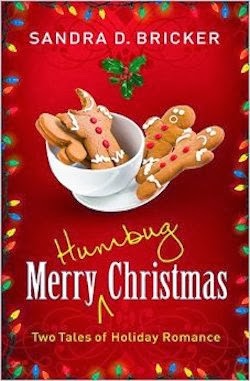
Book Review: Merry Humbug Christmas

7d4cb-merry_humbug_christmasI picked up Merry Humbug Christmas by Sandra D. Bricker when it was on sale for the Kindle app (at the moment it is 99 cents, but that could change at any time) mainly because I enjoyed her The Big 5-OH! a couple of years ago.

This is a two-part story of two friends. The first, Joss Snow, was born on Christmas day, and her parents in a burst of holiday and  new parent inspiration decided to name her Merry with her middle name as Christmas. Merry Christmas Snow. “Her name had come to seem like a Before and After puzzle from Wheel of Fortune.” By adulthood she’d had enough of the jokes and wisecracks such a name brought out, and she had it legally changed to Jocelyn, going by Joss. When a family tragedy occurred on Christmas Eve, she was done with the holiday. “She’d made a decision long ago not to ask too many questions about the why of that turn of events. Instead of turning on God, she’d turned on Christmas.” She not only did not celebrate it, she went out of her way to avoid it along with her best friend, Reese Pendergrass. This year she’s found the perfect getaway for herself and Reese: a Bah Humbug Cruise that promises no festive seasonal vestiges. The only problem is that Reese drops a traitorous bomb on her: her boyfriend has just proposed and she is going to meet his family at Christmas.

Joss decides to go alone, only to discover when she arrives to board the ship that her cruise has been canceled and she has been rebooked on the “12 Days of Christmas Fun Cruise.” It takes a certain suspension of disbelief to accept that that would happen without her having received some notice beforehand, and that she would find herself actually on the ship, deciding to disembark only after it was too late. But setting that aside, Joss soon meets “a walking commercial for Christmas at Dollywood” in the platinum blond, overly adorned and talkative Connie, and steels herself for a miserable time tucked away in her room. Connie, however, won’t let her get away with that, and in the course of events Joss also meets a potential client for her business and a handsome guy with an Irish brogue.

Meanwhile, Reese is nervous about meeting the seemingly idyllic family of her fiance when she herself comes from a non traditional hippie-ish family. An accident in which they hit a deer on their way and have to finish their journey on foot in the snow sets off a series of disasters which makes Reeses doubt she will ever be accepted by the family.

In one scene Reese thinks that it’s like they’re in the middle of a cheesy holiday movie, and, yes, the book did have a TV holiday movie feel about it. I did wince at Reese’s calling her fiance, Damian, Damie, and Joss calling some guy gorge, as in gorgeous (I had never heard the latter before – is that a thing now?) But overall the book is full of Bricker’s trademark humor and is a light, fun holiday read. I especially enjoyed the interaction of the two friends at the beginning and end of the book. And of course, it wouldn’t be a Christmas book without Joss realizing that Christmas is “not really so bad…under the right circumstances.”

(This will also be linked to Semicolon‘s Saturday Review of Books.)