31 Days of Inspirational Biography: A Sense of Him

photo 3(2)

For the 31 Days writing challenge, I am sharing 31 Days of Inspirational Biography.
You can find others in the series here.

I’ve written often of Isobel Kuhn and have benefited so much from her books. One is called Second Mile People, in which she writes of several who have influenced her life in a major way. In Jesus’s instruction about going the second mile, she says, the first one is compulsory, but the second is an offering “for the good and peace of His kingdom.” All of the people she writes of in this book have gone the extra mile and “have cried out, not ‘How much will He ask?’ but ‘How much can I give Him?'”

One such is Dorothy. She begins her chapter with this poem:

Indwelt

Not merely in the words you say,
Not only in your deeds confessed,
But in the most unconscious way
Is Christ expressed.

Is it a beatific smile,
A holy light upon your brow;
Oh no, I felt His Presence while
You laughed just now.

For me ‘twas not the truth you taught
To you so clear, to me still dim
But when you came to me you brought
A sense of Him.

And from your eyes He beckons me,
And from your heart His love is shed,
Til I lose sight of you and see
The Christ instead.

—by A. S. Wilson

Isobel then tells of meeting a young woman named Dorothy at a conference. Isobel had not been saved very long. “My ideas of the Christian life were still in a crude, unmoulded state.” Dorothy seemed attractive, winsome and sweet, and Isobel was pleased when she asked her to go for a walk. Dorothy had in mind to “speak just a word for Jesus” while on this walk, but as it happened, their conversation centered on happy, funny things. “When we parted Dorothy felt she had been a failure, unconscious that the one she had hoped to help was going away enchanted with this glimpse into the very human sweetness of this Christlike girl. ‘…I felt His Presence when you laughed just now….’ The Spirit-filled life cannot ‘fail’, it is fruitful even when it may seem least to have done anything. That walk gave Dorothy ‘influence’ over me when a ‘sermon’ would have created a permanent barrier. In fact at that time I carried a mental suit of armour all ready to slip on quietly the moment any ‘old fogey’ tried to ‘preach’ at me!”

“Oswald Chambers says, ‘The people who influence us most are not those who buttonhole us and talk to us, but those who live their lives like the stars in heaven and the lilies of the field, perfectly simply and unaffectedly.’ A great mistake is to think that a Spirit-filled man or woman must always be casting sermons at people. Being ‘filled with the Spirit’ (which is a first qualification of Second Mile People) is merely a refusing of self and a taking by faith of the life of Christ as wrought in us by His Holy Spirit.” “We must take the Spirit’s fullness, as we take our salvation, by faith in God’s promise that He is given to us.”

Some weeks later when Dorothy and Isobel met again, Dorothy’s “time had come” to “get in a ‘preach,’” for Isobel then was in a frame of mind and heart to receive it. “The Holy Spirit is never too early and never too late.” Though Isobel did not understand as yet all Dorothy was trying to say, her words did lay the groundwork for future understanding, and “from Dorothy I just drank in the inspiration of herself, the ‘sense of Him’, and the fact that this life of undisturbed peace was no mystic dream but a possible reality who sat before me with earnest sweet eyes and soft pink cheeks.”

Please don’t misunderstand — I don’t mean any of this in any kind of a mystic way. I have written much on being grounded in Scripture and not feeling. But I have known some people who seem to reflect Christ and carry a “sense of Him” in everything they do, every word, action, and attitude. May I live so close to Him that people always sense His presence.

31 Days of Inspirational Biography: If I Perish

photo 3(2)

For the 31 Days writing challenge, I am sharing 31 Days of Inspirational Biography. You can find others in the series here.

If I PerishAhn Ei Sook is not a household name among most Christians today (nor is her married name, Esther Ahn Kim), but her testimony in her autobiography, If I Perish, is soul-stirring. She was a young Korean Christian schoolteacher in the 1930s when Korea was under Japanese rule. The Japanese had set up shrines throughout the country, even in Christian churches and schools, and ordered people to bow down and worship at them. In Ahn’s school, she successfully avoided having to go to the shrine for many days, but finally the day came when the principal of the school sought her out and insisted she come to the shrine, lest the Japanese close their school because of her refusal. Miss Ahn went to the shrine, but did not bow down when everyone else did. She was taken to the office of the chief of the district and interrogated, but when he received a phone call and stepped out of the room, she fled.

She and her mother ended up hiding out in a quiet village while her sister brought them food. They tried to be inconspicuous, yet other Christians found them out and came to visit under the cover of darkness. Some of these were living in caves or mountains. Miss Ahn and her mother shared their food with them and enjoyed their fellowship.

One day a man called Elder Park came and told Miss Ahn God had told him to come and find her and go with her to warn the Japanese officials of God’s judgment to come if they did not repent. She initially shrank from this, but finally agreed to go. They had many disagreements about exactly how to accomplish this, and, indeed, some of what they did seems strange to us, even remembering that the times, culture, and circumstances were different. For instance, she felt she should get the proper paperwork; he felt he did not need such “man-made things,” for God was his refuge. He felt that God would blind the eyes of the officials….and that is exactly what happened. When the officials came on the train to see everyone’s paperwork, they walked right by him as if they did not see him.

God gave them a good audience with a few sympathetic Japanese officials. Yet in another disagreement, Elder Park felt they should go to the Japanese Diet and drop a warning from the balcony. This would be illegal: he felt then there would be an arrest and a hearing. Miss Ahn felt that deliberately breaking the law was the wrong way to go about it, but felt she must go with him. They were, of course, arrested and imprisoned. After some days she was released to go home, yet under guard. Some weeks later she was arrested along with several other pastors and Christian leaders and imprisoned for six years.

The majority of the rest of the book is about her prison experiences, how the Lord sustained her and used her. I want to share just one incident that shows real agape love.

A woman had been brought to the prison who was thought to be insane. She had killed her husband and cut him up into pieces. This woman would moan and curse in her cell, was known for biting, and, because she kept pounding the door, she was handcuffed 24 hours a day. Miss Ahn felt that the Lord would have her reach out to this woman. She requested that she be brought to her cell. The woman was disheveled and filthy. When she fell asleep, Miss Ahn, concerned about her being cold, took the woman’s bare feet, which were covered with excrement, into her own bosom and held them against her chest to keep them warm. Bit by bit, every day, with acts of kindness and words of love, the Lord enabled her to break through to this woman, who became a believer. The jailers were astounded at the change in her. Miss Ahn was able to disciple her, and she faced her execution in peace.

Many people who knew Miss Ahn commented on her weakness; she herself referred to being weak many times. Yet God uses “the weak things of the world” to show His power (I Corinthians 1:27, II Corinthians 12:9-10). One thing that encouraged me was that she struggled often with her feelings: she would be full of faith at one time, even feeling adventurous about what she was facing. But another time she would feel fearful. This encouraged me because it showed just how human she was. Even feeling fearful, though, she knew she must obey, and relied on the Lord for strength.

When the Japanese surrendered at the end of World War II, the Christians in the prison were released. Of the thirty-four who had entered that prison, only fourteen survived.

The Russian Communists took over then, and they were not much better than the Japanese: in some ways they were a great deal worse. The Lord opened a way for her to go to South Korea and eventually to America. She married Kim Dong Myung and took the name Esther, so her book was written under the name Esther Ahn Kim.

I hope you’ll read more of her story.


(This will also be linked to Semicolon‘s Saturday Review of Books.)

RTK Classics Book Club Selection for October: How I Know God Answers Prayer


Reading to Know - Book Club

Those of you who follow along with Carrie’s  Reading to Know Classics Book Club. know that we were originally going to do To the Golden Shore by Adoniram Judson this month. But shortly before the end of September, I began to be concerned that most participants might not read it, for several reasons: the book club was running a bit behind due to some lengthier classics earlier in the year and to busy life circumstances, there is no Kindle version of this book, and it probably isn’t in most public libraries. I was thinking about How I Know God Answers Prayer for next year, then suggested to Carrie that under the circumstances we might want to switch and do it this year: it’s shorter, there is a free Kindle version, and the text is online at Project Gutenberg. Though I am a little sad about not going forward with To the Golden Shore, I’d much rather choose a book that people will actually read. It seems from the comments Carrie and I both have received that this was a good decision. I do recommend To the Golden Shore to you: I apologize if you did go ahead and buy the book for this month’s discussion, but I feel sure you’ll find it worth the money and effort to read it.

Jonathan and Rosalind Goforth were pioneer missionaries to China at a time when foreign suspicion and distrust there reigned.

In the foreword of her little book How I Know God Answers Prayer, Rosalind shares how this book came to be:

When in Canada on our first furloughs I was frequently amazed at the incredulity expressed when definite testimony was given to an answer to prayer. Sometimes this was shown by an expressive shrug of the shoulders, sometimes by a sudden silence or turning of the topic of conversation, and sometimes more openly by the query: “How do you know that it might not have happened so, anyway?”

Gradually the impression deepened: “If they will not believe one, two, or a dozen testimonies, will they believe the combined testimonies of one whole life?”

The more I thought of what it would mean to record the sacred incidents connected with answers to prayer the more I shrank from the publicity, and from undertaking the task. There were dozens of answers far too sacred for the public eye, which were known only to a few, others known only to God. But if the record were to carry weight with those who did not believe in the supernatural element in prayer, many personal and scarcely less sacred incidents must of necessity be made public.

…It will be seen that these incidents of answered prayer are not given as being more wonderful, or more worthy of record, than multitudes the world over could testify to; but they are written and sent out simply and only because I had to write them or disobey God.

She goes on to do just that. Some of the answers to prayer are miraculous and monumental; some involve everyday concerns. Some are deeply personal, involving the depths of her own heart.

This was Rosalind’s first book, originally published in 1921. She went on to publish her husband’s biography, Goforth of China, in 1937, and then she was asked to share some of her own perspectives of life as a missionary wife in Climbing, one of my all-time favorite books, in 1940 (links are to my reviews). You’ll probably find her writing just a touch old-fashioned, but it is not hard to comprehend. She’s very transparent, and I’ve written before how it encouraging it is to find a woman “of like passions as we are” who found God’s grace to live for Him.

If you’ve never read of the Goforths, this will be a good introduction, and I hope you’ll go on to read her other books: if you have, it will be a good refresher.

If you’d like to read this book with us this month, you might let Carrie know here, and around the end of the month she’ll have a post where we can comment, share thoughts, or link up our review posts.

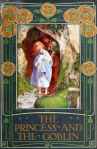
Book Review: The Princess and the Goblin

Princess_and_the_GoblinMy interest in George MacDonald was first piqued when I read of his influence on the life and writings of C. S. Lewis, whose imagination, he said, was “baptised” by reading MacDonald’s Phantastes. I’ve seen him quoted by various others, but somehow I don’t think I have ever read one of his books. I was especially interested in The Princess and the Goblin after listening to the funeral service of a young wife and mom who passed away last year (Julie Herbster, for those who knew her). Her pastor spoke of her love for literature and mentioned her hanging on to the truth she knew in the face of such devastating circumstances, just like the princess followed her great-great-grandmother’s thread through the goblin cave even though no one else could see it or believed it was there (more on that later). So I was delighted to see this title listed for this month for Carrie’s  Reading to Know Classics Book Club. That’s one of the values of these kinds of challenges and book clubs: they spur me to read books I might not otherwise have ever gotten around to.

The story begins with a bored 8 year old Princess Irene, inside on a rainy day, restless and dissatisfied with all her many wonderful toys. Her “King Papa” has sent her out into the country to be raised at first because her mother was not very strong, later because her mother died and her father was often away on kingdom business. On this rainy day her nurse, Lootie, leaves the room for a moment, and Irene notices another door left ajar, one that goes upstairs. She decides to investigate but gets thoroughly lost amidst seemingly myriad doors. She can’t find her way back down and gets quite upset until she finds a very old lady at a spinning wheel in one room. Though she was obviously very old and wise, with white hair, her skin was smooth. She told Irene she was her great-great-grandmother and that she was also named Irene. After her great-great-grandmother  wipes the tears from Irene’s dusty face and shows her her pigeons, she shows her the way back downstairs so that Lootie won’t be worried about her.

Irene tells Lootie all about her great-great-grandmother, but Lootie thinks she is just making up stories. Irene is quite offended, but after a while she wonders if perhaps her visit to her great-great-grandmother was all just a dream.

One thing the princess doesn’t know, but everyone else does, is that the mountains’ underground passages are full of goblins who used to be people but chose to live underground after some disagreements with the King. Eons of living “away from the sun, in cold and wet and dark places” had transformed them into hideous and grotesque creatures. Lootie is supposed to be keeping Irene safe especially from goblins, but one day as they are out exploring, Lootie realizes they’ve gone too far and won’t make it back home before dark. Frightened, she grabs Irene and starts running without having the time to explain why. They take a wrong turn and begin to see odd shapes in the rocks and hear laughter, when suddenly a young miner’s son named Curdie comes across their path singing a rhyme. He tells them the goblins can’t stand rhymes and songs, but they are out and about, and they need to get home as quickly as possible, so he helps them find the way and escorts them back.

Later, when Curdie works late in the mines one night to try to earn money to buy his mother a red petticoat, he overhears some goblins talking and hears reference to a plan that would endanger Irene, and another “Plan B” that isn’t exactly clear. In trying to find out more about it, he eventually is captured. Irene had found her great-great-grandmother once again, who had given her a ring filled with fine thread she had woven for her. She told her that when she needed to, she could put the ring under her pillow and follow the thread to guide her. One day she follows the thread to where Curdie is being kept, and helps him escape. Curdie can’t see the thread and can’t see Irene’s great-great-grandmother, either, when she tries to introduce him. He thinks Irene is trying to make a fool of him; Irene is hurt.

But Curdie determines that he will still try to find out the goblins’ plan and protect the princess. I’ll leave the story there for you to find out the rest if you choose to read the book, but you can be sure a confrontation with the goblins will occur.

One one level, this is a fairy tale with a classic good vs. evil battle and with young people learning and growing in the course of it. Unfortunately I couldn’t find any Spark Notes or Cliff Notes that discussed the plot, theme, and symbolism. Just Googling “symbolism in The Princess and the Goblin” and perusing a few of the posts that came up led to a wide variety of interpretations. Some see Irene’s sreat-great-grandmother as a fairy godmother, a goddess, or the Virgin Mary. Some sympathize with the goblins as victims of a classist society. Some took umbrage to MacDonald’s view that a princess (or anyone of royal blood) should have certain inherent qualities.

Since MacDonald was a Christian (though I’d disagree with some of his views as described in Wikipedia), I think we have to interpret the story in the light of basic Christian teachings. I don’t think the story is meant to be an overt allegory, but it does portray a beneficent being who cares for, heals, protects (and sometimes rebukes) its charges, who can’t be seen unless allowed and with some degree of faith. Light is associated with it, light that guides and protects, and a bird showing up at certain moments seems to invoke Biblical instances of the Holy Spirit in the form of a bird (though in the story the bird is a pigeon rather than a dove). I think the thread does represent truth, and Irene has to discern between what appears to be true and what her great-great-grandmother told her and choose which to trust, even (especially) when others don’t believe. I don’t think that royal blood really influences one’s behavior (except in fairy tales) – both history and modern times have given us royals with less than commendable character. But we can agree that a royal should have certain characteristics, and if Irene and Curdie are supposed to represent children of God, then, yes, they should have certain characteristics and should also be growing in them.

Besides the overall story and symbolism, there is a lot of humor in the book, especially in regard to the goblins. In one of my favorite passages, a goblin father is telling his son that humans have toes, which goblins apparently don’t have:

‘Why do they wear shoes up there?’

‘Ah, now that’s a sensible question, and I will answer it. But in order to do so, I must first tell you a secret. I once saw the queen’s feet.’

‘Without her shoes?’

‘Yes—without her shoes.’

‘No! Did you? How was it?’

‘Never you mind how it was. She didn’t know I saw them. And what do you think!—they had toes!’

‘Toes! What’s that?’

‘You may well ask! I should never have known if I had not seen the queen’s feet. Just imagine! the ends of her feet were split up into five or six thin pieces!’

‘Oh, horrid! How could the king have fallen in love with her?’

‘You forget that she wore shoes. That is just why she wore them. That is why all the men, and women too, upstairs wear shoes. They can’t bear the sight of their own feet without them.’

A few of my other favorite passages:

When Irene in fear unwisely runs right into the path of danger, “Not daring to look behind her, she rushed straight out of the gate and up the mountain. It was foolish indeed—thus to run farther and farther from all who could help her, as if she had been seeking a fit spot for the goblin creature to eat her in his leisure; but that is the way fear serves us: it always sides with the thing we are afraid of. “

“Lootie had very foolish notions concerning the dignity of a princess, not understanding that the truest princess is just the one who loves all her brothers and sisters best, and who is most able to do them good by being humble towards them.”

“…it is so silly of people to fancy that old age means crookedness and witheredness and feebleness and sticks and spectacles and rheumatism and forgetfulness! It is so silly! Old age has nothing whatever to do with all that. The right old age means strength and beauty and mirth and courage and clear eyes and strong painless limbs.”

“Here I should like to remark, for the sake of princes and princesses in general, that it is a low and contemptible thing to refuse to confess a fault, or even an error. If a true princess has done wrong, she is always uneasy until she has had an opportunity of throwing the wrongness away from her by saying: ‘I did it; and I wish I had not; and I am sorry for having done it.”

A comment I saw on Goodreads said that in one person’s edition, the story starts this way:

“THERE was once a little princess who—
“But Mr. Author, why do you always write about princesses?”
“Because every little girl is a princess.”
“You will make them vain if you tell them that.”
“Not if they understand what I mean.”
“Then what do you mean?”
“What do you mean by a princess?”
“The daughter of a king.”
“Very well, then every little girl is a princess, and there would be no need to say anything about it, except that she is always in danger of forgetting her rank, and behaving as if she had grown out of the mud. I have seen little princesses behave like children of thieves and lying beggars, and that is why they need to be told they are princesses. And that is why when I tell a story of this kind, I like to tell it about a princess. Then I can say better what I mean, because I can then give her every beautiful thing I want her to have.”
“Please go on.”

I love that – I don’t know why it is taken out in some editions.

Overall I loved this book and am so glad Bekah chose it for this months Reading to Know Classics Book Club selection.

(This will also be linked to Semicolon‘s Saturday Review of Books.)



What’s On Your Nightstand: September 2014

 What's On Your NightstandThe folks at 5 Minutes For Books host What’s On Your Nightstand? the fourth Tuesday of each month in which we can share about the books we have been reading and/or plan to read.

This is one of those months when the fourth Tuesday comes a week before the actual end of the month. Thankfully I remembered in good time this time. 🙂

Since last time I have completed:

Seeking Allah, Finding Jesus: A Devout Muslim Encounters Christianity by Nabeel Qureshi, reviewed here. Excellent – likely will be one of my top ten of the year.

Undetected by Dee Henderson, reviewed here. Excellent.

The Girl in the Gatehouse by Julie Klassen, reviewed here. Not excellent, in my opinion. Very disappointing.

The Hound of the Baskervilles by Sir Arthur Conan Doyle, audiobook, reviewed here. One of the best of the Holmes books.

Persuasion by Jane Austen, audiobook. I read it for the first time 7 years ago (reviewed here), and very much enjoyed listening to it.

I’m currently reading:

Why We Are Not Emergent: By Two Guys Who Should Be by Kevin DeYoung, Ted Kluck, and David F. Wells. I started it, anyway – need to get going with it.

The Princess and the Goblin by George MacDonald for Carrie’s  Reading to Know Classics Book Club. (Just finished this one shortly after posting, reviewed here.)

Somewhere Safe With Somebody Good, NEWEST Mitford book by Jan Karon! Loving it!

The Pound a Day Diet by Rocco DiSpirito – I’m not convinced that that’s a healthy plan, but I’ve seen him on the “Extreme Weight Loss” show this summer and liked what he had to say, so I thought I’d read the book and possibly gain some tips and recipes.

Gospel Meditations for Missions.

Next up:

The Last Bride by Beverly Lewis

In Perfect Time by Sarah Sundin

The Return of Sherlock Holmes by Arthur Conan Doyle

How I Know God Answers Prayer by Rosalind Goforth for Carrie’s  Reading to Know Classics Book Club. We were originally going to do To the Golden Shore by Adoniram Judson, but the book club is running a bit behind just now due to some lengthier classics earlier in the year and to busy life circumstances. I’m leading the discussion this month, and I was concerned that with the length of the book, the fact that there is no Kindle version, and it probably won’t be in most public libraries, that therefore few people would read it. I was thinking about How I Know God Answers Prayer for next year, then suggested to Carrie that under the circumstances we might want to switch and do it this year: it’s shorter, there is a free Kindle version, and the text is online at Project Gutenberg. If you’ve never read of the Goforths, this will be a good introduction: if you have, it will be a good refresher.

Also starting Oct. 1 I’ll be sharing 31 Days of Inspirational Biographies as part of The Nester’s 31 Days. I invite you join me!

31 Days of Inspirational Biography

For the past few years Myquillyn Smith (The Nester) has hosted 31 Days on her blog, a writing challenge wherein bloggers can choose a topic to write on every day in October in 9 different categories. It has gotten so big that this year it has its own site: 31 Days. You can find more information at What is 31 Days?

I really enjoyed participating for the first time last year with 31 Days of Missionary Stories. I decided this year to write about 31 Days of Inspirational Biography. I was originally going to call it Christian Biography, but rather than just give you an overview of someone’s life that you can find on Wikipedia, I want to share what inspired me about that person’s life. It may be an overview in some cases, or it may be one incident.

photo 3(2)

Reading Christian biographies has been one of the most influential activities of my life: I’ve learned so much by seeing faith in action, growth, example, victories as well as defeats, all of which has aided me in my own walk with the Lord.  I hope to share some of that with you.

I got several comments last year about how much time it must take to write these posts: most of them will come from newsletter articles I’ve already written. For nine years in a previous church I compiled a newsletter for our ladies’ group with a biographical section, for the same reasons listed above, and the Lord has opened the door for me to do something similar in our current church. I’ll be editing and tweaking them, but for the most part I won’t be writing these “from scratch,” so it is not taking as much time as it might appear to be.

I hope you’ll join me! As I post each day, I’ll put the links on this post so that they’ll all be in one place.

And in the meantime you might check out the 31 Days site and see if you’d like to participate. Let me know if you do!

Day 1: Frances Ridley Havergal’s Response to a Rude Waitress.
Day 2: If I Perish. Refusing to bow down to falsehood.
Day 3: A Sense of Him: One of Isobel Kuhn’s “Second Mile People
Day 4: Facing the Darkness.
Day 5: Lady Huntingdon. Saved by an “M”
Day 6: One Woman Against the Reich: The True Story of a Mother’s Struggle to Keep Her Family Faithful to God in a World Gone Mad.
Day 7: Bill Maher, “Missionary to the Handicapped
Day 8: Mimosa: Great Faith From Small Seeds.
Day 9: Dr. Sa’eed of Iran.
Day 10: Margaret Paton, Missionary to Cannibals in the South Sea Islands
Day 11: Walter Wilson, Caring Ambassador For Christ.
Day 12: Georgi and Natasha Vins, Christianity Behind the Iron Curtain
Day 13: William Tyndale, Bringing the Scripture to the People at Risk to Himself
Day 14: Anne Bradstreet, Puritan Poetess
Day 15: The “Uncommon Union” of Jonathan and Sarah Edwards
Day 16: Sarah Edwards As a Mother
Day 17: Rosaria Butterfield: How a Leftist, Feminist, Lesbian Professor Who Hated Christians…Became One.
Day 18: Darlene Deibler Rose learns “faith stripped of feelings, faith without trappings
Day 19: Corrie Ten Boom Repurposes a Concentration Camp
Day 20: Louis Zamperini: Olympian, POW, Christian
Day 21: Ann Judson, Brave and Faithful First American Woman Missionary
Day 22: Margaret Baxter, Overcoming Natural Fear to Face Persecution and Hardship
Day 23: Mrs. C. H. Spurgeon
Day 24: Rosalind Goforth: How I Know God Answers Prayer
Day 25: Rosalind Goforth Learns Submission
Day 26: Rosalind Goforth As a Young Mother Tries to Find Time For Bible Reading
Day 27: The Last CIM Missionaries in Communist China
Day 28: Charlie Wedemeyer, Living With ALS and Giving Hope to Others
Day 29: Nabeel Qureshi: A Devout Muslim Encounters Christianity
Day 30: A list of several other good biographies
Day 31: Why Read Biographies?

Book Review: The Hound of the Baskervilles

HoundThe Hound of the Baskervilles by Sir Arthur Conan Doyle was written 8 years after The Memoirs of Sherlock Holmes, in which Holmes supposedly died, but is set before that time. According to Wikipedia, its success prompted Doyle to write more Holmes novels, and it’s rated as one of his best Holmes stories.

It opens in typical fashion with Holmes wowing Watson with various deductions before they’re visited by a client. Dr James Mortimer has traveled to London to ask Holmes’ advice. It seems that the most recent baronet of Baskerville Hall in Devonshire (and Mortimer’s neighbor) , Sir Charles Baskerville, died of extreme fright apparently after being pursued by a large hound. A mysterious, monstrous hound killed one of his ancestors, and this and the ancestor’s evil deeds grew into a legend that the Baskervilles were cursed. Though the hound didn’t attack Sir Charles directly, its nearby footprints seem to give credence to the legend. Dr. Mortimer’s problem is that the new heir is supposed to arrive from Canada, and Mortimer doesn’t know whether it is safe to conduct him to Baskerville Hall. Holmes asks Mortimer to bring the new heir, Sir Henry, to him when he arrives. By the time they meet, though, Sir Henry has received an anonymous warning to avoid the moors at Devonshire, and one of his boots has been stolen. When they leave Holmes’s apartment, he discovers that Sir Henry is being followed. Henry wants to go to his estate despite the weird occurrences and warnings. Holmes is busy with another case but sends Watson to the Hall with Henry and Mortimer to observe, meet the staff and neighbors, and report back to Holmes.

Holmes says early on that there are several strands to the case, and he has to try various ones to find out which will lead him to the truth. His investigation and Watson’s reports put some strands to rest easily, but others cause more excitement and concern. An escaped convict hiding out in the moor complicates the case. When Holmes does arrive in Devonshire he discerns who was responsible for Sir Charles’s death and realizes Sir Henry is in imminent danger himself, but he does not yet have enough concrete evidence to make a case. While he waits to close the net on the perpetrator, will he be too late to prevent yet another crime?

In my venture through the Holmes novels in publication order, I’ve been piecing together his character as a whole and comparing it to some of the modern characterizations and adaptations of him. Most modern portrayals present him as somewhat rude, but I haven’t found him to be so in the novels, as least not yet. He is pretty egotistical, though. In one amusing exchange, he and Watson are disagreeing about their deductions from a certain piece of evidence. Watson eventually concedes by saying, “You may be right.” Holmes responds, “The probability lies in that direction.” Another conversation is perhaps a little more snide:

“Really, Watson, you excel yourself,” said Holmes, pushing back his chair and lighting a cigarette. “I am bound to say that in all the accounts which you have been so good as to give of my own small achievements you have habitually underrated your own abilities. It may be that you are not yourself luminous, but you are a conductor of light. Some people without possessing genius have a remarkable power of stimulating it. I confess, my dear fellow, that I am very much in your debt.”

He had never said as much before, and I must admit that his words gave me keen pleasure, for I had often been piqued by his indifference to my admiration and to the attempts which I had made to give publicity to his methods. I was proud, too, to think that I had so far mastered his system as to apply it in a way which earned his approval….

[After differing over the evidence in question] “I am afraid, my dear Watson, that most of your conclusions were erroneous. When I said that you stimulated me I meant, to be frank, that in noting your fallacies I was occasionally guided towards the truth.”

Watson’s character continues to emerge as well. Some older film versions portray him as a dumpy old man whose only purpose is a foil for Holmes and a chronicler of his cases: thankfully more modern adaptations show more of his strengths. In this story he is described as “fleet of foot” in a chase scene, and though some of his conclusions are wrong, his observations are helpful. When Holmes sends him with Sir Henry, he says of Watson, “There is no man who is better worth having at your side when you are in a tight place. No one can say so more confidently than I.” Watson himself confesses, “The promise of adventure had always a fascination for me.”

I listened to the audiobook read very nicely by Derek Jacobi. He not only portrayed the different characters very well, but he incorporated the action into his voice, sounding like he was running when his characters were, etc. I also looked at some passages a little more closely at the Project Gutenberg online version of the text.

I do agree that this is the best Holmes novel I have read/heard so far. Doyle did an admirable job setting the scene for a Gothic-type mystery with the  depressing old house, the mysterious legend, and the dangerous moors, and the plot was adequately suspenseful.

(This will also be linked to Semicolon‘s Saturday Review of Books.)

Reading Challenge Update

2014tbrbuttonI keep forgetting that Roof Beam Reader, who hosts the 2014 TBR Pile Challenge, has check-in points around the 15th of each month so we can summarize how we’re doing. I haven’t done one since June, and since that time I have completed (all links are to my reviews):

How to Read Slowly by James W. Sire

The Book of Three by Alexander Lloyd

The Girl in the Gatehouse by Julie Klassen

Just Jane, A Novel of Jane Austen’s Life by Nancy Moser

The last two were my alternates, and this completes twelve books from my list, so technically I am done. I have started Why We Are Not Emergent: By Two Guys Who Should Be, one of the books on my original list. I’d like to get to How to Be a Writer but I am not sure I will. I like to read a book about writing now and then to keep those fires stirred up, but the lack of time to write is a bit of a sore spot right now, so I am undecided.

classics2014I’ve completed everything for the Back to the Classics Challenge except To Kill a Mockingbird, both the book and the movie. We’ll be reading that title in December for Carrie’s  Reading to Know Classics Book Club, so I’ll pick that one up then, or maybe a little early.


bible-verse-christian-hebrews-12-1-2For the The Cloud of Witnesses Challenge, in addition to Mere Christianity and Crowded to Christ, which I had read earlier this year, I finished The Knowledge of the Holy by A. W. Tozer. I had planned to read four books in this category of nonfiction books written by a Christian who has passed on, so with these three and the devotional I am reading by Mrs. Charles E. Cowman, I’ll have no problem finishing my goals for this challenge as well, though I may read one or two more before the year is out.

As much as I have enjoyed the challenges, especially the impetus to work some titles into my reading that I might not have gotten to otherwise, I’m happy to be pretty much done with them and back to some of the fiction books that have been waiting for me.

Laudable Linkage

It’s been a couple of weeks since I have been able to share some interesting reads with you. Here are some standouts from my recent web reading:

The Memorial Service of Tom Craig, Our Pastor. Brad is a member of our church who has been chronicling the journey of our pastor and church every week since our pastor’s cancer diagnosis, and here he describes the events on the day of his memorial service as well as the service itself. Our church originally had a fundraiser that had been scheduled that morning weeks before, and there was much discussion about whether to postpone it since the funeral was scheduled for the same day. Thankfully they decided to go ahead with it, but that’s what the description of the run and bike rides are about. A recording of the memorial service is here.

Losing the Language. Apt analogy about getting away from church and the things of the Lord.

10 Ways to Exercise Christlike Headship, HT to Challies.

What People Who Are New to Your Church Want to Know.

To the Girls in the Pew Ahead of Me.

That Day I Wore Yoga Pants: 5 Myths About Modesty. Most posts/articles/books about modesty tend to lean either toward the woman’s responsibility to watch how she dresses so as not to cause others to stumble or the man’s responsibility to guard his eyes and heart. I thought this one was nicely balanced.

A list of things you may not have known about paralysis from a fellow TMer.

5 Things You Must Do To Protect Yourself Online.

10 Things I’ve Learned After 30+ Years and 70+ Books.

Dear Pinterest, We Need to Have a Talk About Bookshelves. Loved this fun, incredulous look at how people decorate their bookshelves with something other than the best thing: books.

I Quit Liking Things on Facebook For Two Weeks, HT to Kim, shows how what we click that we “like” affects what we see there. I’m not going to quit using the like button, but I am conscious that whatever I “like” feeds into algorithms to give me more of the same.

My friend Lou Ann sent out a survey to readers about decluttering and has posted a series about the results. My favorites are Finding Balance in Decluttering (it’s so easy to get off-balance even in good things) and Disadvantages of Decluttering (did you know there were some? There are! Or at least can be), probably because I rarely see anyone discussing those aspects. Other posts in the series are Advantages of Decluttering and Systems for Decluttering.

I think I have shared this before, but if you haven’t seen it, it’s the story of the pilot who was originally scheduled to fly one of the planes that was highjacked on 9/11:

Book Review: Undetected

UndetectedDee Henderson is one of my favorite authors, so I am always alert to her new releases. I’ve had Undetected on the shelf while I tried to be a good girl and keep to some of my reading commitments before delving into it, but I finally gave myself permission.

Most people acquainted with Mark Bishop only know he is a Navy submarine commander. In truth he is one of a small number of people “entrusted with half the U. S. deployed nuclear arsenal” (p. 12). He commands one of a few a ballistic submarines that is on patrol every 90 days, switching off with other submarines for the next 90. Though ready to launch a nuclear missile if ordered to by the president, their mission is to try to keep peace and to observe trouble spots. He is a widower with no children and is just starting to think about dating again.

Gina Gray is nearly 30 and unmarried, though she wants to be. Her relationships seem to end with the guy giving the “It’s not you, it’s me” speech. With above average intelligence (to put it mildly), she sailed through school and college at early ages. Though she has a vast number of interests, her brother’s being a submariner led her to map the ocean floors to help subs avoid accidents and find optimal places to hide. Further discoveries lead to improvements in sonar readings, each one further into classified territory, hugely helpful to the US but dangerous if its enemies should make the same discoveries. Thus she finds herself with a security detail posted around the clock for her safety.

Since Gina’s brother is one of Mark’s close friends, they’ve met before, but never considered each other as potential for a relationship for various reasons, chiefly their age difference. But as Gina’s work brings them into closer contact, Mark begins to see qualities he admires. He may be too late, though, as she begins dating another submariner.

Though Dee’s books are usually action-packed and suspenseful, that aspect of the story only came in the last part of the book. But I’m fine with that. The details of submarine life and Gina’s work were fascinating. In a previous book where a couple of characters dealt with rare coins, I felt there was too much detail for the average reader and it bogged down the story a bit. I didn’t feel that way in this story: there was enough detail to make it understandable, to make you feel like you were watching over someone’s shoulder, but not so much that an average reader would feel it is too technical. I’m wondering if Dee has spent time on a sub or was in the Navy: her portrayal seemed pretty realistic to me. I wondered, too, how much of Gina’s sonar work was real and in use or just from Dee’s imagination.

I’m not much for “romance for romance’s sake” books, but Dee’s books are rich in story and are mature: I don’t mean just that the characters are a bit older, but after recently finishing a different book that would be classified as a romance that I can only describe as silly, I am glad that Dee’s books aren’t that. I also like that the characters seek the Lord’s will in a genuine way.

I like the multiple shades of the book’s title, dealing with the sub’s need to stay undetected, the value of being able to see other vessels previously undetectable, and Mark and Gina’s finding value in each other previously undetected.

Bryce and Charlotte Bishop from Unspoken make an appearance in this book: Bryce is Mark’s brother. But you don’t have to have read that story first in order to understand this one. The only problem if you read them in reverse would be knowing Charlotte’s true identity, which is part of the mystery in that book.

There were just a couple of places I felt could have used a bit more editing: a couple of places that seemed repetitive, and awkward sentence or two. I thought the “competition” between two men for Gina’s interest was handled more maturely than it probably would have happened in real life. But those are all minor criticisms.

Overall I loved this book and feel Dee has another winner on her hands.

(This will also be linked to Semicolon‘s Saturday Review of Books.)