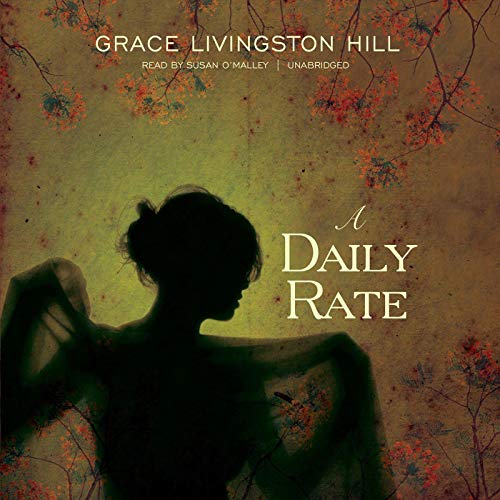
The Search by Grace Livingston Hill

Somehow I never read Grace Livingston Hill, even though her books were very popular with young women when I was in my teens and twenties. I thought of them as clean, sweet romance novels. Though most fiction will include romance, no matter the genre, I prefer novels with more to them.

But recently I finished my audiobook and wouldn’t receive a new credit for my next book til the end of the month. I scrolled through Audible’s selections that are included free with membership. I found a couple of Hill’s books there, so decided to give them a try.

The first was titled The Search. Ruth Macdonald is a society girl whose life consists of parties and outings with friends. When WWI starts, Ruth helps in ways that ladies of her class did: making bandages, knitting socks and sweaters for soldiers. etc. Some of her male friends became officers. But the magnitude and meaning of the war didn’t really sink in until she accidentally came upon a group of people seeing draftees off. There Ruth saw an old classmate, John Cameron, who was not of her “set,” but who had done her a kindness when they were children. Ruth is struck by his tender good-bye to his weeping mother and his brave, resolute face. Their eyes met for a brief moment.

Ruth decides to write to John as a friend to tell him she still remembered what he did for her so long ago and to express her appreciation for his part as a soldier. She writes that she hadn’t really thought of the sacrifice young men were making until she saw him.

John is touched by Ruth’s letter, and they begin corresponding regularly. When John gets leave to come home, he asks to visit Ruth.

But then he learns that an old enemy plans to marry Ruth. Could Ruth really love someone like that?

Then this old enemy becomes an officer in John’s company and makes his life miserable.

As John knows he must be prepared for death when his company leaves for France, he tries to search for God. His home minister is not much help. But someone he meets on base gives him a New Testament, and various contacts along the way shed light. But somehow he still doesn’t comprehend.

He tells Ruth about his search, and she realizes that, even though she has been in church all her life and been a “good” girl, she doesn’t really know God either. She embarks on a search of her own.

Hill’s style and tone seemed very similar to Louisa May Alcott and D. E. Stevenson, though Hill is more overtly Christian. Hill’s lifetime was between the other two ladies, overlapping them each by a few decades.

I enjoyed the story quite a lot and wished I had read them in my younger years.

A Kindle version of the book is currently available for 99 cents.

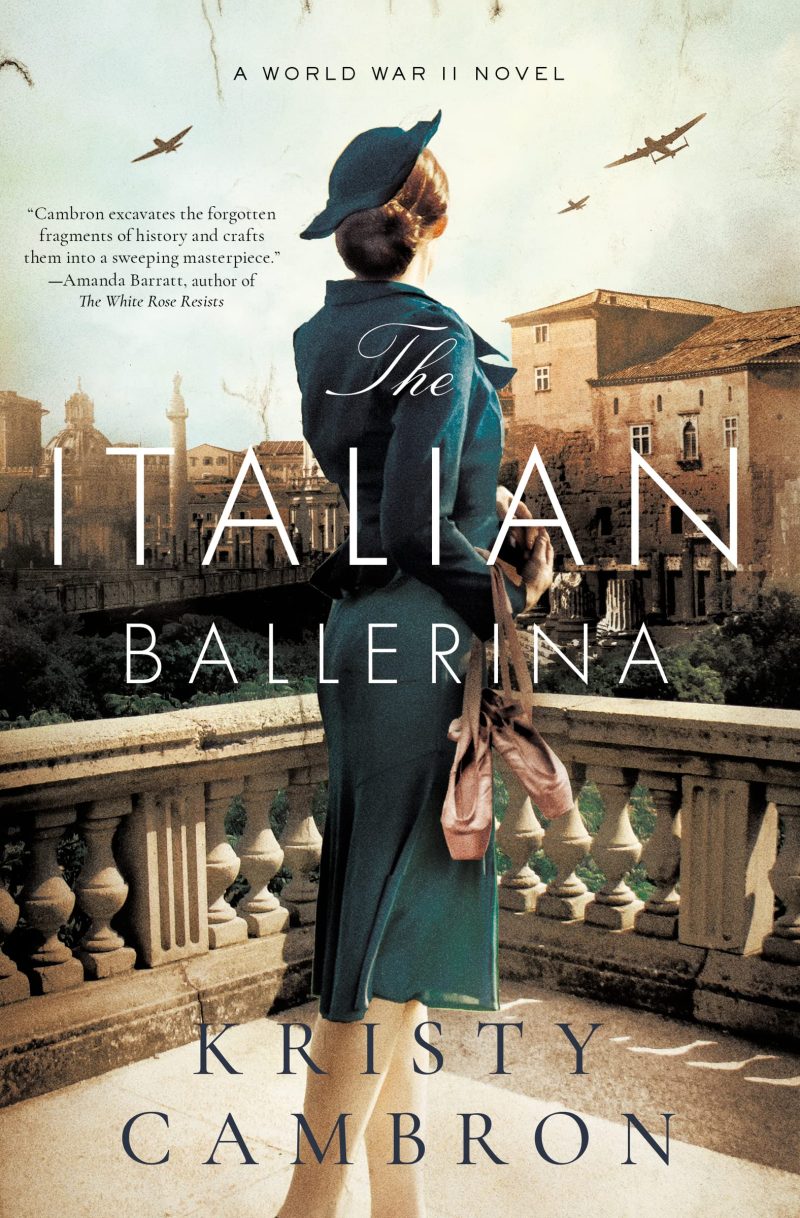
The Italian Ballerina

The Italian Ballerina by Kristy Cambron is one of those books that makes you want to put everything aside and just read.

Delaney Coleman has just returned home to help her parents after the death of her grandfather. She learns that they’ve received notices from a family in Italy saying they have a claim to something of her grandfather’s. Delaney’s mom has ignored the messages, but Delaney looks into the claim.

She speaks to Matteo, who says that Delaney’s grandfather owned a small ivory suitcase printed with cherries on the outside. He claims that the suitcase belongs to his grandmother, and she’d like to have it back. His family offers to fly Delaney and the suitcase to Rome.

Intrigued and confused, and as a writer “between pens,” as she puts it, Delaney decides to accept the offer. In Rome, Delaney meets Calla, Matteo’s grandmother. Calla can’t speak English, but she gazes at Delaney and says, “Salvatore.” Delaney and Matteo work together to learn the connection between their grandparents.

Scenes switch back to Delaney’s grandfather’s time before and during WWII. Court Coleman had gotten himself into trouble and pushed away Penelope, the girl he loved. Roped into helping Penn’s father at their orchard in order to pay off his debts, Court begins to settle down and wonder if he might have a chance with Penn again. But then America enters WWII, and Court is sent to Italy as a medic.

One day as his unit is on a reconnaissance mission, Court and his commanding officer, AJ, are stranded while a Nazi troupe is rounding up Jews. They are horrified to watch the Nazis shoot a couple in cold blood and leave their daughter in the streets. Against orders, Court rescues the girl and is injured in the process.

He wakes up in an Italian hospital. He finds that he is in a quarantine ward, where a mysterious, deadly illness called Syndrome K is running rampant.

Except—Syndrome K is a made-up illness, created to keep the Nazis away from the ward while the doctors and Catholic priests who own the hospital hide and send out Jews.

A British ballerina named Julia and her partner are stranded at the hospital as well while he heals from a gunshot wound in his leg. She helps Court and A. J. and the little girl with them, as well as the doctors in the ward.

Unfortunately, the audiobook I listened to did not include the author’s information about what parts of the story were true, and our library system didn’t have a copy.. But the part about Syndrome K was real, as detailed here.

There are many strands nicely woven together in this novel, many developing relationships, and the unfolding mystery of the connection between Matteo’s and Delaney’s grandparents. The Amazon description says, “Based on true accounts of the invented Syndrome K sickness, The Italian Ballerina journeys from the Allied storming of the beaches at Salerno to the London ballet stage and the war-torn streets of World War II Rome, exploring the sometimes heart-wrenching choices we must make to find faith and forgiveness, and how saving a single life can impact countless others.”

I’ve gotten used to time-slip novels that go back and forth between history and present day. Kristy has written a few with three timelines. The only problem was that the scenes flashing back to Court’s earlier life weren’t in chronological order. The first scenes were in Italy during WWII–then there’s a scene at Penn’s family’s orchard before the war. The same thing happens with Julia’s timeline. The format made it a little confusing and jarring, although it only took a sentence or two to get reoriented. I had to train myself to listen for the date and location listed at the beginning of each chapter, which is a little harder to do with an audiobook.

But other than that, I loved everything about this book. I wanted to race to see what happened, yet didn’t want it to end.

I listened to the audiobook, wonderfully read by Barrie Kreinik.

The Hatmaker’s Heart

In The Hatmaker’s Heart by Carla Stewart, Nell Marchwold is an apprentice designer at Oscar Fields Millinery in 1920 New York City. Nell loves to make hats that frame a woman’s face and bring out her best features.

But Nell speaks with a lisp when she’s flustered, so Mr. Fields has kept her in the background—until one of his best clients falls in love with Nell’s designs. The prestigious Mrs. Benchley wants to commission Nell to make hats for herself and her two daughters for an upcoming event.

Then another well-known designer wants to use Nell’s talents for a show he is putting together.

Mr. Fields allows Nell to work on these other projects, but under the auspices of his shop. He’s two-faced, promoting her in public but treating her like dirt in private.

When Nell and Mr. Fields have an opportunity to go to London, Nell seeks a chance to visit her grandmother and a childhood friend, Quentin. Nell realizes she loves Quentin, but he seems to have moved on. And Mr. Fields is not giving her much time to spend with other people.

It’s hard to imagine that Nell just keeps taking what Mr. Fields is dishing out. But then, she’s young and naive. A big part of her character development is becoming her own person, deciding what she truly wants, and developing the backbone to stand up for it. Nell’s grandmother’s counsel reminds her to seek the Lord and walk with Him.

The book’s setting was interesting with the details about hatmaking. I had done just a tiny bit of that when working for a florist friend part time years ago, but we mostly just decorated hat forms. We didn’t make them from scratch like they did in the 1920s. And I never would have suspected that hat designs could be such a cutthroat business. But I guess they were a big enough fashion item in the day for designers to compete for their sales and designs.

A friend recommended a counselor to Nell to deal with her stammer. I wondered if his methods were true to the times–concluding that the stammer was related to a childhood trauma, having Nell remember specific incidents and draw pictures of them.

Quentin didn’t seem terribly well developed as a character. Since he and Nell were apart for most of the book, we really didn’t get a feel for any chemistry between them. Plus he seemed to have abrupt changes of heart in a couple of places.

So, I have mixed responses to the book. But overall it’s a good story.

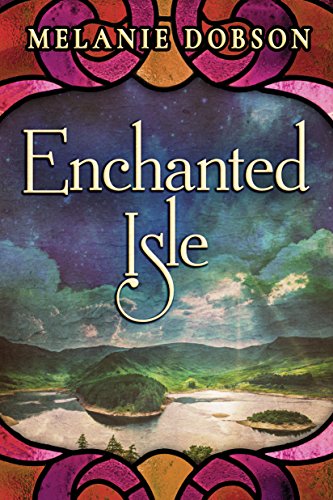
Enchanted Isle

In Enchanted Isle by Melanie Dobson, it’s 1958 and Jenny Winter doesn’t know what to do with herself. She dropped out of college because she wasn’t doing well in any subject. Her grandfather has someone from his company lined up for her to marry, but Jenny’s not sure that’s what she wants.

Her mother encourages Jenny to go to the Lake District in England for a couple of months. Jenny’s mom, Liz, had visited the area some twenty years earlier and had a friend who would be willing to let Jenny stay with her.

So Jenny flew to Lakeland. Though she wasn’t academic, she saw life through pictures and had a vivid imagination, Her mom had purchased a camera for Jenny’s upcoming 21st birthday, and Jenny is eager to try it out on the beautiful lakes and fells.

One place Jenny especially wants to visit is a theme park called the Enchanted Isle. Liz thinks it’s probably closed now, but Jenny wants to try to get in, just to see it and take pictures.

She finds that the park was indeed closed down, but not due to its age. An unsolved murder occurred there twenty years earlier. And the nice young man she just met, Adrian, has had a shadow hanging over his family because of it. His father had built the park with his business partner. But the business partner disappeared, and everyone thinks Adrian’s father killed him.

Jenny’s mother’s friend warns Jenny to stay away from Adrian, not only for his family’s history but for his own mistakes. But as Jenny gets to know him, she thinks he has been misjudged.

As Jenny uncovers the theme park’s history, she and Adrian discover that not everyone wants the park’s secrets revealed. And Jenny finds that even her mother didn’t tell her everything about her visit to Lakeland.

Another book I read recently mention the Lake District, so it was fun to find out more about the area.

The faith element of the story was natural and not preachy.

This was a sweet story, despite the murder mystery part of it. That part was handled well and with suspense. But I liked even better the themes of finding your own place in the world despite others’ expectations and not judging others, but getting to know their story.

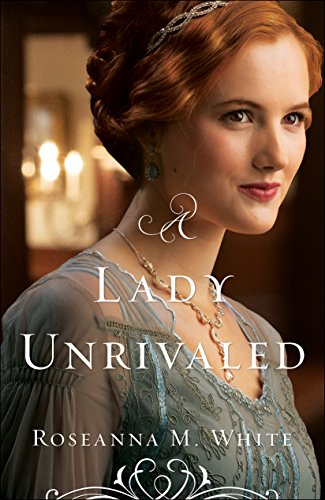
A Lady Unrivaled

In A Lady Unrivaled by Roseanna M. White, Lady Ella Myerston is quick to laugh and always sees the bright side of life. But danger has come to her brother and sister-in-law and their friends. Ella is determined to help, even as the others want to shelter her and keep her from danger.

Lord Cayton, the cousin of one of the Myerston’s friends, had been a cad in his youth. He had led one woman on but then married another for her fortune. Then his wife died in childbirth, leaving him with a beloved baby daughter, Addie. Regret over his past and a desire to do the best for his daughter lead him to Bible study with his cousin, Lord Stafford. Cayton becomes a changed man, but he has trouble convincing everyone except Stafford. And he doesn’t trust himself, doesn’t feel he deserves another chance at love after breaking the hearts of two women.

Now some past associates have come back to lure him into their scheme–the very scheme that threatens Ella’s family, and now her.

The merry Lady Ella and the moody Lord Cayton become unlikely allies in the effort to remove this threat once and for all. They are surprised both by unsuspected betrayals and unforeseen friendships.

In a secondary plot line, Kira Belova is a “kept woman,” a Russian ballerina who became the mistress of a wealthy mogul, Andrei Varennikov. She feels secure, until Andrei announces his plans to marry a princess. He sends Kira to England in disguise as a maid to get information about some missing diamonds. She and her mistress end up guests in Cayton’s home. Kira begins to question her life and choices and must decide whom to trust and whom to help.

This book is the third and last of the Ladies of the Manor series. The author deftly combines suspense, intrigue, humor, faith, and sweetness. This book was a satisfying end to the series and a reminder that we all need to receive and extend grace.

The Reluctant Duchess

The Reluctant Duchess is the second in Roseanna M. White’s Ladies of the Manor series.

Brice Myerston, the duke of Nottingham, was a side character in the series’ first book, The Lost Heiress. He was one of England’s most sought-after eligible bachelors, which he handled by being a notorious flirt to fend off serious advances from young ladies and their mothers. But he also had a close walk with God and uncanny sense of the right thing to do.

He finds himself in a knotty dilemma, though. His family has made their annual visit to Scotland to visit his mother’s family home not long after the death of his father. There, the Scottish laird, who has no use for Englishmen and has avoided the Myerstons all this time, asks the family to dinner. While there, the earl of Lochaber tries to set a trap for Brice to wed the earl’s daughter, Rowena. Brice steadfastly refuses at first. But then he realizes this is no title-seeking or money-grubbing ploy. Rowena is in serious trouble. Brice feels the Lord’s direction to protect her, and the only way to do that seems to be to marry her and take her back to England.

Rowena’s father has become harsh and distant since the death of her mother. Her fiance, Malcolm Kinnaird, seemed loving and kind at first. But his true colors came out when he forced himself on Rowena and became as controlling and as harsh as her father. Rowena hates that her father has set a trap for Brice, but she accepts his offer as the only way to escape.

But Rowena trembles at the thought of being a duchess in English society. And her fears come true when no one accepts her except Brice’s family and two of his closest friends. Rowena has been beaten down mentally and physically and has no confidence. She recoils from Brice physically and emotionally.

In addition to trying to discern how to help his new wife, Brice has another problem on his hands. He had offered to take and hide the rare treasure that had caused his friends, the Staffords, so much trouble (in the first book). But, though the main troublemaker had been killed, other dangerous pursuers are not giving up. And one of them is trying to entice Rowena into a false friendship.

This book had a bit of a rough start for me, with Rowena facing off against Malcolm, the knowledge that He had abused her, and a lot of yelling. In The Lost Heiress, even the villains had an air of gentility. In this book, even the Scottish nobility were quite rough around the edges.

But once I got into the story, I enjoyed it. Brice and Rowena had much to learn to trust each other, and each made many mistakes along the way.

The whole hidden treasures story line was as intriguing as any suspense novel. Besides the enemies Brice knows of, he discovers new unseen ones.

I think this could be read as a stand-alone story, but it’s a much richer experience to read both of them.

I listened to the audiobook, wonderfully read by Liz Pearce. I thought she did a great job with the different accents, which added a lot to the story.

As always, Roseanna did not write a fluff piece with this novel. She leads her characters to an understanding of their need and God’s abundant grace in an organic and not a preachy way.

The Lost Heiress

In The Lost Heiress by Roseanna M. White, set in the Edwardian era, Brook Eden grew up as the ward of Prince Grimaldi in Monaco. But the circumstances of her real family are a mystery. When Brook was a young child, she and her mother were in a carriage accident. An opera singer came to their aid, and Brook’s mother asked the woman to take Brook, a packet of letters, and her necklace before she died.

Brook friend, Justin, thinks he has discovered her real family and makes the arrangement for Brook to meet them in Yorkshire, England. Brook’s father, Lord Whitby, and his sister know right away Brook is his lost daughter. It takes the rest of the family and the servants longer to accept her.

This happened fairly early in the story, leaving me to wonder where the conflict was going to come into the plot.

Well, there’s plenty of conflict. A distant cousin, Lord Pratt, is a predator who sets his sights on Brook as the heiress of the Whitby estate. He bribes a servant to spy on Brook and bring him information. Justin’s father dies, leaving him as the new Duke of Stafford. His responsibilities necessitate his traveling to his family’s holdings in other countries, leaving Brook vulnerable to Pratt’s machinations. Justin begins to feel more for Brook than friendship but doesn’t want to seem like he is only interested now that she is an heiress. He decides to wait. But when he returns, he and Brook clash instead of resuming their easy friendship. Unbeknownst to either of them, someone has been preventing their letters from reaching each other. Other suitors appear to have made inroads into Brook’s affections. And no one realizes the danger Brook is in from a possession she doesn’t even know she has until a near-fatal attack and a stunning betrayal opens their eyes.

Several of the main characters are Christians and learn to deal with broken dreams, new and uncomfortable circumstances, trust in God when He doesn’t seem to be near, and finding forgiveness.

In the author’s notes, Roseanna said she wrote the first version of this story when she was twelve, finishing it at thirteen! After nineteen years, nine books, and many rewrites, it was finally published as the first in the Ladies of the Manor series.

A story about a lost heiress finding her true home might seem like a fluff read. But I have found no fluff in Roseanna’s books. She brings so much depth into her characters’ personalities and struggle. I enjoyed this book very much and have already started the sequel.

To Treasure an Heiress

In Roseanna M. White’s novel, To Treasure an Heiress, Beth Tremayne loved exploration and adventure. She lived in the Isles of Scilly in the early 1900s and traveled to all of them in her sloop. She found some old letters and a map in her grandfather’s house that indicated a legendary pirate king had lived on her island, Tresco, and had left a fortune somewhere in the vicinity. That was fuel to Beth’s adventure-loving heart.

Beth had a trinket box, given to her by her mother, which had King Rupert’s seal on the top. Beth sent the box to the father of her friend at finishing school who was an expert in antiquities. Her friend’s father, Lord Scofield, authenticated the box—but then sold it! Worse yet, both Lord Scofield and his buyer, Lord Sheridan, were intrigued by the thought that more items connected to King Rupert might be on the islands. Scofield was interested mainly in the purported treasure, but Sheridan was a descendant of Rupert and interested in artifacts.

Worst of all, Sheridan had actually come to Tresco. Beth’s efforts to shield her family from the repercussions of her search had failed miserably. Her grandmother urged her to forgive and to work together with the family, and even Sheridan, to find Rupert’s treasure. But Scofield is looking as well and isn’t above using less than honorable means.

A secondary story line involves Beth’s former governess, Senara, who had been dismissed from her most recent job due to indiscretions. Senara had fallen in love with a man who had misled her, and now she feels tarnished and ashamed. A new friend helps her see that with God’s forgiveness, she can be forgiven and made new.

He makes us with great worth. Creates us that way intrinsically. Our sins, our bad choices, perhaps they coat us like mud. But the mud cannot take away the value He instilled in us. Mud does not make a pearl any less valuable. If it did, they why would Jesus have deemed us worthy of the sacrifice of His life? Because He loves us, as does the Father. Because we are valuable. And the blood of Christ, when it washes us clean, fully restores us to what He created us to be. A pearl cannot be stained. No matter how many centuries it sits in mud, wash it in a bit of water and it’s gleaming again.

This book is a sequel to The Nature of a Lady, which I enjoyed last year. I think this book could be read alone, but it’s richer together with the first. I normally wouldn’t be attracted to a book about chasing pirate treasure, but I have loved everything I have read of Roseanna’s. She manages to bring out deeper levels of meaning for her characters. Parts of the story are touching and sweet; some are even funny.

I didn’t like Lord Sheridan at all in the first book, and when this one hinted at a romance between him and Beth, I didn’t think it would work. But he grew on me in this story.

I found the resolution just a bit anti-climactic. But all in all, I found this a lovely story.

I listened to the audiobook, nicely read by Liz Pearce.

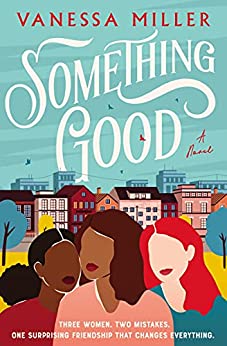
Something Good

The tagline for Vanessa Miller’s novel, Something Good, is “Three Women. Two Mistakes. One Surprising Friendship That Changes Everything.”

Alexis Marshall seemingly has it all: a good husband, family, home, and a generous source of income. She appreciates her husband’s rescuing her from an unstable home life. But it’s a strain living up to his standard of perfectionism.

Then the unthinkable happens. While fumbling to respond to a text while driving, Alexis loses control. The resulting accident leaves a young man paralyzed.

Alexis is consumed with guilt and wants to do something to help the young man. But her husband is about to make a lucrative deal selling the tech company he built. If it becomes public that Alexis caused an accident, the sale would be in jeopardy.

Marquita Lewis is a mouthy teenager who doesn’t understand why she can’t keep a job. She’s determined not to live in shelters as her mom did. She wants better for her baby son. When she loses her latest job, she decides maybe it’s time to confront the baby’s father.

Trish Robinson’s life was turned upside-down when her son, Jon-Jon, was paralyzed. He was in college on a football scholarship with a good chance of going pro. But that potential bright future is gone now. He is so depressed, he’s not even trying in his physical therapy sessions.

Trish’s husband, Dwayne, is enraged at the woman who caused the accident and feels she should be doing more. Trish thinks they should forgive and forget and move on. She’s doing all she can to help Jon-Jon, and now Dwayne is pressuring her to get a job. But how can she leave Jon-Jon alone when he can’t take care of himself?

Trish prays for something good to come from all their trials. But the answer comes in a surprising way.

It was enjoyable to read of friendships that crossed so many differences–race, economic status, personality. etc. It was difficult and took time, but the characters learned and grew through their interactions.

And it was especially refreshing to see a Christian fiction book that was all-out Christian. I know some stories call for subtlety, but some are so subtle that it’s not clear who the characters have faith in or what kind of faith they have. I’m thankful Vanessa created her characters to express their faith in natural and believable ways. Even though the faith element is clear, it’s not heavy-handed.

A couple of sub-plots deal with mental illness in a couple of the families.

My favorite quote from the book: “Sometimes our greatest tragedies become the greatest gifts we can give back to the world” (p. 298, Kindle version).

I had not heard of Vanessa Miller before seeing this book on a Kindle sale, but I am glad I did. I enjoyed this book quite a lot.

The Paris Dressmaker

The Paris Dressmaker by Kristi Cambron is a tale of two women in WWII Paris.

Lila de Laurent is a dressmaker and budding designer for Chanel. But the salon closed its doors as Nazis took over Paris. Working odd jobs for a while, Lila is surprised by a call from an old friend from Chanel who has become a collaborator with the Germans. She needs a gown for a party and knows Lila’s style. At first Lila is repulsed, but then decides this opportunity affords her the chance to pick up information for La Resistance.

As Lila flees from danger one night, she runs into the man she once loved, whom she thought was dead. But whose side is he on now? Can she trust him with her secrets?

Sandrine Paquet’s husband is a French soldier, and she lives with her son and mother-in-law. The place where she works is taken over by the Nazis, who demand that the employees catalog and crate art work the Nazis have stolen from French Jews. The German captain, von Hiller, has taken an interest in her. To refuse his attention outright would be fatal, but she takes pains to be cooperative while keeping him at a distance so things don’t get too personal. Neighbors misunderstand, however, and accuse her of being a collaborator. What they don’t know is that she and her boss are working for La Resistance as well, right under the Nazi’s noses. Though their shop doesn’t deal with textiles, one of the items that came to them was a beautiful blush Chanel gown. In a few moments alone, Sandrine searches the gown and finds a cryptic note initialed LDL sewn in the hemline.

Kristy Cambron is one of the best storytellers around. She weaves historic and personal details into the lives of these two women with suspense, pathos, and a touch of humor. The faith element is subtle but vital.

I miss the days of linear stories that start at the beginning and unfold until the end. But that’s not the fashion these days. The scenes alternate between the two women at different times in their lives, before and during the war. It was a little hard to keep up with at first until I learned to pay attention to the dates at the beginning of each chapter.

The author’s afterword shares which elements were historical and which were fiction, something I love to see in historical novels.

The Kindle version of this book is free with Amazon prime membership at the moment, and I got the audiobook at a 2-books-for-one-credit sale. With the Whispersync function, it was nice to delve into whichever one worked best for me in a given situation and pick up where I left off in the other.

Kristy has written another winner, in my opinion.