Out of the Shadows

In Sigmund Brouwer’s Out of the Shadows, Nick Barrett’s life has been shaped by two abandonments. His mother left with his trust fund before his tenth birthday, and there had been no word from her since. And as an adult, his wife of four days betrayed him.

Nick’s mother had been a waitress when a war hero from one of Charleston’s elite families saw her and fell in love. They married, but Nick and his mother were considered outsiders, especially after his father died. When his mother left, he was begrudgingly taken in by his father’s relatives. But he was still always on the outside. Just four days after he married the girl he loved, an accident cost him his leg, his marriage, and his Charleston residency. He signed an agreement to leave and never return.

Nick has been away from his native Charleston, SC, for fifteen years. He’s bitter against his mother, his relatives, and God. But a mysterious unsigned note has brought him back, promising information about his mother. Looking not only for information, but also revenge, Nick is led through a winding path of revelations. But what will they cost him in the end?

In defense of the stubbornness of my soul’s early flight from God, there were all the events before I left Charleston—events that seemed totally bereft of the touch of a God of love. God, however, as I was about to discover, is a patient hunter. I can now examine my years of exile and see earmarked on the pages of my personal history the times he beckoned, times that I resolutely turned aside to my own path. I imagine that in a way, I was like Jonah, determined to head in the opposite direction of God’s calling. For Jonah, the city he desperately wanted to avoid was Nineveh. For me, it was Charleston.

I picked up this book on a Kindle sale partly because I love Charleston and partly because I had read something of Brouwer’s in the past. I remembered enjoying it, though I couldn’t remember what it was.

This book was fascinating. There were several jaw-dropping surprises or twists, but not too many to seem realistic. I love the Charleston history and setting. I loved the irony of the Old South incongruity of using the most polite language while doing the most awful things. A couple of my favorite characters were a gossipy pair of elderly twin antique owners.

I didn’t know at first that this book was the beginning of a series. But now I look forward to reading the rest.

(Sharing with Carole’s Books You Loved)

The Summer Kitchen

The Summer Kitchen by Lisa Wingate opens with SandraKaye Darden meeting a realtor at her Uncle Poppy’s house. Poppy had been tragically killed in a robbery just a few months before. The police had no new leads in his case. It was time to sell the house and move on.

The house was old and had not been well-kept due to Poppy’s advanced age. But SandraKaye can’t quite let it go yet. This house was a safe haven for her as a child when her mother’s mood swings and substance abuse were too much to bear. Though it doesn’t really make sense, Sandra decides to paint the kitchen cabinets. But she doesn’t tell her family or her pushy best friend.

Though outwardly Sandra looks affluent, she feels her world is crumbling. Her husband, a successful doctor, is rarely home. Neither is her youngest son, Christopher, who is struggling but won’t open up to her. And her oldest son, Jake, fled after Poppy’s funeral. Jake blamed himself: if Jake had been with Poppy, as he usually was that time of the week, perhaps Poppy would still be alive now. Jake’s car was found at the airport, and they suspect he went back to his native Guatemala, from which he had been adopted as a young boy.

As Sandra works in Poppy’s house, some of the neighborhood faces become familiar. The pre-teen wanna-be thugs who roam the streets. The disabled elderly lady. The kids who run around unsupervised. The family of Hispanic people across the street. And the teen girl who looks 13 going on 30.

The teen girl, Cass, lives with her brother, Rusty. Their mother died, and they didn’t want to live with “creepy Roger,” their mother’s boyfriend. So they ran away. Rusty, age 17, finds work to support them, and Cass tries to make ends meet in their cheap apartment. They lie about their ages so that social services won’t find and separate them.

One day when SandraKaye chases some young children from the dumpster, she realizes they were probably scavenging for food. She decides to bring peanut butter sandwiches the next day. That starts a regular routine. Cass begins helping, mainly in order to have access to those sandwiches. The two women form a relationship that changes both their lives.

I picked this book up on a two-for-one audiobook sale because I loved Wingate’s Carolina Chronicles series so much. This book, however, started extremely slowly. Then a crude reference and a bad word caused me to set it aside and listen to another book instead. I decided to come back to it later, and I am glad I did, because I enjoyed the latter half much more.

The slowness was not just the beginning plot. The narrators also seemed slow. The point of view goes back and forth between Sandra and Cass, and the story is set in Texas. I grew up in TX and don’t recall anyone there speaking as slowly as these narrators. It finally occurred to me to speed up the audiobook to 1.2. That helped a great deal without distorting the voices.

I was very disappointed to see the crude reference and bad word in one of Lisa’s books. I hope this doesn’t become a trend. Both were quite unnecessary. I got from the rest of Lisa’s description that the neighborhood Poppy and Cass lived in was seedy. There was no need to throw those elements in for realism or grit.

But I did appreciate SandraKaye’s realization that she didn’t have to retreat into a shell. It was good to see her world opening up to see the needs of others, not just as statistics, but as real people.

I especially liked how Sandra went from asking herself “Aren’t there programs to help these people?” to doing what she could personally.

I was also very satisfied with how the story ended. There were a couple of ways it might have that would have been nice but implausible. I think Lisa ended it the best way possible to be both realistic and gratifying.

(Sharing with Carole’s Books You Loved)

Three Shall Be One

Francena Arnold was one of the first—if not the first—writers of Christian fiction. Her first book, Not My Will, was published in 1946 and became a classic. I read it at least twice and its sequel once. I wasn’t aware (or had forgotten) she had written other books until I saw her Three Shall Be One on a Kindle sale.

In this story, Linda and Tony are a young couple with two little ones. They don’t have much, but they’re happy—at least until Tony’s controlling mother comes for an extended visit and moves them into a nice place with better furniture.

Linda is furious, not only at her mother-in-law, but at her husband for not standing up to her. But Tony has learned through long years of experience that he never wins with his mother, and it’s easiest just to let her have her way.

Linda learns to be quiet for the most part when her mother-in-law is there, despite constant criticism. Occasionally Linda will let slip a sarcastic remark, exasperating Tony.

When Tony’s mother leaves, he and Linda have it out. Tony had thought couples argued when they no longer loved each other, and he is “troubled by the realization that ugly quarrels could come even when they loved.” But after a day apart, they regret their harsh words and make up.

Both Tony and Linda had rejected religion of any kind as a sign of weakness.

Life goes on much the same—until the next mother-in-law visit. An incident then sets off a chain of events none of them could have anticipated.

There are a couple of implausible plot twists in the book that take away from the story, but I can’t go into them here without revealing too much. And this book suffers from the same problem a lot of early Christian fiction had: the main character(s) come to a crisis which leads to their salvation, and then all their problems are solved. Of course, problems don’t go away when we become Christians, though at that point we do have His grace and help and wisdom for them.

If you can look past those issues, though, the book is a sweet, old-fashioned story. I liked that the book didn’t end with Linda’s salvation and showed some of her growth afterward. Also, Linda’s friends’ care for her was a great example. The author shows good understanding of the psychological factors involved in the couple’s troubles.

I looked at Amazon to see what other books they had by Francena Arnold. The Kindle versions of some of them are 99 cents as of this writing, including this title. I’m glad to see someone made them available for the Kindle app, though they are still available in paperback as well.

Have you read Francena Arnold? What did you think of her books?

(Sharing with Carole’s Books You Loved)

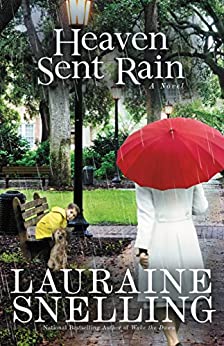
Heaven Sent Rain

In the novel Heaven Sent Rain by Lauraine Snelling, Dinah Taylor is a scientist who started her own company of food supplements to improve health. Her job, her life, her all-white condo and wardrobe are perfectly ordered.

One day at her usual breakfast stop, she sees a small boy and his dog sitting out in front. They look shabby, but not dirty. Dinah offers to buy the boy, Jonah, breakfast, and he accepts. Then he’s at the same place the next day, and then every day thereafter. Dinah tries to find out his background, imagining everything from a drug-infested home to neglect. But Jonah evades her questions.

Then in the middle of one night, Dinah receives a frantic phone call. Jonah’s dog is badly injured. Can she help?

Dinah isn’t sure what she’s getting into, but she can’t refuse. Searching for an emergency vet clinic open that time of night, she takes Jonah and his dog in. They are met by veterinarian Garret Miller, who seems warm and kind toward Jonah and the dog, but icy toward Dinah.

As Dinah continues to help Jonah, she gets in over her head. As she, Jonah, and Garret interact, their lives change.

Most of the other books I’ve read by Lauraine were historical fiction about Norwegian immigrants. I didn’t think I had read any of her contemporary fiction, but then remembered I had read Someday Home a couple of years ago.

I loved the way Dinah’s story unfolded, with the author revealing just a bit at a time until the whole picture came into view. Garret is an enjoyable character, too, after getting past his initial standoffishness, which is explained later.

Dinah is not a Christian, having rejected her parents’ teaching and beliefs. The details of that situation are gradually revealed, too. Garret and Jonah are both believers, as is Dinah’s receptionist. But the faith element felt very natural and not forced.

I thought the ending wrapped up a bit too quickly, and I had a theological quibble with one sentence. But overall I really enjoyed the book.

(Sharing with Carole’s Books You Loved)

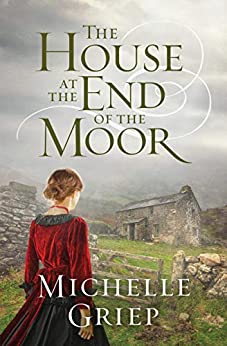
Review and Giveaway: The House at the End of the Moor

Michelle Griep’s novel, The House at the End of the Moor, is set in England in 1861.

A woman known as Mrs. Dossett lives at the title house with only a sheepdog, mute maid, and a manservant. It’s obvious she’s in hiding, but we don’t know from whom at first.

So when she finds a severely wounded unconscious man on her property, she’s torn. It can only mean trouble to bring him home. But she can’t leave him to the elements.

As the man, Oliver, heals and his head becomes clearer he and the woman are wary of each other. He’d like to leave, but he’s too injured.

Just as the two are beginning to trust each other, Oliver opens the door to a room where a beautiful gown is displayed along with a gorgeous red jeweled necklace–the very necklace he was falsely accused of stealing and for which he was thrown in prison.

The mystery of who each of the characters are, where the jewels are from, and what the characters decide to do all make for an interesting read. The faith element is naturally woven into the characters’ makeup and thinking.

A secondary character, Barrow, is the constable seeking Oliver since his escape from prison. Barrow is similar to Javert in Les Miserables but is much more cruel. His motivation is seeking justice for righteousness’s sake. But he has to learn what justice truly is and who is supposed to mete it out.

Somehow I ended up with both a Kindle and paperback version of this book. So I’d love to give away the physical copy to one of you. I can only offer it to someone in the US due to mailing costs. If you’d like to enter the drawing for this book, just leave a comment on this post before Wednesday, June 30. I’ll draw a name then from among the entries. I’ll count all comments on this post as entries unless you mention that you’re not interested in winning the book. Also, I must have a way to contact you to let you know you have won. If I don’t hear back from the winner within a couple of days, I’ll draw another name. Best wishes to each of you!

(Update: I originally scheduled the contest to end Saturday, but decided to extend it to Wed., June 30.)

The giveaway is now closed. The winner is Paula! Congratulations!

(I often link up with some of these bloggers)

Two Short Fiction Reviews

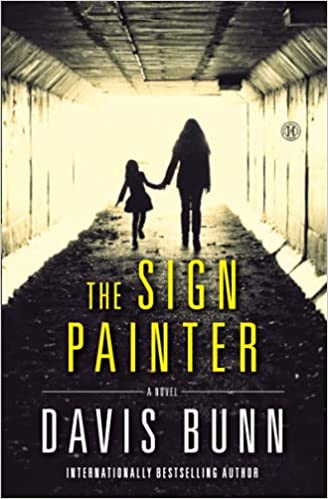
In The Sign Painter by Davis Bunn, Amy Dowell has fallen on hard times. Her husband died and she lost her home. Now she travels in a camper with her young daughter. After charges of vagrancy and the threat of having her daughter taken away, she has a lead on a job painting signs for a car dealership. She comes across a church with an extensive ministry to the homeless, including temporary housing.

Just as things are looking up, she faces a dilemma. While working after closing hours one night, she discovers a salesman has left a significant amount of cash on his desk. If she leaves it, someone could steal it. But if she takes it to keep it safe, would she be accused of stealing? Would her record make her seem all the more guilty?

Meanwhile, ex-policeman Paul Travers has been hired to help the church find the best way to deal with a nearby house overtaken by drug dealers. Some of the church folks are already wary of the kinds of people the homeless ministry brings in. Having drug dealers in the neighborhood might push them into closing down the whole ministry.

I’m used to a more exotic locale in Bunn’s books, so it was interesting to read a novel of his set in the US. I appreciated what he said in a interview at the end of the book. The story was inspired by a news item he saw about homelessness in Orlando. He wanted to show the hardships, but not stop there. “I wanted to focus on the rebuilding. To my mind, too much attention is given to the falling down, and not enough to the getting back up again. So The Sign Painter aims toward hope and healing—a new future for homeless families, but also a reminder about the help our communities may be able to offer.”

The story took a little different turn from what I expected. I enjoyed getting to know Amy and Paul. I appreciated the glimpse into the challenges of those who are homeless and those who want to help.

In Saving Alice by David Lewis, Stephen Whittaker had been in love with Alice in high school. When a car accident takes Alice’s life, Stephen and Alice’s best friend, Donna, comfort each other and eventually marry. They have a daughter named after Alice, Alycia, with whom Stephen has a special bond. But all these years later, Stephen still has nightmares about Alice’s accident.

Stephen is a stockbroker who nearly drove his company bankrupt with a bad deal. They avoided bankruptcy and are slowly making their way back.

But when Alycia turns twelve she wants to know more about her parents’ friend, Alice. When her relentless questions finally bring out the truth that her father loved Alice first, Alycia loses respect for him.

Stephen’s bad decisions and cluelessness lead to Donna’s leaving him. But just as things begin to look up in his job and his relationship with Alycia, everything comes crashing down.

I enjoyed the father-daughter banter, and some of the scenes were very well-done and drew out my emotions. However, a plot device in the latter part of the book fell flat to me. I can’t go into it without spoiling the story. But it didn’t seem to mesh with the rest of the book and seemed too convenient. I liked the rest of David’s writing well enough that I’d try his other books.

David is the husband of Beverly Lewis, one of the first Amish fiction writers.

Though I reviewed these books together mainly because I read them one after the other, they do have similar themes getting back up and rebuilding after crises.

Daughters of Northern Shores

Daughters of Northern Shores is the sequel to Joanne Bischof’s Sons of Blackbird Mountain (linked to my review).

Picking up in 1894, four years after the first book, youngest Norgaard brother Haakon has fled his family and gone to sea after betraying his family’s trust. He wrote just a brief note to them when he left and has not written since. They don’t have an address for him. He has lived far from the morals he was raised with. One particular woman who was only a good friend makes him wonder if life could be different for him, if he could settle down with a family. But first he must go home and face those he wronged.

Back on Blackbird Mountain in Virginia, Thor and Aven had married and are expecting their first child. Business has gone well since Thor decided to quit making hard cider with his apple orchard produce after his grueling battle with alcoholism. Aven and her sister-in-law make apple pie fillings, applesauce, and other items for the local grocer. But Thor has a nagging pain in his side that is growing stronger. He had watched his father succumb to liver disease after years of alcoholism, so he knows the signs. But he has been sober four years—he thought he staved off affecting his liver.

To add to their troubles, their former neighbors, the Sorrels, cruel former Rebel soldiers and Klansmen, are back for revenge after the Norgaard brothers routed them in the last book. The sheriff has searched for them without success, but the Sorrel men know how to hide. Thor and oldest brother, Jorgan, try to attend to business while keeping their families safe and watching out for a Sorrel ambush.

I loved the first book so much, I was eager to continue on with the Norgaard family. I enjoyed this book just as much. Haakon was not my favorite of the brothers due to his personality and wrong choices in both books. But his desire to come back and apologize to his family starts him on the right path, and I warmed up to him as he slowly learned and changed.

A couple of my favorite quotes:

While words were potent, a man’s caring ran through deeper waters. It dwelled right there in what he was willing to do.

She moved as though wood being forced to bend to wind rushing in.

Both the major and minor characters are so well-drawn, and Joanne weaves together the various threads of the plot so well. Parts of the book were touching; other parts were edge-of-your-seat suspenseful. I also enjoyed the author’s afterword about how this book was not planned at first, and then didn’t go the way she expected. Originally she was going to have Haakon die at the end of the first book. I’m glad God led this way instead. I’m sorry to leave the Norgaards behind.

I listened to this via the audiobook nicely read by Amy Rubinate. I kept forgetting, while reading the first book, that Aven was Irish rather than Norwegian. So Amy’s adding an Irish lilt to Aven’s voice was pleasant in itself, plus a reminder of her heritage. Then, since audiobooks don’t usually contain the back matter of a book, I got the library edition to read Joanne’s comments about the story.

. (I often link up with some of these bloggers)

Sons of Blackbird Mountain

In Joanne Bischof’s novel, Sons of Blackbird Mountain, Aven Norgaard is newly widowed in 1890 Norway. She had long corresponded with her husband’s aunt in Virginia, who now invited her to come help keep house for “the boys,” Aven’s husband’s cousins.

But when Aven crosses the sea and arrives on Blackbird Mountain, she finds that Aunt Dorothe has died and “the boys” are grown men.

The three Norgaard brothers invite her to stay. Aven has no other prospects, so she does.

The oldest brother, Jorgan is steady and wise and soon to be married. The youngest, Haakon, is energetic and mischievous. The middle brother, Thor, is deaf. He’s also addicted to the alcohol the brothers produce with their apple orchard. His last attempt to wean himself off the hard cider ended in disaster. But he is kind and considerate.

Thor and Haakon both find themselves attracted to Aven. She had not come thinking about getting married again, she doesn’t want to come between the brothers.

There are so many layers to this story. Thor, Haakon, amd Aven each carry their own private pain. Then there are conflicts with their nearest neighbors, the Sorrels, who head up the local Klan and threaten the Norgaards’ longtime housekeeper and the youths they hire to help at harvest. The fact that the Sorrels own the deed to the Norgaard orchard creates extra pressure.

The author includes a brief preface where she explained a bit about ASL (American Sign Language). I had not realized that the deaf don’t sign every part of a sentence. But it makes sense that they’d streamline their words while signing. So when Thor jots a note (since Aven doesn’t know sign language yet), his sentences are mainly subject and verb with no articles, because that’s how he thinks. The author shared in her afterword how she became interested in sign language and the challenges of having a deaf character who can’t express himself in the usual ways.

All of the characters are nicely drawn, but Thor was the most intriguing. I don’t feel I am doing this book justice, but I enjoyed it very much. I had never read Bischof before, but I am eager to read more from her.

(Sharing with Senior Salon, Carole’s Books You Loved, Booknificent)

Book Review: The Invitation

In Nancy Moser’s The Invitation, four ordinary people in different areas of the country receive a mysterious, hand-delivered invitation to come to Haven, Nebraska, on August 1. The invitations didn’t list a host or organization name or any other information except a Bible verse about faith as a mustard seed and a drawing of a mustard plant.

One of the invitees was an ex-governor. The others were a TV news producer, and wife and mother in an unhappy marriage, and a single young aspiring writer. Some are curious, but most are dismissive of the invitation at first. There’s not enough information and it all seems too weird.

But one by one, events occur that convince them to go. And even though some arrive without an invitation—a homeless stowaway, a disgruntled husband, and a thief—they are all expected and planned for.

Some are confronted with issues in their lives—some more than others. Some are nudged to use their gifts and talents in new ways. The faith of all is tested. Lives are changed.

I can’t say much more than that without giving away too much of the story. It doesn’t take long to figure out who the ultimate host is and who the mentors in Haven are. Because the visitors to Haven are confronted to varying degrees,at times the mentors come across as more didactic than we usually see in fiction. But it works because of the nature of the story.

I don’t know if I have ever read a story quite like this. Nancy Moser says in her afterword that she’s never written a story quite like this. But this story was on her heart.

It would be nice in some ways if there was such a place to go (or send people . . . ) where someone could put their finger exactly on what was wrong in your life, tell you what to do about it, and tell you what your next step should be. It doesn’t usually work like that, though. God uses His Word and prayer and the ministry of the church to guide us in less direct ways. But, still, the premise makes for an interesting imaginative tale.

And I love Nancy’s main two takeaways: that God has invited each of us to participate in His work, and He uses people with faith as small as a mustard seed.

(Sharing with Carol’s Books You Loved, Booknificent)

Book Review: In Between

In Jenny B. Jones YA novel, In Between, 16-year-old Katie Parker finds herself a ward of the state when her mother goes to prison. Her father is out of the picture. Just about the time she gets adjusted to a group home, she’s sent to new foster parents in the small town of In Between, Texas.

But Katie doesn’t want a foster home with strangers. Her foster dad is a pastor, of all things. Katie knows next to nothing about churchy ways. Her first plan of action is to make herself as unappealing as possible so James and Millie Scott will send her back to the group home.

Meanwhile, she has multiple misadventures navigating a new school, avoiding friendship with the near-perfect Frances, who has been assigned to help her, making sense of church, and getting into trouble with her foster grandmother, “Mad Maxine.” She suspects her foster parents are hiding some secret sorrow and determines to find out what it is.

Though light and humorous in tone, the book brings out several deep truths without being preachy or didactic. I enjoyed Katie’s outside-looking-in perspective.

Some of my favorite quotes from the book:

My own mother thought variety in your diet meant eating a different Hot Pocket than you did the night before.

I was gonna read my Bible. I’m sure it’s a great book, but I decided I’d just wait for the movie.

Sometimes Christians are like Shakespeare. It’s English, but a totally different version.

I winced at Katie’s reference to God as “the Big G-man,” but she doesn’t know any better.

I don’t normally read YA (Young Adult) books. But the plot attracted me, it was on a Kindle sale, and I had enjoyed a book or two by Jenny B. Jones before. I enjoyed getting to know Katie and thought Jones did a great job telling her story.

This is the first of five books in the Katie Parker Production series.

(Sharing with Booknificent, Carol’s Books You Loved, Booknificent)