Book Review: The Sweetest Thing

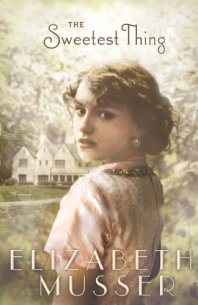
Sweetest ThingIn The Sweetest Thing by Elizabeth Musser, Perri Singleton belongs to a well-to-do family in Atlanta in 1933. She attends a private girls’ high school, goes to parties and dances, has tons of friends and dates, and doesn’t have to worry about much in the world.

Her mother’s best friend, Mrs. Chandler, had invited her niece to live with her and get an education at Perri’s school. The niece, Mary Dobbs Dillard, is about Perri’s age, but her family lives in Chicago and doesn’t have much money. Her father is an evangelist, not a well-paying profession in itself, but the family tends to give much of their resources away to help the poor. Mrs. Chandler thought Mary Dobbs intelligent and wanted to help with her education. So she asks Perri and her mother to accompany her to pick Dobbs (as she prefers to be called) up at the train station. They agree, and Perri is expecting a ragged waif. But Mary Dobbs is gorgeous, yet in an “unorthodox” way that doesn’t fit in with the current styles. She’s also a bit overenthusiastic, talkative, and religious.

Perri’s not particularly impressed, but on that very same day, her world falls apart, and Dobbs ends up becoming her closest friend.

There are so many layers to this book. Friendship, obviously. Differences between rich and poor. Dobbs realizes that she has misjudged wealthy people, and they’re not all selfish – some of them are quite generous, with an eye to helping the poor. And she starts to get used to having enough to eat, beautiful clothes, and little luxuries. Crises of faith for both Perri and Dobbs, in different ways. Life in the South in those times. Figuring out how to live out your faith in a foreign situation. Finding your gifts and your place in life. Family secrets. And even a mystery about stolen items, misplaced blame, threats, and deceit.

I feel like I am not telling you enough about the book, but there is so much I don’t want to give away. Here are just a couple of quotes:

Faith doesn’t work that way. You don’t just believe when you get everything you want. That’s not our choice. We share in the sufferings of others….We bear the burdens together. We take what comes, and we believe. It’s not down here that it will all be equal and okay. It’s later. Here, well, the Lord promised us sometimes we will have hardship and suffering. He also promised He’d never leave us. His presence, His holy presence is with us here. And later, there, that’s when the tears will be wiped away. Later.

I always thought of God like that—providing in the nick of time—believing in Him got me something: a miracle, or at least help. God owed me something. But…it wasn’t working….And finally it hit me. Selfishly, I wanted a formula to fit God into, something that could be explained….It had almost seemed easy – the way He’d provided for us so many times before. But Mother was right. God was past understanding, and He was asking me to trust Him as a good God and Father before I knew there would be [an answer.]

I loved this book and felt right along with the girls and all they were going through. Elizabeth Musser is one of my favorite authors. She says her books are “entertainment with a soul.” They are indeed.

(Sharing with Semicolon‘s Saturday Review of Books, Literary Musing Monday and Carole’s Books You Loved)

Save

Save

Book Review: Love of the Summerfields

Summerfields

Love of the Summerfields by Nancy Moser takes place in England in the 1880s and touches on lives in the manor house, both family and servants, and in the village as well. Some of the characters and their situations are:

Adelaide Weston, the dowager countess of the manor. A strong-willed, take-charge woman, her life turns upside down when an old love comes back into her life.

Frederick and Ruth Weston are the current earl and countess. Frederick is a decent man, but the manor is coming into hard times with more outgo than income. Ruth has become a recluse, both because of feeling intimidated by her mother-in-law and guilt over some of her actions in the past.

Clarissa Weston is their spoiled daughter who has not made a “match” yet, so her father and grandmother make one for her, partly to relieve the financial affairs of the manor.

Jack and Fidelia Hayward are shopkeepers. Jack is a fine, decent, patient man, but Fidelia is a bitter, controlling, unkind gossip. Lila is their daughter, a sweet girl in love with a man out of her reach. To make matters worse, she is pressed into acting as the go-between with this man and his fiancee. The Hayward’s son, Morgan, is in love with Ruth’s maid, Molly, but they have to keep it quiet because a lady’s maid is not supposed to have suitors. When Jack’s father dies, the family takes in his mother.

When a secret threatens to upend the lives of several in both village and manor, good for some but seemingly bad for others, the first instinct of those who uncover it is to keep it concealed. Will they let truth prevail even though it will cost them, or will hiding it bring greater repercussions?

This book is marketed as “If you like Downton Abbey, you’ll enjoy” this book. I don’t know if that’s the best way to present it. It is from the same era with the same strict class rules, and it even has a feisty dowager countess. But all the other characters and storylines are vastly different. So those who don’t want it to be too much like DA might avoid it, and those who want it to be just like DA will be disappointed. But if you like stories like from this time and place and type of people (which is what I think the slogan is actually going for), then you’d probably like this book. From the author’s notes after the book, the story was inspired by her own reading interests and her family history, not DA.

This book is the first in a series of three, and although I enjoyed it, I wasn’t planning on reading the sequels – until I got to the end and then read an except from the next book. Now I want to find out what happens!

(Sharing with Semicolon‘s Saturday Review of Books, Literary Musing Monday and Carole’s Books You Loved)
Save

Save

Book Review: Waiting For Peter

I’m sorry I’ve written about nothing but books so far this week. I’ve been working on another post for some time now but just haven’t had the time and mindset to pull it together this week. I guess book reviews are easier posts, in a way, because I am dealing with definite subject matter, and while I’m sharing my thoughts, it’s different from wrestling through a subject and the Biblical implications and coming to a conclusion. And I just happened to finish several books lately. 🙂

I’m not normally drawn to animal stories. They’re often designed to be heartwarming – and my heart needs warming as much as anyone else’s – but I find myself perversely resistant to stories that I know upfront are going for that effect. Or they’re sad, sometimes while simultaneously being heartwarming. One son shared a quote with me something to the effect that getting a dog is an investment in a small tragedy. Because they live a much shorter time than humans, generally, we’re going to have to deal with their deaths.

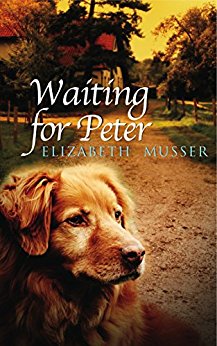
Waiting For PeterSo I don’t think I would normally have picked up the novella Waiting for Peter except that I really like Elizabeth Musser. This is a short book: only 90 pages. And it’s heartwarming and sad. But it’s good.

The story is about a boy named Peter who was in an accident that took the life of his friend and left Peter with severe injuries. He survives with nothing worse than a limp physically, but his confidence is shattered. His whole world has been shaken up and nothing is the same. His parents decide to let him choose a dog to try to help him, and Peter finds one who seems a little sickly and neurotic, but responds to him.

Dog and boy grow up together. They have adventures and Peter learns to extend himself (talking to strangers when not naturally prone to, etc.). Mom has to deal with the messes, chewed up household items, etc., but likes how dog and boy are both developing. When she deals with her own midlife issues – physical changes, aloof daughter, emptying nest – the dog becomes her companion, too.

The back of the book says, in addition to the book being about “the healing power of love between a boy and his dog,” it is also an “allegory of how we should view our relationship with God, our Master.” Those parts were a little more…not didactic, exactly, but more direct, more like one would see in a devotional than in fiction. That’s not characteristic of Musser, but maybe because the book was so short, there wasn’t space to develop it like one would in a novel. Or maybe she meant it exactly like she wrote in order to make the points she made. I’m not criticizing it or saying it’s bad – it’s just different from how she usually writes.

The story is told alternately from the points of view of the mom, Lanie, and the dog…the latter of which could be a little tricky, but it was kind of fun reading Sunny’s “thoughts.”

There is not a forward or afterward, so I don’t know if the story is based on one from the author’s life (although on her author’s page she does mention having a neurotic dog).

Overall, though not my usual cup of tea, I enjoyed it.

(Sharing with Semicolon‘s Saturday Review of Books and Carole’s Books You Loved)

Save

Save

Book Review: If the Shoe Fits

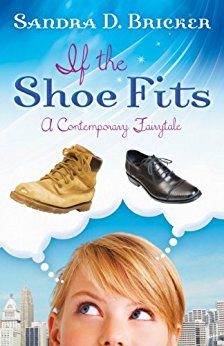
If the shoe fitsI scrolled through the unread books on my Kindle app, looking for something light, and spied If the Shoe Fits: A Contemporary Fairy Tale by Sandra D. Bricker. Perfect! I’ve read a few of Sandra’s books before, and so far they’ve all been lighthearted and funny, yet not purely fluff due to a spiritual undertone.

In this book, Julianne Bartlett just opened a law firm with her lifelong best friend, Will Hanes. But for all her expertise in law, she’s a bit…quirky? scatterbrained? the embodiment of Murphy’s Law? in everyday life. After narrowly missing being part of a multi-car pile-up, she witnesses a devastatingly handsome man rescuing a hurt dog from the road. When she discovers a boot and toolbox fell from his truck before he drove away, she rescues them and takes them as a sign that she’s supposed to find him again. She places an ad and they do meet, but he’s not quite the Prince Charming type. But she’s so focused on her fairy tale ideal that she’s in danger of completely missing the opportunity for a real, true relationship right in front of her.

There are some subplots with an ideal receptionist with a shady past, Julianne’s archenemy rival, Julianne’s mom and Will’s dad, and various cases as well as several bumps along the course of true love not running smooth. But it ends up in a satisfying way. I enjoyed the way Sandra wove in spiritual truth in a natural and not heavy-handed way.

Just a sample of Sandra’s writing:

She couldn’t hold a tune if it were packed up for her in a handy little box, but he sure did love to hear her try.

He waved a mug close enough to Will’s nose to bring him around, like caffeinated smelling salts.

“Apologizing.” Rand spoke the word as if it had been dipped in spoiled milk before crossing his lips.

Romantic comedy is not usually my first choice of genre for reading, but every now and then something light hits the spot. I could easily envision this as a Hallmark movie.

(Sharing with Semicolon‘s Saturday Review of Books and Carole’s Books You Loved)


Save

Save

Save

Book Review: The Ringmaster’s Wife

Ringmaster's WifeKristy Cambron’s The Ringmaster’s Wife is set in the 1920s Jazz Age. Mable Burton came from humble beginnings on a farm in Ohio. She wanted more out of life, so she went to work at the Chicago World’s Fair, carrying with her a cigar box of clippings she had collected to inspire her dreams. She met John Ringling of the Ringling Brothers circus, and eventually they married.

Lady Rosamund Easling was an earl’s daughter whose life was more or less arranged for her without consultation as to her desires. Her parents were arranging and preparing for her engagement and marriage to a man she didn’t love, and worst of all, her father was selling her beloved horse, Ingenue, a gift from her deceased brother. When offered a chance to travel to America, Rosamund took it, eventually becoming the star bareback rider for the circus.

It’s interesting that the two women came from opposite ends of the economic and social spectrum, so to speak, but both were motivated to break out of the life that was expected of them. Mable and John were real people; Rosamund and Colin, the man in charge of everything under John, were fictional. Mable didn’t set out to become rich, but she adapted well to her new lifestyle without letting it go to her head. She and John loved Venice, so when they built their home, Ca’ d’ Zan (House of John), in Florida, Mable oversaw every aspect of it and included a lot of Venetian inspiration. They had grand parties with guests like the mayor and the Ziegfelds. After I read the book, I went back to reread Susanne’s review, and saw a comment there that Kristy had a video of a tour of the house, so I looked and found this. (That’s just the first floor: there is another for the second floor and one for the circus train cars I haven’t watched yet) It was fascinating to see, having just read the book.

In the book, though, Mable was known more for her quiet wisdom. She didn’t “dip her oar” in John’s business, but she extended her influence when she thought it appropriate, like accosting the boy who pickpocketed her husband and, seeing the potential in him, encouraging him to work for the circus (I don’t know if the pickpocket incident was real). Likewise when Rosamund was “just” a beginning performer, Mabel took time to encourage her.

I wondered what inspired Kristy to write about Mable and this era (both her previous books were set in WWII, but this and the next one are set in the Jazz Age). I didn’t find anything on that exactly, but in trying to find that out I did find this interview with her about the book.

There were a lot of behind-the-scenes looks at how a circus works, and a lot of mention of the circus workers as a family. Every family will have its squabbles, though, and there is some dissension among some on a couple of issues. But I think the main thrust of the book is the sacrifice and joy involved in chasing one’s dreams.

My only criticism was that the back-and-forth timelines got a little confusing at times, even though the date is at the beginning of every chapter.

My favorite line: “Home can move. As long as your heart goes with it.”

Genre: Historical inspirational fiction
Potential objectionable elements: None
My rating: 8 out of 10

(Sharing with Semicolon‘s Saturday Review of Books, Literary Musing Monday) and Carole’s Books You Loved)

lmml-button-2-6

Books you loved

Save

Save

Save

Save

Book Review: Traces of Guilt

Traces of GuiltIn Traces of Guilt by Dee Henderson, Evie Blackwell is an Illinois State Police detective helping test out the possibility of a new task force dedicated to reexamining cold cases. To that end she comes to small town Carin. The disappearance of a policeman and his family  as well as the disappearance of a small girl have been unsolved for years. A fresh pair of eyes and an objective point of view should aid in coming up with new angles and questions and hopefully new trails of evidence to solve the case.

Evie’s primary contact is Gabriel Thane, Carin’s sheriff. He makes sure she has everything she needs, from case files to work space to food, answers questions, and considers possibilities of the cases with her. He loves his job, the town, and his close-knit family.

Meanwhile Gabriel’s brother, Josh, receives news that an old friend – in fact, the only girl he ever had feelings for – is coming back to town and will need his help. Learning what she needs and the reason for it is gut-wrenching, but he and his whole family are willing to help, and he hopes he can begin to reestablish a relationship with her.

Ann and Paul Falcon of Dee’s earlier book Full Disclosure make appearances here: Ann is something of the connector for various people in the story. I don’t remember if Gabriel was in any of Dee’s earlier books or not, but here they have a full-fledged working relationship and history. A few other characters from Dee’s most recent books are referenced as well.

The suspense in this story is not that of mile-a-minute action or edge-of-your-seat expectation: it’s more the suspense of puzzle-solving as Evie tugs on different threads to see which one unravels the case.

An attraction is growing between Evie and Gabriel, but they wonder if any kind of romance can thrive between a self-professed “woman of no small ambitions” and a small town sheriff committed to the area.

I always enjoy Dee, and this book is no exception. The cases themselves were intriguing, and I imagine a real-life cold case investigator would have to do much of what Evie did, examining evidence, coming up with and running down leads  that don’t end up anywhere but that tip off other details or questions, before something leads to the right outcome.

I appreciate that the Christianity in the book is neither subtle or blatant. Characters do normal Christian things like pray and talk about spiritual issues, but they don’t preach at each other or the reader.

Evie receives a tantalizing offer near the end of the book, one that contributes to fulfilling her ambitions but does nothing to resolve her personal life. But this book is evidently the first in a series, with a sequel due out in May, so we’ll see where her next steps take her.

(Sharing with Semicolon‘s Saturday Review of Books, Literary Musing Monday, and and Carole’s Books You Loved)

lmml-button-2-6

Books you loved

Save

Save

Book Review: Two Roads Home

two-roads-homeTwo Roads Home by Deborah Raney is the second in her Chicory Inn series (the first was Home to Chicory Lane, reviewed last year). The series focuses on the Whitman family: empty nesters Grant and Audrey, who have turned their home into a bed and breakfast, and their four grown children and their families.

This second book focuses on oldest daughter Corinne, though all of the family is in the book. Corinne is married to Jesse, who has a good, well-paying job which allows her to comfortably stay home with their three daughters in a nice, big house. Jesse is very good-looking and very outgoing, and they’ve had talks about how sometimes women see his interactions as flirtations when he hasn’t meant them that way.

But on a business trip with a female colleague, it finally happens. He hasn’t led her on or flirted intentionally, but she acts towards him in ways that make him feel uncomfortable. When he confronts her and tells her that he is not interested and he is happily married, she turns the tables on him and files a a complaint with their boss against him for sexual harassment.

As Jesse and Corrine deal with the implications of this, several odd things begin to happen that make them realize that more than just Jesse’s job is under threat.

Part of the book reads like a mystery, but the part I liked best was the realistic interactions between family members. Though they all love God, they have misunderstandings or occasionally rub each other the wrong way, like we all do. Audrey wants to be the “quintessential grandmother,” but she feels her children don’t understand that running the inn is the equivalent of a full-time job. Two of the sisters’ housing situations is changing, one moving up and one moving down, and there are very human feelings portrayed there. Sometimes the siblings are too sensitive, sometimes not sensitive enough. I felt that their trying to work through these things in the best way was genuinely portrayed.

All in all it was a good read, and I am looking forward to the next in the series.

Genre: Christian fiction
Potential objectionable elements: The physical side of Jesse’s and Corinne’s marriage is mentioned a few times, but there is nothing explicit and no “steamy” scenes.
My rating: 9 out of 10

(Sharing with Semicolon‘s Saturday Review of Books and Carole’s Books You Loved)

Books you loved 4


Save

Save

Save

Book Review: The Tidewater Sisters

tidewaterThe Tidewater Sisters by Lisa Wingate is a sequel novella to The Prayer Box. At the end of the latter, sisters Tandi Jo and Gina had had a confrontation and parted ways in opposite directions figuratively.

In this new book, Tandi is busy getting the Poole house ready to become a museum as well as planning her upcoming wedding. Right in the throes of all of that she receives notice that she is being sued for fraud connected with a piece of real estate — real estate that she doesn’t even own.

Suspecting that Gina is behind it, Tandi Jo takes an unplanned trip to the Tidewater area of NC to see what’s going on. She confronts several elements of her past: her grandparents’ home, her old boyfriend, and old family secrets. She also discovers secrets that Gina has kept from her for years and tries to unravel the legal situation. How will the impact of all of that affect her future?

As this is a very short book, there is not much else to say without revealing too much of the plot. I enjoyed Lisa’s writing here, the humor tucked in places and the pathos in others. I also appreciated, if I can say this without spoiling anything, that though the sisters do eventually come to an understanding, Gina does not have her “come to Jesus” moment here. Some authors would have resolved things in that way. While I like to think that everyone, even in fiction, is a candidate for redemption, and would hope that Gina would come around eventually, realistically in life sometimes you just have to let people be who they are and move on. As Tandi says in the book, “Eventually, you must stop running to something or from something and embrace where you are. Otherwise you’ll never embrace anything.” As one line in the old hymn says, “Though none go with me, still I must follow.”

The only thing I didn’t like is that the book ended at what the Kindle app said was the 62% mark. With so much left in the book, I wasn’t expecting the story to wrap up yet, so I was surprised and disappointed and just not ready for the end. Even though the main issue was resolved, I was expecting to see the wedding. 🙂 The rest of the content is lengthy excerpts from three of Lisa’s other books, two of which I had already read and one I have on hand and didn’t want to read a preview of yet.

But overall, it’s a very enjoyable read.

Genre: Christian fiction
Potential objectionable elements: None

My rating: 9 out of 10

(Sharing with Semicolon‘s Saturday Review of Books and Carole’s Books You Loved)

Books you loved 4


Save

Save

Save

Save

Book Review: The Silent Songbird

silent-songbird The Silent Songbird by Melanie Dickerson is a Christian fiction retelling loosely based on “The Little Mermaid.” It’s book 7 of the Hagenheim/ Fairy Tale Romance Series, so some other characters in the other books appear here, mainly from The Merchant’s Daughter, as the hero here is the son of the couple there. But it could be read as a stand-alone book.

In this book, Evangeline is the ward of her cousin, King Richard II. When he plans for her to marry Lord Shively, a much older man whom she finds disgusting, she decides to escape. Her maid, and older woman named Muriel, finds out and, not being able to stop her, comes with her.

Evangeline is known for her beauitful singing voice, so she decides to act as if she is mute as part of her disguise. She and Muriel travel with a group going away from the castle back to their home village. Right away Evangeline notices that the apparent leader, Wesley le Wyse, is both handsome and kind. He notices her as well, and feels sorry for her when Muriel tells him that Eva (as she’s known now) lost her voice when her master beat her. Eva and Westley find ways to communicate, and as she comes to know him better, she regrets deceiving him. She wants to tell him the truth but is afraid of how he might react to her deception.

When they get to Westley’s village, he gets Eva and Muriel jobs at his family’s home. But Eva has never been trained to do menial labor and either injures herself or someone else at everything she tries. Muriel is more capable but also more miserable, longing for home and a special someone there.

Eventually Westley catches on the Eva is not who she seems to be, learns of her deception, and is understandably angry. Just then Eva learns that Westley’s life is in danger, as is the king’s safety, but will anyone believe her now? And can she ever be forgiven, not only by other people, but by God?

“Losing everything is sometimes the price one must pay for doing the right thing.”

I wasn’t sure if perhaps Westley’s name was a nod to The Princess Bride, but when “As you wish” was said a couple of times, it seemed so.

This series is labeled as Young Adult, and I mentioned last time that most of them didn’t read that way to me. This one did seem meant for a younger audience, but I generally enjoyed it.

Genre: Christian fiction fairy tale
Objectionable elements: None
My rating: 8 out of 10

(Sharing with Semicolon‘s Saturday Review of Books and Carole’s Books You Loved)

Books you loved 4


Save

Save

Laudable Linkage

img_0021

I usually go a couple of weeks or more between these, but had so many, I decided to go ahead and list them. These are all thought-provoking reads found in the last week or so.

Believing in the somehow.

God’s Work in Your Bible Reading. “The Bible was precious because it mediated a sight of God, and a relation to God, which are sweeter than any other experience. This was the spring of what Sweeney called ‘Edwards’s lifelong love affair with Scripture.'”

Rethinking Phil. 4:13. It’s for far more than positive thinking and winning ball games.

How many days would it take to read through the Bible? A friend and missionary tried reading straight through the Bible in a week and discussed it here, then followed up with Meditations on binge-reading the Bible afterward.

Friends your age are not enough. We need friends of all ages.

#NotMyPresident. I’ve been appalled at some of the reaction to the president-elect. Many of us weren’t happy with the last two elections, but we didn’t act like this. I don’t agree 100% with everything about Trump, but, as a Christian, I appreciated this perspective.

Why Kids Ask Why (and How to Respond Lovingly)

Want to raise successful boys? Children, especially boys, learn better when they have more opportunities to move around than the average school gives them.

Must Christian Homeschool? Well thought-out response from Rebekah.

More than slightly Christian novels. Yes! This resonated with me.

Writing tips from Charles Spurgeon, HT to Challies.

And finally, someone posted this on Facebook, and I found it adorable:

Happy Saturday!