“Special” Music in the Church

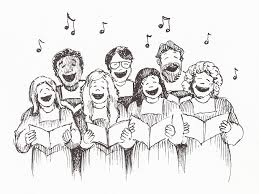
choir

Let me say at the outset that I know some people object to the term “special music” in church, meaning songs that are performed by instrumentalists or sung as solos or groups as opposed to congregational singing, because it sounds like we’re elevating that type of music above congregational singing. In the order of service in our own church bulletin, a “special” is listed as “Ministry in music,” and that’s perfect. But if I used that phrase as a blog title, it would sound like I was writing about the whole panorama of music in the life of a church, and I am not doing that. I just wanted to share a few thoughts on this particular aspect of church music.

These thoughts were spurred some time ago by an article I saw (which I can’t find now) which advised that one way to encourage more and better congregational singing was to deemphasize the special music. I don’t know how many people saw that particular article, but it seems like that is the current trend, and I think it is a sad one, for reasons I’ll get into in a moment. We always have such a tendency to be unbalanced in one direction or another, and I think to scrap or at least downplay personal ministry in music creates a loss for the church, a loss for the musicians and their gifts as well as for the hearers who would be ministered to.

The writer of the article in question suggested that one reason people weren’t singing as well as they could congregationally was that having worship leaders and a band on stage made it seem more like they were “the professionals” and everyone else was just there primarily to listen and maybe to sing along occasionally. I have never experienced a set-up like that personally; the churches we have attended have been more traditional, with a songleader behind the pulpit and a choir behind him, and a few instrumentalists to one side. I am not knocking the other style, but I can see the point that if it is set up more like a concert, the audience will be more likely to listen than to participate. However, I really don’t think that’s the problem in most churches.

Some think that when we listen to others “perform” a spiritual song, we’re more likely to enjoy the performance rather than be ministered to by the words. And I do admit that is a danger. But I don’t think it is a reason to deemphasize performed hymns and spiritual songs. I can get distracted by how well I like a song or its melody even in congregational singing, so I think that’s largely a matter of training our minds and taking “every thought captive.” I don’t think it is wrong to enjoy the music, the harmony, the performance aspect of it, but we need to let that enhance the message rather than become the main point.

Some want to downplay “special” music in church because they feel congregational singing is more participatory, whereas with special music we’re just listening. But I disagree: listening is participating if done right. (And besides that, we don’t apply the same logic to the preaching, which is done by one and listened to by everyone else.) I think we need to train our families and ourselves to concentrate, to pay attention to the words especially, not to talk or fidget or otherwise distract ourselves and others during the performance. Part of that is just consideration and respect for those performing, but another part of it is to enhance our own ability to receive the song’s message.

For me personally, the special music, whether an offertory, solo, or ensemble, is the most worshipful part of the church service. (By the way, I don’t believe the musical segment of a service is the only time where worship takes place: worship should be what we do in every part of the service.) I do enjoy congregational singing very much, but I do get more distracted by my own voice, by the voices of those around me, by wondering when we’re going to get to sit down because my knees are killing me, by what I need to do to start dinner, etc. That is my own problem, and I work on it constantly. Our church does display the words to the songs we’re singing, and that helps immensely, but that time is the hardest time in the whole service for me to keep my mind on what I am doing. During special music, however, I’m all in and focused without really trying to be.

Besides being able to focus better personally, I think special music has value in other ways as well. Some people are gifted vocally or in ways of expressing what they are singing so that we can get more of the nuance of a song than when we’re just barreling through it with everyone else. And though I have a wealth of recorded Christian music I can listen to any time, and do often, it means more to hear someone I know personally who is dealing with a chronic illness sing, “Day by day and with each passing moment, strength I find to meet my trials here,” or someone who recently lost her husband sing about the New Jerusalem, or a sweet couple who have walked with the Lord for decades together singing about Him whom their souls love, or someone undergoing a longstanding trial singing:

What if Your blessings come through raindrops?
What if Your healing comes through tears?
What if a thousand sleepless nights
Are what it takes to know You’re near?
What if trials of this life are Your mercies in disguise?

(“Blessings” by Laura Story)

I can and have been ministered to through music sung by someone I don’t know, but when I know the people and observe how they walk with the Lord, that adds a valuable layer of ministry to a church.

The article I mentioned also proposed that singers and musicians should take it down a notch and not sound so professional so as not to discourage those of us with more average voices to sing out. But Psalm 33:1-3 talks about playing music skilfully. Those who sing and play need to have some skill in doing so (and that is another reason I enjoy it: I can sing and praise in my own spirit vicariously through them, since I don’t have the skills they do.) I don’t think special music has to sound “professional”: it can be very simple. But it is not wrong for it to sound professional, either. Different people have different skill levels, and I can enjoy a variety of them just as I enjoy reading from writers at various levels of writing skill or listening to preaching from men whose style or gifts vary. A child’s first piano offertory or a simple solo with a guitar can minister just as much as a full scale performance of Handel’s Messiah, and I like them all in different ways.

Not long after I came across the article I mentioned, I came to Chronicles in my Bible reading. Among the many people with various specific functions in the temple were musicians and singers.

I Chronicles 16:4-7: Then he appointed some of the Levites as ministers before the ark of the Lord, to invoke, to thank, and to praise the Lord, the God of Israel. Asaph was the chief, and second to him were Zechariah, Jeiel, Shemiramoth, Jehiel, Mattithiah, Eliab, Benaiah, Obed-edom, and Jeiel, who were to play harps and lyres; Asaph was to sound the cymbals, and Benaiah and Jahaziel the priests were to blow trumpets regularly before the ark of the covenant of God. Then on that day David first appointed that thanksgiving be sung to the Lord by Asaph and his brothers.

I Chronicles 16:41-42: With them were Heman and Jeduthun and the rest of those chosen and expressly named to give thanks to the Lord, for his steadfast love endures forever. Heman and Jeduthun had trumpets and cymbals for the music and instruments for sacred song.

I Chronicles 25 gives great detail about David appointing different people for different musical functions. One of the most interesting verses to me is I Chronicles 25:1: “Moreover David and the captains of the host separated to the service of the sons of Asaph, and of Heman, and of Jeduthun, who should prophesy with harps, with psalteries, and with cymbals.” A former pastor used to say that even instrumental music was a form of prophecy.

When the ark was brought into the temple,

all the Levitical singers, Asaph, Heman, and Jeduthun, their sons and kinsmen, arrayed in fine linen, with cymbals, harps, and lyres, stood east of the altar with 120 priests who were trumpeters; and it was the duty of the trumpeters and singers to make themselves heard in unison in praise and thanksgiving to the Lord), and when the song was raised, with trumpets and cymbals and other musical instruments, in praise to the Lord, “For he is good, for his steadfast love endures forever,” the house, the house of the Lord, was filled with a cloud,  so that the priests could not stand to minister because of the cloud, for the glory of the Lord filled the house of God. II Chronicles 5:12-14.

“Special” music was also performed at the dedication of the temple, before the army, at the crowning of a king, when Hezekiah reestablished worship in the temple, at the restoration of the Passover,  at the Passover in Josiah’s time, when the foundation for the temple was laid again in Ezra’s time. But special or performed music wasn’t just for special occasions:  II Chronicles 8:14 says  “According to the ruling of David his father, he appointed the divisions of the priests for their service, and the Levites for their offices of praise and ministry before the priests as the duty of each day required.” Singers are mentioned multiple times from Chronicles to Nehemiah: Ezra 2: 65 says they were male and female.

Then of course the Psalms are themselves songs and mention music throughout. Whether they were song congregationally or by the temple musicians, or both, I don’t know. Now I am in Isaiah: I am not sure whether I’ll find references to singing in the prophets, as their focus and purpose is different.

That is all Old Testament: what about the New? I’ll look for specific references when I come to it in my reading, but two passages there come to mind. Colossians 3:16 says, “Let the word of Christ dwell in you richly in all wisdom; teaching and admonishing one another in psalms and hymns and spiritual songs, singing with grace in your hearts to the Lord.” I think that can apply to both congregational and performed music. I Corinthians 14:6 says, “How is it then, brethren? when ye come together, every one of you hath a psalm, hath a doctrine, hath a tongue, hath a revelation, hath an interpretation. Let all things be done unto edifying.” The ESV has “hymn” in place of “psalm.”

I think songleaders and preachers can enhance the performed music of a church by emphasizing the message of it just before or after the person or people sing. If there is one thing I could say to preachers everywhere on this topic: please don’t joke just after someone has ministered in song, especially about that person. I’m not against laughter, I love to laugh as much as the next person, I know the Lord loves a merry heart, but joking just after someone sings is one of the quickest ways to quench whatever ministry their testimony in song could have had.

Instead of downplaying ministry in musical performance, I think songleaders can enhance congregational singing in a number of other ways: reminding us to sing as unto the Lord and what the Bible says about singing or commenting on something the song teaches (not long: a little sermon before each song or each stanza can dull its effect). Please, however, don’t do what I have heard often through the years and say something like, “Are you a Christian? Do you love the Lord? Then please tell your face!” or “If you could see the view from here, you’d be really depressed. Smile!” That’s basically saying, “Paste a smile on so you look better,” an emphasis on the outer rather than the inner man and not conducive to worship. How much better to encourage better singing by encouraging worship of the one we’re singing about and thinking about the message of the song.

Please understand that I am not trying to exalt “special” or performed music above congregational singing because I have emphasized it here: I’m just asking that we don’t discourage or downplay special music in our efforts to encourage congregational singing. Both have vital places in our worship: both can be great tools the Lord can use to minister to our hearts.

The Quiet Person in the Small group

A church’s small groups or Bible studies can help people to get to know one another and provide a more interactive approach than the main preaching service. I’ve seen a number of articles and blog posts about how to help one’s small group function at its best, and one item that always comes up is what to do about the quiet person who doesn’t say much.

The usual advice is to call on that person by name during the discussion time with a direct question, such as “Mary, what do you think?” May I say on behalf of quiet people everywhere: please don’t do that. Asking the group members to “turn to their neighbor” to discuss one on one a question from the study isn’t much better.

People may be quiet for any number of reasons. Maybe they’re introverts, shy, lacking in confidence to speak out, or just a quiet personality. All of those things don’t necessarily go together: introverts are not always shy and quiet people aren’t always lacking in confidence. But all of them cringe at being put on the spot, especially in front of others.

Small group leaders should naturally make leading their group a matter of prayer, part of which would be asking for wisdom in how to minister to the various personalities in the group and facilitate the best kinds of interaction.

Some people may not feel comfortable about speaking out in a group. I’m not talking butterflies in the stomach nervousness: I’m talking full-blown anxiety. Calling on them will only increase that fear and make them unlikely to come next time. It helps that person to be friendly and talk with them before or after the group: maybe over time she’ll feel comfortable enough to speak out. If she does share something while talking alone with the group leader, perhaps the leader can say something like, “That’s a great thought, Susan. Would you mind of I shared that with the others during discussion time, or would you like to, perhaps?”

Some may be mulling things over. Introverts in particular take a while to process what they hear and learn. That person honestly may not have an answer for you, or she may still be thinking about something from two questions ago. It might help someone like that to ask at the end of the discussion if anyone has any thoughts on anything discussed that day: that way she can feel comfortable bringing up a thought from earlier without feeling like she’s holding up progress for everyone else. Or, at the beginning of the next session the leader could ask if anyone has any thoughts from last week’s discussion: if someone has been processing the discussion through the week, she’ll be more likely to have something to say about it after some extending time to think about it.

Some might not contribute to the discussion due to fear of saying the wrong thing, especially in a Christian discussion. While we don’t need to let a falsehood pass just to be nice, we can handle it in a gracious way: “I can see how you might come to that conclusion. But consider this aspect…” People are more likely to contribute to the discussion if they feel safe doing so.

Some of my blog friends have mentioned their small groups getting together socially apart from their regular study, perhaps after one study and before beginning another. This is a great way for group members to feel more comfortable with each other and might facilitate more interaction in the regular group meetings. A quiet person is not likely to be the life of the party even in a purely social setting, but she may get to know one or two people a little better, and that’s progress.

Naturally small groups work best if there is a good deal of balanced interaction. Some translate that into thinking their group time has been a “success” only if everyone has participated, i.e., spoken and shared something with the group, every time. But may I suggest that’s putting form above function. It can breed thoughts like, “I have to think of something to say so people don’t think I’m unspiritual,” which adds even more pressure to the quiet person. A person may be benefiting greatly from her time there, yet never say a word, at least during the group discussion. After all, listening is participating.

OK, you might say, she might be getting something, but what is she giving? Maybe nothing to the group that day except her presence. But maybe she takes the truths she has learned and applies them in her own life, or teaches them to her children, or discusses them with a close friend, or expands on them in a blog post.

Sometimes one aspect of wanting to see everyone participate is wanting to see results, and those are not always for us to see: sometimes we just have to trust that God is using His Word in people’s lives even if they don’t tell us about it.

I’m not suggesting that everyone reading this opt for silence during the next Bible study or small group get-together, nor am I suggesting that quiet people should never extend themselves (perhaps a topic for a separate post some time). They We should. But they’ll we’ll be more likely to without the artificial pressure of trying to come up with something to say just because it is expected.

Laudable Linkage

Its been another good week with some thought-provoking posts to ponder:

Open Roof Hospitality. Very convicting to me. If I had been the lady of the house whose roof was being torn up so people could bring their paralytic friend to Jesus, my first emotion would not have been gratitude and joy, I’m sure.

Pressing In To the Ungrateful.

Is It Possible For Christians to Idolize the Bible?

Seven Questions to Ask Before Having a Difficult Conversation.

The 3-Second Pause That Can Save a Morning and Spare Some Pain.

Six Observations About Speaking to Pastors Right Before They Preach. Although these are especially true for pastors for obvious reasons, many of them hold true for anyone. Once when my husband was the head usher in a very tightly packed church and was trying to find seats for people right before the service, someone who was also a neighbor chose that moment to tell him that he thought the lawn mower that we often let him borrow had been stolen. Hard to concentrate on anything in the service after that. 🙂

The Do Not Depart site has been focusing this month on what we can learn from the lives of Godly Women: Inspiring Stories of Faithful Daughters, mostly from the past. You know how much I love biographies, so I have enjoyed this series. So far they’ve shared from the lives of Corrie ten Boom, Susanna Wesley, Elisabeth Elliot, Helen Roseveare, Harriet Tubman, and Monica of Hippo (Augustine’s mother).

I saw this on Facebook and thought it rang very true. 🙂

Sports

The bad weather that was forecast for last night did not happen, yay! Have a wonderful Saturday!

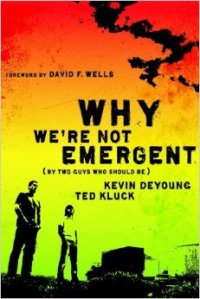
Book Review: Why We Are Not Emergent: By Two Guys Who Should Be

EmergentThose of you who read here regularly and have seen Why We Are Not Emergent: By Two Guys Who Should Be by Kevin DeYoung and Ted Kluck on about five different Nightstand posts are probably thinking, “Yes! She finally finished it!” When I was trying to read a bit here and there in 10-15 minutes offhand segments, it wasn’t working, but then I committed to trying to read a chapter, or at least a section, as many mornings as I could right after my devotional time. Once I really got into it, I loved it.

I would say this is a highly valuable book to read even if you don’t know (or aren’t interested in) what the emergent movement is all about, because there are tendrils of it popping up all over the place, and it is good to have Biblical thinking about these issues.

This book caught my eye because some years ago, when I first heard anything about the Emergent or Emerging church, I was active on a Christian message forum online and asked if someone could tell me in 2 or 3 sentences what it was all about. No one could, or at least, no one did. All I got were book recommendations. I wasn’t interested enough to read a whole book about it at the time. Fairly recently I saw this mentioned somewhere with the comment that it was a fair treatment, so when it came through on a Kindle sale, I got it. But then it sat there until the TBR challenge motivated me to add it to my books to be read this year, and then until just recently.

I don’t know much about either author except that DeYoung is a name in the “young, restless, Reformed” crowd. None of those adjectives fits me, but I do enjoy reading some of those folks and can work around those areas where I disagree with a Reformed view of things.

The Emergent movement or church is kind of hard to pin down, because it is not a denomination and there is no national spokesperson. But DeYoung and Gluck have done extensive research into the books and messages of those who identify themselves as  emergent and addressed some common themes (there is a distinction between those who would call themselves “emergent” and “emerging,” but for the purposes of this book the terms are used interchangeably). They discuss, from emergent writings, the good points, the valid concerns the emerging church has, and the problems they see with some of the emergent viewpoints and practices and why.

I have so many areas highlighted that it is going to be hard to share just a few things.

The authors begin by acknowledging that defining the emergent church or movement is like trying to “nail Jello to a wall,” but after reading some 5,000 pages of writing on the topic, they’ve identified some basic trends. They’re quick to acknowledge that not everyone who calls themselves  emergent will agree on every point and that they even share many of the same concerns as those in the movement, but while they “affirm a number of the emergent diagnoses, it’s their prescribed remedies that trouble us the most.” The emergent church is basically what postmodernism looks like applied to church, valuing questions more than answers, mystery more than authority, Christian living more than doctrine.

Here are some quotes that stood out to me:

For emerging Christians, the journey of the Christian life is less about our pilgrimage through this fallen world that is not our home, and more about the wild, uncensored adventure of mystery and paradox. We are not tour guides who know where we are going and stick to the course. We are more like travelers…the destination is a secondary matter, as is any concern about being on the right path…The journey is more wandering than directional, more action than belief, more ambiguous than defined. To explain and define the journey of faith would be to cheapen it.

[To the emergent] Christian life requires less doctrinal reflection and more personal introspection.

The emergent view of journey…undermines the knowability of God…emergent leaders are allowing the immensity of God to swallow up His knowability.

 Mystery as an expression of our finitude is one thing. Mystery as a way of jettisoning responsibility for our beliefs is another thing. Mystery as a radical unknowing of God and His revealed truth is not Christian, and it will not sustain the church.

One emergent leader writes, “Drop any affair you may have with certainty, proof, argument – and replace it with dialogue, conversation, intrigue, and search.”

There is a place for questions. There is a time for conversations. But there is also the possibility of certainty, not because we have dissected God…but because God has spoken to us clearly and intelligibly and has given us ears to hear His voice.

It is not a mark of humility when we refuse to speak about God and His will except in the most ambiguous terms. It is an assault on the Holy Spirit and disbelief in God’s ability to communicate rational, clear statements about Himself in human language.

The mantra “God is too big to understand and the truth too mysterious to know with certainty” is not just a confused humility. It has dangerous pastoral implications…Uncertainty in the light of our human limitations is a virtue. Uncertainty in light of God’s Word is not.

[Emergent leaders] confess to having “mixed feelings” about the Bible…They don’t want to use the traditional terms – authority, infallibility, inerrancy, revelation, objective, absolute, literal…They would rather use phrases like “deep love of” and “respect for.”…[To them] the Bible is not the voice of God from heaven and certainly not the foundation (foundationalism being a whipping boy among emerging Christians of a philosophical bent). Rather, the Bible “spurs us on to new ways of imagining and learning.”

[Emergents] pit information versus transformation, believing versus belonging, and propositions about Christ versus the person of Christ. The emerging church will be a helpful corrective against real, and sometimes perceived, abuses in evangelicalism when they discover the genius of the “and” and stop forcing us to accept half-truths….Our fullness of joy is dependent on believing, embracing, and treasuring the sentences that Jesus spoke. The sentences do not save us. The life, death, and resurrection of Jesus save us. But without truth-corresponding propositions like “this is eternal life, that they may know you the only true God, and Jesus Christ whom you have sent” (John 17:3) and “I have manifested your name to the people” (v. 6) and “I am praying for them” (v. 9) and “all mine are yours, and yours are mine, and I am glorified in them” (v. 10) – without these precious theological statements communicated and understood by verbal utterances, the joy of Jesus will not be fulfilled in us.

It simply isn’t true that orthodoxy as a right belief is nothing but a perverted Greek idea. John wrote his gospel..that people…might believe that Jesus was the Christ and by believing have life in His name (John 20:31)…There are certain truths that must be affirmed in order to be a Christian…There is no question that Paul believed in orthodoxy. “Follow the pattern of the sound words that you have heard from me, in the faith and love that are in Christ Jesus,” he told Timothy (II Timothy 1:13).

If the good news is an invitation to a Jesus way of life and not information about somebody who accomplished something on my behalf, I’m sunk. This is law and no gospel.

Yes, we do see through a glass darkly; we do not fully understand God…God is greater than we can conceive – but what about the 1,189 chapters in the Bible? Don’t they tell us lots of things about God that we are supposed to do more with than doubt and not understand? Aren’t the Scriptures written so that we might believe and be sure of what we hope for and certain of what we do not see and even proclaim this faith to others?

To the Emergent, Christianity is a story from which ethics are gleaned, rather than a life-saving proposition.

Christ was wounded for our transgressions and crushed for our iniquities. That is the heartbeat of the gospel. It is not the heartbeat of the emergent gospel.  Rather, the cross is a moral example.

Forgive me for not putting notations of where those quotes were: on the Kindle app is just says “Location 250” or whatever, and I started out putting that, but it was just too clunky.

One of the best parts of the book is the epilogue, where the writer sums up by discussing some of the seven churches in Revelation 2-3 and their application to us. The church at Ephesus was praised for being doctrinally correct and intolerant of those who brought false doctrine, but they were unloving. The churches at Pergamum and Thyatira were loving but tolerated false teaching.  “Their love was blindly affirming. The big problem at Thyatira was tolerance. They tolerated false teaching and immoral behavior, two things He who has eyes as piercing as fire and feet as pure as burnished bronze is fiercely intolerant of (Rev. 2:20). Jesus says, ‘You’re loving, which is great, but your tolerance is not love. It’s faithlessness.'” Each church was praised for its virtues but rebuked for its weaknesses. The need is not be be doctrinally correct or loving, but doctrinally correct and loving. We have to be careful in addressing the faults of one side or the other that we don’t magnify those and minimize the virtues and swing the pendulum too far the other way.

There is so much more I wish I could share. I’ll close with one last quote:

As a Christian man, specifically as a husband and father, I need truth. I need to worship a God who makes demands on my character, with consequences. I need to know that Christianity is about more than me just “reaching my untapped potential” or “finding the God inside me.” I need to know I worship a Christ who died, bodily, and rose from the dead. Literally. I need to know that decisions can (and should) be made on the basis of Scripture and not just experience. These are things that give me peace in a world of maybe.

An excellent review of this book is here.

(This will also be linked to Semicolon‘s Saturday Review of Books.)

Laudable Linkage

It’s been a couple of weeks since I have been able to share some interesting reads with you. Here are some standouts from my recent web reading:

The Memorial Service of Tom Craig, Our Pastor. Brad is a member of our church who has been chronicling the journey of our pastor and church every week since our pastor’s cancer diagnosis, and here he describes the events on the day of his memorial service as well as the service itself. Our church originally had a fundraiser that had been scheduled that morning weeks before, and there was much discussion about whether to postpone it since the funeral was scheduled for the same day. Thankfully they decided to go ahead with it, but that’s what the description of the run and bike rides are about. A recording of the memorial service is here.

Losing the Language. Apt analogy about getting away from church and the things of the Lord.

10 Ways to Exercise Christlike Headship, HT to Challies.

What People Who Are New to Your Church Want to Know.

To the Girls in the Pew Ahead of Me.

That Day I Wore Yoga Pants: 5 Myths About Modesty. Most posts/articles/books about modesty tend to lean either toward the woman’s responsibility to watch how she dresses so as not to cause others to stumble or the man’s responsibility to guard his eyes and heart. I thought this one was nicely balanced.

A list of things you may not have known about paralysis from a fellow TMer.

5 Things You Must Do To Protect Yourself Online.

10 Things I’ve Learned After 30+ Years and 70+ Books.

Dear Pinterest, We Need to Have a Talk About Bookshelves. Loved this fun, incredulous look at how people decorate their bookshelves with something other than the best thing: books.

I Quit Liking Things on Facebook For Two Weeks, HT to Kim, shows how what we click that we “like” affects what we see there. I’m not going to quit using the like button, but I am conscious that whatever I “like” feeds into algorithms to give me more of the same.

My friend Lou Ann sent out a survey to readers about decluttering and has posted a series about the results. My favorites are Finding Balance in Decluttering (it’s so easy to get off-balance even in good things) and Disadvantages of Decluttering (did you know there were some? There are! Or at least can be), probably because I rarely see anyone discussing those aspects. Other posts in the series are Advantages of Decluttering and Systems for Decluttering.

I think I have shared this before, but if you haven’t seen it, it’s the story of the pilot who was originally scheduled to fly one of the planes that was highjacked on 9/11:

Laudable Linkage

Here is my semi-weekly round-up of interesting reads – I hope you’ll find one or two of interest:

A Return to the Book. “The further I move from the written Word of God, the less confidence I can have that I’ve heard a word from God. ”

The Danger of Coasting. When we’re not living intentionally, we usually end up somewhere we didn’t mean to go.

Flip or Flop. People can say and do horrible things – like in an earlier post by this author where people commented, “Your poor husband – 6 kids and wife in a wheelchair” or tell her that her children will grow up to resent her disability. But in this post she discusses the good things people have said and done and the choice we can make in which to focus on.

5 Ways Moms Create Cranky Toddlers. Written by a mom and shared by a young mom friend.

Seven Ways to Love Your Pastor.

Why I Read Heartwrenching Stories. I haven’t read the book discussed here but I like what she said about why she reads books that deal with topics that are hard to read about.

Louis Zamperini, the subject of the book Unbroken by Lauren Hillenbrand (one of the best I’ve ever read) passed away this week at the age of 97. An Olympic athlete, WWII soldier, and POW, his greatest victory came through faith in Christ. Here are a couple of short news videos about his life and death, neither of which mentions his faith: let’s hope the upcoming film based on the book does:

Laudable Linkage

Here is a collection of some thought-provoking posts discovered in the last couple of weeks:

You Are What – And How – You Read from Rosaria Champagne Butterfield. About more than reading.

When Sin Looks Delicious.

The Inner Life — Four Reasons to Have a Quiet Time.

The ladies of Out of the Ordinary have been blogging about middle age this month, a topic you don’t often see on blogs. My two favorite posts so far have been Things to Guard Against in the Middle Years and The Middle Years: There’s Good News, Too!

On Daughters and Dating: How to Intimidate Suitors. Loved this: “Instead of intimidating all your daughter’s potential suitors, raise a daughter who intimidates them just fine on her own. Because, you know what’s intimidating? Strength and dignity. Deep faith. Self-assuredness. Wisdom. Kindness. Humility. Industriousness.”

What do those with disabilities owe those without?

An Outburst Is An Opportunity.

When It’s Time to Leave a Church.

Five Helps for Memorizing Bible Verses.

Three Reasons to Diversify Your Reading. Why Christians should read non-Christian books.

Hope you have a great weekend!

Book Review: Loving the Church

loving the churchI first noticed Loving the Church by John Crotts a few years ago when Carrie reviewed it. It struck a chord with me because I have seen a general trend in recent years of people leaving the church, primarily because of all its problems or imperfections or its lack of meeting their needs. When I commented to Carrie that I would probably get the book, she offered to send me her copy. And I am ashamed to say it has been sitting in my bedroom neglected all this time, mainly because I tend to gravitate toward fiction rather than nonfiction, even though this is a topic important to me. But the TBR challenge provided a good opportunity to get to some of those books I hadn’t yet, and I knew this was one I wanted to include.

Crotts begins the book with a fictional group of people coming together at a coffee shop. None are rebellious or malcontents, but all except one are not attending what we would call a conventional church for various reasons: one is involved in a fulfilling ministry, one attends a house church because it keeps his family from being split up into different groups, one has been deeply wounded by the way the church responded to her when she found she was pregnant while unmarried, one has sacrificed some depth of preaching for a high tech church with a lot of singles that he can identify with and where he can possibly find a wife. As this group discusses church, they decide to continue to meet together to study what the Bible says about the church.

They turn up here and there throughout the rest of the book, but the majority of the book is a straightforward discussion of exactly what the Bible says about the church and why believers should attend.

After a brief chapter on the trend away from church over the last few years, Crotts shares from the Bible why the church is valuable. A few of the concepts he discusses are that Jesus loved the church and gave His life for it: “Husbands, love your wives, even as Christ also loved the church, and gave himself for it; That he might sanctify and cleanse it with the washing of water by the word, That he might present it to himself a glorious church, not having spot, or wrinkle, or any such thing; but that it should be holy and without blemish” (Ephesians 5:25-27), and that the church is the “pillar and ground of the truth” (I Timothy 3:15) and described as the bride of Christ. ( Search for the word “church” in a Bible search engine to discover many more. I don’t remember if he includes this one, but one of the most intriguing to me is that “now unto the principalities and powers in heavenly places might be known by the church the manifold wisdom of God,” Ephesians 3:9-11. Somehow through the church God displays His wisdom to those principalities and powers.) It’s abundantly clear that the church is important to Christ.

Crotts then goes on to define the church and discusses the difference between what we call the universal church (all believers everywhere) and the individual local church. Some say that the verses about the church refer to the church universal, but the epistles were written to specific local assemblies which were called churches. “A local assembly…is not just some tiny part of the universal church, like the pinkie toenail in the universal body of Christ. It is better understood as a local expression of the body of Christ – complete in itself” (pp. 44-45).

Crotts also discusses the description  and function of the church from the Bible, the headship of Christ, the purpose of elders and deacons, the giftedness each member provides to minister to the others in the assembly.

Of the several quotes I marked, here are a couple that stood out to me:

The goal of mutual ministry within the church is maturity in Jesus. This is described as “the unity of the faith and of the knowledge of the Son of God” (Ephesians 4:13). The combination of unity and the knowledge of Christ shows that Paul is not maximizing superficial togetherness by minimizing doctrinal content. Voices calling Christians to forget about doctrinal differences and just love Jesus do not represent Christian maturity….Community-wide gatherings or projects that merge churches that don’t believe in the Bible, Jesus, or salvation with churches that do, are a hollow shell of what the Lord intends when he commands us to be in unity around the truth. No matter how sincere the motives of people organizing such events, in the end, the truth becomes watered down instead of strengthened, and unfortunately, weak doctrine turns out weak Christians. In Colossians 1:28, Paul describes the goal of his ministry: “Him we proclaim, warning everyone and teaching everyone with all wisdom, that we may present everyone mature in Christ” (p. 56)

Don’t you need shepherds to guide you? Jesus thinks you need them! It is terrible pride to assume that you don’t need what Jesus designed for his glory and your family’s good (p. 95).

What I find most refreshing about this book is that it is a discussion and exposition from the Bible, not just opinions or quotes from what this or that author says. It’s very readable but very thorough. I also appreciate that in general he didn’t go further than the Bible. I think he said some place, but I forgot to mark where, that every church in every time and culture will not look exactly the same because the Bible does grant a certain amount of latitude in exactly how to “do church.” Missionaries through the centuries have had to learn that their goal isn’t to replicate a church exactly like the one back home, but they’re to keep to Biblical principles and incorporate them into the culture in which they minister.

The last couple of pages of this book lists negative consequences of neglecting church, among them, “thwarting Jesus’ plan, unconsciously saying that your plan for your Christian life and family is superior to His,…rejecting a chief means He has given for your spiritual growth,…boycotting the place He designed for your service,…missing great opportunities for spiritual influence from like-minded believers,…teaching your children to disobey Jesus by your example” (pp. 129-130).

One thing I wish the author would have included was a brief history of the church. He didn’t really answer the question about house churches except to say that they don’t include the authority structure of elders and deacons that the Bible calls for. I’ve often wondered exactly how the early church in Acts met. Acts 2:41 says 3,000 were added to the church in one day, but Romans 16:5 and Colossians 4:15 refer to churches that meet in someone’s house. They didn’t have mega-churches or large places to meet in that day and obviously some did meet in houses. I don’t know if perhaps the individual house churches were connected to each other or exactly how it worked. I know some who have felt that house churches are more Scriptural, but personally I think that’s where the latitude of Scripture comes in: in Acts the church was a new enterprise and they were under persecution. A 21st century church in a country with religious freedom is going to look a little different. But I would say that making individual churches into little empires is going beyond from the Bible’s intentions.

Some will quibble about the author’s definition of pastors and elders, but I think that can be set aside for the larger purposes of the book (I think that is an area Christians can disagree on and still be friends). I may have disagreed with a minor point here and there, but nothing that I thought important enough to make note of. The only note that jarred me a little was his continual emphasis on Christians helping each other toward Christlikeness by helping them see their sins and blind spots. While that’s true, and overemphasis on that point can lead to nit-picking and fault-finding. That’s an area I admit to having a hard time finding the balance in. I tend to avoid confrontation, but when I feel most stirred up towards it, it is usually due to personal irritation and offense rather than a concern about the other person’s maturity in Christ. Sometimes we see things not so that we can jump in to do the Holy Spirit’s job, but rather to pray for the person involved. It takes a great deal of care, delicacy, and being closely in tune with and filled with the Holy Spirit to confront someone. I think the author would say that as well, and he is not advocating that we all become spiritual policemen. He does emphasize that  “love must mark a Christian’s motives and manner in ministering God’s Word to other believers” (p. 58).

I want to close with a brief comment about leaving church because of its faults and failures. The church has always been full of faults and failures because it is full of sinners. Many of the epistles are written to churches about how to correct their problems (which is an admission that they have them!), and in Revelation 2 and 3, Jesus commends and condemns certain aspects of seven churches. One of the things we’re supposed to do in church is help each other towards more Christlikeness, and all the Bible “one anothers” are to be exercised in the context of church (in everyday life, too, but they were given specifically in letters to churches). One of them is “Forbearing one another, and forgiving one another, if any man have a quarrel against any: even as Christ forgave you, so also do ye” (Colossians 3:13). There wouldn’t be a need for forbearance and forgiveness unless we failed each other or irritated each other. But because we do, we’re to “Put on therefore, as the elect of God, holy and beloved, bowels of mercies, kindness, humbleness of mind, meekness, longsuffering…And above all these things put on charity, which is the bond of perfectness” (Colossians 3: 12,14). There may be times to leave a specific church if it falls away from the truth of the Bible, and in Revelation Jesus said some churches were in danger of their candlestick removed, but the Bible doesn’t portray completely leaving the church as an option.

I don’t know anything about John Crotts other than what I have read in this book, but I heartily recommend it.

For more on this topic, see also previous posts here on Why Go to Church? and The Community of Believers as well as Lisa’s 7 reasons why I still go to church. Incidentally, at the time of this writing Loving the Church is available in a Kindle format for $1.99.

(This will also be linked to Semicolon‘s Saturday Review of Books.)

Repost: God Does So Much More Than Just “Show Up”

(With different circumstances in my life right now, I am finding it a little difficult to have my brain working on all cylinders and be awake and alert when I have time to spend at the computer. I have a few posts percolating on the back burner that I hope to get a chance to work through soon. But I thought in the meantime maybe once a week or so I’d repost something from my archives here. I thought about making it a series and calling it “The Summer of Reruns.” 🙂 Seriously, though, sometimes going back over something God has taught or encouraged me with in the past makes for fresh blessings. I hope some of these will bless you as well, whether you saw them the first time or not.)

From October, 2009:

I have seen a particular phraseology going around recently that really bothers me:

“God really showed up.” “Pray that God shows up in a big way.” “I hope God shows up for this event.”

If you have said or written this, please don’t take offense or think I am fussing at you. I can’t remember for sure where all I have seen it. I’m speaking in generalities because I am starting to see this more and more and I want people to realize what it sounds like.

It bothers me for a few reasons.

1. God does not “show up.” He is omnipresent. (See Psalm 139:5-12, Jeremiah 23:23-24.)

2. Making our plans and then hoping God “shows up” is going about things backwardly. We should be seeking His guidance beforehand and all along the way.

3. The phrase “show up” seems to indicate the person wasn’t really expected, or at least his attendance was iffy. “I invited Tom, but I am not sure he’ll show up.”

4. The phrase also seems to indicate the person showing up took the invitation casually and just decided to “show up” — maybe on a whim, maybe because he couldn’t find any better options.

5. When I posted this the first time, someone commented that sometimes we say God “showed up” in a meeting when things got exciting. Sometimes we have more of a sense of His working or we’re touched in a special way, but that’s not to say He is not always meeting with us. Jesus said, “Where two or three are gathered together in my name, there am I in the midst of them” (Matthew 18:20). We know He is present by faith, not when we “feel” it or when the bells and whistles go off.

I think I know what people mean when they want God to “show up”:

“I hope God really blesses this event/situation in such a way that people see it was something only He could do.”

“I want God’s presence to be manifested in a way that touches people’s hearts and draws them to Him.”

“I pray God’s power will be evident.”

Why not say it that way? It’s more accurate, more reverential, and more glorifying to God.

Here are some Scriptural examples of those desires:

“Help me, O LORD my God: O save me according to thy mercy:That they may know that this is thy hand; that thou, LORD, hast done it.” Psalm 109:26-27.

“O God, thou art my God; early will I seek thee: my soul thirsteth for thee, my flesh longeth for thee in a dry and thirsty land, where no water is; To see thy power and thy glory, so as I have seen thee in the sanctuary.” Psalm 63:1-2.

“This beginning of miracles did Jesus in Cana of Galilee, and manifested forth his glory; and his disciples believed on him.” John 2:11.

“Jesus answered, Neither hath this man sinned, nor his parents: but that the works of God should be made manifest in him.” John 9:3.

“And [Moses] said, I beseech thee, shew me thy glory.” Exodus 33:18.

“That all the people of the earth might know the hand of the LORD, that it is mighty: that ye might fear the LORD your God for ever.” Joshua 4:24.

“And it came to pass at the time of the offering of the evening sacrifice, that Elijah the prophet came near, and said, LORD God of Abraham, Isaac, and of Israel, let it be known this day that thou art God in Israel, and that I am thy servant, and that I have done all these things at thy word.Hear me, O LORD, hear me, that this people may know that thou art the LORD God, and that thou hast turned their heart back again.” I Kings 18:36-37.

Laudable Linkage

Wow, I can’t believe it has been about a month since I’ve shared interesting links with you! Here’s some thought-provoking reading:

From my son’s blog: 4 things that have kept me sane in the NICU and Dealing with Disappointment in the NICU.

The Story. The importance of reading the Scriptures as a whole rather than isolated parts.

The Church Is a Body, Not a Body Part.

On parenting:

I’m Not Enough For My Kids.

Godly Feelings Flourish Behind Walls of Self-Control. The girltalk blog has been discussing teaching children self-control, and I especially appreciated this post about teaching a very emotional toddler to rein herself in.

Teaching Toddlers Emotional Self Control: A Few Practical Thoughts, another in the above series.

The Morning When My Mother Got Up Anyway.

I Want My Kids to Serve.

My Child….My Friend?

His Time, His Plan, His Way, a story of a premature birth.

Hospitality For Introverts.

What a child with food allergies would want you to know.

Why I Am Sick of Women’s Conferences. Though the title is maybe a little harsh, this is a good post about the wrong message being emphasized at some conferences.

Dear Inaccessible Church.

Do You Know Your Missionaries? Eight Ideas to get to know them better.

Could Quitting Facebook Be A Mistake? HT to Bobbi.

Web Sites For Writers.

This just made me smile – a friend saw at a shop in Williamsburg Jane Austen Action Figures.

jane-austen-action-figure

Happy Saturday!