Review: My Beloved

My Beloved by Jan Karon

Jan Karon’s last book in her beloved Mitford series was published in 2017 and was supposed to be the end of the series. But she began to play around with an old short story idea, and eventually came up with My Beloved.

The premise of the story is that Father Tim, an Episcopal priest and the main character, has been told by his wife that all she wants for Christmas is a love letter. In a moment of inspiration, he bares his heart on paper. He also buys her a book of poetry, tucks the letter inside, and wraps them.

But then the letter and book go missing. After tracing his steps and racking his brain, he still can’t find them or come up with any ideas about where they could be. He tries a few times to write another, but just can’t get it to sound like the first one did.

Meanwhile, the letter and book get accidentally passed to various Mitford characters. Sometimes the result is comic, sometimes touching.

There are a few subplots running through the book. One involves Hope, owner of the Happy Endings book store, and the financial difficulties threatening the store. Former Mayor Esther Cunningham and her husband are aging and fussing with their “bossy” daughters over what they can and can’t do.

Dooley made an appearance in the first Mitford book as a “throwaway” boy who comes under Father Tim’s influence and, over the course of the series, eventually becomes his adopted son. Though the Mitford books are generally “cozy” reads, they don’t shy away from serious issues. Dooley’s mother had been an alcoholic who gave away some of her children for drink. Though she has become sober and even become a Christian, and all her children have been found, there are still underlying issues and pains blocking healing and relationships.

This book was structured a little differently, rotating the point of view with each chapter. I loved how the dialect instantly let us know which “voice” was speaking, even though the subject’s name was the name of the chapter.

Some of my favorite quotes:

Father Tim: “God’s love for his children wasn’t just for them to have and to hold, it was to freely, spontaneously give away—and to gratefully receive from others.”

Esther: “She was already surprised, thank you. Surprised by bein’ old as dirt; surprised by losin’ her scatter rugs; an’ surprised by goin’ from a mayor everybody voted for to an old woman whose car battery died months ago from sittin’ in th’ garage with a mouse nest under th’ hood.”

Cynthia: “Every saint has a past. Every sinner has a future.”

Esther: “A recliner was a drug, an’ she was overdosin’.”

Ray: “He would consider it a freebie for old people. I’m not goin’ there.” Esther: “Freebies for old people is exactly where I’m goin’.”

Esther: “At their age, surprises were not a good idea in th’ first place. You could keel over from a surprise.”

Helene: “With war raging around the world and suffering everywhere, how extraordinary, how beautiful this life could be. There were no words, really. No words.”

Father Tim: “There was only one person in the world who would really get what just happened. Thank God he was married to her.”

Father Tim: “Even now, that tribe is splitting apart, that one small wounded fragment is scattering in all directions, nursing their wounds, reluctant to give up anything so darkly familiar as their wounds, and headed to places from which they may not find their way back.”

Father Tim: “Why invite more pain into a family raised on pain? Because pain can serve as a passageway to joy. It’s that dark tunnel that goes through a mountain and dumps us out on the other side where the light is.”

I’ve seen reviews of Christian fiction that complain over the least mention of any religious content. So I have always marveled that these books so full of gospel truth have been so popular with the general public. Oh, I wouldn’t agree with every little point. But the great majority of these books are spot on.

Reading a Mitford book is like a visit back to one’s hometown. It was good to catch up with various characters and their situations.

Updated to add: Jan was interviewed on CBS This Morning recently:

Review: A Royal Christmas

Melody Carlson must be the queen of Christmas novellas–she’s written dozens of them.

In A Royal Christmas, Adelaide Smith is a law student working her way through college as a barista. Her mother passed away three years earlier, and she’s still grieving.

One day she gets an official-looking letter saying that her DNA in a registry has indicated she is the daughter of King Maximillian Konig of Montovia, a small European country near Lichtenstein.

At first, Adelaide believes the letter is a scam. But upon further investigation, she begins to think it might be legitimate. Her mother had never said a word about her father.

She calls the phone number provided in the letter and is told her father is dying. He would very much like to meet her while he can. He will pay all her expenses to travel to Montovia.

So Adelaide travels to Montovia for the month of December. She’s met by a member of Parliament named Anton, who has been assigned to be her guide and help her with anything she needs.

Adelaide meets with the king and is soon drawn to him. She learns the particulars of her parents’ relationship. She discovers her father would like for her to rule in his place when he passes on. Though Adelaide comes to love Montovia, she’s not even a citizen. What would she know about being a queen?

Not everyone would be happy about her staying on, especially not her father’s wife, who has been grooming her son from a previous marriage to take over for the king.

Amidst learning the privileges and problems of royal life, evidence of some kind of intrigue arises.

This book had Princess Diaries vibes at first. Though there are some similarities, the plot is different. Some parts were predictable. But it was a nice, short Christmas read.

The audiobook was free from Audible’s Plus Catalog, and the ebook was $1.99 at the time I purchased it (and still was as of yesterday).

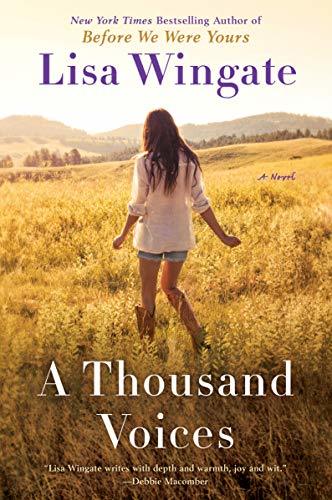
Review: A Thousand Voices

A Thousand Voices

A Thousand Voices is the fifth and final novel in Lisa Wingate’s Tending Roses series.

Dell Jordan was a side character in the first couple of books but is the main character in this one. She was Grandma Rose’s neighbor as a child, living with an ailing grandmother. Her father had not been around since her birth. Her mother had been in and out with drug addictions but died a few years before. After she and Grandma Rose became friends, she became an unofficial part of the family until Rose’s granddaughter and her husband, Karen and James, officially adopted Dell.

When Dell was discovered to be something of a musical prodigy, Karen enrolled her in a performing arts magnet school. Dell had trouble adjusting, but eventually found her way.

As this story begins, Dell graduated two years earlier, spent one year touring Europe with an orchestra, and a second year working in a Ukrainian mission orphanage. Her parents and teachers want her to apply to Julliard. But the appeal of music has faded with the pressures of performance and expectations.

She loves her new family, but she still feels “different,” with her brown eyes and hair and “cinnamon” skin amidst everyone else’s fair skin, blue eyes, and blond hair. She grieves over her birth father’s desertion, her birth mother’s neglect, and the derogatory comments from her uncle.

All she knows about her father is his name on her birth certificate and the fact that he was part Choctaw. When she learns about agencies in Oklahoma that help find Choctaw ancestors, she drives there from Kansas City to see if she can find any information about her father. She doesn’t tell her adoptive parents, feeling they wouldn’t understand and might be hurt.

After a series of mishaps in her travels, including losing most of her money, she arrives at a campground and sleeps in her car. A large group of tents and motor homes in the next campsite hold an extended Choctaw family, there for the annual Choctaw festival. They invite Dell into their gathering, where she becomes friends with several of them and feels a sense of belonging that she has never experienced before. A couple of them help her in her search.

A few quotes that stood out to me:

It’s a powerful thing to realize you were put in this world on purpose. It changes the way you feel about everything afterward (p. 2, Kindle version).

The past, even if you don’t talk about it, still exists, and no matter how hard you try to turn your back, no matter how dangerous it is to look at, part of you cries out to understand it.

Part of growing up is learning that people can’t give what they don’t have. The rest you have to find in yourself (p. 310).

The plot moves rather slowly until the last couple of chapters. There are some scenes that don’t seem to advance the plot at all, like a lengthy encounter with a skunk at the campground.

I was frustrated with Dell’s lying to her parents concerning her whereabouts, especially since she also lied to them in the previous book about her problems at school.

I wondered if Lisa intended for the series to lead to Dell’s journey from the beginning, or if Dell’s story emerged along the way. Apparently, the latter scenario was the case. Lisa said in the discussion questions at the end that the first book in the series was written with no thought of a sequel. But readers’ questions as well as her own musings about the characters grew into subsequent books. She also says there, “Dell was, in many ways, the catalyst for change in Grandma Rose’s family, and in turn she was changed by Grandma Rose’s family.”

I also wondered if Dell was originally thought of as Native American. She has always been described as having cinnamon-colored skin, but in a previous book, her uncle uses a different racial epithet about her. I wasn’t sure if that was just to show his ignorance, or if Lisa switched gears about what race Dell was part of.

I was dismayed by minced oaths (like “Geez”), language that was not profanity but also was not polite, and especially a bawdy description of an old woman whose robe had come undone. On the one hand, the people involved didn’t profess to be Christians. On the other hand, that was conveyed well enough without those elements. Because of this, the sheen of Wingate’s appeal has been a little tarnished for me.

It was interesting to read of Choctaw history. If this is an accurate representation, it seems that, among modern Choctaw, some are really into their heritage while others are not.

I thought the last couple of chapters were the best in the book. My heart went out to Dell in her struggles.

I know some don’t like neatly-wrapped-up-in-a-bow endings. But this book had more loose threads than I like. I would have enjoyed an epilogue, if not one more chapter.

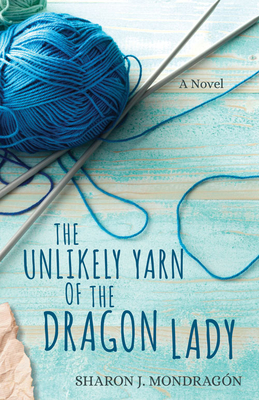
Review: The Unlikely Yarn of the Dragon Lady

Unlikely Yarn

It’s rare that I try a book without ever having heard of it or the author or seeing a recommendation from someone I trust. But I was looking through Audible’s Plus Catalog of titles they rotate in and out, and The Unlikely Yarn of the Dragon Lady by Sharon Mondragon caught my eye. It looked like an interesting novel about a group of knitters, which seemed like a relatively safe topic. Since it was free, if I found something objectionable, I could just delete it.

I’m so glad I tried this book. It was delightful.

A group of four women form the Heavenly Hugs Prayer Shawl Ministry at their church. I was confused about prayer shawls at first, wondering if they were something people wore as they prayed. But no, the ladies pray as they knit them for those who will receive them, and then hand them out to anyone ill, grieving, or going though a hard time so they’ll feel comforted and “hugged.”

The women meet every Wednesday morning to knit and pray together in their church’s prayer chapel. But one morning, they’re surprised to learn they can’t meet there any more. The chapel is being painted. Besides that, their pastor wants them to take their knitting out in public. People weren’t coming to church as much any more. If they knitted in public, people would ask about their knitting, and they could tell them about their ministry and the church.

In addition, the church’s bishop has told the pastor that if things don’t improve with the church soon, they’ll be closed down. More is riding on the success of the knitters’ mission than they know.

Margaret, the group leader, is livid. They’ve met in the chapel for years. How can they have peace and quiet to pray out in public? She wants to meet at her house, but the other ladies aren’t willing to go against their pastor’s request.

So they head to the coffee shop in the mall. Rose, kindhearted and interested in others, loves the idea. She likes to talk about knitting. She lives in a retirement home and is starting to feel invisible and useless. An overprotective daughter keeps her hemmed in until she can hardly do anything. Going out in public to knit seems like an adventure.

Jane has two teen-age daughters who are driving her to desperation with their constant bickering and discontentment. Only Rose knows Jane’s secret sorrow, that her son is in prison for using and selling narcotics.

Fran is the newest knitter among the group, taught and helped by Rose. Her husband passed away suddenly the year before, and the fog is just beginning to lift.

The ladies aren’t knitting long at the coffee ship before a college student comes over because her grandmother used to knit and she wants to see what the ladies are doing. When she hears about their prayers, she asks them to pray for a crucial upcoming test.

Slowly, other people do the same thing–stop by out of curiosity and then ask for prayer. The next time the ladies come to the mall, they find word has gotten around: they receive several prayer requests written on paper napkins. The prayer requests lead to more involvement in people’s lives.

Margaret feels the people stopping by are interruptions. “We’re supposed to be praying,” she repeats often. She can’t see past the green hair of one young man or the weariness of a middle-aged woman to the soul inside them.

But gradually, God works not only through, but in the prayer shawl ministry in surprising ways.

A couple of my favorite quotes:

Rose kept asking questions, drawing out Eileen’s memories of her father the way knitters pull their yarn from the center of the skein.

You’re right. God is orderly. But people are messy. They have problems and wounds and fears and besetting sins. Isn’t that what prayer shawls are all about, though? Trying to give people the comfort and strength they need to face and get through those things?

These characters were so well-drawn. The narrator of the audiobook, Christina Moore, did a beautiful job, especially with Margaret’s and Rose’s voices.

The plot is laced with humor and warmth and poignancy.

I’m not a knitter and I don’t know the jargon. But that didn’t interfere with my enjoyment of the book. There’s enough specific detail that I think seasoned knitters would understand and enjoy it, but not so much that it bogs down the narrative.

There were only two things I didn’t like. The author has God speaking to one character. I don’t think she ever identifies Him as God–she calls Him a “presence.” But I think we have to be very careful about putting words in God’s mouth, assuming we know what He would say in a given situation. I think writers can show how we think He could lead someone without having Him speak verbally. In fact, the author does this nicely with another character.

The other thing is that, in all the talk about people’s prayer needs, there’s no mention of anyone coming to believe on the Lord. People come to church who didn’t before and are encouraged to reconcile with estranged loved ones and such. But people can do that without knowing the Lord. I’m not sure what faith tradition the author is from. I know some authors prefer not to spell things out spiritually, but to let the change in characters’ lives speak for themselves. They feel that being any more explicit would be preachy. But I think a lack of clarity here causes confusion and leaves the reader without the most important message they need. I’ve written before that the whole plan of salvation doesn’t necessarily need to be included for a book to be Christian fiction, but what is there should be clear.

Otherwise, though, I loved this book. When I finished it, I missed the characters. A sequel has been written, so I’ll likely pick it up sometime. Meanwhile, this title is free for Audible members through October 7 and is about 8 hours and 20 minutes long if you want to give it a try.

Review: The Island Bookshop

The Island Bookshop

In The Island Bookshop by Roseanna M. White, Kennedy Marshall has a career she loves in the Library of Congress. But when her sister back in North Carolina’s Outer Banks has a serious fall from a ladder, Kennedy travels to help care for her sister and run their grandmother’s island bookshop.

Kennedy hasn’t been home in a while. She loves the island, her sister, and the bookshop. But she’s avoiding Wes Armstrong. They’ve been friends since childhood, but Kennedy had deeper feelings. Then Wes married her friend Britta. Though Britta passed away, Kennedy knew too many of her secrets–secrets she can’t bear that Wes should know.

Wes’s family has built a successful business on the island, but a development group has offered to purchase the business. The money would help, but the business has been Wes’s life. He struggles with knowing what he should do.

When Kennedy’s sister’s recovery takes longer than expected, Kennedy faces some difficult decisions.

When a question comes up about a different name on the lease of the bookshop than Kennedy’s grandmother, Kennedy searches for information among county records and old boxes in the attic. She finds a number of editions of The Secret Garden in various languages as well as some old letters with surprising news.

Interspersed between the modern-day chapters are scenes from Kennedy’s great-grandmother’s life. Ana is pregnant when she comes to the US during WWII from Dalmatia in Croatia, which at that time was part of Italy. Her husband, Marko, had come earlier to get a job and find a home. But he doesn’t come to meet her when she arrives. Italian-looking immigrants were viewed suspiciously at that time, and Ana doesn’t receive much help or direction. Finally a sea captain gives her a bit of information which leads her to the wife of the man who hired Marko for his fishing boat. The wife graciously takes Ana in, though she has to deal with anti-Italian sentiment from some of the neighbors.

But her friend’s daughter is enamored with Ana. They both love books, and Ana shares her favorite, The Secret Garden.

Then tragedy strikes. Ana doesn’t know what she will do in a new country with a newborn daughter.

I enjoyed both the modern-day and the historical stories. I hadn’t realized Croatia had been part of Italy. At the time, most people in the US weren’t interested in the difference–Italy was Italy and was ruled by Mussolini, so Italians were suspect. It was hard enough to adjust to a new country without that added layer.

I don’t usually read seasonally except at Christmas. But it was fun to read a “beachy” story at the end of the summer.

Themes of faith, forgiveness, and second chances are woven well through both narratives. Roseanna is one of my favorite authors, and this book is a lovely addition to her body of work.

Review: The Bitter End Birding Society

The Bitter End Birding Society

In Amanda Cox’s newest novel, The Bitter End Birding Society, Bitter End is a small town in eastern Tennessee with a variety of legends about how it got its name.

Ana Leigh Watkins, the most recent newcomer to Bitter End, plans to spend the summer helping her great aunt Cora sort through her belongings in preparation for selling her house and moving to a retirement community. In reality, Ana needs time away to recuperate from her year of teaching kindergarten. She’s regarded as a hero for confronting a school shooter who entered her classroom. But she remembers the fear in the young man’s eyes and feels she escalated a situation that could have been resolved peacefully. She can’t forgive herself for the young man’s fate and the trauma caused to her students. The praise she receives only weighs her down further.

Ana gets adopted by a stray dog. While taking him for a walk one day, she runs into a neighbor with a group of birdwatchers who invite her to join them. She learns her aunt is bitter enemies with the head of the bird-watching group. As Ana gently investigates further, she discovers a story over sixty years old of a moonshiner’s daughter, Viola, who falls in love with a preacher’s son. The tragedies that befell them are still having repercussions.

The narrative switches back and forth between Ana’s and Viola’s points of view.

I just discovered Amanda a few years ago and have read all of her books except a novella. I’ve loved every one. The stories are well-written and the characters are easy to identify and empathize with and root for. Their situations tug on the heartstrings, but gentle humor is laced throughout as well. Grace and redemption are underlying themes.

Some of the quotes that stood out to me:

I thought I could fit everything into tidy boxes and sort right from wrong. But now I see that sometimes a saint acts like a sinner. And sometimes a sinner acts like a saint.

Those lines can seem pretty blurry sometimes. One can look just like the other from the outside. I’d say that the difference comes down to the heart. A lost sheep wants to come home but can’t for some reason. Something is getting in their way. But a prodigal is running in the opposite direction on purpose. You can’t make someone come home if they don’t want to. 

It was a mystery how some trinkets and knickknacks were alive with meaning and memory while others were soulless souvenirs. 

Did he know that what he needed for his pain was healing, not an anesthetic? The numbness he felt was not a cure. Anesthesia was not the sort of thing a body could live on.

Healing was an ongoing journey without a fixed destination.

Sometimes things don’t come to a tidy conclusion. Words are left unsaid. Things are left undone. But this life is not the end. . . . . Our present circumstances, our perceived failures, they are not final.

I loved that the birding society visited the Seven Islands State Birding Park, which I have been to.

I listened to the audiobook read by Rachel Botchan, who had a distracting habit of taking a breath in odd places. But otherwise, I enjoyed her narration.

The audiobook does not include the author’s notes, but Amanda has linked to a few interviews she did about this book here, and I found another one here.

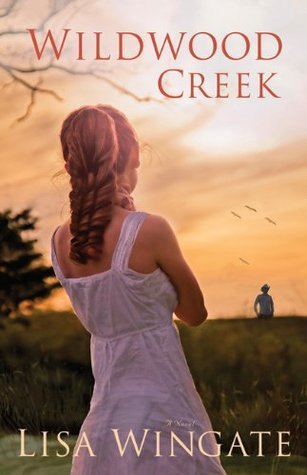
Review: Wildwood Creek

Wildwood Creek

Wildwood Creek is the fourth and final book in Lisa Wingate’s Shores of Moses Lake series. Unlike the others, this is a dual-timeline story.

In the 1850s, Bonnie Rose O’Brien and her family were captured by the Comanche. Her parents were killed, and Bonnie Rose and her younger sister, Maggie May, were held captive for years. Upon their deliverance, Bonnie feels soiled and shameful, even though nothing that happened to her was her fault. When the missionaries she’s staying with recommend her for a teaching position in the wilderness, she sees it as a chance to start over.

In 1861, a man named Harland Delavan is starting a new community called Wildwood to search for gold in Texas. He hires Bonnie as well as others to fill the town’s needs. But he rules with an iron hand. Soon individuals and then whole families disappear without explanation. Rumors and myths spread like wildfire, creating legends that linger through the centuries.

In 2014, Allie Kirkland is following in her father’s footsteps. He was a film director, and her earliest memories involve being with him on set. When he died, Allie’s life was never the same. Her mother remarried a lawyer, and they both urged Allie to work in his firm and major in law. Allie feels she doesn’t fit in with her step-siblings and half-siblings.

When Allie learns of a summer internship for a reality TV show, she jumps at the opportunity and is hired. A famous filmmaker wants to recreate the town of Wildwood near Moses Lake Texas, and have actors represent the townspeople and live as they did while exploring the mysteries of what could have happened to them.

Before long, mysterious things begin to happen in this Wildwood, too. Allie feels a kinship with the young teacher, Bonnie Rose. Can she find out what happened before it’s too late?

It was fun to see some of the characters from the previous books again. That’s one nice thing about reading a series one right after the other–I recognized people I might not have otherwise. I think there’s enough explanation in each book that they could be read alone, but they do build on each other.

Each of the Moses Lake books involves someone whose plans are upended in some way, causing them to reconnect with a faith they’ve neglected. Each story also contains some level of mystery and the importance of community.

Reading four books of one author in succession also brings to light an author’s quirks. I think in every book, someone is said to “flash an eye tooth” at someone. I’d never heard that phrase before–I suppose it’s an idiom for a wide grin.

I listened to the audiobook, which had two different women reading Bonnie Rose’s and Allie’s sections: Morgan Hallett and Heather O’Neill. Then I checked the ebook out via Libby to look at some passages there.

I think this book is the best of the four. My only disappointment is that I was looking forward to the author’s notes about her inspiration for this series and whether any of the details or characters were based in fact, yet there were none. At the end of the third book, the author says her husband, like one of the main characters there, got an unexpected job offer in a small Texas town. So I imagine many of the details of the Moses Lake community came from that experience. I did find a guest blog post from Lisa about the book here and an interview here.

Review: Firefly Island

Firefly Island

Firefly Island is the third of four novels in Lisa Wingate’s Shores of Moses Lake series. This story doesn’t start there, however.

Mallory Hale is a congressional staffer in Washington, D. C. following in the footsteps of her lobbyist father, when she unexpectedly meets Daniel Webster Everson, a biochemist working for the USDA. After a whirlwind romance, Daniel is offered a job in tiny Moses Lake, Texas. He asks Mallory to marry him and move to Moses Lake with him and his four-year-old son, Nick.

Mallory agrees. She’s not sure kind of job a congressional staffer can find there, but she can’t live without Daniel and Nick.

A series of mishaps begins their married life in less than fairy-tale happily ever afters. The house provided with Daniel’s job has not been lived in and is infested with vermin. Daniel’s new boss, Jack, is taciturn and erratic. The small community seems to eye Jack warily.

Suddenly thrust into a new marriage, motherhood, and setting, Mallory struggles. She finds friendship with her cowgirl neighbor, Al, and a young teacher, Keren.

Mallory is suspicious of Jack. Rumors circulate about his possible involvement in the disappearance of his wife and son. He’s secretive to the point of paranoia about his business. When his politician older son, with whom he has not been involved with in years, comes to visit, more details don’t add up. Jacks’ old cabin on Firefly Island is supposedly deserted, yet there are strange boats moored there. Mallory’s search for information leads to tie-ins with her old job. Can Mallory find out what’s going on and bring it to light before a disaster happens?

If I had read this book first in the series, I probably would not have continued. It starts out like a romance novel with what seems to me a lot of silliness (does anyone say hubba hubba any more?) Though there are no explicit scenes, there are more references to the couple’s physical relationship than I care for. Then the plot seems to drag in the middle.

But the latter half of the novel comes together nicely with mystery and intrigue. I enjoyed the interactions with characters from the first two books.

Besides the adjustments with a new marriage and the mystery behind her husband’s boss, Mallory deals with interactions with the more disadvantaged section of Moses Lake. Mallory has been raised the sheltered youngest daughter of a comfortable family. When she takes Nick to a children’s activity and sees a lot of unkempt kids, she worries about lice and bad attitudes. But over time she gets to know the kids and their needs, sees them differently, and looks for ways to help. “Was I really so entrenched in the world I’d been raised in, so set in my ways that I couldn’t look beyond the surface of another person and see a human being? Was I that shallow?” (p. 214).

I also thought this was a sweet line after an encounter with Nick: “Watching him skitter away, I felt the process of loving and parting and holding on and letting go that would be our future together, his and mine” (p. 203).

So, while this wasn’t my favorite of Lisa’s books, I gained from it.

(Sharing with Bookish Bliss)

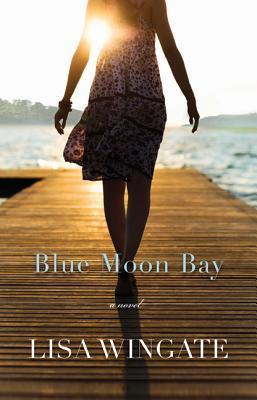
Review: Blue Moon Bay

Blue Moon Bay

Blue Moon Bay is the second novel is Lisa Wingate’s Shores of Moses Lake series, contemporary fiction set in a small town in Texas. The first was Larkspur Cove (linked to my review).

In Blue Moon Bay, Heather Hampton is an architect working in Seattle. Her father was from Moses Lake, but the family only lived there a short time when Heather was in her teens. She felt like an outcast at school and protested the family’s presence in Moses Lake by dressing somewhat Goth-style. Her mother wasn’t very popular in Moses Lake, either, since she stole away a hometown guy.

When Heather’s father died, Heather, her mother, and brother moved away as soon as they could. Heather never wanted to look back.

Now her firm is about to negotiate a big deal for an industrial plant in Moses Lake, with the sale of the family’s land as part of the deal. Heather’s two older great uncles (called the “Uncs”), have plans to move to live with one of their sons. Heather thinks this is the ideal solution to provide for the family, settle the land, and close the door to Moses Lake forever–as well as look good to her boss.

Everything is set, only awaiting her mother’s signature on the documents.

But her mother doesn’t show up for the appointment.

When Heather calls her mother, she gets vague references about considering another offer, which is total news to Heather. And what’s weirder is that her mom is actually in Moses Lake with Heather’s brother, Clay.

Since Heather can’t get any clear details on the phone, she decides to fly to Moses Lake. After a series of mishaps, she finally gets there. But she still can’t get any answers from anyone. And, mysteriously, Blaine Underwood, the handsome football hero of her high school days, is somehow involved.

I know a story needs conflict to have any kind of plot. But the kind of conflict here frustrated me. It’s supposed to, though–the main character is frustrated as well. Heather is more like her father, and her mother and brother are like each other. Her free-spirited mother gives ambiguous answers, getting Heather nowhere in figuring out what’s going on. The Uncs and Clay and Blaine are not much help, either.

Nevertheless, the story wraps up nicely in the end, including some edge-of-your-seat action. Then the reason for the lack of details becomes clear.

A subplot involves the Uncs’ former housekeeper, Ruth, the one person whom Heather had loved when she lived in Moses Lake. Ruth now has cancer, and Heather visits her several times, learning more of her Mennonite history and how she came to the US from Germany as a child. I had thought this was just an interesting side trail, but it ties into the main plot.

Like the first book in the series, this one opens each chapter with “Wall of Wisdom” quotes left by visitors at the Waterbird Bait and Grocery. Some characters from the first book show up there as well as in the story.

Even though I didn’t enjoy this book quite as much as the first, I did like how it came together in the end.

(Sharing with Bookish Bliss)

Review: He Should Have Told the Bees

He Should Have Told the Bees by Amanda Cox tells the story of two young women whose lives intersect unexpectedly.

Beckett Walsh kept bees with her father until he died unexpectedly. Her mother had left them when Beckett was small. Though memories of her mother are hazy, her leaving sent Beckett into nightmares of monsters when she was a child and panic attacks as a young person and adult. Her father had left his job as a banker to homestead, start an apiary, and accommodate Beckett’s needs. But now he’s gone. Still, Beckett thinks she can do just fine, despite her aunt’s attempts to manage her life.

Callie Peterson grew up with an unstable alcoholic mother who went through a series of men. Now Callie has distanced herself and bought a building to start a new business making candles, lotions, etc. But the building is going to need more work than she thought. And then her mother shows up on her doorstep, claiming she’s ready to seek help. When Callie takes her to a rehab center, she’s unaware that her mother named her as the person responsible for the finances needed.

Both women get a summons about a hearing for a trust that Beckett’s father had set up, naming them both as co-owners of the farm. The two women never knew each other before. Beckett can’t fathom why her father would name this stranger a co-owner when he knows Beckett’s needs and problems. Callie doesn’t, either. But she wonders if selling the farm could help her financial problems. But doing so would oust Beckett from the only safe place she knows.

Both women try to understand why Beckett’s father named Callie in the trust. Their search leads them to secrets and connections they never knew about. Will both their lives be upended–or fulfilled?

I enjoyed this story quite a lot. It was easy to sympathize with each woman’s journey and pain.

The side characters are delightful. Beck is unexpectedly visited by a neighbor in the form of a young girl who says she is an alien. Callie’s booth neighbor in the markets where they sell their wares turns out to be a stabilizing factor in her life.

The book opens with an excerpt of a poem by John Greenleaf Whittier titled “Telling the Bees,” in which beehives are draped in black as the bees are told their keeper has died. Evidently, according to Wikipedia, this is a custom in many European countries. It was even done when Queen Elizabeth died in 2022.

At one point, Callie’s friend points out some sunbeams and says:

They’re called crepuscular rays. And they happen because of light hitting dust. It’s just ordinary, boring particulate floating all around us like it always does, and then bam, the light hits it and suddenly it’s something that makes people stop and take pictures. If that’s not a miracle, then I guess I don’t know what a miracle is (p. 54).

That becomes an underlying theme.

A few other quotes that stood out to me:

If she could stack up all the hurt in the world and sort the kind inflicted with malicious intent from the hurt inflicted by carelessness, how would the two compare? Was there really any difference when the result was the same? (p. 216).

It was a hard lesson to learn—that you couldn’t be the one to fill the holes in another person’s life. Working through dysfunctional patterns, finding healthy coping skills, and letting God heal the wounds the past left behind, those were things you couldn’t do for another person. No matter how much you wanted to (p. 251).

It’s possible for treasured things to come out of the brokenness. Even if it doesn’t happen the way any of us would have wanted. Even if it comes through loss (p. 299).

On a humorous note, it’s fun to notice a particular author’s unique repeated words. In this book and others, Amanda uses the word “scrubbed” a lot (eight times in this book)–she scrubbed her eyes, he scrubbed his hand over his face. And hearts tend to “stutter-step” when upset. And people “worry” their bottom lips.

Amanda doesn’t have end notes about the story, but there is an interview here where she discusses the book.

All in all, I’m happy to recommend this book.

(I often link up with some of these bloggers.)