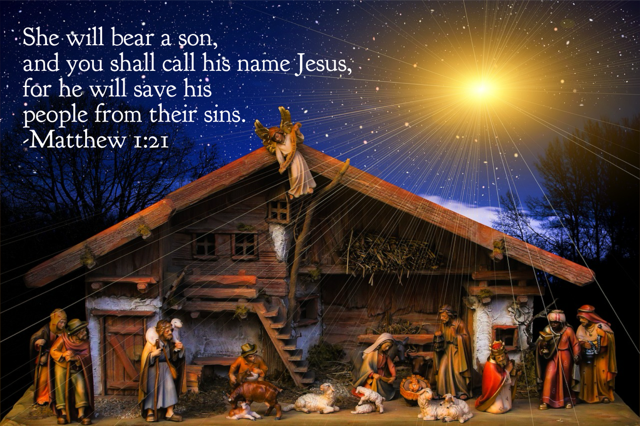
Lesser Lights

Lesser lights

Before the invention of electricity, it was rare to see a whole city lit up. One could see candlelight or lanterns in windows. Gaslights helped illuminate sidewalks. But if the whole city seemed alight, that meant something unusual was going on.

These days, though, cities seem to dwell in perpetual light.

G. K. Chesterton commented on this in The Illustrated London News in 1927:

In every civilised age and country, it has been a natural thing to talk of some great festival on which “the town was illuminated.” There is no meaning nowadays in saying that the town was illuminated. There is no point or purpose in having it illuminated for any normal and noble enthusiasm, such as the winning of a victory or the granting of a charter. The whole town is illuminated already, but not for noble things. It is illuminated solely to insist on the immense importance of trivial and material things, blazoned from motives entirely mercenary. . . .

It is no good to send up a golden and purple rocket for the glory of the King and Country, or to light a red and raging bonfire on the day of St. George, when everybody is used to seeing the same fiery alphabet proclaiming the importance of Tibble’s Tooth Paste or Giggle’s Chewing Gum. The new illumination has not, indeed, made Tibble and Giggle so important as St. George and King George; because nothing could. But it has made people weary of the way of proclaiming great things, by perpetually using it to proclaim small things. It has not destroyed the difference between light and darkness, but it has allowed the lesser light to put out the greater (quoted in Winter Fire: Christmas with G. K. Chesterton by Ryan Whitaker Smith, pp. 107-108).

Light is one of my favorite symbols of Christmas and one of the things I miss most when we take decorations down.

But light is not just a symbol of Christmas. It’s a symbol of God, a thread running through the whole Bible.

From the Old Testament: “The Lord is my light and my salvation; whom shall I fear?
The Lord is the stronghold of my life; of whom shall I be afraid?” (Psalm 27:1).

To the New: “Again Jesus spoke to them, saying, ‘I am the light of the world. Whoever follows me will not walk in darkness, but will have the light of life'” (John 8:12).

From prediction: “The people who walked in darkness have seen a great light; those who dwelt in a land of deep darkness, on them has light shone.” (Isaiah 9:2).

To fulfillment: “And leaving Nazareth he went and lived in Capernaum by the sea, in the territory of Zebulun and Naphtali, so that what was spoken by the prophet Isaiah might be fulfilled: ‘The land of Zebulun and the land of Naphtali, the way of the sea, beyond the Jordan, Galilee of the Gentiles—the people dwelling in darkness have seen a great light, and for those dwelling in the region and shadow of death, on them a light has dawned'” (Matthew 4:13-16).

From the Father: “God is light, and in him is no darkness at all” (1 John 1:5b).

To the Son: “In him was life, and the life was the light of men. The light shines in the darkness, and the darkness has not overcome it. . . . The true light, which gives light to everyone, was coming into the world.” (John 1:4-5, 9).

My husband loves astronomy and will take his telescope out when some phenomenon is happening in the sky. He often says that to really see the stars best, one needs to get away from the lights of cities, towns, or neighborhoods.

It’s not that lesser lights put out the light of the stars, but they obscure and distract from them.

The lesser lights in our lives do the same. They may be harmless in themselves, but their number and seeming urgency take our attention. They can’t put out the Light. But they make it harder to see Him.

Some day, there will be no lesser lights: “And night will be no more. They will need no light of lamp or sun, for the Lord God will be their light, and they will reign forever and ever” (Revelation 22:5).

Until then, may our hearts cry out with the psalmist, “There are many who say, ‘Who will show us some good? Lift up the light of your face upon us, O Lord!’” (Psalm 4:6).
Psalm 36:9

(I often link up with some of these bloggers.)
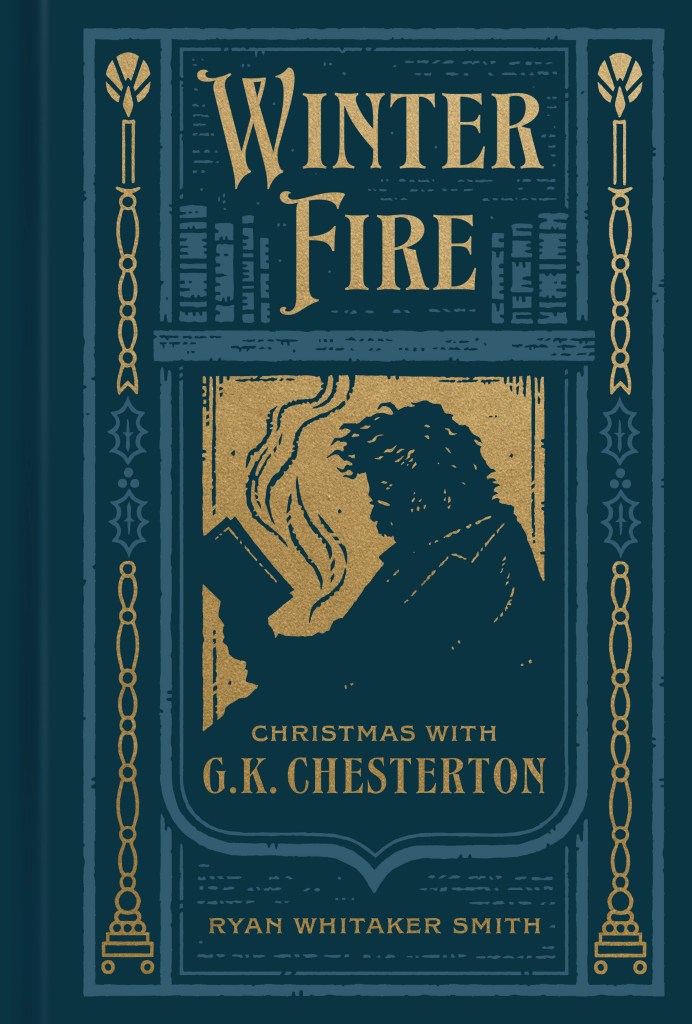
Winter Fire: Christmas with G. K. Chesterton

Winter Fire: Christmas with G. K. Chesterton

I’ve not read G. K. Chesterton except for one novel, The Man Who Was Thursday, and a few pithy quotes. The quotes were enough to entice me to read more. So I was excited to see Winter Fire: Christmas with G. K. Chesterton by Ryan Whitaker Smith.

When I looked at the sample of the book at Amazon, however, I was disappointed that the book seemed to be less of Chesterton and more on Smith commenting on Chesterton. I eventually decided to get the book anyway, and I am glad I did.

Smith says that reading Chesterton is an “acquired taste,” and I agree. I would not have gotten nearly so much out of Chesterton’s quotes here without Smith drawing out the meaning.

If you’re not familiar with Chesterton, Wikipedia says he “wrote around 80 books, several hundred poems, some 200 short stories, 4,000 essays (mostly newspaper columns), and several plays. He was a literary and social critic, historian, playwright, novelist, and Catholic theologian and apologist, debater, and mystery writer.” He was a columnist for several newspapers and even wrote some Encyclopedia Britannica entries (including the one for Charles Dickens). He might be known best for his Father Brown stories about a priest who also does detective work.

He was baptized into the Church of England as a child, dabbled in the occult, then came back to the Anglican church as an adult, and later converted to Catholicism. I am curious how and why he embraced Catholicism but haven’t read enough to know his thinking. But “Christian themes and symbolism appear in much of his writing.”

Smith says Chesterton wrote prolifically about Christmas, much more than could be included in this book.

Winter Fire contains thirty days of readings, with Smith expanding on, explaining, and giving the cultural background to quotes about Christmas from some of Chesterton’s essays. After each reading is a Bible verse and questions for thought.

Then there are a variety of Chesterton’s other writings: several poems, a few essays, and a couple of short stories. Finally, Smith included recipes and games prevalent at the time Chesterton lived (1874-1936). The weirdest game, called Snapdragon, involved raisins doused in brandy, then set on fire. Then children tried to reach into the fire quickly and grab a raisin.

One of the readings here inspired a blog post, A Christmas Boomerang, and I have another post or two in mind based on thoughts read here.

Smith says the title of this book “is taken from a quote featured in the reading for Day 13: ‘Christ is not merely a summer sun of the prosperous but a winter fire for the unfortunate.’ The image of a fire burning amid the frosts of winter seemed a fitting image to draw from for a book that not only celebrates the comfort, joy, and revelry of Christmas, but the mercy of God who has called us to His everlasting feast” (p. 12). He writes that “The purpose of our journey is not so much to dwell in ‘the place from which Christmas came,’ but to allow that place to dwell in us, to return to our own country with christened eyes, to look upon our everyday surroundings with a baptized imagination” (p. 17).

I have scores of quotes marked, but I’ll try to share just a few:

In the majestic march of Progress, we have first vulgarised Christmas and then denounced it as vulgar. Christmas has become too commercial; so many of these thinkers would destroy the Christmas that has been spoiled, and preserve the commercialism that has spoiled it” (Chesterton, p. 32).

I have never understood what people mean by domesticity being tame; it seems to me one of the wildest of adventures (Chesterton, p. 45).

Omnipotence and impotence, or divinity and infancy, do definitely make a sort of epigram which a million repetitions cannot turn into a platitude. It is not unreasonable to call it unique. Bethlehem is emphatically a place where extremes meet. (Chesterton, p. 84).

Christmas did not merely borrow certain traditions from paganism; it survived paganism. It was a stronger thing than all the pagan world could offer. It was fiercer than its creeds, more potent than its rituals (Smith, p. 116).

The land endures the harshness of winter in order to be reborn in the vigor of spring. Everywhere we look, nature is rehearsing resurrection, preparing for the day when all things will be made new, when measurable time gives way to immeasurable eternity (Smith, p. 128).

These are a couple of stanzas from Chesterton’s poem “The House of Christmas”:

A Child in a foul stable,
Where the beasts feed and foam;
Only where He was homeless
Are you and I at home;
We have hands that fashion and heads that know
But our hearts we lost—how long ago!
In a place no chart nor ship can show
Under the sky’s dome.

To an open house in the evening
Home shall men come,
To an older place than Eden
And a taller town than Rome.
To the end of the way of the wandering star,
To the things that cannot be and that are,
To the place where God was homeless
And all men are at home.

The book cover, texture, and illustrations have a lovely old-fashioned feel to them.

Chesterton uses a lot of irony, and often. as Smith says, is “saying several things at once” (p. 11). I have question marks at a couple of places in the book. But I was inspired, taught, and encouraged by much that I read, and I am sure I’ll read this again in future Advent seasons.

(Sharing with Bookish Bliss Quarterly Link-Up)

A Christmas Boomerang

A Christmas Boomerang

Boomerangs, according to G. K. Chesterton, are “things that return.” He names sleep and a new day as boomerang blessings–something we experience which comes back to us to experience again. No matter how many times we go to sleep and wake up again, we continue to enjoy those recurring cycles.

In Winter Fire: Christmas with G. K. Chesterton, Ryan Whitaker Smith comments that feasts in the Jewish calendar were like boomerangs, recurring reminders of God’s grace in delivering and providing for His people. He quotes Chesterton again:

It is the very essence of a festival that it breaks upon one brilliantly and abruptly, that at one moment the great day is not and the next moment the great day is . . . The thing is done at a particular time so that people may be conscious of a particular truth; as is the case with all ceremonial observances, such as the Silence of Armistice Day or the signal of a salute with the guns or the sudden noise of bells for the New Year. They are all meant to fix the mind upon the fact of the feast or memorial, and suggest that a passing moment has a meaning when it would otherwise be meaningless (pp. 68-69).

Whitaker goes on to say, “As the Israelites’ festivals were a perpetual retelling of the same story, so are our Christian traditions a form of continually re-grounding ourselves in the narrative of redemption. The consistent ‘return of old things in new times,’ Chesterton tells us, . . . . the regularity of our holiday rituals is a way of maintaining godly sanity in an unstable and unpredictable world” (p. 56).

Our modern church and personal calendars may not follow the feasts given Israel in the Old Testament. But regular observances with their symbols and rituals remind us of great truths.

Christmas reminds us:

We need a Savior. She will bear a son, and you shall call his name Jesus, for he will save his people from their sins” Matthew 1:21).

God loves us enough to rescue us at great cost to Himself.For God so loved the world, that he gave his only Son, that whoever believes in him should not perish but have eternal life.” (John 3:16).

God’s timing is perfect. “But when the fullness of time had come, God sent forth his Son, born of woman, born under the law, to redeem those who were under the law, so that we might receive adoption as sons” (Galatians 4:4-5).

And so much more.

May the “boomerang blessing” of Christmas never be stale or empty, but rather a regular reminder that God loved us enough to send His Son to be our Savior, to die for our sins so we could become His.

"She will bear a son, and you shall call his name Jesus, for he will save his people from their sins." Matthew 1:21

(I often link up with some of these bloggers.)