Review: The Librarian of Saint-Malo

The Librarian of Saint-Malo

In the novel, The Librarian of Saint-Malo, by Mario Escobar, World War II broke out on the day Jocelyn and Antoine married. She developed tuberculosis on their honeymoon and struggled with her health for a long time.

Jocelyn worked as a librarian’s assistant in Saint-Milo, France, a port city that was once a haven for privateers. Antoine was eventually called for military service. When the Nazis invaded France, Jocelyn and her friend, bookstore owner Denis, hid some of the most valuable and important books away before the Nazis could either destroy or steal them.

A Nazi officer took over one of the bedrooms in Jocelyn’s apartment. The officer in charge of going through the books at the library was kinder and did not search as thoroughly as he could have for forbidden or valuable books.

The longer the Nazis occupied the area, the worse things got: food shortages, restrictions, people being herded and sent to concentrations camps–including Denis.

When the tide turned and the Nazis saw they were beginning to lose the war, they refused to surrender or retreat from Saint-Malo in an effort hold off Allied forces from getting further inland. So the city was besieged by American bombs to try to drive out the Nazis, leaving it nearly totally destroyed.

The book is written as a series of letters from Jocelyn to an author she admires so that he might tell her story. But most of the chapters weren’t really written as letters. When Jocelyn addresses the author at intervals, it seems she does so almost as a reminder to the reader that she’s writing letters.

Escobar writes in his author notes that this book was inspired by a visit he took to Saint-Malo as well as an account of a love story someone shared with him. He shares what circumstances and characters were based on real people.He writes that he “wanted to show the suffering of the common people during the German occupation of France and home in on the terrible persecution that the occupation unleashed on culture and books in particular” (p. ix).

I’ve read a number of WWII novels, mainly because that seems to be the most popular era for historical fiction. Usually this genre details some of the awful things people went through during that time but also highlights the bravery and humanity of the characters and leaves one feeling inspired and hopeful.

But this book fell flat for me, especially the ending. I never really connected with Jocelyn. The fact that this book was translated from another language and written by someone from another culture may have contributed to some of the thinking and conversations seeming a little unnatural to me.

Plus the author had characters, mainly Jocelyn, making sweeping generalizations. At one point she comes to see the wife of the marshal’s daughter because she’s been told letters from her husband have been sent there. She remarks, “I thought about how the rich and powerful never lose a war; they can adapt to any circumstance, as if pain and suffering were never meant for them (p. 46)–as if no one rich or powerful ever suffers. In another place, she says, “Heroism is just selfishness” (p. 46). She writes to her author-correspondent, “Being a writer means feeling things at a deeper level than everyone else and knowing how to communicate those depths, helping readers to see reality in a way they never have before” (p. 112). I agree with the second half of the sentence, but not the first. She tells an officer, “You fail to understand women, Lt. Bauman. We are not moved by ideals—that is a banal game ever played by men. We’re driven by something much deeper that really makes the world turn: affections” (p. 116). That doesn’t make sense to me at all.

And then there’s a vulgar expression that I thought was more modern uttered by the Marshall.

I had thought this was a Christian fiction novel, but it doesn’t seem to be. “Fate” is mentioned several times.

One good thing from the book was learning about Saint-Malo, which I had never heard of before. Somehow it was rebuilt after all the destruction and is now a resort town.

Plus there were a few quotes I loved. A couple of my favorites:

My hope is that someday, when humanity regains its sanity, people will know that the only way to be saved from barbarianism is by love: loving books, loving people, and, though you may call me crazy, loving our enemies. There’s no doubt that love is the most revolutionary choice and, therefore, the most persecuted and reviled (p. 2).

Literature is a weapon against evil (p. 124).

Since Escobar is a new author to me, I looked up several reviews of this book when I saw it on sale. Opinions were mixed. Some, like me, felt the book fell short in some ways; others loved it.

(Sharing with Bookish Bliss Quarterly Link-Up)

Two Reading Challenge Wrap-Ups

Though I’ll finish a couple more books by the end of the year, I thought this would be a good time to report on a couple of reading challenges I participate in.

Shelly Rae at Book’d Out hosts the Nonfiction Reader Challenge. Shelly has twelve different categories that we can aim for. Or we can be a “Nonfiction Grazer” and make our own goals. I chose the latter course, because I was only interested in a handful of the categories listed.

My own goals for this challenge and the results were (linked to my reviews):

Memoirs/Biographies:

Books About Writing:

Bible Study Books:

Christian Living Books:

Letters/Journals:

The Collected Letters of C. S. Lewis, Volume III. I’m maybe halway through this one.

A Book by C. S. Lewis I Have Not Read:

Same as above.

Organization/Productivity:

Related to a Holiday:

The only category I missed was aging/midlife.

By my count, that’s 28 nonfiction book (or 29 if I count reading Adorning the Dark twice. I’m satisfied–all these were informative and some were profound.

The Intrepid Reader hosts the Historical Fiction Reading Challenge. I like a variety of fiction categories, but historical fiction is probably what I read most. I aimed to read fifteen for the Medieval category. I completed twenty-four.

Linked to my reviews:

I love that there are classics here as well as some hot off the press, old favorites as well as newly-discovered authors.

Next week I’ll share my completed list of books read this year and my top favorites.

Review: Christmas at Sugar Plum Manor

Christmas at Sugar Plum Manor

Christmas at Sugar Plum Manor by Roseanna M. White is a sweet (pun intended) Edwardian-era novella with shades of Jane Austen and The Nutcracker.

Lady Mariah Lyons’ step-father, the Earl of Castleton, has to leave his estate to a distant cousin due to an entail on the property. His heir, Cyril Lightbourne, had visited the manor as a child, where he and Mariah became fast friends. They were both imaginative and fun-loving, renaming Plumford Manor as Sugar Plum Manor and writing tales set in the woods.

But due to a misunderstanding, Cyril thought the Earl didn’t really want him as an heir, so he’s been absent for twelve years. Now he’s been invited to Plumford Manor for Christmas and is not quite sure what to expect.

Mariah isn’t sure, either, whether Cyril will be the same friend he was, or whether he will be distant and aloof. She’s heard he is courting Lady Pearl, and she doesn’t know why the men who flock to Pearl can’t see the cruelty behind the beauty.

Another guest arriving at the manor for Christmas is a Danish Greve (Count) who specifically wants to seek Mariah’s hand in marriage because his prince wants to strengthen ties with England by having a member of the royal court marry into a leading English family. He doesn’t love her: he thinks she is pleasant enough, though a bit silly, but he attributes that to her youth. Though handsome, he comes across as almost emotionless, cold, and calculating.

The two men had an altercation in the past, which sets the tone for their meeting at Plumford. Their pursuit of Mariah adds to their animosity and desire for revenge.

Mariah is a sweet girl, though not as beautiful as her widowed older sister. Her siblings and mother think she’s a bit immature, even ridiculous. Now the Greve feels the same way. Is what she always thought of as joyfulness truly childishness? Does she need to tone herself down to marry the Greve, or will Cyril ever see her as more than a childhood friend?

Embedded in the story are themes of faith, forgiveness, redemption, and being who God created you to be. I listened to the audiobook nicely read by Liz Pearce. This was a nice Christmas read.

(Sharing with Bookish Bliss Quarterly Link-Up)

Review: Christmas with the Queen

Christmas with the Queen

I’ll say up front that I have mixed emotions about this novel.

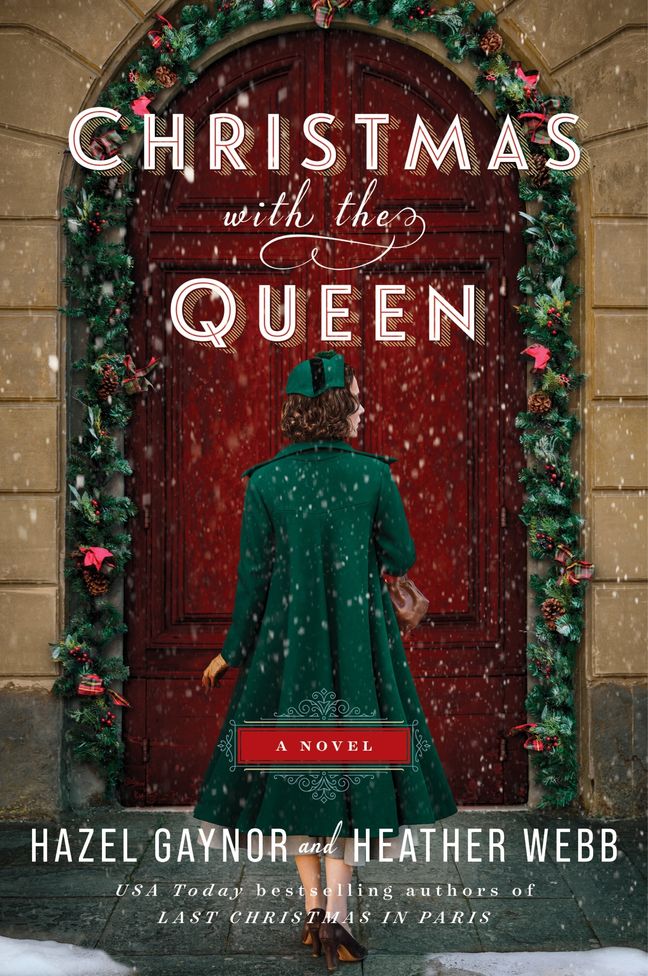
Christmas with the Queen by Hazel Gaynor and Heather Webb opens in 1952 with Elizabeth II in the first year of her reign, planning to continue the Christmas radio broadcast her father and grandfather had begun. She’s finding her footing as a young monarch, as well as juggling royal and family duties. Plus the nation is undergoing changes following WWII.

Olive Carter is a reporter trainee with the BBC. She lives with her parents and young daughter, Lucy. She wears a wedding ring and tells people her husband died in the war, but she was never married. Lucy’s father is revealed about a third of the way through the book, but it’s no surprise.

Olive can’t seem to get any serious stories to cover. She’d love the royal news, but an older man, Charlie, has been covering the royal family for decades. However, when he gets sick over Christmas, Olive asks to take his place at Sandringham for the Queen’s first radio address. Her boss agrees.

Jack Devereux is an American from New Orleans who stayed in England after his time in the Navy was over in WWII. A group of friends found each other on VE Day and kept in touch afterward. Jack is attracted to Olive Carter, but once he gets to know Andrea, he develops a serious relationship with her. Jack and Andrea marry, and he works in a restaurant with the hopes of starting his own someday.

But then Andrea is killed in an accident. At loose ends, Jack doesn’t know what to do with himself in his grief. Finally a friend urges him to spend Christmas with him and his family, where Jack meets his brother, Mason, who works as an assistant chef with the royal family. There’s an opening, so Mason invites Jack to apply, which Jack does. In Sandringham, Jack is surprised to run into Olive Carter again.

Jack and Olive run into each other at intervals through the years, usually at Christmastime in Sandringham. At first Jack is too lost in grief to consider Olive any more than an old friend. But over time, he wonders if he can love again.

Olive, meanwhile, has an important secret to share with Jack, but never seems to find the right opportunity to do so.

They both have interactions with Elizabeth and Philip.

I enjoyed the story about the queen quite a lot. From the title, you’d think her story would have been the main one. But it’s not. I got frustrated with Jack and Olive going around the same circles so many times.

I also liked Jack’s journey from his grandfather’s restaurant in New Orleans to a chef in the royal kitchen, trying to balance his love for experimentation and spices with the more traditional fare he’s expected to serve.

It was fun to see Elizabeth’s and Philip’s interactions with each other and with Jack and Olive. I was surprised, but shouldn’t have been, that girls kept scrapbooks with news and pictures of Elizabeth just like they did for Diana years later.

However, I am sorry to say I didn’t like Olive much. She’s kind of a party girl at first and has no problem with lying to get ahead at work.

But what bothered me most was the attitude about Olive’s one-night stand when she got pregnant. Nothing explicit is shown, but neither she nor her best friend feel she’s done anything wrong, and that night is referred too often through the book as “delicious.” Then later, tired of being alone, Olive decides to go out with an old flame just for fun. Her friend says, “Sex, you mean,” and encourages her to go.

Yes, this is a secular book, so I don’t expect it to have Christian values. And, yes, non-Christian characters are going to act like non-believers. Secular authors have the right to write what they want, but I have the right to express when I don’t like something. Plus, there was none of this kind of thing in the previous book I had read from these authors, so I wasn’t expecting it here–nor the amount of bad words and taking the Lord’s name in vain.

I loved The Last Christmas in Paris by these authors and I am sad this book was not the same caliber.

(Sharing with Bookish Bliss Quarterly Link-Up)

Review: The Painted Castle

The Painted Castle by Kristy Cambron

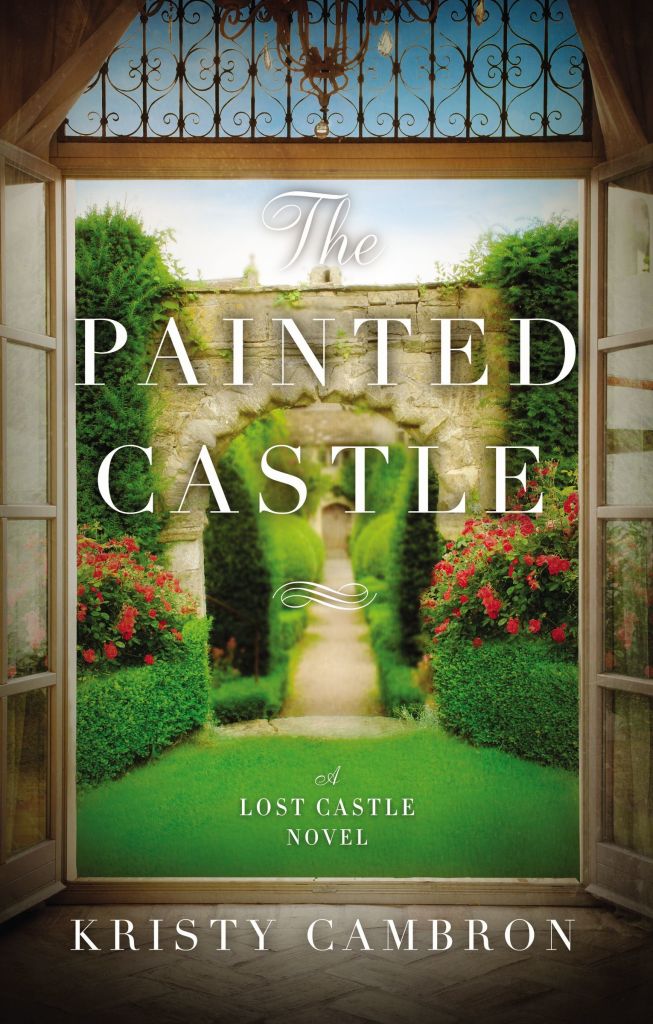
The Painted Castle is the third in Kristy Cambron’s Lost Castle series, the first two being The Lost Castle and Castle on the Rise.

In modern-day Dublin, Keira Foley is the sister of the two main characters in the previous books. She is an art historian but lost her job, and her fiance broke up with her. She’s working in her brother’s pub for now, until she’s asked to authenticate a portrait of Queen Victoria painted by Franz Xaver Winterhalter. It was discovered in an old manor home whose owner just wants to sort through and sell everything. But Keira doesn’t know if she can trust the man asking: a rumored American art thief. She decides to go with him, and uncovers more questions than answers.

In 1833 England, Elizabeth Meade is shattered when her beloved father is killed. He left her and her mother in dire financial straits, which her mother tries to hide from society. Elizabeth’s only goal in life to to find the man who killed her father and take revenge. Her favorite pastime, painting, is not approved by her mother, but brings Elizabeth joy. When Elizabeth is grown, her mother arranges her marriage to a Viscount Huxley, and Elizabeth is startled to learn he is the very man she thinks murdered her father.

During WWII, Amelia Woods turned the estate into a haven for refugee children after her beloved Arthur died. But now she’s ordered by the English military to house a group of American pilots. Amelia does her best in a difficult situation, trying to shelter the children from the war as much as she can and manage amidst rationing. She and the American captain bond over the books in her husband’s library.

A main character in each timeline is recovering from some kind of loss. Many of the characters learn that though our path isn’t always what we’d planned, we can trust God through it.

Partway through the book, I began to wonder if Winterhalter was a real artist. He was! And the portrait of Victoria was real as well, commissioned by her for her husband’s birthday. It was unconventional for the time, showing Victoria with her hair down and a bit more shoulder uncovered than usual. Albert loved it, but felt it was too intimate for public display, and hung it in his study.

Much historical fiction these days is written with two timelines. Kristy is the only writer I’ve known to weave together three, and though she does it well, I hope this does not become a trend. 🙂 She does a good job keeping us from getting confused by naming the date and location at the beginning of each chapter and orienting us quickly with pertinent details.

I enjoyed the settings and stories as well as the way details were unfolded throughout the book. Each of the characters seemed relatable.

A couple of favorite quotes:

Books are a completely personal kind of journey. On the first page, they ask us not only to be willing but to be moved, changed, persuaded, even made new by the time we reach the end. Everyone’s walk-through is different (p. 104).

Parham Hill seemed to own the strange combination of both peace and pain. Beauty and bitterness. A lavishness surrounded by a coldness . . . They were strange bedfellows to find hidden in the shadow of Framlingham Castle and its quaint little country hamlet (p. 131).

In her author’s notes, Kristy shares that her father was an American pilot in WWII who flew in the very area she wrote about here. And she shares other bits and pieces that inspired her plots.

There are also some interesting bits in the book about H. A. Rey and his wife, Margret. He was born in Germany, and he and his wife were Jews living in France. They escaped on bicycles not long before Paris fell, taking their manuscript of Curious George with them, which became an instant success when they got it published.

Though it’s been a while since I read the previous two books, I felt the last chapter pulled everything together very well and was a fitting conclusion.

(Sharing with Bookish Bliss Quarterly Link-Up)

Review: An Honorable Deception

An Honorable Deception

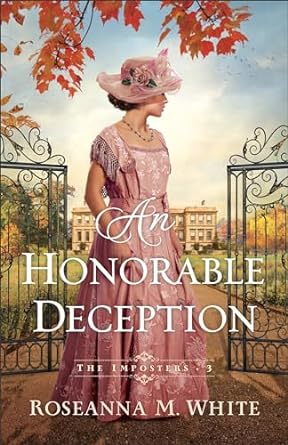
An Honorable Deception is the third in Roseanna M. White’s Imposters series about an aristocratic English pair of siblings in the early 1900s whose father left them nearly penniless. One of the father’s extravagant expenditures was a circus, whose residents now make their home at the Fairfax tower and whose staff taught the siblings, Yates and Marigold, skills to help them in their venture as private investigators

Yates heads to the church of a friend, James, who allows him to conduct interviews with potential clients in the confessional booth. Yates poses as “Mr. A” with an accent, Scottish this time. A “Miss B” on the other side of the booth asks him to help find her ayah, Samira. Miss B had been raised in India when her father was a viceroy there. Samira was with the family until they moved back to England, and since then she has traveled back and forth in several similar situations. Miss B. and Samira have remained close and meet whenever Samira is in town. But Samira missed their scheduled meeting, and so did a friend who was supposed to give Miss B. some news.

As Mr. A. and Miss B talk, they hear banging doors and hurried footsteps. Before Yates can stop her, Miss B leaves the confessional, says, “You!” and is shot three times.

Yates is in danger of blowing his cover, but he has to help Miss. B. As he leaves the confessional, the men have gone, and he discovers Miss B. is none other than Alethia Barremore, daughter of one of London’s leading families.

James and Yates bring Alethia to the Fairfax’s London home for her safety, fearing her attackers would find her in a hospital. As she slowly recovers, they learn more of her story and start looking into her case.

Also with the Fairfax siblings is a longtime friend, Lavinia Hemming.Yates had loved Lavinia when they were teenagers, but she developed scarlet fever which damaged her heart, leaving her ill for several years. Then when Yates discovered he had no money, he knew her parents would never consent to him asking for her hand. And Lavinia herself seemed totally uninterested in him.

In one of the previous books, Lavinia discovered her mother was a traitor who threatened her life, her father’s and Yates’. Her mother was killed, leaving Lavinia to recover from the disillusionment of her deception. With her father away, Lavinia accompanies the Fairfax siblings to their Northumberland tower, where she accidentally learns that they are the Imposters. She recruits herself into the group to help.

Their investigation turns out to be involve more than a missing ayah as they uncover some of society’s seedier secrets.

I don’t want to spoil the story, but some readers would want to know the last half of the book shares details of child abuse and sex trafficking. However, nothing explicit is shown.

As almost always, I loved Roseanna’s story. Though dealing with a serious subject, there are moments of lively banter. And Lavinia and Alethia wrestle with several emotional issues in the wake of their parents’ sins.

A fun surprise in this book was the appearance of Barclay Pearce from Roseanna’s Shadows Over England series about a group of street kids who form their own family.

There’s an interview with Roseanna about this new book here. I assume this is the last of the Imposters books–Roseanna’s series all seem to form groups of three. If so, I’ll miss these characters.

(Sharing with Bookish Bliss Quarterly Link-Up)

Review: Across the Ages

Across the Ages

Across the Ages is the fourth in Gabrielle Meyer’s novels about time crossers: people who live in more than one timeline until their twenty-first birthdays, at which time they can choose which of their timelines to stay in and which to forfeit.

In all the previous books, the time crosser had a parent to tell them what was going on and share the rules. In this book, Caroline’s mother left her as a baby with her grandfather in South Carolina in 1727 and then fled, never to be heard from since.

Caroline goes to sleep in South Caroline and wakes up in Minnesota in 1927, where she is the dutiful daughter of a famous pastor. The next night, she goes to sleep in MN and wakes up in SC on a plantation with her grandfather, without having lost a day in-between.

When Caroline tried to tell either family about her strange existence as a child, they scolded her for making up stories. Her grandmother from her 1727 life had been burned at the stake as a witch. All Caroline can figure is that she’s under a curse from that grandmother.

When her grandfather in 1727 plans to force her into an arranged marriage with a man she doesn’t love, she decides to try to find her mother to get some answers. Caroline dresses as a boy and finds work on a ship to Nassau, the last known location of her mother. Everything goes well—until her boat is captured by pirates.

In 1927, Caroline’s brothers don’t live up to her father’s standards. One is a crooked cop, the other a crooked businessman. She tries to keep her brothers’ activities secret so as not to harm her father’s reputation. But she admits that living under public scrutiny is wearing. Her own search for answers leads her to places her parents wouldn’t want her to go.

Gabrielle Meyer keeps finding ways for new takes on this unique concept. This is the first book where the main character isn’t related to the main characters in the previous books. But I realized further in that there was a connection in this book with some of the side characters from the third book, For a Lifetime.

I listened to the audiobook, nicely read by Rachel Botchan, who has narrated all the books in this series. Thankfully, the audiobook included the author’s historical notes.We meet Ernest Hemingway and Charles Lindbergh as characters in this book, and several others are based on real people. Caroline’s preacher father is based on Billy Sunday, which I had guessed due to his having been a professional baseball player. However, I had not known that Sunday’s sons did not share his faith and dabbled in the things he preached against, like Caroline’s brothers did.

Some readers would want to know that there is mention of adultery and brothels with the corrupt brothers, but nothing explicit is shown.

Part of the history also included in this novel was the O’Connor agreement in St. Paul, MN, whereby criminals could stay in the city without being bothered as long as they checked in with the police, paid bribes, and did not commit crimes while there.

But besides the fascinating historical detail, I enjoyed Caroline’s personal journey, though it was painful for her in parts. She struggles to discern what true belief in God is, rather than just performing outwardly to her parents’ expectations. And she finds that she is not cursed, but blessed.

Although this book could be read alone, I’d recommend the whole series.

Review: The Secret Keepers of Old Depot Grocery

The Secret Keepers of Old Depot Grocery by Amanda Cox

In The Secret Keepers of Old Depot Grocery, a novel by by Amanda Cox, Sarah Ashby’s husband has just died. She returns to Brighton, TN, where she grew up and where her mother and grandmother still run the Old Depot Grocery Store which her grandfather began. All she wants to do is settle back in Brighton and help run the store she loves so much.

But her mother, Rosemary, doesn’t want Sarah to feel stuck in Brighton like she did. She keeps pushing her to move on and see the world.

And even if Sarah stayed, the old grocery isn’t doing well since the big new chain store opened nearby. Rosemary is pushing her mother, Glory Ann, to sell while they have interested buyers. Besides, Rosemary has urgent reasons to sell, reasons Sarah and Glory Ann know nothing about.

But the Old Depot was Glory Ann’s husband’s legacy, his way of ministering to the community. He never gave up. How can she?

The novel is told with a dual timeline, the second one in 1965 detailing Glory Ann’s life from her teen years. She was engaged to her blue-eyed farmer boy, Jimmy. But he was called up to fight in Viet Nam and was killed not long after. She didn’t have a chance to tell him that she carried the baby conceived from their one night of indiscretion.

Glory Ann’s father was a preacher who arranged for Glory Ann to marry Clarence, the son of an old-time friend. Clarence has been told the situation and is willing to marry Glory Ann. She resists, but her father says her sin will destroy his reputation and ministry as well as hers if it becomes known.

Glory Ann, Rosemary, and Sarah each have secrets that they think are protecting the others. Instead, misunderstandings and assumptions strain their relationships.

I love the way Amanda wove the different threads of this novel. As with her first novel, which I loved, The Edge of Belonging, the story has multiple layers: unplanned pregnancies, the nature of true love, the nature of everyday ministry, the damage secrets can cause and the freedom truth brings, PTSD. (Her first novel had a character with PTSD, too, making me wonder f someone in her family did.)

I listened to the audiobook, which was free from Audible’s Plus Catalog and read by Stephanie Cozart. The narration was well-done except the fake Southern accents were a little overwrought and grating to me. I think I would have liked this better in print.

But I did love the story and highly recommend it.

Review: Mrs. Tim Carries On

Mrs. Tim Carries On by D. E. Stevenson

Mrs. Tim Carries On is a sequel to Mrs. Tim of the Regiment. Like the first book, this is written in a diary format and based on author D. E. Stevenson’s own experiences.

Major Tim left for France during early 1940, leaving Mrs. Tim—Hester—home in a small English village with their daughter, Betty. Their son, Bryan, is away at preparatory school but comes home on holidays.

Hester writes that she decided to use her diary as an escape from war news and not mention it unless it affects her directly. So, at first she writes of old friends mentioned in the first book, amusing anecdotes of Betty, squabbles among servants, and such. She heads up the “Comfort Depot,” which involves collecting things for the soldiers and setting them out for the men to choose from.

The only mention of the war in the first part of the book has to do with shortages and an increasing number of Polish soldiers who have escaped from Hitler’s advances there. The community seems to receive them generously. Some of them can speak English or French, so they can usually find someone to communicate with.

The daughter of a friend, Pinkie, comes to stay with Hester indefinitely. Pinkie was a little girl the last time she was seen, but now is a beautiful seventeen-year-old, and several of the men fall in love with her. But she sees them only as friends.

Things turn a little somber in Part 3 when several more countries have fallen to Hitler and Hester has not heard from Tim for several months. Then in Part 4, she visits her brother in London and experiences bombs dropping in the streets and constant airplanes buzzing overhead.

There’s one odd new character, a Miss Brown Winters, who thinks she has lived several other lifetimes, mainly in ancient Egypt. Hester doesn’t believe her but finds her “interesting.”

Once again, there’s not much of an overall plot arc–the story is more just reflecting everyday life during that time.

Some of my favorite quotes:

[I] repair to the kitchen in a cheerful frame of mind. Cheerful feelings are soon dissipated. The kitchen is extremely warm, but the moral atmosphere is at zero. Mrs. Fraser, my large and terrifying cook, is waiting for me with a grim smile. I enquire in trembling tones whether anything has gone wrong. Mrs. Fraser replies that that depends. Having long and bitter experience of domestic catastrophes I am prepared for the worst (p. 5, Kindle version).

Her eyes are full of tears and I realise that she must be comforted, so I proceed to explain my own particular method of “carrying on”. None of us could bear the war if we allowed ourselves to brood upon the wickedness of it and the misery it has entailed, so the only thing to do is not to allow oneself to think about it seriously, but just to skitter about on the surface of life like a water beetle. In this way one can carry on and do one’s bit and remain moderately cheerful (p. 12).

“All war is awful,” says Guthrie. “It’s a wrong and horrible thing, war is, but we don’t need to worry about the rights and wrongs of war. We tried our best for peace. We tried for peace to the absolute limit of honour . . . but you can’t have peace when a pack of ravening wolves gets loose” (p. 37).

A day like this is a gift from God—or so it seems to me—and it seems all the more precious when it comes at the end of a long dark dreary winter (p. 52).

The daffodils have come in and are blowing like the bugles of Spring in the flower-shop window (p. 58).

I have the feeling that everyone in the world is asleep—but I know that it is not so. All over Europe there are people—men and women—keeping watch. There are aeroplanes, laden with death, speeding across the sky; there are sailors on the lookout; there are thousands of women like me who cannot sleep because their hearts are torn with anxiety . . . all over Europe the shadow of suffering lies. I sit and think about it, and in some strange way it is a relief to give way to misery. It does nobody any harm, for there is nobody to see. Just for a few moments I can take off the mask of cheerfulness. Just for a few moments I can allow myself to think (pp. 113-114).

I sit down on the window seat and prepare to listen, for if there is one thing I enjoy more than another it is a heart-to-heart talk with my son (p. 140).

[On visiting her childhood home] The dressing-table mirror is spotted with damp, and I am not sorry to see its degeneration, for it was never a kindly friend. It was like the friend who is in the habit of saying, “I feel it is my duty to tell you . . .” and it did its duty well. It was always candid about spots or blemishes or untidy hair. I glance into it as I pass to the window and find that its nature is not ameliorated by the passing years (pp. 215-216).

There’s a lovely poem called “Dunkirk 1940” which Stevenson shows as coming from one of the men. It’s too long to include (but I found a copy here). It tells of the Israelites’ miracle of the Red Sea parting, and the men at Dunkirk wishing for a similar miracle, to escape on dry land. But God provided a different miracle for them: “A double miracle to set us free –
Lion-hearted men, calm sea,” and hundreds of boats of all sizes.

I enjoyed this book much more than the first one. I can’t put my finger on why. Maybe because the characters were familiar to me, or maybe because the story had more touching moments mixed in with the lighter fare..

Review: Written on the Wind

Written on the Wind by Elizabeth Camden

In Written on the Wind by Elizabeth Camden, Natalia Blackstone has an unusual position for a woman in 1900. Her father owns a major bank in New York. Natalia rose through the ranks until she became one of his main analysts. Because her mother was Russian and Natalia speaks Russian fluently, she heads the analysis and funding for the Trans-Siberian Railway project.

She has communicated so often with the man in charge of the project, Count Dimitri Sokolov, that the two have become friends. Their correspondence veers into music, literature, and a number of other interests.

Lately, however, Natalia hasn’t heard from Dimitri. When she inquires about him, she is only told that he is no longer on the project.

Unknown to Natalia, Dimitri had been ordered to take part in an appalling crime. When he refused, he was arrested, stripped of his title and lands, and exiled to a Siberian penal colony. His only hope is to escape and tell the truth about what happened. But the incident will reflect poorly on the czar, so Dimitri must tread carefully. Without cash and contacts, he plans an impossible journey to get to Natalia, the only trustworthy person able to help him.

I very much enjoyed that the plot, setting, and characters were all much different than anything I have read before.

The only other book I have read from this author, The Rose of Winslow Street, had characters from Romania. With that and this book having Russian characters, I wondered if the author had a Russian heritage or a special interest in that region. The audiobook had an end note with details about the Trans-Siberian Railway, but nothing about the author personally.

Unfortunately, the narrator of the audiobook had an annoying way of over-enunciating. Plus she emphasized minor words in sentences, like propositions. (“He navigated THROUGH mirrored hallways”; “AFTER arriving IN New York . . .,” etc.). She made a faint attempt at the accent of an Irish character but none with any of the Russians. I am going to avoid this narrator in the future.

I didn’t realize, when I started the book, that it was the middle volume in a series. But it read well as a stand-alone. I looked through my Kindle library and saw I had the first book in the series on hand, so I’ll look into that one some time.