Shadowed by Grace: A Story of Monuments Men

In the novel Shadowed by Grace: A Story of Monuments Men by Cara Putman, Captain Rachel Justice is a photojournalist during WWII. Her mother is dying of tuberculosis, and Rachel takes an overseas assignment to Italy to try to find the father she never knew to see if he can help provide for her mother’s treatment. All Rachel has to go on is a sketchbook given by her father to her mother with the initials RMA on some of the pages. Her mother refuses to say any more about her father and does not want Rachel to find him.

Lieutenant Scott Lindstrom is an officer with the Monuments, Fine Arts, and Archives Division, and stationed in Naples. He had arts degrees from Harvard and was a curator of a museum in Philadelphia. But he felt he could use his expertise to do something meaningful, to save history, to salvage beauty and meaning to sustain people after the war. He says, “We are defined by what we love and respect” (p. 28, Kindle version).

The problem was, his superiors and many soldiers didn’t take his job seriously. When lives were at stake, what did art matter to them? He had trouble getting the men and resources he needed.

When he did get a chance to talk to local people who might know where art was hidden, they didn’t trust him. The Germans had said they’d protect art, too—but they stole or destroyed much of it.

And now he was assigned to babysit a woman photojournalist who shouldn’t be so close to the danger.

So Scott and Rachel get off to a rocky start. But as they get to know each other, they appreciate each other’s mission and characters.

When Rachel shows Scott the sketchbook, hoping his knowledge of art and Italy may help her identify the artist, she doesn’t say the artist is her father. Scott thinks he recognizes the early work of an artist friend and mentor in the sketches, but he’s suspicious about why Rachel would have such a prize.

Scott is a Christian. Rachel isn’t sure she believes or trusts God. Her own father’s disinterest in her colors her view of God.

There is historical fiction that contains a romance, and romances that occur in a historical setting. I prefer the former, but this story is the latter. Still, the peek into the Monuments Men work, art history, photojournalism, the problems women in the military faced, the refugee situations in Europe all made for an interesting story.

One thing that jarred me just a bit was a major betrayal in the story that seemed to blow over much more quickly and easily than I would have expected.

But all in all, this was an enjoyable book.

Cara shares some of the influences that went into the book in an afterword and in the video below.

Were you familiar with the “Monuments Men” and their work?

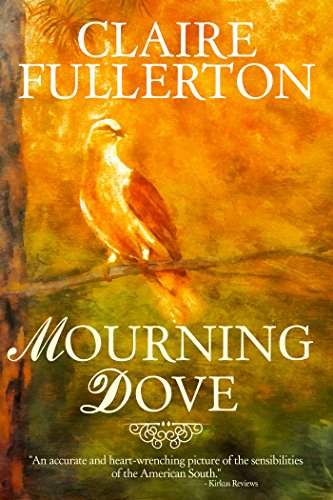
Mourning Dove

Millie Crossan is the narrator of Claire Fullerton’s Mourning Dove. When Millie was in her teens, her mother moved the family from Minnesota back to her native Memphis after her divorce.

Millie’s older brother and hero is Finley, eighteen months her senior. She looks up to him, follows him, feels secure in his care. “His presence was one part security blanket, one part safety net, and two parts old familiar coat conformed to fit my size after years of wear.”

They loved their father, who was much more involved with them than their mother. But he was an alcoholic who had trouble giving up his addiction. His death, as well as his addiction, had a profound influence on both children.

When the family arrived in Memphis, Millie’s mother, Posey, melted right back into her role. But Millie and Finley felt like outsiders until they got the hang of the culture of keeping up appearances at all costs.

Part of the novel is a coming-of-age story. Part of it is historical Southern fiction set in the seventies and eighties. Part of it is a nature-or-nurture question exploring how two close siblings can come to such different ends.

We learn early on that Finley is no longer with the family. As the story unfolds, we see his unraveling, leading to a tragic end.

I rarely have trouble “getting” the point of a book. But I did with this one. I searched for interviews with the author to try to gain a little more insight. She says here that the book started as a poem and then was transformed into narrative nonfiction before she turned it into a fictional saga. Since Claire, like Millie, moved from MN to Memphis and was raised by “the last of the great Southern belles,” I wonder if she had a “Finley” in her life. She shares in this interview what she wants readers to take away from the book, “That it’s not what we’re handed in life that matters, it’s how we handle the circumstances in which we find ourselves.”

This review helped me understand Finley a little more, especially this line: “When a child with intelligence and sensitivity is reared in an emotionally unstable household marred by tragedy, he may direct his intelligence toward destructive habits and pursuits.” Millie, by contrast (though she was not unintelligent or insensitive), keeps her feelings to herself. Her mother and her culture don’t encourage heartfelt openness. But Millie’s other relationships are somewhat stunted.

I was also a little confused because I had thought this was Christian fiction. But it’s not. Posey’s spirituality is only the socially acceptable kind, Millie has no use for God, and Finley goes the opposite direction, becoming a cult leader.

The ending left me a little flat at first, because it seemed there was nothing redemptive, nothing hopeful. Of course, in real life, tragedy doesn’t seem redemptive or hopeful at the time. And even if we can see ways God used it, after time has passed, it still hurts. But in books, usually there’s something to be gleaned from the events rather than just the fact that tragedy happened. I reread the beginning and the ending, and was caught by this sentence: “Every chord their father ever played in this room went out into the universe to ring forever, because music never dies, and they were born with it inside them.” A loved one’s influence lives on after them.

Have you read this novel? If so, I’d love to hear your thoughts.

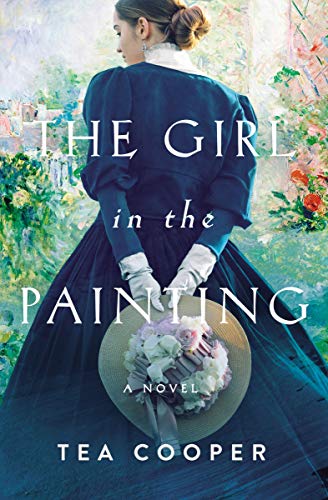
The Girl in the Painting

In The Girl in the Painting by Australian author Tea Cooper, Michael and Elizabeth Quinn are orphaned siblings who immigrated from England to Australia in 1862. Their parents had gone on ahead to take advantage of free passage for married couples and left them with an aunt. But the aunt died before the children left and they had to go to a workhouse until time for departure. Then they found, upon arrival, that their mother had died, and the father passed away, too, before long.

The father had established himself in an area of gold seekers. But he didn’t mine gold for himself: he started a business servicing the miners, especially hauling their things around. Michael, a teenager by this time, took over the business and built it up, leaving Elizabeth in the care of a woman they’d met on the ship until he could establish a home for them..

By 1906, the Quinns were wealthy business people and philanthropists in Maitland Town. One of their outreaches was to the local orphanage, in memory of their own time as orphans. One of the orphans, Jane, has an exceptional aptitude for math. The Quinns offer to take Jane in and pay for her education in exchange for her working for their company. She eventually becomes their bookkeeper as well as taking over many of Michael’s duties.

One day Jane and Elizabeth visit a one of their buildings where they’ve invited an artist to hold an exhibition. Suddenly the ultra self-controlled Elizabeth is on the floor, shaking in terror, hat off, mumbling unintelligible words.

After a while, Elizabeth seems back to normal and insists everything is fine. But she’s not back to normal, and everything’s not fine. Odd snatches of memory and terror keep coming back to her mind.

Jane makes it her mission to find out what caused Elizabeth’s episode and discovers some unexpected long-held secrets.

This was an enjoyable book, especially in trying to figure out the mystery behind Elizabeth’s reaction to a painting. It was nice to read something set in a different time and place than a lot of historical fiction (so much of which centers around WWII). We get a picture of what immigrants were up against in those times, not only the English, but also the Chinese who were treated mainly as servants and the lowest workmen.

I loved the cover.

My only minor complaint is that the change between happy and adjusted Michael and Elizabeth and unraveling Elizabeth and brooding Michael seemed rather sudden. I guess that’s an indication that the past was a well-kept secret. But it just seems that, in a literary sense, there would have been more hints throughout the book that everything was not as we thought. I only caught one, and that was only after finishing the book and going back to reread the siblings entry onto the ship taking them to Australia. But, again, it’s a minor complaint and can be explained by the reaction to the painting that set off that aspect of the story.

I had thought this was a Christian fiction book because I bought it from a Christian site. But it wasn’t in any real sense of the word. That’s fine—I don’t restrict myself to Christian fiction. It just meant the book wasn’t what I expected at first. The orphanage Jane comes from is Catholic. Some of the Chinese religious practices are explained when Elizabeth befriends the Chinese man who works for them. But there’s not much other religious content. I would disagree with one statement that it doesn’t matter what gods people prayed to and one person’s thought that a dead relative was looking out for them from heaven.

The book is remarkably clean for modern secular fiction. Michael took the Lord’s name in vain a couple of times and a couple people said “what the hell.”

But, overall, I enjoyed the story.

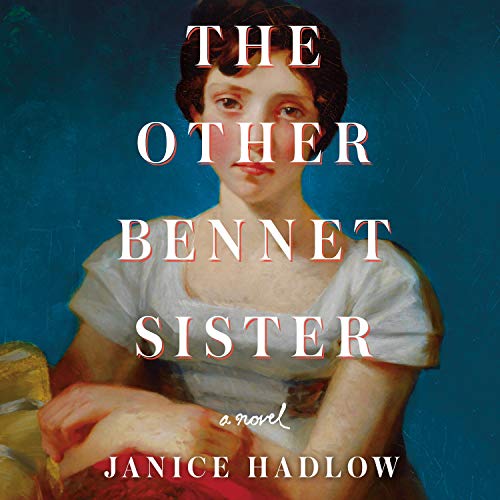
The Other Bennet Sister

If you are a Pride and Prejudice fan, you might remember middle sister Mary Bennet as being bookish and quiet. In fact, the only significant scene of hers I can recall is when she’s playing the piano at the Bingley ball (the one where all the Bennet family comes across as ridiculous in front of Mr. Darcy) to the point that her father has to pull her away with “You’ve entertained us enough for now.”

Janice Hadlow has crafted a novel from Mary’s point of view: The Other Bennet Sister. Hadlow delves more deeply into Mary’s character and what might have been after P&P ended.

The Bennets had five daughters. Mr. Bennets property is entailed, meaning it will go to a male cousin upon Mr. Bennet’s death rather than a Bennet daughter.

Even though the Bennets are landed gentry, there’s not enough money for any of the girls to have large enough dowries to attract the “right” kind of husband. But most of the girls are pretty enough to attract attention, and their ambitious mother is determined to place them where they can be seen and admired.

Mary, however, is plain. In Mrs. Bennet’s book, that’s almost a sin. At the very least, Mary’s plainness is a great disappointment to her mother. Mrs. Bennet is one of the most annoying characters in literature, and one of my least favorite. Mary’s mother not only has little use for Mary, she constantly berates her daughter. “She had learned from Mrs. Bennet that without beauty, no real and lasting happiness was attainable. It never occurred to her to question what she had been taught.” Mrs. Bennet didn’t even want Mary to get needed glasses because they would further hamper her ability to get a husband.

Since Mary doesn’t have the looks or personality to be “pleasing,” and she loves to learn, she sets herself to study in her father’s library. Perhaps at some point she can discuss books with him. But he demands absolute silence in the library—except when Lizzie, his favorite, is there.

Mary tries other venues, like music, in which to stake her significance, with poor results.

Mary is also in the very middle of the five sisters. The older two are close, as are the younger two, leaving Mary with no one. Lizzie and Jane are not unkind, but they don’t draw Mary in, either.

Since Mary feels invisible, she looks invisible as well, wearing very plain dresses with no color or frill.

The first part of the book covers the events of P&P, but from Mary’s point of view.

Then the book jumps ahead a couple of years. Mr. Bennet had died, and all the Bennet daughters are married except Mary. Mary and her mother go to live with Jane and Mr. Bingley. But the days there are dreary for Mary, with her mother’s constant harping and Caroline Bingley’s sniping remarks. Mary goes to visit Elizabeth and Mr. Darcy for a while, then Charlotte (Elizabeth’s close friend) and Mr. Collins, the obsequious cousin who inherited the Bennet family home. Charlotte and Mary have several talks about life as a plain woman.

Single women did not have many options in those days. Spinsters were pitied and often poor, earning money as governesses or music teachers. Mary is not interested in either profession, but living with one of her sisters is not ideal, either.

Finally Mary goes to London to stay with her aunt and uncle, the Gardiners—the same aunt and uncle Lizzie stayed with in P&P. Things start to turn a corner as Mrs. Gardiner gently draws Mary out and convinces her that it is not drawing undue attention to herself to dress nicely. And the Gardiner’s friend, Mr. Hayward, convinces Mary’s very rational mind that poetry and feeling are valuable.

I loved a lot of Mrs. Gardiner’s advice, some of which had a double meaning.

Sometimes the very best stuff can seem quite plain, until one examines it closely. It is only then that one sees its true quality.

I see plainly enough that you don’t like to make a fuss about dress—that you dislike having attention drawn to you. But there are times when the best way to ensure you are not remarkable is to conform to the expectations of those around you.

There is a middle way between an obsession with one’s appearance and an absolute denial of its importance.

It’s hard to persuade anyone, especially a man, that your regard is worth having if you have none for yourself.

In our house, no-one is obliged to sparkle. Which, I find, makes it far more likely that they might.

There were several things I liked about this novel. One is Mary’s slow “blossoming,” often with one step forward and two back as she makes mistakes.

I thought the author did an admirable job keeping the personality of each of Austen’s main characters close to what they were in P&P. Even though Hadlow’s style is different from Austen’s, the book still had a cozy Regency feel to it.

I had two minor complaints, though. One is that, especially in the beginning of the book, there was a lot more “telling” than “showing.” That improved after the story got into new material after the P&P timeline.

The other complaint is that sometimes there was too much explanation. The narrative would belabor a point long after the reader understood.

Those two aspects made the story drag just a little in places, but not enough to ruin the book.

Overall, I really enjoyed this story. I wanted to speed ahead to see how things worked out for Mary, but then I didn’t want it to end. Some parts of the book had me in tears.

I listened to the audiobook wonderfully narrated by Carla Mendonca.

Thanks to Lois for putting this book on my radar.

Last Christmas in Paris

Last Christmas in Paris: A Novel of World War I by Hazel Gaynor and Heather Webb opens with the beginning of WWI. Two friends from childhood, Will Elliott and Thomas Harding, head out for France to fight, enthusiastically expecting the war to be over by Christmas. Then they plan to meet Will’s sister, Evie, and her friend, Alice, in Paris for Christmas to celebrate.

But of course the war drags on much longer than the few months til Christmas.

Evie writes Will and Thomas with all the support and hope she can send. Will is not much of a writer, so Evie gets most of her news about him from Tom.

Over time, enthusiasm and naiveté wanes and the realities of war weigh them all down. Tom gets more discouraged by what he has seen and has to do.

Tom also faces pressure from his father’s illness and business troubles. His father owns and operates the London Daily Times and always planned for Tom to follow in his footsteps. Tom’s interests fall more into a literary and scholarly vein, and he has no interest in the newspaper, which causes tension with his father. But when his father falls ill, Tom is consulted. He can’t do much from France, so he asks his cousin, John, to step in. There has been some longstanding feud between Tom’s and John’s families, but Tom never knew what it was all about, and he has to hope John will keep the paper’s best interests in mind.

Evie, meanwhile, chafes at home. She wants to do something to help, but her mother insists that for girls in her class, the only acceptable activity is aiding her mother with her charities and looking for a suitable husband. But Evie branches out from her protective gilded cage. Though she puts herself at risk, she also grows through her efforts.

The book opens with an aged and ill Thomas planning to go to Paris for Christmas in 1968 to read one last letter from Evie. Most of the book is made up of letters, mostly between Tom and Evie, but also with Will, Alice, their parents, and Tom’s contacts at his father’s business. At different places throughout the novel, the scene switches back to Tom and his current situation and reflections over his life.

This book was not in my Christmas reading plans, not even on my radar until Becky mentioned it. It sounded interesting, and I needed a new audiobook, so I got it. Epistolary novels are not my favorite style of writing, but I have enjoyed some.

I am so glad I listened to this book. I enjoy historical fiction, and not as many books are written about the first world war. I like how this one shared details of everyday life in England as well as on the front.

But mostly I enjoyed the growth of Evie and Tom’s characters and their relationship with each other. From lighthearted banter to lifting each other up from the deepest discouragement, from heartbreak to hope, from misunderstanding to shared poetry, they get to know one another better than they ever had before but almost miss each other in the end.

Though there is some mention of God and prayer, this is a secular book. It has maybe three bad words, but is remarkably clean.

The audiobook is excellently done, with different narrators for the different characters.

This is a beautiful book, and I am so glad I listened to it.

Book Review: A Quilt for Christmas

Sandra Dallas’ novel, A Quilt for Christmas, takes place in Kansas in 1864. Eliza Spooner is trying to keep the farm together with her two children while her husband is away fighting for the Union. An expert quilter, Eliza decides to make a quilt for her husband’s Christmas present to keep him warm and remind him of her love.

When Eliza’s friend, Missouri Ann, learns that her own husband has died, Eliza invites Missouri Ann and her daughter to stay with her in order to rescue them from Missouri’s abusive in-laws.

Then the unthinkable happens. Eliza receives news that Will has also died. She hopes he was buried in her quilt. Her children and her quilting group help bear her through her grief.

Eliza’s beliefs are put to the test when she is asked to shelter an escaped slave. She has already given a husband to the war: isn’t that enough? And what about the danger to her children? Though Kansas is a Union state, slave catchers in pursuit of a reward could be dangerous to anyone in their way.

As the war ends, soldiers in various states of need show up at her door occasionally, asking for a meal or permission to sleep in the barn overnight. Then one day a soldier shows up with Will’s quilt with the surprising, and at first disconcerting, story of what happened to it after Will died.

I picked this up on my friend Susanne’s recommendation and listened to the audiobook version, nicely read by Pilar Witherspoon.

I thought this was a very well-written book. The story shows the hardships women went through alone on a farm in that time. Not only did they have to deal with their husbands’ absence while fighting or his death, they had all the responsibility of the farm on their shoulders. Even though the North won the war, and the widows and wives received some compensation, many lived in poverty. Yet they were generous, helping others in need as much as they could.

I really liked Eliza’s character and could empathize with her struggles..

I appreciated the emphasis in the last few chapters on forgiveness. Eliza’s son is full of hatred against “Johnnies” because they killed his father. But Eliza tries to teach him that the war is over and they are one nation now.

I also appreciated the talk that, even though only men could fight, there was much women could do to help after all.

Though there is talk of God in the book, I wouldn’t call this Christian fiction. One reason is that Eliza credits her dead husband with watching over her. Another is that, in the talk of forgiveness, nothing is brought up about God’s forgiveness or expectation that we forgive others.

All in all, it was a very good book.

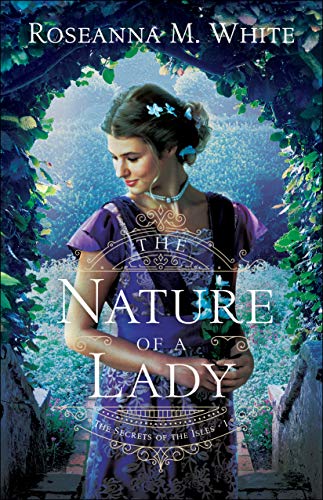
Book Review: The Nature of a Lady

In The Nature of a Lady by Roseanna M. White, Lady Elizabeth Sinclair prefers microscopes to ballrooms. She never feels she fits in with her peers. Her best friend is her maid, Mabena. Libby’s brother wants to marry her off to Lord Sheridan so she’s “taken care of.” Sheridan would at least tolerate her eccentricities. But is that she can expect out of life—toleration?

Libby decides to take Mabena on a summer holiday to the Isles of Scilly, where Mabena is from. While she’s away, Libby hopes Sheridan will see that they can’t possibly get married. She rents a cottage and discovers the previous occupant had also been named Elisabeth and had left suddenly with no explanation.

Then Libby begins receiving packages and notes that must be for the other Elizabeth. But one contains a cannonball, of all things.

Then a young man shows up at her doorstep demanding to know where his sister is. And this young man somehow knows Mabena.

Oliver Tremayne is a vicar and a gentleman, but most of the family’s wealth was spent on his brother’s illness. He’s exasperated with his sister, Beth. She was supposed to write him twice a week, but he hasn’t heard from her in two weeks. He’s afraid Beth’s absence is aggravating his grandmother’s dementia. He’d told Beth he’d stay away and giver her her freedom while on Holiday, but he has to make sure she is all right. Imagination his surprise, then, when someone other than his sister opens her door at his knock—someone he has met before, someone with Mabena.

Besides the mysteries of what happened to Beth and how everyone knows Mabena, other unexplained happenings include strange noises on one of the islands, a white figure, odd notations in an old book, pirate treasure, and past princes.

Meanwhile, Libby feels more at home in the isles than she has ever felt in her life. But can she ever convince her brother to let her stay?

One mystery to me: why the cover portrays Libby as dark-haired, when she’s repeatedly described as blonde and fair in the book.

I had never heard of the Isles of Scilly before listening to this book, and I enjoyed learning about them. The puzzles and mysteries in the book were intriguing, though I think I lost a couple of the threads before it was all over–probably a result of listening to the audiobook rather than reading the book, which made it harder to go back and trace some things. I liked the threads about being who God created you to be and the fact that science and faith aren’t enemies (though Libby seemed to accept evolution as fact, which I would disagree with).

I can’t say I enjoyed this story quite as much as Roseanna’s other books I’ve read, but I still enjoyed it quite a bit. And I am looking forward to the next book in the series.

Book Review: Hidden Among the Stars

In Austria in 1938, Annika Knopf is the daughter of the caretaker of the Dornbach family’s castle in Hallstatt. She and the Dornbach’s only son, Max, have been friends since childhood. But now they are grown, and she has quietly loved him for a long time.

When Annika discovers Max is hiding treasures of their Jewish friends on the estate grounds, she wants to help. Max wants to protect her as much as possible, but the time comes when he must accept her offer.

Max has never seen Annika as anything but a good friend. He’s in love with Luzia Weiss, a beautiful and brilliant violinist with the local orchestra. The Dornbach and Weiss families have been friends for years. But as Hitler’s forces advance, it’s not healthy to associate with Jews like the Weiss family. Max loves Luzia still and looks for ways to avoid fighting for the Reich and to get Luzia and her family out of Austria before it’s too late. In the meantime, he brings Luzia to the family’s lake castle to hide and asks Annika to watch over Luzia.

In modern times, Callie Randall runs a book store with her sister. Her tumultuous early life, with rejection from both parents and and betrayal by her fiance, has turned her naturally introverted character into someone who enjoys hiding out and is afraid of . . . almost everything except her job and shop.

Callie’s sister gifts her an early edition copy of Bambi, and Callie finds within its pages a list of items in the same script as the book’s font. The name written in the front is Annika Knopf. Callie begins an Internet search, hoping to reunite the book with Annika or someone in her family. But Callie discovers Annika’s story may intersect with Charlotte, the woman who took Callie and her sister in and whom she loves like a mother. Callie yearns to find Annika and restore to Charlotte something of her lost history. But first she must find the courage to step outside her safe haven.

I had read several WWII-era books this year, and was determined to read something from a different time. I love stories from that era, but I was starting to get a little tired of it. However, when I read the description of Hidden Among the Stars by Melanie Dobson, I had to read it next. A main character with a personalty similar to mine, a bookstore owner, mention of several classic children’s books, a castle on a lake—all these drew me in. And I am glad. I think this might be my favorite of Melanie’s books so far—and that’s saying something, because I’ve enjoyed all I’ve read from her.

I listened to the audiobook, wonderfully read by Nancy Peterson. Unfortunately, the audio version didn’t include any back matter that books sometimes have about the author’s inspiration for writing, historical research, etc. However, I did find that information on Melanie’s site here. There really is an abandoned castle in Hallstatt! I enjoyed hearing about Melanie’s trip there.

I’m pretty sure this will be one of my top ten books of the year. Highly recommended.

Memories of Glass

Memories of Glass by Melanie Dobson is a time-slip novel. One time line is modern day, and one begins in 1933 but quickly progresses to WWII.

In the older timeline, three childhood friends in Amsterdam are joined by a fourth when Anneliese Linden moves into their neighborhood. Just a few years later, the war has begun. Eliese’s father’s bank was closed because he was Jewish. Samuel works in another bank and sends his sister, Josie, on missions to deliver hidden correspondence in baskets of flowers and jam when she’s not taking classes at the teacher’s college. Klaas—well, no one knows quite where he stands, so they don’t trust him.

Eliese had moved to London for a time. Her friends don’t know that she’s back in Amsterdam with a young son. Her father has a position helping the Nazis, which he thinks will protect him and Eliese. Eliese feels conflicted registering the families that the Nazis round up, but she doesn’t know what she, as one young woman, can do. When she finds that Josie is working at a creche nearby, they form a plan to rescue some of the children.

In the modern timeline, Ava Drake helps her grandmother, Marcella Kingston, with her charitable foundation though the rest of the family disapproves. Ava’s mom had left the family years ago, but when she and Ava’s brother died in a fire, a case worker found Ava’s connections to the Kingstons. The Kingstons all view Ava as an outsider except Marcella, and since Marcella is the matriarch and holds the purse strings, they all go along—at least in public.

Part of Ava’s job is to vet the charities that apply to the Kingston Foundation for grants. In that capacity, she travels to Uganda to visit a man, Paul, who runs a coffee plantation as a means to help Ugandans. Later, Ava travels to the coffee company’s headquarters in Portland and meets Paul’s sister and grandmother, where she finds a surprising connection.

Ava determines that her family won’t heal until its past is brought to light. As she digs into her family history, she finds connections with the young friends from Amsterdam—connections that some of the Kingstons don’t want known.

The part about rescuing children away by deleting their names on the registration forms was a true one, and Melanie tells that story in her afterword. It’s a reminder that even thought it looks like someone is collaborating with the enemy, he or she might have another purpose in mind.

I felt for Eliese here—there were probably many who were in similar positions, stuck “helping” the Reich. If she resisted, she and possibly her father would have been killed. I was glad she found a way to help after all.

I found myself reading parts of this while also reading Women Heroes of World War II, mentioned yesterday. It was interesting seeing some of the activities there fleshed out in the novel.

There were a lot of details to keep up with, and I am not sure I caught all the threads in the end. But I enjoyed the stories of hope and redemption.

Catching the Wind

Melanie Dobson’s Catching the Wind made me want to lay everything else aside to read it. But I also wanted to slow down and savor it and hated to see it end

The story opens with two children playing in 1940 Germany. Brigette Berthold is ten and wants to play nothing but princesses and knights. Dietmar Roth is a few years older and tolerates the game because Brigette is his favorite playmate. Plus he promised her father that he would help take care of her.

When the children’s parents are attacked by the Nazis, Dietmar and Brigette run. If they can make it to the English Channel and get across, Hopefully Dietmar can find his aunt.

After a harrowing journey, they finally do make it to English soil. But then they are separated.

Over 70 years later, Dietmar is a wealthy old man who goes by the name Daniel Knight. He has hired several private investigators to try to find Brigette, with no luck. Now his hopes rest in a reporter, Quenby Vaughn. He has read her stories about refugee children and knows she searches with her heart.

Quenby is working on her own story about a wealthy English woman, Lady Ricker, rumored to have helped and secretly supported the Nazis in the 1940s. Understandably, the woman’s descendants don’t want the story to run and aren’t cooperating.

When Mr. Knight’s arrogant solicitor approaches Quenby with Mr. Knight’s proposal, he’s not forthcoming enough to interest her. But she agrees to meet with Mr. Knight. When she learns that Brigette’s story ties in with the Rickers, she’s hooked.

There are several layers to this story—what happened to Brigette and Daniel, what was going on with Lady Ricker, and Quenby’s family history of a mother who abandoned her, which has crippled her ability to trust.

As one character says, “I believe God uses our pasts, even our regrets to help us and other people find Him.”

I listened to the audiobook (winner of a 2018 Audie award) nicely read by Nancy Peterson. This is one of my favorites of Melanie Dobson’s.