Review: My Beloved

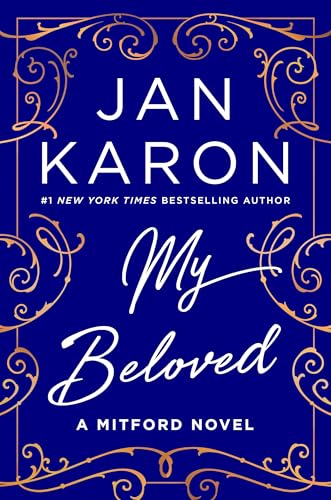
My Beloved by Jan Karon

Jan Karon’s last book in her beloved Mitford series was published in 2017 and was supposed to be the end of the series. But she began to play around with an old short story idea, and eventually came up with My Beloved.

The premise of the story is that Father Tim, an Episcopal priest and the main character, has been told by his wife that all she wants for Christmas is a love letter. In a moment of inspiration, he bares his heart on paper. He also buys her a book of poetry, tucks the letter inside, and wraps them.

But then the letter and book go missing. After tracing his steps and racking his brain, he still can’t find them or come up with any ideas about where they could be. He tries a few times to write another, but just can’t get it to sound like the first one did.

Meanwhile, the letter and book get accidentally passed to various Mitford characters. Sometimes the result is comic, sometimes touching.

There are a few subplots running through the book. One involves Hope, owner of the Happy Endings book store, and the financial difficulties threatening the store. Former Mayor Esther Cunningham and her husband are aging and fussing with their “bossy” daughters over what they can and can’t do.

Dooley made an appearance in the first Mitford book as a “throwaway” boy who comes under Father Tim’s influence and, over the course of the series, eventually becomes his adopted son. Though the Mitford books are generally “cozy” reads, they don’t shy away from serious issues. Dooley’s mother had been an alcoholic who gave away some of her children for drink. Though she has become sober and even become a Christian, and all her children have been found, there are still underlying issues and pains blocking healing and relationships.

This book was structured a little differently, rotating the point of view with each chapter. I loved how the dialect instantly let us know which “voice” was speaking, even though the subject’s name was the name of the chapter.

Some of my favorite quotes:

Father Tim: “God’s love for his children wasn’t just for them to have and to hold, it was to freely, spontaneously give away—and to gratefully receive from others.”

Esther: “She was already surprised, thank you. Surprised by bein’ old as dirt; surprised by losin’ her scatter rugs; an’ surprised by goin’ from a mayor everybody voted for to an old woman whose car battery died months ago from sittin’ in th’ garage with a mouse nest under th’ hood.”

Cynthia: “Every saint has a past. Every sinner has a future.”

Esther: “A recliner was a drug, an’ she was overdosin’.”

Ray: “He would consider it a freebie for old people. I’m not goin’ there.” Esther: “Freebies for old people is exactly where I’m goin’.”

Esther: “At their age, surprises were not a good idea in th’ first place. You could keel over from a surprise.”

Helene: “With war raging around the world and suffering everywhere, how extraordinary, how beautiful this life could be. There were no words, really. No words.”

Father Tim: “There was only one person in the world who would really get what just happened. Thank God he was married to her.”

Father Tim: “Even now, that tribe is splitting apart, that one small wounded fragment is scattering in all directions, nursing their wounds, reluctant to give up anything so darkly familiar as their wounds, and headed to places from which they may not find their way back.”

Father Tim: “Why invite more pain into a family raised on pain? Because pain can serve as a passageway to joy. It’s that dark tunnel that goes through a mountain and dumps us out on the other side where the light is.”

I’ve seen reviews of Christian fiction that complain over the least mention of any religious content. So I have always marveled that these books so full of gospel truth have been so popular with the general public. Oh, I wouldn’t agree with every little point. But the great majority of these books are spot on.

Reading a Mitford book is like a visit back to one’s hometown. It was good to catch up with various characters and their situations.

Updated to add: Jan was interviewed on CBS This Morning recently:

Review: Drenched in Light

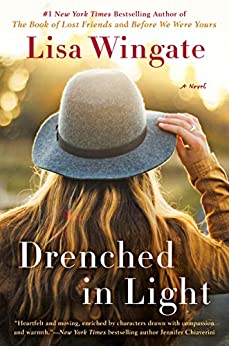
Drenched in Light

Drenched in Light is the fourth novel in Lisa Wingate’s Tending Roses series.

Julia Costell trained all her life as a ballerina, but crashed soon after being accepted into the Kansas City ballet troupe. The emphasis on body line and thinness and the stress of competition led to an eating disorder, which led to a ruptured esophagus and near death.

Now she’s 27, living at home with worried helicopter parents, and working as a guidance counselor at the same performing arts magnet school she attended.

Julia feels lost and without purpose. But then one day a student named Dell Jordan is sent to her office with a troubling essay she had written for English.

Dell was the impoverished neighbor of Grandma Rose in the first book in this series. She started out as a side character, but now has moved to the forefront. The previous book, The Language of Sycamores, ended with Dell being adopted by Karen and James, Karen being Grandma Rose’s granddaughter. Dell is something of a musical prodigy–she has an a beautiful voice and an aptitude for piano even though she had no training.

Her adoptive parents thought the performing arts school would be the best for Dell. But the students there are from well-to-do and high-level families. Some of the administration, as well, as the students, don’t see Dell as the “right kind of student.” Though she excels in music, she’s behind in her other subjects. Furthermore, though she knows her new parents love her, she feels a need to keep everything “perfect” before them. So they don’t know she’s struggling.

Julia sees something of herself in Dell–their circumstances are different, but they both deal with pressure and expectations. So she offers to tutor Dell privately.

Meanwhile, Julia becomes aware of other problems within the student body. But the principal and school board members want to keep up the school’s reputation, so they want problems handled discreetly or swept under the rug. Julia is advised to “play the game.” Yet she sees the kids are hurting. If she pushes the issues, she might lose her job.

There’s a fun side story with Julia’s sister’s upcoming wedding and the wedding dress restorer Julia finds to repair their mother’s wedding dress.

Also, some of the characters from the previous books make appearances here.

I thought the book started a little slowly at first, but gained traction in the last third or so, becoming very exciting towards the end. I enjoyed Julia’s and Dell’s journeys.

I was dismayed by instances of taking God’s name in vain, using “Good God!” and such as expressions.

But otherwise, I thought this was a great story. I listened to the audiobook nicely read by Erin Spencer but also checked out the e-book from the library for the author’s notes.

Review: The Collector of Burned Books

Collector of Burned Books

The Collector of Burned Books by Roseanna M. White takes place in Paris during WWII, opening with the Nazi takeover of the city.

Corinne Bastien is a professor at the Sorbonne, but looks more like a student. Secretly, she oversees the Library of Burned Books, a collection of books that have been banned by the Nazis. She encodes some of them with war news and send them out to some of her students, who send encoded messages back. The others Jewish authors who worked with the library fled before the Nazis arrived.

Now, however, Goebbels has sent a “library protector,” Christian Bauer, to take over all the libraries in Paris. Christian is not sure how he got the position. He’s a professor, not a soldier. With his record of speaking out against the Nazis, he’s surprised he hasn’t been arrested. All he can figure is that his friend in the police force, who was absorbed into the Gestapo, has adjusted his records.

He and his friend, Erik, had many discussions about the best way to combat the madness surrounding them–whether to fight against it overtly, only to be arrested, or to battle quietly from within while seeming to go along. They decide on the latter course. Christian knows many of the French Jewish authors personally. Perhaps he can mitigate the damage done to them and their works. At the very least, he can insist on civility among the soldiers assigned to him.

Christian arrives at Corinne’s flat with a list of books checked out by her mother from the Library of Burned Books. He only wants then returned. Corinne plays dumb. Her mother is out of the country and is not very organized–she doesn’t know where the books could be.

As Christian visits repeatedly to search for the books, they discover they have much in common. Corinne still regards him as an enemy, but she realizes he is not like the others.

Eventually, some surprising twists lead them to the truth about each other. And then a shocking betrayal threatens everything they’ve worked for.

Another part of the story involves hiding a boy with birth defects whom the German authorities wanted to have euthanized.

Some of my favorite quotes from the book:

These students had it all wrong—backward. Books didn’t burn. Books ignited. They lit the burning in others. Not with paper and match. With ideas. But then, that was their very argument (p. 1, Kindle version).

The only way to defeat a bully was to win him over. The only way to truly defend what you believe is to make your enemy believe it too (p. 4).

The words we hear, the words we read, the words we sing along to on the radio and study in the papers with our morning coffee, become our thoughts. I think our thoughts become our beliefs. And I think our beliefs become our actions. That is why Goebbels sent us here, Kraus. Because words form the foundation of society. Ideas create culture. Control them, and you can control . . . everything (p. 76).

He would tell you to think, next time, before you blindly chase your ideology. He would ask you to think, not just to feel. To ask, always, if you could be wrong. To listen, always listen, to the other points of view. Because the moment we stop granting someone the right to disagree, Kraus, this is what happens. Do you understand me? This is what turns men into tyrants. This is what leads to fear and death (p. 265).

God could well have said no. Today, he’d extended his mercy. His grace. But as too many in Germany had already learned, sometimes he didn’t intervene. Sometimes he let the monsters come. Sometimes good people, good Christians, good Jews were dragged off in the night, no matter the prayers they cried. He’d promised to be with his people through persecutions—not to prevent them (p. 304).

Read novels, because they will put you in someone else’s skin. Read poetry, because it will give wings to your soul. Read science, because it will show you what’s possible. Read politics, because it will teach you how strongly people care about how their fellow men are treated, wherever they stand on what the best way is. . . . Read things you hate and things you love and things you never thought you’d understand. And never, never accept the excuse that you’re not strong enough to handle it if you read something that offends you. You are. You’re strong enough to be offended and then try to understand why. You’re strong enough to grant that someone can be different and still be worthy of dignity. And if you aren’t? . . . Then read more, until you are (pp. 315-316).

Roseanna is a master storyteller who creates wonderful characters and intricately interwoven plots. I enjoyed both of these characters immensely.

I also enjoyed Roseanna’s notes at the end of the book, where she shares what’s historically accurate and what’s made up. There really was a Library of Burned Books. There really was an anti-Nazi professor who was given a special assignment, though not the one detailed in the book.

There were even some fun surprises, like a character from Roseanna’s Shadows Over England series showing up. This was the first series of Roseanna’s I read, and I loved them. Though there were clues, I didn’t recognize him until his real last name was revealed and he shared a bit of his history. There was a tie-in with another previous character from Yesterday’s Tides, but I didn’t remember him or his situation at all.

The faith element is Catholic, which would have been accurate for the setting and characters. There was mention of some practices I couldn’t agree with–a priest forgiving sins, the need for penance, praying to Mary and saints, the supposed healing power of the Eucharist. But the overall tenor of the characters’ hope in God was touching and inspiring.

I listened to the audiobook, superbly read by Lisa Flanagan. This time, the audiobook did include the author’s notes, which I appreciated. But I also had a Kindle version for reference.

Roseanna mention in her notes that one character will be getting his own story in another book. I don’t know if it will be a sequel, exactly, but I look forward to it.

Review: The Unlikely Yarn of the Dragon Lady

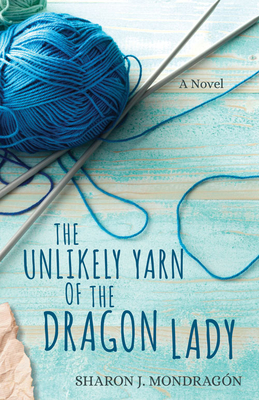
Unlikely Yarn

It’s rare that I try a book without ever having heard of it or the author or seeing a recommendation from someone I trust. But I was looking through Audible’s Plus Catalog of titles they rotate in and out, and The Unlikely Yarn of the Dragon Lady by Sharon Mondragon caught my eye. It looked like an interesting novel about a group of knitters, which seemed like a relatively safe topic. Since it was free, if I found something objectionable, I could just delete it.

I’m so glad I tried this book. It was delightful.

A group of four women form the Heavenly Hugs Prayer Shawl Ministry at their church. I was confused about prayer shawls at first, wondering if they were something people wore as they prayed. But no, the ladies pray as they knit them for those who will receive them, and then hand them out to anyone ill, grieving, or going though a hard time so they’ll feel comforted and “hugged.”

The women meet every Wednesday morning to knit and pray together in their church’s prayer chapel. But one morning, they’re surprised to learn they can’t meet there any more. The chapel is being painted. Besides that, their pastor wants them to take their knitting out in public. People weren’t coming to church as much any more. If they knitted in public, people would ask about their knitting, and they could tell them about their ministry and the church.

In addition, the church’s bishop has told the pastor that if things don’t improve with the church soon, they’ll be closed down. More is riding on the success of the knitters’ mission than they know.

Margaret, the group leader, is livid. They’ve met in the chapel for years. How can they have peace and quiet to pray out in public? She wants to meet at her house, but the other ladies aren’t willing to go against their pastor’s request.

So they head to the coffee shop in the mall. Rose, kindhearted and interested in others, loves the idea. She likes to talk about knitting. She lives in a retirement home and is starting to feel invisible and useless. An overprotective daughter keeps her hemmed in until she can hardly do anything. Going out in public to knit seems like an adventure.

Jane has two teen-age daughters who are driving her to desperation with their constant bickering and discontentment. Only Rose knows Jane’s secret sorrow, that her son is in prison for using and selling narcotics.

Fran is the newest knitter among the group, taught and helped by Rose. Her husband passed away suddenly the year before, and the fog is just beginning to lift.

The ladies aren’t knitting long at the coffee ship before a college student comes over because her grandmother used to knit and she wants to see what the ladies are doing. When she hears about their prayers, she asks them to pray for a crucial upcoming test.

Slowly, other people do the same thing–stop by out of curiosity and then ask for prayer. The next time the ladies come to the mall, they find word has gotten around: they receive several prayer requests written on paper napkins. The prayer requests lead to more involvement in people’s lives.

Margaret feels the people stopping by are interruptions. “We’re supposed to be praying,” she repeats often. She can’t see past the green hair of one young man or the weariness of a middle-aged woman to the soul inside them.

But gradually, God works not only through, but in the prayer shawl ministry in surprising ways.

A couple of my favorite quotes:

Rose kept asking questions, drawing out Eileen’s memories of her father the way knitters pull their yarn from the center of the skein.

You’re right. God is orderly. But people are messy. They have problems and wounds and fears and besetting sins. Isn’t that what prayer shawls are all about, though? Trying to give people the comfort and strength they need to face and get through those things?

These characters were so well-drawn. The narrator of the audiobook, Christina Moore, did a beautiful job, especially with Margaret’s and Rose’s voices.

The plot is laced with humor and warmth and poignancy.

I’m not a knitter and I don’t know the jargon. But that didn’t interfere with my enjoyment of the book. There’s enough specific detail that I think seasoned knitters would understand and enjoy it, but not so much that it bogs down the narrative.

There were only two things I didn’t like. The author has God speaking to one character. I don’t think she ever identifies Him as God–she calls Him a “presence.” But I think we have to be very careful about putting words in God’s mouth, assuming we know what He would say in a given situation. I think writers can show how we think He could lead someone without having Him speak verbally. In fact, the author does this nicely with another character.

The other thing is that, in all the talk about people’s prayer needs, there’s no mention of anyone coming to believe on the Lord. People come to church who didn’t before and are encouraged to reconcile with estranged loved ones and such. But people can do that without knowing the Lord. I’m not sure what faith tradition the author is from. I know some authors prefer not to spell things out spiritually, but to let the change in characters’ lives speak for themselves. They feel that being any more explicit would be preachy. But I think a lack of clarity here causes confusion and leaves the reader without the most important message they need. I’ve written before that the whole plan of salvation doesn’t necessarily need to be included for a book to be Christian fiction, but what is there should be clear.

Otherwise, though, I loved this book. When I finished it, I missed the characters. A sequel has been written, so I’ll likely pick it up sometime. Meanwhile, this title is free for Audible members through October 7 and is about 8 hours and 20 minutes long if you want to give it a try.

Review: The Island Bookshop

The Island Bookshop

In The Island Bookshop by Roseanna M. White, Kennedy Marshall has a career she loves in the Library of Congress. But when her sister back in North Carolina’s Outer Banks has a serious fall from a ladder, Kennedy travels to help care for her sister and run their grandmother’s island bookshop.

Kennedy hasn’t been home in a while. She loves the island, her sister, and the bookshop. But she’s avoiding Wes Armstrong. They’ve been friends since childhood, but Kennedy had deeper feelings. Then Wes married her friend Britta. Though Britta passed away, Kennedy knew too many of her secrets–secrets she can’t bear that Wes should know.

Wes’s family has built a successful business on the island, but a development group has offered to purchase the business. The money would help, but the business has been Wes’s life. He struggles with knowing what he should do.

When Kennedy’s sister’s recovery takes longer than expected, Kennedy faces some difficult decisions.

When a question comes up about a different name on the lease of the bookshop than Kennedy’s grandmother, Kennedy searches for information among county records and old boxes in the attic. She finds a number of editions of The Secret Garden in various languages as well as some old letters with surprising news.

Interspersed between the modern-day chapters are scenes from Kennedy’s great-grandmother’s life. Ana is pregnant when she comes to the US during WWII from Dalmatia in Croatia, which at that time was part of Italy. Her husband, Marko, had come earlier to get a job and find a home. But he doesn’t come to meet her when she arrives. Italian-looking immigrants were viewed suspiciously at that time, and Ana doesn’t receive much help or direction. Finally a sea captain gives her a bit of information which leads her to the wife of the man who hired Marko for his fishing boat. The wife graciously takes Ana in, though she has to deal with anti-Italian sentiment from some of the neighbors.

But her friend’s daughter is enamored with Ana. They both love books, and Ana shares her favorite, The Secret Garden.

Then tragedy strikes. Ana doesn’t know what she will do in a new country with a newborn daughter.

I enjoyed both the modern-day and the historical stories. I hadn’t realized Croatia had been part of Italy. At the time, most people in the US weren’t interested in the difference–Italy was Italy and was ruled by Mussolini, so Italians were suspect. It was hard enough to adjust to a new country without that added layer.

I don’t usually read seasonally except at Christmas. But it was fun to read a “beachy” story at the end of the summer.

Themes of faith, forgiveness, and second chances are woven well through both narratives. Roseanna is one of my favorite authors, and this book is a lovely addition to her body of work.

Review: The Bitter End Birding Society

The Bitter End Birding Society

In Amanda Cox’s newest novel, The Bitter End Birding Society, Bitter End is a small town in eastern Tennessee with a variety of legends about how it got its name.

Ana Leigh Watkins, the most recent newcomer to Bitter End, plans to spend the summer helping her great aunt Cora sort through her belongings in preparation for selling her house and moving to a retirement community. In reality, Ana needs time away to recuperate from her year of teaching kindergarten. She’s regarded as a hero for confronting a school shooter who entered her classroom. But she remembers the fear in the young man’s eyes and feels she escalated a situation that could have been resolved peacefully. She can’t forgive herself for the young man’s fate and the trauma caused to her students. The praise she receives only weighs her down further.

Ana gets adopted by a stray dog. While taking him for a walk one day, she runs into a neighbor with a group of birdwatchers who invite her to join them. She learns her aunt is bitter enemies with the head of the bird-watching group. As Ana gently investigates further, she discovers a story over sixty years old of a moonshiner’s daughter, Viola, who falls in love with a preacher’s son. The tragedies that befell them are still having repercussions.

The narrative switches back and forth between Ana’s and Viola’s points of view.

I just discovered Amanda a few years ago and have read all of her books except a novella. I’ve loved every one. The stories are well-written and the characters are easy to identify and empathize with and root for. Their situations tug on the heartstrings, but gentle humor is laced throughout as well. Grace and redemption are underlying themes.

Some of the quotes that stood out to me:

I thought I could fit everything into tidy boxes and sort right from wrong. But now I see that sometimes a saint acts like a sinner. And sometimes a sinner acts like a saint.

Those lines can seem pretty blurry sometimes. One can look just like the other from the outside. I’d say that the difference comes down to the heart. A lost sheep wants to come home but can’t for some reason. Something is getting in their way. But a prodigal is running in the opposite direction on purpose. You can’t make someone come home if they don’t want to. 

It was a mystery how some trinkets and knickknacks were alive with meaning and memory while others were soulless souvenirs. 

Did he know that what he needed for his pain was healing, not an anesthetic? The numbness he felt was not a cure. Anesthesia was not the sort of thing a body could live on.

Healing was an ongoing journey without a fixed destination.

Sometimes things don’t come to a tidy conclusion. Words are left unsaid. Things are left undone. But this life is not the end. . . . . Our present circumstances, our perceived failures, they are not final.

I loved that the birding society visited the Seven Islands State Birding Park, which I have been to.

I listened to the audiobook read by Rachel Botchan, who had a distracting habit of taking a breath in odd places. But otherwise, I enjoyed her narration.

The audiobook does not include the author’s notes, but Amanda has linked to a few interviews she did about this book here, and I found another one here.

Review: Where We Belong

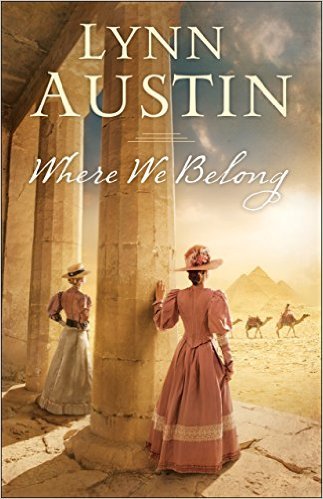
Where We Belong

In Lynn Austin’s novel, Where We Belong, sisters Rebecca and Flora Hawes are traveling across the Sinai Desert on camels.

That’s particularly unusual for 1892. But neither sister is a conventional Victorian woman.

Rebecca was often bored in school as a child, thirsting for adventure. She convinced Flora to go with her to the train station and shipping line to amass information to persuade their father to take them on a trip overseas. He listened to their reasoning and planned a trip for the following summer. Rebecca found she had an affinity for languages, learning French and a little Italian for the trip. Later she added Greek so she could read Homer in his native tongue and Arabic for another trip.

She thought each journey would get the traveling and adventure bug out of her system. Instead, each journey made her want to travel more. Her father had always urged his daughters to find God’s purpose for their lives. But what could God do with a woman who loved travel, adventure, and learning and had enough wealth to finance any journey she wanted to undertake? The answer came in a surprising way.

Flora was a little more pliable and gracious than Rebecca. Flora didn’t usually initiate adventures, but she could be talked into going and always enjoyed them. She, too, struggled with assessing God’s plan for her life and almost let herself be molded into someone else’s plan for her. But then God’s leading became clear.

Each woman’s story is told in a series of flashbacks, always returning to their current desert trek. Their mother died shortly after Flora was born. They live through a meddling aspiring stepmother, the death of their father, and the Great Chicago Fire. A chance purchase of an ancient manuscript in Cairo turns out to be from an early copy of Scripture, fueling Rebecca’s desire to find more. With the recent publication of Darwin’s book and the tide of scientific discovery turning against the Bible’s truths. Rebecca feels that finding proof of such old copies of Scripture will help prove its validity and reliability. Along the way, she finds a much more personal reason for her quest.

The story is divided into five parts, each told from a different point of view: first Rebecca’s, then Flora’s, then Soren’s and Kate’s, two troubled young people that the sisters help, then back to Rebecca’s. At first Soren’s and Rebecca’s stories just seemed added on, but they did end up blending well with the overarching narrative.

Themes include the nature of Christianity, the Bible’s veracity and reliability, the responsibility of privilege, compassion for the less fortunate, being your own unique person, and finding your purpose in the world and the family of God.

I listened to the audiobook narrated by Mary Beth Light, speeding the rate up to 1.2 since the recording was a bit slow.

I saw that the novel was based on two real-life sisters, but the audiobook didn’t include the author’s notes, and my library didn’t have the book for me to look up that information. I didn’t find much information online except for a reference to twin sisters Agnes Smith Lewis and Margaret Dunlop Gibson, who also traveled, spoke many languages, and found one of the earliest copies of the gospels at Saint Catherine’s Monastery in Egypt. It looks like the novel included many details of the sisters lives but changed some, making them sisters rather than twins, describing different men from their real-life husbands, and detailing different charitable work than what’s listed.

I enjoyed the book and the trajectory of the characters’ lives.

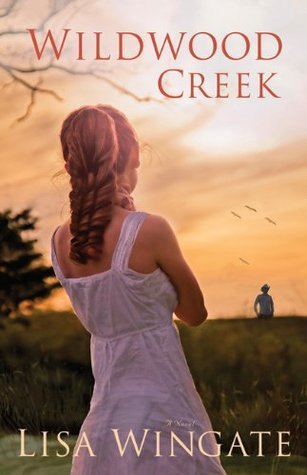
Review: Wildwood Creek

Wildwood Creek

Wildwood Creek is the fourth and final book in Lisa Wingate’s Shores of Moses Lake series. Unlike the others, this is a dual-timeline story.

In the 1850s, Bonnie Rose O’Brien and her family were captured by the Comanche. Her parents were killed, and Bonnie Rose and her younger sister, Maggie May, were held captive for years. Upon their deliverance, Bonnie feels soiled and shameful, even though nothing that happened to her was her fault. When the missionaries she’s staying with recommend her for a teaching position in the wilderness, she sees it as a chance to start over.

In 1861, a man named Harland Delavan is starting a new community called Wildwood to search for gold in Texas. He hires Bonnie as well as others to fill the town’s needs. But he rules with an iron hand. Soon individuals and then whole families disappear without explanation. Rumors and myths spread like wildfire, creating legends that linger through the centuries.

In 2014, Allie Kirkland is following in her father’s footsteps. He was a film director, and her earliest memories involve being with him on set. When he died, Allie’s life was never the same. Her mother remarried a lawyer, and they both urged Allie to work in his firm and major in law. Allie feels she doesn’t fit in with her step-siblings and half-siblings.

When Allie learns of a summer internship for a reality TV show, she jumps at the opportunity and is hired. A famous filmmaker wants to recreate the town of Wildwood near Moses Lake Texas, and have actors represent the townspeople and live as they did while exploring the mysteries of what could have happened to them.

Before long, mysterious things begin to happen in this Wildwood, too. Allie feels a kinship with the young teacher, Bonnie Rose. Can she find out what happened before it’s too late?

It was fun to see some of the characters from the previous books again. That’s one nice thing about reading a series one right after the other–I recognized people I might not have otherwise. I think there’s enough explanation in each book that they could be read alone, but they do build on each other.

Each of the Moses Lake books involves someone whose plans are upended in some way, causing them to reconnect with a faith they’ve neglected. Each story also contains some level of mystery and the importance of community.

Reading four books of one author in succession also brings to light an author’s quirks. I think in every book, someone is said to “flash an eye tooth” at someone. I’d never heard that phrase before–I suppose it’s an idiom for a wide grin.

I listened to the audiobook, which had two different women reading Bonnie Rose’s and Allie’s sections: Morgan Hallett and Heather O’Neill. Then I checked the ebook out via Libby to look at some passages there.

I think this book is the best of the four. My only disappointment is that I was looking forward to the author’s notes about her inspiration for this series and whether any of the details or characters were based in fact, yet there were none. At the end of the third book, the author says her husband, like one of the main characters there, got an unexpected job offer in a small Texas town. So I imagine many of the details of the Moses Lake community came from that experience. I did find a guest blog post from Lisa about the book here and an interview here.

Review: Larkspur Cove

Larkspur Cove

Larkspur Cove is the first of Lisa Wingate’s Shores of Moses Lake series.

Andrea Henderson has moved into her parents’ lake house in Texas with her teenage son after her husband’s betrayal and abandonment. She’s found a job as a social worker and wants to make a new start for herself and her son.

Her son, Dustin, is having a hard time making the transition. Left alone while his mom works, he ventures out with some new friends into an area of Moses Lake where boats are not supposed to go, ignoring the posted warning signs. Mart McClendon, the fish and game warden (or “boat cop,” as some call him), takes the teens in and calls their parents.

When Mart and Andrea meet, sparks fly. She thinks he is overreacting. He thinks she is some over-busy rich mom who doesn’t keep an eye on her son.

When Mart offers to let the teens take a water safety course in lieu of a fine, Andrea agrees despite Dustin’s protests.

Andrea’s work takes her into remote areas. One day when she sees an older man with a little girl in his truck, she suspects something is wrong. The little girl is not in a seat-belt and her hair is tangled with bits of leaves.

Later, Mart’s friends at a diner tell of seeing an old man with a little girl in the hills across the lake. The man, Len, is not known to have a family. He hasn’t been right mentally since he returned from Viet Nam. But he has seemed harmless. Yet, where had this little girl come from, and can a recluse like Len take care of her?

As Mart and Andrea investigate the situation, they learn more than Len’s situation. They discover their own purposes and more about each other.

I enjoyed this story. The little community around Moses Lake seems like real people, characters without being caricatures.

The Waterbird Bait and Grocery has a “wall of wisdom” where people write little sayings, and these proverbs and observations begin each chapter.

Some of the themes: first impressions aren’t always accurate; the best solutions are not always the most obvious; it takes time to heal from trauma, and others.

The audiobook was nicely read by two narrators, Johanna Parker and Scott Sowers. It was free from Audible’s Plus Catalog at the time I listened.

My only complaint is that this author has a penchant for putting several paragraphs of description or backstory in-between lines of dialogue. It can make discussions seem really stilted, especially while listening to an audiobook. I picture the other characters waiting patiently for the one with the next line to come back out of his or her thoughts and speak.

But otherwise, this was a great story. I’m looking forward to the rest.

(Sharing with Bookish Bliss)

Review: Ribbon of Years

Ribbon of Years

Ribbon of Years: A Timeless Journey of Love, Loss, and Unwavering Grace is a novel by Robin Lee Hatcher.

The story opens with middle-aged Julianna Crosby somewhat at loose ends, feeling there should be more to life. Nothing major is wrong, but she just feels sort of empty, purposeless.

She visits an estate sale, usually one of her favorite activities. As she roams through the house, she finds an upstairs sitting room with a cardboard box labeled “My Life.” The woman at the door had said everything in the house was on sale, so Julianna opened the box. The items inside were a hodgepodge collection that didn’t seem connected.

Just then an elderly man comes into the room and notices the box. He sits down and asks Julianna to pass him the movie poster in the box. He begins to tell Julianna how Miriam, the woman whose house they were in, acquired the poster and what it meant to her.

As a teenager, Miriam had wanted to be an actress. Headstrong and impulsive, she didn’t even want to finish high school: she wanted to run away to Hollywood.

More people come into the room with Julianna and the older man, Jacob McAllister. Each person has some story to tell about Miriam based on one of the items in the box. Through frequent flashbacks, we get the story of Miriam’s life, from a teenage girl headed for trouble, to a young wife who can barely handle her husband being sent off to war, and so on throughout her 80 yeas of life.

She has many ups and down through the years, but eventually finds God faithful and his grace sufficient for all her needs. Her life, then, inspires others–even Julianna’s.

I heard of this book from Susanne, who loved it so much, she’s read it four times. I’ve enjoyed some of this author’s books through the years, so I looked up this book and found the audiobook was free with my Audible account.

I didn’t realize until I started listening to it that it was narrated by a “Virtual Voice.” I was disappointed, but figured it was free and I’d already started it, so I kept listening.

That was a mistake. The voice sounded human, but the inflections were often wrong. There was no emotion in the voice. Some words were mispronounced. Sometimes the voice sounded garbled and I missed a few words–if this had been a cassette, I would have said it sounded like the tape had wrinkles in places.

Miriam’s life was inspirational, not because she lived it perfectly, but because she learned to rely on God through all that happened to her.

The author said that Miriam was based on her own mother. The audiobook didn’t contain end notes, so I am not sure whether the events of the story occurred in the author’s mother’s life, or whether the character of Miriam reflects the author’s mother–or both.

The story itself was good, but I am afraid I didn’t love it as much as my friend did. I can’t pinpoint exactly why. However, I feel I can recommend it to you–at least the print version–without qualms. Maybe you’ll love it as much as my friend.

(Sharing with Bookish Bliss)