Book Review: The Returning

In the novel The Returning by Ann Tatlock, Andrea has loved her husband John since they were teenagers. She knew he did not love her and only married her because he had to after she became pregnant. But she hoped that his heart might change someday.

Now John has just been released from prison, where he spent the last five years after accidentally killing a man while driving drunk. Andrea is not sure how everything will work after the adjustments of the last few years.

Their youngest daughter, Phoebe, was just a baby when John left, so she doesn’t remember her father and is afraid of him. Teenage daughter Rebekah is angry and rebellious. Only their oldest son with Down Syndrome, Billy, seems genuinely happy to have John home.

John knows he has a lot to overcome. His brother-in-law gave him a low-paying job, but he needs to find something better. He needs to rebuild his relationships with his family. And he needs to tell them what happened to him in prison when he committed his life to Christ. His biggest need, though, he doesn’t even realize yet: he needs to get grounded in his faith and grow. When he succumbs to temptation again and again, he begins to wonder if Rebekah is right in her accusation that his faith was just “jailhouse religion.”

A friend went through this scenario with a husband returning home after several years in prison, though the details were different. Even with all parties wanting to heal and put the family back together again, they faced difficulties. I thought Ann showed this struggle tenderly and realistically within the framework of the Sheldon family’s circumstances.

Ann says in her acknowledgements page that Billy’s character was inspired by Down Syndrome actor Chis Burke. Chris and his mother read Ann’s manuscript and offered feedback. She also talked with local parents and others who work with people with Down Syndrome.

My only difficulty with this story is that Rebekah is into some pagan-ish, New Age-y practices along with her best friend. I don’t have a problem with this being in the story, as people do turn to these things (and, spoiler alert, Rebekah finds they give her no peace or answers). But I’ve found I am sensitive to this kind of thing, so when Rebekah was performing her rituals, I had to skim through those pages.

But overall, I enjoyed the story very much. I ached along with each character in their difficulties and rejoiced with them in their victories.

(Sharing with Booknificent Thursday, Carole’s Books You Loved)


Book Review: Promises to Keep

In Ann Tatlock’s novel, Promises to Keep, eleven-year-old Roz Anthony has just moved with her mother, older half-brother, and younger sister to a small town in Illinois in the 1960s. Roz’s mother, Janis, was compelled to leave her abusive husband, and her father helped set her family up in a new home.

After just a few days, though, they found a stranger sitting on their porch, reading their newspaper. She was a rather large older woman named Tillie Monroe, and she said this was her house. She had helped build it with her own two hands along with her husband, and no matter what the paperwork said, it was her house. All she wanted was to die in her home, but she had fallen and broken her hip, and her kids whisked her away to a nursing home. But now she’s better, and she wants to live in her own home

About that time, Tillie’s son drives up, apologizes profusely, and takes his mother back to the nursing home.

But a few days later, Tillie is back on her . . . er, their porch. Janis invites her in for coffee. Another time Janis comes home to find Tillie cooking dinner for them.

This happens so often that Janis is relatively sure that Tillie is safe and invites her to stay. The relationship is mutually beneficial as Tillie watches the children and helps out around the house while Janis works.

While Roz adjusts well to all the changes and even provides a humorous narration, she misses her father. She tries to focus on the good memories, but the bad ones creep in. She feels if her father could just stay the good dad and leave off the Dr. Jekyll bad side, they could all be together again.

Meanwhile, Roz faces a new school with trepidation. But she finds a friend in a black girl named Mara. She soon learns that Mara has her own daddy issues, secrets, and dreams. They girls decide together to pray for their secret dreams.

Though the family was healing and readjusting after all they had been through, the first part of the book seemed lighthearted and fun as the family interacted with Tillie and as Roz observed and processed her world. One sub-plot line could have worked out for good or bad, and Ann reeled out the tension and information skillfully. The dramatic climax was a surprise to me — I was expecting something, but not what happened.

I’ve enjoyed all of Ann’s books that I’ve read so far, but this will be a favorite. Roz and Tillie are a couple of my favorite characters.

(Sharing with Booknificent Thursday, Carole’s Books You Loved)

Book Review: All the Way Home

Home In the novel All the Way Home by Ann Tatlock, Augie O’Shaughnessy‘s father has died by his own hand in the 1930s. Her mother takes what money they have left and moves her family in with her reluctant brother and his family. But Augie’s mother checks out and seeks respite in alcohol. Augie’s uncle is short-tempered and harsh; her aunt is a little more caring, but busy and distracted. Augie is mostly left to herself.

One day Augie wanders down to a park and meets a Japanese girl named Sunny, who invites Augie home. Augie becomes close with the whole kind and loving Yamagata family, spending more time with them than her own family. She even comes to consider herself Japanese.

Then Japan bombs Pearl Harbor, and the Yamagatas are sent away to an internment camp.

And Augie’s brother comes home from a Japanese prisoner of war camp and is never the same.

Fast forward twenty years, and Augie is a journalist specializing in civil rights stories. She has been asked to travel to Carver, Mississippi, to find out why no Negros have registered to vote even though the law allows them to. She finds more surprises than she bargained for.

I’ve read many WW2 novels, but none of them have touched on the Japanese internment camps. I had not known many details about them. It was interesting, but sad, to learn what happened to them. The fear was understandable: many experienced a similar fear of Middle Eastern people after 9/11. Like young Augie has to wrestle out for herself, no race of people is all good or all bad.

I’d like to tell him that there is no such thing as “they” or “them.” That there are only individuals with layer upon layer of experience, ideas, hopes, dreams, beliefs. That there are some Japanese who are really Americans, some whites who are really Negroes, some Irish-German-Americans who are really Japanese at heart. And that in spite of what a person appears to be or not to be, it’s the heart and not the face that matters.

I could begin again to differentiate, to see the faces of individuals rather than the blur of one large group. The Yamagatas had the eyes but not the soul of the people who had destroyed my brother. And that was what made them different.

Some of the civil rights era stories were both brutal and sad as well. Ann captured the struggles of everyone in the story in a realistic and heartfelt way. Her writing shines as well in a couple of turns of phrases I particularly liked:

I was already well aware of a hollow place inside of me, like an air bubble caught in a pane of glass.

Her painted eyelids were two blue robin’s eggs in a nest of clotted mascara.

The music filled what we would otherwise not have recognized as our parched souls, helping us realize the beauty that we longed for only when we heard it.

This book was a Christy award winner, and I can see why. A very good read.

(Sharing with Literary Musing Monday, Carole’s Books You Loved, Booknificent Thursday)


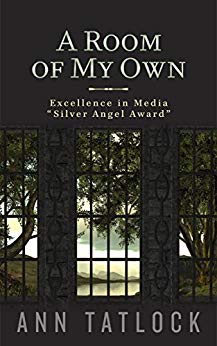
Book Review: A Room of My Own

Room of my ownIn A Room of My Own by Ann Tatlock, Virginia Eide’s family was not rich, by her father’s definition, but they were better off than most during the Depression. He was a doctor, which at least provided steady work, even if some people paid in goods and services rather than cash.

But not everyone had steady work. Ginny’s uncle’s loss of his job led to his whole family living with the Eides, with Ginny having to give up her room and sleep with her younger sisters.

The Depression also led to a shanty camp being set up outside of town called Soo City. People who had lost their jobs had nowhere else to go. They tried to rig up some kind of shelter to stay in while they looked for work.

When Virginia’s father was called to help a woman in labor in Soo City, Virginia’s mother had misgivings. Every time he was called there, she had a feeling that something bad was going to happen.

Of course, there were the usual opinions around town that the Soo City residents were bums, that they could find work if they wanted to. To combat those attitudes and develop Ginny’s empathy, her father asked her to assist him in his rounds there. He didn’t tell her his purpose: he just told her he could use her help. Likewise, when he gave some of their home-canned goods to Soo City residents, he asked if they could take the old jars of food off their hands because his wife was getting ready to start this year’s canning. He made them feel like they were doing him a favor.

Ginny feels important helping her father, and she comes to know many of the residents by name.

Meanwhile, her uncle has become involved with a man trying to set up a labor union, while townspeople accuse strikers and unionists of Communism.

Things come to a head with both the strikers and Soo City, bringing tragedy to Virginia’s world and jolting her out of childhood.

I loved the back-and-forth between Ginny’s girlish activities with her friend and her fledgling forays into being grown up. I loved her father’s gentle and thoughtful example. And I loved Ginny’s coming-of-age in a manner she had not expected.

Some of my favorite quotes:

We can’t help worrying sometimes. But in spite of what we feel, we can still trust God to do what’s right.

Fear, I discovered in that moment, is as contagious as disease–maybe even more so because it takes only a moment, a few words, or a look for it to leap from one person to the next.

Most people might just be glad it was the other fellow hit by hard times, but a sensitive person like you probably can’t look on the suffering of another without feeling guilty that you aren’t suffering in the same way. But you have to look at it this way. If you and I had nothing, we’d have nothing to give. And if we had nothing to give, our friends down in Soo City might be just a little bit worse off.

I was so overwhelmed by feelings that I couldn’t feel anything anymore.

I missed home. I missed the routines of our lives, all the otherwise unnoticed customs–meals together around the kitchen table, and evenings together on the porch or around the radio, all the untroubled hours of work and play and rest. How sweet all those simple things seemed now. How much I longed for that completely unromantic but loveliest of lives.

American flags waved from front porches all up and down our street. I saw the patriotic gesture as ironic–people had been complaining about our country all year long, but now that it was Independence Day, they went right ahead and celebrated as usual. Maybe it wasn’t hypocrisy that led to the flags and the fireworks. Maybe it was hope.

So for a time, with Charlotte at my side, I almost forgot where I was and why I was there. Friends can do that, bring a bit of real comfort in a time of distress like balm on a wound.

I love this one for the description, as one who grew up with oscillating fans before central air-conditioning was common: “The one small fan in the corner turned its head from side to side, giving off mechanical sighs of contentment as it blew warm air across the room.”

When I looked this book up on Amazon, I was surprised to see a note that it was written for the general market but “may contain content of an inspirational nature.” There is a natural faith element woven into the story without being at all preachy.

All in all, a very good book.

(Sharing with Booknificent, Literary Musing Monday, Carole’s Books You Loved)

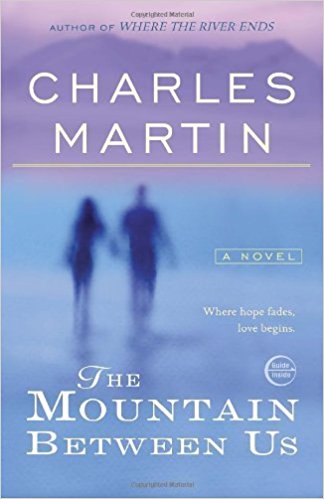
Book Review: The Mountain Between Us

MountainA snow storm and a broken de-icer strands thousands of travelers in the Salt Lake City airport. Dr. Ben Payne, on his way home from a medical conference, checks in with a charter pilot to see if they could beat the storm and get to Denver. Ben invites Ashley Knox, a fellow passenger he just met, to accompany them. Ashley’s on her way to her wedding rehearsal, so she’s eager to go.

But the pilot has a heart attack over the Uinta mountains. The plane crashes, the pilot dies, Ashley and Ben sustain several injuries. Her leg is severely broken; he has a couple of broken ribs and maybe a collapsed lung.

Thankfully Ben has hiking gear with him, brought along for a few excursions in-between conference meetings. His experience as a doctor and hiker and his athleticism from years of running give him an advantage, but he and Ashley have several things against them: their injuries, the remoteness of their location, the terrain, the cold, the fact that their pilot hadn’t filed a flight plan, and they had not let anyone know of their last-minute changes.

As they get well enough to travel, find food, and start off, Ben records messages to his wife, Rachel, on a voice recorder. Ben tells Ashley that he and Rachel are separated, but this recorder tradition started early in their relationship.  Through Ben’s recordings, both Ashley and readers learn of Ben and Rachel’s backstory. Ashley finds herself questioning whether she and her fiance have the kind of love that will last.

My thoughts:

I’m not usually one for plane crash stories. I don’t want them to come to mind when I have to fly. But I had heard good things about The Mountain Between Us by Charles Martin. It is a surviving disaster story, but even more than that, it’s about relationships. The fight to survive is suspenseful and intense, and the relationships between Ben and Rachel, and then Ben and Ashley (and even the pilot and his wife) are beautifully unfolded.

The story is marred for me, though, by some crudities (particularly a joke between Ben and Ashley) and some interaction between Ben and his wife that should have remained private.

Martin says in an afterward that he was inspired by Psalm 121:1-2: “I lift up my eyes to the hills. From where does my help come? My help comes from the Lord, who made heaven and earth.” But that’s not reflected in the story. I know that Christian stories are sometimes subtle: in Esther, for instance, God’s name is not mentioned nor are there any practices that acknowledge God beyond a time of prayer and fasting, yet God’s influence and leading are all throughout the book. Maybe that’s how Martin meant this book, but but it comes across as fairly secular. Perhaps he meant it for the general market.

So – mixed emotions. I loved the story itself. I could have done without the crude parts and private moments, and I would have liked the Christian undercurrent, if there is one, fleshed out more.

(Sharing with Semicolon‘s Saturday Review of Books)

Book Review: Sarah’s Song

Sarah's SongSarah’s Song is the third in Karen Kingsbury’s Red Glove series, but can easily be read without having read the first two.

In this story, Sarah Lindeman lives in a retirement home while fighting a losing battle with heart failure. Every Christmas she brings out twelve old yellowed envelopes with ornaments with a single word on each and places one on the tree each day. The words unfold the story of her return to the Lord and her love story with dear husband, Sam, a story involving sin, rebellion, grace, and restoration.

This Christmas, one of Sarah’s nurses, Beth, takes an interest in hearing the story unfold day by day. Sarah senses that Beth has deep needs that the details of her own story can minister to. But will Beth hear it? And will Sarah live long enough to tell it?

A couple of sentences made me wince a bit, like “All of life was a dance, the steps measured out to the music of the days” and especially gloves that “smelled of old love and days gone by.” And though the plot line is somewhat predictable, it’s a sweet, touching story and I enjoyed it.

(Sharing with Semicolon‘s Saturday Review of Books, Literary Musing Monday, and Carole’s Books You Loved)

Book Review: Washington’s Lady

Washington's Lady Washington’s Lady by Nancy Moser is a fictionalized biography of Martha Washington, wife of the U.S.A.’s first president.

The story opens with Martha at age 26 having just lost her husband of seven years, preceded by the deaths of two children. One of her two remaining children was sick with the same illness that took her husband. Despite her grief, she had to deal with the affairs of their plantation, including the complications of her husband’s neglect to leave a will.

Because she was “the wealthiest widow in Virginia,” “expected to remarry in a timely fashion,” it wasn’t long before a number of suitors sought her hand. No one interested her, however, until she met Colonel Washington. They conversed easily and were drawn to each other, eventually marrying. George tried to help her sort out the issues at her plantation, but eventually they moved to his smaller estate at Mount Vernon.

Trouble was stirring, however, with “Mother England.” Ludicrous laws and taxes, low quality goods sold to colonists at inflated prices, and a number of other issues were moving the populace from dissatisfaction to revolt. George left Mount Vernon as a representative, but eventually became the leader of the armed forces, not returning home for six years.

The story is told from Martha’s point of view, so we hear of battles through letters and occasional visits Martha made to wherever the troops were camping. She put herself to good use, sewing and repairing uniforms, organizing sewing circles to do the same, and visiting the men. Once she and the family had to flee Mt. Vernon as British forces approached, but a storm kept the enemy back. Two schemes to kidnap her failed. Other times newspapers spread lies, such as one stating that she was loyal to Britain.

At one point, overwhelmed by the suffering of the men and the lack of food, clothing and supplies for them at Valley Forge, she lamented that she could not do more. But she realized “the fate of many men depended on the fate of this one. And this one I could help.”

As the conflict drew to a close, many realized the revolution was all for nothing if the fledgling country could not get off to a good start, so talks began as to how best to achieve that. The result was George’s being elected president, not something he wanted at first. He longed for nothing more than to go home and be with his family and get his neglected house in order. But many felt that, as he had unified an army of untrained disparate individuals, he was the best to try to do the same with the thirteen colonies.

Martha was not pleased. All she wanted was for both of them to go home, too. Plus there was nothing for her to do as the president’s wife. She couldn’t even take a walk with her husband without being mobbed, the price of fame neither of them wanted. Perhaps because of all this, the book skips ten years over the time of George’s presidency to the last day of his life, then sums up the couple of years that Martha survived him.

Like most people, Martha had a mixture of qualities. She was unpretentious, strong, feisty, practical, capable in many respects. She had a constant stream of visitors and enjoyed hospitality until it became almost constant as they became more well known. She was also a self-proclaimed worrier. Her one main weakness was her son, Jacky. Perhaps because her husband and other children all passed away, and this son had been dangerously ill, plus for reasons unknown she and George were not able to have their own children, she was over-protective of him, and not only did she not discipline him, she did not let George do so, either. Jacky ran into all kind of trouble as a teenager and young man, seemed to settle down somewhat when he married, but then went back to his undisciplined, self-willed ways later on, and died leaving a wife and four children, the youngest two of whom George and Martha took in. Martha blamed herself, but then she repeated the very same mistakes with her one grandson while being strict with her granddaughters.

After George’s death, she destroyed all but a couple of their letters, perhaps to keep at least that part of their private lives from public view, understandably.

I also enjoyed the author’s several pages at the end explaining her interest in Martha and what things were made up or compiled and what things were real. Conversations, of course, needed imagination to recreate, but she based the story on as much fact as she could discover.

Besides learning more about Martha and George, it was also neat to see glimpses of other historical figures as well and to get the feel of those times. This was a fascinating and enjoyable book.

(Sharing with Semicolon‘s Saturday Review of Books, Literary Musing Monday, Carole’s Books You Loved)

Book Review: To Be Where You Are

To Be Where You AreI don’t often read books “hot off the press.”  Usually I have so many stacked up from my last birthday, Christmas, etc., that anything new goes behind them. But Jan Karon’s books are an exception: they go straight to the front of the queue! To Be Where You Are is her newest, and its action starts right on the heels of Come Rain or Come Shine, in which Father Tim’s adopted son, Dooley, married his fiance, Lace.

In this book, Dooley and Lace have been fostering a four-year-old boy named Jack, and they’re making plans for a big celebration on what they call Name Day, when their adoption becomes final. That’s probably the major plot line, but as always in Mitford, there are multiple things, large and small, going on at any one time. Some of the other happenings in this book, just to name a few: one long-time Mitford resident passes away; another faces a serious illness and others offer to pitch in at his place of business; major plumbing problems wreak havoc at Dooley’s practice; Lace is offered a major art project which would take care of the plumbing bills, but it’s in California; a number of romances are blossoming; another Mitford resident is looking for ways to spice up his marriage; another is considering running for mayor; another is writing a book (not Cynthia!).

A few favorite spots:

She thought that one of the hardest parts of marriage was being loving when both partners were exhausted or wounded at the same time. When you had the least strength, that’s when you had to dig beyond your limits and grab whatever could be found and give it away.

She needed complete solitude to do this huge thing. No music, no interruptions, just the work. But that was not going to happen, and she had to get used to it.

Lights on in the town at the foot of the hill. Stars on in the great bowl above.

How could he do possibly want to do this fool thing?…Maybe it wasn’t about wanting or not wanting. Though he was beyond serving the mission field, wasn’t his own town a mission field?…And didn’t charity begin at home?

Once in a blue moon they got an October morning like this. It was a day when he could almost smell the ocean, when a gull might wing overhead. He wasn’t the biggest fan of sand and sea, but occasionally some hungering gnawed at him for the visual feast of the Atlantic plain and the knowledge – more like a secret revealed only to Tim Kavanaugh – that over there were Ireland and England and Scotland and Italy and…

His sermon had been preached 24/7 on the floor of The Local for more than three and a half decades.

Reading the Mitford books is like coming home for an extended visit. It was fun seeing how things had changed and yet stayed the same. The same warmth, gentle humor, and undercurrent of truth pervades this book just as it has the others. I don’t know how long Jan will continue writing Mitford books, but I’ll keep reading as many as she wants to write!

Another nice plus to reading this volume now is that the book started in October, and I also started reading (or listening) to it in October, so there were parallels in the setting to what I was experiencing personally.

I listened to the audiobook, wonderfully read, as the other Mitford books have been, by John McDonough.

(Sharing with Semicolon‘s Saturday Review of Books, Literary Musing Monday, Carole’s Books You Loved)

Save

Save

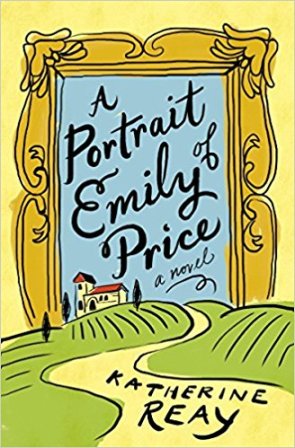
Book Review: A Portrait of Emily Price

Emily PriceIn  A Portrait of Emily Price by Katherine Reay, the title character is a “fixer.” She works for an insurance company in restoration, particularly of art pieces, but she also tackles wall damage, toys, even appliances. In the rest of her life, her dysfunctional broken family developed the “fixer” in her as well. When her sister can’t keep a job, Emily has to find a new one for her. When her clients reveal issues beyond the fire damage in their home, she tries to help the visible as well as invisible family problems. She would like to be an artist as well and has a degree of talent, but something is missing.

Though she lives in Chicago, she’s been sent to Atlanta for her most recent assignment, and her company rented space in a conservator’s studio for her work. The proprietor, Joseph, takes her to his aunt and uncle’s Italian restaurant her first night in town, where she meets his brother, Benito, or Ben. Ben is visiting from Italy, where he works in his family’s restaurant, and is helping his aunt and uncle revitalize their place. Immediately attracted to Ben, Emily agrees to help him restore the restaurant in her spare time. They fall in love (no spoiler, as this happens early in the book and is mentioned in the summary on the back), marry, and she accompanies him back to Italy.

But it’s no fairy tale honeymoon. Ben’s mother doesn’t approve and feels hurt that she was left out of her son’s wedding. Much of the family lets her know in covert ways that she doesn’t fit in. She feels constantly in the way, and efforts to help usually end up making things worse. Ben’s time away has left the family restaurant in a mess, so he’s working all hours to get things back in shape. Only Lucio, Ben’s father, shows Emily any kind of warmth or welcome, and later, Ben’s sister Francesca does as well.

Emily’s fixer mode kicks in, but without understanding the background of the issues, the family, and the culture, her advice and actions backfire. She has to learn that everything can’t be fixed, and furthermore, it’s not always her job to try. But somehow amidst all the pain, she finds a new freedom in her own art.

Yet when she unwittingly stumbles across a long-hidden family secret, it seems to be the last straw, for her as well as Ben’s mother. Will all the relationships shatter, or can they find the grace to heal?

One of Reay’s hallmarks is the wealth of literary allusions in her books. There didn’t seem to me to be quite as many this time, and they mainly came in Lucio’s book recommendations to Emily. Sadly, I wasn’t familiar with most of them, but one I did know was Jane Austen’s Emma. One review at Amazon mentioned this book was a nod to Emma. I hadn’t really caught that – the plots aren’t similar, but Emma and Emily do share “fixer” tendencies (and name similarities I just noticed.) I wished I had thought of that in the passages where Emily discussed her thoughts on Emma.

Reay also usually writes Christian fiction, and around 3/4 of the way into the book, I realized that aspect was absent, and Emily herself seemed woefully ignorant about the Bible or spiritual things. But it does come through in the end. Since it’s in Italy, it’s heavily Catholic-flavored, but the need and provision for grace do come through.

Reay infuses the book with a lot of detail about art restoration, Italy, and Italian cooking, but it flows naturally and nothing sounds overly technical. I almost felt like I could see the sunflowers out the window and smell some rich sauce simmering in the kitchen.

I loved her characters here, especially Emily, Ben, and Lucio, but all of them are well fleshed-out.

This was a book that pulled me in and made me want to spend all day curled up with it.

Update: Here is an interview with the author about this book, her blog, and the C. S. Lewis roots to her stories. It’s an excerpt from a longer interview here.

(Sharing with Semicolon‘s Saturday Review of Books and Carole’s Books You Loved)

Save

Save

Save

Book Review: A Fall of Marigolds

marigoldsIn A Fall of Marigolds by Susan Meissner, Clara Woods is a nurse on Ellis Island in September of 1911. She describes it as something of an in-between place. Immigrants who come in are kept on the island for a time if they have been exposed to any kind of contagious disease. Clara is in her own in-between place as well. Some months earlier she had worked in Manhattan and encountered a man named Edward every day on the elevator. Their relationship had never progressed beyond mutual attraction, but she felt certain they were going to know each other better. But she lost him in the Triangle Factory Shirtwaist Fire.  She moved to Ellis Island to work and hasn’t set foot in Manhattan since. She does her work well and is friends with her roommate, but never goes out, never pursues other friendships, has no future plans.

One day she notices one of the incoming immigrants has a colorful scarf, a woman’s scarf, around his neck. She learns that he lost his wife to scarlet fever on the voyage to America. Since he has been exposed, he is detained, and he indeed comes down with the fever. Clara is drawn to him in their mutual grief, and in trying to help him, gets herself embroiled in a dilemma that causes a crisis of conscious.

In September 2001, that same marigold scarf is brought into the heirloom fabric shop where Taryn Michaels works. It has been passed down through the customer’s family, and she and her sister both like it and wanted to see if the print could be found to make another one. Taryn is delayed in meeting her husband by the customer, but that ends up saving her life, as the 9/11 attacks occur while she is on her way. Unfortunately, her husband was in the Towers and could not escape. So for ten years she has been in her own in-between place, until the tenth anniversary of 9/11 causes a resurgence of photos from the event, one of which shows her with the scarf, the beginning of a chain of events

The author goes back and forth between the two women’s timelines to unfold their stories, their similarities, the history of the scarf, and how the women get out of their in-between places.

I loved the historical aspect of this book. I hadn’t known much about Ellis Island and nothing about the Triangle Shirtwaist fire. Taryn’s experiences on the streets of NYC just after the 9/11 attacks were gripping.

The two women’s journeys toward moving on were compelling and empathetic as well, except it was a little hard to account for the depth of Clara’s grief given that she had known Edward for only two weeks and only on the surface at that. Of course, she was dealing with not just the loss of the relationship, but the potential as well. There is an interview with the author at the end of the book in which she says, “I really do believe that the capacity to love is what gives meaning to our lives, even though we are never more vulnerable than when we let down our guard and trust our hearts to others. The world isn’t perfect; nor are other people. It’s quite possible that loving flawed people in an equally flawed world is going to subject you to the worst kind of heartache. But I like to think that the heart is capable of surviving the costs of loving because it was meant to. The heart is made of muscle; we are meant to exercise it. This is what Taryn and Clara come to realize. It seems to me the best kind of takeaway I could hope for.”

A few of my favorite quotes:

The person who completes your life is not so much the person who shares all the years of your existence, but rather the person who made your life worth living, no matter how long or short a time you were given to spend with them.

It should always make us happy to say that loving someone and being loved by someone is worth whatever price paid.

Everything beautiful has a story it wants to tell. But not every story is beautiful.

If the book was meant to be Christian fiction, I found it a little lacking in that department: I didn’t find much distinctly Christian about it except that the characters wonder sometimes whether God is at work behind their circumstances. But if it was meant as a clean, historical, inspirational novel, then it was very good.

Genre: Historical inspirational fiction
Objectionable elements: A couple of “damns”; God’s name used carelessly a few times.
My rating: 8 out of 10

(Sharing with Semicolon‘s Saturday Review of Books and Carole’s Books You Loved)

Books you loved 4


Save

Save