Review: Code Name Edelweiss

Code Name Edelweiss

Code Name Edelweiss by Stephanie Landsem is a novel based on a true story.

In 1933, Hitler’s rise to power in Germany causes concern for many. But Liesl Weiss doesn’t have time to pay much attention to him. Her husband is missing, and the police assume he just abandoned his family. Liesl is the sole provider for her two children as well as her mother and brother. When Liesl is suddenly fired from her secretarial job at MGM, she desperately looks for another position.

She interviews with a Jewish lawyer named Leon Lewis and learns that what he needs is a spy. An organization called Friends of New Germany appears to help German Americans, especially veterans. But Lewis thinks the leaders are up to something nefarious. He wants Liesl to work as a secretary for group, keep her eyes and ears open, and report back to him.

At first, Liesl thinks Lewis’ fears are unfounded. Her bosses seem very nice. Some of their documents could be taken the wrong way, but aren’t blatant.

As time goes on, however, the group’s stance becomes clearer. Yet there’s not enough concrete evidence to report them. Lewis meets with officials in Washington, but they think he is overreacting. Everyone’s focus is on the Communists, not the Nazis.

Lewis has another operative in the group, known only as Thirteen. He and Liesl don’t know the other’s identity. As he works his way up in the group, he becomes more alarmed. He knows they are up to something, but he can’t find clear details.

Finally Liesl’s and Thirteen’s paths converge. They take more risks to get the information they need, but put themselves in danger to do so. When they finally learn the group’s plans, will they be too late to stop them?

The last several chapters kept me on the edge of my seat.

I think Liesl was like a lot of Americans at the time–preoccupied with her own problems, disbelieving anything bad was going on, then thinking there was nothing she could do anyway. But slowly, she comes to realize that she has to intervene. Lewis shares a quote with her: “If not me, who? If not now, when?”

Then as she rises in the Friends of New Germany organization, she has to deal with misunderstandings from her mother, friends, . . . and her Jewish neighbors.

Some of the other quotes that stood out to me:

I loved my country, but also I loved my German heritage. Would I be forced to choose between the two? (p. 64, Kindle version).

He thought maybe he had it figured, the question that had hounded him since Monterey, the one about why God allowed evil like Winterhalder and the Nazis. Why he didn’t stop them. He guessed that God did stop them—but not with fire and brimstone or smiting like Wilhelm would have done. No, he used people—good people like Leon Lewis, not-so-good people like himself. Gave them what they needed to work with and let them at it. Wilhelm would sure prefer the fire and brimstone, but maybe that’s why God was God . . . and he wasn’t (p. 348).

Adolf Hitler and his religion of anti-Semitism was not a Jewish problem. It was my problem. And if good people did nothing, the evil around us would continue to grow and flourish (p. 90).

The faith element is more subtle here. At first Liesl’s relationship with God is strained: she can’t understand why He would allow her husband to leave. She’s burdened with the pressures of providing for her family and feeling like she is not giving her children the time they need. Thirteen is not particularly spiritual at first. He says at one point that most people weren’t born bad, but were made that way–which is not true, Scripturally, but which shows where his thinking is at the time. But both of them gradually come to stronger faith and dependence on God. 

I enjoyed the author’s historical notes. Leon Lewis was a real person who employed a spy network, helped prosecute American Nazis, and prevented assignations and sabotage. The Nazis really were more active here than many realized. The author includes a quote from Hitler saying the Nazis would cause confusion in America and undermine people’s faith in their government, and then the Nazis would help German Americans rise to power (she doesn’t cite the source). One of their goals was to take over the movie studios and use them for their own purposes. Organizations like the Friends of New Germany were real as well. 

The author says her goal “is not to document a historical event but to write a compelling story about how a character reacts to this event, how it affects her life, and how she is changed by what she encounters. One of my favorite quotes about fiction is this: A story doesn’t have to be true to tell the truth. This is what I hope you gain from [the characters’] story: the truth about courage, conviction, and love that both encompasses and transcends the historical record.”

I think she succeeded.

(Sharing with Bookish Bliss)


Review: This Promised Land

This Promised Land

In Cathy Gohlke’s latest novel, This Promised Land, Ginny Pickering Boyden is finally about to realize her dream of traveling to her family’s ancestral home in England. Decades earlier, she had run away to marry her boyfriend before he shipped out to WWII. Her mother and brother disowned her; she lost the baby she was expecting; and her husband came back maimed in body and mind. She cared for him as long as she could, and then he spent the rest of his years in a nursing home. When he died, Ginny spent years recovering and paying off her debts so she could travel.

Now she has just retired from her job when she gets a letter from a lawyer in New Scrivelsby, VA–the town where her family owned a Christmas tree farm for generations. The letter says her brother has died and there is a problem with his will. She needs to come and settle the family business.

Ginny doesn’t want to go, but doesn’t seem to have a choice. She plans for a quick trip to sign whatever papers are needed, see her parents’ graves, and then get on with her life.

But the situation is more complicated than she thought. Her mother, who had died long before, had actually left the Christmas tree farm and family home to her. Her brother, Harold, had told his sons he was leaving everything to them, but he couldn’t since he didn’t rightfully own it.

On top of that, Harold was not in his right mind his last few years. Despite his son’s efforts, Harold took out a sizeable loan and didn’t pay two years worth of taxes.

Even if Ginny wanted the farm, there’s no way she could pay its debts. She has no choice but to sell.

Harold’s son, Luke, has been running the farm almost single-handedly. He believes his father’s lies about Ginny and figures she’s swooping to claim everything and sell it all, leaving him high and dry.

And then Harold’s other son, Mark shows up. A Vietnam veteran, Mark has been in and out of trouble with drugs and alcohol. He did some time in jail while his three children were placed in separate foster homes. All he wants is to sell out his part of the farm to his brother so he can try to make a new start with his children. He’s stunned to learn that his brother doesn’t own the farm.

All the branches of the family tree are fractured and barely holding on. Harold is angry and barely gives Ginny or Mark a chance. His longsuffering wife, Bethany, urges patience and grace. Mark’s children desperately need stability, but his addiction recovery is fragile.

They decide to try to maintain the farm through one more Christmas season to see if they can recover their losses. If not, Ginny will sell and divide the proceeds between them. Though keeping the farm is uncertain, Ginny hopes the rifts can heal and they can become a true family, something they all need.

Unbeknownst to them all, they have enemies without as well as within.

The Bible story of the prodigal son comes up often in this story, with Ginny realizing she has been in the place of both the prodigal and the resentful older brother. Now she wants to be like the welcoming father. But all the family’s problem make it difficult.

Ginny enjoys the hobby of pressing flowers and making pictures with the dried blooms. She shares this with the children and even uses their creations to make framed art to sell to help the farm. Along with the interesting process of how flowers are dried and pressed, the process symbolized that “something so pretty and permanent could come out of something as short-lived as a rose” and “life was not done–simply waiting to bloom again.”

I have enjoyed all of Cathy’s books that I have read, and this one is no exception. The characters are well-developed, and the faith element is woven in naturally. It’s easy to sympathize with all the characters and their struggles. I like how the author brought everything together in the end.

I listened to the audiobook, nicely read by Sarah Zimmerman.

(Sharing with Bookish Bliss)

Review: He Should Have Told the Bees

He Should Have Told the Bees by Amanda Cox tells the story of two young women whose lives intersect unexpectedly.

Beckett Walsh kept bees with her father until he died unexpectedly. Her mother had left them when Beckett was small. Though memories of her mother are hazy, her leaving sent Beckett into nightmares of monsters when she was a child and panic attacks as a young person and adult. Her father had left his job as a banker to homestead, start an apiary, and accommodate Beckett’s needs. But now he’s gone. Still, Beckett thinks she can do just fine, despite her aunt’s attempts to manage her life.

Callie Peterson grew up with an unstable alcoholic mother who went through a series of men. Now Callie has distanced herself and bought a building to start a new business making candles, lotions, etc. But the building is going to need more work than she thought. And then her mother shows up on her doorstep, claiming she’s ready to seek help. When Callie takes her to a rehab center, she’s unaware that her mother named her as the person responsible for the finances needed.

Both women get a summons about a hearing for a trust that Beckett’s father had set up, naming them both as co-owners of the farm. The two women never knew each other before. Beckett can’t fathom why her father would name this stranger a co-owner when he knows Beckett’s needs and problems. Callie doesn’t, either. But she wonders if selling the farm could help her financial problems. But doing so would oust Beckett from the only safe place she knows.

Both women try to understand why Beckett’s father named Callie in the trust. Their search leads them to secrets and connections they never knew about. Will both their lives be upended–or fulfilled?

I enjoyed this story quite a lot. It was easy to sympathize with each woman’s journey and pain.

The side characters are delightful. Beck is unexpectedly visited by a neighbor in the form of a young girl who says she is an alien. Callie’s booth neighbor in the markets where they sell their wares turns out to be a stabilizing factor in her life.

The book opens with an excerpt of a poem by John Greenleaf Whittier titled “Telling the Bees,” in which beehives are draped in black as the bees are told their keeper has died. Evidently, according to Wikipedia, this is a custom in many European countries. It was even done when Queen Elizabeth died in 2022.

At one point, Callie’s friend points out some sunbeams and says:

They’re called crepuscular rays. And they happen because of light hitting dust. It’s just ordinary, boring particulate floating all around us like it always does, and then bam, the light hits it and suddenly it’s something that makes people stop and take pictures. If that’s not a miracle, then I guess I don’t know what a miracle is (p. 54).

That becomes an underlying theme.

A few other quotes that stood out to me:

If she could stack up all the hurt in the world and sort the kind inflicted with malicious intent from the hurt inflicted by carelessness, how would the two compare? Was there really any difference when the result was the same? (p. 216).

It was a hard lesson to learn—that you couldn’t be the one to fill the holes in another person’s life. Working through dysfunctional patterns, finding healthy coping skills, and letting God heal the wounds the past left behind, those were things you couldn’t do for another person. No matter how much you wanted to (p. 251).

It’s possible for treasured things to come out of the brokenness. Even if it doesn’t happen the way any of us would have wanted. Even if it comes through loss (p. 299).

On a humorous note, it’s fun to notice a particular author’s unique repeated words. In this book and others, Amanda uses the word “scrubbed” a lot (eight times in this book)–she scrubbed her eyes, he scrubbed his hand over his face. And hearts tend to “stutter-step” when upset. And people “worry” their bottom lips.

Amanda doesn’t have end notes about the story, but there is an interview here where she discusses the book.

All in all, I’m happy to recommend this book.

(I often link up with some of these bloggers.)

Review: Up from the Sea

Up from the Sea by Amanda Dykes

Amanda Dykes’ novella, Up from the Sea is a prequel to Whose Waves These Are, one of my all-time favorite Christian novels.

Savannah Mae Thorpe was raised in Georgia, but is taken in by an aunt and uncle in Maine after her parents die. Savannah is more comfortable walking in the forest than the ballroom with her cousins.

When her cousins and their friends tell of an old legend, Savannah recognizes it as a variation on a story her mother told of a young woman who buried a small chest under what came to be known as the Atonement Tree, asking forgiveness while an unknown observer watched.

When Savannah discovers an updated version of the map her mother drew as a child, she goes with her cousins and Alistair Bliss, a local woodsman and employee of the family, to see if they can find the tree. What they discover has ramifications for all of them.

Along with Savannah’s “fish out of water” story, there are hints of troubled secrets in Alistair’s past, Savannah’s uneasy relationship with the cousin she used to count as a friend, and some Revolutionary War history.

Some of my favorite quotes:

Darkness comes, Savannah my girl. But don’t you let it steal your light.

I have a feeling no matter how mixed up the problem is, the answer’s almost always the most simple thing hiding beneath all our worries. That if we scale it back and look for the simplest truth—there lies the thing to do.

So many dashed hopes between the three women present within, yet it felt like a gathering place. God’s hand moving and weaving, stitching these unlikely hearts to one another.

So far, I have loved everything I’ve read of Amanda’s. This was such a sweet story. I loved the development of Savannah’s relationship with Alistair (who becomes the father of the brothers in Whose Waves These Are). I think both books could be read on their own, but they go well together.

Review: Good Hope Road

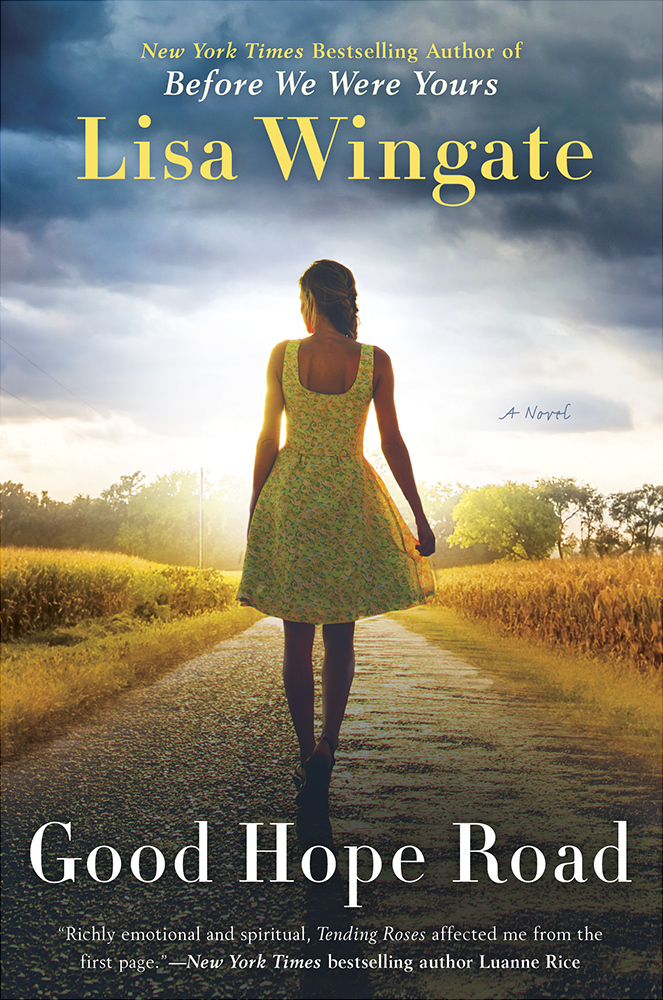
Good Hope Road by Lisa Wingate

Good Hope Road by Lisa Wingate begins with a tornado hitting the small town of Poetry, Missouri. Twenty-one-year-old Jenilee Lane is home alone, her father and brother having gone to a cattle auction in Kansas City.. Their house is spared, but Jenilee discovers her elderly neighbor, Mrs. Gibson, and the woman’s granddaughter trapped under debris across their storm cellar.

Jenilee and her family had not been close to their neighbors. Jenilee’s father had a bad temper and kept the family to themselves. They were often regarded as “white trash” by the townspeople. But Jenilee is the only help available, so she gets her neighbors out from the cellar just before Mrs. Gibson’s son and daughter-in-law come.

To keep busy, Jenilee and Mrs. Gibson go to the armory, the only large building in town still standing. Along the way, Jenilee picks up pieces of debris she finds: parts of letters, pictures, certificates.

The veterinarian is the only medical help at the armory until a doctor stranded in the storm is brought in. Jenilee had worked for the vet and seems to have a natural way of calming frightened people while they wait for help.

Jenilee continues going to the armory while waiting to hear about her father and brother. One day she decides to tape the paraphernalia she found on a wall there so people can find their lost treasures. This blossoms into giving hope to people.

Mrs. Gibson begins to see there is more to Jenilee than she’d thought. She also runs into an injured man at the armory with whom she’d had a long-running feud. At first she can’t spare a kind word for him. But she sees sides to him that she had forgotten were there.

As neighbors help neighbors and helpers come from others areas, they see each other with fresh vision and discover good things can arise from tragedies.

The book touches on multiple themes: the difficulties of an abusive family; how we can too easily misjudge others; the need to let go of the past; the fact that difficulties can bring out the best and worst in people; and faith, hope, and forgiveness

Some of my favorite quotes:

I walked to the kitchen, shuffling the way I do when my knees are like old plow handles and my joints are rusted shut.

It’s humbling to realize maybe you ain’t as good as someone you’ve spent years looking down on.

That part of you that wants to care for other folks is like fresh milk. You might as well pour it out as you go along the path. It don’t . . . keep in a bucket . . . very long.

In town after town, people were building anew. Towns just like our own—small, imperfect places beneath which hid the potential for something larger, something stronger, something we may never have seen, if not for the disaster.

The book is the second in a series of five, the sequel to Tending Roses (linked to my review). It’s been a few months since I read the first book, but I didn’t see any characters I recognized in this one. In the author’s notes at the end of the book, she explains one distant connection with the first book which will be delved into later.

There were a few “damns” and misuses of the Lord’s name. But otherwise, this was a great book.

Review: Between the Sound and Sea

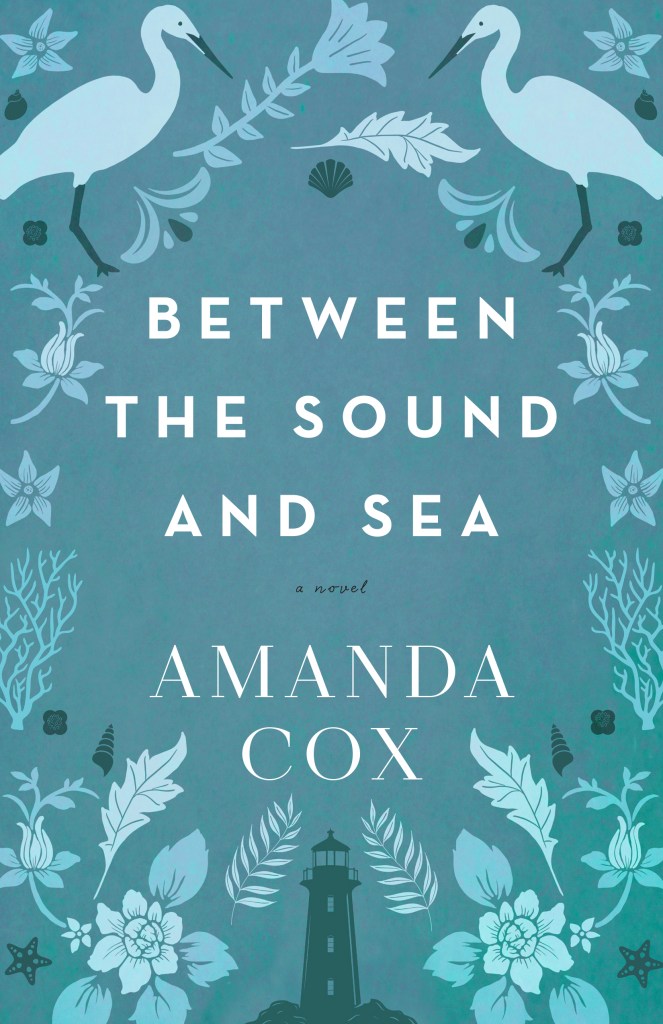
Between the Sound and Sea

Between the Sound and Sea is “Inspirational Contemporary Fiction with History and Mystery at a North Carolina Lighthouse.” The Sound in the title is Pamlico Sound in the Outer Banks of NC, but the title has several layers of meaning.

Josephina Harris–Joey–owns a fledgling event-planning business in Copper Creek, TN, where she grew up. She had helped her father and brother in their restoration business until her father retired and sold the business. But the new owner cheated people, who, for some reason, blamed Joey’s father. Her parents decided to make a new start in Florida. Joey’s customers have cancelled events one by one

When Joey’s friend sends her an ad about help wanted to restore a lighthouse and cottage on a North Carolina island, Joey decides to apply. If she gets the job, it will give her an income to tide her over and give her time to think about what she should do next.

Joey travels to NC and meets the owner of the lighthouse, 81-year-old Walt O’Hare, and his grandson, Finn. Walt had grown up in the area but left after WWII. His best friend, Cay, short for Cathy, had been the lighthouse keeper’s daughter. During the war, her father’s body had mysteriously washed up on shore, but Cay was never found and presumed dead. Walt wants to restore the lighthouse in their memory. Finn is not so sure this idea of his grandfather’s is a good one and is even less sure Joey is the person for the job. But he acquiesces.

It soon becomes clear that Walt has other reasons for wanting to restore, reasons which he is not sharing.

The people in town tell of strange things happening on the island over the years. Some say ghosts inhabit the island. Others say Cay’s father was working for the Nazis.

As Joey begins restoration, she finds patched-up places in the lighthouse’s inner walls. When one area begins chipping, she discovers what appears to be a lighthouse keeper’s log inside–but the events described don’t match the official logs.

Local lore describes a “Saint Mae” who rescued people lost at sea. Could these logs belong to Mae? But who is she and why is she not listed among the lighthouse keepers?

When accidents and unexplained things start happening around the lighthouse and cottage, Joey wonders what’s at the bottom of it all.

Besides the lighthouse mystery, Joey, Walt, and Finn all deal with regrets from their past and indecision about how to handle the future. There’s a secondary story line involving a teenage boy with a troubled past.

I enjoyed how the story unfolded, sharing what really happened with Cay, who Mae was, how everything connected, and how each character found peace. The restoration of the lighthouse seemed a subtle metaphor for the needed restoration available to each character.

I also loved that the author had Christian characters doing Christian things without being heavy-handed about it. Some Christian fiction is so subtle, there’s almost nothing Christian about it. It’s refreshing to find truly Christian fiction.

A couple of favorite quotes:

God meets us right where we’re at. And maybe things in our lives get broken down and beat up along the way. The good news is restoration work is kind of His specialty.

I’m grateful to have played a role, but I wasn’t the planner orchestrating this event.
This one was in the hands of One far more skilled than I, gently guiding even when we were all half certain we’d lost our way.

A couple of well-worded descriptions caught my ear, too: “the comfort of an oversized sweater worn on a crisp fall morning” and “Her voice was wispy like fog over water.”

I listened to the audiobook read by Rebecca Quinn Robertson, who did an okay job. She spoke too softly sometimes.

As I sat down to write this review, I looked up the book on Amazon and reread the first few pages in their free sample. I had forgotten how it began, with an older woman telling a young boy about Saint Mae. I was delighted to realize who those characters were later in the story.

Overall, this was a great read that I am happy to recommend.

Review: Christmas at Sugar Plum Manor

Christmas at Sugar Plum Manor

Christmas at Sugar Plum Manor by Roseanna M. White is a sweet (pun intended) Edwardian-era novella with shades of Jane Austen and The Nutcracker.

Lady Mariah Lyons’ step-father, the Earl of Castleton, has to leave his estate to a distant cousin due to an entail on the property. His heir, Cyril Lightbourne, had visited the manor as a child, where he and Mariah became fast friends. They were both imaginative and fun-loving, renaming Plumford Manor as Sugar Plum Manor and writing tales set in the woods.

But due to a misunderstanding, Cyril thought the Earl didn’t really want him as an heir, so he’s been absent for twelve years. Now he’s been invited to Plumford Manor for Christmas and is not quite sure what to expect.

Mariah isn’t sure, either, whether Cyril will be the same friend he was, or whether he will be distant and aloof. She’s heard he is courting Lady Pearl, and she doesn’t know why the men who flock to Pearl can’t see the cruelty behind the beauty.

Another guest arriving at the manor for Christmas is a Danish Greve (Count) who specifically wants to seek Mariah’s hand in marriage because his prince wants to strengthen ties with England by having a member of the royal court marry into a leading English family. He doesn’t love her: he thinks she is pleasant enough, though a bit silly, but he attributes that to her youth. Though handsome, he comes across as almost emotionless, cold, and calculating.

The two men had an altercation in the past, which sets the tone for their meeting at Plumford. Their pursuit of Mariah adds to their animosity and desire for revenge.

Mariah is a sweet girl, though not as beautiful as her widowed older sister. Her siblings and mother think she’s a bit immature, even ridiculous. Now the Greve feels the same way. Is what she always thought of as joyfulness truly childishness? Does she need to tone herself down to marry the Greve, or will Cyril ever see her as more than a childhood friend?

Embedded in the story are themes of faith, forgiveness, redemption, and being who God created you to be. I listened to the audiobook nicely read by Liz Pearce. This was a nice Christmas read.

(Sharing with Bookish Bliss Quarterly Link-Up)

Review: Across the Ages

Across the Ages

Across the Ages is the fourth in Gabrielle Meyer’s novels about time crossers: people who live in more than one timeline until their twenty-first birthdays, at which time they can choose which of their timelines to stay in and which to forfeit.

In all the previous books, the time crosser had a parent to tell them what was going on and share the rules. In this book, Caroline’s mother left her as a baby with her grandfather in South Carolina in 1727 and then fled, never to be heard from since.

Caroline goes to sleep in South Caroline and wakes up in Minnesota in 1927, where she is the dutiful daughter of a famous pastor. The next night, she goes to sleep in MN and wakes up in SC on a plantation with her grandfather, without having lost a day in-between.

When Caroline tried to tell either family about her strange existence as a child, they scolded her for making up stories. Her grandmother from her 1727 life had been burned at the stake as a witch. All Caroline can figure is that she’s under a curse from that grandmother.

When her grandfather in 1727 plans to force her into an arranged marriage with a man she doesn’t love, she decides to try to find her mother to get some answers. Caroline dresses as a boy and finds work on a ship to Nassau, the last known location of her mother. Everything goes well—until her boat is captured by pirates.

In 1927, Caroline’s brothers don’t live up to her father’s standards. One is a crooked cop, the other a crooked businessman. She tries to keep her brothers’ activities secret so as not to harm her father’s reputation. But she admits that living under public scrutiny is wearing. Her own search for answers leads her to places her parents wouldn’t want her to go.

Gabrielle Meyer keeps finding ways for new takes on this unique concept. This is the first book where the main character isn’t related to the main characters in the previous books. But I realized further in that there was a connection in this book with some of the side characters from the third book, For a Lifetime.

I listened to the audiobook, nicely read by Rachel Botchan, who has narrated all the books in this series. Thankfully, the audiobook included the author’s historical notes.We meet Ernest Hemingway and Charles Lindbergh as characters in this book, and several others are based on real people. Caroline’s preacher father is based on Billy Sunday, which I had guessed due to his having been a professional baseball player. However, I had not known that Sunday’s sons did not share his faith and dabbled in the things he preached against, like Caroline’s brothers did.

Some readers would want to know that there is mention of adultery and brothels with the corrupt brothers, but nothing explicit is shown.

Part of the history also included in this novel was the O’Connor agreement in St. Paul, MN, whereby criminals could stay in the city without being bothered as long as they checked in with the police, paid bribes, and did not commit crimes while there.

But besides the fascinating historical detail, I enjoyed Caroline’s personal journey, though it was painful for her in parts. She struggles to discern what true belief in God is, rather than just performing outwardly to her parents’ expectations. And she finds that she is not cursed, but blessed.

Although this book could be read alone, I’d recommend the whole series.

Review: The Edge of Belonging

The Edge of Belonging by Amanda Cox opens with a homeless man, Harvey James, finding a newborn baby abandoned near his camp. He cleans her up and decides to look for a nice house with toys in the yard. A family with children would know what she needed. But none of the places he sees seem suitable.

He names her Ivy for the way she wound her way around his heart so quickly.

When he stumbles upon a pantry at a church with baby supplies, he begins to wonder if he could take care of her after all. At least for a while.

Twenty-four years later, Ivy is engaged and working her dream job as a counselor in a school when she learns that her grandmother has passed away. None of her family is related by blood, but their bond is strong as if they were. She goes home for the funeral, but her fiance’s selfishness in not wanting her to go makes her realize how controlling and emotionally abusive he has been.

She receives a letter her grandmother sent before her death, asking Ivy to take care of some of her things and telling her about a journal detailing her origin.

Ivy had always been told she had been left on her adopted parents’ doorstep as a baby, and they took her in. But her grandmother indicates there was more to the story.

After breaking up with her fiance and losing her job, Ivy travels back to her grandmother’s house. But the journal is missing. Her parents and uncle won’t answer any questions about her birth, saying the past is better left behind. But Ivy feels she needs to know where she came from to determine where she should go next. She begins to piece together clues found in her grandmother’s belongings.

The story switches back and forth from the events after her birth in 1994 and the present day, with the people and circumstances in Ivy’s and Harvey’s lives slowly revealed.

I loved this book. Some of the themes involve the nature of family, healing of wounded souls, the nature of sacrificial love, reaching out to help others even when they might reject it. The book also touches on homelessness, PTSD, depression, infertility, the foster care system, sex trafficking, and more. Everyone has a story, and that’s true of all of the main characters here.

Although I enjoyed Ivy’s journey, Harvey is my favorite character. At the beginning, he’s so skittish he can barely hold a conversation. He’s been shuffled aside so many times, he’s closed off to everyone. But his love for Ivy pushes him to extend himself far beyond his comfort zone.

Ivy’s Grandma Pearl is another favorite, but I can’t tell you too much about her without spoiling the story. Though both sides of the dual timeline focus on Ivy, Pearl is in many ways the hub of the wheel that connects all the characters. She says of herself, “If the story of my life could say one thing, I’d hope it would show the importance of venturing into the highways and the hedges to let invisible people know they’re seen and loved. To invite them in.”

A couple of other sentences that stood out to me:

I’m starting to see that when I let go of my grip on my pain, I make space for new things. Things that bless me in a way I never would have imagined. I’m getting there little by little—learning how to release my disappointments and embrace the gifts I have (pp. 295-296).

It’s not about my pain versus your pain. It’s about sharing in the human experience and knowing what it is to hurt. It takes courage—stepping forward and healing when it’s so tempting, so safe, to stay and worship the altars we’ve built to our pain (p. 297).

I started out listening to the audiobook, nicely read by Leah Horowitz, which was free from Audible’s Plus Catalog. But Audible rotates titles in and out of their free offerings, and this book rotated out about a day before I could finish it, so I lost the quotes I had marked in the early part of the book. Thankfully, our library had a copy, so I could finish the book.

This book was Amanda’s debut novel in 2020. I’m looking forward to reading the books she has written since then.

Review: Whose Waves These Are

Whose Waves These Are by Amanda Dykes

Whose Waves These Are by Amanda Dykes begins in September, 1944. Identical twin brothers in a small Maine village, Ansel-by-the -Sea, have just turned eighteen. Enlistment in military service has been closed “to protect the home-front work force,” but the draft is in effect. A letter arrives from the President ordering one of the twins to report for duty. Robert Bliss assumes, hopes, the letter is for him. He’s single, ready to go. His brother, Roy, is married to Jenny–the girl Robert has loved for years but didn’t speak up for soon enough. Roy and Jenny have just discovered they’re going to be parents.

But, no. The letter is for Roy.

Robert proposes that he could go in Roy’s place. They’ve stood in for each other many times. But Roy argues that it’s his turn to help save others.

Then we’re whisked to Chicago in 2001, where Annie Bliss crunches numbers. She was an anthropology major, but her first assignment to help a small village ended in disaster. In her current job, at least she can’t hurt anybody.

Then she receives news that her “Grandbob” back in Ansel-by-the-Sea is in grave condition in the hospital.

Annie speeds back to Maine, where she had visited as a child when her parents’ deployments overlapped and they left her with Bob. There she is known as “Bob’s Annie.”

While Bob is unconscious, Annie gets reacquainted with the people she knew. There’s one newcomer since she lived there, a quiet, brooding postman and EMT named Jeremiah Fletcher, or Fletch. Annie discovers boxes of rocks in a closet in Bob’s house. Jeremiah shows her even more in the boathouse. Bob has left her a key, but no word about what it belongs to. As Annie asks around town, people either don’t know or aren’t sharing what Bob was up to.

The point of view switches back and forth between these two time frames. The older one unfolds what happened with the brothers during the war and the years afterward. As one grieves the loss of the other, he writes the only poem of his life asking for rocks to represent people lost during the war. He plans to build something to represent hope and healing. But another tragedy halts his efforts.

The twenty-first century timeline shares Annie’s story and shows her discovering the pieces of her history that she had not known.

I loved this book. I just wanted to sit and hug it after finishing it. It left me wishing I could visit Ansel-by-the-Sea, if it were a real place and these people lived there. I love books with a strong sense of place, whose stories could not have taken place anywhere else.

I loved the characters. I loved the way the author unfolded and wove together everyone’s stories.

I also loved many of the author’s turns of phrases. A few:

A wake is a ripple left after a departure (p. 41).

He said it was time to be part of the unbreaking, of the making of something. He told me there was a Carpenter who was going to build me right up, too (p. 75).

She looks at Bob lying there, face mapped in wrinkles carved from compassion (p. 79).

She’s used to city life, rich in its own way, with an energy and bustle from the lives there, but where eye contact is a safety issue and a good neighbor is your insurance company’s tagline (p. 87).

Annie tries for small talk. Which, as she’d learned, could sometimes lead to large talk. Which made the small talk bearable (p. 131).

Don’t get stuck in the dark . . . There’s a whole lotta light . . . Go there instead (p. 171).

Saluting—a stance of the fiercest heartache schooled into firmest respect (p. 173).

The song she offered up was all the more beauitful in its wavering and brokenness. Courageous, and offering. The laying out of her broken heart before her God (p. 188).

Words begin to light up, pour right through, like someone turned on a faucet and he’s just trying to catch them. They’re not his, really, he’s just the one scratching them out (p. 188).

He slaps courage back into himself and goes to church (p. 202).

I choose to believe there is some shred of light left in him. A light I pray he fights for (p. 238).

His thoughts are becoming more like an ongoing conversation with heaven, these days—usually more questions than anything else. And this was a big one. What now? (p. 249).

He looks like someone who’s been cut loose to drift and hasn’t found shore (p. 252).

Not healed . . . but held. Like the pieces of him have been gathered right up, and that is enough for now. The rest will follow (p. 275).

The strength of the storm does not change whose waves these are. There is One mightier still (p. 348).

I was motivated to read this book because I had seen high praise for it. That praise was well-deserved. I’ll be looking up more of Amanda Dykes’ books to read.