The First Step to Murder

The First Step to Murder

If we look through the Ten Commandments, most of us breathe a sigh of relief when we come to the sixth one: “You shall not murder.” At least that’s one thing we haven’t done.

However, Jesus takes the issue beyond outward action to the heart. He said, “You have heard that it was said to those of old, ‘You shall not murder; and whoever murders will be liable to judgment.’ But I say to you that everyone who is angry with his brother will be liable to judgment; whoever insults his brother will be liable to the council; and whoever says, ‘You fool!’ will be liable to the hell of fire” (Matthew 5:21-22).

Some translations show the middle of verse 22 saying “And whoever says to his brother, ‘Raca!’ shall be in danger of the council” (NKJV). According to the Berean Study Bible notes here, “‘Raca’ is an Aramaic term of contempt, roughly equivalent to calling someone ’empty-headed’ or ‘worthless.'” Other translations use the word “idiot.”

The notes go on to say, “Calling someone a ‘fool’ implies moral and spiritual deficiency, not just intellectual lack. In biblical terms, a fool is someone who rejects God and His wisdom (Psalm 14:1). This phrase highlights the destructive power of words and the importance of speaking with love and respect.”

We can understand how lust is the first step toward sexual sin, as Jesus said earlier in Matthew: “You have heard that it was said, ‘You shall not commit adultery.’ But I say to you that everyone who looks at a woman with lustful intent has already committed adultery with her in his heart” (Matthew 5:27-28).

But how are anger and name-calling precursors to murder?

They both dehumanize other people and cheapen their worth. Jen Wilkin describes the progression in her book on the Ten Commandments, Ten Words to Live By: “First, I am angry with you in response to a hurt. Next, I begin to question your character with an insult. Then, I begin to question your worth as a person. As anger degrades into contempt, the personhood of another is devalued” (p. 93).

I’ve often wondered at the atrocities humans have committed against each other during the days of slavery or the Holocaust or in prisoner of war camps. Some people thought of slaves or Jews or enemies as something less than human, and that was the first step to treating them horribly.

Even now, online battles reveal a shocking wish for harm towards others who disagree with opposing politics or views. Seven years ago, author and teacher Karen Swallow Prior was hit by a bus and had a long recovery. Recently, she shared a post on X where someone said he wished that bus had better aim. Like her or not, disagree or agree with her, wishing for her demise is appalling.

But these kinds of things are common online. Harm is wished towards people of differing opinions. Cancel culture is a smaller version of wanting to wipe out, to remove from public view, those we disagree with.

A few years ago, I was in a WalMart when I first realized that Covid was going to be a major issue. I had heard of it, but we’d been warned about viruses before (like H1N1), which didn’t have a great effect on our everyday lives. We figured this new virus would be the same.

But that day in WalMart, shelves were empty of disinfecting wipes, antibacterial soap, and toilet paper, among other things. I had never seen anything like this. I was rattled, wondering what was going on, how big this thing was going to be, and where I was going to find what I needed.

In my preoccupied state, I turned in front of another cart to get something from a shelf. It was the equivalent of cutting someone off in traffic. I wasn’t being malicious: I just wasn’t thinking clearly. But I was definitely in the wrong. I couldn’t seem to form the thoughts or words to apologize.

The person I offended pulled his mask down, looked straight in my eyes, and said to his companion, “I hope she gets the Coronavirus. I hope she dies from it.”

I watched him pass by with my mouth gaping open. I couldn’t believe he said that. I was even more rattled.

Genesis 1 tells us God created people in His image or likeness. Everyone has worth because God made them, even though that image is marred because of sin.

When we become believers, we “put on the new self, created after the likeness of God in true righteousness and holiness” (Ephesians 4:24). We start to look and act more like our Father. The more we behold Him and walk with Him, the more we’ll look like Him. Therefore we take care to “Be angry and do not sin; do not let the sun go down on your anger, and give no opportunity to the devil” (Ephesians 4:24-27).

We don’t keep the sixth commandment just by avoiding murder. We value others as God’s creation.

Jen Wilkin continues:

Because we are accepted in the beloved, we will not be content to simply be not-murderers, or not-contemptuous, or not-angry. We will not merely refrain from taking life—we will run toward giving it. Let us read in the sixth word’s prohibition of murder the exhortation to take every care to preserve life. Let us run to be life-protectors and esteem-givers and peacemakers.

To do so will require that we take stock of how we might be participating in the anger-worship of our cultural moment. It will require that we strive to preserve life in a culture that believes entire categories of image bearers are worthy of our contempt or our disregard—the unborn, the elderly, the physically or mentally challenged, the poor, the powerless, the foreigner. And in a world defined by living at odds with others, it will require that we strive to live at peace with others, as far as it is possible with us. It will ask us to be our brothers’ keepers, even as Christ has been ours (p. 96).

Paul writes in Philippians 2: “Do nothing out of selfish ambition or conceit, but in humility consider others as more important than yourselves. Everyone should look not to his own interests, but rather to the interests of others” (verses 3-4, CSB).

He points us to Jesus’ example: “Adopt the same attitude as that of Christ Jesus, who, existing in the form of God, did not consider equality with God as something to be exploited. Instead he emptied himself by assuming the form of a servant, taking on the likeness of humanity. And when he had come as a man, he humbled himself by becoming obedient to the point of death —even to death on a cross” (verses 5-8, CSB).

If anyone had a right to be angry with others, Jesus did. But He became as a servant and humbled Himself, even to the point of death, for people who, at best, did not understand Him, and, at worst, plotted to do away with Him.

We can’t have the attitude Jesus did in ourselves. We need His grace. We need to look long at Him so that we might become more like Him, showing love instead of contempt.

Philippians 2:3

(I often link up with some of these bloggers.)

Laudable Linkage

Laudable Linkage

A variety of good reads found this week:

When God Used a Stutterer, HT to Challies. “Must limitations and weaknesses keep us from effective ministry? And how should we think about others in the church who have glaring, limiting imperfections?” This is a neat story.

If I Have Matching Dishes, But Have not Love . . . HT to Challies. “If I have matching dishes but have not love, my kitchen cupboard becomes a higher priority to me than the most important person to me in this life.”

People Over Perfection: 5 Tips to Help You When Tiny Distractions Take Over. “Have you ever found yourself in a friend’s living room when you suddenly noticed a picture on the wall that was crooked? Did it occupy your attention for too long, leaving you unsettled and distracted until you walked over and straightened it?”

You’re Beautiful, HT to Challies. “In this month’s letter, I share my personal journey with female beauty standards—a topic that’s been on my mind ever since my daughter was born. I share what life was like growing up with contradicting beauty standards, and how they shaped my insecurities as an Asian Australian woman. I then explore how my new faith, motherhood, and entering my late 30’s has redefined my perspectives on outward beauty.”

Why Christian Men Need Friendship, Not Just “Accountability,” HT to Challies. Yes, yes yes! I’ve always felt there was something off, even artificial, about “accountability partners,” and this helps explain why.

The 10%, HT to Challies.”What does that say about us as a society? We, with the requisite number of chromosomes, determine your fate before we even meet you, before we experience one of your open-hearted hugs or witness your exuberant spirit. How far have we fallen, that we will only welcome you if your test results declare you worthy of our care?”

Why Are There Four Gospels? A great illustration helps answer this question.

You Can’t Do It Alone. “Productivity is not the solution to all of your problems. That’s the promise of secular productivity, isn’t it? Peace, order, simplicity, abundance—the life you want—is just on the other side of one simple system/technique/app/framework.”

The Theology of Work and the Stay-at-Home Mom: Embracing the Value of Our Calling, HT to Redeeming Productivity. “It’s easy to feel like our work doesn’t “count” because we’re not bringing home a paycheck. We don’t get the flashy title that comes with being a high-powered professional, and sometimes, it feels like society only values work that earns money. But if we believe, as Christian moms, that God has called us to this specific work, does the absence of financial gain truly define our calling’s worth?”

God Is Writing Your Story: You Need to Tell It. “God has given each one of us a story. It may not be as dramatic as Corrie ten Boom’s or as screen-worthy as Louis Zamperini’s, but each and every one can be used by God to connect with someone and to ultimately point them to Jesus. And we’re not supposed to keep these stories to ourselves.”

Charles Spurgeon quote

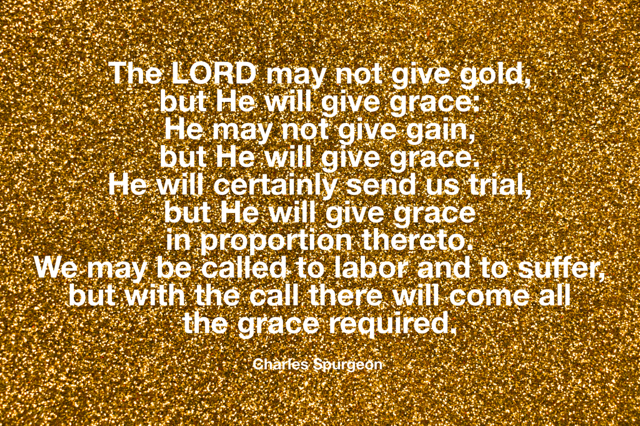
The LORD may not give gold, but He will give grace: He may not give gain, but He will give grace. He will certainly send us trial, but He will give grace in proportion thereto. We may be called to labor and to suffer, but with the call there will come all the grace required.
— Charles Spurgeon

How Can We Love Like God Loves Us?

How can we love like God loves us?

This time of year, our hearts are drawn toward love. Whether one celebrates Valentine’s Day or not, we can’t help but hear about it and see displays in stores.

Valentine’s Day is one of my favorite holidays. I love to make cards for my family, prepare a special meal, and bake heart-shaped cupcakes served on festive, heart-covered paper plates. I love receiving cards, flowers, and my favorite candy. I don’t often listen to mushy love songs, but I’m more inclined to in February.

As fun as those things are, we know real love goes deeper. It shows up “for better or worse, for richer or poorer, in sickness and in health.” Love can feel giddy or warm and fuzzy. But love can also feel like hard work..

Jesus told us to “love one another just as I have loved you” (John 13:34; 15:12). What’s more, He told us to go beyond loving those who please us or love us back, but also to love those who persecute us and hate us.

How can we do that? After all, He is God, and we are not. Oswald Chambers said in the April 30 reading from My Utmost for His Highest, “The springs of love are in God, not in us. It is absurd to look for the love of God in our hearts naturally; it is only there when it has been shed abroad in our hearts by the Holy Spirit.”

I’m far from perfect in this, but I’ve found these things to help:

Pray for more love

I was encouraged when I realized there were passages in the Bible about praying to be more loving. That indicates God knows we’re not perfectly loving yet and we need to grow in love. I sometimes pray these for myself and need to do so more often.

Now may our God and Father himself, and our Lord Jesus, direct our way to you, and may the Lord make you increase and abound in love for one another and for all (1 Thessalonians 3:11-12).

And it is my prayer that your love may abound more and more, with knowledge and all discernment (Philippians 1:9).

That Christ may dwell in your hearts through faith—that you, being rooted and grounded in love, may have strength to comprehend with all the saints what is the breadth and length and height and depth, and to know the love of Christ that surpasses knowledge (Ephesians 3:17-19).

May the Lord direct your hearts to the love of God and to the steadfastness of Christ (2 Thessalonians 3:5).

Abide in Him

Trying to love as Jesus did will show us soon enough that we can’t do it in our own power. “Abide in me, and I in you. As the branch cannot bear fruit by itself, unless it abides in the vine, neither can you, unless you abide in me. I am the vine; you are the branches. Whoever abides in me and I in him, he it is that bears much fruit, for apart from me you can do nothing” (John 15:4-5).

We have come to know and to believe the love that God has for us. God is love, and whoever abides in love abides in God, and God abides in him” (1 John 4:16).

Be Filled with the Spirit

Ephesians 5:5 tells us, “God’s love has been poured into our hearts through the Holy Spirit who has been given to us.” Part of the fruit of the Spirit is love, so when we’re filled with Him, we’ll be filled with His love.

Behold Him

It makes sense that to love as Jesus loved, we need to consider how He loved.

He took initiative. God loved us even before we knew Him, before we turned to Him, even before the foundation of the world (Ephesians 1:3-6). “We love because he first loved us” (1 John 4:19).

He showed grace. “God shows his love for us in that while we were still sinners, Christ died for us” (Romans 5:8). He loved us when we were most unlovable and undeserving. He didn’t wait for us to “clean up” or get “good enough.”

His love was sacrificial. “For God so loved the world, that he gave his only Son, that whoever believes in him should not perish but have eternal life” (John 3:16). God gave not just a pittance, not just a fraction, but rather what was most dear to Him. 

His love is active. The Father and Son love not just in word, but in deed. “By this we know love, that he laid down his life for us, and we ought to lay down our lives for the brothers” (1 John 3:16). “Greater love has no one than this, that someone lay down his life for his friends” (John 15:13).

He gave of Himself. “Therefore be imitators of God, as beloved children. And walk in love, as Christ loved us and gave himself up for us, a fragrant offering and sacrifice to God” (Ephesians 5:1-2). That giving involved inconvenience, weariness, misunderstandings, false rumors, humiliation, pain, and death. He ministered to others when He was the only One who deserved to be ministered to.

His love is kind. “For we ourselves were once foolish, disobedient, led astray, slaves to various passions and pleasures, passing our days in malice and envy, hated by others and hating one another. But when the goodness and loving kindness of God our Savior appeared, he saved us, not because of works done by us in righteousness, but according to his own mercy, by the washing of regeneration and renewal of the Holy Spirit, whom he poured out on us richly through Jesus Christ our Savior” (Titus 3:3-6).

He is longsuffering. “The Lord is slow to anger and abounding in steadfast love” (Numbers 14:18a).

His love corrects us. “My son, do not despise the Lord‘s discipline or be weary of his reproof, for the Lord reproves him whom he loves, as a father the son in whom he delights” (Proverbs 3:11-12). God’s love is not indulgent. Sometimes love involves doing the hard thing of bringing sin to the surface so it can be dealt with.

More than just observing how He loved, we need to observe His glory. 2 Corinthians 3:18 tells us, “And we all, with unveiled face, beholding the glory of the Lord, are being transformed into the same image from one degree of glory to another. For this comes from the Lord who is the Spirit.” We’re changed to be more like Him as we behold Him.

Once a missionary was troubled because she didn’t love others the way she knew she should. For years she berated herself with the need to be more loving, but she continually failed, leaving her continually discouraged. Finally she started to meditate on God’s love for her. Without realizing it, her life was transformed so much that people asked her husband what had happened to her.

If we just tell ourselves over and over, “I need to be more loving,” we’re going to get discouraged because we’re focusing on ourselves and setting ourselves up for failure. But when we concentrate on His love for us, our hearts will overflow with that same love to others. No wonder Paul prays that we might know the love of Christ (Ephesians 3:19).

He took the first step in loving me, so I should not wait on others to make the first move. His love came at a great sacrifice, so I should not be surprised when love costs me. He loved me at my most unworthy and forgave a multitude of my offenses, so how can I withhold love from others? When I meditate on His love for me, His love flows through me to others.

Love one another as I have loved you. John 15:12

(Revised from the archives)

(I often link up with some of these bloggers.)
Laudable Linkage

Here are some good reads found this week:

He Gives to His Beloved Sleep, HT to Challies. “It was two o’clock in the morning and my newborn was asleep in the bassinet next to me. Most of the time, a newborn sleeping is cause for celebration and slumber but on this particular night, fears about my son’s life plagued my mind.”

The Character of Revival. “Apparently, the essential ingredients of revival are not sincerity, passion, zeal, emotion, organization, expense, unity, sacrifice, effort. Apparently, you can have all that, and yet not have revival.”

When Healing Hurts. “In my life, I’ve had to trust God to heal many things. It’s been painful as He’s had to break me and allow me to hurt to remove sins of pride and addiction from my life. Do I trust him still? Absolutely. In fact, because He has healed me from mental, physical, and spiritual needs, I trust Him more.”

Another Great Consequence. Dan Olinger has been working his way through the consequences of God’s work in us, and this week details why we can have joy in trials.

Humble Words, HT to Challies. “Articles, blogs, and books give us great encouragement, but we cheat ourselves out of so much encouragement when we expect the same kind of counsel from every saint around us. Most often the answers we seek can’t be summed up in key takeaways anyway. Our lives are so much more complicated than that.”

Hospitality Is an Everyday Endeavor. “When we think of hospitality as an event, we lose a lot of the meaning behind its purpose. Hospitality is about showing kindness to others, whether we know them well or not, without grumbling or complaining. (1 Peter 4:9) It’s more than an event. Practicing hospitality is cultivating a spirit that is generous, welcoming, and warm, and its purpose is to show what the love of Jesus is like.”

Angry and Holy: How Your Anger Can Be Righteous. “When I started therapy, however, I was taught that anger isn’t an enemy to squash. As I, in turn, searched Scripture, the Holy Spirit guided me to see that he’s not anti-anger either. All anger isn’t sin. Rather, anger is a good emotion when rightly used. As a professional emotion-stuffer, this has been a hard lesson to learn and one that God, in his good patience, is teaching me over and over again as I parent my children and re-teach myself.”

Going to Church Is Hard but Worth It, HT to Challies. “Sundays never fail to be tough. The plan is always to have the house clean and organized on Saturday, to do family devotionals, to set out and iron clothes for the morning, to go to bed early, and have a big happy breakfast together Sunday morning. Things never go according to plan.”

When You Don’t Like Your Wife, Love Your Wife. “The thing about love is that it is more likely to grow cold when you fail to give it than when you fail to receive it. The one sure way to fall out of love with your wife is to stop loving her—to stop doing deeds of love and speaking words of love and otherwise displaying a heart of love. Love is like a muscle that atrophies with disuse and that strengthens with exercise.” These things are true for wives with their husbands as well.

Is Manifestation a Worthwhile Pursuit? (Short answer: No.) I’ve seen manifestation pop up in conversations here and there. Lauren explains what it is, what’s wrong with it, and a better way to think.

Worship prepares us for crises.

Happy Valentine’s Day!

Image

Love Does Not Eliminate Hard Things

Imagine your best family friend and mentor was a skilled physician. If someone in your family got seriously ill, your doctor friend would be the first person you’d call. And though your friend had other responsibilities, you’d expect him to come as soon as he could.

Mary and Martha must have felt that way when Lazarus was sick. Jesus was not a doctor, but He was a healer. He was their friend. They knew He was the Messiah, though they didn’t understand fully how His role would work itself out. But they had every reason to expect that Jesus would come to them right away.

But He didn’t.

Now Jesus loved Martha and her sister and Lazarus. So, when he heard that Lazarus was ill, he stayed two days longer in the place where he was” (John 11:5-6).

Knowing that Lazarus was ill, and the family wanted Him to come, Jesus delayed. He didn’t wait an hour or a day. He waited two days.

What struck me in my recent reading of this familiar passage was the little word “so.” The passage doesn’t say, “Jesus loved them, but he stayed.”

It doesn’t say, “In spite of the fact that Jesus loved them, He delayed.”

Instead, “He loved them. So He waited.”

He waited because he loved them.

If you’re not familiar with the story, Lazarus dies before Jesus comes. By the time Jesus arrives, Lazarus has been in the tomb four days. Mary and Martha are crushed and greet Jesus with, “Lord, if you had been here, my brother would not have died.”

But the story doesn’t end there. Jesus raises Lazarus from the dead.

Why didn’t He come before Lazarus died and save everyone the heartache by healing him?

Jesus told the disciples, “Lazarus has died, and for your sake I am glad that I was not there, so that you may believe.”

Jesus told Martha, “Did I not tell you that if you believed you would see the glory of God?

Just before He raised Lazarus, He prayed, “Father, I thank you that you have heard me. I knew that you always hear me, but I said this on account of the people standing around, that they may believe that you sent me.”

He wanted them to know who He was and believe in Him. The disciples and Mary and Martha knew, but He wanted to manifest Himself to them in deeper ways. The crowd was a mixture of people, many of whom did not know Him yet.

Jesus had healed a girl not long after she died and a young man at his funeral. But someone could have said, “Maybe they weren’t really dead in the first place. Maybe He just revived them.”

But Lazarus had been buried for four days. When Jesus told men to roll away the stone in front of the tomb, Martha objected because of the odor that would arise from his corpse. There’s no question that Lazarus was actually dead.

Jesus could have performed a miracle to heal Lazarus beforehand. But He performed a greater miracle by raising him from the dead, that His friends might be strengthened in their faith and that others might believe.

Jesus’ raising of Lazarus was a precursor not only of Jesus’ future resurrection, but of that of all believers. How many people through the ages have been comforted by what Jesus told Martha: “I am the resurrection and the life. Whoever believes in me, though he die, yet shall he live, and everyone who lives and believes in me shall never die.”

Jesus showed His love in other ways as well.

He came to Mary and Martha though His life was in danger. When Jesus told the disciples He was going to Judea, they reminded Him the Jews there wanted to stone Him. When He insisted, Thomas was so sure of danger that he said, “Let us also go, that we may die with him.”

Jesus was “deeply moved” and wept, even though He was about to raise Lazarus. “He had to be made like his brothers in every respect, so that he might become a merciful and faithful high priest in the service of God” (Hebrews 2:17).

We often want to remove all the hard places from the lives of those we love. As parents especially, we want to make things as easy as possible for our children. And that’s not a wrong desire. But it’s often through the hard things that we grow in our faith and in our character. “Suffering produces endurance, and endurance produces character, and character produces hope, and hope does not put us to shame, because God’s love has been poured into our hearts through the Holy Spirit who has been given to us” (Romans 5:3-5). That doesn’t mean we go too far the opposite direction and heap hard things on them. We need God’s wisdom and balance.

God doesn’t take away all the hard parts of life. He uses them to deepen our knowledge of Himself, strengthen our faith, to mature us, to comfort us that we may comfort others.

“Though he cause grief, he will have compassion according to the abundance of his steadfast love; for he does not afflict from his heart or grieve the children of men” (Lamentations 3:32-33).

(I often link up with some of these bloggers.)

Laudable Linkage

Here are some of the articles that resonated with me this week:

Love Is a Skill, HT to Challies. “Anyone who has tried very hard to love other people well will know that love doesn’t always feel very natural. A lot of times it feels more like hard work.”

The Problem with Reading the Bible Verse-by-Verse, HT to Knowable Word. The verses divisions, subheadings, footnotes, charts, etc., in most of our Bibles “break up the text into little chunks (often arbitrarily), and we do not naturally read in little chunks, we read in big chunks. You read ordinary books section by section, not word by word, but all the footnotes and verse numbers condition us to read the Bible verse by verse.” Those tools are good for study later, “but the first and most important rule for interpreting and appropriating any biblical book is to actually read the book.”

Dig Deeper, HT to Challies. “Think of the scriptures like a fancy layered dessert — maybe a cake or parfait. There are several layers, and each offers new delights. If you don’t dig down into all the layers, you’re missing out.”

A Call for Endurance and Faith, HT to Challies. “We are not without encouragement in times like these, and sometimes the call for endurance comes in ways that seem strange to the contemporary churchgoer who has enjoyed religious freedom all their lives.”

What Does God Want of Me? HT to Challies. “But what I do remember are the three questions that came out of this difficulty, questions that my husband raised in the midst of this trial to help provide us with direction and guidance. These questions have stayed with me ever since, and have given me clarity and lessened my burden in a wide variety of situations: problems with children or other family members, issues in my marriage, dilemmas in church, personal trials, and more.”

Is Your Way Really God’s Way? ‘While the Bible is heavy on function (what we are to do) it is light on form (how we are to do it).” This article helps discern between form and function and the errors of insisting on our form of doing things.

Protecting Your Teenagers Online, HT to Proclaim and Defend. “We have a pool in our backyard. We also have young children. What steps do we take to protect them? 1. A fence; 2. Swim lessons; 3. Supervision.” Kristopher Schaal then applies these three levels of protection to internet usage.

Cultivating Attention: The Challenge of Reading Great Literature, HT to Linda. “As a literary critic, writer, and professor, I have the great privilege of working with literature every day, and helping others to encounter the beauty of great stories as well. Evangelization and discipleship through beauty is vitally important for our modern culture, for God is perfect Beauty as well as perfect Goodness and Truth. Stories, poetry, and all the arts can help us both to grow in our own faith and to share that faith with others in a compelling way . . . But it’s not easy. Many readers find themselves discouraged, encountering a gap between their desire to engage with great tales and the rather more difficult reality of the experience.”

Why the World Needs Readers (Like You), HT to Linda. “I’ll be honest. It’s in my own self-interest to say that reading is important. I am the author of a book blog, after all. But I believe—passionately—that reading is more than your average pastime. Much more. Here’s why I think that readers, people like you and me, are critical to preserving civilization—and helping it flourish.”

How an Introvert Does Thanksgiving, HT to Linda. “As a large and diverse group, we introverts love our families and the holidays no more or less than anyone else. So the fear and loathing with which we sometimes face this season is not an intro-aversion to the whole concept of family or holidays. It’s more the specifics of the experience that exhaust us; many of us are right now anticipating Thanksgiving with equal parts of delight and anxiety. Yes, pie. But also forced togetherness, lots of chitchat, and old family scripts replaying again and again. It’s a tradeoff. So, before the holidays flatten you like a runaway truck, perhaps take a minute to sort through their delights and the stresses to sketch out some strategies for Thanksgiving so you can enjoy more of the former and less of the latter.”

I Could Never Get Grandma’s Dressing Quite Right—Until She Was Gone, HT to Linda. “Back then I hadn’t yet learned that the most important thing about cooking for other people is the joy your food can bring them. . . .that on Thanksgiving, it’s a waste of time to roast a whole entire pumpkin for pie (the canned stuff is superior anyway!), and that investing in six great dishes is far better than churning out 12 I’m too exhausted to actually eat, and that turkey tastes approximately the same no matter what you do to it.”

thankful heart

Laudable Linkage

Here are some good reads found this week:

Evaluating Evangelistic Phrases. “Sadly, much of what is called evangelism today lacks gospel clarity. Repentance and faith are often missing or muddied in many of our evangelistic endeavors. Over the years, a number of popular phrases, terms, and shorthand expressions have either watered down or replaced the Biblical response to the gospel.”

What Is the Gospel? HT to the above article. “What exactly do Christians mean when they talk about the ‘gospel of Jesus Christ’?” I especially like the definition of repentance: “To repent of our sins means to turn away from our rebellion against God. Repentance doesn’t mean we’ll bring an immediate end to our sinning. It does mean, though, that we’ll never again live at peace with our sins.”

How Valuable to Me Is My Bible Today? “What would it feel like today not to own a Bible? What if I knew hardly anyone who did? What would I be willing to do to have one for myself?” Written by our beloved former pastor.

The Paradox of Parenting and How to Trust God More, HT to Challies. “From the moment our babies leave the safety and protection of the womb, we are literally and figuratively pushing them out. They can’t stay in the nest forever, and this brings us joy and sorrow. Isn’t this the paradox of parenting? The more we want to hold on to them, the more time reveals we have to keep letting them go, little by little.”

A Common Face, HT to Challies. “One of the best things my church’s women’s ministry does is to have someone share their testimony at our events. I am often stunned at what I hear from the ordinary women around me – women who quietly go about their everyday lives while harboring beautiful, compelling stories of God’s mercy. Why do we pander and scramble to hear the famous, successful and beautiful people speak, when God’s glory is just waiting to be displayed by the sisters and brothers around us?”

Sending Love, HT to Challies. “Sending Christ-like love means moving from the busy lane of one’s own life to enter the path of another, just as Jesus did when God sent Him to earth. It’s a selfless kind of love, not one from which the giver seeks to gain. And when such love is given, it brings blessed relief, casts hope over despair, and offers a glimpse of Christ.”

Church Membership–The Biblical Basis for It and Benefits of It. I enjoyed this creative look at what the church is and does and why we need to be a part of it.

A Message for Young Women. “Somewhere out there in the great, wide world, someone is praying for you. She probably doesn’t know you and you probably don’t know her. You may not meet one another for many more years. But she’s praying for you nonetheless and has been for a very long time. She is the mother of a son.”

Resources for Bible Study and Teaching. I came to this through a link from another post on the Knowable Word site.

Incredible performance. An annual meeting of high school choirs in KY led to a wonderful tradition.

I enjoy listening to parts of Stephen Davey’s sermons on the radio while my oatmeal is bubbling. I’m thankful he puts the transcripts online so I can catch the rest. He had a series of messages about David that I particularly loved. This section from last Tuesday (Feb 8) struck me:

And as we’ve already learned, being a man or woman after God’s own heart doesn’t mean you’re sinless. David was guilty of great sin against God and others.

Why could David be called a man after God’s own heart? Was it because David was perfect? No; it was because God was David’s priority.

Being a man or woman or a young person who pursues after the heart of God doesn’t have anything to do with your perfection – it has everything to do with your priority.

And that is exactly the priority that David wants to ring in Solomon’s ears for the rest of his life.

That’s what I want to ring in my children’s hearts as well. I think I put this verse somewhere in their graduation paraphernalia for each of them: “And you, Solomon my son, know the God of your father and serve him with a whole heart and with a willing mind, for the Lord searches all hearts and understands every plan and thought. If you seek him, he will be found by you, but if you forsake him, he will cast you off forever” (1 Chronicles 28:9).

Is Love More Important than Doctrine??

Some would say so. The reasoning goes that the Bible says God is Love. It doesn’t say God is doctrine. Therefore, love trumps doctrine.

Part of the confusion or disagreement comes from what is meant by doctrine. I’m using the word here as the truth God declares about Himself and His requirements for us.

And the Bible also says God is truth.

Jesus said, “I am the way, and the truth, and the life. No one comes to the Father except through me” (John 14:6).

The Holy Spirit is “the Spirit of truth” (John 14:17; 15:26; 16:13).

Some translations of Deuteronomy 32:4 say God is “a God of truth and without iniquity, just and right is he.”

Not only is God truth, but His Word is characterized as truth.

The psalmist declared, “The sum of your word is truth, and every one of your righteous rules endures forever” (Psalm 119:160).

Jesus prayed, “Sanctify them in the truth; your word is truth” (John 17:17).

God wants us to respond to Him in truth.

Jesus said, “God is spirit, and those who worship him must worship in spirit and truth” (John 4:24).

“The LORD is near to all who call on him, to all who call on him in truth” (Psalm 145:18).

Most of the books of the Bible warn against false doctrine, false prophets, and false teachers in the strongest terms. It’s not loving to cut corners on truth for the sake of not sounding adamant. It’s not loving to God or to others to teach something untrue about Him or about how He wants us to live.

But it’s also not loving to bludgeon people with truth like a club.

And it’s wrong to elevate every little disagreement to the same level as doctrine. There are areas where we can’t give any ground: the deity and humanity of Christ, our need for salvation, Christ’s death on the cross for our sins, salvation by grace through faith, the resurrection, the Bible as God’s Word, and so on. But there are areas in Scripture where good people can disagree and should give each other grace. Too many Christians spend way too much time and effort on these issues than on declaring unequivocal truth and loving each other and the lost.

We don’t need to put love and doctrine in competition with each other. We need them both. Both are aspects of God, and both should permeate our lives.

(I often link up with some of these bloggers.)

How Can We Love Like Jesus?

How can we love like Jesus

It’s hard to find a story that doesn’t have romance in it. I don’t mind as long as the story itself has a meaty plot line. But I don’t read many books that are primarily romance. They seem to focus on all the tingles and end when the couple finally declares their love to each other. Tingles and the mushy-gushy stuff are fun. But they’re not the main component of love. And the real test and depth of love usually occur more in the “for worse” part.

Jesus told us to “love one another just as I have loved you” (John 13:34; 15:12). What’s more, He told us to go beyond loving those who please us or love us back, but also to love those who persecute us and hate us.

How can we do that? After all, He is God, and we are not. Oswald Chambers said in the My Utmost for His Highest reading for April 30, “The springs of love are in God, not in us. It is absurd to look for the love of God in our hearts naturally; it is only there when it has been shed abroad in our hearts by the Holy Spirit.”

Once a missionary was troubled because she didn’t love others the way she knew she should. For years she berated herself with the need to be more loving, but she continually failed, leaving her continually discouraged. Finally she started to meditate on God’s love for her, and without realizing it, her life was transformed so much that people asked her husband what had happened to her.

Though I’ve lost track of this story’s source (I believe it came from Rosalind Goforth), it has always inspired me because I can identify with it so well. I’m frequently appalled at my selfishness and often tell myself “I need to be more loving.” But, like the missionary, I continually fail.

How can we love more like Jesus?

Behold Him

We’re changed to be more like Him as we behold Him. “And we all, with unveiled face, beholding the glory of the Lord, are being transformed into the same image from one degree of glory to another. For this comes from the Lord who is the Spirit” (2 Corinthians 3:18).

What are aspects of His love?

Initiative God loved us even before we knew Him, before we turned to Him, even before the foundation of the world (Ephesians 1:3-6). “We love because he first loved us” (1 John 4:19)

Gracious. “God shows his love for us in that while we were still sinners, Christ died for us” (Romans 5:8). He loved us when we were most unlovable and undeserving. He didn’t wait for us to “clean up” or get “good enough.”

Sacrificial. “For God so loved the world, that he gave his only Son, that whoever believes in him should not perish but have eternal life” (John 3:16). God gave not just a pittance, not just a fraction, but rather what was most dear to Him.

Active. The Father and Son love not just in word, but in deed. “By this we know love, that he laid down his life for us, and we ought to lay down our lives for the brothers” (1 John 3:16). “Greater love has no one than this, that someone lay down his life for his friends” (John 15:13).

Giving. “Therefore be imitators of God, as beloved children. And walk in love, as Christ loved us and gave himself up for us, a fragrant offering and sacrifice to God” (Ephesians 5:1-2). That giving involved inconvenience, weariness, misunderstandings, false rumors, humiliation, pain, and death. He ministered to others when He was the only One who deserved to be ministered to.

Forgiving. “This is real love–not that we loved God, but that he loved us and sent his Son as a sacrifice to take away our sins.” (1 John 4:10, NLT).

Kind. “For we ourselves were once foolish, disobedient, led astray, slaves to various passions and pleasures, passing our days in malice and envy, hated by others and hating one another. But when the goodness and loving kindness of God our Savior appeared, he saved us, not because of works done by us in righteousness, but according to his own mercy, by the washing of regeneration and renewal of the Holy Spirit, whom he poured out on us richly through Jesus Christ our Savior” (Titus 3:3-6).

Longsuffering. “The Lord is slow to anger and abounding in steadfast love” (Numbers 14:18a).

Correcting. “My son, do not despise the Lord‘s discipline or be weary of his reproof, for the Lord reproves him whom he loves, as a father the son in whom he delights” (Proverbs 3:11-12). God’s love is not indulgent. Sometimes love involves doing the hard thing of bringing sin to the surface so it can be dealt with.

In the parable of the unforgiving servant, a man was forgiven a massive debt. However, instead of extending that same grace that he had received to others, he withheld forgiveness of someone’s very small debt and exacted a penalty. That story opened up to me the realization that my forgiveness towards another isn’t based on whether or not they “deserve it.” I did not deserve forgiveness, either. My forgiveness of others should be based on the fact that God has forgiven me so much more than anything I have had to forgive.

It’s the same with God’s love. My love for others should be an overflow of God’s great love for me. He took the first step in loving me, so I should not wait on others to make the first move. His love came at a great sacrifice, so I should not be surprised when love costs me. He loved me at my most unworthy and forgave a multitude of my offenses, so how can I withhold love from others? When I meditate on His love for me, His love flows through me to others.

Pray

Once, in an effort to be more loving, I compiled verses about love. I was delighted to find prayers in the Bible for more love, and I pray them for myself:

For this reason I bow my knees before the Father, from whom every family in heaven and on earth is named, that according to the riches of his glory he may grant you to be strengthened with power through his Spirit in your inner being, so that Christ may dwell in your hearts through faith—that you, being rooted and grounded in love, may have strength to comprehend with all the saints what is the breadth and length and height and depth, and to know the love of Christ that surpasses knowledge, that you may be filled with all the fullness of God. (Ephesians 3:14-19

It is my prayer that your love may abound more and more, with knowledge and all discernment (Philippians 1:9).

That their hearts may be encouraged, being knit together in love, to reach all the riches of full assurance of understanding and the knowledge of God’s mystery, which is Christ (Colossians 2:2).

May the Lord make you increase and abound in love for one another and for all, as we do for you (1 Thessalonians 3:12).

May the Lord direct your hearts to the love of God and to the steadfastness of Christ (2 Thessalonians 3:5).

Be Filled with the Spirit

Ephesians 5:5 tells us, “God’s love has been poured into our hearts through the Holy Spirit who has been given to us.” Part of the fruit of the Spirit is love, so when we’re filled with Him, we’ll be filled with His love.

Abide in Him

Trying to love as Jesus did will show us soon enough that we can’t do it in our own power. “Abide in me, and I in you. As the branch cannot bear fruit by itself, unless it abides in the vine, neither can you, unless you abide in me. I am the vine; you are the branches. Whoever abides in me and I in him, he it is that bears much fruit, for apart from me you can do nothing” (John 15:4-5).

Obey

Jesus said, “Whoever has my commandments and keeps them, he it is who loves me. And he who loves me will be loved by my Father, and I will love him and manifest myself to him. . . . If anyone loves me, he will keep my word, and my Father will love him, and we will come to him and make our home with him. Whoever does not love me does not keep my words” (John 14:21, 23-24a). We don’t obey in order to earn God’s love—as was said earlier, God loved us even when we were His enemies. But when we know Him, we show our love by obedience. That makes sense: if we say we love someone but do the opposite of what they want or don’t take their desires into account, our profession rings hollow. The verses about abiding in Him in John 15 are sandwiched in-between passages about showing our love by obedience.

May we continually learn more of His love and show it to others.

What helps you most to love like Jesus?

Ephesians 5:2. Walk in love as Jesus did.

(Revised from the archives)

(Sharing with Hearth and Soul, Sunday Scripture Blessings, Selah, Scripture and a Snapshot, Inspire Me Monday, Senior Salon, Remember Me Monday,Tell His Story, InstaEncouragements, Legacy Link-Up, Recharge Wednesday,
Let’s Have Coffee, Heart Encouragement, Grace and Truth, Blogger Voices Network)