
I’ll say upfront that I have mixed emotions about these two books by Patti Callahan Henry. I’ll explain why a little later.
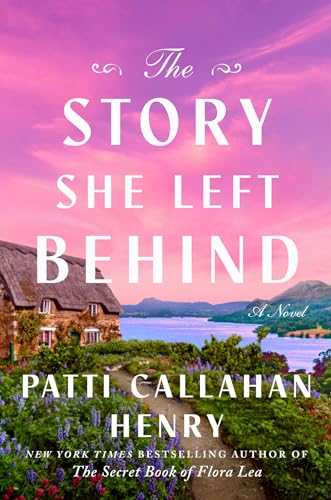
In the first one, The Story She Left Behind, Clara Harrington lives in Bluffton, SC in 1952. Her mother, Bronwyn, was a child prodigy who wrote a best-selling book at the age of twelve. But Bronwyn disappeared twenty-five years ago, taking her dictionary of a language she had created with her. The family’s boat was found, but Bronwyn and her dictionary were not. Most assumed both were at the bottom of the sea.
Clara was eight when her mother disappeared, and she lived under the shadow of that event all her life. Now she’s a divorced mom with an eight-year-old daughter. They live with Clara’s father. Clara is a successful children’s book illustrator who is about to receive the Caldecott medal.
Then one day, out of the blue, Clara receives a phone call from England. A man tying up his father’s affairs found an old satchel in his father’s study. Inside was a stack of papers with words he couldn’t understand, along with a note and a sealed letter addressed to Clara. The note said the contents of the satchel were to be given only to Clara in person. They must not be mailed.
At first, Clara thinks the caller is another scammer, looking for information or seeking remuneration for false information. But as the man, Charlie, describes the satchel and reads the note, Clara realizes they are truly her mother’s.
With her father’s help, Clara and her daughter, Wynnie, take a ship and then a train to England.
The story was inspired by a true one concerning Barbara Newhall Follett, a child prodigy who wrote a book at age eight and had it published at age twelve. She also developed a language for her stories. And she disappeared at age 28. But the comparisons seem to end there. She didn’t have a daughter, and nothing is known about her since her disappearance.
The bones of Henry’s story are very good. I enjoyed the unrolling of the mystery. I liked the historical references, including Beatrix Potter and T. S. Elliot. Clara and Wynnie arrive in London during the “great smog,” a period of several days in which London was covered in an unusually thick fog caused by weather conditions and coal used for heating. Some 4,000 people died and a hundred thousand more were made ill by the air. I had also read of this in Christmas with the Queen by Hazel Gaynor and Heather Webb. In Henry’s story, the smog causes a crisis for Wynnie, who has asthma.
In the two previous books by Henry that I have read, Becoming Mrs. Lewis and Once Upon a Wardrobe, the author expressed some Christian-ish beliefs. That may have been just because C. S. Lewis, a major character in each book, was a Christian. I don’t know what Mrs. Henry’s personal beliefs are. But this book was thoroughly secular. That’s not so much a problem in itself–I wouldn’t expect anything different from a non-Christian. But I was very sorry to see a sex scene in the book plus continued reference to two characters sleeping together. One is even concerned that the other will somehow think less of her because she had only been intimate with her husband until now.
There were a lot of references that made me think the book was going to delve into magical realism. Emjie is the main character in Clara’s mother’s book and also Wynnie’s invisible friend (Wynnie insists she is invisible, not imaginary). There’s talk of Emjie being “sent” to Wynnie. Gaelic curses are mentioned, plus a couple of times the author writes variations of “All things are one and we are all things.” I’m not sure what philosophy that comes from, but I disagree with it.
There was a lot of repeat information, a lot of convenient coincidences, a smattering of “damns” and similar words and way too much taking the Lord’s name in vain. The romance developing over ten days seems unrealistic.
I listened to the audiobook wonderfully narrated by Julia Whelan and Theo Solomon. And I appreciated that the author’s end notes were included, which isn’t often the case in an audiobook.
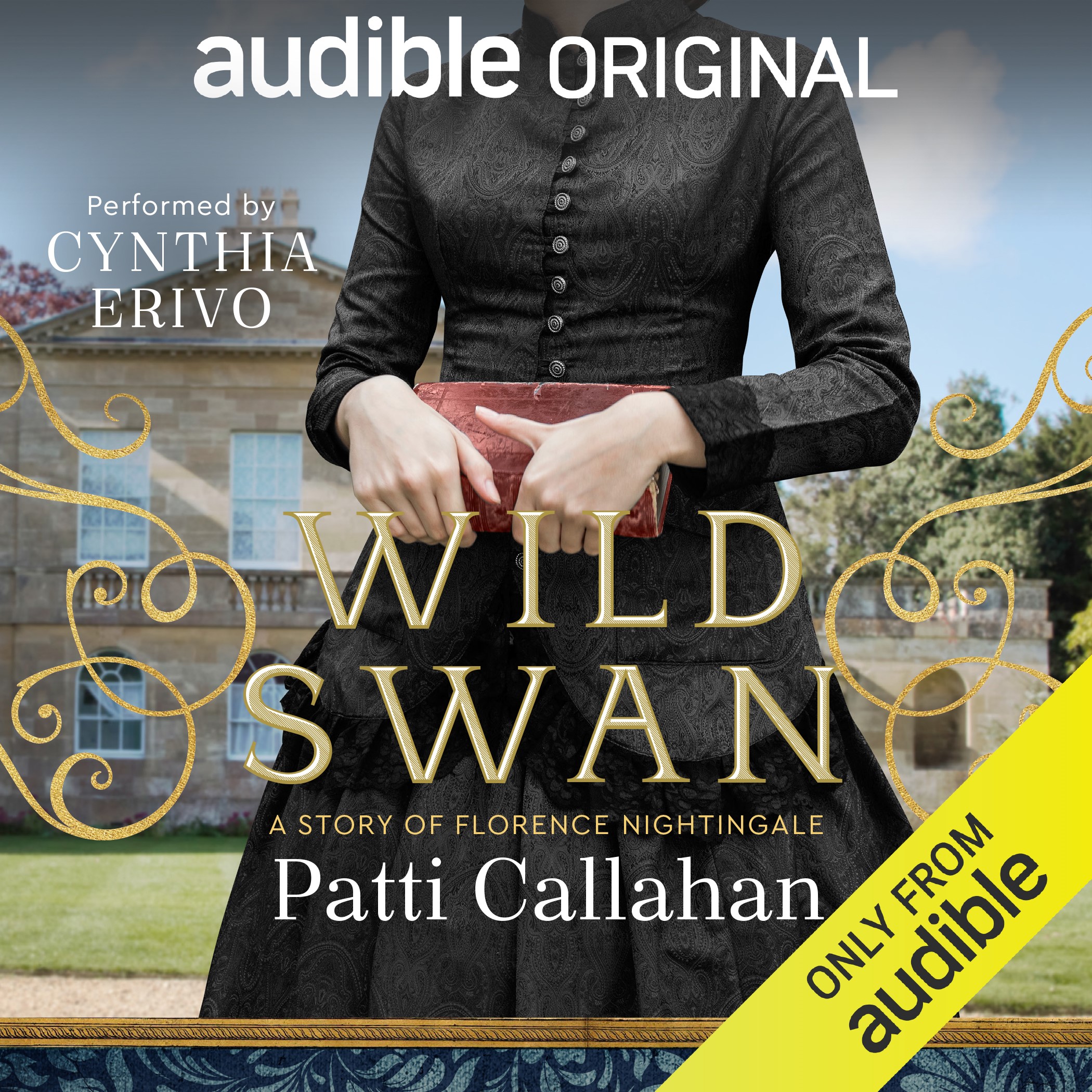
Wild Swan is only available on Audible at this point, and is included with an Audible membership. It’s short, less than two hours. This book tells about Florence Nightingale’s “calling” to become a nurse in an era when cultured, privileged young ladies did not do such things.
When Florence accompanies a friend and her ailing husband on their travels, she spends two weeks at a religious medical community in Germany. The simple, almost spartan lifestyle appealed to her. She felt confirmed in her calling as a nurse.
But when she returned home, her mother and sister called her ambition selfish and said they needed her.
The rest of the story tells her inward struggles and her family’s eventual agreement to let her pursue her calling. A brief few paragraphs at the end tell of her accomplishments as well as a scene at the beginning when she meets with Queen Victoria.
This audiobook was narrated by Cynthia Erivo, who did a great job except for speaking a little too quietly sometimes.
I thought this story was very good. Mrs. Henry portrays Florence as a little too “Woe is me,” but then, she would have been greatly frustrated at being expected to fritter away her life in idle pastimes when she wanted to be useful.
The is the second book of Henry’s in which she compares mountains or hills to a resting woman’s breasts. I don’t see any need to inject a sensual element into such descriptions. It made a little more sense for Joy Davidman in Becoming Mrs. Lewis, but it doesn’t seem like Florence would think in those terms.
Several times, Henry has Florence referring to the Victorian era or Victorian women. I wondered if that term would have been used during Queen Victoria’s lifetime. Perhaps so. But it seems like people in later eras would have referred back to this time as Victorian rather than the people living during that time.
Henry is a gifted writer, and her books are wildly popular (the library’s waiting lists for both the print and Kindle versions of The Story She Left Behind had about thirty people each). Once Upon a Wardrobe was my favorite and had the fewest objectionable elements. Personally, though I liked the main stories in each book, I had reservations about some of the content.
(I often link up with some of these bloggers.)
 Stray Thoughts