Review: What’s a (Dis)Organized Person to Do?

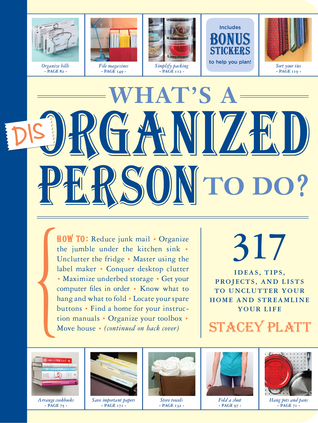
What's a Disorganized Person to Do?

Stacey Platt’s What’s a (Dis)Organized Person to Do? is subtitled 317 Ideas, Tips, Projects, and Lists to Unclutter Your Home and Streamline Your Life.

Stacey is a professional organizer and runs a company in New York with a wide variety of clients. One reviewer described this book as an organizer’s Pinterest board.

The book is organized according to different rooms in a house, except that the last chapter deals with trips and moves. Yet within each chapter are tips not just for the physical objects there, but for saving time and energy. Scattered throughout the book are one-hour projects, like organizing under the sink, the junk drawer, the bathroom vanity, or making a master grocery list.

I appreciated that the book was filled with specific tips, though some principles were discussed. Many books on organizing/productivity/time management that I have read are filled with broad principles, or are so rigidly organized as a whole system that they are overwhelming. This books lets you pick and choose what works best for you.

The book is probably meant to be dipped into as a reference resource rather than read straight through as I did. But I didn’t want to miss anything. 🙂

Some of the tips didn’t appeal to me; some I already used; some seemed like overkill. A few were outdated (this book was written in 2010. But I marked many tips to remember.

This appears to be the only book Stacey has written. I didn’t find a website for her. I did find one with her company name, but I am not sure it’s hers.

I can recommend this book as a good resource if you’re looking for organizational tips.

Laudable Linkage

Laudable Linkage

This is a busy time of year, but here are a few good reads you might find thought-provoking when you have a moment:

Uncomfortable Christmases, HT to Challies. I saw this last year after Christmas and saved it for this year. “But for some of us, going to a holiday gathering (or hosting one) can be fraught with spiritual tension when few (or none) share our Christian faith. And given numerous trends in our society, the tension may only get worse in the days ahead.”

Eleven Hindrances to Answered Prayer. HT to Challies.

Thinking About Bruce Willis and Jesus, HT to Challies. “We often talk as Christians about the suddenness of death. We talk to unbelievers about how important it is to not put off a decision for Jesus until later, because what if death comes calling when you don’t expect it. I wonder though have often we talk about or think about for ourselves, the suddenness of debilitation or disablement; how fast we can go from a fully functioning person, to our arms not working, our legs not working, our kidneys not working or even our mind not working.”

Keep This in Mind When There Is “Too Much to Do,” HT to Challies. This is written to pastors but has good advice for all.

Proverbs 31 Is Not Just for Women. Marli has an interesting perspective on this chapter that I’d not heard before.

How to Read and Remember, HT to Challies. “Someone recently asked me how to stay focused and retain what they read. It’s an important question, especially for anyone devoted to a life of profitable reading and learning.”

The Almighty Bean: When God’s Good Gift Becomes an Idol. “Maybe you own the t-shirt that says, ‘I need a little bit of coffee and a whole lot of Jesus.’ In truth, we just need Jesus—coffee optional.”

Wrap Up Some Stuff this Christmas, HT to Challies. “Our consumer-driven mentality is out of control, and we feel it everyday as more and more waste piles up around us. Sometimes a good answer is to slow down, cut back, and remove the unused things in our lives. But sometimes it’s not. Because you and I were created for a world full of things.”

More Than a Feeling: Be Ruled by Peace. “I’ve often fallen into the trap of thinking that peace is primarily a feeling. So when circumstances outside my control arise—my kids’ health situations, strained relationships, or some other crisis—peace feels elusive . . . drowned out by anxiety, sadness, anger, or overwhelm. This is why it’s important to understand peace as a reality that does not change when we encounter trials and suffering. Peace originates in the unchanging person of Jesus, and it never runs dry, regardless of what we’re facing or what our emotions might tell us. 

I sometimes think of changing the name of my “Laudable Linkage” posts, and one reason is that it seems weird to include links back to my own posts under such a title. But there are two that I think might be helpful this time of year:

Christmas Grief, Christmas Hope, Christmas Joy. Both of my parents and my grandmother all died in December, in different years. It seems every year I know of someone with a fresh loss during the holiday season. Even “old” grief can flare this time of year.

You Don’t Have to Choose a Word for the Year. Some do this rather than New Year’s resolutions and find great benefit in it. If it’s helpful, great. But it’s not a must. “What’s more vital than a word for the year is daily seeking God in His Word.”

G. K. Chesterton Christmas quote

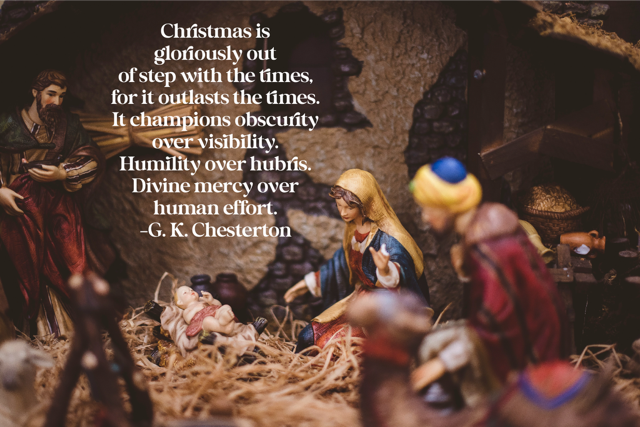
Christmas is gloriously out of step with the times, for it outlasts the times. It champions obscurity over visibility. Humility over hubris. Divine mercy over human effort.
–G. K. Chesterton

Laudable Linkage

Laudable linkage

Some of the good reads found this week:

How to Have a Perfect Christmas. “The longer I live, the more I realize perfect Christmases only appear in movies. No surprise, really, because real Christmases are never perfect.”

The Other Christmas Story. “We all love the Christmas story in Matthew’s gospel. . . . What we seldom notice, however, is that there is another Christmas story in Matthew, another version of how Jesus was born to Mary and Joseph. This overlooked account is squeezed between a list of Jesus’ ancestors and the familiar story.”

8 Proofs that the Bible Is One Story. “Does the Bible sometimes seem random to you? What does Hezekiah have to do with Philemon? How is Enoch connected to Ruth? What do battles in ancient Mesopotamia have to do with the church? Is the Bible really all one story?”

5 Tips to Reinforce Your Bible Study and Prayer Routine, HT to Knowable Word. “No church leader wants to admit it, but for many of us it’s true: we still don’t have a sustainable habit for personal Bible study and prayer. Here are five ways forward—true for anyone, church leader or not.”

You Can Read the Bible to Your Kids. “And one day, out of the blue, she asks me an innocent question that cuts me deeply. ‘Papa, how can I tell people about Jesus when I grow up, unless you first read the whole Bible to me?’”

Re: Is God Calling Me to Obscurity or Influence? I loved this post. Christa makes good points about both obscurity and influence.

Modesty Requires Looking Away. “When we talk about modesty we usually speak about the way people present themselves in public with their dress or demeanor, with their words or their actions. We speak about the immodest ways people may draw attention to themselves, whether to their bodies, their wealth, their power, or any other attribute. But no sin has just one side. If one side of modesty is refusing to display what should remain private, the other side is refusing to pay attention to what is not our concern.”

13 Ways to Redeem Small Pockets of Time. “Too often, however, we overlook the potential of small pockets of time. They seem too short to get anything meaningful done in them. But with a pinch of discipline and a dash of strategy, you can train yourself to redeem these little bits of time for the glory of God.”

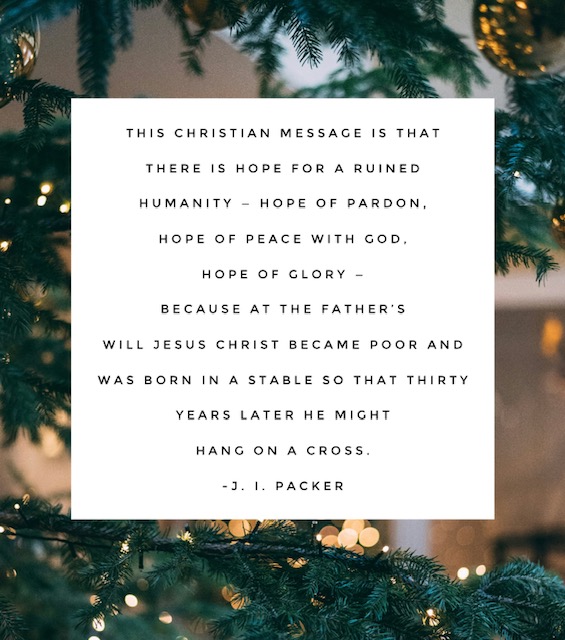
J. I. Packet quote about Christmas

This Christian message is that there is hope for a ruined humanity — hope of pardon, hope of peace with God, hope of glory — because at the Father’s will Jesus Christ became poor and was born in a stable so that thirty years later he might hang on a cross. –J. I. Packer

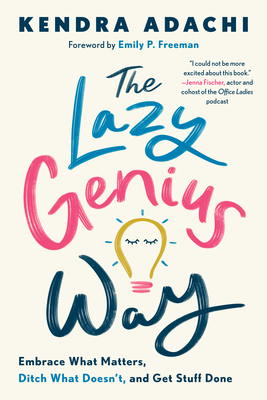
Review: The Lazy Genius Way

The Lazy Genius Way

Suppose you want to reorganize your pantry. You might research organizational systems, pull everything out, dust shelves and canned goods, check expiration dates, sweep, buy cute containers, make labels, and spend the better part of a day, if not days, placing items in just the right order. And then you get frustrated when that order is not maintained.

Or you might go the opposite extreme and decide nobody has the time and energy for that.

Kendra Adachi calls these the “genius” and “lazy” approaches. She proposes a happy medium: that we be geniuses about what matters and lazy about what doesn’t. She shares thirteen principles for implementing this in her book, The Lazy Genius Way: Embrace What Matters, Ditch What Doesn’t, and Get Stuff Done.

For those of us who tend to make any small need into a major project, Kendra says, “When you care about something, you try to do it well. When you care about everything, you do nothing well, which then compels you to try even harder. Welcome to being tired” (p. 11. Kindle version).

On the other hand, “Little did I know you can be just as exhausted from not trying as you can from trying too hard. Managing apathy and survival mode takes as much energy as managing rules and perfection” (p. 15).

One of her premises is that there is no one right method or tool that will appeal to and work for everyone. If we’re to be geniuses about what matters, that will differ from person to person.

She mentioned that she likes to make bread. She cares about it and puts a lot of effort into it. But it’s fine if others have no desire to make bread and buy the bargain brand.

She likes comfortable clothes in neutral colors and doesn’t like top spend a lot of time on clothing decisions. But she acknowledges that others like to pill out five different outfits before they decide what to wear, and that’s fine.

That’s why she comes back again and again to acknowledging what’s important to you, not Instagram or the neighbors or whoever.

Some quotes that stood out to me:

I want to stop judging women who have it all together, assuming they have something to hide. I want to stop applauding chaos as the only indicator of vulnerability (p. 16).

You might think a routine is nothing more than doing the same things in the same order every day, but that’s not the whole story. Routines are meant to lead you into something else (p. 74).

It’s easier to clean up a cup of spilled milk than it is to mend a second-grader’s hurt feelings (p. 89).

House rules are about connection, not protection. They keep the first domino from tipping and knocking over a lot more (p. 99).

The goal isn’t to maintain control but to be in a better headspace to engage with what matters—namely, your people (p. 99).

You can celebrate where you are without being distracted by where you’re not yet (p. 210).

You’re tired because you’re trying to overcome the world. but we can take heart because the God of the universe has already done that (p. 211).

Though this book is not advertised as a Christian book, and the author doesn’t base her principles on the Bible, a few sentences like that last one are sprinkled through the book.

One thing I loved about the book is the recap statements at the end of each chapter. I get frustrated wishing I could retain everything I read from nonfiction. Having the key points collected at intervals helps me pull things together at the end of each chapter plus provides a quick place to review.

Kendra writes in an easily understandable and relatable way. Don’t miss her footnotes—many of them are funny asides.

My only minor criticism is that the explanations and examples seemed perhaps a little overdone in places. But I suppose a wide variety of examples makes the book applicable to more people.

Kendra also has a Lazy Genius Podcast, but I have not listened to it yet.

This book was all the rage a few years ago. I kept seeing it mentioned everywhere. I was intrigued, but didn’t get around to it. I’m glad I finally did.

(I often link up with some of these bloggers.)

Laudable Linkage

Here are some of the good reads found this week:

To the Older Woman in the Church: You Are NOT Obsolete. “Older women in the Body of Christ are not obsolete, and ‘so we do not lose heart.’ Though our outer self may be forgetful, less agile, and plumper than we’d like, our inner self is on duty, continuing in service to our God.”

Potential Dangers of “Applying Scripture to My Life,” HT to Knowable Word. “Imagine asking a friend how her day was and two minutes into her summary interjecting, ‘Wait, tell me how this applies to me?’ We’d never do this. And yet we do it to God. We exchange the feast of relational intimacy and holistic formation for the porridge of minor behavioral change and practical nuggets for our optimized life.”

What We Regard as Little, HT to Challies. “The lack of obedience in small things would always eventually lead Israel to idolatry, to drifting from the God who rescued them and made them His own people. We like the dramatic stories of walls falling and dry river crossings but deemphasize the daily obedience to God’s Word because that’s not as gripping or faith-growing.”

Obituary for a Quiet Life, HT to Susan. “When the notable figures of our day pass away, they wind up on our screens, short clips documenting their achievements, talking heads discussing their influence. The quiet lives, though, pass on soundlessly in the background. And yet those are the lives in our skin, guiding us from breakfast to bed. They’re the lives that have made us, that keep the world turning.”

At the Center of All Things. “Christians are prone to take a relatively minor point of doctrine, one we might identify as second- or third-order, and set it like the earth at the pivot point of Ptolemy’s universe. Their love of this doctrine and their conviction that it is key to a right understanding and practice of the Christian faith means that soon everything begins to orbit around it. It becomes the center of their beliefs in such a way that any other point of doctrine is understood only in relation to it.” Tim shares a better way.

The Danger of Playing God. I caught part of this from Stephen Davey’s Wisdom for the Heart program on the radio then skimmed through the transcript online.The part that grabbed my attention was the difference between critical thinking and judgmentalism. “The Christian is actually told, and I quote, to judge all things (1 Corinthians 2:15) – the same root word for judge that James uses here when he obviously tells us not to judge. So is the Bible confused? Not if you understand the context of this prohibition. What James is forbidding here is judgmentalism – a critical spirit that judges everyone and everything and runs everyone down. / Hughes, p. 196. There is a difference between making a discerning judgment and having a judgmental spirit. There is a difference between judging and judgmentalism.  There is a difference between thinking critically and being critical.”

The Assignment I Wasn’t Expecting, HT to Challies. “I once was an eager college student flush with conviction, laying my life out for Jesus. His love had captured and transformed me, and I was driven by the wonder of it. I would go anywhere, do anything, I vowed. And I did. It was difficult and painful and exhilarating and beautiful, while it lasted. But somehow I didn’t expect it all to come down to this.”

Why We Should Read Poetry, although the piece talks about literature, not just poetry. HT to the Story Warren. “Reading literature offers us profound solidarity with an author and admits us to a broader human community but it also holds up a mirror that allows us to see aspects of ourselves more clearly than we could have before.”

Why Build a Personal Library? HT to Linda.”Writing in the Guardian, Rhiannon Lucy Cosslett recently took aim at ‘everything that is smug and middle class about the cult of book ownership.’ She clarified, ‘I don’t mean reading. . . . No, I specifically mean having a lot of books and boasting about it, treating having a lot of books as a stand-in for your personality, or believing that simply owning a lot of books makes one ‘know things.’ But, seriously: Who does that?” Joel J. Miller shares some good reasons *for* a personal library.

I enjoyed looking through several illustrations by Liz Fosslien, many about time management, HT to Redeeming Productivity. I especially liked this one about having a bad day and breaking the cycle.

It’s a good time for my occasional reminder that links do not mean 100% endorsement of everything on these sites.

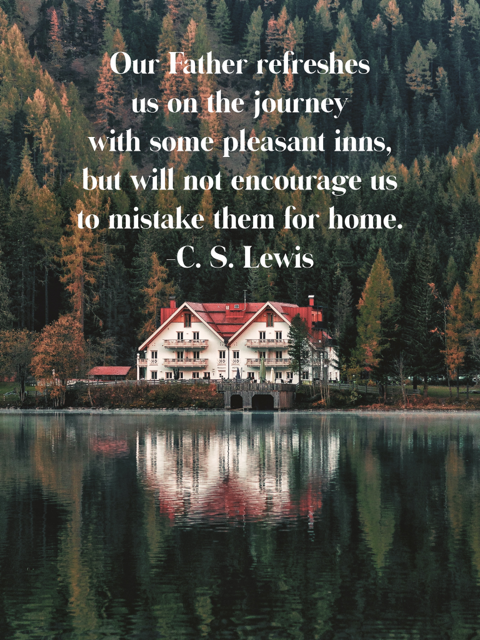
Our Father refreshes us on the journey with some pleasant inns, but will not encourage us to mistake them for home.  C. S. Lewis

Laudable Linkage

Here’s my latest list of good online reads:

My Grandmother Would Tell You That, HT to Challies. “I could write out my grandmother’s full name and you wouldn’t recognize it. She wasn’t famous, wealthy, accomplished, or well-known. But her unremarkable life was truly remarkable because of who Jesus was to her.”

Martyn Lloyd-Jones, April Witkowski & the Myth of the Wasted Ministry, HT to Challies. “Our lives today will not be defined by our dreams, hopes, or expectations of what is to come (of what may never come) but will be defined by our faithful execution of the life and ministry God has given us in this moment. If we are faithfully serving God today in accordance with his Word and our calling and gifting, our lives are not a waste but rather the very definition of success.”

What Pins Are You Juggling? A Parenting Story, HT to Challies. One of the hard things about children growing up: “‘I have all these pins that I’m juggling and I have to keep them all up in the air and I can’t let any of them drop.’ I ended with a little sob of self-pity and mom-guilt that I am oh so good at. She came over to my chair and looked me in the eye. ‘But they’re not your pins.’”

Evidence of God’s Faithfulness in Ukraine, HT to Challies. After praying for this country for months now, it’s good to get a peek at some ways God is working there.

From the Heavens to the Depths: Sparking Wonder for Him Through Science. “When we shy away from science, we miss a breathtaking opportunity to open our kids’ eyes to the true majesty, the wonder, the artistry, and the magnificence of our Creator. The very foundations of science require acceptance of our universe as ordered, discoverable, and characterizable — a philosophy that lends itself to a higher, intelligent power who put it all into order in the first place. When we guide our kids through the mysteries and splendors of creation, we give them a glimpse of the brilliance, mastery, and goodness of the Creator, a glimpse that complements rather than contradicts the attributes He reveals through Scripture.”

5 Steps to Break Free from To-Do List Overwhelm. “As Christians we want to be faithful in the tasks the Lord has given us. But often we mistake busyness for productivity. We think if our to-do lists are full, and we are frantically working on them each day, surely we must be on the right track.”

How to Create an Effective Weekly Schedule, HT to Redeeming Productivity. “Every Monday for the past 5 years, I’ve taken the first 15 minutes to plan the week ahead. For me, this has been my single greatest productivity routine.” Great tips here for how to implement.

The Art of Moving On: When and How to Disengage from a Goal, HT to Redeeming Productivity. “When discussing goals, we typically talk about employing perseverance and persistence, even in the face of adversity and setbacks. ‘Quitters never win, and winners never quit,’ and all that. While grit is essential to goal achievement, Wrosch argues that an equally important part of successful living is knowing when to give up and disengage from a goal. “

Laudable Linkage

I’m still catching up with blog reads from the last few weeks, but here are a few good ones I came across.

A Friend Just Lost an Unbelieving Loved One to Death: What Do I Say, Think, and Do? HT to Challies. “How on earth is anyone supposed to be perfectly ‘balanced’ as they traverse this seemingly impossible canyon? With God’s help, it is possible to be faithful to His Word and your friend simultaneously, but this ability does not equate to ease or an absence of deep distress.”

You Can Understand the Bible, HT to Knowable Word. “I’ve battled to get through the census records in Numbers. I’ve labored through the kidneys, livers, and “entrails” of the Levitical laws. I’ve grown weary of the repetitive failures of Israel in 1–2 Kings. I’ve sometimes struggled to see what Hebrews sees in the Old Testament. Much of the imagery of Revelation is still a mystery to me. And so, I regularly find these clear and accessible words from Paul all the more meaningful and encouraging: ‘Think over what I say, for the Lord will give you understanding in everything’ (2 Timothy 2:7).”

Why I Stayed in the Church. “So when I offer these reasons for why we stayed in the church, I do so as a woman who has wrestled with the church’s messiness–and my own. In the end, they may not answer your questions fully, but at least they’ll be a place to start:”

Hedgerows and Big Yellow Trucks, HT to Challies. I loved this. “A hard rain was falling that afternoon, and I was eager to get home. After a long day of doctor appointments in the city for my son Ben, I loaded up the car with groceries and headed up the twisting road to our home in the mountains. Only a few miles up, however, a large yellow County Roads Department truck suddenly pulled out in front of me, making me hit the brakes in frustration. I stewed and fumed as the big truck ground upwards at 20 mph instead of my usual 45.”

Risks and Benefits of Age-Specific Ministry. HT to Challies. “Reflecting on that season of ministry, I’m freshly reminded of the two sides of the age-specific ministry coin. On one hand, the junior high and senior high ministries were incredibly fruitful in their own right (not to mention other age-segregated ministries in between). The ability to hone in on age-specific needs and opportunities served everyone in a personal and powerful way. On the other hand, the combined events were reminders that there are many riches to be discovered with cross-generational ministry. There is a massive benefit to an integrated ministry approach that unleashes the saints to do the work of ministry with everyone in the church, rather than a small segment of it. We all have much to learn from—and much to offer—brothers and sisters who are in different seasons of life.”

An Encouragement to Young Husbands, HT to Challies. “I wanted to do this Christian marriage thing right. As a couple who felt called to missions among the unreached, I wanted us to discipline and focus everything about our lifestyle toward that end. I desired for us to be an example of a sacrificial, Jesus-centered marriage. These desires were not bad. In fact, I would say they were God-given. However, they were also paired with a rushed time-line, anxiety, and pressure. During this newlywed period I was missing what should have been a major emphasis of that time – helping my new bride to simply rest securely in my love for her.”

4 Biblical Truths to Help You Use Time Wisely. “Like Frosty, I saw time melting away, and I wondered if I’d done anything worthwhile with my life. What if I’d wasted weeks and months chasing after worthless things? What if I’d fretted away my days with endless worries over inconsequential things? Had I misspent my minutes, pondering and procrastinating, but never progressing? Had I missed the things that matter?”

A Certain Kind of Evangelical Christian, HT to Challies. This is a Twitter thread that starts: “There once was a certain kind of evangelical Christian I felt free to make fun of. I was pastoring a fast growing church in an urban environment, and a spirit of elitism had infected us. No one would correct me on it because they made fun of them too.”

The Comedy Wildlife Photography Awards, HT to Challies. These are always fun.

Laudable Linkage

Happy first Saturday of January! As might be expected, a lot of posts I found this week dealt with getting ready for a new year.

His Feet, HT to Challies. “I was fourteen and small for my age, a reserved shy shadow of the man I might one day grow into. Others struck me for an unknown reason, some imagined offence I had committed. Verbal assault soon became physical, yet it wasn’t the impact of fist on face that hurt most. I felt alone. I felt small. I felt undone. But then his feet were there.”

Say It, HT to Challies. A short account of Charles Spurgeon’s conversion, which is always delightful to read, but with a few good points added.

Grant Me One Muslim Friend, HT to Challies. “The most strategic thing we could do to reach the Muslim world is for every Muslim to simply have a believing friend.”

Three Faith-Focused Strategies to Welcome the New Year. “Some of us deliberate over annual goals or resolutions while others invite God to give us a word for the New Year. As we invest time in these pursuits, let’s walk through the following four steps as we consider how He led us through last year and as we seek His guidance in the New Year.

How Can We Have Peace and Confidence in the New Year? “With all the turmoil and instability over the last few years, most of us want more peace, more joy, and more confidence in the future. Are we at the mercy of the government or the economy or the culture around us if we’re to have those things? Or is it possible that the right goals and habits can play a big part? If so, what kind of goals and habits?”

5 Tips to Reinforce Your Bible Study and Prayer Routine, HT to Knowable Word. Although aimed at church leaders, these are good for anyone trying to develop a “sustainable habit for personal Bible study and prayer.”

7 Reasons Winter Reminds Us to Hold on to Hope, HT to Challies. “Many people suffer from seasonal depression or feel down in the winter. The trees seem lifeless, we spend a lot more time inside, and it gets darker earlier and for longer stretches of the day. It can also mean we spend more time pondering upon the difficult seasons in our own lives.”

Assign It a Day and Time. A great time management principle!

8 Tips to Have a More Productive Year, HT to Lisa. “I am all about To Do lists and planners! However, that doesn’t always make me as productive I could be. There has to be some follow-through to be productive. I am going to share 8 tips on how to have a more productive year in whatever area you are working.”

Gladys Hunt on Little Golden Books, HT to the Story Warren. I loved the little Golden books as a child and read many of them to my own children. It was interesting to read the story behind them.

Essentialism: The Disciplined Pursuit of Less

Normally I wouldn’t have looked twice at a book like Essentialism: The Disciplined Pursuit of Less by Greg McKeown. I’ve read a number of books on time management, achieving goals, etc., so I wasn’t looking for one more.

But I listened to an interview with the author as part of one writer’s group’s attempts to draw in new members. And though I decided not to join the writer’s group, I appreciated much that Greg had to say.

These days, we’re all beset by having more opportunities and responsibilities than we can keep up with. Plus other people can pile their agendas on to us. We spend much of our time “busy but not productive.”

The way of the Essentialist means living by design, not by default. Instead of making choices reactively, the Essentialist deliberately distinguishes the vital few from the trivial many, eliminates the nonessentials, and then removes obstacles so the essential things have clear, smooth passage. In other words, Essentialism is a disciplined, systematic approach for determining where our highest point of contribution lies, then making execution of those things almost effortless (p. 7).

Lest that sound cold and heartless, one of our essentials is our loved ones. One of the catalysts to McKeown’s journey towards essentialism was when he was pressured to be at a meeting with a client just hours after his daughter was born. He was told the client would respect him for his sacrifice of being there. But the client didn’t, and the meeting in the end turned out to be pretty worthless.

Trade-offs are going to happen as we learn we can’t do everything. It’s better to decide ahead of time what’s really most important and spend our energy there, even when that means saying no to other things, even good things.

Part 1 of McKeown’s book focuses on essence: to do what’s essential, we first have to figure out what’s essential according to our goals and values. We have to determine what’s non-negotiable and what’s a trade-off.

Part 2 is Explore: the “perks of being unavailable,” the necessity of sleep and even play.

Part 3 is Eliminate: to say yes to some things, we have to say no to others. Part 3 explores principles and methods for eliminating the nonessential.

Part 4 is Execute: protecting our essential goals by implementing buffer zones, starting small and celebrating small wins, the helpfulness of routines to eliminate unnecessary decisions, flow and focus.

Sprinkled throughout the book are simple but very effective illustrations. This one, for example, shows “the unfulfilling experience of making a millimeter of progress in a million directions” vs. “investing in fewer things” to “have the satisfying experience of making significant progress in the things that matter most” (pp. 6-7).

Here are a few of the other quotes that stood out to me:

For capable people who are already working hard, are there limits to the value of hard work? Is there a point at which doing more does not produce more? Is there a point at which doing less (but thinking more) will actually produce better outcomes? (p. 42).

We need to be as strategic with ourselves as we are with our careers and our businesses. We need to pace ourselves, nurture ourselves, and give ourselves fuel to explore, thrive, and perform (p. 94).

An essential intent, on the other hand, is both inspirational and concrete, both meaningful and measurable. Done right, an essential intent is one decision that settles one thousand later decisions. It’s like deciding you’re going to become a doctor instead of a lawyer. One strategic choice eliminates a universe of other options and maps a course for the next five, ten, or even twenty years of your life. Once the big decision is made, all subsequent decisions come into better focus (p. 126).

The way of the Essentialist isn’t just about success; it’s about living a life of meaning and purpose. When we look back on our careers and our lives, would we rather see a long laundry list of “accomplishments” that don’t really matter or just a few major accomplishments that have real meaning and significance? (p. 230).

McKeown includes multiple examples from businesses and institutions. Just about the time I wished he brought some of his illustrations and principles down to a person level, he did.

One problem that he didn’t discuss, though, is when you can’t say no to obligations that seem meaningless. He says several times that saying no to the unnecessary meeting or obligation actually garners respect instead of resentment. But that’s not always the case. And you can’t always say no if your boss requires something that you think is a waste of time.

And you have to be careful that your time-savers don’t become an imposition on someone else. For instance, he mentions someone who skipped a regular hour-long meeting at work to get his own work done, then got a ten-minute summary from a coworker, thus saving himself forty minutes. But he doesn’t note that this guy was putting an unnecessary drain on his coworker’s time. If I had been the coworker, I would have been tempted to say, “If you want to know what happens at the meetings, you need to be there. I have too much to do to recap them for you every week.”

But those instances are minor. Most of what the author had to say was very good.

This isn’t a Christian book, and the author recommends a wide range of resources that I wouldn’t always agree with.

But overall, McKeown gave me much to chew on.

When You Have to Say No

When my husband and I were first married, if someone in the church we attended asked me to participate in some ministry, I usually said no. I worked in the nursery and sang in the choir. But I felt intimidated and inadequate to do much of anything else.

The ladies’ group in this particular church was highly organized with officers over various areas of responsibility. One fall, the president explained nominees for the next year would be notified soon. She encouraged those nominees not to say an automatic no, but to pray about the opportunity.

I was a nominee for the first time that year. I had been on a committee that changed the main hall bulletin board once a month to focus on a couple of missionaries our church supported. Bulletin boards had been the bane of my college education major, and I wasn’t excited about overseeing the committee for them for a whole year. But I took to heart the admonition to pray about it. I didn’t feel I should say no.

I was elected. I did not have to participate in every bulletin board, but I assembled a committee of ladies to work on them, usually two a month. Another officer made up the list of which missionaries were featured each month. Sometimes I’d come up with the idea for the boards; sometimes the ladies would.

Even though I was a reluctant officer at first, I learned and grew through the year. I came to actually enjoy bulletin boards, and I learned principles that enabled me in other areas of responsibility.

But then I went to the other extreme of feeling like everything that anyone asked me to do in church was of the Lord. I was soon overrun and overburdened.

It doesn’t take long, in church or in life, to learn that you can’t say yes to everything. Yet it’s hard to say no. You don’t want to let people down or let a need go unmet.

But no one can do everything. Here are some truths I learned along the way when trying to decide what to take on or let go. Maybe they’ll be a help to you, too.

Pray for wisdom. Just as my former ladies’ group president advised me not to say no until I prayed over an opportunity, I also should not say yes until doing the same. I shouldn’t use “Let me pray about it first” as a cop-out or stall tactic. But, even if I feel pretty sure one way or the other, I need to take it to the Lord.

Evaluate your season of life. When I had young babies, I felt like I was barely keeping my head above water. The outside ministries I was involved in only added pressure, and I wish now I had stepped back from them. I finally learned to do so with my third child. Likewise when we cared for my mother-in-law in our home, my husband and I both had to lay other ministries aside. There just wasn’t time or energy or mental space for anything else.

Remember little things add up. In one church, I had one major responsibility plus a lesser one. Over time, I was asked to take on other small tasks. They didn’t involve a great amount of time, so I said yes. But the small things that weren’t too much on their own added more pressure all together. I had to hand off some of them to others.

Remember my no may be someone else’s yes. Once I felt particularly bad about saying no to an opportunity, even though I felt sure I should. The person who said yes was as reluctant as I was with my first office, but she did a wonderful job. I realized that if I had said yes, I would have been robbing her of that opportunity.

Don’t feel guilty. If this opportunity is of the Lord, He has someone in mind for it. If it’s not you, He’ll help bring the right person to it. Or it may be time to set certain ministries aside or reorganize them. This happened with a homeschool support group we were part of in GA. It had started out small: one mom got together with a few other moms, organized field trips and get-togethers, and began an informal newsletter. But the group grew exponentially. When the woman who started the group had her seventh baby, she had to drop everything involved with the group. For the next year, I think the only thing we did as a group was the monthly renting of the skating rink. But by the end of that year, different moms volunteered for different areas. The year off had shown us how much we wanted and needed the group plus helped us diversify responsibilities so everything wasn’t on one person. And that gave more people opportunity to learn and grow in their areas. In hindsight, it might have been better if the original mom had tried to transition things before having to drop it all. I don’t know if she just didn’t think of it or if she had planned to continue until she realized she couldn’t. She might not have had time to figure it all out. But it all worked out for the best.

And sometimes a lack of available personnel means it’s time for that particular ministry to come to an end. Greg McKeown suggests running a “reverse pilot” in his book, Essentialism: The Disciplined Pursuit of Less. This isn’t a Christian book, but it has lots of good common-sense principles. A pilot program is used by companies to help discern whether a certain product or service would be beneficial. A reverse pilot tries to discern what the effect would be of removing a certain product or service. Greg told of a senior executive in a new position who kept up with his predecessor’s detailed visual report for the other executives. This report was time-consuming for both him and his team and didn’t seem to serve any useful purpose. So he just stopped doing it to see what happened. No one seemed to miss it. As organizations, churches, and even our individual lives change over the years, some practices will no longer be needed.

Don’t say yes for the wrong reasons. As much as we don’t want to disappoint people, we can’t always do everything everyone else wants. We also shouldn’t say yes for fear of missing out. We have to guard against pride: sometimes being part of a certain committee or ministry might bring a measure of prestige or feelings of importance.

Consider the trade-offs. What will be the impact of this new responsibility mean to my schedule, my energy, my family, and other ministries and activities I am involved in? Can I handle something new, or will I need to let something go if I take this on? Is it worth the trade?

If you have to say no, be gracious. I’ve asked someone to participate in a particular ministry only to be met with wide eyes and the equivalent of “Are you kidding?” This was someone who, as far as I could tell, seemed to have extra time. But then another lady volunteered who I would never have asked because of everything else I knew she had on her plate. Of course, we don’t really know what people have going on in their lives. And the issue isn’t always one of time. But when you find you do need to say no, don’t make the other person feel bad for asking. Ultimately you both want the right person for the job or ministry or opportunity. When you pray about and feel you’re not that person for this situation, you might also pray about the best way to say no so that the asker isn’t discouraged. Maybe something like, “I’m sorry, I have all I can handle right now. But I’ll be praying God will lead you to the right person.” You might also suggest someone else that you feel would be a good fit (and it’s probably best to ask them first if they’d mind your suggesting their name).

Remember even Jesus said no to some requests. Jesus did not give a sign when people asked for one, because they had plenty of evidence to believe who He was. Once, after a full day of preaching, he went out alone the next morning to pray (Mark 1:38). People found Him and “would have kept him from leaving them, but he said to them, ‘I must preach the good news of the kingdom of God to the other towns as well; for I was sent for this purpose’” (Luke 4:42-43). Healing was part of His ministry, but not the main purpose. Every person He healed would eventually die. Every person He raised from the dead would face death again. He came to provide hope for life after death and kept that the main focus.

Even aside from ministry opportunities, we have to tell ourselves no sometimes to activities that are harmless in themselves but aren’t our main purpose. We have more activities available than ever before and need God’s wisdom and guidance to know what’s best.

How about you? What helps you decide whether to say yes or no to new opportunities?

(I often link up with some of these bloggers.)