
Why Do We Need Wisdom?

Wisdom

Our pastor recently spent several weeks teaching from the book of Proverbs in the Bible. In the same time frame, several blogs I follow also had a series of posts from Proverbs: Michele at Living Our Days, Proclaim and Defend, and Knowable Word.

Even my Typeshift word game app brought up Proverbs.
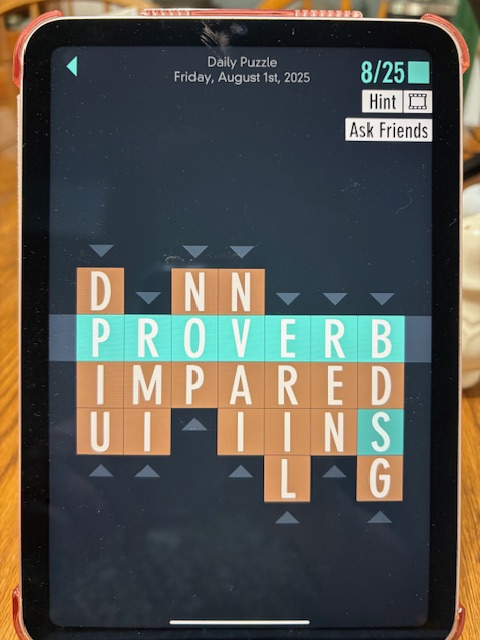
Typeshift game

The main thrust of Proverbs is wisdom. It occurred to me that about the only time I hear people asking for wisdom is when they have to make a decision. “I need prayer for wisdom about whether to take this job” or “I need wisdom for dealing with a difficult situation at work,” etc.

We do need wisdom for those needs. But we also need God’s wisdom for everyday life. The ESV Study Bible notes define wisdom in James 1:5 as “a God-given and God-centered discernment regarding the practical issues in life” (p. 2391).

I decided to look through the first few chapters of Proverbs, as well as a few other passages, to see why the Bible says we need wisdom. I ended up with six typed pages in Microsoft Word, too much to share here. No wonder other blogs ran whole series on Proverbs.

But, just to hit some highlights, here are some results of my study:

Why do we need wisdom?

It’s commanded: “Look carefully then how you walk, not as unwise but as wise, making the best use of the time, because the days are evil” (Ephesians 5:15-16). “Walk in wisdom toward outsiders, making the best use of the time. Let your speech always be gracious, seasoned with salt, so that you may know how you ought to answer each person” (Colossians 4:5-6).

To walk worthy of the Lord: “And so, from the day we heard, we have not ceased to pray for you, asking that you may be filled with the knowledge of his will in all spiritual wisdom and understanding, so as to walk in a manner worthy of the Lord, fully pleasing to him: bearing fruit in every good work and increasing in the knowledge of God; being strengthened with all power, according to his glorious might, for all endurance and patience with joy” (Colossians 1:9-11).

To avoid naivete and foolishness: “Wisdom cries aloud in the street . . .: ‘How long, O simple ones, will you love being simple? How long will scoffers delight in their scoffing and fools hate knowledge?’ (Proverbs 1:20-22) “Leave your simple (folly, foolishness in other versions) ways, and live, and walk in the way of insight” (Proverbs 9:6).

To understand the fear of the Lord: “If you seek [wisdom] like silver and search for it as for hidden treasures, then you will understand the fear of the Lord and find the knowledge of God” (Proverbs 2:4-5).

To develop discretion: “For wisdom will come into your heart, and knowledge will be pleasant to your soul; discretion will watch over you, understanding will guard you” (Proverbs 2:11-12).

For protection from evil people and from being led astray: “Delivering you from the way of evil, from men of perverted speech, who forsake the paths of uprightness to walk in the ways of darkness, who rejoice in doing evil and delight in the perverseness of evil, men whose paths are crooked, and who are devious in their ways. So you will be delivered from the forbidden woman, from the adulteress with her smooth words” (Proverbs 2:12-16). (See also Proverbs 1:12-19; 7:4-5.)

To be blessed: “Blessed is the one who finds wisdom, and the one who gets understanding” (Proverbs 3:13). “She is a tree of life to those who lay hold of her; those who hold her fast are called blessed” (Proverbs 3:18). “And now, O sons, listen to me: blessed are those who keep my ways. Hear instruction and be wise, and do not neglect it. Blessed is the one who listens to me, watching daily at my gates, waiting beside my doors” (Proverbs 8:32-34).

Her gain is valuable: “For the gain from her is better than gain from silver
and her profit better than gold. She is more precious than jewels, and nothing you desire can compare with her” (Proverbs 3:14-15). “My fruit is better than gold, even fine gold,
and my yield than choice silver” (Proverbs 8:19).

Long life: “Long life is in her right hand; in her left hand are riches and honor” (Proverbs 3:16). “For by me your days will be multiplied, and years will be added to your life” (Proverbs 9:11). “For whoever finds me finds life and obtains favor from the Lord, but he who fails to find me injures himself; all who hate me love death” (Proverbs 8:34-35). (I don’t think this is a guarantee that a wise person won’t die young. However, wisdom will act in ways that prolong life. And these verses also say God favors a wise person.)

Pleasantness and peace: “Her ways are ways of pleasantness, and all her paths are peace” (Proverbs 3:17). “For wisdom will come into your heart, and knowledge will be pleasant to your soul” (Proverbs 2:10).

Confidence: “Then you will walk on your way securely, and your foot will not stumble” (Proverbs 3:23).

To teach others: “Let the word of Christ dwell in you richly, teaching and admonishing one another in all wisdom, singing psalms and hymns and spiritual songs, with thankfulness in your hearts to God” (Colossians 3:16).

To edify others: “By wisdom a house is built, and by understanding it is established; by knowledge the rooms are filled with all precious and pleasant riches” (Proverbs 24:3-4). “The wisest of women builds her house, but folly with her own hands tears it down” (Proverbs 14:1).

What is the character of wisdom?

“But the wisdom from above is first pure, then peaceable, gentle, open to reason, full of mercy and good fruits, impartial and sincere” (James 3:17).

“Who is wise and understanding among you? By his good conduct let him show his works in the meekness of wisdom” (James 3:13).

“Hear, for I will speak noble things, and from my lips will come what is right, for my mouth will utter truth; wickedness is an abomination to my lips. All the words of my mouth are righteous; there is nothing twisted or crooked in them.” (Proverbs 8:6-8).

“I, wisdom, dwell with prudence, and I find knowledge and discretion” (Proverbs 8:12).

“I walk in the way of righteousness, in the paths of justice” (Proverbs 8:20).

 “When pride comes, then comes disgrace, but with the humble is wisdom” (Proverbs 11:2).

Where do we get wisdom?

God: “For the Lord gives wisdom; from his mouth come knowledge and understanding;
he stores up sound wisdom for the upright; he is a shield to those who walk in integrity (Proverbs 2:6-7). “He gives wisdom to the wise and knowledge to those who have understanding” (Daniel 2:21).

Jesus: “Christ, in whom are hidden all the treasures of wisdom and knowledge” (Colossians 2:2-3). “And because of him you are in Christ Jesus, who became to us wisdom from God, righteousness and sanctification and redemption, so that, as it is written, “Let the one who boasts, boast in the Lord” (1 Corinthians 1:30-31).

Fear of the Lord: “The fear of the LORD is the beginning of wisdom, and the knowledge of the Holy One is insight” (Proverbs 9:10).

The Bible: “From childhood you have been acquainted with the sacred writings, which are able to make you wise for salvation through faith in Christ Jesus” (2 Timothy 3:15).

Prayer: “If any of you lacks wisdom, let him ask God, who gives generously to all without reproach, and it will be given him. But let him ask in faith, with no doubting, for the one who doubts is like a wave of the sea that is driven and tossed by the wind” (James 1:5-6). “And so, from the day we heard, we have not ceased to pray for you, asking that you may be filled with the knowledge of his will in all spiritual wisdom and understanding” (Colossians 1:9). “I do not cease to give thanks for you, remembering you in my prayers, that the God of our Lord Jesus Christ, the Father of glory, may give you the Spirit of wisdom and of revelation in the knowledge of him” (Ephesians 1:16-17). “If you call out for insight and raise your voice for understanding” (Proverbs 2:3).

Intentional listening: “Making your ear attentive to wisdom and inclining your heart to understanding” (Proverbs 2:2).

Active searching: “If you seek it like silver and search for it as for hidden treasures, then you will understand the fear of the Lord and find the knowledge of God” (Proverbs 2:4-5).

Obeying God’s Word: “See, I have taught you statutes and rules, as the Lord my God commanded me, that you should do them in the land that you are entering to take possession of it. Keep them and do them, for that will be your wisdom and your understanding in the sight of the peoples” (Deuteronomy 4:5-6).

Wise people: “Whoever walks with the wise becomes wise, but the companion of fools will suffer harm” (Proverbs 13:20).

When we become wise

“And those who are wise shall shine like the brightness of the sky above; and those who turn many to righteousness, like the stars forever and ever” (Daniel 12:3).

“Thus says the Lord: ‘Let not the wise man boast in his wisdom, let not the mighty man boast in his might, let not the rich man boast in his riches, but let him who boasts boast in this, that he understands and knows me, that I am the Lord who practices steadfast love, justice, and righteousness in the earth. For in these things I delight,’ declares the Lord” (Jeremiah 9:23-24).

Did any of these reasons to seek wisdom or sources of wisdom surprise you? Did any resonate with you?
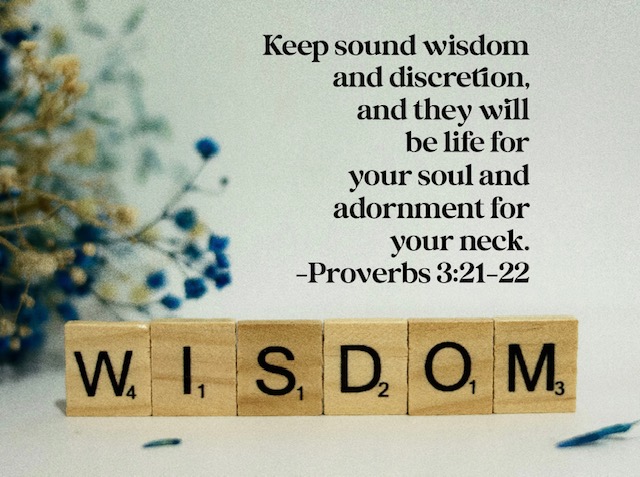
Wisdom

(I often link up with some of these bloggers.)

The Meekness of Wisdom

“Don’t try to fix it! Just listen.”

Sometimes we just want people to listen and sympathize. We may even know what to do about our problem, but we just want to be heard.

Sometimes we resent “fixers” because they haven’t taken the time to listen first. They start spouting solutions before they even know what the problem is. James warns us to be “quick to hear, slow to speak, slow to anger” (James 1:19). Proverbs 18:13 tells us “If one gives an answer before he hears, it is his folly and shame.”

Sometimes people with a lot of knowledge come across as arrogant know-it-alls. Some of them just want to show off or one-up their listeners. James says, “But if you have bitter jealousy and selfish ambition in your hearts, do not boast and be false to the truth.This is not the wisdom that comes down from above, but is earthly, unspiritual, demonic. For where jealousy and selfish ambition exist, there will be disorder and every vile practice” (James 3:14-16).

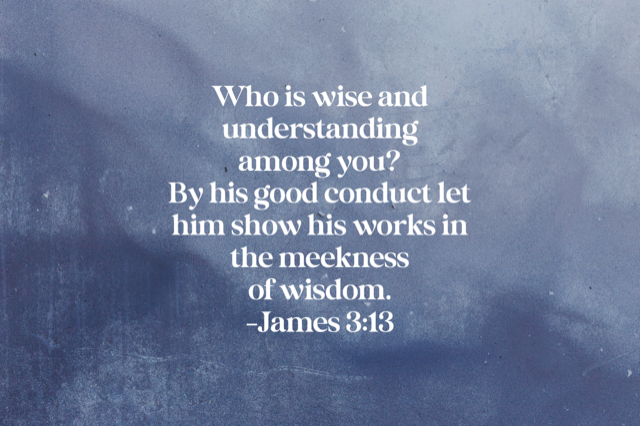
By contrast, James says, “Who is wise and understanding among you? By his good conduct let him show his works in the meekness of wisdom” (James 3:13).

That phrase, the meekness of wisdom, stood out to me. Meekness is not wishy-washy weakness. Moses was called the meekest man on the earth in his day (Numbers 12:3). Yet he faced down Pharaoh, led thousands of people out of Egypt, spent 40 days and nights alone with God when others were afraid to approach Him. Jesus said He was “meek and lowly in heart” (Matthew 11:28-30). Meekness is strength under control.

Galatians talks about restoring a fallen brother or sister in Christ “in a spirit of gentleness” (6:1-3). And Paul tells Timothy “the Lord’s servant must not be quarrelsome but kind to everyone, able to teach, patiently enduring evil, correcting his opponents with gentleness” (2 Timothy 2:24).

A truly wise man knows the answer and can give good counsel. But he doesn’t share it in pride or superiority. James goes on to say this wisdom is “from above is first pure, then peaceable, gentle, open to reason, full of mercy and good fruits, impartial and sincere” (verse 17).

A few weeks ago in our writing critique group, one member’s piece was on the way men and women think differently. One of the ladies mentioned this video, a hilarious depiction of someone with an obvious and easily repairable problem who wants her hearer to listen and not rush to “fix” it.

When I posted a link to this on my Saturday “Laudable Linkage” a couple of weeks ago, one commenter shared that someone she loved recently accused her of “fixing” instead of listening. She lamented her inclination to want to change others instead of examining her own motives.

While it’s true we need to listen first and not rush in to tell others what to do, the opposite of the coin is true as well. When we have an obvious problem and someone offers a workable solution, how wise is it to rebuff them just because we’d rather wallow in “venting” than finding an answer? The meekness of wisdom can apply to receiving as well as giving wisdom.

Proverbs is full of references about listening to wisdom, instruction, and even reproof. Just one example: “The way of a fool is right in his own eyes, but a wise man listens to advice” (Proverbs 12:15). Fools don’t listen to advice, but wise men do.

The prophets lamented that people would not listen to their wise counsel. Jeremiah said, “the word of the Lord has come to me, and I have spoken persistently to you, but you have not listened. You have neither listened nor inclined your ears to hear, although the Lord persistently sent to you all his servants the prophets” (Jeremiah 25:3-4).

God told Ezekiel that people would regard him “like one who sings lustful songs with a beautiful voice and plays well on an instrument, for they hear what you say, but they will not do it” (Ezekiel 33:31-32). What God had given Ezekiel to say in the previous verses was not beautiful music–it was a stern warning of judgment to come for their sins. Yet because the people would not listen and obey, they deceived themselves about the nature of what Ezekiel said.

By contrast, Moses accepted wise–and unasked for–advice from his father-in-law, Jethro, when Jethro saw that Moses was being worn out and needed assistants (Exodus 18).

“Let the wise hear and increase in learning, and the one who understands obtain guidance” (Proverbs 1:5). Wisdom says in Proverbs 8:33-34, “Hear instruction and be wise, and do not neglect it. Blessed is the one who listens to me, watching daily at my gates, waiting beside my doors.”

Sometimes silence is indeed the wisest option. Sometimes people just need to know they are cared for, heard, and not alone. We need to listen with sensitivity and empathy and offer counsel in dependence on God’s guidance. And we need to receive good counsel prayerfully, humbly, and gratefully, testing it against Scripture. We need meekness both to give and receive wisdom.

(I often link up with some of these bloggers.)
The humility of wisdom

When’s the last time you heard anyone say they needed wisdom? About the only time I hear anyone mention wisdom is in regard to a particular situation. “I need wisdom about this job decision.” I’m praying for wisdom for dealing with Johnny’s continued disobedience.”

But when is the last time we thought about our need for wisdom just to live our everyday lives for God’s honor and glory? We often pray that He will guide us, provide for us, forgive us. But do we pray for wisdom? Do we value wisdom as the Bible does?

Or do we plunge ahead with our day and our plans, thinking we know everything we need to and can make our own choices?

Our church has been reading through Proverbs together the last few weeks. If you’re familiar at all with Proverbs, you know it is all about wisdom. I don’t think there is a chapter that doesn’t mention it. And since we’ve been camped out there, the need for and value of wisdom have been emphasized repeatedly and in varying ways.

A full-scale study of wisdom would take more space than a blog post allows. But what struck me most during this reading is the humility of wisdom.

It takes humility to understand that we need wisdom, that to go our own way often leads us astray.

Trust in the Lord with all your heart, and do not lean on your own understanding. In all your ways acknowledge him, and he will make straight your paths. Proverbs 3:5-6

There is a way that seems right to a man, but its end is the way to death.
 Proverbs 14:12

The fear of the Lord is the beginning of wisdom, and the knowledge of the Holy One is insight. Proverbs 9:10

It takes humility to search for wisdom, to acknowledged that I don’t have it, and no matter how much I have, I need more.

My son, if you receive my words and treasure up my commandments with you, making your ear attentive to wisdom and inclining your heart to understanding;  yes, if you call out for insight and raise your voice for understanding, if you seek it like silver and search for it as for hidden treasures, then you will understand the fear of the Lord and find the knowledge of God. Proverbs 2:1-5

It takes humility to receive and instruction, and even more to receive rebuke. I was familiar with one or two verses about it being wise to receive reproof,  but I’ve noted 19 so far! Here are a few:

Like a gold ring or an ornament of gold is a wise reprover to a listening ear. Proverbs 25:12

The ear that listens to life-giving reproof will dwell among the wise.
Whoever ignores instruction despises himself, but he who listens to reproof gains intelligence.
The fear of the Lord is instruction in wisdom, and humility comes before honor. Proverbs 15:31-33

By insolence comes nothing but strife, but with those who take advice is wisdom.
 Proverbs 13:10

If someone tries to correct us, is our first response, “I better take heed: I might gain some wisdom from this?” No, our first response is anger with thoughts of “Who do you think you are?” and “Don’t judge me!” But the Bible says the wise person listens and learns. By contrast, “A scoffer does not listen to rebuke” (Proverbs 13:1) and “He who hates reproof is stupid” (Proverbs 12:1).

It’s scary to think of the personal consequences of rejecting reproof: it’s even more scary to realize that my lack of listening to instruction can negatively affect others. “Whoever heeds instruction is on the path to life, but he who rejects reproof leads others astray” (Proverbs 10:17).

I wonder if this lack of realization of our need for wisdom is behind our subtle ageism, even in the church. Once when visiting a new church, someone was showing us where the various classes were, and as we passed one door, our guide said, “Oh, you don’t want that one. That’s where the older folks are.” One younger lady told me she didn’t come to our ladies’ meetings because she thought only older ladies attended – even though at that time most of the attendees were just in their forties. Instead of deeming older people as worthy of our time and drawing on their wisdom, we label them out of touch, too slow, not “with it.” Proverbs honors older saints and the value of listening to authorities.

Of course, the need for wisdom runs throughout the Bible, not just Proverbs. One notable passage says:

For I want you to know how great a struggle I have for you and for those at Laodicea and for all who have not seen me face to face, that their hearts may be encouraged, being knit together in love, to reach all the riches of full assurance of understanding and the knowledge of God’s mystery, which is Christ, in whom are hidden all the treasures of wisdom and knowledge. I say this in order that no one may delude you with plausible arguments. Colossians 2:1-4.

May we continually seek Him and His wisdom through His Word.

IMG_1422

(Sharing with Inspire Me Monday, Literary Musing Monday, Tell His Story, Let’s Have Coffee, Porch Stories, Wise Woman, Faith on Fire, Grace and Truth. Links do not imply complete endorsement)