The Laura Ingalls Wilder Reading Challenge Wrap-Up

”"

It’s the end of February…and the end of the Laura Ingalls Wilder Reading Challenge. I hope you’ve enjoyed it as much as I have. I’ve tried to catch some of your reviews throughout the month.

I had been wanting to have some kind of give-away for those who have participated in the challenge, but wasn’t sure just what I wanted to do until I came across Laura’s Album: A Remembrance Scrapbook of Laura Ingalls Wilder by William Anderson. I just got it last week and was able to read through it in an evening. It is set up just like a scrapbook,  with photos of the family, of some of the houses, a sample of Mary’s handwriting in a letter after she was blind, etc. It also has a condensed history of Laura.

To enter the giveaway, you must have participated in the challenge in some way and leave a comment telling us how you did so: either let us know in the comments what you read and your thoughts about it, or share a link back to your blog, whether you wrote a wrap-up post or want to link to your reviews of the books you read (it’s fine if you have multiple links in a comment here, but WordPress’s spam catcher will likely think it is spam. But I do check my spam folder every day and will fish it out if it lands there.) I’ll draw a name for a winner a week from today, Wednesday, March 7.

The books I finished are:

I Remember Laura by Stephen W. Hines, reviewed here, a collection or articles and interviews of people who actually knew Laura.

Little House in the Ozarks: the Rediscovered Writings of Laura Ingalls Wilder, compiled and edited by Stephen Hines, a collection of newspaper columns and magazine articles she wrote before starting the Little House books, reviewed here.

Little House in the Big Woods by Laura Ingalls Wilder, reviewed here, the first book in the series.

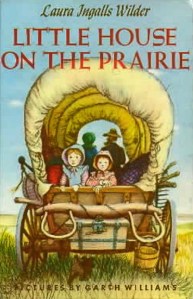
Little House on the Prairie by Laura Ingalls Wilder, reviewed here, their year in “Indian Country.”

Laura’s Album: A Remembrance Scrapbook of Laura Ingalls Wilder by William Anderson, not reviewed.

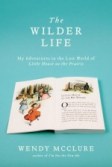
The Wilder Life: My Adventures in the Lost World of Little House on the Prairie by Wendy McClure, Laura fan extraordinaire, reviewed here.

I just got The Little House Cookbook by Barbara Walker last week but have only had time to flip through it a bit. I’m a little over halfway through Saving Graces: the Inspirational Writings of Laura Ingalls Wilder edited by Stephen Hines. I was disappointed that these are just columns from his previous book, but I guess for anyone who just wants an overview of this aspect of her life, it is nice to have them all in one place. I’ll have more to say about this book when I finish it.

My reading turned out to be a complementary mix of books by Laura and books about Laura, both old and new. A part of me really wants to keep going through the series, but I should probably save the rest of it for next year.

I have enjoyed immersing myself in Laura-related books this month. It gives a new insight to her. I should probably do this with other authors as well.

I shared in my review of The Wilder Life many new things I learned about Laura this month. There were several things I learned from I Remember Laura as well (among them, that Almanzo was 5’4″, Laura was even shorter, and they built their final home to their dimensions; that he preferred Laura on the other hand of a saw more than anyone else). That was interesting, but it was also cozy to reread the first two books in the Little House series. Each time through, at different ages and stages of life, I get different things or identify with different things from the book. I also learned of many Laura-related books I hadn’t known of before: I’ve gotten two already and am looking forward to exploring more next year.

Next year I’d also like to do something special on Laura’s birthday. I chose February for the challenge because Laura was born in February and then died in February a few days after her 90th birthday, but it didn’t even occur to me to mark that day especially until it arrived.

With this challenge just following Carrie‘s Lucy Maud Montgomery Challenge, one obvious difference between the two authors is that LMM is more more flowery in her descriptions. Laura tends to be more straightforward, yet her imagination isn’t less than LMM’s (she even had several magazine columns about fairies) — it’s just expressed differently. Perhaps the fact that she was writing primarily from real life made for a difference as well in her style.

I’ve always admired the sense of history, the strength of character, the love of family, the endurance of whatever life threw at them that comes through in Laura’s books.

I’m looking forward to seeing what you read and hearing your thoughts! Thanks so much for being a part of this challenge.

Update: The giveaway is now closed: congratulations to Kami! But feel free to continue to leave comments related to the challenge here if you’d like.

Book Review: The Wilder Life

I thought about saving The Wilder Life: My Adventures in the Lost World of Little House on the Prairie by Wendy McClure until after I had read all the Little House books so the references would be fresh to me, but I’ve had it for a while and really wanted to complete it for the Laura Ingalls Wilder Reading Challenge, especially since some of the other participants were planning to read it, too.

I had won it from 5 Minutes For Books months ago, and Jennifer warned me it was “irreverent.” I wasn’t sure exactly what way that would play out, so that and the fact that I’d run into bad language and such in most anything modern and secular lately made me a little wary. There is a smidgen of bad language and a couple of unnecessary sexual references, but it was all much less than what I was afraid there would be, not that I’m brushing it off or condoning it.

The crux of the book is that Wendy loved the Little House books as a child, even having Laura as her imaginary friend whom she wanted to show her modern world, and then rediscovered them as an adult. She wanted to experience “Laura World,” so she read extensively, tried her hand at churning butter and preparing some recipes from the Little House cookbooks, and then she visited several of the LIW-related museums, homes, sites, pageants, and such. On the Ingalls Homestead she actually got to stay in a covered wagon overnight (for $50 at that time), complete with an electrical hookup and an unexpected hail storm (during which her significant other, Chris, asked “What about the wheat?” Loved that. There actually was wheat, corn, and oats growing at the time, which they checked out the next day, and it all seemed to be okay.) She even saw “Laura Ingalls Wilder: the Musical” with Melissa Gilbert (TV Laura) as Ma!

In some places she had some neat experiences, such as when Chris was reading one of the books, came across an illustration of the prairie, lifted up his eyes and realized he was seeing the exact same landscape depicted in the illustration, or when Wendy stepped into Plum Creek and recognized it from the books’ description. Other times there was a strange disconnect between Laura’s world that she was seeing and and the “Laura’s World” in her own mind, or the one she had thought she would see. She found some absurdities (like what sounded almost like a cult of people preparing for the “end times” by learning prairie ways) as well as some surprises, like the insight she found at Almanzo Wilder’s childhood home (the only home at all related to LIW still standing on its own foundation) when originally Farmer Boy, based on Almanzo’s early life, was her least favorite book in the series. It helped, too, to read in The Road Back, a kind of a travel diary of Laura’s rare visit back to De Smet, where the rest of her family lived, that Laura experienced her own disconnect with things being different from her childhood and missing the ones who had passed on (pp 296-297).

Wendy discusses as well some of the disputed things that came up in her reading and research: whether some of the books’ content was actually fictionalized, how much Laura’s daughter Rose had to do with the books, whether Pa did actually know that the land he was on in disputed Indian territory (here is where some of the irreverence comes in: she calls Pa an “opportunistic jerk.”)

Some of the quotes I found most interesting or insightful:

“I didn’t think of Laura’s life as history. It was more alive than that, and more secret, too” (p. 7).

Speaking of childhood road trips: “I hoped we’d come across the cabin the Ingallses abandoned at the end of Little House on the Prairie. We’d see it in the distance, waiting for someone to come back to it. I wanted that someone to be me: I wanted to find that door and open it and complete the story” (p. 8).

Quoting from Barbara Walker’s foreword to the Little House Cookbook: “Laura Ingalls Wilder’s way of describing her pioneer childhood seemed to compel participation” (p. 38).

She used to come into her room, “describing it’s details to herself as if I’d never seen them before…For a few moments my room felt enchanted, just from the power of observation I’d borrowed from Laura…The story of the Little House books was always a story of looking (p. 61).

“Sometimes when I hear folks maunder on about how simple Laura’s lifestyle was I wonder if they’ve ever thought about all the hauling and fetching and stowing and stoking it took just to boil a pot of water” (p. 165). (I have, too!)

“Sometimes, Laura World wasn’t a realm of log cabins or prairies, it was a way of being. Really, a way of being happy. I wasn’t into the flowery sayings, but I was nonetheless in love with the idea of serene rooms full of endless quiet and time, of sky in the windows, of a life comfortably cluttered and yet in some kind of perfect fend shui equilibrium, where all the days were capacious enough to bake bread and write novels and perambulate the wooded hills deep in thought” (p. 172).

I learned several new things, among them:

Rose suggested that when Laura’s character got too “old,” perhaps they should focus on Carrie as the main character now. Laura replied, “We can’t change heroines in the middle of the stream” (p. 98). I am SO glad they didn’t. I’m glad they followed through with Laura’s life as she grew older and married. (Plus I get really tired of the idea that kids can only relate to kids near their own age. And here I thought that was a new line of thought.)

There is a 2005 Disney version of the books on film.

Ed Friendly, who began the LH TV series, wanted to keep it close to the books, but Michael Landon wanted heartwarming, moral lesson type stories (which he actually could have had by sticking closer to the books…)

Rose Wilder Lane’s book Let the Hurricane Roar was written before the Little House books and took elements from different parts of the Ingallses history. Rose “hoped it would inspire Depression-era readers with its themes of resilience in the face of hardship and the strength of the American character” (p. 168). But I don’t think Laura had conceived of writing the books yet. Wendy has a good section on Rose in Chapter 6, “The Way Home.”

Wendy didn’t like adult Laura’s non-fiction writings as much as I did, and overall she writes from a secular, non-conservative, “postmodern” viewpoint. Everyone I’ve known who really loved the LH books was more conservative and religious, so it was interesting to see “Laura’s world” through that perspective. She can be snarky in tone, which won’t likely sit well with many. But overall this was a really interesting book of a dedicated Laura fan. She even started a Twitter account where she comments as Laura at @HalfPintIngalls.

The Laura Ingalls Wilder Reading Challenge

(This review will also be linked to Semicolon‘s Saturday Review of Books.)

What’s On Your Nightstand: February

What's On Your NightstandThe folks at 5 Minutes For Books host What’s On Your Nightstand? the fourth Tuesday of each month in which we can share about the books we have been reading and/or plan to read.

For such a short month, February has been an awfully full one! But then the fourth Tuesday of last month left us with a full week of January, so I guess we did get an extra reading week in there.

Here’s what I completed reading since the last Nightstand post:

Rainbow Valley by L. M. Montgomery, reviewed here.

Rilla of Ingleside by L. M. Montgomery, reviewed here.

Vicious Cycle by Terri Blackstock  (audiobook), reviewed here.

The Help by Kathryn Stockett (audiobook), reviewed here.

I Remember Laura [Ingalls Wilder] by Stephen W. Hines, reviewed here.

Little House in the Ozarks: the Rediscovered Writings of Laura Ingalls Wilder, compiled and edited by Stephen Hines, a collection of newspaper columns and magazine articles she wrote before starting the Little House books, reviewed here.

Little House in the Big Woods by Laura Ingalls Wilder, reviewed here.

Little House on the Prairie is by Laura Ingalls Wilder, reviewed here.

Laura’s Album: A Remembrance Scrapbook of Laura Ingalls Wilder by William Anderson, no reviewed.

Practical Happiness: A Young Man’s Guide to a Contented Life by Bob Schultz, with my youngest son, Jesse, not reviewed yet.

The Wilder Life: My Adventures in the Lost World of Little House on the Prairie by Wendy McClure, just finished, hope to review in the next day or so. Review is up here.

I also listened to Silas Marner, but it wasn’t an audiobook as I had thought: it was an 111 minute production/adaptation. But it was very good! I will have to read the book some day.

Since I’ve been exploring audiobooks the past month or two, I wrote some thoughts on audiobooks, but basically I do prefer a real physical book in my hands for several reasons, yet audiobooks have been wonderful for driving time and other times when my hands are busy but my mind is free.

I am currently reading:

Saving Graces: the Inspirational Writings of Laura Ingalls Wilder edited by Stephen Hines. I was disappointed that these are just columns from his previous book, but I guess for anyone who just wants an overview of this aspect of her life, it is nice to have them all in one place.

Intervention by Terri Blackstock (audiobook).

I’m not sure what’s next. I’ve been pushing hard to get books completed for the Laura Ingalls Wilder Reading Challenge, which ends Wednesday, so I haven’t thought much about what to read beyond that. But I have The Big 5-Oh! by Sandra Bricker on my nightstand, and it looks like good. I’ve enjoyed Carrie‘s LMM and my LIW reading challenges immensely, but it will be nice to get back to modern times and a little more free-form reading this month.

The Week in Words

”"

Welcome to The Week In Words, where we share quotes from the last week’s reading. If something you read this past week  inspired you, caused you to laugh, cry, think, dream, or just resonated with you in some way, please share it with us, attributing it to its source, which can be a book, newspaper, blog, Facebook — anything that you read. More information is here.

Here are a few quotes gleaned from last week’s reading:

From Diane‘s Facebook:

“Our divine Lord spent six times as long working at the carpenter’s bench as He did in His world-shaking ministry. He did not shrink from the hidden years of preparation.” ~ J. Oswald Sanders

It’s easy to balk at the “hidden years” while eager to serve, but it seems many, if not all, of the people God used most had some time hidden away — Moses in the desert before being called to Egypt, Paul between his conversion and first missionary journey, Joseph in prison, David with his sheep. Who knows why, in the mysteries of God, it’s that way, but we can trust Him even when “hidden” that He is preparing us and using us for His glory.

Seen at Mama Bear’s:

“Love is that condition in which the happiness of another person is essential to your own.” ~ Robert A. Heinlein

Real love is essentially others-focused, not self-focused.

Janet penned this here:

Sometimes it’s our most deeply held ideals that seem to emerge most falteringly in our lives. (Why is that?) We need authors who breathe life into them by going before us and putting them into words more eloquent than any we could come up with ourselves, and taking them farther than we can currently see.

I’ve read good authors who have done just that for me.

You can share your family-friendly quotes in the comments below or write a post on your blog and then put the link to that post (not your general blog link) in Mr. Linky below.

I hope you’ll visit the other participants as well and glean some great thoughts to ponder. And I hope you’ll leave a comment here, even if you don’t have any quotes to share.

Jesus, Thy Blood and Righteousness

“And be found in him, not having mine own righteousness, which is of the law, but that which is through the faith of Christ, the righteousness which is of God by faith.” Philippians 3:9

Jesus, Thy blood and righteousness
My beauty are, my glorious dress;
’Midst flaming worlds, in these arrayed,
With joy shall I lift up my head.

Bold shall I stand in Thy great day;
For who aught to my charge shall lay?
Fully absolved through these I am
From sin and fear, from guilt and shame.

The holy, meek, unspotted Lamb,
Who from the Father’s bosom came,
Who died for me, e’en me to atone,
Now for my Lord and God I own.

Lord, I believe Thy precious blood,
Which, at the mercy seat of God,
Forever doth for sinners plead,
For me, e’en for my soul, was shed.

Lord, I believe were sinners more
Than sands upon the ocean shore,
Thou hast for all a ransom paid,
For all a full atonement made.

When from the dust of death I rise
To claim my mansion in the skies,
Ev’n then this shall be all my plea,
Jesus hath lived, hath died, for me.

~ Nikolaus L. von Zin­zen­dorf

A few more stanzas are here. You can hear a clip of a newer tune here.

Laudable Linkage

Here are a few things that especially caught my eye this past week:

Treasure In, Treasure Out, HT to Challies. I don’t know anything about R. C. Sproul’s teaching, so don’t take this as an endorsement thereof, but I’ve seen the name and knew his wife recently passed away. The broader theme of this piece is how what we take in affects how we think, and though that is important, I was especially touched at how his wife’s efforts to beautify her home ministered to him even after she was gone.

Two Kinds of Husband Whisperers.

Women Who Go About Doing Good.

This is the time of year some segments of the church as well as some individuals observe Lent. There are some good thoughts on both sides of the issue at On Being a Lentendud and Why Would We Observe Lent? I think the bottom line with this or any other spiritual exercise is to do whatever you do as unto the Lord, thoughtfully and seriously rather than just going through the motions outwardly because it is a certain time of year.

Dating Tebow. Though I cringe at the thought of calling an outing with a 10 year old girl a date, I thought this was a sweet story. Plus it is a good example of ignoring criticism while quietly going about doing good.

Why I Hope Real Books Never Die (And They Won’t). I sure hope they won’t.

If you have a Blogger blog with the new word verification system , please read this, HT to Brenda. Though they seem to have removed the little blobs behind the letters that were making it even harder to read, it is still even more difficult to leave comments. I tried 8 times to leave a comment on one friend’s blog yesterday before giving up and sending her an e-mail.

From Pinterest:

🙂

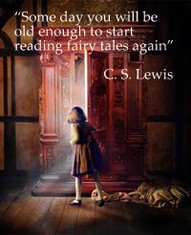
Love this. I am glad I rediscovered fairy tales!

Very cute, articulate kid:

How to talk to Moms:

How to talk to girls:

“Life is hard. Move on.” Good motto to learn young. 🙂 Though I do wish kids weren’t thinking about crushes and such so early.

Hope you have a good day!

Friday’s Fave Five

Welcome to Friday’s Fave Five, hosted by Susanne at Living to Tell the Story, in which we can share five of our favorite things from the last week, a wonderful exercise in looking for and appreciating the good things God blesses us with. Click on the button to learn more, then go to Susanne’s to read others’ faves and link up your own.

Here are a few favorites from this past week:

1. Celebrating my daughter-in-law’s birthday.

2. Seeing the first daffodils in bloom. This winter hasn’t been bad, but those first signs of spring are still uplifting.

3. Working on my recipe book I mentioned a few weeks ago while watching episodes I’ve missed on the computer. There are a few shows that I am interested in but my family isn’t, but it seems a waste of time to just sit and watch them by myself in the daytime, which is my prime work time. But while putting clipped recipes in a notebook at my desk, where I can spread everything out, it’s been enjoyable to catch a few of those shows online while working on it. And a subpoint here: I love those network sites that put their shows online the day after they run rather than waiting a week or even 30 days!

4. The Laura Ingalls Wilder Reading Challenge. It’s been so fun to just immerse myself in books by and about her this month. Even while I am looking forward to moving on to other things, I am going to miss stopping the series…but I need to save some for next year. This may be a good way to explore other authors in the future as well.

5. This is a life favorite rather than just a favorite from this week, but recently I’ve had a renewed appreciation for being able to be a stay-at-home mom and homemaker. I’m so grateful.

Overall it has been a pleasant week here. I hope it has been for you as well — and if not, may next week be better.

Book Review: Little House on the Prairie

When Pa feels that too many people are living in the Big Woods, he decides to take the family West into Indian country, ushering in quite an adventurous year for the Ingalls family.

They pack things up in a covered wagon, leaving major furniture behind “because Pa could always make more” (and I am sure because it would have taken another wagon just to load bigger things like beds and tables), say a poignant good-bye to grandparents and cousins without knowing when they would be able to communicate again, much less see them again, cross the frozen Mississippi River only the day before the ice starts to break, then endure traveling unnumbered days (with no DVDs, radios, iPods, or McDonald’s!) and make camp in a new place almost every night.

Finally they reach Kansas, where they see wide open space with “nothing but the rippling grass and the enormous sky” which seemed to curve over them in a perfect circle, quite a contrast to the Big Woods. But they traveled on still to Oklahoma, passing through a dangerous high creek in the process. I felt almost as sick as Laura said she felt til they were safely on the other side.

When they finally choose a spot to settle, then the long process of making a home begins: making a tent of the wagon covering, hauling logs, making the cut-outs at each end so they can stack together, making doors (without nails!!) Once again I was impressed with the industriousness and knowledge of both Ma and Pa as well as everyone’s bucking up under what we would consider hardship. I can’t quite imagine having a dirt floor or making beds on it: wouldn’t everything constantly get dusty? Yet everyone seems patient with the time it takes to get everything done step by step. When Pa is finally able to build a bed frame and they fill a straw tick with dry grass from the prairie (which almost makes me itchy just to think about), Ma says she is “so comfortable it’s almost sinful.”

The Ingalls had word that the Indians would soon be leaving, but there were still plenty of them around, giving Ma a fright when they would show up at her door and apparently want something to eat. Wolf packs, fire in the chimney and then on the prairie, “fever ‘n’ ague” (which Laura said later was probably malaria) which would likely have taken the whole family if someone had not come upon them when there were sick are just a few of the trials the family experienced. I could empathize with Ma’s long nights alone when Pa had to make the four-day trip back and forth to the nearest town.

And in this book we meet dear Mr. Edwards, one of my favorite characters, and have one of my favorite parts of the series during the Christmas he makes a trip at great hardship to himself so the girls can have Christmas — and they are so thrilled with the little gifts they receive.

There are a few remarks about Indians that we would consider racist today, but I think they were primarily motivated by fear. Pa tried to keep the peace and calm other neighbors’ excited feelings against the Indians. Other books I have been reading debate the controversy of settlers encroaching on Indian territory, but I don’t think most of the settlers had the big picture we do today in retrospect: most of them weren’t personally trying to run the Indians out: they just knew the government said there was land to be homesteaded.

Little House on the Prairie is a fascinating account of what I imagine many pioneer families dealt with in traveling in covered wagons and settling new territory. But even more than the historical interest, the warmth of the family and their character makes this book one of the most special children’s books written.

The Laura Ingalls Wilder Reading Challenge

(This review will also be linked to Semicolon‘s Saturday Review of Books.)

Submission in Christian Marriage

Since e-Mom announced last Friday that the topic for her Marriage Monday this week was “Submission in Christian Marriage,” it’s been in the back of my mind, but I haven’t had the kind of time needed to write that kind of post til this morning.

The concept (command, really) that Christian wives are supposed to be submissive to their husbands comes primarily from a couple of passages, both sections involving instruction to the family. Ephesians 5:22 says, “Wives, submit yourselves unto your own husbands, as unto the Lord” and Colossians 3:18 says, “Wives, submit yourselves unto your own husbands, as it is fit in the Lord.”

This command has been challenged in recent years by the thought that the Bible teaches a mutual submission in the preceding verse in the Ephesians passage, “Submitting yourselves one to another in the fear of God.” But the following verses 22-24 go on to say, “Wives, submit yourselves unto your own husbands, as unto the Lord.  For the husband is the head of the wife, even as Christ is the head of the church: and he is the saviour of the body.  Therefore as the church is subject unto Christ, so let the wives be to their own husbands in every thing,” so wives submitting to their husbands is a step beyond the mutual submission in verse 21. That mutual submission is part of the outflow of being filled with the Spirit in verse 18 (more on that in a moment) and applies to the whole church, but that principle of mutual submission certainly applies in marriage as well. Yet it doesn’t nullify the particular submission a wife is to show to her husband in verses 22-24. The next part of the passage instructs a husband to love his wife as himself as Christ loved the church (v. 25) and as himself (v. 33). I think a couple of ways that mutual submission applies in marriage is that neither partner is an independent agent, and neither is to be tyrannical or selfish. All of the Biblical instruction about how Christians are to love and treat each other in general applies to each partner within marriage as well.

The Greek word for “submit” in all the passages mentioned here is from a Greek word transliterated as “hupotasso” and is defined by this site as:

to arrange under, to subordinate
to subject, put in subjection
to subject one’s self, obey
to submit to one’s control
to yield to one’s admonition or advice
to obey, be subject

A Greek military term meaning “to arrange [troop divisions] in a military fashion under the command of a leader”. In non-military use,it was “a voluntary attitude of giving in, cooperating, assuming responsibility, and carrying a burden”.

So this goes far beyond the idea that submission just means that when push comes to shove, the husband has the final say (there shouldn’t be any pushing or shoving physically or verbally). We’re to “arrange ourselves under” our husband’s leadership just as the church should arrange itself under Christ’s leadership.

This doesn’t mean that the husband is a tyrant — his leadership should be as loving as Christ’s. Nor does it mean that the wife is a doormat, because the church certainly isn’t portrayed that way under Christ.

It also doesn’t mean the wife never shares her opinion, though of course she should do so in a kindly way. The Bible says that the two different people in a marriage become one. Neither eclipses the other: they somehow meld into a new unit.

But it does mean that the husband is the leader, the head. That can rankle modern, independent women. But Chrysalis portrayed the beauty of ice skating couples, the man leading, the woman following, both submitting to each other. The same is true in dance as well as business and even Star Trek. 🙂 I remember noticing during episode one episode the many times a captain had to ask or tell someone to do something. If each of those people challenged his authority, they’d have been defeated by the enemy within the first few episodes. When authority and submission work together like they are supposed to, it’s a beautiful thing.

I think many women have a few particular fears about submission.

One is that they might lose their own voice. But even Christ values the prayers of His bride. That’s a little different — we don’t (or shouldn’t) give Him suggestions about how to run the universe. 🙂 But He does welcome our requests and communication.

But the second fear is that, since our husbands aren’t Christ, they might fail, they might lead the wrong way. And indeed they might. They’re only human, and we need to be as loving and forgiving as we want them to be when we fail. It takes great faith to be truly submissive. When we are concerned about the direction our husband’s leadership is taking the family, we can express our concerns (though we shouldn’t nag or demean or berate), but ultimately we should ask the Lord to guide our husbands in the way they should go. I’ve relied heavily on Psalm 37:23a (“The steps of a good man are ordered by the LORD”) and Jeremiah 10:23 (“O LORD, I know that the way of man is not in himself: it is not in man that walketh to direct his steps”) through many of the major decisions we have faced through the years and prayed for the Lord to guide and direct my husband in the way He wanted him to go.

The third fear is that it is somehow demeaning to be in submission to someone else. But Jesus was not demeaned by being under the headship of His Father. They are co-equal. That word hupotasso is even used when Jesus went home from the temple with Mary and Joseph and “was subject unto them” (Luke 2:51). He was the Son of the Highest, yet He subjected Himself while on earth to his earthly parents.

Sometimes wives feel that if they don’t think their husbands are loving them as Christ loved the church, as the husbands are commanded to do, then the wife isn’t under obligation to submit to her husband. Some years ago when I was a new Christian chafing under the things going on in my unsaved home as I was growing up, I came across the instruction later in Ephesians 5 and Colossians 3 to children to obey their parents. It struck me then that there were no qualifications on that instruction. The Bible didn’t say I was to obey my parents only if they were Christians or if they were doing everything right. It just said “obey.” The example of Jesus as a boy obeying His earthly parents, even though I am sure they didn’t always do everything right, was a help. So it is in the marriage relationship. Ideally these things are to work together: when a husband lovingly leads and loves his wife, it’s easier for her to submit to him; when she is lovingly submitting rather than fighting against him, it’s easier for him to lovingly lead. But we’re each responsible before God to do our part whether the other does or not. I Peter 3: 1-2 says, “Likewise, ye wives, be in subjection [hupotasso again]to your own husbands; that, if any obey not the word, they also may without the word be won by the conversation of the wives;  While they behold your chaste conversation coupled with fear.”

Such a command seems beyond us. I mentioned earlier that the Ephesians 5-6 instruction flows out of the command to be filled with the Holy Spirit in Ephesians 5:18; similarly, the verses about family relationships in Colossians 3 come after instruction to “seek those things which are above (verse 1), to put on certain characteristics (verses 12-15), to “Let the word of Christ dwell in you richly in all wisdom” (verse 16), and to “whatsoever ye do in word or deed, do all in the name of the Lord Jesus, giving thanks to God and the Father by him” (verse 17). It’s only as we’re rightly related to God, spending time in His Word, being filled with His Spirit, doing everything as unto Him and by His grace that we can be what we need to be in our marriages and homes.

This post will be also linked to “Works For Me Wednesday,” where you can find an abundance of helpful hints each week at We Are THAT family on Wednesdays, as well as  Women Living Well.

Book Review: Little House in the Big Woods

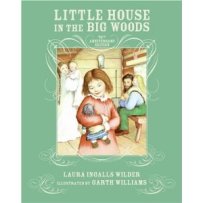
Little House in the Big Woods is the first book in the Laura Ingalls Wilder Little House series. My set has the same Garth Williams illustration shown on the left, only my books have a blue background. I think his illustrations are wonderful and add a lot to the stories.

In this opening book, Laura is portrayed as five years old, but according to Wikipedia she was actually three: the publishers changed her age in the stories “because it seemed unrealistic for a three-year-old to have specific memories such as she wrote about.” And I had thought these pretty remarkable memories even for a five year old!

Of course, much of what she wrote about were probably activities that were repeated throughout her life, such as butchering and smoking a hog, making maple syrup and sugar, laying up food for the winter, planting and harvest, etc., so I suppose the details were imprinted on her mind almost without effort. Sprinkled throughout are family stories handed down, songs that Pa played on his fiddle on winter evenings, customs and proverbs of the day.

But even though this is all fascinating historically, it doesn’t read like a history lesson: it reads like a warm family story with old-fashioned but always ever needed “family values”: love of family, respect for parents, obedience, industriousness, thrift, and so on.

There were several things that were amazing to me: that Laura and Mary had not seen a town or a store or even two houses together yet in their young lives (their first trip to town is a major event later in the book); that they used every bit of their resources, even to roasting a pig’s tail and using its bladder for a ball; the sheer amount of knowledge, skill, and energy it took to live in those times; contentment with what we would think of today as very little. Laura plays with an old corn cob as a doll named Susan, and even when she got a new doll, she didn’t want to make “Susan” jealous.

Even the children were expected to work hard and not to complain. Yet they didn’t seem to resent it: they just took it as a matter of course.

And Paul’s twinkling eyes and good humor and Ma’s gentleness, Christmas celebrations and get-togethers with extended family all smoothed some of the rough edges of life.

I so enjoyed revisiting with the Ingalls family a bit for the Laura Ingalls Wilder Reading Challenge. It’s easy to see why these books are beloved children’s classics, and I hope they will be for a many years to come. Yet even though they are written for children, they are beloved and read by adults as well.

The Laura Ingalls Wilder Reading Challenge

(This review will also be linked to Semicolon‘s Saturday Review of Books.)