After I got my iPhone and got ready to find some audiobooks, I opened a trial account at Audible.com. Looking around for my first book to try, I happened upon The Help by Kathryn Stockett. I’d seen it mentioned and highly recommended, so I bought it.
For some reason it didn’t even occur to me that with this being modern secular fiction, there would likely be some bad language. I hadn’t recalled any of the bloggers I’d read mentioning it (for the record I do very much appreciate when reviewers mention these things so readers can take this into account.) By this reviewer’s count (which I hadn’t seen before listening to the book) there are about two dozen expletives, several of them taking the Lord’s name in vain.
Now, I am not naive. I grew up in an unsaved home and public schools, so I know people use such language. I really don’t hear it by and large in everyday life now, but my oldest son, who works with the general public (when they’re having computer problems and therefore upset) says he hears it all the time. But I don’t like to read or listen to it and fill my mind with it so that the next time I am frustrated, one of those words come flying into my thoughts. And I especially don’t like hearing the dearest name in the world brought down to such a level. Yet if I set out to purge every source of such words from my life I’d have to avoid some members of my extended family forever (as it is I have to delete about every other Facebook post from some of them). We live in a fallen world, so we’re going to encounter those things. Yet there is a difference between being unable to avoid it in some cases and voluntarily bringing it in for entertainment in others. I don’t think there is ever a case where it is really needed to make the story realistic. I don’t know if anyone ever gets to the end of a book and thinks, “You know, that was really good except it needed a few bad words.”
So…I wrestle with that. I really do. That’s one reason why I usually read Christian fiction and avoid modern secular work. In some cases the work itself supersedes these kinds of flaws, yet the flaws of such language may be enough to avoid it. I’m still working on that, but I wanted to put this at the forefront.
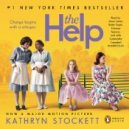 As for the rest of the book: it is excellent. The story is told from the viewpoint of three different women in Jackson, Mississippi in the 1960s:
Aibileen is a maid for Elizabeth Leefolt and looks after her daughter, Mae Mobley, who is the seventeenth white child Aibileen has helped raise. Mrs. Leefolt is considerably lacking in the maternal affection department, and Aibileen tries to make up for it by often telling Mae Mobley, “You is kind. You is smart. You is important.” Aibileen is the voice of calmness, common sense, and what spirituality is in the book, being noted for her prayer list.
Miss Skeeter is a friend of Elizabeth’s who often comes over to play bridge. Her family’s maid, whom she was closer to than her own mother, disappeared some time earlier, and Skeeter is hurt and mystified over where she went, why she left, and why no one will tell her anything. Skeeter, more than the other white ladies, seems to see and treat “the help” as real people. She’s finished college at Ole Miss and wants to be a writer.
Minnie is feisty, keeps losing jobs because of her tendency to mouth off, but is known for her exceptional cooking. There are only two people Minnie can’t face down: her drunken, abusive husband, and Hilly Holbrook.
Hilly is the self-appointed leader of her circle of friends and the president of the League. She decides to promote a bathroom initiative requiring every white household to build a separate bathroom for the colored help so that they don’t catch diseases from each other. Hilly is the ultimate control freak. Anyone dissenting from her viewpoint is not merely disagreeable. They must be crushed and ruined.
One other major character is Celia Foote, “white trash” who married up, pathetically trying to break into the community of white ladies and not understanding why none of them returns her calls.
Skeeter lands a job at the newspaper, writing a Miss Myrna column of housecleaning tips. She’s thrilled to have a writing job but has never cleaned anything in her life, so she asks Elizabeth if she can talk to Aibileen from time to time to ask her questions for her column. In the friendship that develops, Skeeter gets an idea: writing a book from the point of view of the help. I don’t recall if it was stated whether she just thinks this is a good angle for a book or if she is motivated in the beginning by any altruistic desire (one disadvantage of an audiobook is not being able to flip back through pages to try to find out), but it is not long before her eyes are opened and she sees this as more than just a project. She contacts an editor in New York who tells her to give it a try “before this civil rights thing blows over.”
It’s dangerous, both for Skeeter and Aibileen. Skeeter could be ruined socially and Aibileen could be harmed physically, as well as lose her job (and any job in the town). They meet secretly to work on the book. Then Skeeter’s editor tells her she needs to interview a dozen maids. No one else is willing to talk to her…until a tragedy in their midst convinces them they need to tell their stories. But another tragedy, the murder of Medgar Evers in the maids’ neighborhood, heightens the danger.
As the project continues, warmth and understanding unfolds on both sides — for there is prejudice on both sides (a colored doctor refusing to operate on a white boy’s hand when he loses his fingers is one example). There is even more to poor Celia than initially meets the eye.
The story was wonderfully told with both humor and pathos. The voices, the vernacular were right on.
The production values of the audiobook version were fantastic. Four actresses read the different sections, but at no point did I have the feeling someone was reading a book to me. At one point when I was recalling a particular scene, it was so vivid in my mind I had to remind myself I didn’t actually see it. It was enjoyable to hear the accents as well: one of my pet peeves is fake Southern accents, but for the most part these were genuine.
Overall, except for the instances of bad language and a couple of cases of vulgarity, I loved the book. I mentioned another review above: both it and the comments are very insightful.
(This review will also be linked to Semicolon‘s Saturday Review of Books.)




 Little House in the Ozarks: the Rediscovered Writings of Laura Ingalls Wilder



 Oh well. But I think I can sleep a smidgen longer than usual.
 Stray Thoughts