Thoughts From an Instant Pot Novice

The first time I read a blog post about the Instant Pot, I scoffed that it certainly didn’t sound instant. Though the IP has many functions, it’s primarily a pressure cooker, and pressure cookers take time to build up and then release pressure.

But I kept hearing more and more people rave about Instant Pots and kept seeing more good-sounding recipes. So I used my Amazon points (racked up from using the Amazon credit card. I could use them for everyday buying, like books, but I like to save them up for bigger purchases I wouldn’t normally make).

But my IP sat on the counter for a couple of weeks before I tried it.

I had been afraid of pressure cookers, having heard horror stories of their explosions all my life. But the Instant Pot has safety features built in, so I have little fear of the machine itself. However, it would take a bit of a learning curve and some experimenting to figure it all out, and most weekday evenings had me throwing together whatever was quick and tasty without much time or inclination to experiment.

I’ve been collecting Instant Pot recipes on Pinterest, however, and finally tried a few.

The biggest pluses to the IP I have found so far are:

1. Some items do take less time. The time it takes for the pressure to build up and release does offset the time saved actually cooking, but sometimes the whole process is still less than conventional cooking.

2. Meals can be made all in one pan. With some regular casseroles, I’d have to brown the meat in a skillet, cook the rice or noodles in a saucepan, and then combine them with sauces and spices in a baking pan before putting it all in the oven or microwave. But the IP has a “saute” function, which means I can brown meat in it and then add other ingredients and switch to the pressure cooker function, so I am just using the one pan.

3. It keeps the oven off. I don’t use the oven much in warm weather because of the excess heat it creates that the AC can’t keep up with. But with the IP I can make some meals that I normally wouldn’t during the summer.

4. It has multiple functions. Besides sauteing and pressure cooking, the IP can also function as a rice cooker and crockpot. It can even make yogurt.

Probably my favorite discovery for the IP was that I could cook chicken tenderloins straight from the freezer in it. I’ve cooked them frozen in the microwave and oven, but it’s nice to know I can do that with the IP, too. I’ve been thinking about cooking a whole pot full of them and then dividing them up to freeze for easy future meals.

My favorite recipe for the IP so far is Chicken and Dumplings. I use the ingredients for this one, a stove-top recipe I had used before, and the Instant Pot instructions for this one. These ribs were really good, too. We also enjoyed Copycat Hamburger Helper and Chicken Parmigiana.

And that’s about the limit of my Instant Pot experience so far. 🙂 How about you? Have you tried it? What do you like about it? What’s your favorite Instant Pot recipe?

What’s On Your Nightstand: May 2018

Nightstand82The folks at 5 Minutes For Books host What’s On Your Nightstand the last Tuesday of each month in which we can share about the books we have been reading and/or plan to read.

I enjoy this monthly opportunity to share what we’re reading.

Since last time I have completed:

Adam Bede by George Eliot, reviewed here. Excellent.

Anchor in the Storm by Sarah Sundin, WWII story and mystery, reviewed here. Very good.

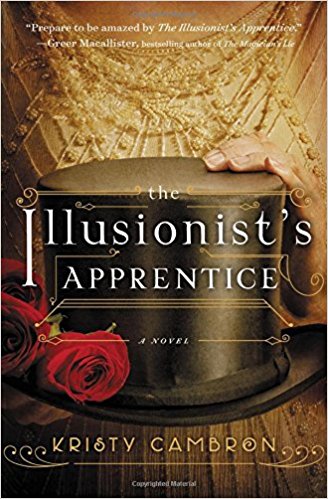
The Illusionist’s Apprentice by Kristy Cambron, reviewed here. Excellent.

Drawing Near to the Heart of God: Encouragement for Your Lifetime Journey by Cynthia Heald, reviewed here. Good.

I’m currently reading:

Heaven Without Her: A Desperate Daughter’s Search for the Heart of Her Mother’s Faith by Kitty Foth-Regner

The Highly Sensitive Person by Elaine N. Aron. Mixed emotions about this one.

Villette by Charlotte Bronte

A Small Book About a Big Problem: Meditations on Anger, Patience, and Peace by Edward T. Welch

Gospel Meditations for Mothers by Chris Anderson, Joe Tyrpak, Hannah Anderson, and others

Up Next:

The Hunchback of Notre Dame by Victor Hugo

Christian Publishing 101 by Ann Byle

The Song of Sadie Sparrow by Kitty Foth-Regner

Overcoming Your Devotional Obstacles: 25 Keys to Having Memorable Devotions by John O’Malley.

Tarissa at In the Bookcase hosts the Louisa May Alcott Reading Challenge in June. I’d like to read a biography,  Invincible Louisa by Cornelia Meigs, and possibly A Long Fatal Love Chase by Louisa. The latter was one of her “sensational novels” that she, like Jo in Little Women, wrote for quick money. It was recently rediscovered and printed. It may be too sensational for me – we’ll see.

I also made a list of books I’d like to reread…someday.

Read anything interesting this month? Do you have big reading plans for the summer?

Heavenly Waze

My husband likes to use the Waze navigational app on his phone even when we know where we’re going. Waze not only tells gives you directions, it tells you when there is a traffic snarl or some kind of hazard ahead. Recently when road construction caused traffic back-ups on the way to church, Waze navigated another route for us which my husband estimated saved us at least an hour, if not more.

I’ve thought how nice it would be to have a heavenly Waze. We do in a sense. The Bible tells us some things to come and gives us commands and principles which, if we ignore, will land us in trouble.

But in God’s mercy and wisdom, He doesn’t tell us everything about our journey through life. Probably because we would want to avoid some of the troublesome paths He wants us to go through, or we’d face the future with fear.

I’ve often paused over a passage in Exodus 13:17-18a which says that when the children of Israel finally left Egypt, “God did not lead them by way of the land of the Philistines, although that was near. For God said, ‘Lest the people change their minds when they see war and return to Egypt.’ But God led the people around by the way of the wilderness toward the Red Sea.” God took them the longer route because He knew the shorter one might be too much for them. That implies that they should have been able to trust Him for their experiences at the Red Sea. Instead, when the people were caught between the Red Sea and Pharaoh’s army, they feared and complained. In fact, fear and complaining characterized the bulk of their journey to the promised land, despite all the wonders they had seen in God’s deliverance of them from Egypt. 

Why would God take them that route? One reason is mentioned in Exodus 14:4: “I will get glory over Pharaoh and all his host, and the Egyptians shall know that I am the Lord.” The Egyptians weren’t the only ones to know Who God was through how He dealt with Israel. When they finally got to Canaan, the Israelites and their God had a reputation. Rahab had come to believe on the Lord due to all she had heard.

Not to speak irreverently, but it’s almost as if God had in mind something like, “Watch this: I am going to show you something fantastic!” And eventually the Israelites did see the marvels of the Red Sea parting so they could walk through on dry ground – after complaining about the fix they were in first. It was the same story when they needed food and water and when they should have entered Canaan the first time. God knew what was ahead, He had a marvelous provision in mind, but instead of waiting in anticipation to see what He would do, they doubted Him and complained.

I can’t point my finger at them because I am too much like them. I’d use a heavenly Waze to avoid anything unpleasant. I have a tendency to complain and a love of ease and comfort. I’m not generally adventurous. I don’t usually approach problems with excitement, just waiting to see what God is going to do this time.

God takes us through rough paths to display His glory, to increase our faith, to show us His love, to manifest Himself to others through us. May God give us grace to approach hazards and delays with the eye of faith, looking forward to how our Heavenly Father is going to work things out.

If we could see, if we could know,
We often say.
But God in love a veil doth throw
Across our way.
We cannot see what lies before,
And so we cling to Him the more
He leads us till this life is o’er,
Trust and obey.

From “If We Could See Beyond Today” by Norman Clayton

(Sharing with Inspire me Monday, Wise Woman, Let’s Have Coffee, Woman to Woman Word-filled Wednesday, Porch Stories, Faith on Fire)


Friday’s Fave Five


It’s Friday, time to look back over the blessings of the week with Susanne at Living to Tell the Story and other friends.

This time next week, it will be June! But for now, let’s enjoy what’s left of May. Here are some favorite parts of the last week:

1. Patio additions. Jim had bought this bench to provide a place to sit at the edge of the front yard when we watch Timothy in his riding toys on the cul-de-sac. But we pulled it back to the patio for our first grilled meal, and we decided we like it there. Then, I used my Amazon points to get a water table for Timothy, and he has enjoyed using it several times already.

2. Watching a movie with Jim. Last weekend we found ourselves alone for the evening with nothing on TV to watch. Someone had mentioned the movie “Wonder” to me, and the previews looked good, so we watched it together. So good. Even though it’s primarily about a boy with a disfigured face, the theme can be summed up in one of the precepts that his teacher conveys to the class: “Be kind, for everyone is fighting a tough battle.”

3. A satisfactory ending to a dispute. An item I had bought online had a problem, and after several emails the dispute was finally settled to my satisfaction. I usually ask my husband to handle these kinds of things, but I was pleased that I saw it through and that it worked out well.

4. Mending done. I tend to put off mending as it’s often a headache. But one item needing attention was my husband’s most often worn sports coat. So I worked on it and a pair of pants with the cuff coming undone. They both came together about as easily as they possibly could have, much to my relief.

5. Checking off the to-do list. I had a number of minor tasks around the house that I had been putting off. When I finally got to them one day this week, it only took around an hour to take care of them all.

Here in the US we have a 3-day weekend with Memorial Day on Monday. It’s usually a time of get-togethers and cookouts, the kick-off to summer. But we don’t want to forget those who helped to make such days possible.

Book Review: The Illusionist’s Apprentice

Illusionist On New Year’s Eve in 1926, a medium in Massachusetts advertises that he will raise a man from the dead.  Though someone does rise from the newly unearthed coffin, he immediately falls down dead. The FBI treat the case as a homicide, and their investigation takes them to other vaudevillian performers, particularly Wren Lockhart. Wren is an illusionist who apprenticed under Harry Houdini. But interest in her goes beyond her stage work: the dead man had the name of Jennifer Charles in his vest pocket, Wren’s real name which she has tried to keep buried. FBI agent Elliot Matthews works with Wren to gain more information helpful to the case, but Wren reveals as little as possible, wary of bringing her past to light.

When Wren and Agent Matthews are chased and shot at in a car, the case expands from the one magic trick gone wrong on New Year’s Eve. Is someone after Wren to gain Houdini’s secrets? Or is someone wreaking revenge for the part Houdini and Wren played in debunking a medium’s claims? Or has someone uncovered Wren’s carefully buried secrets?

The Illusionist’s Apprentice by Kristy Cambron kept me on the edge of my seat with multiple twists and turns and the revelation of new information along the way. Wren’s history is told in flashbacks which jumped around to different parts of her life. They could have been confusing, but I made it a point to look at the date beginning every chapter to try to keep on track.

Besides the mystery and suspense elements, I loved Wren’s development through the story as she slowly learns to trust Matthews. I also enjoyed that there were several layers to the story. The faith element first shows up in Wren’s insistence that only one man ever raised anyone from the dead and that her profession wasn’t magic but illusion. After that her faith is more undercurrent than overt, but its expression becomes more vivid near the end.

One of my favorite quotes from the book:

There cannot be dark without the light that will overcome it. Whatever darkness there is, God’s light shines brighter. It has to. He’s the Hero in every story–especially this one.

Kristy’s first two books were set during WWII, the third one took place in a circus, and now this one centers around illusionists and vaudeville. Though I also enjoy authors who write in particular time eras or niches, I love that Kristy’s subject matter is unexpected and often largely unexplored until now.

(Sharing with Semicolon‘s Saturday Review of Books, Literary Musing Monday, Carole’s Books You Loved)



Book Review: Adam Bede

Adam Bede Adam Bede is a solid, hardworking, salt-of-the-earth kind of man in the novel that bears his name by George Eliot (aka Mary Ann Evans, sometimes seen as Marian Evans). He lives in a pastoral community known as Hayslope in 1799 England. Adam is a carpenter and lives with his mother and brother, Seth. His closest friends are the Poysers, who run the nearby dairy farm, and Arthur Donnithorne, the young squire just coming of age who will inherit the estate when his grandfather dies. Adam is so well regarded at the carpenter shop that the owner not only wants Adam to take over when the owner retires; he also wants Adam to marry his daughter, Mary.

Adam, however, is in love with Hettie, the Poysers niece who has been living with them since she was orphaned. Sadly, Hettie is not the girl Adam thinks she is. She’s pretty, but she is also shallow, selfish, and vain. She wants out of her boring lifestyle. When Arthur visits the dairy and flirts a little with her, she begins to think that perhaps he will fall in love with her and make her a fine lady one day.

Seth, meanwhile, is in love with Dinah, a niece of Mrs. Poyser. Dinah doesn’t plan to marry, though, because she feels her calling is to preach God’s Word. Dinah and Hettie are set up as opposites. One night in their adjoining rooms, Hettie is trying on earrings and a shawl, parading up and down her room, admiring herself in a mirror, while Dinah is looking out the window, admiring the landscape and then praying. Dinah tries to befriend Hettie, but without success at first.

Brief descriptions of the book hint at a tragedy that occurs as a result of the love triangle, but it’s not the tragedy I was expecting. My jaw literally dropped at what happened. Some descriptions also mention the word “seduction,” which made me a little wary of the book. But I liked Eliot’s Daniel Deronda and Middlemarch so much, I decided to take a chance. I am glad I did. There is not a seduction per se in the novel. It’s more like an unwise falling into temptation. Elliot is quite discreet about it: similar to David and Bathsheba’s sin in the Bible, there are no sordid scenes, just the tragic results.

Arthur, in fact, is kind of a study in a lighthearted, likeable man who drifts into temptation by excuse:

No young man could confess his faults more candidly; candour was one of his favourite virtues; and how can a man’s candour be seen in all its lustre unless he has a few failings to talk of? But he had an agreeable confidence that his faults were all of a generous kind—impetuous, warm-blooded, leonine; never crawling, crafty, reptilian. It was not possible for Arthur Donnithorne to do anything mean, dastardly, or cruel. “No! I’m a devil of a fellow for getting myself into a hobble, but I always take care the load shall fall on my own shoulders.” Unhappily, there is no inherent poetical justice in hobbles, and they will sometimes obstinately refuse to inflict their worst consequences on the prime offender, in spite of his loudly expressed wish.

He could no more believe that he should so fall in his own esteem than that he should break both his legs and go on crutches all the rest of his life. He couldn’t imagine himself in that position; it was too odious, too unlike him.

He was getting in love with Hetty—that was quite plain. He was ready to pitch everything else—no matter where—for the sake of surrendering himself to this delicious feeling which had just disclosed itself. It was no use blinking the fact now—they would get too fond of each other, if he went on taking notice of her—and what would come of it? He should have to go away in a few weeks, and the poor little thing would be miserable. He MUST NOT see her alone again; he must keep out of her way…He wondered if the dear little thing were thinking of him too—twenty to one she was. How beautiful her eyes were with the tear on their lashes! He would like to satisfy his soul for a day with looking at them, and he MUST see her again.

No man’s conduct will bear too close an inspection; and Poyser was not likely to know it; and, after all, what had he done? Gone a little too far, perhaps, in flirtation, but another man in his place would have acted much worse; and no harm would come—no harm should come, for the next time he was alone with Hetty, he would explain to her that she must not think seriously of him or of what had passed. It was necessary to Arthur, you perceive, to be satisfied with himself. Uncomfortable thoughts must be got rid of by good intentions for the future.

It was the last weakness he meant to indulge in; and a man never lies with more delicious languor under the influence of a passion than when he has persuaded himself that he shall subdue it to-morrow.

No man can escape this vitiating effect of an offence against his own sentiment of right, and the effect was the stronger in Arthur because of that very need of self-respect which, while his conscience was still at ease, was one of his best safeguards. Self-accusation was too painful to him—he could not face it. He must persuade himself that he had not been very much to blame; he began even to pity himself.

Though the love triangle forms the main plot and conflict, there are a plethora of other unique characters and subjects that come up during the course of the book.  One subject is the nature of religion. Adam views using one’s gifts to do one’s best at one’s work as an act of worship and a practical display of faith. He preferred the pastor who was not the best preacher, but had a heart for his people, as opposed to a later minister who excelled at “doctrines and notions” without warmth and personal care of his church. It’s sad that Eliot later rejected Christianity: she seemed to have a good understanding of its main points here.

Another major theme is the effect of suffering. A couple of times Adam stoutly rejects the notion that good can come out of bad. But his suffering does soften him from the good but hard and slightly proud man he was to a more kindhearted and sympathetic version.

Eliot’s strength is getting into the minds of her characters and revealing them to us. Even though this was her first novel, she displayed that skill well. I ached along with several of them.

A few favorite quotes:

What greater thing is there for two human souls, than to feel that they are joined for life–to strengthen each other in all labor, to rest on each other in all sorrow, to minister to each other in all pain, to be one with each other in silent unspeakable memories at the moment of the last parting?

We must learn to accommodate ourselves to the discovery that some of those cunningly-fashioned instruments called human souls have only a very limited range of music, and will not vibrate in the least under a touch that fills others with tremulous rapture or quivering agony.

Her little butterfly soul fluttered incessantly between memory and dubious expectation.

In a mind where no strong sympathies are at work, where there is no supreme sense of right to which the agitated nature can cling and steady itself to quiet endurance, one of the first results of sorrow is a desperate vague clutching after any deed that will change the actual condition. Poor Hetty’s vision of consequences, at no time more than a narrow fantastic calculation of her own probable pleasures and pains, was now quite shut out by reckless irritation under present suffering, and she was ready for one of those convulsive, motiveless actions by which wretched men and women leap from a temporary sorrow into a lifelong misery.

Mrs. Poyser, known for speaking her mind, when asked by the squire why she was leaving his grandson’s birthday party so early:

Oh, Your Honour, it’s all right and proper for gentlefolks to stay up by candlelight—they’ve got no cheese on their minds. We’re late enough as it is, an’ there’s no lettin’ the cows know as they mustn’t want to be milked so early to-morrow mornin’.

In chapter 17, the narrator or author addresses the reader directly on the issue of why one character was not drawn more ideally.

Certainly I could, if I held it the highest vocation of the novelist to represent things as they never have been and never will be. Then, of course, I might refashion life and character entirely after my own liking; I might select the most unexceptionable type of clergyman and put my own admirable opinions into his mouth on all occasions. But it happens, on the contrary, that my strongest effort is to avoid any such arbitrary picture, and to give a faithful account of men and things as they have mirrored themselves in my mind. The mirror is doubtless defective, the outlines will sometimes be disturbed, the reflection faint or confused; but I feel as much bound to tell you as precisely as I can what that reflection is, as if I were in the witness-box, narrating my experience on oath.

She goes on to say that in real life, there are people with whom we have to do who are flawed in major and minor ways, and the novelist does us a disservice by creating an ideal world when what we really need is to better view and interact with our real one:

These fellow-mortals, every one, must be accepted as they are: you can neither straighten their noses, nor brighten their wit, nor rectify their dispositions; and it is these people—amongst whom your life is passed—that it is needful you should tolerate, pity, and love: it is these more or less ugly, stupid, inconsistent people whose movements of goodness you should be able to admire—for whom you should cherish all possible hopes, all possible patience. And I would not, even if I had the choice, be the clever novelist who could create a world so much better than this, in which we get up in the morning to do our daily work, that you would be likely to turn a harder, colder eye on the dusty streets and the common green fields—on the real breathing men and women, who can be chilled by your indifference or injured by your prejudice; who can be cheered and helped onward by your fellow-feeling, your forbearance, your outspoken, brave justice.

I listened to the audiobook wonderfully narrated by Nadia May. If I have a choice of narrators, and May is one, I choose her! I also dipped into the written text online at Project Gutenberg and through a library copy.

(Sharing with Semicolon‘s Saturday Review of Books, Literary Musing Monday, Carole’s Books You Loved)

Recent Cards

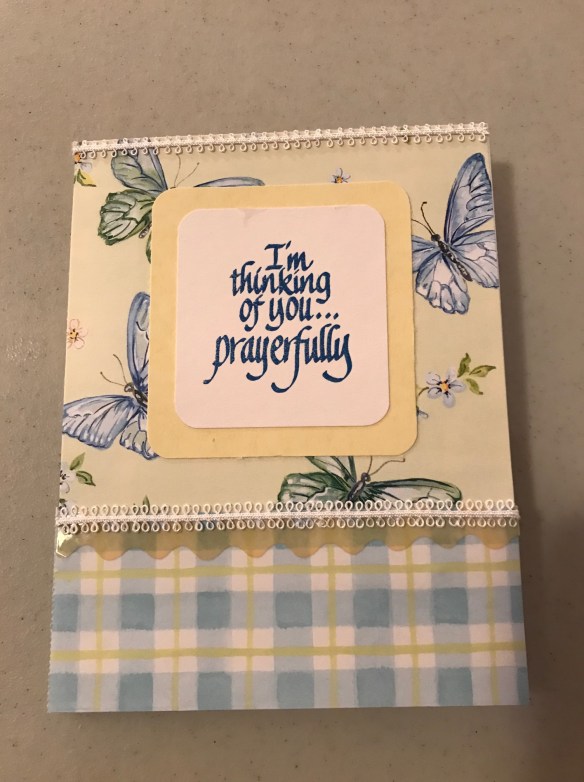
I thought I’d share some of the cards I’ve made recently.

This was for a friend.

IMG_0769

The wording was made with a stamp. I don’t remember where I got the stamp, but I love it.

This one was for Jim’s birthday in March.

IMG_0774

The wording was done on the computer and it and the background shapes were made with two different sized punches.

This was for Timothy’s birthday:

IMG_0892

Since these are licensed characters (PJ Masks, for those of you unfamiliar with preschooler TV heroes. 🙂 They provided the theme for his birthday this year), I wanted to be careful not to just copy images from the Internet. I searched for free PJ Mask printables and found these as cupcake toppers, then printed and cut the figures out for the card.

The rest are for Mother’s Day. This one was for a sweet lady I’ve looked up to as an adopted spiritual mom since my college days.

IMG_0912

The paper was so pretty and detailed, I wanted to keep any added decorations simple.

This was for a friend, and I ended up using the same basic idea, but on a square card.

IMG_0935

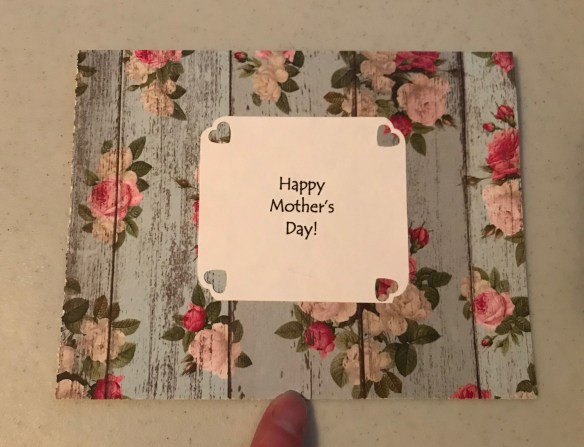
This was for my mother-in-law:

IMG_0936

The design was done on the Cricut, but was a little smaller than the card, so I filled in the corners with these stick-on 3-D flowers.

And this is one of my favorites, for my daughter-in-law:

IMG_0938

This just looked like her and Timothy! This design was on the Cricut also, so all I had to do was choose the design and papers, push the right buttons to cut them out, and then glue it all together.

You can tell I am not a professional, with not-the-best lighting and my fingers in some of the photos to hold the cards down. But I make them as an expression of love to the recipients and for fun and a creative outlet as well.

Why Isn’t God Winning?

Sometimes when I am dismayed over the state of the world or the state of a personal problem, I am tempted to think, “God, why aren’t you winning? You’re stronger than evil. You’re bigger than this problem. Why isn’t all of this taken care of? It would be nothing to You to right these things.”

The psalmists wrestled with this question in a slightly different way. In Psalm 73, Asaph struggled with not only the presence of the wicked, but the fact that they prospered. He even came to the point of thinking that his efforts to live purely have been in vain. Job’s friends’ asserted that God blesses the righteous and punishes the wicked, and therefore Job must have done something wrong to be experiencing so much trouble. One of Job’s arguments against their theory was that the wicked often prosper in this life.

But nothing in Job’s circumstances indicated that God wasn’t “winning,” that He was absent, or that He had lost control of the situation. God was with Job all along, even though Job couldn’t sense His presence. God displayed mercy and compassion to Job, even though it looked different from what we might expect. All of the physical, material blessings that God restored to Job at the end of the book are items that he once again lost at the end of his life. But through the first loss of them, God taught him eternal truths and drew Job closer to Himself. Job’s relationship with God and the spiritual truths he learned would affect the rest of his life, his relationships with others, and the afterlife. Though it might have looked like Satan was winning, God was working out His purposes.

I love the Psalms for their honest emotion. Whether the psalmists faced personal danger or lamented the seeming triumph of evil in the world, they brought their own thoughts and those of their listeners back to the truth they knew about God. Psalm 10 (ESV) starts out, “Why, O Lord, do you stand far away? Why do you hide yourself in times of trouble?” But the psalmist reminded himself, “But you do see, for you note mischief and vexation, that you may take it into your hands; to you the helpless commits himself; you have been the helper of the fatherless.” He concludes back on solid ground:

 The Lord is king forever and ever;
    the nations perish from his land.
 O Lord, you hear the desire of the afflicted;
    you will strengthen their heart; you will incline your ear
 to do justice to the fatherless and the oppressed,
    so that man who is of the earth may strike terror no more.

When God seems far away, we remind ourselves of the truth we know about Him from His Word. He sees what is going on. He loves us. He will deal justly. He might be waiting to answer for a number of reasons. We ask Him to search us and show us anything that might be hindering His answer to our prayers. And we rest in His wisdom, love, righteousness, and strength.

Trusting that God has control of the situation doesn’t mean inaction on our part. Only God can take care of all the needs of the world, but He often works through people. A needy world is a call to pray and then to look for ways to help those in need. William Wilberforce and Hannah More not only prayed against the evil of slavery but fought against it. We may not be able to solve world poverty, but we can help those within our sphere of influence.

In the May 19 selection of Spectacle of Glory by Joni Eareckson Tada, she wrote:

On the whole, the good that we are able to tally in this life doesn’t seem to outweigh the bad that we observe. We keep praying, but we don’t see some of the answers closest to our hearts. Only heaven will reveal a clear picture of how the sweet fragrance of our faith in Jesus, even in times of grief and loss, influenced the lives of those around us. Only eternity will show how our fainthearted prayers changed the destinies of people on our prayer list. Great faith believes in God even when He plays His hand close to the vest, now showing all His cards. God wants to increase your “measure of faith.” He does this whenever He conceals a matter and you trust Him nevertheless (p. 156).

The Bible tells us the world will get worse before the end. “But as for you, continue in what you have learned and have firmly believed, knowing from whom you learned it and how from childhood you have been acquainted with the sacred writings, which are able to make you wise for salvation through faith in Christ Jesus” (2 Timothy 3: 14-15).

God not only wins in the end. He is winning now. He’s working out His purposes even now.

(Sharing with Inspire Me Monday, Literary Musing Monday, Let’s Have Coffee, Porch Stories, Wise Woman, Faith on Fire)

Caregiver Resentment

Even though my mother-in-law is sweet and easy to get along with, I sometimes battle resentment over the circumstances of caregiving: feeling tied down, having strangers coming in my home at irregular times, etc. I’m guest posting today at The Perennial Gen about ways God is helping me deal with caregiver resentment.

(Sharing with Inspire Me Monday, Literary Musing Monday)

Laudable Linkage

IMG_0195

I have just a few this week, but I wanted to go ahead and share them lest I end up with an overly-long list next time.

What Does It Mean to “Accept Jesus”? “Accepting Jesus is not just adding Jesus. It is also subtracting the idols.”

Is It “Unspiritual” To Be Discouraged? HT to Challies.

Don’t Leave Your Convictions Behind To Get Ahead, HT to Challies.

A Genealogy of Grace (Mothers of the King). “Accept the fact that every family line, including yours, is a trail of wreckage and debris due to sin. When you do, you will learn to see something better and brighter. You will see his grace and goodness, bringing life out of ashes, light out of darkness, and glory out of decay.”

Would Bath-sheba Have Joined the #MeToo Movement? People have been debating for centuries about whose fault it was that David and Bathsheba fell into sin. I am not posting this to get into that, but I thought the author made some good points that are not often discussed in Christian circles and should be.

A non-mom speaks about Mother’s Day, HT to Linda. Thoughts on honoring mothers without alienating others – principles good not just on Mother’s Day and not just in church. I especially liked “The Wide Spectrum of Mothering” under #2.

A different video I watched this morning made me think of this hymn, so I looked it up next.

Happy Saturday!