Unknown's avatar

About Barbara Harper

https://barbarah.wordpress.com

Is God Disappointed In Me?

Is God Disappointed in Me?

When we’ve been walking with the Lord for a while, we’re sometimes dismayed that we’re still fighting battles with the same sins. We think, “Shouldn’t we be past that by now?”

Or perhaps we’ve gotten victory over some sins, but new ones crop up. Or regrets over past actions haunt us.

We might think God must be saying the same thing–“Shouldn’t she have made more progress by now? Is she ever going to get it right?”

Of course, God doesn’t ask questions like that. He knows us inside and out and knows our future as well as our past.

When I searched the Internet for articles about disappointing God, the first few discussed how God doesn’t have emotions as we do and is totally self-sufficient and self-satisfied in Himself.

I found that distinctly unhelpful in this context. Yes, God is self-sufficient and doesn’t need anyone or anything. But the Bible speaks of Him being pleased and displeased, angry or delighted.

A case study of what certainly looked like disappointing God came to mind: Peter’s denial of Christ. In Luke 22:31-34, at the last supper, Jesus told Peter that he would deny Jesus three times, even though Peter was sure he would follow Christ to the death.

In verse 40, Jesus told Peter, James, and John, “Pray that you may not enter into temptation.” But they fell asleep.

After Jesus was arrested, Peter followed behind and waited at the high priest’s courtyard while Jesus was inside. Peter was asked or accused three times of being one of Christ’s followers, but he denied it, denied even knowing Jesus. The Bible says, “And immediately, while he was still speaking, the rooster crowed. And the Lord turned and looked at Peter. And Peter remembered the saying of the Lord, how he had said to him, ‘Before the rooster crows today, you will deny me three times.’ And he went out and wept bitterly.”

We don’t know what was in that look of Jesus. I imagine it was something like the song, “The Look,” although that’s not about this situation.

We also don’t know what Peter was feeling, though we can imagine. In his place, I would have felt remorse, regret, probably some degree of self-loathing.

Later, though, the Lord was very tender with Peter.

After Jesus’ crucifixion and resurrection, the angels told the women who came to the tomb, “But go, tell his disciples and Peter that he is going before you to Galilee. There you will see him, just as he told you” (Mark 16:7).

Tell the disciples and Peter. Special mention. Jesus hadn’t dismissed Peter or ejected him from among Jesus’ followers.

Jesus appeared to His followers several times after His resurrection. Then Peter and a few others went fishing. I’ve heard sermons scolding Peter for this, accusing him of going back to his old life instead of fulfilling his mission. That may be. He may have thought, “I failed at being a disciple of Jesus–I should go back to what I know.” But the Bible doesn’t really say. Maybe he was bored. Maybe they were running out of funds and needed to make some money–they’d been hiding out for several days.

But whatever Peter’s motive, the group fished through the night without catching anything. In a scene reminiscent of the time Jesus called Peter to follow Him, He appeared and told the disciples to cast their nets on the other side. When they did, they netted so many fish, they couldn’t haul them into the boat.

Then we have the famous scene where Jesus asked Peter three times whether he loved Him. Three times, Peter said yes. Three times, Jesus told him to feed His sheep.

Three times–the same number of times Peter denied Jesus.

Was Jesus rubbing Peter’s failure in? I think He was reassuring him that he was restored and still had a purpose in God’s kingdom. Was Peter’s failure at catching fish a reminder that Peter couldn’t even do the task that was his strength, his profession, without Jesus? Possibly.

Many years later, when Peter wrote, “He himself bore our sins in his body on the tree, that we might die to sin and live to righteousness. By his wounds you have been healed. For you were straying like sheep, but have now returned to the Shepherd and Overseer of your souls” (1 Peter 2:24-25). Perhaps he was thinking of his own straying and return to his Shepherd.

I don’t profess to have all the answers to whether God is ever disappointed in us, but, as I have pondered the question, a few things came to mind.

We won’t reach sinless perfection in this life. We receive a new nature when we’re saved, but we still have the old one until we get to heaven. We’re sanctified–set apart unto God–from the first moment we’re saved. But until we reach heaven, and sin and Satan are removed completely, we’ll still fight our old nature. Galatians 5:17 says, “For the desires of the flesh are against the Spirit, and the desires of the Spirit are against the flesh, for these are opposed to each other, to keep you from doing the things you want to do.”

The Bible makes provision for forgiveness of sin after salvation. John wrote, “My little children, I am writing these things to you so that you may not sin. But if anyone does sin, we have an advocate with the Father, Jesus Christ the righteous” (1 John 2:1) and “If we say we have no sin, we deceive ourselves, and the truth is not in us. If we confess our sins, he is faithful and just to forgive us our sins and to cleanse us from all unrighteousness. If we say we have not sinned, we make him a liar, and his word is not in us” (1 John 1:8-10). This isn’t a green light or an encouragement that sin doesn’t matter. It does. But when it happens, as God knew it would, there is forgiveness.

God sees us through Jesus. The essence of salvation is that Jesus took our wrong on Himself so that we might receive His righteousness. He lived a righteous life in our place because we couldn’t. “For our sake he made him to be sin who knew no sin, so that in him we might become the righteousness of God” (2 Corinthians 5:21). The Bible says in many places that once we repent of our sin and believe on Jesus as our Lord and Savior, we’re in Christ. “There is therefore now no condemnation for those who are in Christ Jesus” (Romans 8:1). Again, this doesn’t mean that we can live any old way because God sees Jesus’ righteousness rather than ours. That feeling is incompatible with salvation. Our desires change when we’re saved to where we want to please God. Though we fail sometimes, our ultimate desire is to please Him. And when we do go our own way in rebellion, the Bible says God disciplines and chastens His children (Hebrews 12:5-13) to train them in righteousness.

Remember Satan’s influence. Jesus told Peter, “Satan demanded to have you, that he might sift you like wheat” (Luke 22:31). We can’t blame Satan when we sin, because God has promised a way of escape (1 Corinthians 10:13). But it helps to know that some of the weird thoughts that occasionally assail us might be coming from an outside influence.

Don’t trust in yourself. Peter had good, fervent intentions. But they were not enough to keep him from falling. 1 Corinthians 10:12 warns, “Let anyone who thinks that he stands take heed lest he fall.”

Use the means God provided. Jesus told Peter to watch and pray, lest he enter into temptation. Paul told the Galatians, “Walk by the Spirit, and you will not gratify the desires of the flesh” (5:16). God’s Word builds us up and strengthens us (Romans 16:25; Acts 20:32). Jesus defeated Satan’s temptations with Scripture.

A heightened awareness of sin develops as we grow in the Lord. When we first hear about sin, we might respond, “Well, nobody’s perfect.” Or we feel we’re not guilty of the “big stuff”–murder, adultery, stealing, drug dealing, etc.–so we’re not so bad. But as we read the Bible, we find that pride, self-glory, angry thoughts, and hatred are every bit as sinful. And we realize even more that sin is an affront to a holy God. We identify with David when he said, “My iniquities have overtaken me, and I cannot see; they are more than the hairs of my head; my heart fails me” (Psalm 40:12).

God knows our frailties. David writes in Psalm 103, “As a father shows compassion to his children, so the Lord shows compassion to those who fear him. For he knows our frame;
he remembers that we are dust.”

God’s posture towards His own is loving, merciful and faithful. David went on to say in Psalm 40, “But may all who seek you rejoice and be glad in you; may those who love your salvation say continually, ‘Great is the Lord!’ As for me, I am poor and needy, but the Lord takes thought for me. You are my help and my deliverer; do not delay, O my God!” (verses 16-17). Another psalmist writes, “If you, O Lord, should mark iniquities, O Lord, who could stand? But with you there is forgiveness, that you may be feared” (Psalm 130:3-4). Lamentations 3:22-23 says, “The steadfast love of the Lord never ceases; his mercies never come to an end; they are new every morning; great is your faithfulness.” “The Lord is gracious and merciful, slow to anger and abounding in steadfast love” (Psalm 145:8).

Just before Jesus told Peter of his coming denial, He said, “I have prayed for you that your faith may not fail” (Luke 22:32). Even knowing that Peter would fail, Jesus said, “When you have turned again, strengthen your brothers.” He knew Peter would fall, but He also knew Peter would repent.

Have you ever felt like God must be disappointed in you? What truths helped you? Do any of these thoughts resonate with you?

Psalm 130:3-4

(I often link up with some of these bloggers.)

Laudable Linkage

Laudable Linkage

I have just a short list of good reads to share this week. Most of them have to do with Thanksgiving, but that’s all right–we can apply Thanksgiving lessons year round.

The Other Side of Human Rights, HT to Challies. “We’ve forgotten something our ancestors knew: there is a necessary flip-side to human rights. If I have the right to be treated fairly and respectfully, then that means you have the responsibility to treat me that way. It also means that I have the responsibility to treat you that way. And just like that, another R word has slipped in beside our golden rights: responsibility. Responsibility is not a popular word. It sounds like duty and obligation, and those concepts aren’t trending right now. But if you look closely, every single right we claim has responsibility attached to it.”

Corrupt Communication a Sign of Corrupt Hearts. “Whether scatological locker room talk, or taking God’s name in vain, or gossip, or lies, or cruel insults, there are things we say that stink. And these utterances reveal a corruption or rottenness that goes deeper than the lips, the tongue, or the mouth. Jesus observed, ‘Out of the abundance of the heart, the mouth speaketh.’ (Mt. 12:34) Our words expose our inner attitudes and thoughts. We say what we say because we are what we are.”

Gratitude In a Hostile Land. “Even in this inconvenience, I had a choice. Interruptions like these reveal the state of our hearts. When unexpected circumstances come crashing in, are prayer and gratitude the conductor of our lives—or are they the caboose? Yet prayer and gratitude aren’t only for happy times; they are for every time, every moment, and every day.”

Forget Not His Faithfulness: Thanksgiving Begins with Remembering. “The danger of a hurried life is that when we don’t pause and reflect, we don’t remember. And when we don’t remember, gratitude struggles to make its way to the surface. But when we take time to look back, we begin to see what hurry had hidden all along: the grace of God, His unexpected provision and answered prayers, and His steady faithfulness woven through every ordinary day.”

Thanksgiving Gratitude: Receiving God’s Gifts with Joy. “One year Larry picked up some small gifts for some visiting children. Their delight in receiving them gave us as much, if not more, pleasure than if we’d received gifts. This reminds me how important receiving God’s gifts is to both our hearts and His. Gratitude is a gift. If our hearts swell when someone enjoys the gift we’ve chosen for them, I imagine God also smiles when we appreciate His gifts.”

C. S. Lewis quote

If you think of this world as a place simply intended for our happiness, you find it quite intolerable: think of it as a place for training and correction and it’s not so bad.–C. S. Lewis

Friday’s Fave Five

Friday's Fave Five

This week is coming swiftly to a close, as is the month of November. I’m pausing for a bit with Susanne at Living to Tell the Story to stop, think, and be thankful for the blessings of the week.

1. Thanksgiving Day. We had a lovely time with all the family here and talked with my oldest son in RI the day before. Lots of good food, chatting, and fun.

2. Helpers. Because my heart rate is still elevated, Mittu offered to make all the side dishes for Thanksgiving–I think Timothy and Jason helped. Mittu made a beautiful gluten-free pie crust for my apple pie. Jesse made a pumpkin pie. And Jim cleaned bathrooms and vacuumed. He also always takes care of getting all the meat off the turkey bones after we eat and then washing the roasting pan. He also washed some of the bigger dirty dishes that wouldn’t fit in the dishwasher.

3. A nice Thanksgiving craft kit. I found this at Hobby Lobby–leaves that come with little bamboo sticks with which we can scratch designs. All the Thanksgiving items were half-off when I got them, plus I had a gift card.

leaf scratch kit

A couple of ours: Mittu’s swirly one and Jim’s veined one.

leaf art

4. This year’s thankful tree. It’s always fun to read everyone’s contributions.

Thankful tree

5. Getting the dates set for Jeremy’s visit. It’s always good when everything is confirmed. Looking forward to his coming.

I hope those of you in the USA had a meaningful Thanksgiving, too! I’m planning on staying within my own four walls this Black Friday. How about you?

November Reflections

November Reflections

We’re a few days before the end of the month, but with Thanksgiving tomorrow and other posts scheduled, this seems the best time to reflect.

November has been a fairly quiet month. We enjoyed going to a play–actually a free dress rehearsal–at our church’s Christian school, then going out to eat afterwards. We enjoyed doing some Thanksgiving crafts with Tim.

Jim finished his shed, winterized the camper, and cleaned out all the dead stuff in the flower beds and planters.

I sorted through boxes from the shed as well as some parts of the house and have a pile set aside for the thrift store.

I am still dealing with an elevated heart rate, but my devices aren’t showing signs of atrial fibrillation. It may be atrial flutter. When I had that in July and August, it went on for several weeks and turned into atrial fibrillation, resulting in a cardioversion. I’m praying God will intervene and set my heart right so we don’t have to go that route again. I feel okay except I have to take breaks in-between doing things.

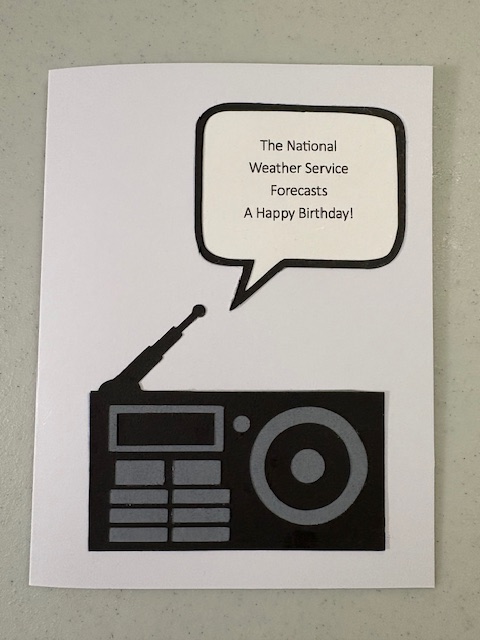
I only made one card this month, but it hasn’t reached its recipient yet, so I’ll share it next month.

Watching

We watched one season (six episodes) of Crossroad Springs, about a pastor in Chicago who comes home to help his father after the latter is injured. There are hard feelings because the father wanted his kids to take over the farm, which has been in the family for several generations. But one child became a pastor and the other a doctor. When the pastor gets reacquainted with a girl he used to know, he’s torn between going back to his church or staying. Meanwhile, there’s trouble brewing with a neighbor who may be up to no good. The show was clean and the story was good, but something was lacking. It had the same vibe as a lot of early Christian movies. One negative aspect: they equate salvation with baptism.

Where the Lilies Bloom was based on a book by the same name, written by Bill and Vera Cleaver. A poor family consisting of an ailing father and his four children live in the mountains of North Carolina. They used to own their home but sharecrop it now, fully believing that neighbor Kiser Pease stole it out from under them by paying the back taxes. Kiser wants to court the oldest daughter, but the father will not allow it. When the father knows he is dying, he makes fourteen-year-old Mary Call, the practical one, promise to keep the family together and not let Kiser date her sister. The children don’t let anyone know when the father dies, believing they’ll be taken from the farm. The oldest sister is kind of dreamy, and the other two children too young to understand what needs to be done, leaving the major burden to Mary Call until things come to a head. This was also a good, clean movie but also lacked something. I have a feeling the book is much better and want to read it some time.

We also watched the second season of House of David. It picks up right where the first left off, with the slaying of Goliath and the ensuing battle between the Israelites and Philistines. The series portrays David as not a skilled warrior at first, having to be taught by Jonathan and protected until he gains his footing. Saul thinks he has recovered from his madness, but he hasn’t. Intrigue arises from a couple of different fronts. This season ends with Saul discovering David has been anointed by Samuel, and David runs for his life. My understanding is there’s supposed to be one more season, culminating in David being crowned king.

As usual, some parts are in line with the Bible, some are not. I’ve read that a lot of material is drawn from the Talmud and other Jewish writing.

One episode that I especially liked showed everyone going to the tabernacle for the day of atonement. We had just been studying the tabernacle in our Exodus Bible study, so it was interesting to see a limited portrayal of the Day of Atonement portrayed and the solemnity of those looking on.

Reading

Since last time I have completed:

  • Bloom In Your Winter Season by Deborah Malone and others. A collection of essays on various women of the Bible, showing that God can be trusted to take care of us and can use us at any age. Very good.
  • Raising the Perfectly Imperfect Child: Facing Challenges with Strength, Courage, and Hope by Boris Vujicic, father of Nick Vijicic, who was born without arms and legs. Very good.
  • The Language of Sycamores by Lisa Wingate. A woman’s put-together life comes crashing down with the loss of her job and a bad report from the doctor. She goes to visit her sister, trying to set aside old rivalries. The neighbor, Dell’s grandmother is ailing, leaving Dell in the foster care system.
  • Drenched in Light by Lisa Wingate. Dell has been adopted. Being something of a musical prodigy, she’s enrolled in a performing arts magnet school. But her vastly different background gives her trouble fitting in. Meanwhile, her guidance counselor is at a crossroads in her life. Good.
  • A Thousand Voices by Lisa Wingate.These last three book finish Lisa’s Tending Roses series. Dell is an adult, but still struggles with wondering about her birth father. She drives to the Choctaw festival in Oklahoma to seek answers. An okay story but had some elements that troubled me.
  • The Man Behind the Patch: Ron Hamilton by Shelly Garlock Hamilton. Biography of musician and vocalist Ron Hamilton, aka Patch the Pirate. Very good.

I’m currently reading:

  • Exodus for You by Tim Chester with the ladies’ Bible study at church
  • James for You by Sam Allberry. Haven’t made much progress with this due to Bible study and Sunday School reading. But I hope to catch up over the holidays.
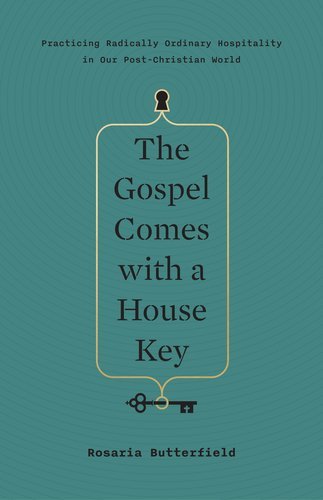
  • The Gospel Comes with a House Key by Rosaria Butterfield
  • Amy Snow by Tracy Rees, audiobook
  • My Beloved by Jan Karon

Blogging

Besides the weekly Friday Fave Fives, Saturday Laudable Linkage, and book reviews, I’ve posted these since last time:

  • Why Do We Need Wisdom? Not just for big decisions, but for everyday life.
  • Inconvenient Holiness. Sometimes opportunities to serve the Lord or do the right thing don’t come at the most convenient times. But when we think of hows Jesus was inconvenienced for us, it inspires us to go the extra mile for Him.
  • When Spiritual Disciplines Seem Dull. Praying, reading the Bible, taking communion are not always exciting or inspiring. But even while we pray God will revive our hearts, we obey, knowing that God works through those means.
  • Thanksgiving Is Not a Feeling, it’s an action. But it can lead to feelings of gratefulness.

I hope those of you in the States have a wonderful Thanksgiving tomorrow!

Thou that hast giv’n so much to me,
Give one thing more, a gratefull heart:
See how Thy beggar works on Thee
                                              By art:

Not thankfull when it pleaseth me,
As if Thy blessings had spare days;
But such a heart whose pulse may be
                                            Thy praise.

From “Gratefulnesse” by George Herbert

Happy Thanksgiving to you and yours!

Psalm 92:1-2

(I often link up with some of these bloggers.)
Review: The Man Behind the Patch: Ron Hamilton

Ron Hamilton and his alter ego, Patch the Pirate, are household names in some places but unknown in others. I wrote something of a tribute to him a couple of years ago after he passed away. His wife wife, Shelly, wrote a biography of him, published last year, titled The Man Behind the Patch: Ron Hamilton.

I first knew of Ron in college. He and Shelly were newly married and GAs (graduate assistants) during my freshman year. They were always active in music both on campus and at the church they attended, which I visited occasionally.

I remember when Rob debuted some new songs he had written at college. “It Is Finished” was inspired by a teacher pointing out that when Christ said “It is finished” from the cross, it was a victory cry. The other two were “Come to the Cross” and “The Blood of Jesus.” I had not known that these songs were part of his requirements to graduate in his major. It’s interesting that these songs continued to be well-known and well-loved all through his career.

I remember when Ron was diagnosed with cancer in his eye. When they did surgery, he wouldn’t know until he woke up whether they had to remove the eye or not. They did. Sometime after his recovery, he gathered together all the notes and verses people had sent him and wrote what became his signature song, “Rejoice in the Lord.”

As Ron wore his eye patch, kids in his church began calling him “Patch the Pirate.” He had written music for adults but then decided to write some for kids as well. He put together a story line with interesting character voices for a children’s recording. Kids loved it, and parents soon begged for more because they were tired of listening to the same album over and over. Thus a children’s ministry was born. A Patch the Pirate adventure has been released every year since then, over forty all together.

He continued to write music for adults and choirs, cantatas, books of music arrangements for his songs. He wrote the words, various people wrote the music, and Shelly arranged them.

One of the trials of their life was when their oldest son developed a mental illness over several years, ending with the taking of his own life. Shelly told his story in Always, Only Good: A Journey of Faith Trough Mental Illness.

Another severe trial came when Ron was diagnosed with early onset dementia. He passed away at his home in 2023.

Shelly tells Ron’s story in three sections, Becoming Patch the Pirate, Life with Patch the Pirate, and Patch’s Long Journey Home. She begins with his early childhood in Indiana, to attending college, meeting and dating Shelly, their marriage and children. Then Ron’s eye surgery and budding career. They took over and managed the music company her dad began, Majesty Music.

Many of the middle chapters are something of a travelogue, along with which recordings came out when, sprinkled with anecdotes. The whole family traveled to churches doing “Patch” concerts until the family grew too big. Ron traveled alone for a while, eventually cutting back to traveling just a bit while becoming the music pastor of a local church.

Shelly was warned that biographies of men by their wives often become hagiography, idealizing the husband. Shelly attempts to show all sides of Ron. He wasn’t perfect–no one is. He was a prankster, and some of his pranks backfired badly.

A couple of other interesting facts I had not known: Ron had a deviated septum, which gave his voice a slight nasal quality. He didn’t know if surgery would change his voice for better or worse, so he decided to leave well enough alone.

Also, he considered doing doctoral work in music at another school and was accepted, but he was told his music would need to be more academic. He considered the offer, but decided to decline. He wanted to “put the cookies on the lowest shelf”–make them accessible to everyone. Shelly wrote later that Ron “chose to compose biblical texts that united with simple, memorable melodies for everyday life and everyday struggles (p. 368).

Ron wrote about 700 songs. Some for children were fun, like “I Love Broccoli” and “The Poochie Lip Disease.” Others focused on character. All of his songs for children and adults were biblically based. I shared some of my favorites in my earlier post about him.

By all accounts, Ron was a humble man. When Shelly once mentioned how many lives he had touched, he said, “I’d like to think God did it.”

This book was nostalgic for me in many ways. I didn’t know Ron and Shelly personally, though I had met them each a couple of times. But since I was in school a few years behind them and lived in the same town for over fourteen years, I was acquainted with their ministry. Then my kids grew up on “Patch the Pirate” tapes, especially in the car and at bedtime. We listened to many of Ron’s albums for adults over the years and sang some of his music in choir. Finally, I followed Shelly’s public Facebook page the last years of Ron’s illness.

I think this book would be especially interesting to anyone familiar with Ron or Patch. But even for those who don’t know him, this is an inspiring account of a humble servant of God using his talents for His glory.

Thanksgiving Is Not a Feeling

Thanksgiving is not a feeling

I often feel a little awkward when a group leader wants participants to share something we’re thankful for right off the bat. I hope she won’t call on me first so I have a little time to think.

In the midst of a heavy trial is another time it is hard to be thankful. The weight of what we’re going through overshadows thankful feelings.

Then other times, nothing bad is going on, but life just seems mundane, unexciting. If someone asks us what we’re thankful for at those times, we’d likely draw a blank.

These are all occasions when we might not feel thankful. But thanksgiving isn’t a feeling. It’s an action. And, ironically, giving thanks even when we don’t feel thankful often leads to feeling thankful.

It doesn’t usually take a lot of thought to find reasons to be thankful. And if you’re like me, once you get started, it’s hard to stop!

When going through a trial, I can be thankful that:

  • God is with me.
  • He promised to give me grace and help me.
  • He knows just how much to allow.
  • He loves me.
  • He is interested in my growth even if I am not.
  • He has a purpose in all He allows and works it for my good.

When life is mundane, I can be thankful that:

  • A respite is provided from busyness.
  • God is with me, even in the small moments.
  • When I do things as unto the Lord, they are important even if they are not big.
  • Quiet days provide time to listen to others.

When life is busy, I am thankful that:

  • God gives strength.
  • God quiets my racing heart.
  • God gives peace.
  • Rest is coming.

Any day, I can be thankful that:

  • God saved me.”Giving thanks unto the Father, which hath made us meet to be partakers of the inheritance of the saints in light: Who hath delivered us from the power of darkness, and hath translated us into the kingdom of his dear Son: In whom we have redemption through his blood, even the forgiveness of sins” (Colossians 1:12-14).
  • God comforts me. “For the LORD shall comfort Zion: he will comfort all her waste places; and he will make her wilderness like Eden, and her desert like the garden of the LORD; joy and gladness shall be found therein, thanksgiving, and the voice of melody” (Isaiah 51: 3).
  • God helps me. “The Lord is my strength and my shield; in him my heart trusts, and I am helped; my heart exults, and with my song I give thanks to him” (Psalm 28:7).
  • God loves me. “Let them thank the Lord for his steadfast love, for his wondrous works to the children of man!” (Psalm 107:8).
  • God forgives me. “I will give thanks to you, O Lord, for though you were angry with me, your anger turned away, that you might comfort me” (Isaiah 12:1).

We often look to our circumstances for reasons to be thankful. But we can be thankful for God Himself and His wonderful attributes:

  • Oh give thanks to the LORD, for he is good; for his steadfast love endures forever!” (I Chronicles 16:34; Ezra 3:11; Psalm 106:1; 107:1; 118:1, 29; 136).
  • Sing unto the LORD, O ye saints of his, and give thanks at the remembrance of his holiness” (Psalm 30:4).
  • Let us come before his presence with thanksgiving, and make a joyful noise unto him with psalms. For the LORD is a great God, and a great King above all gods” (Psalm 95:2-3).
  • I will give thanks to the Lord with my whole heart; I will recount all of your wonderful deeds” (Psalm 9:1).

Among the many admonitions and encouragements to be thankful in the Bible is this, from 1 Thessalonians 5:18: “In everything give thanks; for this is the will of God in Christ Jesus for you” (NKJV). In everything–all circumstances, the ESV says–there is something for which we can be thankful.

Thanksgiving often spontaneously overflows when news is good or something happy occurs. But when we’re going through something hard, thanksgiving isn’t easy. The Bible says sometimes praise is a sacrifice. When we remind ourselves who our God is, what He has promised us, and how He loves us, we can find abundant reasons to thank Him.

1 Thessalonians 5:18

(I often link up with some of these bloggers.)

Laudable Linkage

Laudable Linkage

Some of the blog posts that stood out to me this week:

Why Christian Kids Leave the Faith. “Few things are sadder to witness than people who once professed faith leaving it all behind. This is especially true when those people were raised in Christian homes by God-fearing parents. These children were given every opportunity to put their faith in Jesus but determined instead to turn their backs on him. Why would they make such a tragic choice?”

Beauty Bears Witness to God, HT to the Story Warren. “Art is haunted by beauty, and beautiful things point beyond themselves to more perfect beauty. Psalm 50 says, “Out of Zion, the perfection of beauty, God shines forth” (v. 2). We’re meant to trace this world’s splendor back to its Creator.”

What to Consider When a Loved One Is Critically Ill, HT to Challies. “The Bible remains a lamp to our feet and a light to our path even in the ICU (Ps. 119:105). Although Scripture doesn’t explicitly mention CPR or ventilators, it does offer key guidance on the sanctity of mortal life, God’s sovereignty over life and death, mercy, and our resurrection hope. These four truths can provide a framework as we strive to honor God at a loved one’s bedside.”

Gratitude In the Midst of Grief: Finding Hope in the Lord’s Kindness. “Gratitude doesn’t cancel grief—it coexists with it, transforming sorrow into worship.”

Three Thanksgivings In Heaven. “While we celebrate Thanksgiving on earth below, what’s going on in heaven? We could answer this question in part by examining the three instances of the word “thanks” in the book of Revelation.” Interesting–I never thought about this before.

No Heart Too Hard: Thanksgiving and the Power of God’s Mercy. “Somewhere along the way, have you stopped expecting that God is able to move in their story? What if this year, gratitude includes trusting that God is still softening hearts—even the ones that seem impossible to crack open?”

Why Contentment in Christ Is the Best Gift This Season. “Paul found contentment in prison. Eve lost it in paradise.”

Negativity Bias and the Praying Imagination, HT to Challies. “Negative information has a greater impact on our thoughts and emotions than positive. If you give a person three bits of good news and one bit of bad news, he or she will likely zoom in on the bad news so much that the good news has little impact. Bad news sticks like Velcro.” The author shares the Christian antidote to negativity bias.

Just for fun, 27 Best Thanksgiving Facts to Impress Your Family, HT to So She Reads. One example–apparently Black Friday was originally called that to discourage shopping on that day.

Reason for trials

Trials are intended to make us think, to wean us from the world, to send us to the Bible, to drive us to our knees.–J. C. Ryle

Friday’s Fave Five

Friday's Fave Five

It’s time again to count the week’s blessings with Susanne at Living to Tell the Story.

1. Thanksgiving crafts with Tim. I often have some little crafty thing to do on Thanksgiving to help wile away the long hours of cooking and then the time between the meal and dessert. I got a couple of kits at Hobby Lobby, forgetting Jason, Mittu, and Timothy weren’t going to be with us for Thanksgiving this year. So I got them out when we watched Timothy last Friday.

Thanksgiving crafts
Thanksgiving crafts

I started on the little pumpkin house, but it was hard to do! It was made of Styrafoam, with tabs from one piece going into the slots from another–but the tabs wouldn’t slide in. So I passed that on to Jim while Tim and I worked on the other pieces. Jim had to use toothpicks to push the tabs through and tape to hold them down on the inside. But it was cute when done, and everything else went together well.

I liked the little creatures, too, especially the fox.

Thanksgiving crafts
Thanksgiving crafts

Then we also had a kit for making fun faces with stickers and googly eyes.

Thanksgiving crafts

I was thinking afterward that Timothy might think himself too old for these kinds of things before long. But I am glad he enjoyed them this year.

2. A free play. The Christian school associated with our church does a play a couple of times a year, and they invite the church, family, friends, etc. to a free showing of the final dress rehearsal. The kids performed a radio production version of It’s a Wonderful Life, complete with people manufacturing the sound effects. They did a great job. We were sitting near some other couples our age who joked about having a cheap date night. 🙂

3. Dinner out. After the play, Jim and I tossed around various ideas of where to go eat and ended up at Texas Roadhouse again. The food was so good. I had a grilled pork chop, baked potato, and salad, and Jim had grilled steak and shrimp with the same sides (and gave me a few of his shrimp). Plus they have these wonderful fluffy rolls and cinnamon butter. They even brought us some extra rolls and butter, so we had some to take home.

4. Leftovers. Jason and Mittu hosted their small group and had leftover roast, carrots, and potatoes, and apple pie, which they brought over to our house. They ate some with us and left the rest of the roast and vegetables for us.

5. An available appointment. In the not-so-good news department, I’ve been in atrial flutter for the last couple of days. 😦 I called the cardiologist to try to nip this in the bud this time and not let it go on for weeks like last time. At first they were talking about scheduling me for mid-December. I asked if I couldn’t get in the next few days, so they scheduled me for this morning. I’m probably going to end up having to have an ablation, which I really don’t want to do. But neither do I want to have this keep coming up. Thankfully, an ablation for atrial flutter is supposed to be a one-time thing, whereas an ablation for atrial fibrillation might have to be repeated.

I hope those of you in the US have a wonderful Thanksgiving Day next week! I wish you something good to eat, someone you love to eat it with, and much to be thankful for.

Review: A Thousand Voices

A Thousand Voices

A Thousand Voices is the fifth and final novel in Lisa Wingate’s Tending Roses series.

Dell Jordan was a side character in the first couple of books but is the main character in this one. She was Grandma Rose’s neighbor as a child, living with an ailing grandmother. Her father had not been around since her birth. Her mother had been in and out with drug addictions but died a few years before. After she and Grandma Rose became friends, she became an unofficial part of the family until Rose’s granddaughter and her husband, Karen and James, officially adopted Dell.

When Dell was discovered to be something of a musical prodigy, Karen enrolled her in a performing arts magnet school. Dell had trouble adjusting, but eventually found her way.

As this story begins, Dell graduated two years earlier, spent one year touring Europe with an orchestra, and a second year working in a Ukrainian mission orphanage. Her parents and teachers want her to apply to Julliard. But the appeal of music has faded with the pressures of performance and expectations.

She loves her new family, but she still feels “different,” with her brown eyes and hair and “cinnamon” skin amidst everyone else’s fair skin, blue eyes, and blond hair. She grieves over her birth father’s desertion, her birth mother’s neglect, and the derogatory comments from her uncle.

All she knows about her father is his name on her birth certificate and the fact that he was part Choctaw. When she learns about agencies in Oklahoma that help find Choctaw ancestors, she drives there from Kansas City to see if she can find any information about her father. She doesn’t tell her adoptive parents, feeling they wouldn’t understand and might be hurt.

After a series of mishaps in her travels, including losing most of her money, she arrives at a campground and sleeps in her car. A large group of tents and motor homes in the next campsite hold an extended Choctaw family, there for the annual Choctaw festival. They invite Dell into their gathering, where she becomes friends with several of them and feels a sense of belonging that she has never experienced before. A couple of them help her in her search.

A few quotes that stood out to me:

It’s a powerful thing to realize you were put in this world on purpose. It changes the way you feel about everything afterward (p. 2, Kindle version).

The past, even if you don’t talk about it, still exists, and no matter how hard you try to turn your back, no matter how dangerous it is to look at, part of you cries out to understand it.

Part of growing up is learning that people can’t give what they don’t have. The rest you have to find in yourself (p. 310).

The plot moves rather slowly until the last couple of chapters. There are some scenes that don’t seem to advance the plot at all, like a lengthy encounter with a skunk at the campground.

I was frustrated with Dell’s lying to her parents concerning her whereabouts, especially since she also lied to them in the previous book about her problems at school.

I wondered if Lisa intended for the series to lead to Dell’s journey from the beginning, or if Dell’s story emerged along the way. Apparently, the latter scenario was the case. Lisa said in the discussion questions at the end that the first book in the series was written with no thought of a sequel. But readers’ questions as well as her own musings about the characters grew into subsequent books. She also says there, “Dell was, in many ways, the catalyst for change in Grandma Rose’s family, and in turn she was changed by Grandma Rose’s family.”

I also wondered if Dell was originally thought of as Native American. She has always been described as having cinnamon-colored skin, but in a previous book, her uncle uses a different racial epithet about her. I wasn’t sure if that was just to show his ignorance, or if Lisa switched gears about what race Dell was part of.

I was dismayed by minced oaths (like “Geez”), language that was not profanity but also was not polite, and especially a bawdy description of an old woman whose robe had come undone. On the one hand, the people involved didn’t profess to be Christians. On the other hand, that was conveyed well enough without those elements. Because of this, the sheen of Wingate’s appeal has been a little tarnished for me.

It was interesting to read of Choctaw history. If this is an accurate representation, it seems that, among modern Choctaw, some are really into their heritage while others are not.

I thought the last couple of chapters were the best in the book. My heart went out to Dell in her struggles.

I know some don’t like neatly-wrapped-up-in-a-bow endings. But this book had more loose threads than I like. I would have enjoyed an epilogue, if not one more chapter.

When Spiritual Disciplines Seem Dull

When Spiritual Disciplines Seem Dull

Some parts of the Old Testament are exciting, but others can be a little tedious to read. Our Bible study group is in the section of Exodus talking about the furniture in the tabernacle and the priest’s garments. Thankfully, the book we’re using as an accompaniment has been helpful in pointing out the symbolism behind each item.

I wondered, though, how much the people in that day understood the symbolism. Some connections might be obvious: the cherubim in the curtain between the Holy Place and the Most Holy Place echo the cherubim standing guard at Eden after Adam and Eve sinned. The names of the children of Israel on the high priest’s ephod symbolized his carrying the whole nation into the presence of God to pray for them. The mercy seat situated on top of the ark of the covenant, which contained the tablets on which were written the ten commandments, is a rich picture of God’s mercy and righteousness meeting together.

But Old Testament saints didn’t have the fulfillment of some of those symbols in Jesus or further explanation in the book of Hebrews. So I wondered if sometimes they got lost in the details, or if carrying them out felt as tedious as reading about them. I’m pretty sure they did. Israel had to be called back to true worship of God many times over the centuries. The Pharisees had mastered the letter of the law but missed the point of it all. In Malachi, God rebuked His people for bringing polluted offerings and saying, “What a weariness this is” (Malachi 1:13).

Sadly, we can feel that way in our day, even with all the information and explanations we have. The Bible sometimes seems dull and our spiritual disciplines seem lifeless.

First, we need to ask the Lord to search us and show us whether any sin is interfering. When there is a problem in any of our close relationships, our interaction with that person will be somewhat strained, maybe a little artificial, certainly not as free and natural as usual until we deal with the issue. It’s the same with the Lord. When there’s something wrong between us, things won’t feel right until we clear the air.

Often, though, dullness or tedium in our spiritual routines comes from our flesh, our humanness.

What do we do then?

I appreciated what one lady in our Bible study said. When she read parts that were less than exciting, she reminded herself, “All Scripture is breathed out by God and profitable for teaching, for reproof, for correction, and for training in righteousness, that the man of God may be complete, equipped for every good work” (2 Timothy 3:16-17). God’s Word doesn’t have to be what we think of as exciting to be profitable.

Then, as she got into the Bible study, she saw things she hadn’t realized before that opened the passage up to her. Bible study aids, commentaries, and even just discussing the passage with others can shed new light for us.

We can pray, asking God to open our minds and hearts to His truths and revive us. Sometimes I remind myself that His Word is true and precious and spiritual disciplines are helpful even if the right feelings aren’t there. The writer of Psalm 80 requests three times, “Turn us again, O God of hosts, and cause thy face to shine; and we shall be saved.”

Sometimes reading through parts of Psalm 119 can reinspire my love and appreciation for God’s Word.

I remind myself as well that God doesn’t adapt Himself to my way of thinking and my ideas of how things should be. He expects me to adapt to His.

And I remind myself to keep reading and obeying. Our spiritual disciplines–prayer, Bible reading, communion, serving, etc.–are valuable even when nothing seems to be coming from them. Sometimes a session with the Bible that starts out feeling dry can suddenly touch my heart in an unexpected way. Even if that doesn’t happen, His Word is still beneficial. I’ve often said that every meal is not a Thanksgiving feast, yet even the peanut butter sandwiches and tuna casserole nourish us, and in the same way, the Bible does good things in our hearts and minds whether the passage is exciting or not.

It’s the same with prayer, communion, and the rest. Sometimes it seems we’re just going through the motions. It helps to stop and remind ourselves why we do what we do and do them in faith even if inspiring feelings aren’t there.

May God give us grace to always see His word and ways as precious and beneficial. When we get weary, may He revive us and open our hearts.

Psalm 119:14

(I often link up with some of these bloggers.)