Unknown's avatar

About Barbara Harper

https://barbarah.wordpress.com

Book Review: Hard Times

In Charles Dickens’ book, Hard Times, Thomas Gradgrind is a member of Parliament who also runs a school. His philosophy of education emphasizes pure fact: no fancy, no imagination, not even any morality. He discovers one poor student in the school Sissy, who can’t seem to learn her facts. When he goes to talk to her father, he discovers that her father had worked in the circus but has mysteriously left. So he offers to take Cissy in to help care for his near-invalid wife if she promises never to return to the circus.

Gradgrind’s own children have been raised according to his philosophy at home. Both his oldest two, Louisa and Tom, are rather bored. The implications of their education play out differently for each of them.

Gradgrind’s close friend, Josiah Bounderby, is a blustery self-made man who boasts of his rise from “street kid” to a successful banker. He eventually takes on Tom as an apprentice and married Louisa. Louisa has no love for Bounderby, but as her father presents the facts of the case, marriage seems reasonable.

In another area of town lives Stephen Blackpool, one of what Bounderby calls “hands”—common workmen. Stephen was 40, but “looked older, but he had had a hard life” with seemingly all thorns and no roses. “He was a good power-loom weaver, and a man of perfect integrity” though not particularly intelligent.

Eventually Stephen’s path crosses that of the other characters and reasons for his hard life become known. His refusal to go in with the unionists gets him in trouble with them and Bounderby. When he leaves to find work elsewhere, he’s framed for a bank robbery.

Usually when I start a classic novel, I get some background information about it first. I didn’t this time: I just let the story draw me in. I wondered who would advocate a “just facts” education and why. After reading the book, I learned that a philosophy called Utilitarianism was going around at the time. You can read more about it at Wikipedia if you’re interested. Louisa’s path follows that of the son of one of Utilitarianism’s advocates, who felt he was emotionally stunted as a result of his upbringing. Tom’s maturity and character was stunted, too, but in a different way. Perhaps it’s better to say he was more warped than stunted.

The two most highly moral, compassionate, and common-sense characters, Sissy and Stephen, were not raised in this philosophy, and eventually they show some of the others a different way. Some of the characters end up sadder but wiser, “making .. facts and figures subservient to Faith, Hope, and Charity.” Dickens almost portrays all the poor as virtuous and the rich and powerful as corrupt, but he makes the characters complicated enough that they don’t fall into stereotypes. As he often writes not only for social awareness, but for social change, he appeals to the reader that “It rests with you and me, whether, in our two fields of action, similar things shall be or not.”

This is the shortest of Dickens’ novels and the only one not to have any scenes in London. This is his tenth novel and, like most of his others, first appeared in serial form. He infuses the story with his characteristic humor, pathos, and memorable characters and descriptions and keeps the reader thinking long after the book ends.

I listened to the audiobook, nicely read by Peter Batchelor, and read parts on the Project Gutenberg copy online here.

(Sharing with Carole’s Books You Loved, Booknificent)

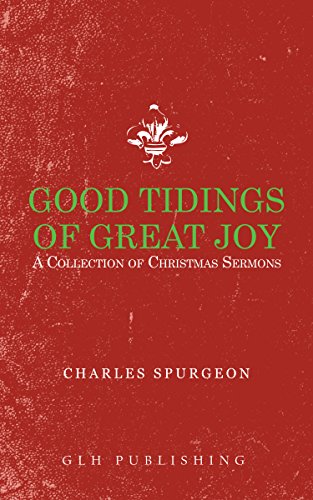
Book Review: Good Tidings of Great Joy

I like to read an Advent or Christmas devotional in December. I didn’t have any new ones on hand last year and didn’t want to reread an old one. But then I came across Good Tidings of Great Joy: A Collection of Christmas Sermons by Charles Spurgeon in my Kindle collection.

I thought I could read a bit at a time, like a devotional book. And I could—but I just wasn’t getting as much out of the sermons as I did when I read them one at a time in their entirety. The only days I could work in reading a whole sermon at once were Saturdays. So that’s why I am just now finishing a book of Christmas sermons.

Spurgeon was not a big fan of Christmas, according to these messages. He thought it was too often used as an excuse for excess. And he disliked a superstitious keeping of church holidays. But he did concede that hard-working people could use the time off and that the holidays provided a time to bring out particular truths related to Christ’s birth.

There are eight messages in all, each focused on a text connected to Jesus’ birth. I won’t go into an outline or summary of each message, but I’ll just share a few quotes.

I. The Birth of Christ, Isaiah 7:14-15: “Therefore the Lord himself shall give you a sign; Behold, a virgin shall conceive, and bear a son, and shall call his name Immanuel. Butter and honey shall he eat, that he may know to refuse the evil, and choose the good.”

Let us take courage here. If Jesus Christ was born in a manger in a rock, why should He not come and live in our rocky hearts? If He was born in a stable, why should not the stable of our souls be made into a house for Him? If He was born in poverty, may not the poor in spirit expect that He will be their Friend? If He thus endured degradation at the first, will He count it any dishonor to come to the very poorest and humblest of His creatures and tabernacle in the souls of His children? Oh, no! We can gather a lesson of comfort from His humble parentage and we can rejoice that not a queen, or an empress, but that a humble woman became the mother of the Lord of Glory!

And so, “let us keep the feast, not with old leaven, neither with the leaven of malice and wickedness; but with the unleavened bread of sincerity and truth.” Do not feast as if you wished to keep the festival of Bacchus! Do not live, tomorrow, as if you adored some heathen divinity. Feast, Christians, feast! You have a right to feast. Go to the house of feasting tomorrow! Celebrate your Savior’s birth. Do not be ashamed to be glad—you have a right to be happy.

Remember that your Master ate butter and honey. Go your way, rejoice tomorrow, but, in your feasting, think of the Man in Bethlehem—let Him have a place in your hearts, give Him the glory

II. The Great Birthday, Luke 2:10: “And the angel said unto them, Fear not: for, behold, I bring you good tidings of great joy, which shall be to all people.

It is clear that if God condescends to be so intimately allied with manhood, He intends to deliver man and to bless him. Incarnation prophesies salvation. Oh, believing Soul, your God cannot mean to curse you.

If you know yourself lost by nature and lost by practice. If you feel sin like a plague at your heart. If evil wearies and worries you. If you have known the burden and the shame of iniquity, then will it be bliss to you even to hear of that Savior whom the Lord has provided!

God’s Omnipotence comes down to man’s feebleness and infinite Majesty stoops to man’s infirmity!

III. A Visit to Bethlehem: Luke 2:15b: “Let us now go even unto Bethlehem, and see this thing which is come to pass, which the Lord hath made known unto us.

“Here,” says this faithful son of Abraham, “is the fulfillment of a thousand prophecies and promises! The hope, the expectation and the joy of my noble ancestry!”

Do you know, my children, that our comforts were purchased at the expense of His sufferings?

IV. Holy Work for Christmas, Luke 2:17-20

Holy wonder will lead you to grateful worship.

That we may go again to the Bethlehem of our spiritual nativity and do our first works, enjoy our first loves and feast with Jesus as we did in the holy, happy, heavenly days of our espousals.

Let us go to Jesus with something of that youthful freshness and excessive delight which was so manifest in us when we looked to Him at first. Let Him be crowned anew by us.

We may well excuse ourselves from the ordinary ways of celebrating this season. And considering ourselves to be “holy work-folk,” we may keep it, after a different sort from other men, in holy contemplation and in blessed service of that gracious God whose unspeakable gift the new-born King is to us.

The mystery of God Incarnate, for our sake bleeding and dying—that we might neither bleed nor die! God Incarnate descending that we might ascend! Wrapped in swaddling cloths that we might be unwrapped of the grave clothes of corruption!

Learning need not be an impediment to grace and may be a fitting weapon in a gracious hand.

Let every man who truly hears the Gospel bid others come to drink of the water of life. This is all the warrant you require for preaching the Gospel according to your ability. It is not every man who has ability to preach the Word. And it is not every man that we should like to hear preach it in the great congregation, for if all were mouth, what a great vacuum the Church would be! Yet every Christian in some method should deliver the glad tidings. Our wise God takes care that liberty of prophesying shall not run to riot, for He does not give efficient pastoral and ministerial gifts to every man. Yet every man, according to his gifts, let him minister!

We set before you, now, another mode of keeping Christmas by holy wonder, admiration, and adoration.

Think not much of yourselves, but do not think too little of your callings. There is no trade which is not sanctified by the Gospel.

You have heard the faults of the preacher—let him mourn them. You have heard his Master’s message. Do you bless God for that? Scarcely will you ever hear a sermon which may not make you sing if you are in a right frame of mind.

V. The First Christmas Carol, Luke 2:14: “Glory to God in the highest, and on earth peace, good will toward men.

I wish everybody that keeps Christmas this year, would keep it as the angels kept it. There are many persons who, when they talk about keeping Christmas, mean by that the cutting of the bands of their religion for one day in the year, as if Christ were the Lord of misrule, as if the birth of Christ should be celebrated like the orgies of Bacchus. There are some very religious people, that on Christmas would never forget to go to church in the morning; they believe Christmas to be nearly as holy as Sunday, for they reverence the tradition of the elders. Yet their way of spending the rest of the day is very remarkable; for if they see their way straight up stairs to their bed at night, it must be by accident. They would not consider they had kept Christmas in a proper manner, if they did not verge on gluttony and drunkenness. They are many who think Christmas cannot possibly be kept, except there be a great shout of merriment and mirth in the house, and added to that the boisterousness of sin. Now, my brethren, although we, as successors of the Puritans, will not keep the day in any religious sense whatever, attaching nothing more to it than to any other day: believing that every day may be a Christmas for ought we know, and wishing to make every day Christmas, if we can, yet we must try to set an example to others how to behave on that day; and especially since the angels gave glory to God: let us do the same.

VI. The Incarnation and Birth of Christ, Micah 5:2: “But thou, Bethlehem Ephratah, though thou be little among the thousands of Judah, yet out of thee shall he come forth unto me that is to be ruler in Israel; whose goings forth have been from of old, from everlasting.

VII. God Incarnate, the End of Fear, Luke 2:10a: “And the angel said unto them, Fear not

Adam was afraid and hid himself from the presence of the Lord God among the trees of the garden. Sin makes miserable cowards of us all!

Now may I come to God since God has come to me.

That holy, filial fear of God, which makes us dread sin and constrains us to be obedient to His command is to be cultivated.

VIII. A Christmas Question, Isaiah 9:6a: “For unto us a child is born, unto us a son is given.”

Now, my hearer, have you a fear of God before your eyes—a filial fear, a fear which a child has lest it should grieve its parent? Say have you a child’s love to God? Do you trust to him as your father, your provider, and your friend? Have you in your breast “The spirit of adoption whereby we cry, Abba, Father?”

My favorite of these was the fourth, which looks at how different people responded to the birth of Christ.

I wish whoever had compiled these messages had included the dates they were originally preached.

Spurgeon is always good for a thoughtful read and for bringing things out of passages I hadn’t seen or considered in quite as much depth. I disagreed with him in just a couple of places due to our differences on the implications of election and free will. But overall I enjoyed this and benefited from it very much.

(Sharing with Carole’s Books You Loved, Booknificent)

When I fall, I shall rise

I missed my time in the Bible . . . again. I may as well give up.

I blew my diet today. I should wait until life is less hectic to start up again.

I lost my temper with my pesky neighbor again. Maybe I should just avoid her instead of trying to be nice.

We’ve all had experiences like these. We set goals. We have good intentions. But invariable we drop the ball, and then we wonder if the effort is even worth it. We let an off day derail our endeavors.

I love what Christina Rossetti said: “A fall is a signal not to lie wallowing, but to rise.”

Or, as Proverbs 21:16 puts it: “The righteous falls seven times and rises again.”

How can we rise again? First we assess what caused the fall.

Sin

Did we willfully choose our own way instead of God’s? Some of God’s greatest servants had some of the most spectacular falls. David, a “man after God’s own heart,” committed adultery and then had the woman’s husband put in the line of fire in battle so he would be killed. His heart-wrenching confession and plea for God’s mercy and forgiveness can be found in Psalm 51. Peter, the main spokesman for the disciples, denied he even knew Jesus when the pressure was on. Then “he went out and wept bitterly” (Luke 22:62). Both men were restored to fellowship. Does that mean they “got away with” their sin? No. John wrote:

My little children, I am writing these things to you so that you may not sin. But if anyone does sin, we have an advocate with the Father, Jesus Christ the righteous (1 John 2:1).

If we confess our sins, he is faithful and just to forgive us our sins and to cleanse us from all unrighteousness (1 John 1:9)

Jesus took on all our sin and punishment so we could be forgiven. True faith and repentance doesn’t say, “Great! Now I can do whatever I want with no consequences!” A true believer will be grieved over his sin and what it cost while still being grateful for God’s forgiveness.

Immaturity

We’re saved in a moment, but we spend the rest of our lives growing more like Christ. Just as a baby trips and falls while learning to walk, we’ll have our share of missteps. We can learn from them and move on. “But grow in the grace and knowledge of our Lord and Savior Jesus Christ” (2 Peter 3:18).

Lack of prayer

When Jesus went to Gethsemane to pray, He told His disciples, “Pray that you may not enter into temptation.” But when he came back to them, they were sleeping (Luke 22:39-46).

Set-up for failure

I’ve learned that it’s easier to say “no” to problem foods at the store rather than at home. Recently while shopping I wanted a “treat”—and came home a couple of bags of candy and a couple of dessert mixes. And then I figuratively kicked myself. Romans 13:14 says, “But put on the Lord Jesus Christ, and make no provision for the flesh, to gratify its desires.” I had just made plenty of provision for my flesh. Thankfully, God helped me realize it and ration out the goodies. But we sabotage ourselves in other areas as well: We want to get up early, but then we stay up late on social media or Netflix. We want to read the Bible, but we wait for a time that never opens up instead of making time.

Goals too big or vague

Saying “I need to eat healthier” or “I need to be less selfish” are generalities that are hard to put into practice. I need to look at my specific habits to see needs to change. Likewise, a goal set on January 1 will need some checking through the year. In one book I read, the author set quarterly goals and took time to review them. We may need weekly or even daily goals.

Relying on our own strength

Jesus said, “Abide in me, and I in you. As the branch cannot bear fruit by itself, unless it abides in the vine, neither can you, unless you abide in me. I am the vine; you are the branches. Whoever abides in me and I in him, he it is that bears much fruit, for apart from me you can do nothing” (John 15:4-5).

Not knowing or using God’s Word

In Matthew 4, every time Satan tempted Jesus, Jesus countered with the Word of God. Satan uses Scripture, too, but he misapplies or twists it. Romans 12:1-2 tells us to be “transformed by the renewing of your mind.”

Psalm 103:13-14 reminds us: “As a father shows compassion to his children, so the Lord shows compassion to those who fear him. For he knows our frame; he remembers that we are dust.” Barb Raveling says in The Renewing of the Mind Project:.

[God] sees things right now in your life that He’d like to change. Not because He’s a demanding perfectionist who’s disgusted with you. But because He’s a loving Father who cares about you and also about the people you interact with each day. So as you look at your weaknesses, look at them from the comfort and safety of your Father’s arms. knowing that He’s looking at them with you, but through eyes of grace and love and a desire to help (p. 8).

He wants to help us:

Therefore he had to be made like his brothers in every respect, so that he might become a merciful and faithful high priest in the service of God, to make propitiation for the sins of the people. For because he himself has suffered when tempted, he is able to help those who are being tempted (Hebrews 2:17-18).

 For we do not have a high priest who is unable to sympathize with our weaknesses, but one who in every respect has been tempted as we are, yet without sin. Let us then with confidence draw near to the throne of grace, that we may receive mercy and find grace to help in time of need (Hebrews 4:15-16).

So next time we fall or fail, let’s not wallow. Let’s not stay down. Let’s confess to God our sin and need of Him and seek His grace to stand back up and keep going. His mercies are new every morning. He “equip[s] you with everything good that you may do his will, working in us that which is pleasing in his sight, through Jesus Christ” (Hebrews 13:20-21). He “has granted to us all things that pertain to life and godliness, through the knowledge of him” and “has granted to us his precious and very great promises(2 Peter 1:3-4). Let’s look unto Jesus, and as we behold Him, we’ll become more like Him.

Rejoice not over me, O my enemy;
    when I fall, I shall rise;
when I sit in darkness,
    the Lord will be a light to me.

Micah 7:8

(Sharing with Inspire Me Monday, Global Blogging, Senior Salon, Hearth and Home, Literary Musing Monday, Purposeful Faith, Happy Now, Tell His Story, InstaEncouragement, Recharge Wednesday, Worth Beyond Rubies,
Anchored Abode, Share a Link Wednesday, Let’s Have Coffee,
Heart Encouragement, Grace and Truth, Blogger Voices Network)

Musings Of A Tired Mummy

Grace and Truth

Friday’s Fave Fives

friday fave five 12It’s Friday, time to look back over the blessings of the week
with Susanne at Living to Tell the Story and other friends.

Our February has begun with rain and flooding. Thankfully, the rain looks like it will hold off until next week, so hopefully some of the impromptu lakes will recede. And, thankfully, for my family, the worst result was extra navigation due to closed roads. Here are some others causes for gratefulness this week:

1. “Pretend camping.” There’s been much talk of going camping for Timothy’s birthday in a few months. We watched Timothy Friday night so his parents could have a date. While I made dinner, Timothy wanted to pretend camp with Granddad. They put drinks in a cooler, turned off the living room lights, turned on lanterns, made a pretend fire, had Alexa play forest noises. Timothy got out a little tent that he had played in when he was two (and which is now way too small for him–his legs stuck out.) He was most impressed that Granddad got out his real camping pans to cook their catch of fish.

2. Rediscovering a sweater. My regular sweater needed to be washed, so I dug out a different one to wear until it dried. This one was fairly new, but I hadn’t liked how it looked or fit. So it’s pretty much hung unused in the closet. But I discovered it is much warmer than my everyday sweater. My usual one is just right most of the time, but this one is great for some of the 20-30 degree weather we’ve had and keeps me from bumping up the thermostat.

3. Rediscovering a purchase. I keep some of our Christmas packaging on hand for a while in case anything needs to be returned. As I cleared that out of my closet, I discovered this little “Our nest” sign I had bought before Christmas with a Hobby Lobby gift card. I hadn’t had time to put it up with all the Christmas activities, and then I forgot about it. I enjoyed putting it up in the spot I had envisioned for it, above a cross stitch I did a few years ago and a Karla Dornacher print, both having to do with nests.

4. My own tool box. I often either can’t find tools when I need them, or they are dirty when I do find them. Some years ago I bought my own tool set–pink, hopefully to deter any of then men of the house from borrowing them. 🙂 I had to look this up when I couldn’t find the regular hammer in its usual place when I put the sign up, and it did the job just fine.

5. Lunch with a friend. It had been a long while since we had gotten together, and we’ve even been missing each other at church lately. We ended up spending three hours over lunch catching up and laughing. Thankfully the restaurant wasn’t so busy that they needed to shoo us out.

Bonus: not getting sick after all. I woke up with a sore throat and congestion earlier in the week, and thought for sure I had caught whatever is going around. I tried to rest throughout the day, and was fine the next day except for sinus pressure and tiredness. By yesterday I felt back to normal.

So, all in all, despite ups and downs, it has been a good week here. How was your week?

Book Review: Off the Clock

Laura Vanderkam’s subtitle for her book, Off the Clock, aptly sums up the book’s takeaway: Feel Less Busy While Getting More Done.

The title comes from that euphoric feeling we get when we clock out from work.

Laura’s curiosity was piqued when she started a phone interview with a busy executive with the promise that she wouldn’t take much of her time. Her interviewee responded that she had all the time in the world. Most people aren’t so open-ended or relaxed about other people’s requests for their time.

Laura conducted a time-perception study, asking people to keep records of how they spend their time and then asking them questions about how they felt about the time in question. The book refers back to these studies, pulls from other time management experts, and shares examples from the lives of everyday people “with full lives who nonetheless see time as abundant” (p. 16). Laura has not filled the pages with excessive, minute, rigid rules for a particular system: she groups her findings under seven broad categories.

The first is “Tend your garden.” Here she does ask readers to keep track of their time for two weeks (which I confess I have not done yet…).

Being off the clock implies time freedom, yet time freedom stems from time discipline. You must know where the time goes in order to transcend the ceaseless ticking (p. 4).

Such a record opens our eyes up how we really use our time as opposed to how we think we do. Laura thought she worked 50 hours a week. Her records showed that her work week was closer to 40 hours most of the time. So she had to figure out what happened to that other ten hours. Some tasks, like loading the dishwasher, seemed to take great chunks of time but actually only took a few minutes, relieving her dread of that task. As the title of this chapter implies, once we’re aware of how we actually use our time, we can make decisions and weed out anything not useful.

A second principle is “Make life memorable.” The days that feel lost are those where we do the same routines over and over. Vacations or special days make time seem fuller. We can’t vacation every day, so Laura encourages small steps to make memorable moments in our days: taking a different route to work, visiting an anticipated exhibit, talking to a new coworker or neighbor, etc. One interesting fact here is that our “anticipating self” and “remembering self” focus on the memorable aspects of our plans. The “experiencing self” in the present is the one to see the obstacles and talk itself out of anything new: It’s raining; The kids are fighting; I’d rather go home and watch TV.

Conscious fun takes effort. This seeming paradox—Why should fun be work?—stops us in our tracks. So we overindulge in effortless fun (scrolling through Instagram . . .) It is the effortful fun that makes today different, and makes today land in memory. You don’t say “Where did the time go?” when you remember where the time went (p. 75).

Principle three is “Don’t fill time.” Allow for some white space. “With every activity ask this question: What is my purpose here?” (p. 96). See what you can eliminate or consolidate.

Strategizing boosts efficiency; planning your toughest work for the time when you have the most energy means a task might take one hour instead of two (p. 93).

Four: “Linger.” “Find ways to savor the savor of time where [you] currently are” (p. 119). “Consciously lingering in a pleasurable downtime reminds us that we have downtime. And that can make us feel like we have more time than when we let it slip through our hands” (p. 134).

Five: “Invest in your happiness,” time, resources, and when possible, finances. That may mean moving closer to work to avoid a commute you hate, hiring a lawn service (or neighbor boy) if you don’t like yard work, etc. Treat yourself—not extravagantly, but with a few set-side moments to read a book, savoring your favorite beverage while watching the sunrise, etc. Do what’s most important first.

Feeling harried and rushed is associated with feeling like you lack the time for the things you want to do. Doing what matters first opens up the time (p. 150).

I’ll just mention the last two: “Let it go”—when your schedule doesn’t work out like you want, just do the best with what you have (neat story about an artist here) and “People are a good use of time.” That last statement is what attracted me most to the book and made me want to read it.

Laura expands on and illustrates these principles from real life. Besides benefiting from the quotes and principles mentioned, I appreciated that Laura dealt in common-sense broad principles rather than a rigid system and that her examples came from home and family as well as work and career. This is a great book for learning how to “feel less busy while getting more done.” Highly recommended.

(Sharing with Booknificent, Grace and Truth, Global Blogging, Senior Salon,
Hearth and Home, Literary Musing Monday, Happy Now, Carole’s Books You Loved)

More songs about God’s way

When I wrote about wanting my own way yesterday, the old hymn, “Have Thine Own Way,” seemed a fitting ending. But the last day or two that I was working on my rough draft, other songs on the topic drifted to mind. Here are a few:

Let Him Have His Way With Thee” by Cyrus S. Nusbaum is one we used to sing often, but I haven’t heard it in a while. The chorus goes:

His pow’r can make you what you ought to be;
His blood can cleanse your heart and make you free;
His love can fill your soul, and you will see
’Twas best for Him to have His way with thee.

I have not heard these two in years.

Thy Way, Not Mine

Thy way, not mine, O Lord,
however dark it be;
lead me by thine own hand,
choose out the path for me.

Smooth let it be or rough,
it will be still the best;
winding or straight, it leads
right onward to thy rest.

I dare not choose my lot;
I would not if I might:
choose thou for me, my God,
so shall I walk aright.

The kingdom that I seek
is thine, so let the way
that leads to it be thine,
else I must surely stray.

Take thou my cup, and it
with joy or sorrow fill,
as best to thee may seem;
choose thou my good and ill.

Choose thou for me my friends,
my sickness or my health;
choose thou my cares for me,
my poverty or wealth.

Not mine, not mine, the choice
in things or great or small;
be thou my guide, my strength,
my wisdom, and my all.

~ Horatio Bonar, 1857

In looking for this song on YouTube, I found it to several tunes I had never heard before. I don’t know these folks, but this is the melody I am familiar with.

Submission

The path that I have trod,
Has brought me nearer God,
Though oft it led through sorrow’s gates .
Though not the way I choose,
In my way I might lose
The joy that yet for me awaits.

(Refrain)
Not what I wish to be,
Nor where I wish to go,
For who am I that I should choose my way?
The Lord shall choose for me,
‘Tis better far, I know,
So let him bid me go, or stay.

The cross that I must bear,
If I a crown would wear,
Is not the cross that I should take;
But since on me ’tis laid,
I’ll take it unafraid,
And bear it for the Master’s sake.

Submission to the will
Of him who guides me still
Is surety of His love revealed;
My soul shall rise above
This world in which I move,
I conquer only when I yield.

~ Charles Austin Miles (1868-1946)

I especially love the last line. Again, I don’t know this singer, but this is the melody I know for this song:

His Way Is Perfect” by Betsy Kistler is newer (1997). We used to sing this often in choir, and I heard it numerous times as solos. I always wished I knew the story behind it. It’s cast a bit sadder than the others, but that’s often when we most need to reassurance, as the last line repeats, that His way is best.

Scripture-soaked hymns and songs help us meditate on truths of God’s Word. May these be a blessing to you.

Are you familiar with these? Are there other songs that encourage you to yield to God’s will?


Wanting My Own Way

We’re born wanting our own way.

Babies, of course, don’t know any better than to demand that their universe revolves around their needs. That’s all they know at first.

But even when children make their first conscious, deliberate choices, they demonstrate a “me first” mentality. If they want a toy another child is holding, they grab it. If they don’t want their food, they spit it out or throw the plate on the floor. They scream or cry at any displeasure.

We recognize such responses as immaturity and understand why God gave kids parents. We try to patiently teach them that the universe does not revolve around them, they have to sometimes acquiesce to others, it’s rude to grab things from away from people, they sometimes have to do things they don’t like to do (and can’t do things they would like to do). As they get older, we teach the concept of taking turns, negotiation, and compromise. It’s a sign of growth and maturity when they can take the next steps to give sacrificially: to let someone else play with the toy they want, to give someone else the last cookie, to let someone else choose what movie to watch.

Even as adults, we note and dislike signs of selfishness in others and in ourselves.

Yet we’re still prone to want our own way.

Wanting our own will isn’t always bad. I think God gives us certain innate desires and tendencies that guide our futures. Someone who hates math will probably not be an accountant. Sometimes God nudges us out of our comfort zones, even out of our natural gifting, to cause us to depend on Him more and to show that the results could only have come from Him.

The problem comes when what we want conflicts with what He wants.

For the flesh desires what is against the Spirit, and the Spirit desires what is against the flesh; these are opposed to each other, so that you don’t do what you want (Galatians 5:17, CSB).

Some years ago, I did a study of phrases like “own way,” “own thoughts,” own heart,” etc., in order to find plenty of fuel to remind me that my way is not usually best. I ended up with four pages of types verses. Here are just a few:

All we like sheep have gone astray; we have turned every one to his own way; and the LORD hath laid on him the iniquity of us all (Isaiah 53:6).

Every way of a man is right in his own eyes: but the LORD pondereth the hearts (Proverbs 21:2).

Therefore shall they eat of the fruit of their own way, and be filled with their own devices (Proverbs 1:31).

What’s so wrong with wanting our own way? Sometimes nothing. But if our will clashes with God’s, then guess Who is right?

What? know ye not that your body is the temple of the Holy Ghost which is in you, which ye have of God, and ye are not your own? (I Corinthians 6:19).

For they got not the land in possession by their own sword, neither did their own arm save them: but thy right hand, and thine arm, and the light of thy countenance, because thou hadst a favour unto them (Psalm 44:3).

One of the worst things God can do to us is give us up to our own ways.

Hear, O my people, while I admonish you! O Israel, if you would but listen to me! … But my people did not listen to my voice; Israel would not submit to me. So I gave them over to their stubborn hearts, to follow their own counsels (Psalm 81:8, 11-12, ESV).

Because they hated knowledge and did not choose the fear of the Lord, would have none of my counsel and despised all my reproof, therefore they shall eat the fruit of their way, and have their fill of their own devices (Proverbs 1:29-31, ESV)

Wherefore God also gave them up to uncleanness through the lusts of their own hearts, to dishonour their own bodies between themselves (Romans 1:24).

And he gave them their request; but sent leanness into their soul (Psalm 106:15).

When I struggle with wanting my own way, I try to remember these things:

God has a right to call the shots.

He’s the creator. He made me; He made this world. Everything I have, my life, my breath, even my righteousness, is from Him. “And be found in him, not having mine own righteousness, which is of the law, but that which is through the faith of Christ, the righteousness which is of God by faith” (Philippians 3:9).

He is wise. He knows best.

He is kind. He is loving.

If He allows bumps in the road, delays, frustrations, unpleasantness, and even outright pain, He has a purpose. He promised His “grace to help in time of need” (Hebrews 4:16).

Therefore, I should:

Trust in the Lord with all your heart,
    and do not lean on your own understanding.
In
all your ways acknowledge him,

    and he will make straight your paths.
Be not wise in your own eyes;
    fear the Lord, and turn away from evil.
It will be healing to your flesh
    and refreshment to your bones. (Proverbs 3:5-8, ESV)

Neither yield ye your members as instruments of unrighteousness unto sin: but yield yourselves unto God, as those that are alive from the dead, and your members as instruments of righteousness unto God (Romans 6:13).

Elisabeth Elliot said, “To pray, ‘Thy will be done,’ I must be willing, if the answer requires it, that my will be undone.” That’s not always easy.

But I am heartened that our Lord Jesus, in His human nature, prayed in Gethsemane, “Father, if thou be willing, remove this cup from me: nevertheless not my will, but thine, be done” (Luke 22:42).

He taught His disciples, and practiced Himself: “If any man will come after me, let him deny himself, and take up his cross daily, and follow me. For whosoever will save his life shall lose it: but whosoever will lose his life for my sake, the same shall save it” (Luke 9:23-24).

And what was the result when He yielded to His Fathers will? Besides obeying, pleasing, and glorifying His Father, He accomplished what was needed to save multitudes of people.

It’s one of those seeming paradoxes of Scripture that “Whosoever shall seek to save his life shall lose it; and whosoever shall lose his life shall preserve it” (Luke 17:33). Whatever we want to hold onto for ourselves we will eventually lose. What we yield to Christ He will keep for us and give back so much more.

Love is patient and kind; love does not envy or boast; it is not arrogant or rude. It does not insist on its own way; it is not irritable or resentful…(1 Corinthians 13:4-5, ESV)

Have thine own way, Lord! Have thine own way!
Thou art the potter, I am the clay.
Mold me and make me after thy will,
while I am waiting, yielded and still.

Have thine own way, Lord! Have thine own way!
Search me and try me, Master, today!
Whiter than snow, Lord, wash me just now,
as in thy presence humbly I bow.

Have thine own way, Lord! Have thine own way!
Wounded and weary, help me I pray!
Power, all power, surely is thine!
Touch me and heal me, Savior divine!

Have thine own way, Lord! Have thine own way!
Hold o’er my being absolute sway.
Fill with thy Spirit till all shall see
Christ only, always, living in me!

Adelaide A. Pollard (1906)

I was blessed by more songs about God’s way here.

(Sharing with Inspire Me Monday, Global Blogging,
Senior Salon, Hearth and Home, Purposeful Faith,
Tell His Story, Happy Now, InstaEncouragement,
Anchored Abode, Recharge Wednesday,
Worth Beyond Rubies, Share a Link Wednesday,
Literary Musing Monday, Let’s Have Coffee,
Heart Encouragement, Grace and Truth,
Faith on Fire, Blogger Voices Network.
Links do not imply 100% agreement)

Laudable Linkage

I don’t usually do these on Sunday. But yesterday kicked off the Last Laura Ingalls Wilder Reading Challenge, and I didn’t want to save these for next week and end up with an overly long list then. So if you have some leisure, you might find some of these interesting.

The Almighty Bean. Our country’s addiction to coffee is used as an example of how something harmless and pleasurable can soon become too important to us.

The Spirit of Sabbath and One Woman’s Struggle With It, HT to Maree. I’ve always believed in a one-day-in-seven rest, but Jamie brings out some aspects I hadn’t considered before.

Dear Church—Don’t Overlook and Undervalue the Elderly, HT to HT to Challies. “Many young church leaders put a great deal of emphasis on attracting millennials and specific demographics that do not have gray hair or need assistance getting from their car into the building on the Lord’s Day without stumbling. When a church overlooks the elderly, it can cause several big problems within the church family.”

Modern Feminism’s Hated Enemy: Womanhood, HT to Challies. “Feminism can only survive if women continue to hate the very elements of their nature that differentiate them from men.”

The Extraordinary WW2 Sketchbook of Victor Lundy, HT to Challies.

And finally, a good song that came up in my listening this morning:

Happy Sunday!

The Last Laura Ingalls Wilder Reading Challenge Sign-up Post

This is our ninth year to celebrate the life and writing of Laura Ingalls Wilder by reading books by and about her. February seems a fitting month for this challenge since her birth and death both occurred in February.

Last year I shared why I thought Laura Ingalls Wilder was still worth reading.

If you’re looking for something other than the Little House books, I posted a Laura-related book list here. Some have also incorporated some LIW activities during that month. It’s not required, but I love to see and hear about it if you do. Annette at Little House Companion has some activities and other resources (By the way, keep an eye out for Annette’s upcoming book: The Laura Ingalls Wilder Companion due out in July!)

I don’t have many hard and fast rules about the challenge. Just sign up in the comments to let us know if you’re joining in. If you know what you’re going to read, we’d love to know: you can either share in the comments or share a link back to a post on your blog. Having a blog isn’t required.

Then, on Feb. 29, I’ll have a wrap-up post for the challenge where I’d love to hear what you read, what you thought, any corresponding activities you did. About a week later, to give people time to finish and comment, I’ll draw a name from those who participated to win their choice of a prize:

The Little House Cookbook compiled by Barbara M. Walker

OR

Laura’s Album: A Remembrance Scrapbook of Laura Ingalls Wilder by William Anderson

OR

Little House Coloring Book, which contains art and quotes from the books. It’s not designed as an “adult” coloring book, but adults could certainly use it. 🙂

If none of those suits you, I can substitute a similarly-priced Laura book of your choice. Unfortunately, I can only send physical books to US addresses due to shipping costs.

I mentioned earlier that this will be the last LIW reading challenge here. I’ve enjoyed hosting this challenge since 2012. I’ve thought about ending it the last couple of years due to waning participation and coming to an end of Laura-related things I wanted to read. But each year I’d come across another interesting book or two and decide to keep on. Now, however, I believe it’s time for me to draw this challenge to a close. If someone else would like to take it up next year, I’d be happy for you to do so.

As for this last year, I am planning to read The Mother-Daughter Book Club by Heather Vogel Frederick. It’s one of a series of novels about modern moms and middle-school daughters reading classic books. I don’t remember who recommended it to me. Modern fiction is often disappointing to me, but I have high hopes for this. I have one other title I might get to if I have time, but I am still conflicted about it. So we’ll see.

I’m looking forward to seeing what you are going to read!

Friday’s Fave Five

It’s Friday, time to count the blessings of the week
with Susanne and other friends at Living to Tell the Story.

Here we are at the end of January—one-twelfth of the way through 2020 already! I enjoy these little pauses on Friday to savor big and small good things. Here are a few from this week:

1. Cake. My husband had to have a work-related dinner out this week. He bought home a piece of chocolate cake for me. Yum.

2. More cake! A while back at the store I saw this little mix for a six-inch, one-layer cake. I got one and made it this week. It was good! It’s a nice size for just the three of us. If I have a 9×13 cake in the house, I tend to cut little slivers off and on through the day. So I try to avoid a full-sized cake except for birthdays, when there are multiple people to eat it.

Then later in the week, Mittu brought over a similar gluten-free version: a Godiva Flourless Chocolate Torte. It was good as well.

3. Not cooking. If you’ve read here long, you know I love a night out of the kitchen. I think I set a record this week: I only made dinner twice! Jason and Mittu brought Chick-Fil-A over last Friday night and made dinner here Wednesday night. One time we were out on errands and ended rather late, so we stopped nearby to eat. One night Jim gave in to my craving for hamburgers (Saturday—which I might not have asked for if I had known I’d have so many other nights off). Monday Jim was out-of-town, so Jesse picked up pizza on his way home from work. Surprise offers of dinner are always welcome, but it’s especially nice to know earlier in the day that I don’t have to cook: somehow I get so much done in that extra hour or so.

4. Fingerless gloves. For some reason, my hands have started getting cold when I am at the computer for long. My youngest son has some of these gloves, so I decided to get my own pair to try. I’m still getting used to them. The wrist is tighter than I’d like. But they do keep my hands warm while allowing me to type.

5. Timothy and jokes. Timothy has been able to “get” jokes for a while now. His originals don’t always make sense, but he’s getting there. I had previously shared with him what few I remembered from my kids’ childhood. This week he was telling knock-knock jokes. I searched for kids’ knock-knock jokes on my phone and entertained him with several. It’s so fun to see and hear him giggle at them.

And that’s my week so far! If you haven’t seen it yet, I am giving away a copy of The Shop Keepers by Nancy Moser—click and comment here if you are interested. Also, tomorrow begins the Laura Ingalls Wilder Reading Challenge here.

How was your week?