Unknown's avatar

About Barbara Harper

https://barbarah.wordpress.com

Friday’s Fave Fives

Friday's Fave Five

It’s been a busy, up-and-down kind of week. It’s easy to get stuck in doldrums over the “down” parts, so it helps to remind ourselves of the good parts–which we do every Friday with Susanne and friends at Living to Tell the Story.

1. Ladies’ Luncheon at church. We had a couple of sessions before and after with the theme of telling our stories of God’s work in our lives.

2. A mistake is often not good, but this time it was. We got a weird email, supposedly from our insurance company. But we brushed it off as a scam attempt. The next day we got an email from them thanking us for our conversation that day, with an attachment of an insurance policy. We began to be concerned about identity theft. After some research and phone calls, we discovered the agent had used the wrong email.

3. Valet parking and finding our way. I had an appointment at UT Medical Center this week, which is a huge, confusing complex. Jim offered to drive me and drop me off at the right building while he parked. But we discovered they had valet parking for only $2 more than the parking garage charge would be. Then we had to go in one building to get to another building and felt a bit like rats in a maze, but we found our way in and out without any problems. I’m quite directionally challenged, so I appreciated that Jim drove and then went with me to find the right place.

4. Spring flowers. Jim was looking around the garden section of Home Depot and found some plants marked down. He decided to get several for the planters around the house, thinking that if I didn’t like any of them, he could plant them somewhere else. But I liked them all!

5. Real ID appointment set up. I was concerned that I might not get an appointment before my driver’s license expired–the web site said most appointments are made 90 days out. But, thankfully, I was able to set it in time. I dug up all the appropriate paperwork, so all I have to do with it now is wait for the appointment.

How was your week?

Ruth by Elizabeth Gaskell

Ruth is a novel written by Elizabeth Gaskell (sometimes listed as Elizabeth Cleghorne Gaskell) in the 1850s.

Ruth’s mother died when she was twelve. Her father, absorbed in his own grief, did not pay much attention to Ruth and died when she was fifteen. The man named as Ruth’s guardian had never met her before, but obtains a postilion for her with a dressmaker.

Ruth is naive and immature, not having had her mother’s instruction as she became a young woman. When she accidentally meets a Henry Bellingham, a well-to-do young man in his twenties, he is struck by her beauty. He observes that she goes to church alone on Sundays and arranges to be where he can interact with her afterwards. After several weeks of meetings, he offers to walk with her to where she used to live, as she has often described how much she loved the area.

Ruth’s boss sees her so far from home with a young man, draws the wrong conclusion, and tells Ruth she is fired. Distressed and alone in the world, Ruth succumbs to Bellingham’s persuasion to accompany him to London.

Some time later, Ruth and Bellingham are visiting Wales when he falls seriously ill. The inn’s proprietor sends for his mother, who disgustedly ousts Ruth.

A Mr. Benson is a dissenting minister visiting the same area who ascertains Ruth’s situation. He intercepts her as she plans to attempt suicide and persuades her to live with him and his sister, Faith, and their crusty but kind-hearted housekeeper, Sally.

Faith and Sally don’t think well of Ruth at first. But her sweetness and humbleness win them over.

None of them realize that Ruth is with child at first–not even Ruth. When Ruth’s pregnancy is discovered, Mr. Benson’s sister, Faith, persuades him to say that Ruth is a distant relative who has recently been widowed. They want to give Ruth a fresh start but also want to protect her child.

As Ruth attends Mr. Benson’s church, she realizes she has done wrong and repents.

Eventually she becomes a governess to the daughters of the town’s leading citizen. But then her secret becomes known.

Mrs. Gaskell is one of the first authors to make a “fallen woman” the heroine of her story (The Scarlet Letter by Nathaniel Hawthorne came a few years earlier; Tess of the d’Urbervilles by Thomas Hardy came a few decades later). The book was controversial in its Victorian era. Gaskell rightly asserted that sometimes the fallen woman is the wronged party, that grace and forgiveness are available to all who have sinned, and that the child born of such a situation does not deserve to be branded.

Gaskell comes from a Unitarian background, which, from what I have read, I would not agree with. But much of what is said of Christ in this book seems accurate. However, there’s also talk about penance and “self-redemption,” which I don’t think are scriptural concepts.

Besides the themes of forgiveness and compassion, the book deals with the dangers of gossip and hypocrisy.

This novel is a product of its times. It’s wordy, with a lot of detailed description. Ruth is presented as almost too perfect. Some interactions are a bit overwrought.

But I loved the story. And I loved what Gaskell conveyed through the story. Both the main and secondary characters were well-developed.

I listened to the audiobook, nicely read by Eve Matheson.

(I often link up with some of these bloggers.)

Not When, But How

Now when, but how

After Jesus foretold that the temple in Jerusalem would be destroyed, the disciples asked when it would happen.

For the next six paragraphs of Mark 13, Jesus gives the disciples signs of the end of the age. There would be an increase of:

  • False Christs
  • Natural disasters (earthquakes, famines, etc.).
  • Wars and rumors of wars
  • Persecution of His followers
  • Family division
  • Celestial phenomena

But Jesus never answers the question about when these things will happen. He doesn’t give them a date. He says in verse 32 that He doesn’t know when; only the Father knows. (Jesus was fully God and fully man, yet while He was on earth He did not always fully exercise His divine attributes.)

He did tell the disciples how to wait.

Don’t be led astray by false Christs (verses 5, 21, 22).

Don’t be alarmed by the bad news and upheaval (verse 7). Jesus compared these things to birth pains.

Be on your guard due to coming persecution and falsehoods taught (verses 9, 23, 33).

Proclaim the gospel (verse 10). This isn’t stated as a command here, though it is after Jesus’ resurrection.

Do not be anxious about what to say when persecuted: the Holy Spirit will give you what you need to say when it is needed (verse 11).

Stay awake (verses 32-37). He doesn’t mean for us to avoid physical sleep, but to be alert and watchful.

Learn from the fig tree (verses 28-31). Verse 28 says that when the fig tree puts out its leaves, we know summer is near. In the same way, Jesus said, watch for the signs of His coming and know it is near.

It’s natural that we’d like to know what’s going to happen when. But we need to follow Jesus’ admonitions. The ESV Study Bible notes says that “Jesus’ discourse about the end times focuses the attention of the disciples on preparedness, on readiness to suffer, and on trust” (p. 1922).

Similarly, Warren Wiersbe wrote, “The purpose of prophetic truth is not speculation but motivation” (Be Alert (2 Peter, 2 & 3 John, Jude): Beware of the Religious Impostors, p. 107).

Our Sunday School teacher quoted pastor and teacher Bob Deffinbaugh as saying, “The purpose of prophecy is to generate hope by focusing on perseverance and encouragement.”

Most of the preaching I have heard about end times focused on the timeline and order of events. But not as much has been said about how we’re to wait. We need to let these truths motivate us to service, faithfulness, watchfulness, trust, and encouragement as we wait for our Savior’s sure return.

Mark 13:35

(I often link up with some of these bloggers.)

Laudable Linkage

Laudable Linkage

I have a short list this week:

Watch for the Thing After the Thing, HT to Challies. After a crisis or major event, there are often unexpected challenges to deal with.

The Article You Don’t Want to Read, on the subject of death. HT to Challies.

What If You Were the Older Brother? “Too often we read the Bible as though we would have been the hero in every story. God knows this, and so He gives us deeply flawed heroes. When Moses disobeys or Abraham lies or Noah gets drunk or David commits both adultery and murder, or another good king becomes arrogant and rebels against God’s representative, we begin to realize that we all have problems and God is the real hero of the Bible. But still, in some stories I fear we might miss what God is seeking to teach us because we write off the villain too quickly.”

Testing the Teachings of Roman Catholicism, HT to Challies. “Following my conversion, I saw the contrast between my religious upbringing and the straightforward teaching of the Bible. Because our beliefs have eternal consequences, I sincerely desire to help others understand some of the key differences between official Roman Catholic doctrine and the truth of Scripture.”

Beautifully Made: Breaking Gender Stereotypes for God’s Glory. “Wouldn’t it be nice if there were a worldview that had room for girls to be girls even if they like football, NASCAR, and power tools? Or for a boy to be a boy even if he’d rather crochet than swing a hammer and listen to showtunes rather than heavy metal? I have good news. There is.”

Elisabeth Elliot quote

If your life is broken when given to Jesus, it may be because the pieces will feed a multitude.–Elisabeth Elliot

Friday’s Fave Five

Friday's Fave Five

It’s the first Friday of May! I’m joining Susanne and friends at Living to Tell the Story to cultivate gratitude by pausing to remember the good things of the week.

1. Puttering. I sent much of Saturday afternoon getting some none-computer-related stuff done that usually keeps getting transferred from one to-do list to another–stuff that’s minor, but still needs to be done.

2. Mammogram done. I’d had to reschedule a time or two, so it was nice to finally get it behind me. I was told that the “nodule was stable”–but no one had mentioned a nodule before! Evidently there is one, but they don’t think it’s a problem and it hasn’t grown.

3. Hobby Lobby excursion. While I was out for the mammogram, I stopped by Hobby Lobby for a couple of things. It’s almost like a field trip or day at the park for me. 🙂 Plus, my family keeps me stocked with Hobby Lobby gift cards, so I was able to get a few things I might not have otherwise.

4. Bible study wrap-up. Our ladies’ Bible study group finished our look at Hebrews last week, and this week we had finger foods, played a fun game, and discussed what we’d learned. The game involved writing down something others wouldn’t know about us on a piece of paper, folding it up, putting it in a basket, then passing the basket around to choose a paper (not our own). Then we guessed which paper belonged to which person. Some of the entries involved snorkeling (not the person any of us guessed!), moving eleven times, a fun encounter with actor Chevy Chase, and working on a NASA project.

5. Hearing from recovering friends that they are doing well. One was in an accident and the other had surgery. They still have a way to go, but they’re home and progressing well.

How was your week?

April Reflections

April Reflections

Spring has finally settled in, and I am enjoying the “in-between” weather–not too hot or cold.

Highlights in April include Easter, Timothy’s birthday, and the guys’ first camping trip in Jim’s new camper van.

Watching

We finished up The House of David. This first season ended with David’s confrontation with Goliath. Though the filmmakers embellished the story in ways they didn’t need to, we still got the truth that David met Goliath in faith. It seemed miraculous that David even got the chance, since his brothers as well as the other soldiers would not have let an untrained teenager on the battle field.

When Jim was camping, I watched Wicked, a retelling of the “Wicked Witch’s” story from The Wizard of Oz. I had seen a few clips but wasn’t sure what else to expect. I ended up liking it a lot more than I thought I would. I’ve mentioned before that I used to avoid any story with witches or “magic” until I realized that “fairy tale magic” is a different thing that the occult (more thoughts on that here).

Creating

I don’t do a lot of freehand work when I make cards: neither my handwriting nor my drawing skills are great, so I rely on my tools. A couple of Timothy’s main interests are balloon men (also called tube men or air dancers) and tornado sirens. I wanted to incorporate both in his birthday card, but couldn’t find Cricut images or stickers of either. In fact, when I searched for “tornado sirens,” most of the results were mermaids–I guess they were thinking of the sirens of Greek mythology, which are different from mermaids, but, oh well.

I wanted to have a tube man looking like he was using a tornado siren as a megaphone. So here’s what I came up with.

air dancer card

I thought of adding a few other touches but decided to quit while I was ahead.

This card was meant for a baby shower, but I ended up not using it, for a couple of reasons.

baby shower card

I’d seen a similar idea on Pinterest, which often leads back to the maker’s website with instructions. This one didn’t, so I was figuring it out on my own. I didn’t realize the cross piece was too long until I already had it glued down. Plus, I thought it would look neat to use real twine. Although it wasn’t very thick, it was enough that it left a bump under each of the bears. I wasn’t up to redoing this one from scratch, so I went with a simpler idea.

baby shower card

The onesie and bears were done with the Cricut.

The following two were simple variations on the same idea. These were for friends, one recovering from an accident and the other recovering from surgery.

thinking of you card

The blue card is one of my all-time favorites. The words were done with a stamp. The rosy corners on the second card were done with a punch. The lacy strips across the bottom of both were from a set of stickers.

Reading

Since last time, I have finished (titles link to my reviews):

  • Hebrews for You by Michael J. Kruger, a helpful commentary on the biblical book of Hebrews.
  • An Ocean of Grace by Tim Chester, a Lenten devotional compiled of writings of many Christians of the past.
  • The Return of the King by J. R. R. Tolkien, the last of his Lord of the Rings series.
  • The Story She Left Behind by Patti Callahan Henry. Though the main story was good, I had some problems and mixed emotions with this one.
  • Wild Swan by Patti Callahan Henry, a novella of Florence Nightingale’s difficulties in convincing her family that she was called to be a nurse.
  • He Should Have Told the Bees, another winner by Amanda Cox. Two young women who don’t know each other are named in the same trust, which leaves them co-owners of the one’s farm and apiary. In trying to find out why, they discover each other’s history and more about themselves. Excellent.

I’m currently reading:

  • Minor Prophets 1 by the Navigators
  • The Collected Letters of C.S. Lewis, Volume 3: Narnia, Cambridge, and Joy, 1950 – 1963, compiled by Walter Hooper
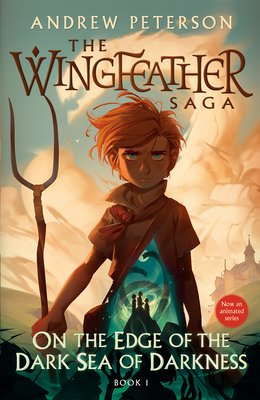
  • On the Edge of the Dark Sea of Darkness, Volume 1 of the Wingfeather Saga by Andrew Peterson
  • Ruth by Elizabeth Gaskell

Blogging

Besides the weekly Friday Fave Fives, Saturday Laudable Linkage, and book reviews, I’ve posted these since last time:

  • The First Step to Murder. Just as lust is the first step to adultery, and is a sin in itself, contempt and dehumanizing others is the first step to murder.
  • Redeemed Regrets. Regrets can haunt us even when we know we’re forgiven. But God can redeem them and use them for good.
  • The Cross Is the Measure, both of the awfulness of sin and the depths of God’s love.
  • When Stones Speak. Jesus said if people were silenced from acknowledging Him, the very stones would cry out. It turns out stones have testified of Him many times.
  • If Jesus Had Not Been Resurrected, how bleak and horrible our outlook would be.
  • What Does Jesus Pray for Us? I knew that Jesus prayed for us but never considered what He prayed for us until a book I was reading inspired a study of Jesus’ prayers.

As we change the calendar to May, we look forward to Mother’s Day, a ladies’ luncheon at church, the resuming of our writing critique group, and a long-awaited appointment.

How was your April? What do you look forward to in May?

(I often link up with some of these bloggers.)

Review: He Should Have Told the Bees

He Should Have Told the Bees by Amanda Cox tells the story of two young women whose lives intersect unexpectedly.

Beckett Walsh kept bees with her father until he died unexpectedly. Her mother had left them when Beckett was small. Though memories of her mother are hazy, her leaving sent Beckett into nightmares of monsters when she was a child and panic attacks as a young person and adult. Her father had left his job as a banker to homestead, start an apiary, and accommodate Beckett’s needs. But now he’s gone. Still, Beckett thinks she can do just fine, despite her aunt’s attempts to manage her life.

Callie Peterson grew up with an unstable alcoholic mother who went through a series of men. Now Callie has distanced herself and bought a building to start a new business making candles, lotions, etc. But the building is going to need more work than she thought. And then her mother shows up on her doorstep, claiming she’s ready to seek help. When Callie takes her to a rehab center, she’s unaware that her mother named her as the person responsible for the finances needed.

Both women get a summons about a hearing for a trust that Beckett’s father had set up, naming them both as co-owners of the farm. The two women never knew each other before. Beckett can’t fathom why her father would name this stranger a co-owner when he knows Beckett’s needs and problems. Callie doesn’t, either. But she wonders if selling the farm could help her financial problems. But doing so would oust Beckett from the only safe place she knows.

Both women try to understand why Beckett’s father named Callie in the trust. Their search leads them to secrets and connections they never knew about. Will both their lives be upended–or fulfilled?

I enjoyed this story quite a lot. It was easy to sympathize with each woman’s journey and pain.

The side characters are delightful. Beck is unexpectedly visited by a neighbor in the form of a young girl who says she is an alien. Callie’s booth neighbor in the markets where they sell their wares turns out to be a stabilizing factor in her life.

The book opens with an excerpt of a poem by John Greenleaf Whittier titled “Telling the Bees,” in which beehives are draped in black as the bees are told their keeper has died. Evidently, according to Wikipedia, this is a custom in many European countries. It was even done when Queen Elizabeth died in 2022.

At one point, Callie’s friend points out some sunbeams and says:

They’re called crepuscular rays. And they happen because of light hitting dust. It’s just ordinary, boring particulate floating all around us like it always does, and then bam, the light hits it and suddenly it’s something that makes people stop and take pictures. If that’s not a miracle, then I guess I don’t know what a miracle is (p. 54).

That becomes an underlying theme.

A few other quotes that stood out to me:

If she could stack up all the hurt in the world and sort the kind inflicted with malicious intent from the hurt inflicted by carelessness, how would the two compare? Was there really any difference when the result was the same? (p. 216).

It was a hard lesson to learn—that you couldn’t be the one to fill the holes in another person’s life. Working through dysfunctional patterns, finding healthy coping skills, and letting God heal the wounds the past left behind, those were things you couldn’t do for another person. No matter how much you wanted to (p. 251).

It’s possible for treasured things to come out of the brokenness. Even if it doesn’t happen the way any of us would have wanted. Even if it comes through loss (p. 299).

On a humorous note, it’s fun to notice a particular author’s unique repeated words. In this book and others, Amanda uses the word “scrubbed” a lot (eight times in this book)–she scrubbed her eyes, he scrubbed his hand over his face. And hearts tend to “stutter-step” when upset. And people “worry” their bottom lips.

Amanda doesn’t have end notes about the story, but there is an interview here where she discusses the book.

All in all, I’m happy to recommend this book.

(I often link up with some of these bloggers.)

What Does Jesus Pray for Us?

What does Jesus pray for us

Robert Murray McCheyne is quoted as saying, “If I could hear Christ praying for me in the next room, I would not fear a million enemies. Yet distance makes no difference. He is praying for me.”

The Bible tells us, “The former priests were many in number, because they were prevented by death from continuing in office, but [Jesus] holds his priesthood permanently, because he continues forever. Consequently, he is able to save to the uttermost those who draw near to God through him, since he always lives to make intercession for them” (Hebrews 7:23-25).

I’ve known the last verse for decades. However, it never occurred to me to wonder what Jesus prays for us until I saw the topic discussed in An Ocean of Grace by Tim Chester. He quotes a Scottish pastor of the nineteenth century, William Symington, as saying that we can assume Jesus’ prayers in heaven are similar to what He prayed on Earth.

That makes sense. I imagine He prays things for us that are beyond our imagination or consideration. But it’s logical to think that His current prayers would mirror what He prayed while here.

So what did He pray when He lived in human form on Earth?

When Jesus foretold that Peter would deny Him, He said, “Simon, Simon, behold, Satan demanded to have you, that he might sift you like wheat, but I have prayed for you that your faith may not fail” (Luke 22:31-32).

What a comfort and encouragement. Jesus knows our temptations, our weaknesses, and our enemy’s ambushes–and He prays that our faith will not fail.

In what we call Jesus’ high priestly prayer in John 17, He prays not only for the disciples He had then, but also “for those who will believe in me through their word”–us!

He prays first for God’s glory to be manifested through the Son.

Then He asks His father to keep us in His name., and later, to keep us from the evil one even as we live in this world.

Jesus pleads that we may be one, just as He and the Father are one.

He wants us to have His joy fulfilled in ourselves.

He prays that we might be sanctified in God’s word, which is truth.

And finally, He asks that we be with Him where He is, to behold His glory.

In a sense, Jesus might also be praying for all His expressed will in the Bible to be fulfilled in us, like Colossians 1:9-12 or Ephesians 3:14-21. He might include the things He taught His disciples to pray in what we call “the Lord’s prayer“: that we might reverence His name, for the coming of His kingdom, the provision of our needs, our forgiveness and forgiving, our leading, and our deliverance from evil.

But it touches my heart to think that Jesus is currently praying for me some of these same specific things He prayed when He was here. I’m sure He doesn’t pray in generalities, but for specifics. He prays as One who has been where we are, who has faced temptations as we do, who can sympathize with our weaknesses. What a boost to our faith and confidence. What a clarification of priorities. What an evidence of love.

Hebrews 7:25

(I often link up with some of these bloggers.)
Laudable Linkage

Laudable Linkage

I found several noteworthy blog posts this week:

The Good We Cannot See, HT to Challies. “I wanted to see the purpose of the suffering; at least a small glimpse. I wanted to understand even a small piece of why God allowed it. I wanted to see the man that Ezra would become because of the pain he endured. I wanted to see a piece of redemption. I wanted to experience the tangible comfort of knowing that God intended the suffering for good with good defined by me. Therein lies the trouble.”

All the Books I’ll Never Read, HT to Linda. This resonated with me so much! “Not only will I never read all the books I wish I could, but I’ll never be all the things that I want to be, or do all the things that I want to do. When this realization first hit me, I have to confess I did not roll with it well.”

What We Miss When We Skip the Prophets. “The prophetic books of the Old Testament make up 250 of the Bible’s 1189 chapters. That’s about 21% of the Bible! And I think those books are sorely neglected.”

Big Heads or Big Hearts, HT to Knowable Word. “Truth and love ought not be thought of as if they are opposites — as if the pursuit of one will automatically detract from the pursuit of the other. Even in specific situations, we shouldn’t think that we need to decide between standing for the truth and loving. We can always do both!”

Beware Toxic Servant Leadership, HT to Challies. “Sometimes, what people mean by servant leadership is not leadership at all. If I only understand leadership as deferring to others and not stepping on people’s toes, then I’m at risk of ignoring what God has called me to do. We have become so allergic to authority that anytime someone expresses any authority at all we immediately recoil. This is not good.”

Why Does John Mention That He Outran Peter to Jesus’ Tomb? HT to Challies. I don’t remember if I ever wondered about this, but I appreciate this answer.

The 15-Minute Block, HT to Redeeming Productivity. “I am obsessed with this idea of the 15-minute block. Anything and everything becomes possible when you break it down into a manageable chunk.”

Should We Capitalize Divine Pronouns? I’ve been taught all my life that capitalizing pronouns referring to God was a sign of respect to Him. But lately I’ve found several sources saying that capitalizing divine pronouns is not necessary–partly because they are not capitalized in the original languages nor in many Bible translations. I’m glad Tim categorizes this as a conscience issue. Author and editor Lori Hatcher discusses the same question in To Capitalize or not to Capitalize: Exploring the Deity Pronoun Question.

Dead Man Talking. Bob Roberts is frequent camp speaker and the founder of Kids4Truth Clubs. We attended the same church for several years. Bob had cancer a few years ago, which went into remission. But now it’s back in his liver, and the prognosis is not good. While undergoing some experimental treatments as a last effort, Bob didn’t want to “waste” his cancer. So he began a podcast with five men who have been his friends for 30+ years to discuss what God is doing in his life. The one I linked to is the third, where he discusses the first half of his “bucket list.” The first one was more general; the second one discussed friendship and the impact of the group potentially losing one member. These are available wherever one listens to podcasts and on YouTube.

If I listened to the wretched talk of proud men, I might sometimes fancy sin was not so very sinful! But I cannot think little of sin, when I look at the cross of Christ. — J. C. Ryle

Friday’s Fave Five

Friday's Fave Five

Wow, it’s hard to believe this is the last Friday of April already. I think spring has finally settled in for the duration. The dogwoods exchanged their blossoms for leaves, but it was pretty to watch the trees raining pink petals for a few days.

It’s time for a weekly recounting of blessings with Susanne and friends at Living to Tell the Story. Through highs and lows, good times or bad, there are always things to be grateful for.

1. Easter Sunday church service. We had more songs than usual, plus different individuals read parts of the gospel accounts of Jesus death and resurrection. Very moving.

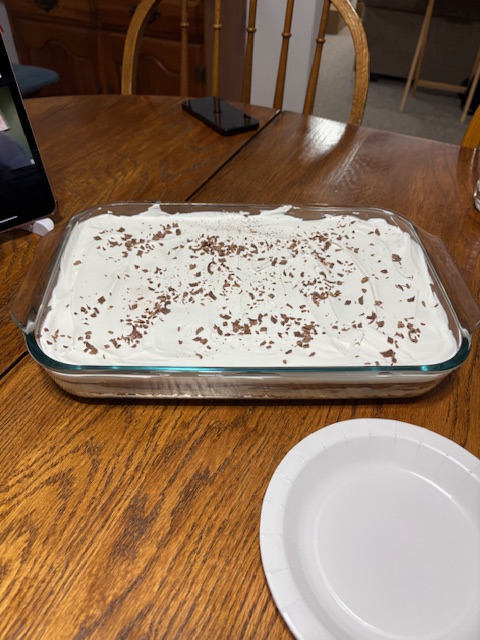
2. Easter celebration with the family. To accommodate Jesse’s third shift work and sleep schedule, we got together for Easter dinner rather than lunch. That actually worked out nicely. We had the usual favorites–ham and cheesy potatoes and salad, along with “resurrection rolls.” Mittu made a chocolate mousse cake. And Jim conducted the Easter egg hunt for the guys with cash-filled eggs. 🙂

Chocolate mousse cake

3. Our own Easter baskets. I don’t make Easter baskets for Jim or myself, though I do keep back some candy for us. This year, Jason and Mittu made one for us! Well, for me. They got Jim an off-brand Lego-type set of a camper van.

Lego-type camper

My basket–or bucket:

Easter bucket
Easter bucket

4. Surprise lunch. Since my kids were old enough to make a sandwich or run the microwave, I have not usually cooked on Sunday evenings. We each fend for ourselves with leftovers or whatever we want to eat individually. But since we were having our big meal at dinnertime Easter Sunday, Jason and Mittu made a heat-and-eat Sunday lunch for us and brought it over Saturday night. That was so thoughtful and helpful.

5. Thinking alike. Jim ran a time-sensitive early-morning errand for me on Monday. On his way back, I texted, “Chick-Fil-A biscuit?” He texted back, “Already got it.” 🙂

That’s our week–how was yours?