Unknown's avatar

About Barbara Harper

https://barbarah.wordpress.com

Yielding

I’ve been going through Steve Pettit’s book Walking in the Spirit: A Study Through Galatians 5 recently, and it brought back to mind this post I wrote about 6 years ago. Sometimes I need to remind myself of past lessons. I thought I’d share it again here as well, with a little tweaking.
______________________________________________________________

I had finished reading Romans several days ago and Galatians this morning, and truths from both of them were in my thoughts.

There are two verses in Romans 6 that talk about yielding:

“Neither yield ye your members as instruments of unrighteousness unto sin: but yield yourselves unto God, as those that are alive from the dead, and your members as instruments of righteousness unto God” (Romans 6:13).

“Know ye not, that to whom ye yield yourselves servants to obey, his servants ye are to whom ye obey; whether of sin unto death, or of obedience unto righteousness?” (Romans 6:16).

While I understood and agreed with those verses, there was one aspect that troubled me in regard to my “besetting sins,” and that was the word “yield.” I was thinking of it as a synonym for “let” — in other words, don’t let yourself sin, but let yourself do right. “Let” seemed appropriate for yielding to sinful impulses — it is all too easy to let the flesh do what it wants to do — but it seemed I couldn’t just “let” myself do right. I rather needed to make myself do right, often with a lot of prayer and struggling with the flesh.

Tied in with those verses from Romans was this one from Galatians 5:16-17 that I just read this morning:

“This I say then, Walk in the Spirit, and ye shall not fulfil the lust of the flesh. For the flesh lusteth against the Spirit, and the Spirit against the flesh: and these are contrary the one to the other: so that ye cannot do the things that ye would.”

I thought of the word “walk” in terms of taking a series of steps, and walking in the Spirit as taking those steps under the Holy Spirit’s control and direction while verse 17 acknowledges that conflict between flesh and Spirit.

A picture came to my mind of coming up to a yield sign in traffic. What do you do when you see a yield sign? You put on the brakes and you let the people in the other lane have the right of way.

And suddenly it became clear: the whole idea of yielding to God involved stepping on the brakes of my flesh (only made possible because of His gracious enablement) and letting Him have His way, not just in the big decisions of life, but my everyday walk and choices.

I don’t know if that distinction helps or makes sense to anyone else, but it was a light bulb moment for me.

Have Thine own way, Lord! Have Thine own way!
Thou art the Potter, I am the clay.
Mold me and make me after Thy will,
While I am waiting, yielded and still.

Have Thine own way, Lord! Have Thine own way!
Search me and try me, Master, today!
Whiter than snow, Lord, wash me just now,
As in Thy presence humbly I bow.

Have Thine own way, Lord! Have Thine own way!
Wounded and weary, help me, I pray!
Power, all power, surely is Thine!
Touch me and heal me, Savior divine.

Have Thine own way, Lord! Have Thine own way!
Hold o’er my being absolute sway!
Fill with Thy Spirit ’till all shall see
Christ only, always, living in me.

– Ad­e­laide A. Poll­ard

(Photo courtesy of FreeFoto.com.)

Laudable Linkage

Here are some good reads from the past couple of weeks:

How to Enjoy Every Moment When Not Every Moment Is Enjoyable. If I rated blog posts, this would be 5 stars. Though this is primarily from the perspective of a mom with young kids, it really spoke to me about taking care of my mother-in-law. Quote: “Not every stage is rainbows and flowers. Some stages are a ‘pouring out’ of yourself.”

3 Things to Consider Before That Next Big Sin.

I Can Imagine. I don’t think I had ever made this connection before. If I can use my imagination to understand how hobbit, rabbits, soldiers, etc., feel in books, that same imagination can help me in understanding what my children think and help them in relating to each other.

The Most Overlooked Characteristic of Who You Want to Marry.

The Crucial Importance of Stay-at-Home Wives – not just moms. HT to Challies.

10 Free Thanksgiving Printables, seen on Pinterest. I especially like the leaf made of words.

Also seen on Pinterest:

prayer

Happy Saturday!

Friday’s Fave Five

FFF fall backgroundIt’s Friday, time to look back over the blessings of the week with Susanne at Living to Tell the Story and other friends.
Here are some of my favorite parts of the week:

1. A relatively quiet week after a couple of busy ones.

2. Getting some odds and ends tasks done – those little things you see but can’t tend to at the time. It was good to get several of those taken care of this week. Plus I was able to make definite plans for a project that has been on the back burner for years. I hope to actually start on it next week if not before.

3. A scenic route. Normally I am not a fan of going for a drive just to do so. The car is not where I like to spend time, and I like to get from Point A to Point B in the shortest time possible. But in my errand running yesterday my GPS app decided to take me on some back roads I had never seen before. About the time I began to seriously wonder where I was, I figured I was almost at the end of the route, and if I wasn’t where I was supposed to be, I’d reconfigure it. I did end up at the right place, both times, though I am still not sure how I got there! But the timing and everything worked out and the drive was truly lovely. Though some trees are losing leaves, there is still a lot of beautiful color to see. In a couple of hundred yards on one road it seemed to be raining leaves.

4. Running errands on a perfect fall day. Some of my favorite stores (Joann’s, Michael’s, Tuesday Morning) are far enough away that I have to make special plans to get over there and then try to hit all three. As it turned out, I didn’t find what I needed at any of them, but I still enjoyed the outing, along with a stroll through Babies R Us! 🙂 It was a windy, blustery day, cool but not enough to need a sweater, my hair was flying and leaves were swirling every time I got out of the car. I find that kind of weather invigorating!

5. The privilege of voting…and the fact that most of the elections I was a part of concluded the way I wanted. 🙂

My “blustery day” reminded me of one of my favorite childhood videos, Winnie the Pooh and the Blustery Day. My kids loved Pooh when they were little, and I can’t wait to show these to Timothy! Here’s an excerpt:

Happy Friday!

A revival of what?

Some days ago I turned on the radio to catch the news at noon, and caught the last few minutes of the prayer time my Christian radio station has right before 12:00. As I listened, I heard the announcer pray for “a revival of Biblical values” in our society. I stopped in my tracks and thought, “What?”

50sI’m sure he meant well, and I am pretty sure I know what he meant, but that request struck me as a little off-base. I had the same reaction as I do when people speak of “reclaiming our culture for Christ.” I know they don’t mean this, but it brings to mind a 50s-style era where people were at least fairly decent in their lifestyles and even to some extent “God-fearing.” The problem is you can have a pleasant culture exactly like that with most of its members totally lost and on their way to hell.

I don’t think we’re called to reclaim cultures or promote Biblical values without the underlying base of trying to introduce people to the Lord. He has called us to make disciples. That kind of change comes from within and then influences a person’s actions which will then result in a change of values. Trying to promote Biblical values without a heart change is coming at things from the outside. It may make a person easier to live with, but it doesn’t change their destiny or character. But in this postmodern era, especially, Biblical values don’t make sense to someone without a Biblical heart.

I don’t mean that Christians should not be active in government. I’ve been listening to bits of Stephen Davey’s message “Stay on Task” (in other places it appears to be named “I Pledge Allegiance, Part II”) on the radio. I agree with the general thrust of his message that “The mission of the church is not moral reformation, but spiritual transformation” and “Our true battle is against the kingdom of darkness which has blinded the minds of the world to believe that God is not watching.” (It’s a great message – I encourage you to listen to or read it). On the other hand, just because Jesus or the apostles never tried to organize voters or push for campaign issues doesn’t mean it is wrong to do so. Unlike Bible times, we do have a government in these days where we can use our voice. We should first of all pray “For kings, and for all that are in authority; that we may lead a quiet and peaceable life in all godliness and honesty” (I Timothy 2:1-3). And personally I believe we should at least vote, as intelligently as possible. To be given such a gift at this time in history and not use it would be terribly negligent. Some might be called to do more, as described in the article “Is Voting Enough?” I think it is good for Christians to be involved in government as in every other segment of society, to be salt and light there. Since our government can be influenced by our voices, I am grateful for some who keep on top of issues, stand for the right, keep voters informed, and voice our concerns to our representatives. I don’t believe our ultimate hope is in government, but that doesn’t mean it isn’t a tool in God’s hands that can be used for good. Proverbs 21:31 says, “The horse is prepared against the day of battle: but safety is of the LORD.” God didn’t tell people to abandon their horses, but He told them rather to remember that ultimately safety is of Him. Our trust is in Him, not in any tools, even though He may use various tools to accomplish His objectives.

And in past history He has done so without a conservative culture or a representative form of government. I am extremely thankful for both of those and I hope we keep them. But the church can and should thrive with or without them. In Paul’s time, dictators were in power, yet the church grew in numbers and in character.

While we can and should use the tools at our disposal, those pursuits should never take priority over the basics of what God has called us to: being salt and light wherever we are, showing His love and grace to people, and telling them about the only God and Savior who alone can save them and meet their needs.

The Rupture of Self

From an old e-mail devotional from Elisabeth Elliot:

Sometimes our prayers are for deliverance from conditions which are morally indispensable–that is, conditions which are absolutely necessary to our redemption. God does not grant us those requests. He will not because He loves us with a pure and implacable purpose: that Christ be formed in us. If Christ is to live in my heart, if his life is to be lived in me, I will not be able to contain Him. The self, small and hard and resisting as a nut, will have to be ruptured. My own purposes and desires and hopes will have to at times be exploded. The rupture of the self is death, but out of death comes life. The acorn must rupture if an oak tree is to grow.

 It will help us to remember, when we do not receive the answer we hoped for, that it is morally necessary, morally indispensable, that some of our prayers be denied, “that the life of Jesus may be plainly seen in these bodies of ours” (2 Cor 4:11 JBP). Then think of this: the agonized prayer of Jesus in the garden went unanswered, too. Why? In order that life–our life–might spring forth from death–his death.

~ Elisabeth Elliot, A Lamp For My Feet

 Verily, verily, I say unto you, Except a corn of wheat fall into the ground and die, it abideth alone: but if it die, it bringeth forth much fruit.
John 12:24

Public domain image, royalty free stock photo from www.public-domain-image.com

(Photo courtesy of Public Domain Images.)

Friday’s Fave Five

FFF fall backgroundIt’s Friday, time to look back over the blessings of the week with Susanne at Living to Tell the Story and other friends.

Here are some of my favorite parts of the week:

1. A good report. I mentioned last week that a routine colonoscopy showed everything was fine except for one little polyp which was removed and looked to be benign. I got the official word back this week that it was indeed benign and I don’t have to deal with colonoscopies for another 10 years. Yay!

2. Oven meals. I think I say that every year about this time. 🙂 I don’t use the oven much at all during warmer weather, because the AC just can’t keep up. So adding some of those meals that take 45-60 minutes in the oven revives the meal-planning a bit, and I enjoy popping something in and then having an hour or so to do something else.

3. Pumpkin carving night. Jason and Mittu made grilled cheese sandwiches and tomato soup, and then we carved our pumpkins.

Pumpkins

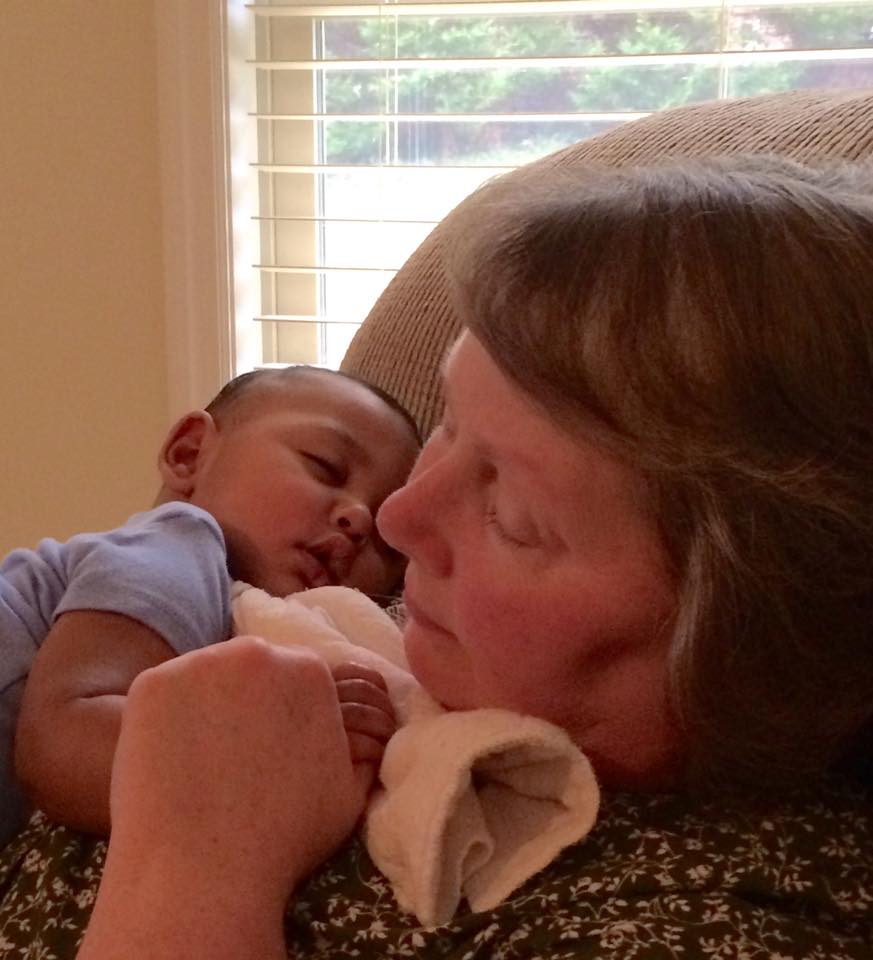
And spending time with this little punkin is always a fave. 🙂

photo(3)

He got a good report from the physical therapist this week that he is right on target in his development.

4. My dear husband has been on a roll the last couple of weeks. I neglected to mention last week how much I appreciated his taking care of the rest of the household while I was out of commission preparing for the colonoscopy. During his day off he caulked the area between the kitchen counters and backsplash and last weekend he painted a door and cleaned our bathroom. We have very hard water in our area and I had been scrubbing at some spots to no avail, but he got them with Magic Eraser and Lime-Away (and I am sure more elbow grease than I have 🙂 ). I don’t think our bathroom has looked this good since we moved in. He works so long and hard, I hate for him to have tasks to do at home as well, but I so appreciate them – and him!

5. The end of the 31 days writing challenge. It has been enjoyable, but it also took more time and work than I’d thought it would. It will be nice not to feel like I *have* to post every day. 🙂 The 31 Dayers Facebook group added a lot to the enjoyment. I wish I could have kept up with several of the posters there – but there is only so much time in the day to read blogs, even though they contain good stuff. But I did enjoy what I did have time to read.

Happy Friday!

Why Read Biographies?

You would think a post like this would come at the beginning of a series titled 31 Days of Inspirational Biography rather than the end. That would have been more logical – but I didn’t think of it then beyond the few remarks in my introductory post. However, having been steeped in biographies all this month, I have been reminded of several good reasons to pursue them.

I’ve always been interested in people’s stories, in what makes them tick. The very first book I remember checking out at my school library in first or second grade was a biography of Martin Luther (that may not have been the first book I ever actually checked out, but it is the first I remember). I’m sure I read more through my school years, but it was at college that an older woman spoke to a group of us involved in praying for missionaries about her years of reading missionary biographies and the benefit they were to her. That got me started reading Christian and missionary biographies, and that practice was reinforced at the first church we attended after we were married, where a part of the monthly ladies’ meetings included a book report by one of the officers from one of the books in the group’s lending library. So I have been purposefully reading biographies for some 35+ years.

The first benefits that come to mind from reading biographies are the same first benefits gained from reading anything: learning about other places, times, cultures, people, gaining empathy for the people in the story, and understanding how other people think and react.

While you can derive these benefits even from fiction (I have another post in the works about the benefit of reading fiction), biographies and “true life” stories have the advantage of being real. Though spiritual truth can be conveyed even in fiction, in a biography there is no arguing with how the story should have ended or what directions the plot should have taken. If you believe in God, as I do, part of reading a biography is tracing His hand in people’s lives, even, perhaps especially, when the circumstances are different from what we would have thought they would or should be. Though I primarily read Christian biographies, I enjoy some secular ones, and it is interesting to see not only what has influenced them, but they also often have some brush with spiritual truth (Robert Burns‘ story, for example).

We learn history for a number of reasons, among them: to better understand our current times, to appreciate our heritage, to avoid repeating mistakes. There are heroes in our national history who inspire us to a love of country and duty and courage. There are heroes of our spiritual heritage who inspire us in love and dedication to God and to greater faith in remembering that the God they served and loved and Who provided for and used them is the very same God we love and serve today and Who will provide for and use us. Though times and culture change, human nature at its core doesn’t change much, and God never changes.

For me the primary  reason for reading Christian biographies is to follow others as they follow Christ, as Paul said. No, they won’t be perfect, but we can learn from their mistakes just as we learn from David’s or Peter’s in the Bible. Missionaries would never want to be thought of as super-Christians or a step above anyone spiritually, but by and large there usually is a seriousness and maturity in their walk with the Lord, some wrestlings and overcomings, if they have gone through everything they need to in order to get to a mission field. Even though I am not called to “the” mission field (it’s my belief that every Christian is called to “a” mission field, whether on foreign soil or in their own homes and neighborhoods), I can still learn much from what Christians who have gone before me have learned and experienced.

Some people, including a former pastor of mine, don’t like to read older biographies because they made the subjects seem almost too good to be true. Even Isobel Kuhn, whose writing I love, put Amy Carmichael’s books, which I also love, back on the shelf because she thought she was too high and unattainable (I think Amy would either be highly dismayed or would laugh that anyone thought such about her). Admittedly some older Christian biographies can seem unrealistically perfect. I think there are several reasons for this: I think a “warts and all” type of biography was not the fashion in older times like it is today, even in secular biographies, and since Christians are generally instructed to give each other the benefit of the doubt, love each other, overlook each other’s faults, and not gossip or “backbite,” I think that would come into play in writing a biography as well. Yet the Bible shares people’s faults and sins in a realistic and not malicious way. I think we relate to people better when we can see that they are as human as we are, but they acknowledge their faults and are growing in sanctification. I think many of them would probably blush to read the glowing reports people wrote after their deaths.

Let me share, as well, some points to keep in mind when reading Christian biographies.

When reading any book, of course we filter everything through our own frame of reference. But an author can’t possibly know what every reader’s frame of reference will be even in her own time, much less hundreds of years later. So it is the reader’s responsibility to try to figure out the author’s frame of reference or at least to give the benefit of the doubt.

Different times and cultures will yield different practices. It’s fairly common in older missionary biographies for them to speak of servants. That doesn’t mean they were living upper class Western lifestyles while ministering to more primitive people. In more primitive cultures especially, sometimes they would hire help in the kitchen or for certain household tasks so the couple, particularly the wife, could teach or minister in other ways. (Even in modern times I had a missionary friend who mourned over having to spend so much time in the kitchen instead of  in ministerial pursuits: if that is so today, imagine what it would have been like 100+ years ago). Too, in some cultures where becoming a Christian could cost someone their job or family standing, sometimes missionaries would hire them in order to help them out.  Today they might say they hired help or employed someone; likely no one would use the word “servant” today. Another example would be schooling situations. In a lot of older biographies, missionaries sent their kids off to a mission school at a fairly young age because there was no appropriate school available and home schooling as it is known today was unheard of.  Often it was agonizing for both parents and children, and some stories share how God gave grace for the parents to cope. We can’t really hold it against parents then for sending their kids off if that’s all they knew to do at the time. I think the hardships involved as well as the realization that educating and raising their kids was a part of their ministry and testimony led to the changes we see today, where most missionaries home school and some send their kids to public schools in town. But we can understand that God could give grace to people who sent their kids away to school even while that is not a choice most of us would make today.

Even in the more glowing missionary books, you won’t agree with everything. You likely wouldn’t agree with everything even in a biography of your best friend or closest loved one. No two of us is going to agree on every little point of faith and practice. One of the things that stood out to me in 50 People Every Christian Should Know by Warren Wiersbe is that a lot of those people would be on opposite sides of certain fences from each other, yet God used them all. That doesn’t mean the fences and sides don’t matter: each of us is responsible to search out issues and take the stands we feel most faithfully represent Scripture. There are fundamental or foundational issues on which we cannot budge, but there are some beliefs and practices where we can give each other room to differ.

On the other hand, there are those foundational issues to consider. If someone is preaching a false gospel which is going to lead his followers to hell, we need to be aware of that and even warn people about it even though some of what they might say sounds compatible with Scripture, which tells us to “rebuke them sharply,” “mark them and avoid them,” “receive him not. ” Even the devil uses Scripture and appears as an “angel of light.”

I think to sum up what I have been verbosely trying to say in the last few paragraphs, we need to be discerning but not critical.

On the other hand, you might find practices you want to emulate, but don’t feel you necessarily need to change everything with every biography you read. In my early years of reading them, I might be inspired by how one had their time in the Bible, and in the next book I’d see a different way and wonder if I should try that. Feel free to try some of those things and glean what works best for you, but don’t feel tossed about or feel you have to do something just like they did.

Instruction. Encouragement. Inspiration. Illustration of the Christian life in action – overcoming difficulties, growing, seeking God’s wisdom, help and grace. Comfort from that which has comforted others. Warning from their mistakes. These are among the many reasons I enjoy reading Christian biographies.

I’ve often said that reading Christian biographies has been the most influential impact in my Christian life, next to the Word of God itself. I’ve posted this poem before, discovered by an unknown author in the first pages of Rosalind Goforth’s Climbing, but I post it here again as it embodies what Christian biographies have been to me:

Call Back!

If you have gone a little way ahead of me, call back-
It will cheer my heart and help my feet along the stony track;
And if, perchance, Faith’s light is dim, because the oil is low,
Your call will guide my lagging course as wearily I go.

Call back, and tell me that He went with you into the storm;
Call back, and say He kept you when forest’s roots were torn;
That when the heavens thunder and the earthquake shook the hill.
He bore you up and held where the very air was still.

O friend, call back, and tell me for I cannot see your face;
They say it glows with triumph, and your feet bound in the race;
But there are mists between us and my spirit eyes are dim,
And I cannot see the glory, though I long for word of Him.

But if you’ll say He heard you when your prayer was but a cry,
And if you’ll say He saw you through the night’s sin-darkened sky-
If you have gone a little way ahead, O friend, call back-
It will cheer my heart and help my feet along the stony track.

Robert Murray McCheyne said of Jonathan Edwards, “How feeble does my spark of Christianity appear beside such a sun! But even his was a borrowed light, and the same source is still open to enlighten me.” May we learn from these “borrowed lights” to seek the same Light they did.

photo 3(2)

For the 31 Days writing challenge, I have been sharing 31 Days of Inspirational Biography. You can find others in this series here.

(Sharing with Literary Musing Monday)

31 Days of Inspirational Biography: A Short List of Several

photo 3(2)

For the 31 Days writing challenge, I am sharing 31 Days of Inspirational Biography. You can find others in the series here.

As we near the end of the 31 Days writing challenge, I find I have many more inspirational biographies I’d like to share than days left in the month, so I’d like to share a short list of the ones I didn’t get to with a few comments on each.

Last year I wrote about 31 Days of Missionary Stories and ended with a list of the favorites I had read over some 37 or so years. In addition to those, plus the ones I have listed for 31 Days of Inspirational Biography this year, I can recommend these (those with links are ones I have reviewed and linked back to):

Kitty, My Rib by E. Jane Mall is story of the wife of Reformer Martin Luther. He was a former priest, she was a former nun. She was a well-suited complement to his personality.

Ida Scudder: Healing Bodies, Touching Hearts by Janet and Geoff Benge. The Benges actually have a series of biographies aimed primarily at younger people, but I have enjoyed the ones I have read. Ida was a daughter of a missionary doctor in India and had absolutely no plans of being a missionary herself until one night when three different women died whom her father could have helped but who were not allowed to be seen by a male doctor. She eventually became a doctor herself and went back to India.

Bruchko: The Astonishing True Story of a 19-Year-Old American, His Capture by the Motilone Indians and His Adventures in Christianizing the Stone Age Tribe by Bruce Olson. I really wanted to talk about this one this month, but it has been too many years since I read it and I did not have time to reread it this month. I do remember thinking he was perhaps a little headstrong, but overall it was a great book.

Dorie, The Girl Nobody Loved by Dorie N. Van Stone. It has been years since I’ve read this one, too, and I’d like to reread it some time, but the story of a grueling, abusive childhood overcome by God’s grace was very touching.

Gifted Hands by Ben Carson. I’m not sure if Dr. Carson is a Christian, but this is a great book about overcoming difficulties in childhood and changing direction in life. He grew up in poverty, did not do well in school, and had a horrible temper, but ended up being a pioneering neurosurgeon.

The Valley Is Bright by Nell Collins, the story of her salvation, her training as a nurse and plans to go to Africa, and the disruption (as it seemed) of her life by a serious cancer diagnosis. Part of her testimony is here.

Walking From East to West: God in the Shadows by Ravi Zacharias. You may have heard his radio broadcasts or benefited from his apologetics ministry. This is the story of how he came to the Lord and some of the difficulties in doing so for those from an Eastern mindset.

The God I Love by Joni Eareckson Tada. I’d also recommend When God Weeps by Steve Estes and Joni, not a biography but a book about why God allows suffering, and Joni and Ken: An Untold Love Story by Ken and Joni Eareckson Tada.

The Titanic’s Last Hero about John Harper, who told people about the Lord while clinging to debris from the ship. A testimony of him is here.

Same Kind of Different As Me by Ron Hall and Denver Moore. How one man’s reluctant service in a homeless shelter led to a lifelong friendship. This was riveting.

Heir to a Dream by Pete Maravich. I mentioned in an earlier post that I wasn’t really a sports fan, but I loved this autobiography of “Pistol Pete.” His dad groomed him to play basketball, even tucking a basketball into his bed instead of a teddy bear. He achieved great success and acclaim, but it was all empty until he found Christ. I first heard a bit of his testimony on some news show – 20/20, I think – and he seemed so genuine that I had to read the book. I could not find that interview online, but I did find this one:

The Autobiography of George Muller. Wonderful testimony of his rescue from a debauched lifestyle to an exercise of faith in supporting orphanages by depending on God alone.

Mistaken Identity by Don & Susie Van Ryn, and Newell Colleen & Whitney Cerak. Another riveting story of two girls in a horrific accident, and the surviving one was identified as the other.

In Trouble and In Joy by Sharon James, short biographies of Ann Judson, Margaret Baxter, Ann Steele, and Frances Ridly Havergal.

Faithful Women and Their Extraordinary God by Noel Piper, short biographies of Sarah Edwards, Gladys Aylward, Lilias Trotter, Esther Ahn Kim, and Helen Roseveare.

Thunder Dog: The True Story of a Blind Man, His Guide Dog, and the Triumph of Trust at Ground Zero by Michael Hingson

50 People Every Christian Should Know: Learning From Spiritual Giants of the Faith by Warren Wiersbe

Infinitely More by Alex Krutov, about an abandoned orphan in Russia whom God brought to Himself.

A Severe Mercy by Sheldon Vanauken, about his relationship with his wife, their conversion after originally having no interest in Christianity, her cancer, and his letters to C. S. Lewis.

The Reel Story by Larry D. Vaughn. Wonderful story about how someone outside the “bubble” of the conservative Christian world ended up a Christian. Larry was a film buyer, and his pastor and almost everyone else said he should continue in his job to be a witness to the film community, but Larry felt his conscience pricked and provoked enough that he finally had to leave the business.

The Hiding Place by Corrie ten Boom about her family’s involvement in helping to hide Jews during WWII and the consequences.

More Precious Than Gold, the Fiery Trial of a Family’s Faith by John and Brenda Vaughn. A garage fire had devastating consequences for Mrs. Vaughn and her young daughter. This book details the circumstances and how God helped the family through this trial.

As I have shared biographies that have inspired me this month, I tried to include some from people of various walks of life and some that were older as well as some modern ones. I hope you’ve found something to inspire you in some of these posts as well.

Tomorrow I want to write about “Why Read Biographies.” I know, a post like that should probably have come at the beginning of this series. I didn’t think about it then, beyond the remarks in my introductory post, but as I have been steeped in biographies this month, some thought came to mind I thought I’d share.

31 Days of Inspirational Biography: A Devout Muslim Encounters Christianity

SeekingIn Seeking Allah, Finding Jesus: A Devout Muslim Encounters Christianity Nabeel Qureshi first gives a window into a loving and devout Muslim home, with all its practices, disciplines, and teachings, as well as a peek into the perspective of growing up Muslim in a non-Muslim culture.  Wanting to be a faithful representative of Islam, having been taught critical thinking in school and having a mind geared for it, he often turned the arguments of some of his Christian classmates on their heads, bringing up aspects they had not thought about before and were not ready to defend.

In college God brought to him “an intelligent, uncompromising, Non-Muslim friend who would be willing to challenge” him, someone who was “bold and stubborn enough” to deal with him but also someone he could trust “enough to dialogue…about the things that mattered to [him] the most.” Nabeel and his friend, David, were both on the forensics team and knew how to get to the heart of an argument and draw out and refute key points. For the most part they did this with each other’s worldviews good-naturedly, but when a given topic became too heated, they’d table it for a while. Muslims particularly have trouble with the reliability of the Bible, the deity of Christ, the Trinity, and the connection between Christ’s death on the cross and how it atoned for others’ sins. For three years Nabeel studied the Bible and its claims and others’ claims about it, fully confident that he’d be able to disprove those claims, and then to study the history of Mohamed and the claims of the Quran, fully confident that Islam would be justified. Though he was obviously biased toward the Quran, he really wanted to know the truth. He discovered the Bible’s claims were justified and Islam’s to be on shaky ground.

For some time he resisted acting on this knowledge. Being a Muslim was a matter of identity as well as religion: his whole life, everything he had always believed, his relationship with his family and community, everything would be turned upside down if he became a Christian. Yet he could not continue on, knowing what he now knew. In one of the most beautiful and touching passages in the book, he was seeking time to mourn before making the decision he knew he had to, and he opened the Bible for guidance this time, not simply to look for information to refute. He came to Matthew 5:4, 6:

Blessed are they that mourn: for they shall be comforted.

 Blessed are they which do hunger and thirst after righteousness: for they shall be filled.

Nabeel writes further:

There are costs Muslims must calculate when considering the gospel: losing the relationships they have built in this life, potentially losing this life, and if they are wrong, losing their afterlife. It is no understatement to say that Muslims often risk everything to embrace the cross.

But then again, it is the cross. There is a reason Jesus said, “Whoever wants to be my disciple must deny themselves and take up their cross and follow me. For whoever wants to save their life will lose it, but whoever loses their life for me and for the gospel will save it” (Mark 8:34-35).

Would it be worth it to pick up my cross and be crucified next to Jesus? If He is not God, then, no. Lose everything I love to worship a false God? A million times over, no!

But if He is God, then yes. Being forever bonded to my Lord by suffering alongside Him? A million times over, yes!

All suffering is worth it to follow Jesus. He is that amazing.

I feel I must comment on one aspect of the story that I questioned at first and I am sure other readers might as well: When Nabeel mentioned early on being “called to Jesus through visions and dreams,” I admit I inwardly winced and wondered what kind of story I’d be reading. For reasons too long to go into here, I am of those who believe that once God gave us His completed Word in writing, then dreams, visions, tongues, and the like fell away as unneeded.  The few modern instances I have ever heard or read of that seemed most in line with Bible truth were in cultures which didn’t have the Bible, often didn’t have a written language at all. Another problem with relying on dreams Nabeel discovered himself: one questions what it really means (his Muslim mother and Christian friend had completely opposite interpretations for what Nabeel’s dreams meant), wonders how much was due to wishful thinking, asks “Could I really hinge my life and eternal destiny on a dream?” etc. If that’s all he had to go on to become a believer, I would question what he was really trusting, but these dreams came after years of intense searching and study. In an appendix by Josh McDowell on this topic, he states, “Dreams and visions do not convert people; the gospel does,” but he explains, “In many Muslim cultures, dreams and visions play a strong role in people’s lives. Muslims rarely have access to the scriptures or interactions with Christian missionaries.” As in Nabeel’s case, “the dreams lead them to the scriptures and to believers who can share Jesus with them. It is the gospel through the Holy Spirit that converts people.”

One of many passages that stood out to me was in the chapter “Muslims in the West,” which described how Muslims view the West and Christians and, because they think both have corrupting influences and Westerners they are against Islam, they tend to keep to themselves. “On the rare occasion that someone does invite a Muslim to his or her home, differences in culture and hospitality may make the Muslim feel uncomfortable, and the host must be willing to ask, learn, and adapt to overcome this. There are simply too many  barriers for Muslim immigrants to understand Christians and the West by sheer circumstance. Only the exceptional blend of love, humility, hospitality, and persistence can overcome these barriers, and not enough people make the effort.”

I didn’t agree with everything Nabeel’s Christian friend said in the section about the Bible, in regard to believing some sections in the Bible were added later and not part of the original canon, but I do acknowledge that some do believe that.

There are multiple good aspects of this book: the window into another culture and mindset and the understanding of the difficulties a Muslim would have in coming to Christianity; the example of David and other friends who shared truth kindly and politely rather than belligerently or condescendingly, who genuinely cared about Nabeel as a friend rather than a “project”; the  wealth of information Nabeel found and shared from his studies which give a valuable apologetic (supplemented by several appendices>); and the touching yet agonizing conversion of a soul truly hungering and thirsting after the one true God.

(Reprinted from the archives. I hope regular readers will forgive my doing so with so recent a post. I was going to just summarize but then didn’t feel I could leave anything here out.)

photo 3(2)

For the 31 Days writing challenge, I am sharing 31 Days of Inspirational Biography. You can find others in the series here.