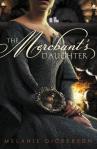
Author Adam Blumer writes edge-of-your-seat suspense infused with Biblical principles. His new book, The Tenth Plague, will be released as an e-book on January 29. I’ll have more to say about it then, but meanwhile, if you’d like to have a chance to win a copy of The Tenth Plague or a physical copy of his first book, Fatal Illusions (linked to my review), go here or click on the graphic.
Adam discusses the book here, and you can read an excerpt of The Tenth Plaguehere.
Welcome to Friday’s Fave Five, hosted by Susanne at Living to Tell the Story, in which we can share five of our favorite things from the last week, wonderful exercise in looking for and appreciating the good things God blesses us with. Click on the button to learn more, then go to Susanne’s to read others’ faves and link up your own.
It’s been a better week for us than the last couple of weeks have been, though we’re still heavy-hearted and concerned for a niece’s fiance who was discovered to have multiple tumors and is suffering through a heavy regime of chemotherapy this week and will be for weeks to come. The ultimate prognosis is good, the doctor says, but they’re going to have an awful time of it through treatment. Prayers are always appreciated!
The faves for this week are small ones, but they do lighten and encourage.
1. Thoughtfulness. My husband had to pick up Chick-Fil-A biscuits for a meeting at work, and time was tight between the time they opened and the time he had to be at work, but he still stopped by the house and dropped off chicken biscuits for Jesse and me.
2. Filters. When my oldest son was here he showed me how to set up filters for gmail. That has been a great help, especially for sales-related ones (coupons for the pizza place, fabric shop, etc.) I can set them to go into a folder without them cluttering up my e-mail and then look at them when I want to.
3. Hand-written notes, both sending and receiving them.
4. Downton Abbey. Yes, I’ve gotten on the bandwagon. 🙂 I was discouraged from doing so, thinking I’m 3 seasons behind and it would take ages to catch up, but then I saw each season was only 7-8 episodes long. I’ve seen some episodes through Netflix and some through the PBS site, but thanks to Lisa for sharing this link to stream the episodes (The “Behind the Drama” special was really good), and also for the warning that there is a pretty bad scene in the first episode, but thankfully nothing like that has come up again so far. I was disappointed that it seemed a little soap-operaish at first, but I liked the historical aspects, especially when WWI and the Spanish flu hit. But according to the author in the “Behind the Drama” special, what I thought was the most soap opera-like one of all about the Turk was actually based on a true story. Truth is stranger than fiction sometimes!
5. A cozy, warm shelter. Our area is being hit with an ice storm with predictions now of up to a 1/2″ of ice before it’s over. I’m thankful to have a safe place to stay and pray for those who don’t.
Hope you’re having a safe and warm weekend wherever you are.
I was talking with a friend about the upcoming Laura Ingalls Wilder Reading Challenge hosted here in February (more information is here), and she mentioned that she wanted to participate but would like to read something other than the Little House books. So I thought I’d share some of those titles for anyone else seeking that kind of information as well.
As far as I know, the only books that Laura wrote as books are the nine Little House ones, as well as her first book titled Pioneer Girl, (which is not the same thing as a biography of her by the same title) which she and her daughter, Rose, later reworked into the Little House series. But there are a few books of her writings compiled and published after her death. Those are:
On the Way Home, a diary of her move with her husband and daughter in a covered wagon from South Dakota to Missouri.
West From Home, letters Laura wrote to Almonzo while visiting their daughter in San Francisco, where she visited the World’s Fair.
A Little House Traveler contains the above two books plus the previously unpublished The Road Back, about the first trip she and Almonzo took back to De Smet, where Laura grew up and where they met.
A Little House Sampler, stories and writings of Laura as well as of Rose Wilder Lane, compiled by William T. Anderson.
There may be some other “compilation” type books, but these are the ones I know of. I have only read the one compiled by Stephen Hines so far.
Laura’s daughter, Rose Wilder Lane, wrote Let the Hurricane Roar (also known as Young Pioneers) about her grandparents’ “prairie life,” I believe before the Little House books were written or planned. Laura didn’t start writing until in her 60s, if I remember correctly. Another of Rose’s prairie-based books is Free Land: I am not sure if that one was specifically based on her family’s story or not. I have not read either of these but I have Let the Hurricane Roar on hand and hope to read it next month. These books are written for adults, while Laura’s were written for children. Rose wrote a number of other books: she was more well-known as a writer than her mother until the Little House books caught on: then Laura’s fame surpassed hers. There is disagreement in scholarly circles as to how much of the Little House books was actually written by Rose. Rose insisted they were all her mother’s work, but it seems likely that Rose would have shaped and edited them to some degree. Those who have read more of Roses’s writing seem to feel that her style is so different from that of the Little House books that they can’t believe she would have been the main writer behind them. That’s what I like to think, but I suppose we’ll never know for sure.
Some years ago Roger Lea MacBride published a series of books based on Rose’s childhood. When I first saw them, I didn’t realize they were about Rose and I was miffed that someone was seeming to horn in on the Little House fame by trying to write similar books. I didn’t realize until last year that MacBride was something of an unofficial adopted son of Rose’s and her sole heir. I didn’t realize until today that he was the co-creator and co-producer of the Little House on the Prairie TV series and that he had the rights to them. So he was much more closely related to the Little House world than I thought. I’d like to read these books some time but I don’t think I’ll get to them this year. I will forewarn you, though, that Rose is a very very different person than her mother in many ways. Of course, the times in which she grew up were quite different as well.
A more modern and kind of fun, though irreverent, book relating to Laura is The Wilder Life: My Adventures in the Lost World of Little House on the Prairie by Wendy McClure, Laura fan extraordinaire, reviewed here. Wendy set about to try to recapture something of “Laura world” by trying different Laura experiences (churning butter. etc.) and visiting the different sites where her family lived.
Then there are any number of biographies about Laura. So far I have only read I Remember Lauraby Stephen W. Hines, reviewed here, a collection or articles and interviews of people who actually knew Laura.
The folks at 5 Minutes For Books host What’s On Your Nightstand? the fourth Tuesday of each month in which we can share about the books we have been reading and/or plan to read.
These fourth Tuesdays that aren’t the last Tuesdays of the month always throw me off — I would have forgotten about this if I hadn’t seen Carrie’s Nightstand post up early. (Thanks, Carrie!)
Introverts in the Church: Finding Our Place in an Extroverted Culture by Adam S. McHugh.
I may or may not read one of the next LMM Emily books for Carrie’s challenge, depending on when I get done with the current one.
I’m hosting the Laura Ingalls Wilder Reading Challenge in February, so I will be reading a couple of her books, and I invite you to join along! More information is here.
Last year I kept seeing Quiet: The Power of Introverts in a World That Can’t Stop Talking by Susan Cain mentioned favorably all over the blogosphere, and being an introvert myself (I got 11 out of 12 questions as an introvert on the Quiet Quiz!) and highly intrigued, I put it on my Christmas wishlist.
The author traces the history from a Culture of Character, when disciple, honor, and quietly doing the right thing were valued, to the Culture of Personality, where being likeable and presenting oneself well emerged as the more valued qualities (fueled, among other things, by the transition from an agricultural society to an industrial one and the need for salespeople), to these days esteeming charisma and overt extroversion. She draws examples from the worlds of business, education, and politics to show that Western society really is set up for the Extroverted Ideal, and she cites numerous scientific studies to show that introverts aren’t just shy (not all introverts are), but that they have physical, neurological differences that affect how they process things, and they also have many valuable qualities..
I was amazed at the many ways in which the world is indeed set up for more extroverted personalities, from businesses which put workers together in the same room to brainstorm and feed off each other’s energy rather than giving them quiet offices in which to think, to classrooms set up for groups, where contributing to class discussions is highly prized (she cites one classroom sign of “‘Rules for Group Work,’ including, ‘You can’t ask a teacher for help unless everyone in your group has the same question'” [p. 77] Talk about snuffing out individuality!)
The author isn’t saying that introverts are better than extroverts, but that they have valued gifts and abilities that society can and should make provision for, and that it is okay to be an introvert. Part of a larger quote from Allen Shawn says, “A species in which everyone was General Patton would not succeed, any more than a race in which everyone was Vincent Van Gogh” (p. vii). Both personality types are needed.
But she acknowledges that it’s not good for introverts to sit in a corner all our lives and never extend ourselves, and she suggests ways to interact in an extroverted world, like a popular public speaker who skips the social venues while on a speaking engagement to walk quietly by a river or hide out in the bathroom to “recharge” between sessions.
Probably one of the most helpful sections for me was a study of “highly reactive” babies. When disturbed in some way, the highly reactive babies would flail their arms, kick, and cry, but the other babies seemed to take everything in stride. I thought at first that the highly reactive babies would be the extroverts, since they were more vocal and expressive, but they became introverts. They reacted “not because they were extroverts in the making, but because their little bodies reacted strongly — to new sights, sounds, and smells. The quiet infants were silent not because they were future introverts — just the opposite — but because they had nervous systems unmoved by ” such stimulation (p. 102). As they grew older this high reactivity manifested itself in more stressful reactions to new people and situations, while extroverted people were easy-going. Turns out something called the amygdala in the brain affects our reactions. This came to a crux for me after TM: in even normal, not too busy and loud public settings (like a restaurant), I’d feel as if I were on sensory overload. Looking back, I can see I have pretty much always been this way. I think it just came to the forefront then because my mind and emotions were tied up with recovering from illness. Sometimes I’ve been stressed over my ability to get too easily stressed and wondered why I couldn’t take things in stride as easily as other people. It’s nice to know there is a reason! That doesn’t mean, of course, I should just give way to that and not seek God’s help as well as practical ways to react more calmly, but it does help to know it’s part of my make-up that I need to learn to deal with and not a character flaw.
Cain also dispels some myths about introverts: they are not all shy, they are not all bookish, they are not all sensitive, they are not anti-social — of the last, she says “introverts and extroverts are differently social” (p. 226). “When extroverts show up at a party, everyone knows they are present,” (p. 227), while an introvert will be quietly talking with one or two other people. Both do need and value intimacy, but introverts will likely have a few very close friends and small get-togethers rather than a lot of friends and big parties.
A chapter on communication, especially in relationships, yielded this helpful quote: “It can be hard for extroverts to understand how badly introverts need to recharge at the end of a busy day. We all empathize with a sleep-deprived mate who comes home from work too tired to talk, but it’s harder to grasp that social over-stimulation can be just as exhausting. It’s also hard for introverts to understand just how hurtful their silence can be…whatever the reasons for these differences in social needs…what’s important is that it is impossible to work through them” (p. 228).
This chapter (“The Communication Gap”) as well as the next on dealing with introverted children in ways that help and encourage them were probably the most helpful and valuable to me. It broke my heart to read one one set of highly extroverted parents seeking “treatment” for their very introverted son because they thought something was wrong with him. Cain shares a lot of ideas for both teachers and parents about ways to recognize an introverted child’s gifts and abilities and to help them in areas where they fall short, like social skills.
This book is written from a secular point of view, so there is a small smattering of words like “hell” sprinkled throughout, and I wouldn’t agree with the evolutionary reasoning behind some of the studies quoted. Some of the religious references are a bit “off,” such as this one: “The Western God is assertive, vocal, and dominant; his son Jesus is kind and tender, but also a charismatic, crowd-pleasing man of influence (Jesus Christ Superstar)” (p. 189). At first I was astounded that she would quote Jesus Christ Superstar as a reference, but then I thought maybe she was just citing it as one example of popular perception (though a mistaken one, in my opinion. Jesus was kind and tender, yes, but I wouldn’t call him charismatic and crowd-pleasing. Crowds did follow him, but for different reasons. But that’s another subject for another day).
But despite those caveats, I found this a fascinating and very helpful book in many ways. I would recommend it to both introverts and extroverts!
(This will also be linked to Semicolon‘s Saturday Review of Books.)
I didn’t realize until earlier today that today is Sanctity of Life Sunday, but I didn’t want to let the day end without saying something about it.
As a Christian I believe God is the author of life, and He says he knew us even in the womb.
“Before I formed you in the womb I knew you, And before you were born I consecrated you; I have appointed you a prophet to the nations.” Jeremiah 1:5
For you formed my inward parts; you knitted me together in my mother’s womb. I praise you, for I am fearfully and wonderfully made. Wonderful are your works; my soul knows it very well. My frame was not hidden from you, when I was being made in secret, intricately woven in the depths of the earth. Your eyes saw my unformed substance; in your book were written, every one of them, the days that were formed for me, when as yet there was none of them. Psalm 139:13-16
This column, On abortion, it’s best to err on the side of life, makes the point that if there is any chance at all that the unborn fetus is a real human life, then it is best to treat it as such. I would think that even non-Christian people could see that. But apparently they don’t.
I saw this going around Facebook:
“Each day, 2,150 women wake up in America believing abortion is the only realistic solution to an unplanned pregnancy” (care-net.org). God brought Norma out of darkness and into His marvelous light. Many women are still sitting in the darkness; will you help them see the light of the world? We win by showing love, compassion, and mercy to one frightened woman at a time.
Cold-Case Christianity, a review of a book examining the claims of Christianity as a cold case detective. “The answers are available; you don’t have to turn off your brain to be a believer. Yes, it is possible to become a Christian because of the evidence rather than in spite of the evidence.”
Welcome to Friday’s Fave Five, hosted by Susanne at Living to Tell the Story, in which we can share five of our favorite things from the last week, wonderful exercise in looking for and appreciating the good things God blesses us with. Click on the button to learn more, then go to Susanne’s to read others’ faves and link up your own.
It’s been a rather heavy week for many friends and family members. In my extended family just within the last week, two have been diagnosed with cancer, one struggling with a drug addiction had a relapse, and my husband’s uncle passed away. Then there have been serious illnesses among many friends’ families. It is always good to look for and acknowledge God’s blessings, but in those times perhaps it is even more necessary and helpful than others. Here are a few high spots from the last week:
1. Snow! I think it was just a week ago that we were experiencing almost summer-like weather. I remember saying that I don’t mind a mild winter at all, but I was hoping we’d get at least one good snow before it was all over, and we got it last night.
2. Sunshine. We haven’t seen it in at least 1 and 1/2, maybe two weeks.
3. Cessation of rain. It has been raining almost constantly for days.
Sorry to be so weather-related, but that has greatly affected the last week or two!
4. Safety driving. Wednesday we had some of the hardest rains after more than a week of steady rain, and one of the main roads I travel was flooded. I had to go the back way into our neighborhood, which is made up of very narrow roads — not too bad normally, but a bit tense since all traffic was rerouted that day. I almost got side-swiped by a school bus turning onto the street I was on. Then last night hubby and kids all made it home safely in the inclement weather — the interstate my husband usually travels was blocked for 3 hours, I think due to an accident, but he got off and came the back way, so was spared that wait.
5. Good books, good food, good programs, good music, all brighten up the days.
Most of all I am grateful for God’s presence with His children and His grace for every moment.
A Light in the Window is the second book in the Mitford series by Jan Karon, and the second I have listened to narrated wonderfully by John McDonough.
In the last book, At Home in Mitford, Father Tim, a 60 year old Episcopalian priest, realizes he is attracted to his neighbor, Cynthia. Most of this book is his struggle to come to terms with what that means and how far he wants the relationship to go. He had thought he would be a lifelong bachelor, so he was surprised for love to come to him at this stage of life, plus he’s highly introverted, “set in his ways,” “buttoned-down,” fearful by nature, and not at all sure if he would even be capable of giving of himself in the way a marriage would require.
One section in his ponderings really stood out to me:
Was he willing to blend into the life of another human being for the rest of his days, and have hers blend into his? That, of course, was the Bible’s bottom line on marriage: one flesh. Not separate entities, not two autonomous beings merely coming together at dinnertime or brushing past one another in the hallway, holding on to their singleness, guarding against invasion. One flesh! (p. 207).
The phrase “guarding against invasion” particularly struck me. I still have that tendency sometimes and have to remind myself that love means being open to others.
Their relationship is strained when another town widow sets her sights for him, Cynthia has to go to New York to work on her newest book, and they have a series of misunderstandings. It’s further strained when Cynthia is ready for further commitment to their relationship and can’t understand his hesitancy. In all honesty, I felt she was a little pushy in some places, and I felt she just needed to give him time and let him lead in the relationship. But the underlying thought amongst his friends seems to be that without a little pushing, he’d never move forward.
Among several subplots is Father Tim’s cousin Meg from Ireland coming to visit, proving to be every bit as eccentric as some of Mitford’s other characters; Miss Sadie’s desire to provide for Dooley Barlow, the boy under Father Tim’s care, with better schooling out of town; the danger that his favorite (and the town’s only) restaurant will be shut down; and a very abrasive, rough around the edges construction supervisor in charge of the nursing home being built with Miss Sadie’s donated money.
My only real objection with this book in the series is a number of references to something or other being s*xy, even a “Better Than S*x Cake” (disguising the words not because I am a prude but to avoid certain kinds of searches ending up here and certain over-sensitive filters blocking this post). There is nothing explicit, and by comparison to other books it’s quite tame, but still, I didn’t think even this needed to be tossed in the mix.
As with the first book in the series, I don’t think this was written and marketed as “Christian fiction,” but there is Scriptural truth throughout. This was another enjoyable visit with Father Tim and the Mitford residents.
(This will also be linked to Semicolon‘s Saturday Review of Books.)
Here are a few interesting things seen around the Web this week:
Why We Read the Bible. “I have a burden for my people right now, just like I do for myself, that we get beyond propositions and Bible verses to Christ. I do not mean “get around” Bible verses, but “through” Bible verses to Christ, to the person, the living person, to know Him, cherish Him, treasure Him, enjoy Him, trust Him, be at home with Him.”
How Is Obedience a Gateway to Understanding the Gospel? I haven’t read of the gospel-centered-parenting type books, but the posts I have seen on the subject seem to downplay the need to teach and train children to obey. But this post shows how it actually goes hand-in-hand with teaching the gospel. Girltalk has been doing a series on gospel-centered parenting that has been refreshing.
Parenting as Storytelling. I enjoyed the video with Sally Lloyd Jones about stories in children’s lives. I’d disagree a bit with the comparison with video games: I’ve raised three boys who play them, and though sometimes they’ve spent more time with them than I have thought beneficial, they don’t come out of playing them as she describes. But I would rather see them reading than playing them.