Review: Drenched in Light

Drenched in Light

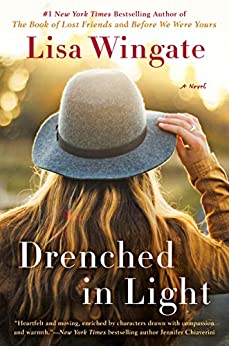
Drenched in Light is the fourth novel in Lisa Wingate’s Tending Roses series.

Julia Costell trained all her life as a ballerina, but crashed soon after being accepted into the Kansas City ballet troupe. The emphasis on body line and thinness and the stress of competition led to an eating disorder, which led to a ruptured esophagus and near death.

Now she’s 27, living at home with worried helicopter parents, and working as a guidance counselor at the same performing arts magnet school she attended.

Julia feels lost and without purpose. But then one day a student named Dell Jordan is sent to her office with a troubling essay she had written for English.

Dell was the impoverished neighbor of Grandma Rose in the first book in this series. She started out as a side character, but now has moved to the forefront. The previous book, The Language of Sycamores, ended with Dell being adopted by Karen and James, Karen being Grandma Rose’s granddaughter. Dell is something of a musical prodigy–she has an a beautiful voice and an aptitude for piano even though she had no training.

Her adoptive parents thought the performing arts school would be the best for Dell. But the students there are from well-to-do and high-level families. Some of the administration, as well, as the students, don’t see Dell as the “right kind of student.” Though she excels in music, she’s behind in her other subjects. Furthermore, though she knows her new parents love her, she feels a need to keep everything “perfect” before them. So they don’t know she’s struggling.

Julia sees something of herself in Dell–their circumstances are different, but they both deal with pressure and expectations. So she offers to tutor Dell privately.

Meanwhile, Julia becomes aware of other problems within the student body. But the principal and school board members want to keep up the school’s reputation, so they want problems handled discreetly or swept under the rug. Julia is advised to “play the game.” Yet she sees the kids are hurting. If she pushes the issues, she might lose her job.

There’s a fun side story with Julia’s sister’s upcoming wedding and the wedding dress restorer Julia finds to repair their mother’s wedding dress.

Also, some of the characters from the previous books make appearances here.

I thought the book started a little slowly at first, but gained traction in the last third or so, becoming very exciting towards the end. I enjoyed Julia’s and Dell’s journeys.

I was dismayed by instances of taking God’s name in vain, using “Good God!” and such as expressions.

But otherwise, I thought this was a great story. I listened to the audiobook nicely read by Erin Spencer but also checked out the e-book from the library for the author’s notes.

Review: Raising the Perfectly Imperfect Child

Boris Vujicic

Imagine what your reaction would be if you gave birth to a child born without arms or legs. You would likely grieve and then wonder how in the world you would raise him to live any kind of normal life.

Boris and Dushka Vujicic experienced those reactions when their son, Nick, was born. “We were burdened not by Nick but by our doubts and our fear that we were not capable of giving him all he needed to succeed (p. 163).

Nick grew up to become an internally known evangelist and motivational speaker, telling his story in Life Without Limits. But there were many hurdles and trials before that happened.

Boris shares their experience in Raising the Perfectly Imperfect Child: Facing Challenges with Strength, Courage, and Hope. The book is part memoir, part encouragement to other parents.

After the Vujicics got over their initial shock at Nick’s condition, they found that, in many ways, he was a baby like any other. He needed love, cuddling, food, and diaper changing. The rest they had to figure out along the way. There weren’t many resources available to help.

Their faith was shaken. As Christians, they wondered why God would allow such a seemingly cruel thing to happen.

With our limited vision, Dushka and I could foresee only struggle and anguish for Nick and for us. We were so wrong, of course. Our son and our experiences with him have enriched our lives beyond measure and taught us many lessons at the heart of this book. Nick gave us a new definition of the ideal child and a deeper appreciation for the complexity of our Father’s divine vision.

Nick taught us to find new meaning in the psalm that says we are “wonderfully made.” We came to see Nick as God’s beautiful creation, lovingly formed in His image. We lacked the wisdom, initially, to understand that. We saw Nick as disabled rather than enabled. We could not grasp that his missing arms and legs were part of God’s unique plan for our son.

Chapters cover accepting and loving your child, giving yourself permission to grieve, allowing friends and family to help, advocating for your child’s medical care, meeting the needs of siblings, education, preparing your child for adulthood, keeping marriage bonds strong, and building a spiritual foundation. Boris encourages taking cues from your unique child as to what he needs and the best way to help him.

It would be easy with a child like Nick to swoop in and do everything for him. But his parents raised him to do as much for himself as possible. 

My favorite aspect of his book is that Boris writes humbly and practically. Nowhere does he hint that readers should do everything just like he and his wife did. He just shares insights gleaned along the way.

Some of the quotes that stood out to me:

Nick is proof that none of us are limited by our circumstances and that all of us can create meaningful, fulfilling, and joyful lives if we choose to focus on our gifts rather than on what we may lack. All of us are imperfect. All of us are perfect (p. 10).

All children have strengths and weaknesses, and they can surprise you in so many ways. Our duty is to nurture, encourage, and motivate them, and help them build upon their strengths (p. 11).

Perhaps the greatest gifts we can give our children toward their success in adulthood are a foundation of unconditional love, a sense that they have a purpose in this world, a value system to guide them, and a spiritual base as a perpetual source of hope (p. 157).

Our imperfections have a purpose. We often can’t discover that purpose without first accepting that it exists and then searching to find it (p. 187).

God makes no promises that our lives will be pain free; He promises only that He will always be with us if we believe. We realized that we had to trust in His wisdom and good purposes, in His Word rather than in our feelings, and in His grace, which is sufficient for any trial (p. 191).

I might not be the target audience for this book since my children are grown now, and none of them had physical disabilities. But I enjoyed reading it and learned from it all the same. 

(I often link up with some of these bloggers.)

Review: Bloom In Your Winter Season

Bloom In Your Winter Season

Bloom In Your Winter Season was written by Deborah Malone “with twenty-three contributing writers” for older women as a reminder that God can both minister to them and use them in their later years.

They don’t really define what constitutes a “winter season.” One of the authors is in her fifties, which I would say is more autumnal than wintry. Still, we’re all facing that time of life and getting closer every day, so we can tuck the lessons away for future reference if we don’t need them immediately.

The book is divided up into six chapters, each featuring a couple, or sometimes three, women in the Bible: Miriam and Anna; Mary and Martha; Mary and Elizabeth; Lois and Eunice; Lydia, Joanna, and Susanna; and Naomi and the widow with two coins. (I’m surprised there wasn’t a chapter on Sarah, maybe couple with Rebekah.) All of the women focused on are not “older,” but there are things about their lives we can learn from whatever season we’re in.

Each chapter is designed to be read over five days. The first four days’ reading contains short essays written by different women, each ending with application questions and a prayer. Day 5 is a Bible study on the focus women written by Deborah with passages to read, questions to answer, and blank lines to jot down notes .

The overall theme of the book is that God can still use you whatever age you are, and that’s brought out in most of the chapters. Some of the writers discuss specific situations like adjusting to the empty nest, widowhood, aging, sharing faith with our grandchildren, and living in a nursing home (one woman wrote over 70 books while in a nursing home!) But other chapters are more general.

One problem with five writers contributing to each chapter is that there’s a bit of overlap. But perhaps repetition reinforces the details. On the other hand, the chapter on Naomi only mentioned her once in passing in the essays.

The chapter that stood out the most to me was the one on Lydia, Joanna, and Susanna–I think partly because we don’t usually hear much about these women, especially the last two. They are mentioned in Luke 8:1-3 with “some women who had been healed of evil spirits and infirmities” who traveled with Jesus and the disciples and “who provided for them out of their means.” Joanna is mentioned again at the cross with other women in Luke 24. Writer Sherye Green points out that these women served Jesus out of “pure, unbridled gratitude” (p. 123).

I only knew of a couple of the authors here before reading this book. There are a few with whom I might not agree in every point, judging from their biography information. But I didn’t find anything objectionable in this volume.

Some of the quotes that stood out to me:

Anna worshiped in the waiting (p. 29).

Is there a mother or grandmother in your life who prays, encourages, and supports the younger generation in the faith? Godly women invest in a heavenly treasury of prayers and a heritage of faith for their loved ones. Praying mamas deposit a foundation of wisdom and understanding into their children’s lives, building up their character and committing their future to God (p. 91).

I used to pray for my daughter’s strength and personality–stating what I wanted God to place in her. I failed to realize that the parenting challenge is knowing God already has a plan and purpose for our little people. Our prayer should ask God to show us their developing talents so that we cultivate His gifts in them (p. 96).

When my focus was on me, I felt my broken heart intensely. I began noticing those around me with their own trials and doing small things I could to help ease their burdens: visiting a young friend dying of breast cancer, training as a hospice volunteer, taking food to new widows, and generally loving on people. It was different from the lay ministry my husband and I shared as a team, but just as important in God’s economy (p. 143).

The essays are designed to read one a day. I usually read two or three, because they were so short. If I ever read this book again, though, I think I’ll stick to one a day and ponder it more before moving on. 

Still, the book did its job in encouraging me that God has something for me to do and has promised to be with me in every season.

Review: The Language of Sycamores

The Language of Sycamores

The Language of Sycamores is the third novel in Lisa Wingate’s Tending Roses series.

Karen Sommerfield received two blows in one day. A routine test at the doctor’s office indicates her cancer may have returned. And her whole department, of which she was the head, has just been eliminated at her firm in their downsizing efforts. “I sat back in my chair, looked around my office, and for the first time in my life, felt completely worthless. What do you do when the thing you’ve put your time and effort, your heart and soul, into, the thing that is the biggest part of who you are, is gone? Where do you go from there?”

When her sister, Kate, calls with an invitation to come to Missouri, Karen agrees. Normally, she avoids Missouri. Her lifelong rivalry with her seemingly perfect sister, their different lifestyles, the difficulties with their father, all contribute to keeping her distance. But, learning that her pilot husband, James, is going to MO for the weekend as well, Karen decides the trip will take her mind off her troubles. She doesn’t tell anyone about her double dose of bad news at first. She’s still processing it, and she doesn’t want to seem any more imperfect.

Kate has made contact with some long lost cousins who have some old letters between their grandmother and Kate and Karen’s Grandma Rose. They discover the two grandmothers had a sister they never spoke of.

Meanwhile, Dell, an young girl from an impoverished neighbor of Grandma Rose’s, spends much of her time at Kate’s. Dell’s grandmother isn’t well, and Uncle Bobby, who lives with them, is an unsavory character.

As Karen makes discoveries about her family and tries to help Dell, her eyes are opened to her own misconceptions and to the needs of others. She’s reawakened to old interests she had closed the door to. And Grandma Rose’s advice comes back to her.

A couple of the quotes that stood out to me:

Grandma saw the poetry in ordinary things. She mused on the meaning of life while her hands were busy with everyday chores. Anything else would have been far too impractical to suit her.

It’s those little nicks and dents and imperfections of spirit that allow us to flow out into a thirsty world. It’s our scars that allow us to relate to the scars of others, our suffering that connects us to others who suffer.

The first two books, Tending Roses and Good Hope Road, didn’t seem to be connected. But this book ties them together with the cousins finding out about each other.

The title comes from something Grandma Rose used to say: when some surprise was coming or something was brewing, she’d say she heard it in the sycamores.

I did have a couple of problems with the book: the use of minced oaths and Dell’s supposedly somehow getting messages from the deceased Grandma Rose.

But otherwise, I enjoyed Karen’s journey from being self-absorbed and defensive to seeing people for who they are, not who she thought they were.

Review: The Women of Oak Ridge

Women of Oak Ridge

When we first moved to the Knoxville area, we attended church in Oak Ridge. I saw signs about the “secret city” and wondered what they were referring to. I learned that Oak Ridge sprang up quickly and secretly during WWII as part of the Manhattan Project plans to build an atomic bomb. The Oak Ridge plants processed uranium. No one except top officials knew the purpose of the plants. Secrecy was strictly enforced. The employees only knew that their work was supposed to help the war effort. Oak Ridge was a restricted city complete with dormitories, trailers, grocery stores, tennis courts on which dances were held, even a movie theater.

Michelle Shocklee set her novel, The Women of Oak Ridge, in two different timelines. In 1944, young Maebelle Willett is recruited to work in the K-25 plant of Oak Ridge as an errand girl. The building is so big that bicycles are supplied for people like Mae to get around the plant. She took the job mainly for the salary: her father is a Kentucky coal miner suffering from black lung. She can help the family much more here than she could in KY. She enjoys her work, her young roommate, Sissy, and the social opportunities with friends and the young men on site.

Mae is suspicious of the man Sissy is dating. There’s just something off about him. The employees are not supposed to talk about their work, but this man shares disturbing details. When Sissy doesn’t return to their room after a date, Mae is sure Sissy’s boyfriend, Clive, had something to do with her disappearance. Her search to prove her suspicions leads to more trouble and then disaster.

In 1979, Mae’s niece, Laurel, lives in Boston and is working on her doctorate in psychology. When she learns about Oak Ridge’s part in the Manhattan Project, she think a study of the effects of long-term secrecy and the employees’ mixed feelings over finding out they were working on such a massively destructive weapon would be a good subject for her dissertation. She travels to Oak Ridge to spend the summer with her Aunt Mae, interviewing her and other former OR employees and doing research.

Mae welcomes Laurel but is close-lipped about her own wartime experience. Mae feels the past is best left there. Laurel nudges her gently, but when she sees how upset Mae gets over the subject, she backs off. Mae does give her the name of some friends who worked at the site to interview.

Laurel’s research of old Oak Ridge newspapers at the library leads her to a small notice placed by Mae asking for information about Sissy. Laurel tries to find out more without disturbing Mae. Will the results bring healing for Mae . . . or untold trouble?

I was fascinated when I first heard the history of Oak Ridge years ago, partly due to the thought of a whole secret city springing up out of nowhere, and partly in wonder over the hundreds of people who would move out of state to take a job they knew nothing about. I don’t think either occurrence would happen these days. Several years ago I read The Girls of Atomic City by Denise Kiernan, a factual account of Oak Ridge’s history. Michelle’s book lines up with the details in Denise’s–in fact, I wondered of she might have used it as a resource. It was fun to see the experience of a young new employee there fleshed out and to hear street names and places I recognized.

Parts of the book had me on the edge of my seat and looking for extra opportunities to listen to my audiobook of it. I loved the spiritual counsel Mae’s friend gives her about the freedom from guilt and sin that Jesus offers.

The only thing that bothered me about the plot was that young Mae seemed awfully naive–maybe a little clueless. She’s supposed to be naive: she’s young and has never been away from her small town before. But I got frustrated that her attempts and responses made things so much worse than they could have been. I can’t say more without giving away too many details.

However, we all have gotten into some level trouble at times from mistakes we’ve made. What a blessing and relief God’s grace is.

I listened to audiobook nicely narrated by Caroline Hewitt. The point of view switches back and forth between Mae’s early timeline in the 1940s and Laurel’s in 1979, but I didn’t find it difficult to follow along.

This is the first book of Michelle’s that I have read, and I am eager to check out more of her work.

Review: Van Gogh Has a Broken Heart

Van Gogh Has a Broken Heart

Van Gogh Has a Broken Heart: What Art Teaches Us About the Wonder and Struggle of Being Alive by Russ Ramsey is similar to his earlier book, Rembrandt Is In the Wind. Each draws observations from art and artists. This second book explores the theme of suffering and the beauty and grace that comes from it.

Art shows us back to ourselves, and the best art doesn’t flinch or look away. Rather, it acknowledges the complexity of struggles like poverty, weariness, and grief while defiantly holding forth beauty—reminding us that beauty is both scarce and everywhere we look (p. 4).

Beauty pulls us upward toward something that calls for some measure of discretion, something to be treated with dignity and care, something sacred. What does it pull us toward? The truth that we were made to exist in the presence of glory (p. 5).

All art comes from somewhere. It comes from someone who is in the process of living the one life they’ve been given. The more we can understand the specifics of their individual experience, the more we will understand why they created what they did and why the world has responded to it in the way we have (p. 12).

Ramsey says sad stories are universal, and they can provide fellowship in whatever we’re going through as well as empathy for others. They help us wrestle with the evil and brokenness in the world. “They remind us not just that this world can wound us, but that wounds can heal. They remind us to hope” (p. 10). They show us that beauty can come from brokenness.

That’s not to say all art comes through suffering. I think it was in my Music Appreciation class in college I heard a comparison of Beethoven and Haydn and how their lives shaped their music. Beethoven had a difficult father, health issues, and started experiencing hearing loss before he was thirty. Haydn had struggles, but by his thirties he had a steady job as the music director for a prince. A lot of his work is light, clever, even playful, while Beethoven’s is rich in emotional depth. 

There are ten chapters in Ramsey’s book. One tells the story of how the Mona Lisa was stolen and recovered, Pablo Picasso was a suspect, and the painting became a lot more famous after the theft. Another contrasts Rembrandt’s Simeon’s Song of Praise, which is very detailed and elaborate, painted early in his career, with Simeon in the Temple, painted late in his career and found after his death. They cover the same incident in the Bible, but the latter is simple and focuses on Simeon’s emotion. 

When I look at the old painter’s reimagining of the scene, to my eye he doesn’t seem to want to show us the spectacle of the temple when Simeon held Jesus, or what he can do with it as a painter. After a life filled with suffering and sorrow, he just seems to want to hold Jesus (p. 51).

Artemisia Gentileschi was a painter I’d never heard of. Ramsey describes the difficulty of a woman in this field as well as an artist working “for hire”–not painting scenes she loved for the pure pleasure of it, but taking commissions of what others wanted to see painted. He points out that “she’s not a girl-power feminism icon. She’s an icon in the sense that she’s an example of a woman who’s navigating a world that’s not built for her” (p. 66).  “We must be careful not to romanticize her work to make it fit our own cultural moment. It is one thing to draw conclusions about the impact of her art over time, and quite another to assign intent to her body of work that may not represent how she thought about it (p. 66). I wish people who try to bring modern-day sensibilities into other people’s history would realize “If we come to an artist like Artemisia with a narrative already in mind and insert her into it, we dishonor her actual experience” (p. 67).

Joseph Turner was another artist I didn’t know, whose style changed about halfway through his career. Ramsey discusses the possible reasons and implications.

The Hudson River School I had heard of but didn’t realize it was: a group of landscape painters who went into unexplored areas of what would become the United States to show immigrants to the area what beauty and grandeur was there. But the beauty was also untamed and could be dangerous. And the influx of new European plans for colonization would clash with the Native Americans already there whose philosophy about the land was vastly different.

Van Gogh’s infamous cutting off of his ear is told in the context of his trying and failing to establish an artist’s residence with Gauguin. They only lived in the same yellow house for sixty-three days, “two of the most productive month’s of each artist’s career, and two of the most turbulent” (p. 125).

Norman Rockwell’s work was “Dismissed by critics, who considered his paintings to be too idyllic and sentimental to be great art (p. 139). Rockwell agreed his work wasn’t “the highest form of art,” but said “I love to tell stories in pictures–the story is the first thing and the last thing” (p. 139). His work was influenced by the new technology of the four-color press. He became a well-loved fixture of the Saturday Evening Post until he started painting scenes from the Civil Rights movement like The Problem We All Live With and Murder in Mississippi, based on real events.

Edgar Degas is known for detailed paintings of ballerinas, like The Dance Foyer at the Opera in 1872. But macular degeneration slowly changed his work to the much less distinct Two Dancers Resting in 1910. I can’t fathom the difficulty and painfulness of trying to portray one’s vision when one’s vision is deteriorating. After discussing other artists with failing vision, Ramsey notes, “The art changes, but not necessarily in a negative way. Often when affliction and compulsion collide, something deeper, truer, and more lasting is born” (p. 166). He quotes modern artist Jimmy Abegg, who also has macular degeneration, as saying “The bad isn’t so bad when you recognize the goodness that will emerge from it, whatever trail that leads me down” (p. 166). Ramsey comments, “Affliction stirs us awake to things we might not have seen otherwise” (p. 166) and seeing “through new eyes” requires courage and humility.

Ramsey includes appendices on the symbolism often used in art and and famous art heists. One appendix is titled “I Don’t Like Donatello, and You Can Too.” Ramsey says we don’t have to like or “get” every artist, but, with “a posture of openness, willing to learn and grow” (p. 192), we can appreciate even what we don’t like.

A few other quotes that stood out to me:

What comes out of this life is his business, but what I do will never be what makes me who I am. Because this is so, when suffering comes, it doesn’t have the power to unravel God’s design. Instead, the suffering becomes part of the fabric (p. 155).

Our sorrows are ultimately hallowed by the One who enters fully into the painful stories of our own lives in order to show us that our suffering matters, while also becoming the place from which the Spirit enables us to become agents of God’s healing grace to those who find themselves lost and alone in their griefs (p. xi).

The goal of suffering well is to move us not only beyond the stick figures, but also from a place of pride to one of intimacy and familiarity with our Lord. It is to move us not from crude to eloquent, but from unfamiliar to intimate. This is why we practice spiritual disciplines (p. 50).

To truly love someone is to move beyond first impressions into the heart of things; it is to take on the sacred work of stewarding another’s joys and sorrow (p. 132).

Think about the physiology of growing old. If the Lord grants us many years, the way to eternal glory will include the dimming of our vision, the slowing of our bodies, the dulling of our minds, and the diminishing of our appetites. It’s a path that requires us to loosen our grip on this world, preparing us to leave it before we leave it. Is this not mercy? (p. 136).

I had missed the fact that there were discussion guides for each chapter in the back until I finished the book. I wish these had been included at the end of the corresponding chapters.

I don’t know if Ramsey has any future books like these planned. I hope so. There are multitudes more paintings and artists that could be discussed. If he does, I’d love to hear his thoughts on a couple of issues. One, how to think about pictures of deity in art and the second commandment about not making images. I wrestled with my own thoughts on this a few years ago. Two, the depiction of nudity in art. I personally would rather not see nudity in art or anywhere else. (There are a couple of paintings involving female nudity in this book).

As with Ramsey’s first book about art, I appreciated not only the information but the thoughtful and beautiful way the author weaves spiritual truth into the narrative. The result is poignant and meditative.

Review: North! Or Be Eaten

North! Or Be Eaten

North! Or Be Eaten is the second of Andrew Peterson’s Wingfeather Saga for children.

In the first book, On the Edge of the Dark Sea of Darkness (linked to my review), we met the Igiby family: grandfather Podo, mother Nia, sons Janner and Tink, and daughter Leeli. They lived in Skree, which is under the domination of the Fangs of Dang, headed by Gnag the Nameless.

At the end of the first book (spoiler alert if you haven’t read it), the children are stunned to learn that they are the lost Jewels of fabled Anniera. Their father was the High King.

Unfortunately, the Fangs figure this out as well. They raze the town, burn the Igiby’s home, and pursue them. Podo’s plan is to make it to the Ice Prairies, which the lizard-like Fangs can’t tolerate. Once there, they can decide what to do next.

Thus the family sets out on an epic quest “through many dangers, toils, and snares.”

They are accosted by the Stranders, rough, fierce people who live in Glipwood Forest and have no conscience about stealing and kidnapping. Yet they find a couple of people of character even there.

They get separated at Dugtown, which, oddly, lacks children–and soon find out why.

While searching for the lost Tink, Janner gets whisked away to the deceptively named Fork Factory, where there is no escape.

They are betrayed by those they thought were friends. But they find aid in unexpected sources.

Along the way, they battle not only the enemies pursuing them, but themselves. When the journey is quiet, the children are told more about the kingdom and their established roles in it. Leeli is fine with hers and seems to have been fulfilling it already. But the boys take longer to absorb the news and aren’t so sure they want the responsibility.

However, their trials and hardships bring home to their hearts what is most important. And when things seem at their lowest, “darkness is seldom complete, and even when it is, the pinprick of light is not long in coming–and finer for the great shroud that surrounds it” (p. 312).

One whose hidden past caught up with him “moved through the days in peace and wonder, for his whole story had been told for the first time, and he found that he was still loved” (p. 323).

The first book took a while to set up the characters and situation. This book dove right into the action. There’s a lot less humor in this book than the first, but I felt the first went a little overboard in that department. There aren’t many occasions for full-blown humor in this book, but it’s tucked in here and there.

Besides trusting “the Maker,” family, bravery, and overcoming, it seemed to me that identity was a key theme. Though Janner struggled with his role in the kingdom, remembering who he really was helped him in the Fork Factory, where all the workers were only called “Tools” and treated as such.

The book is wonderfully illustrated by Joe Sutphin. I think the boy on the front cover is supposed to be Tink, who looks a lot like former Monkee Michael Nesmith. 🙂 I don’t think that’s purposeful, as neither author nor illustrator are old enough to have been Monkee’s fans. But it was a fun connection.

I enjoyed the book a lot, especially the latter third of it. There are two more books in the series. I look forward to what happens to the Igiby family next.

Review: The Mystery of Edwin Drood

The Mystery of Edwin Drood was the last of Charles Dickens’ novels and only about half-finished when he died.

The story opens in an opium den as a man awakens from his drug-induced stupor, then goes to the cathedral, where he is the choirmaster.

A little later, this man, John Jasper, tells his nephew, Edwin Drood, that he takes opium for a physical condition. The reader is left unsure for a while whether Jasper is telling the truth or leading a double life.

Edwin is a young man engaged to Rosa Bud. They are both orphans, but their fathers were good friends and arranged their marriage. Edwin comments that the prearrangement “flattens” the excitement of their courtship. But he’s willing to go along with the plan. He and Rosa often end up arguing.

Twin siblings, Neville and Helena Landless, also newly orphaned, arrive from Ceylon with their guardian. Neville is to study with the minor canon, Rev. Crisparkle, while Helena will attends the nuns’ boarding school. She and Rosa, also a student there, become good friends.

Nevile has been mistreated by his stepfather and has a quick temper. He is secretly attracted to Rosa and can’t stand the way Edwin treats her. The two young men argue, goaded on by Jasper.

Crisparkle urges the two to settle their differences. The day after they do, Edwin disappears. Neville is immediately suspect, but there’s no proof of his guilt.

Dickens always has multiple threads and quirky characters woven into his plots. Mr. Durdles is a stonemason and undertaker. Jasper asks Durdles to take him on a nighttime tour of the crypts. “Deputy” is the nickname of a street child who throws rocks at people out at night but who also sees and hears much that goes on. Mr. Sapsea is a somewhat self-important auctioneer who later becomes the mayor. Dick Datchery comes into the story later, a man of independent means supposedly looking for a pleasant place to stay. A former sea captain, Mr. Tartar, arrives later, too, and ends up living next to where Neville is hiding out. At first I thought Tartar was spying on Neville for Jasper, but later I didn’t think so.

One of the most touching moments for me involved Mr. Grewgious, Rosa’s guardian. At first he comes across as a little silly and fussy. But later, as he remembers the women he silently loved, who died long ago, he wonders whether the man she married ever suspected him of having feelings for her. As he catches sight of himself in the mirror, he says “A likely someone, you, to come into anybody’s thoughts in such an aspect! There! There! There! Get to bed, poor man, and cease to jabber!” The narrator notes, “There are such unexplored romantic nooks in the unlikeliest men.”

Another favorite quote, said of Rev. Crisparkle: “He was simply and staunchly true to his duty alike in the large case and in the small. So all true souls ever are. So every true soul ever was, ever is, and ever will be. There is nothing little to the really great in spirit.”

I liked the turn of phrase that a bombastic man targeted another as “kind of human peg to hang his oratorical hat on.” Then, “the remainder of the party lapsed into a sort of gelatinous state, in which there was no flavour or solidity, and very little resistance.”

And this brought a smile: “The two shook hands with the greatest heartiness, and then went the wonderful length—for Englishmen—of laying their hands each on the other’s shoulders, and looking joyfully each into the other’s face.”

Wikipedia lists some of the theories about how Dickens intended to finish the novel. I feel pretty sure I know what happened to Edwin and why and by whom–the clues seem to point one direction. But it would have been fun to learn whether I was right and to see the plot unravel and the bad guy get his comeuppance.

I listened to the audiobook, narrated by David Thorn. He did a great job, except I had a little trouble understanding a few of the characters. I also got the Kindle version, which was free at the time, to go over the passages which weren’t clear to me.

Some years ago I set myself a mission to read all the Dickens novels I hadn’t read yet. Now I have read all of them except Barnaby Rudge, which, honestly, doesn’t sound very exciting. But I will still read it some day.

While Edwin Drood isn’t my favorite of Dickens’ novels–those would be A Tale of Two Cities and David Copperfield--I did enjoy it and got caught up in the mystery.

100 Ways to Improve Your Writing

101 Ways to Improve Your Writing

If you’ve read much writing instruction, you may have seen this well-known paragraph:

This sentence has five words. Here are five more words. Five-word sentences are fine. But several together become monotonous. Listen to what is happening. The writing is getting boring. The sound of it drones. It’s like a stuck record. The ear demands some variety. Now listen. I vary the sentence length, and I create music. Music. The writing sings. It has a pleasant rhythm, a lilt, a harmony. I use short sentences. And I use sentences of medium length. And sometimes when I am certain the reader is rested, I will engage him with a sentence of considerable length, a sentence that burns with energy and builds with all the impetus of a crescendo, the roll of the drums, the crash of the cymbals—sounds that say, “Listen to this; it is important” (p. 58).

The author of that masterpiece is Gary Provost, who wrote “more than a thousand published article and stories” (p. 160) as well as two dozen books. He was also a writing teacher and the founder of a semiannual Writer’s Retreat Workshop.

101 Ways to Improve Your Writing: Proven Professional Techniques for Writing with Style and Power was his second instructional book about writing, The Freelance Writer’s Handbook being the first. Some of the material here originally appeared in the Writer’s Digest magazine. The first edition of the book came out in 1985. This 2019 edition has been updated, mostly concerning changes in technology, by his wife, Gail Provost Stockwell, and one of his students who became a teacher and then the director of his writer’s conference, Carol Dougherty.

This book is laid out in eleven sections which are divided into several fairly short topics within the section. Some sections cover broad topics like overcoming writer’s block, developing style, giving words power, and making your writing likeable. But others get into the minutia of grammar, punctuation, and editing. The short pieces on each topic make this book very readable. Since they were so short, I read a handful at a time. But when I read this again, I think I might take one or maybe two at a time and digest them before moving on.

Gary sprinkles succinct but helpful side-by-side good and bad examples to illustrate what he advises.

One aspect of his writing I really appreciated was his saying that his tips are just that: “Tips, not laws” (p. 159). For example:

Never violate a rule of grammar unless you have a good reason, one that improves the writing. But never choose good grammar over good writing. There is nothing virtuous about good grammar that does not work. Your goal is good writing. Good grammar is only one of the tools you use to achieve it (pp. 118-119).

Try to use the active voice. But realize that there are times when you will need to use the passive. If the object of the action is the important thing, then you will want to emphasize it by mentioning it first. When that’s the case, you will use the passive voice (pp. 78-79).

For the past several years, I’ve tried to read at least one book about writing each year, as well as blogs about writing. Much of the information in this book wasn’t new to me, but I benefited from the reminders and the different way of expressing them. Plus, even though I have heard and read many of these things, I certainly haven’t mastered them yet. However, some of the advice touched on subjects we discussed in my last session with my critique group and helped me think through those issues. 

I think this book would be an excellent introduction for new writers and a great “refresher course” for more experienced writers.

Review: The Collector of Burned Books

Collector of Burned Books

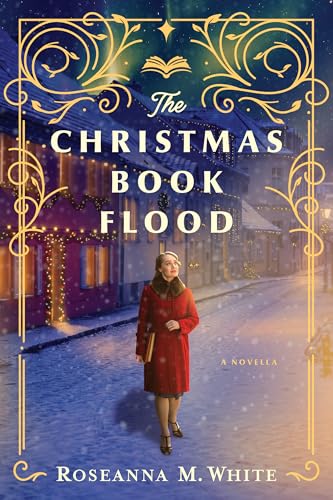
The Collector of Burned Books by Roseanna M. White takes place in Paris during WWII, opening with the Nazi takeover of the city.

Corinne Bastien is a professor at the Sorbonne, but looks more like a student. Secretly, she oversees the Library of Burned Books, a collection of books that have been banned by the Nazis. She encodes some of them with war news and send them out to some of her students, who send encoded messages back. The others Jewish authors who worked with the library fled before the Nazis arrived.

Now, however, Goebbels has sent a “library protector,” Christian Bauer, to take over all the libraries in Paris. Christian is not sure how he got the position. He’s a professor, not a soldier. With his record of speaking out against the Nazis, he’s surprised he hasn’t been arrested. All he can figure is that his friend in the police force, who was absorbed into the Gestapo, has adjusted his records.

He and his friend, Erik, had many discussions about the best way to combat the madness surrounding them–whether to fight against it overtly, only to be arrested, or to battle quietly from within while seeming to go along. They decide on the latter course. Christian knows many of the French Jewish authors personally. Perhaps he can mitigate the damage done to them and their works. At the very least, he can insist on civility among the soldiers assigned to him.

Christian arrives at Corinne’s flat with a list of books checked out by her mother from the Library of Burned Books. He only wants then returned. Corinne plays dumb. Her mother is out of the country and is not very organized–she doesn’t know where the books could be.

As Christian visits repeatedly to search for the books, they discover they have much in common. Corinne still regards him as an enemy, but she realizes he is not like the others.

Eventually, some surprising twists lead them to the truth about each other. And then a shocking betrayal threatens everything they’ve worked for.

Another part of the story involves hiding a boy with birth defects whom the German authorities wanted to have euthanized.

Some of my favorite quotes from the book:

These students had it all wrong—backward. Books didn’t burn. Books ignited. They lit the burning in others. Not with paper and match. With ideas. But then, that was their very argument (p. 1, Kindle version).

The only way to defeat a bully was to win him over. The only way to truly defend what you believe is to make your enemy believe it too (p. 4).

The words we hear, the words we read, the words we sing along to on the radio and study in the papers with our morning coffee, become our thoughts. I think our thoughts become our beliefs. And I think our beliefs become our actions. That is why Goebbels sent us here, Kraus. Because words form the foundation of society. Ideas create culture. Control them, and you can control . . . everything (p. 76).

He would tell you to think, next time, before you blindly chase your ideology. He would ask you to think, not just to feel. To ask, always, if you could be wrong. To listen, always listen, to the other points of view. Because the moment we stop granting someone the right to disagree, Kraus, this is what happens. Do you understand me? This is what turns men into tyrants. This is what leads to fear and death (p. 265).

God could well have said no. Today, he’d extended his mercy. His grace. But as too many in Germany had already learned, sometimes he didn’t intervene. Sometimes he let the monsters come. Sometimes good people, good Christians, good Jews were dragged off in the night, no matter the prayers they cried. He’d promised to be with his people through persecutions—not to prevent them (p. 304).

Read novels, because they will put you in someone else’s skin. Read poetry, because it will give wings to your soul. Read science, because it will show you what’s possible. Read politics, because it will teach you how strongly people care about how their fellow men are treated, wherever they stand on what the best way is. . . . Read things you hate and things you love and things you never thought you’d understand. And never, never accept the excuse that you’re not strong enough to handle it if you read something that offends you. You are. You’re strong enough to be offended and then try to understand why. You’re strong enough to grant that someone can be different and still be worthy of dignity. And if you aren’t? . . . Then read more, until you are (pp. 315-316).

Roseanna is a master storyteller who creates wonderful characters and intricately interwoven plots. I enjoyed both of these characters immensely.

I also enjoyed Roseanna’s notes at the end of the book, where she shares what’s historically accurate and what’s made up. There really was a Library of Burned Books. There really was an anti-Nazi professor who was given a special assignment, though not the one detailed in the book.

There were even some fun surprises, like a character from Roseanna’s Shadows Over England series showing up. This was the first series of Roseanna’s I read, and I loved them. Though there were clues, I didn’t recognize him until his real last name was revealed and he shared a bit of his history. There was a tie-in with another previous character from Yesterday’s Tides, but I didn’t remember him or his situation at all.

The faith element is Catholic, which would have been accurate for the setting and characters. There was mention of some practices I couldn’t agree with–a priest forgiving sins, the need for penance, praying to Mary and saints, the supposed healing power of the Eucharist. But the overall tenor of the characters’ hope in God was touching and inspiring.

I listened to the audiobook, superbly read by Lisa Flanagan. This time, the audiobook did include the author’s notes, which I appreciated. But I also had a Kindle version for reference.

Roseanna mention in her notes that one character will be getting his own story in another book. I don’t know if it will be a sequel, exactly, but I look forward to it.