Review: The Unlikely Yarn of the Dragon Lady

Unlikely Yarn

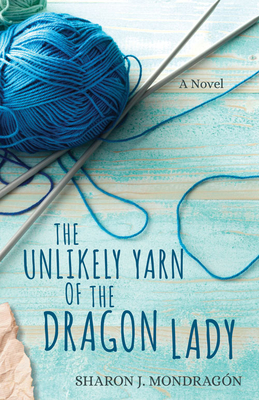
It’s rare that I try a book without ever having heard of it or the author or seeing a recommendation from someone I trust. But I was looking through Audible’s Plus Catalog of titles they rotate in and out, and The Unlikely Yarn of the Dragon Lady by Sharon Mondragon caught my eye. It looked like an interesting novel about a group of knitters, which seemed like a relatively safe topic. Since it was free, if I found something objectionable, I could just delete it.

I’m so glad I tried this book. It was delightful.

A group of four women form the Heavenly Hugs Prayer Shawl Ministry at their church. I was confused about prayer shawls at first, wondering if they were something people wore as they prayed. But no, the ladies pray as they knit them for those who will receive them, and then hand them out to anyone ill, grieving, or going though a hard time so they’ll feel comforted and “hugged.”

The women meet every Wednesday morning to knit and pray together in their church’s prayer chapel. But one morning, they’re surprised to learn they can’t meet there any more. The chapel is being painted. Besides that, their pastor wants them to take their knitting out in public. People weren’t coming to church as much any more. If they knitted in public, people would ask about their knitting, and they could tell them about their ministry and the church.

In addition, the church’s bishop has told the pastor that if things don’t improve with the church soon, they’ll be closed down. More is riding on the success of the knitters’ mission than they know.

Margaret, the group leader, is livid. They’ve met in the chapel for years. How can they have peace and quiet to pray out in public? She wants to meet at her house, but the other ladies aren’t willing to go against their pastor’s request.

So they head to the coffee shop in the mall. Rose, kindhearted and interested in others, loves the idea. She likes to talk about knitting. She lives in a retirement home and is starting to feel invisible and useless. An overprotective daughter keeps her hemmed in until she can hardly do anything. Going out in public to knit seems like an adventure.

Jane has two teen-age daughters who are driving her to desperation with their constant bickering and discontentment. Only Rose knows Jane’s secret sorrow, that her son is in prison for using and selling narcotics.

Fran is the newest knitter among the group, taught and helped by Rose. Her husband passed away suddenly the year before, and the fog is just beginning to lift.

The ladies aren’t knitting long at the coffee ship before a college student comes over because her grandmother used to knit and she wants to see what the ladies are doing. When she hears about their prayers, she asks them to pray for a crucial upcoming test.

Slowly, other people do the same thing–stop by out of curiosity and then ask for prayer. The next time the ladies come to the mall, they find word has gotten around: they receive several prayer requests written on paper napkins. The prayer requests lead to more involvement in people’s lives.

Margaret feels the people stopping by are interruptions. “We’re supposed to be praying,” she repeats often. She can’t see past the green hair of one young man or the weariness of a middle-aged woman to the soul inside them.

But gradually, God works not only through, but in the prayer shawl ministry in surprising ways.

A couple of my favorite quotes:

Rose kept asking questions, drawing out Eileen’s memories of her father the way knitters pull their yarn from the center of the skein.

You’re right. God is orderly. But people are messy. They have problems and wounds and fears and besetting sins. Isn’t that what prayer shawls are all about, though? Trying to give people the comfort and strength they need to face and get through those things?

These characters were so well-drawn. The narrator of the audiobook, Christina Moore, did a beautiful job, especially with Margaret’s and Rose’s voices.

The plot is laced with humor and warmth and poignancy.

I’m not a knitter and I don’t know the jargon. But that didn’t interfere with my enjoyment of the book. There’s enough specific detail that I think seasoned knitters would understand and enjoy it, but not so much that it bogs down the narrative.

There were only two things I didn’t like. The author has God speaking to one character. I don’t think she ever identifies Him as God–she calls Him a “presence.” But I think we have to be very careful about putting words in God’s mouth, assuming we know what He would say in a given situation. I think writers can show how we think He could lead someone without having Him speak verbally. In fact, the author does this nicely with another character.

The other thing is that, in all the talk about people’s prayer needs, there’s no mention of anyone coming to believe on the Lord. People come to church who didn’t before and are encouraged to reconcile with estranged loved ones and such. But people can do that without knowing the Lord. I’m not sure what faith tradition the author is from. I know some authors prefer not to spell things out spiritually, but to let the change in characters’ lives speak for themselves. They feel that being any more explicit would be preachy. But I think a lack of clarity here causes confusion and leaves the reader without the most important message they need. I’ve written before that the whole plan of salvation doesn’t necessarily need to be included for a book to be Christian fiction, but what is there should be clear.

Otherwise, though, I loved this book. When I finished it, I missed the characters. A sequel has been written, so I’ll likely pick it up sometime. Meanwhile, this title is free for Audible members through October 7 and is about 8 hours and 20 minutes long if you want to give it a try.

Review: Little Lord Fauntleroy

Little Lord Fauntleroy has never been on my to-read lists. But I was looking through Audible‘s Plus Catalog of free books they rotate in and out, and this title caught my eye. I saw that the novel was written by Frances Hodgson Burnett, who also wrote The Little Princess, which I loved, and The Secret Garden, which I had mixed emotions about. I decided to give it a try.

Cedric Errol is a little boy living with his mother in “genteel poverty.” His father had been the third son of an earl in England. When he came to America, he fell in love and married. His father hated Americans and felt this one was just after his son’s money. So he cut his son off from his inheritance and position.

Cedric’s parents lived happily together for several years until his father became sick and died. Cedric calls his mother “Dearest” because that’s what his father had always called her, and it seems to make her happy.

Cedric is seven years old at the story’s beginning. “He had never heard an unkind or uncourteous word spoken at home; he had always been loved and caressed and treated tenderly, and so his childish soul was full of kindness and innocent warm feeling.” He’s special friends with the grocer, Mr. Hobbs, a young bootblack named Dick, and the “apple woman.” Even when winning a race with another boy, he encourages him by saying he only won because he’s three days older and his legs are a little longer.

Then one day a stranger from England, a lawyer named Mr. Havisham, arrives at Cedric’s home. Cedric’s father’s brothers have all died, and Cedric is the heir to his grandfather’s estate. His grandfather wants Cedric to come to England, live with him, and learn how to become an earl. He would become Lord Fauntleroy. His mother is invited, too, but the earl doesn’t want to see her. She’s be provided another home nearby so she and Cedric can visit every day.

Cedric’s mother believes his father, who loved his home in England, would have wanted Cedric to accept this invitation. She doesn’t want Cedric to start out with bad feelings against his grandfather, so she doesn’t tell him why his grandfather won’t see her.

The earl is described as “sitting in his great, splendid, gloomy library at the castle, gouty and lonely, surrounded by grandeur and luxury, but not really loved by any one, because in all his long life he had never really loved any one but himself; he had been selfish and self-indulgent and arrogant and passionate.” Everyone is intimidated by him. But Cedric’s mother said he was kind and generous. So Cedric approaches him without fear, which impresses the earl.

He wants Cedric to realize the riches at his disposal, so he gives instructions that Cedric can have anything he likes (perhaps not realizing that this was what ruined his two older sons). Instead of indulging himself, Cedric wants to use the money to help others.

Just when I thought the book was going to be fairly predictable, an unforeseen crisis arises.

Cedric is almost too good to be true. I haven’t found anything to explain why Burnett wrote the book: this was her first children’s book, though she had written for adults before. Perhaps she wanted to give children an example to follow. It’s interesting to trace the development of characters in her children’s books (at least the three I have read). Sarah in A The Little Princess is ideal as well, but not so perfect. Mary in The Secret Garden is spoiled and nasty.

Wikipedia says this book was as popular as Harry Potter in its day, and it started a fad of boys wearing the long curls and white frilly shirt that Cedric was known for.

Virginia Leishman did a nice job narrating the audiobook. It’s free through September to Audible subscribers, and only about six and a half hours long. I also got the Kindle version for 99 cents, which includes some of the original illustrations, which were fun to see. I don’t know why the newer cover shows Cedric with dark hair when the book repeatedly mentions his golden curls.

Even though Cedric and his mother are somewhat idealized, this was a sweet story that I enjoyed very much.

Review: The Island Bookshop

The Island Bookshop

In The Island Bookshop by Roseanna M. White, Kennedy Marshall has a career she loves in the Library of Congress. But when her sister back in North Carolina’s Outer Banks has a serious fall from a ladder, Kennedy travels to help care for her sister and run their grandmother’s island bookshop.

Kennedy hasn’t been home in a while. She loves the island, her sister, and the bookshop. But she’s avoiding Wes Armstrong. They’ve been friends since childhood, but Kennedy had deeper feelings. Then Wes married her friend Britta. Though Britta passed away, Kennedy knew too many of her secrets–secrets she can’t bear that Wes should know.

Wes’s family has built a successful business on the island, but a development group has offered to purchase the business. The money would help, but the business has been Wes’s life. He struggles with knowing what he should do.

When Kennedy’s sister’s recovery takes longer than expected, Kennedy faces some difficult decisions.

When a question comes up about a different name on the lease of the bookshop than Kennedy’s grandmother, Kennedy searches for information among county records and old boxes in the attic. She finds a number of editions of The Secret Garden in various languages as well as some old letters with surprising news.

Interspersed between the modern-day chapters are scenes from Kennedy’s great-grandmother’s life. Ana is pregnant when she comes to the US during WWII from Dalmatia in Croatia, which at that time was part of Italy. Her husband, Marko, had come earlier to get a job and find a home. But he doesn’t come to meet her when she arrives. Italian-looking immigrants were viewed suspiciously at that time, and Ana doesn’t receive much help or direction. Finally a sea captain gives her a bit of information which leads her to the wife of the man who hired Marko for his fishing boat. The wife graciously takes Ana in, though she has to deal with anti-Italian sentiment from some of the neighbors.

But her friend’s daughter is enamored with Ana. They both love books, and Ana shares her favorite, The Secret Garden.

Then tragedy strikes. Ana doesn’t know what she will do in a new country with a newborn daughter.

I enjoyed both the modern-day and the historical stories. I hadn’t realized Croatia had been part of Italy. At the time, most people in the US weren’t interested in the difference–Italy was Italy and was ruled by Mussolini, so Italians were suspect. It was hard enough to adjust to a new country without that added layer.

I don’t usually read seasonally except at Christmas. But it was fun to read a “beachy” story at the end of the summer.

Themes of faith, forgiveness, and second chances are woven well through both narratives. Roseanna is one of my favorite authors, and this book is a lovely addition to her body of work.

Review: A Face Illumined

A Face Illumined

In A Face Illumined by Edward Payson Roe, Harold Van Berg is an artist attending a concert when he sees a striking young woman in the audience. He thinks her almost perfect face is so beautiful that he would love to paint it. But as he observes her, he finds that she is shallow and flirtatious. He’s disturbed that such beauty is ruined by her demeanor.

He overhears that she and her mother are going to a certain resort for the next few weeks. He decides to take his painting gear and go to the same resort. He wants to see if he can possibly awaken “thought, with womanly character and intelligence” in her.

He attempts his project first of all by expressing silent disapproval, which the girl, Ida, senses immediately. Rankled by his judgment, she determines to get back at him. But she realizes her usual way of handling men won’t work with him.

Then a pretty, sweet, kind teacher named Jenny comes to the resort. Isa sees how Harold, as well as others, respond to Jenny. She hears Jenny’s praises sung. She believes Harold is falling in love with Jenny. In fact, he seems to have forgotten Ida altogether.

Ida realizes her faults, but not knowing how to be any way other than what she is, she’s driven to despair and almost tragedy. Fortunately, a kind older man in a garden points her to One who loves her and can change her.

And Harold is stunned along the way to discover some of his own imperfections. “His confidence in his own sagacity received the severest shock it had ever experienced” (p. 203).

Edward Payson Roe was a Presbyterian pastor in the 1800s who also wrote fiction and horticulture books. I first read and loved He Fell In Love with His Wife by him when a friend mentioned it. I found some of his other books free for the Kindle app, but just got around to this one.

Of course, the language is old-fashioned. Some of the sentences are excessively long. I like to read books from this era partly so as not to lose the ability to.

The plot might seem a little odd in our day. We would notice that someone seems shallow, but I don’t think many of us would set ourselves a mission to try to improve that person n the way Harold did.

But setting all that aside, this ended up being a tender, lovely story.

Some of the quotes I marked:

He was less versed in human nature than art, and did not recognize in the forced and obtrusive gayety the effort to stifle the voice of an aroused conscience  (p. 31, Kindle app). 

Beauty without mind is like salad without dressing (p. 55).

The number of those who rise above their circumstances with a cheery courage are but few (p. 71).

A genuine man, such as she had not seen or at least not recognized before, had stepped out before the gilt and tinsel, and the miserable shams were seen in contrast in their rightful character (p. 106).

What a heaven it would be to look up into the eyes of a man I could trust, and who honored me (p. 120).

What an unknown mystery each life is, even to the lives nearest to it! (p. 150).

Mr. Mayhew was a tired, busy man, who visited at his own home rather than lived there (p. 154).

Was she not seeking to make her life an altar on which she laid as a gift to others the best treasures of her woman’s soul? (p. 160).

It is a fearful thing to permit a child to grow up ignorant of God, and of the sacred principles of duty which should be inwrought in the conscience, and enforced by the most vital considerations of well-being, both for this world and the world to come (p. 180).

When the storm was loudest and most terrible, his hand was on the helm, and now I am entering the quiet harbor (p. 194).

It was our imperfection and wickedness that brought Christ to our rescue, and yet you have been made to believe that your chief claim upon our Divine Friend is a hopeless barrier against you! (p. 210).

The hopeless fools are those who never find themselves out (p. 245).

Roe says in his preface that seeing a “beautiful but discordant face” at a concert some years earlier became this story, though he doesn’t know that person’s fate. Also, “The old garden, and the aged man who grew young within it, are not creations, but sacred memories.” He writes his earnest wish is “That the book may tend to ennoble other faces than that of Ida.”

Review: The Bitter End Birding Society

The Bitter End Birding Society

In Amanda Cox’s newest novel, The Bitter End Birding Society, Bitter End is a small town in eastern Tennessee with a variety of legends about how it got its name.

Ana Leigh Watkins, the most recent newcomer to Bitter End, plans to spend the summer helping her great aunt Cora sort through her belongings in preparation for selling her house and moving to a retirement community. In reality, Ana needs time away to recuperate from her year of teaching kindergarten. She’s regarded as a hero for confronting a school shooter who entered her classroom. But she remembers the fear in the young man’s eyes and feels she escalated a situation that could have been resolved peacefully. She can’t forgive herself for the young man’s fate and the trauma caused to her students. The praise she receives only weighs her down further.

Ana gets adopted by a stray dog. While taking him for a walk one day, she runs into a neighbor with a group of birdwatchers who invite her to join them. She learns her aunt is bitter enemies with the head of the bird-watching group. As Ana gently investigates further, she discovers a story over sixty years old of a moonshiner’s daughter, Viola, who falls in love with a preacher’s son. The tragedies that befell them are still having repercussions.

The narrative switches back and forth between Ana’s and Viola’s points of view.

I just discovered Amanda a few years ago and have read all of her books except a novella. I’ve loved every one. The stories are well-written and the characters are easy to identify and empathize with and root for. Their situations tug on the heartstrings, but gentle humor is laced throughout as well. Grace and redemption are underlying themes.

Some of the quotes that stood out to me:

I thought I could fit everything into tidy boxes and sort right from wrong. But now I see that sometimes a saint acts like a sinner. And sometimes a sinner acts like a saint.

Those lines can seem pretty blurry sometimes. One can look just like the other from the outside. I’d say that the difference comes down to the heart. A lost sheep wants to come home but can’t for some reason. Something is getting in their way. But a prodigal is running in the opposite direction on purpose. You can’t make someone come home if they don’t want to. 

It was a mystery how some trinkets and knickknacks were alive with meaning and memory while others were soulless souvenirs. 

Did he know that what he needed for his pain was healing, not an anesthetic? The numbness he felt was not a cure. Anesthesia was not the sort of thing a body could live on.

Healing was an ongoing journey without a fixed destination.

Sometimes things don’t come to a tidy conclusion. Words are left unsaid. Things are left undone. But this life is not the end. . . . . Our present circumstances, our perceived failures, they are not final.

I loved that the birding society visited the Seven Islands State Birding Park, which I have been to.

I listened to the audiobook read by Rachel Botchan, who had a distracting habit of taking a breath in odd places. But otherwise, I enjoyed her narration.

The audiobook does not include the author’s notes, but Amanda has linked to a few interviews she did about this book here, and I found another one here.

Review: Where We Belong

Where We Belong

In Lynn Austin’s novel, Where We Belong, sisters Rebecca and Flora Hawes are traveling across the Sinai Desert on camels.

That’s particularly unusual for 1892. But neither sister is a conventional Victorian woman.

Rebecca was often bored in school as a child, thirsting for adventure. She convinced Flora to go with her to the train station and shipping line to amass information to persuade their father to take them on a trip overseas. He listened to their reasoning and planned a trip for the following summer. Rebecca found she had an affinity for languages, learning French and a little Italian for the trip. Later she added Greek so she could read Homer in his native tongue and Arabic for another trip.

She thought each journey would get the traveling and adventure bug out of her system. Instead, each journey made her want to travel more. Her father had always urged his daughters to find God’s purpose for their lives. But what could God do with a woman who loved travel, adventure, and learning and had enough wealth to finance any journey she wanted to undertake? The answer came in a surprising way.

Flora was a little more pliable and gracious than Rebecca. Flora didn’t usually initiate adventures, but she could be talked into going and always enjoyed them. She, too, struggled with assessing God’s plan for her life and almost let herself be molded into someone else’s plan for her. But then God’s leading became clear.

Each woman’s story is told in a series of flashbacks, always returning to their current desert trek. Their mother died shortly after Flora was born. They live through a meddling aspiring stepmother, the death of their father, and the Great Chicago Fire. A chance purchase of an ancient manuscript in Cairo turns out to be from an early copy of Scripture, fueling Rebecca’s desire to find more. With the recent publication of Darwin’s book and the tide of scientific discovery turning against the Bible’s truths. Rebecca feels that finding proof of such old copies of Scripture will help prove its validity and reliability. Along the way, she finds a much more personal reason for her quest.

The story is divided into five parts, each told from a different point of view: first Rebecca’s, then Flora’s, then Soren’s and Kate’s, two troubled young people that the sisters help, then back to Rebecca’s. At first Soren’s and Rebecca’s stories just seemed added on, but they did end up blending well with the overarching narrative.

Themes include the nature of Christianity, the Bible’s veracity and reliability, the responsibility of privilege, compassion for the less fortunate, being your own unique person, and finding your purpose in the world and the family of God.

I listened to the audiobook narrated by Mary Beth Light, speeding the rate up to 1.2 since the recording was a bit slow.

I saw that the novel was based on two real-life sisters, but the audiobook didn’t include the author’s notes, and my library didn’t have the book for me to look up that information. I didn’t find much information online except for a reference to twin sisters Agnes Smith Lewis and Margaret Dunlop Gibson, who also traveled, spoke many languages, and found one of the earliest copies of the gospels at Saint Catherine’s Monastery in Egypt. It looks like the novel included many details of the sisters lives but changed some, making them sisters rather than twins, describing different men from their real-life husbands, and detailing different charitable work than what’s listed.

I enjoyed the book and the trajectory of the characters’ lives.

Review: Wildwood Creek

Wildwood Creek

Wildwood Creek is the fourth and final book in Lisa Wingate’s Shores of Moses Lake series. Unlike the others, this is a dual-timeline story.

In the 1850s, Bonnie Rose O’Brien and her family were captured by the Comanche. Her parents were killed, and Bonnie Rose and her younger sister, Maggie May, were held captive for years. Upon their deliverance, Bonnie feels soiled and shameful, even though nothing that happened to her was her fault. When the missionaries she’s staying with recommend her for a teaching position in the wilderness, she sees it as a chance to start over.

In 1861, a man named Harland Delavan is starting a new community called Wildwood to search for gold in Texas. He hires Bonnie as well as others to fill the town’s needs. But he rules with an iron hand. Soon individuals and then whole families disappear without explanation. Rumors and myths spread like wildfire, creating legends that linger through the centuries.

In 2014, Allie Kirkland is following in her father’s footsteps. He was a film director, and her earliest memories involve being with him on set. When he died, Allie’s life was never the same. Her mother remarried a lawyer, and they both urged Allie to work in his firm and major in law. Allie feels she doesn’t fit in with her step-siblings and half-siblings.

When Allie learns of a summer internship for a reality TV show, she jumps at the opportunity and is hired. A famous filmmaker wants to recreate the town of Wildwood near Moses Lake Texas, and have actors represent the townspeople and live as they did while exploring the mysteries of what could have happened to them.

Before long, mysterious things begin to happen in this Wildwood, too. Allie feels a kinship with the young teacher, Bonnie Rose. Can she find out what happened before it’s too late?

It was fun to see some of the characters from the previous books again. That’s one nice thing about reading a series one right after the other–I recognized people I might not have otherwise. I think there’s enough explanation in each book that they could be read alone, but they do build on each other.

Each of the Moses Lake books involves someone whose plans are upended in some way, causing them to reconnect with a faith they’ve neglected. Each story also contains some level of mystery and the importance of community.

Reading four books of one author in succession also brings to light an author’s quirks. I think in every book, someone is said to “flash an eye tooth” at someone. I’d never heard that phrase before–I suppose it’s an idiom for a wide grin.

I listened to the audiobook, which had two different women reading Bonnie Rose’s and Allie’s sections: Morgan Hallett and Heather O’Neill. Then I checked the ebook out via Libby to look at some passages there.

I think this book is the best of the four. My only disappointment is that I was looking forward to the author’s notes about her inspiration for this series and whether any of the details or characters were based in fact, yet there were none. At the end of the third book, the author says her husband, like one of the main characters there, got an unexpected job offer in a small Texas town. So I imagine many of the details of the Moses Lake community came from that experience. I did find a guest blog post from Lisa about the book here and an interview here.

Review: Firefly Island

Firefly Island

Firefly Island is the third of four novels in Lisa Wingate’s Shores of Moses Lake series. This story doesn’t start there, however.

Mallory Hale is a congressional staffer in Washington, D. C. following in the footsteps of her lobbyist father, when she unexpectedly meets Daniel Webster Everson, a biochemist working for the USDA. After a whirlwind romance, Daniel is offered a job in tiny Moses Lake, Texas. He asks Mallory to marry him and move to Moses Lake with him and his four-year-old son, Nick.

Mallory agrees. She’s not sure kind of job a congressional staffer can find there, but she can’t live without Daniel and Nick.

A series of mishaps begins their married life in less than fairy-tale happily ever afters. The house provided with Daniel’s job has not been lived in and is infested with vermin. Daniel’s new boss, Jack, is taciturn and erratic. The small community seems to eye Jack warily.

Suddenly thrust into a new marriage, motherhood, and setting, Mallory struggles. She finds friendship with her cowgirl neighbor, Al, and a young teacher, Keren.

Mallory is suspicious of Jack. Rumors circulate about his possible involvement in the disappearance of his wife and son. He’s secretive to the point of paranoia about his business. When his politician older son, with whom he has not been involved with in years, comes to visit, more details don’t add up. Jacks’ old cabin on Firefly Island is supposedly deserted, yet there are strange boats moored there. Mallory’s search for information leads to tie-ins with her old job. Can Mallory find out what’s going on and bring it to light before a disaster happens?

If I had read this book first in the series, I probably would not have continued. It starts out like a romance novel with what seems to me a lot of silliness (does anyone say hubba hubba any more?) Though there are no explicit scenes, there are more references to the couple’s physical relationship than I care for. Then the plot seems to drag in the middle.

But the latter half of the novel comes together nicely with mystery and intrigue. I enjoyed the interactions with characters from the first two books.

Besides the adjustments with a new marriage and the mystery behind her husband’s boss, Mallory deals with interactions with the more disadvantaged section of Moses Lake. Mallory has been raised the sheltered youngest daughter of a comfortable family. When she takes Nick to a children’s activity and sees a lot of unkempt kids, she worries about lice and bad attitudes. But over time she gets to know the kids and their needs, sees them differently, and looks for ways to help. “Was I really so entrenched in the world I’d been raised in, so set in my ways that I couldn’t look beyond the surface of another person and see a human being? Was I that shallow?” (p. 214).

I also thought this was a sweet line after an encounter with Nick: “Watching him skitter away, I felt the process of loving and parting and holding on and letting go that would be our future together, his and mine” (p. 203).

So, while this wasn’t my favorite of Lisa’s books, I gained from it.

(Sharing with Bookish Bliss)

Review: Rembrandt Is in the Wind

Rembrandt Is In the Wind

I don’t remember being exposed to classical art or even going to a museum until I got to college. My alma mater had its own art museum at the time. I remember going on a guided tour and being fascinated as the guide brought out details I would never have noticed myself. I took Art Appreciation my senior year. But that was the limit of my art education.

I’ve visited a few museums with my family since then. But I haven’t gotten much beyond wandering around the gallery and noting what I liked and didn’t.

Russ Ramsey is an excellent guide in Rembrandt Is in the Wind: Learning to Love Art through the Eyes of Faith. Not only does he bring out unnoticed details, but he draws spiritual lessons from the lives of the artists as well.

Ramsey says we learn to understand God through truth, goodness, and beauty.

In my experience, many Christians in the West tend to pursue truth and goodness with the strongest intentionality, while beauty remains a distant third. Yet when we neglect beauty, we neglect one of the primary qualities of God. Why do we do that?

The pursuit of beauty requires the application of goodness and truth for the benefit of others. Beauty is what we make of goodness and truth. Beauty takes the pursuit of goodness past mere personal ethical conduct to the work of intentionally doing good to and for others (p. 8, Kindle version).

This is the gift of beauty from an artist to their community—to awaken our senses to the world as God made it and to awaken our senses to God himself (p. 14).

Ramsey focuses on an artist and/or a specific work of art in his remaining nine chapters, which he describes as “part art history, part biblical study, part philosophy, and part analysis of the human experience. But they are all story” (p. 15).

Ramsey includes a black and white image of the paintings he discusses at the beginning of each chapter, and then a small color print at the end of the book. But I found that if a painting had a Wikipedia entry, I could click once on the painting’s image and make it full-screen, then click on it again to zoom in further. 

One of the chapters features Rembrandt, especially his Christ in the Storm on the Sea of Galilee (pictured on the cover) one of my al-time favorite paintings. I didn’t know before that Rembrandt painted “himself into several biblical scenes. He did this not for vanity but for the sake of the story. He wanted to draw us in, capture our imaginations, instruct us on how we should relate to what was happening on the canvas, and bear witness to what he believed to be true about the world he painted and his place in it” (p. 73). He’s the one looking straight at the viewer, with one hand on the rope, the other on his hat. “By painting himself into the boat in The Storm on the Sea of Galilee, Rembrandt wants us to know that he believes his life will either be lost in a sea of chaos or preserved by the Son of God. Those are his only two options. And by peering through the storm and out of the frame to us, he asks if we are not in the same boat” (p. 75).

This painting was also part of one of the most infamous art heists in history–and it has never been recovered. Ramsey shares the details of the theft.

Some of the artists, like Caravaggio, perceived beauty, and their hearts were touched and drawn to Christ, yet still didn’t submit to Him.

This is the paradox of Caravaggio—he brought so much suffering on himself, with such bravado and acrimony, yet when he picked up his brush, the Christ he rendered was the Redeemer of the vulnerable. . . He knew what it was to have the ability to render beauty that could bring a person to tears and yet remain unable to live free from his own destructive behavior (pp. 60, 64).

The chapter on Vermeer was wonderfully layered with references to light: the light God created which would make visible His creation, art’s use of light, the “borrowed light” from one source to another and from others who “illuminate the places where we’re doing our own work, and then our work lights the way for others” (p. 96).

This chapter also led to quite an interesting lunchtime discussion with my husband. Rembrandt was thought to use some kind of optical lens as he painted, not to “[pull a trick] on his viewers, He was learning to see” (p. 106). “His use of a lens was not a shortcut, but rather an innovation–the kind that gave his work a mysterious quality” (p. 104).

Rembrandt’s neighbor, and the executor of his estate, was Antoni van Leeuwenhoek, the “father of microbiology” and inventor of a “single-lens microscope that intensified light and enhanced magnification through the use of a concave mirror” (p. 100) (another facet of the theme of light). I asked my husband if he knew of van Leeuwenhoek, and of course, he did. Being interested in microscopes himself, he has a replica of one of van Leeuwenhoek’s devices.  

This chapter also discusses the influence of technology on art–not only this lens, but the tin paint tube. Artists usually painted indoors because they often mixed their own paints and had everything at hand in their studios. But with the invention of the paint tube, they could paint anywhere. “Painting is not just an art, but a science. It is an achievement not only in beauty or emotion or color, but in math and geometry and light” (p. 104).

An artist I never heard of before, but enjoyed learning about, was Henry O. Tanner, whose The Banjo Lesson was the “first recognized genre painting of blacks by an African American artist” (p. 152). He often painted an older person teaching a younger person something. But, “Though race would always play an important role in Tanner’s art, in order to expand people’s view of race, he didn’t want to become a niche artist focused only on race. . . As a man of faith, Henry believed persuading one race to regard another with equity and love was a theological endeavor, one which required a biblical view of personhood—that all people are made in the image of God and therefore share an inherent dignity and worth that transcends any human construct” (p. 156).

The last chapter tells of Lilias Trotter, who lived during the time of van Gogh, was pursued by John Ruskin as a pupil, but put aside her artistic career to become a missionary to Algiers. I had read her inspiring story before, but it was good to be reminded of it again.

A few other favorite quotes:

On the other side of the veil is the tangible glory of unfailing perfection, but it is just out of our reach. So we have given ourselves to the pursuit of making copies from the dust of the earth, compressed by time, crafted by pressure, but conceived by something more than mere imagination. Our best attempts at achieving perfection this side of glory come from an innate awareness that it not only exists, but that we were made for it (p. 38).

Ruskin believed “the greatest thing a human soul ever does in this world is to see something and tell what it saw in a plain way . . . To see clearly is poetry, prophecy, and religion—all in one” (p. 197).

A like independence is the characteristic of the new flood of resurrection life that comes to our souls as we learn this fresh lesson of dying . . . the liberty of those who have nothing to lose, because they have nothing to keep. We can do without anything while we have God (Lilias Trotter( (p. 199).

Ramsey includes a few appendices: How to Visit an Art Museum, How to Look at a Work of Art, and an Overview of Western Art: Renaissance to Modern Selected Works.

This book will be one of my top ten of this year. I enjoyed it immensely.  

(Sharing with Bookish Bliss)

The Collected Letters of C. S. Lewis, Volume 3

Walter Hooper was an American who became something of a secretary to C. S. Lewis, or Jack, as he was known, in the latter’s final years. After Jack’s death, Hooper helped care for Warnie, Jack’s older brother, and tried to preserve some of Jack’s memorabilia. Many of Jack’s letters had been quoted by Warnie in an earlier book titled Letters of C. S. Lewis, but none is quoted in its entirety. Hooper scoured the various libraries where Jack’s papers were kept to present a comprehensive volume of his letters.

That volume ultimately became three. Volume 1 is titled Family Letters and covers 1905-1931. Volume 2 is titled Books, Broadcasts, and the War, from 1931-1949. The final volume is titled Narnia, Cambridge, and Joy, covering 1950-1963.

I chose to read the last volume first. I had read of Jack’s earlier life in Surprised by Joy and other books, but knew the least about his last several years. This book was a whopping 6,328 pages, so it has taken me a while to read it.

Lewis was a prolific letter-writer, corresponding by hand. Warnie helped him when he was home, then Hooper later. It’s obvious Jack enjoyed a great many of the letters he wrote, but answering correspondence also put pressure on him. He even asked some of his friends not to write in December, because he received so much extra mail then.

One question I had was where these letters came from. Lewis says in this volume that he did not keep copies of the letters he answered once he was done with them. He didn’t appear to use carbon copies. It’s understandable the letters to family members were kept by the recipients. But Hooper doesn’t explain how he obtained the letters written to so many people. I don’t know if he, or Warnie, or someone else put out a request to Jack’s correspondents asking for any of his letters, which were then included in various collections.

Some of the letters are lengthy and thoughtful. Some are short notes. I think some of the short notes about where to meet someone for dinner or when they were coming to visit could have been left out. But even some of these have funny or interesting spots. He writes to lifelong friend Arthur Greeves of their travel plans that since Arthur was a light sleeper and Jack “an unreasonably early riser,” they should ask at the places where they were staying to “be put in rooms not adjacent. (This is not meant as a joke!)”

Some letters were news between friends. Others were answers to questions about his writings or philosophical or spiritual queries. Some gave requested writing advice like that “wh. old Macan gave me long ago ‘Don’t put off writing until you know everything or you’ll be too old to write decently.'”

Some of his letters provided critiques requested by his correspondent of their writing. He didn’t pull any punches! But he was not unkind.

By this time, he refused most of the requests for forewords or prefaces to other people’s books. He just didn’t have time. We forget that, with all his writing, he had a full-time job teaching. He writes to one friend, “I am so busy marking examination papers that I can hardly breath! The very good ones and the very bad ones are no trouble, but the in-between ones takes ages.” Plus, he said to most of these authors that his reputation was such that he didn’t think his name in their books would be a help to them.

I thought it a little odd that no letters to Joy were here. Of course, their main correspondence would have occurred before she moved to England. Perhaps she didn’t bring those letters over, or maybe she or Jack destroyed them. They may have been too personal, concerning her own soul-searching plus problems with her first husband.

It was funny to read how he described her when she visited, though. Evidently she liked to talk a lot. He wrote one friend: “I am completely circumvented by a guest, asked for one week but staying three, who talks from morning till night.” To another he said, “Perpetual conversation is a most exhausting thing.” (I agree!)

Jack said he never appreciated parents before–her two boys were good kids, he said, but whirlwinds that left the “two old bachelors” exhausted by the end of the day.

But he tells through various letters of his developing relationship with Joy, their marriage of convenience so she could remain in England, her illness, a “real” marriage ceremony (the first was legal, but when they began to care for each other, they found a minister who would marry them in her hospital room), her miraculous recovery, and a few good years they had until she began to decline again. He writes near the end of her life, “May it please the Lord that, whatever is His will for the body, the minds of both of us may remain unharmed; that faith unimpaired may strengthen us, contrition soften us and peace make us joyful.”

Jack’s letters are filled with literary references. Hooper painstakingly annotated these, sharing the source, the location within the source, and the full quote Lewis cited.

It’s fun to see humor laced through many of the notes. He asked one friend, “What is a ‘rumpus room’? Rumpus with us means a loud noise, or row, or ‘shindy’. Do you have a special room for shouting in? (I’ve known houses where it wd. be convenient!) To another: “There’s no news at all about Cambridge cats. I never see one. No news and no mews.”

One of the great sorrows of his life was his brother Warnie’s alcoholism. Warnie would go off on benders and then go to a place to dry out, then come home, only to repeat the process later. Jack would let close friends know what was going on, but would tell others that Warnie was sick or in the hospital.

It was sad to read of Jack’s final days, knowing when he was going to die. He was to have one last trip with his friend, Arthur. But they had to cancel due to illness on both their parts. Lewis writes that he is comfortable, “But, oh, Arthur, never to see you again! . . .”

As you can imagine, I have multitudes of quotes highlighted. Here are some that stood out to me:

Of course we differ in temperament. Some (like you–and me) find it more natural to approach God in solitude: but we must go to church as well. Others find it easier to approach Him thro’ the services: but they must practice private prayer & reading as well. For the Church is not a human society of people united by their natural affinities but the Body of Christ in which all members however different (and He rejoices in their differences & by no means wishes to iron them out) must share the common life, complementing and helping and receiving one another precisely by their differences.

God loves us: not because we are lovable but because He is love, not because He needs to receive but because He delights to give.

I am going to be (if I live long enough) one of those men who was a famous writer in his forties and dies unknown–

I don’t wonder that you got fogged in Pilgrim’s Regress. It was my first religious book and I didn’t then know how to make things easy.

[On Queen Elisabeth’s coronation] Over here people did not get that fairy-tale feeling about the coronation. What impressed most who saw it was the fact that the Queen herself appeared to be quite overwhelmed by the sacramental side of it. Hence, in the spectators, a feeling of (one hardly knows how to describe it)–awe–pity–pathos–mystery. The pressing of that huge, heavy crown on that small, young head becomes a sort of symbol of the situation of humanity itself: humanity called by God to be His vice-regent and high priest on earth, yet feeling so inadequate. As if He said ‘In my inexorable love I shall lay upon the dust that you are glories and dangers and responsibilities beyond your understanding.’

How little they know of Christianity who think that the story ends with conversion: novelties we never dreamed of may await us at every turn of the road.

As long as we have the itch of self-regard we shall want the pleasure of self-approval: but the happiest moments are those when we forget our precious selves and have neither, but have everything else (God, our fellow-humans, animals, the garden & the sky) instead.

If only people (including myself: I also have fears) were still brought up with the idea that life is a battle where death and wounds await us at every moment, so that courage is the first and most necessary of virtues, things wd. be easier. As it is, fears are all the harder to combat because they disappoint expectations bred on modern poppycock in which unbroken security is regarded as somehow ‘normal’ and the touch of reality as anomalous.

We should mind humiliation less if [we] were humbler.

I’m so pleased about the Abolition of Man, for it is almost my favourite among my books but in general has been almost totally ignored by the public.

At the end of this volume, Hooper included a series of letters between Lewis and his friend, Owen Barfield, called “the Great War” in which Lewis tries to “dissuade Barfield from his belief in anthroposophy,” a “system of theosophy . . . based on the premise that the human soul can, of its own power, contact the spiritual world.” The timing of these belonged to one of the earlier volumes, but Hooper didn’t receive them until he was working on this one. I didn’t read these, because they were quite long and I couldn’t follow the reasoning. I scanned some of them.

Hooper also includes extensive biographies in the back of Jack’s regular correspondents as well as interesting details about them or their interactions with Jack (which, along with the index, makes up some of the lengthy page count). I did not read all of these, either.

I very much enjoyed reading these letters and getting to know Lewis a little better. Someday I’ll get back to the other two volumes.

(Sharing with Bookish Bliss)