Book Review: A Place Called Morning

In the novel A Place Called Morning by Ann Tatlock, Mae Demaray faces a grandparent’s worst nightmare. Her two-year-old grandson died while in her care, due to a moment of carelessness on her part.

Long after her daughter and son-in-law forgive her, Mae can’t forgive herself. She refuses to be alone with her other grandchildren, withdraws from the ministry she enjoyed for years at the children’s hospital, withdraws, in fact, from almost everything, including God. Mae’s daughter tries various ways to draw Mae out, but Mae resists.

The one activity she does keep up is her relationship with Roy, an old family friend. Roy is a few years older than her and has some kind of mental or learning disability. For as long as she can remember, her mother invited Roy from the orphanage for dinner and family get-togethers. Now her parents and her husband have all passed away, and Roy lives in a boarding house. Mae has Roy over for lunch a couple of times a week. He does odd jobs around the house and yard for her. The upkeep on her house, inherited from her parents, is too much for her, and the extra cash helps his fixed income.

Then another crushing family tragedy occurs, this one threatening her relationship with Roy. But in the aftermath, a long-buried family secret is revealed. Though it throws Mae for a loop at first, ultimately it opens her eyes and causes all her walls to come crashing down.

As a grandmother, the first part of this book was hard to read. I could really identify with Mae’s feelings in the loss of her grandson.

I loved the truths Ann brought out about relationships with family and with God. I loved where Mae ended up.

(Sharing with Carole’s Books You Loved and Booknificent)


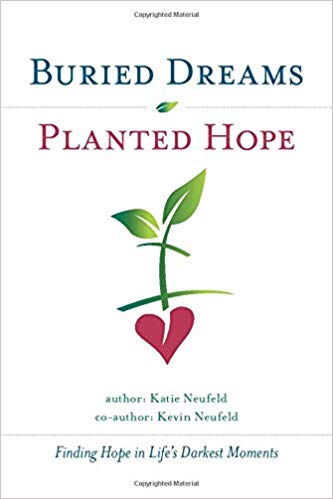
Book Review: Buried Dreams, Planted Hope

Katie Neufeld was the young daughter of our pastor when we lived in GA several years ago. In the intervening years she grew up, went to college, became a nurse, met the man of her dreams, and got engaged, following close to God each step of the way.

Then the unthinkable happened. A few months before the wedding, Katie and her fiance, Jerod, were in a horrific car accident, hit from behind and “pinballed” between two other cars. Jerod did not survive his injuries.

Katie shares her story in Buried Dreams, Planted Hope. She tells her background of how God worked in her life as she grew up, how she and Jerod met and fell in love, the accident, the raw grief afterward, and the many ways God ministered to her heart. Her father, Kevin, writes from his standpoint as a parent helping his daughter through such deep pain. At some point he realized he had suffered a loss of a friend and future son-in-law as well and had his own grief to deal with in addition to hers.

Part of their reason for writing is to share with others who might be going through their own season of grief the comfort and hope that they’ve found. Their joy is not the pasted-on, grin-and-bear-it, “everything is fine” when it’s not variety. It’s hard-won, through the pain and not bypassing it. There are still unanswered questions and mysteries about God’s will in all of this. But they’ve found, as Job and countless others have, that God shares Himself even when He doesn’t give satisfactory answers to our whys.

A few of the quotes I marked:

We made the conscious choice to be honest about our thoughts and feelings with those around us. Far too often Christians froth at the mouth with pious platitudes and paint an impossibly rosy picture (p. 3).

In all of these things, God is really taking me back to the basics and teaching me to trust. To believe that He will take care of me and provide for me in this drought. When I start to worry or dread, I am not trusting. As messy and ugly as the circumstances of my life are right now, I know my God, and I know I can count on Him (p. 113).

That last quote reminded me of something Spurgeon said about Hebrews 12:27, that God sometimes shakes up our world “that the things that cannot be shaken may remain.”

One of the lessons we learned was that it wasn’t our job to stop her tears. The Bible says to weep with those who weep. Oftentimes we attempt to stop the tears of others, but this, though well-intended, turns out to be more about our own discomfort with tears than the one who sheds them. In those initial days, there were many times where we would wrap our arms around Katie and cry with her (p. 142).

Taking every thought captive isn’t an easy or a one-time-fix-all task, but it’s a critical skill to learn and put into daily practice that will serve you well when those thoughts start to creep in that you know are not of God (p. 243).

When I reached my rock bottom, I found that Jesus was the Rock at the bottom, that sure and steady Rock that I could hold onto, the Rock that I realized was already holding on to me. And in those darkest and lowest moments, when He was all I felt I had left, I realized like no time ever before that He was all I’d ever needed (p. 245).

Suffering has this way of liberating us from the petty concerns and worries of everyday life. It clears the clutter and idols and helps us realize that Jesus really is all we need (p. 247).

Even though my story doesn’t have the cliche happy ending right now, there is still joy, although different from any I’d ever experienced in the past. A more pure form of joy (p. 252).

One of the ways God ministered to Katie was by unexpectedly bringing across her path people further along on the road of grief who could assure her that she wasn’t crazy, understand her feelings, and provide hope that things would get better. Katie and Kevin want “to comfort those who are in any affliction, with the comfort with which we ourselves are comforted by God” (2 Corinthians 1:4).

(Sharing with Literary Musing Monday, Carole’s Books You Loved, and Booknificent)

Book Review: The Inheritance

In 1996, two professors going through Louisa May Alcott’s letters and journals discovered a previously unknown and unpublished manuscript. The Inheritance was Louisa’s first novel, written when she was 17. Neither the professors nor anyone else could find any other information about the novel. There was no record of it having been submitted for publication and rejected. Maybe Louisa just wrote it for fun or for her family. After the novel’s discovery, it was published in 1997.

The heroine of the story is Edith Adelon. She was discovered as a poor orphan in Italy by Lord Hamilton, who took pity on her and brought her home. There she became a companion to Hamilton’s daughter, Amy.

As the story  opens, Edith is a young woman and Amy is a teenager. Edith teaches Amy “music, painting, and Italian, and better lessons still in patience, purity, and truth,” but she’s not exactly a governess. However, she is regarded by Lady Hamilton as “poor and lowborn,” and as such, she is not allowed to mingle with “noble” guests as an equal (p. 17). Lord Hamilton died years before. Amy’s older brother, Arthur, her mother, Lady Hamilton, and her mother’s niece, Lady Ida complete the household. A friend, Lord Percy, comes for an extended visit and the young siblings learn his background: he and his brother had loved the same woman, and once Percy found out, he stepped back for his brother’s happiness. “Careless of the wealth and honor that might be his, he prized far more the purity and worth of noble human hearts, little noting whether they beat in high or low.” He visited the “poor and suffering” and still kept a hope that he “might win a beautiful and noble wife to cheer life’s pilgrimage and bless him with her love” (p. 13).

Ida hopes to attract Percy’s attention for herself, but when she sees him favoring Edith, Ida’s latent jealousy comes to the surface. Between Ida’s verbal jousts, another visitor’s ignoble intentions, and a betrayal of her kindness, Edith has her hands full.

Yet there is a secret to Edith’s background that none of them knows. But will it be revealed or suppressed and forgotten?

The story is only 150 pages and has elements of both a Gothic novel and what were called sentimental novels. It’s a very sweet story, but a little overdone in places. Edith is too good to be true. Descriptions such as this one abound: “With an angel’s calm and almost holy beauty, Edith bore within as holy and pure a heart–gentle, true, and tender” (pp. 12-13). Likewise, Percy’s “calm, pale face and serious eyes are far more beautiful than mere comeliness and grace of form, for the pure, true heart withing shines clearly out and gives a quiet beauty to his face, such as few possess” (p. 5).

But even though Louisa’s writing is understandably not as mature as her later works, and the characters are a little two-dimensional, I thought it was very sweet and a good effort on Louisa’s part for her age then.

Several years ago I saw a film version of The Inheritance which I enjoyed immensely. It must have come out not long after the book was published. It’s been a while since I’ve seen it, but it kept to the main points of the book. A few exceptions: it has Lord Hamilton as still living for most of the film; shows Lady Hamilton as warm and friendly whereas she is described as cold and haughty in the book; and it has Edith loving and racing horses, which was not at all in the book. I’m looking forward to seeing the film again some time now that I’ve read the story.

Thankfully Tarissa, who hosts the Louisa May Alcott Reading Challenge, told me about the Internet Archive, which loans copies of books that have been photocopied page by page. It’s not quite the same as an e-book, but once I figured out how to make the page fit my iPad mini, I read it quite easily. I’m glad to know this service exists! The edition I read included a lengthy introduction by the two professors who discovered this manuscript, Joel Myerson and Daniel Shealy.

I’m counting this book as my Classic Novella (250 or fewer pages) for the Back to the Classics Challenge.

(Sharing with Carole’s Books You Loved and Booknificent)

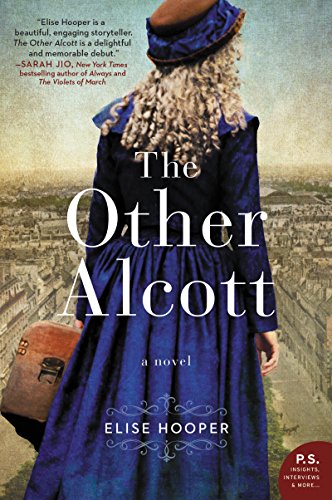
Book Review: The Other Alcott

Louisa May Alcott has been famous for hundreds of years as the author of Little Women. Not many people know that her younger sister, Abigail May (who went by May and is Amy’s counterpart in LW) had some success as an artist. May probably would have gone further in her career, but she died at the age of 39. The Other Alcott is Elise Hooper’s attempt to bring May’s story to the forefront via fiction.

The book begins just after Little Women has been published and the Alcott family received the first reviews. Praise was high for Louisa’s book, but not so kind for May’s illustrations. May decided she needed more instruction, so she approached Louisa about living with her in Boston and taking art lessons there. After some curmudgeonly grumbling, Louisa agreed.

A few years later, Louisa, May, and another friend traveled to England, where Louisa wrote and May explored and took lessons. They were prohibited from traveling to Paris at that time due to war, but a few years later May traveled to Paris on her own and continued her studies. She met John Ruskin and several other “women artists languishing in the margins of the historical record.” She became friends with Mary Cassatt during the beginnings of the Impressionist movement. Mary eventually became a well-known Impressionist, but the movement was controversial at first. May continued along a more traditional route. “Her paintings were exhibited in the Paris Salons of 1877 and 1879, major accomplishments for an artist of the era.” She wrote a book titled Studying Art Abroad, and How to do it Cheaply.

She met and married Ernest Nieriker, a Swiss tobacco merchant and violinist, in 1878. In November of 1879, May gave birth to a daughter named after Louisa but called Lulu. But May died seven weeks later, Wikipedia says from childbed fever, Hooper says from cerebral spinal meningitis. May wanted Lulu to be sent to Louisa in the event of here death. Louisa raised Lulu until her own death ten years later, when Lulu was sent back to her father.

I enjoyed learning more about May’s life. I had particularly wondered why her daughter was sent to Louisa, and this gave insight into that decision. It was interesting to read of the Impressionist movement’s beginnings.

May and Louisa seemed to be the most headstrong and spirited of the Alcott sisters. May’s burning of one of Louisa’s early manuscripts (an event that really happened and was portrayed in LW) gives a glimpse of the way they could clash. But I felt Hooper played up their differences and potential for butting heads a bit overmuch. She admits in her afterward that the estrangement between the two in her book was made up for the story. I know authors may have to make up some details and dialogue in a fictionalization of a true story, but I felt this went too far. Hooper also portrayed May as resenting the way her book counterpart, Amy, was portrayed. I don’t know if this is true or made up or over-emphasized for the book. The book indicates Louisa was unhappy about May’s marriage and suspicious that her husband was really after Louisa’s money, but Wikipedia says, “Louisa Alcott called the day a ‘happy event’ and described Ernest as a handsome, cultivated and successful ‘tender friend’. Further, ‘May is old enough to choose for herself, and seems so happy in the new relation that we have nothing to say against it.'”

Louisa comes off as mostly grouchy in this portrayal. The author says of May, “Creating beauty through art made her happy. And being happy seemed to be her natural state.” But Hooper did not portray May as happy except during her courtship and early married days.

Hooper describes one scene where May finds herself in a class of all men sketching a male nude model who, when he sees May, acts lewdly toward her. Again, I don’t know f this scene is real or invented, but even if real, it went into more detail than needed.

So, I have mixed emotions bout the book, and reviews seem to be mixed as well. Though I did enjoy learning more about May, and I think the cover of the book is gorgeous, I don’t think I will be reading this author again.

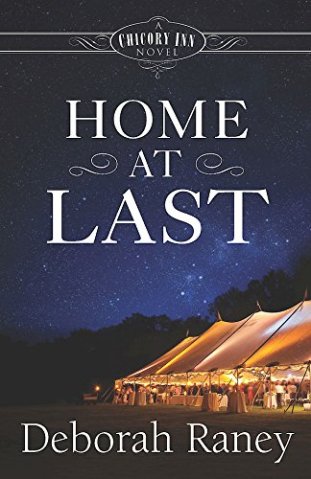
Book Review: Home at Last

 Home at Last is the last book in Deborah Raney’s Chicory Inn series. Link Whitman is the oldest and only remaining son of bed and breakfast owners Grant and Audrey Whitman. He’s 29 and single. He’d like to have a family like the rest of his siblings, but has been too involved with work and has just never found the right girl. He tries to avoid disastrous set-ups with relatives of his mom’s friends.

Link is not above a little flirtation now and then, however. On his way to the bakery on cold morning for his mom, he anticipates seeing Shayla, the cute girl who works there. But right in front of the bakery, suddenly a young girl runs into the street. Link has trouble stopping on the icy road, but manages to swerve his pickup and miss her. Then Shayla comes running out, terrified and angry with him. At first he thinks the little girl is Shayla’s daughter, but finds she’s the niece – but a niece that Shayla is responsible for.

This incident sets Link and Shayla off on the wrong foot. But overcoming this rough start proves easier than handling their more serious differences. Shayla is of mixed race, with neither set of grandparents approving her parents’ marriage. Her mother has died, her brother is in jail, and her father is bitter and disillusioned. She thinks there are too many obstacles and issues that Link would never understand.

But Link wants to try and convinces her to go out with him – along with her niece, Portia. The path isn’t easy, with misunderstandings and misconceptions on both sides. Will they overcome them or give up trying?

I enjoyed this last visit with the Whitman family and felt Deborah handled the issues involved with sensitivity and understanding.

(Sharing with Carole’s Books You Loved and Booknificent)

Book Review: Wuthering Heights

For years I avoided reading Wuthering Heights by Emily Bronte. I had seen a couple of film adaptations and did not like them. But every year when I chose books for the Back to the Classics Challenge, Wuthering Heights came up as a possibility. This year, I took into account that books are usually better and fuller than their movie adaptations, and there must be some reason so many people love this story. So I put the book in my queue.

The story begins with a Mr. Lockwood taking possession of a house rental. He goes to see his landlord at a neighboring house, Mr. Heathcliff of Wuthering Heights. Being a solitary man himself, Mr. Lockwood rejoices to find out that Mr. Heathcliff seems to be of the same disposition. But on this and a subsequent visit, he discovers Mr. Heathcliff and his whole household are not just loners: they’re strange and surly, even cruel.

Wanting to find out more about the household, Lockwood asks his housekeeper, Nellie Dean, for more information. She tells him that she was housekeeper for the Earnshaw family who used to live at the Heights. They had two children, Hindley and Catherine. On a business trip, Mr. Earnshaw found an abandoned child and brought him home. The rest of the family thought the child a gypsy and did not like him. Earnshaw took Heathcliff’s part against Hindley, which incited Hindley’s further mistreatment of Heathcliff. Finally Hindley was sent away to college and Heathcliff and Catherine became close.

When Earnshaw died three years later, Hindley came back, married now, and assumed the role of master of the house. He treated Heathcliff as a common laborer.

One night Heathcliff and Catherine headed over the the neighbor’s house at Thrushcross Grange, where they peeped in the windows and made fun of the two Linton children.Then the family’s dogs came after them, biting Cathy. The family rescued and took Catherine in, sending Heathcliff back home. Cathy spent five weeks recuperating at the Grange. When she returned home, she was no longer a wild young, at least outwardly. She had seen another side of life which tamed and refined her, and she and Edgar Linton had feelings for each other. Eventually Cathy and Edgar married, and Heathcliff left.

Hindley and his wife had a son, Hareton. Hindley’s wife died and Hindley checked out of life, drowning in drink and gambling. Nellie took care of Hareton.

After three years Heathcliff returns with wealth from an untold source. He wants to renew his relationship with Cathy, who advises Edgar to allow it against his better judgment. Edgar’s sister, Isabella, falls in love with Heathcliff, despite Cathy’s warnings against him. Heathcliff only encourages Isabella’s interest out of revenge. A series of arguments result in Catherine becoming gravely ill and Heathcliff and Isabella eloping. Catherine has a daughter, Cathy, and dies.

Heathcliff returns and sets himself up at Wuthering Heights, lending money to Hindley only to ensnare him in debt. When Hindley dies, Heathcliff owns the Heights.

The rest of the book details Heathcliff’s manipulation and revenge carried out in the lives of Cathy’s daughter and his son.

My thoughts:

Wuthering Heights has had mixed reviews since it was first published. Respect for it has risen over the years: it even ranked as the number one love story in a poll several years ago. But others were shocked at it: one recent reviewer referred to it as a hot mess. Not a lot is known about its author, Emily Bronte, except that she was a very private person and she loved the moors, where the book is set. She died at the age of 30, a year after the book’s publication.

The introduction to the audiobook I listened to said one reason the book shocked people was because it had no moral. But I don’t think it needed to have a stated moral to convey the cruelty and futility of revenge. At first the reader feels sorry for Heathcliff’s being mistreated by everyone on the planet (including even Nellie and Catherine at first), and that treatment certainly contributed to his character. But his revenge exceeds normal bounds, wanting to ruin, control, and even annihilate the people and property connected with those who wronged him (near the end, when he has both houses, he speaks of arranging his will and wishes he could destroy both properties rather than let anyone have them).

Plus, I don’t think what Heathcliff and Catherine had was love. An unhealthy obsession, maybe. They both seemed motivated by selfishness than concern for each other’s good.

Also, there’s almost no “good” character. Joseph, the one religious character, curses and complains. Nellie shades the truth and outright lies. Even Lockwood takes a hand that has reached through his window and presses it against the cut glass. The daughter Catherine is better than most, but still motivated by self-will more often than not. But at least she does seek the good of her father and her cousin at times.

Still, there’s a strange fascination with the book — maybe it’s partly motivated by wondering how all these odd people and situations will end up. I had not known until a recent reading of one of Frances Hodgson Burnett’s books that “wuthering” meant a strong, even fierce wind. There is something strangely drawing about the wildness of the setting and story.

And Emily was a skilled writer. I loved how the characters revealed themselves by their conversation. Even in the opening paragraphs, Lockwood tells much about himself in his little asides and observations. Emily mastered “showing, not telling” even then.

I listened to the audiobook nicely read by Joanne Froggatt (Anna in Downton Abbey) and read over some passages in the online version. I chose this for the “Classic Tragic Novel” category of the Back to the Classics Challenge.

(Sharing with Carole’s Books You Loved and Booknificent)

The Little Women Treasury

The Little Women Treasury by Carolyn Strom Collins and Christina Wyss Eriksson is aptly named: it’s a treasure trove for Little Women fans.

The authors give an abbreviated history of author Louisa May Alcott’s life and share pictures of her and her family. Another chapter gives a brief description of each of the four March sisters, an illustrated family tree, and a brief overview of their lives as traced through the books about them: Little Women, Little Men, and Jo’s Boys.

Other chapters include details about Orchard House, the Alcott family home (they only lived there for nineteen years, but that’s where Louisa wrote Little Women); details of the March family life; a time line of world history dovetailed with incidents in the Little Women books and sequels; recipes, some from the book and some common to the era (I was glad to learn what blancmange was); activities from the books that readers can try (how to make a “work basket,” “mark” handkerchiefs like Beth, make a mailbox, etc.); fashions of the era; and gardening and floral crafts from the era, with a mention of each of the March girls’ garden plots.

The illustrations and embellishments are lovely and in keeping with the era. I thoroughly enjoyed this treasury.

LMA-button

Tarissa at In the Bookcase hosts the Louisa May Alcott Reading Challenge every June to encourage reading or listening to books by or about Louisa or about her family. I’m thankful she let me know about this book!

(Sharing with Carole’s Books You Loved and Booknificent)

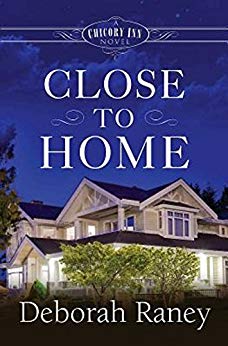
Book Review: Close to Home

 Close to Home is the fourth in Deborah Raney’s Chicory Inn series, where empty nesters Grant and Audrey Whitman have transformed their big, rambling home into a bed and breakfast. Each book focuses on one of their five children. This book, however, tells the story of daughter-in-law Bree. Bree had been married to their youngest son, Tim, who had died a solider in Afghanistan. Bree had issues with her own parents and drew close to the Whitmans. They, in turn, considered Bree as one of their own.

It’s been five years since Tim’s death. Bree’s coworker, Aaron, has shown an interest in her, but she’s just not sure she’s ready to date again. Yet she decides to go out with him just as friends. She enjoys him and the relationship, yet something isn’t right. Is it that Aaron isn’t the right one, or that Bree doesn’t want to lose her relationship with the Whitmans?

Another plotline in this book is that feisty Grandma Ceecee has been having some issues that make Grant and Audrey wonder how much longer she can live alone. Ceecee has already said she would not go to a nursing home. Yet it’s seeming less safe than ever for her to be on her own. And with the inn, they don’t think they can manage caring for her at their home.

As soon as one character from a previous book showed up, I had a feeling which way the plot would go. But I enjoyed the journey nonetheless. I have not been in Bree’s situation, but I could sympathize with her dilemma. And, as many of you know, we have dealt with a parent needing care, so I could empathize with the characters in that situation as well. As always, I enjoyed the time with the Whitmans. Though they have their squabbles and irritations, they they love each other, support each other, and pull together.

Previous books in this series (linked to my reviews):

(Sharing with Carole’s Books You Loved and Booknificent)

Book Review: The Returning

In the novel The Returning by Ann Tatlock, Andrea has loved her husband John since they were teenagers. She knew he did not love her and only married her because he had to after she became pregnant. But she hoped that his heart might change someday.

Now John has just been released from prison, where he spent the last five years after accidentally killing a man while driving drunk. Andrea is not sure how everything will work after the adjustments of the last few years.

Their youngest daughter, Phoebe, was just a baby when John left, so she doesn’t remember her father and is afraid of him. Teenage daughter Rebekah is angry and rebellious. Only their oldest son with Down Syndrome, Billy, seems genuinely happy to have John home.

John knows he has a lot to overcome. His brother-in-law gave him a low-paying job, but he needs to find something better. He needs to rebuild his relationships with his family. And he needs to tell them what happened to him in prison when he committed his life to Christ. His biggest need, though, he doesn’t even realize yet: he needs to get grounded in his faith and grow. When he succumbs to temptation again and again, he begins to wonder if Rebekah is right in her accusation that his faith was just “jailhouse religion.”

A friend went through this scenario with a husband returning home after several years in prison, though the details were different. Even with all parties wanting to heal and put the family back together again, they faced difficulties. I thought Ann showed this struggle tenderly and realistically within the framework of the Sheldon family’s circumstances.

Ann says in her acknowledgements page that Billy’s character was inspired by Down Syndrome actor Chis Burke. Chris and his mother read Ann’s manuscript and offered feedback. She also talked with local parents and others who work with people with Down Syndrome.

My only difficulty with this story is that Rebekah is into some pagan-ish, New Age-y practices along with her best friend. I don’t have a problem with this being in the story, as people do turn to these things (and, spoiler alert, Rebekah finds they give her no peace or answers). But I’ve found I am sensitive to this kind of thing, so when Rebekah was performing her rituals, I had to skim through those pages.

But overall, I enjoyed the story very much. I ached along with each character in their difficulties and rejoiced with them in their victories.

(Sharing with Booknificent Thursday, Carole’s Books You Loved)


Book Review: Promises to Keep

In Ann Tatlock’s novel, Promises to Keep, eleven-year-old Roz Anthony has just moved with her mother, older half-brother, and younger sister to a small town in Illinois in the 1960s. Roz’s mother, Janis, was compelled to leave her abusive husband, and her father helped set her family up in a new home.

After just a few days, though, they found a stranger sitting on their porch, reading their newspaper. She was a rather large older woman named Tillie Monroe, and she said this was her house. She had helped build it with her own two hands along with her husband, and no matter what the paperwork said, it was her house. All she wanted was to die in her home, but she had fallen and broken her hip, and her kids whisked her away to a nursing home. But now she’s better, and she wants to live in her own home

About that time, Tillie’s son drives up, apologizes profusely, and takes his mother back to the nursing home.

But a few days later, Tillie is back on her . . . er, their porch. Janis invites her in for coffee. Another time Janis comes home to find Tillie cooking dinner for them.

This happens so often that Janis is relatively sure that Tillie is safe and invites her to stay. The relationship is mutually beneficial as Tillie watches the children and helps out around the house while Janis works.

While Roz adjusts well to all the changes and even provides a humorous narration, she misses her father. She tries to focus on the good memories, but the bad ones creep in. She feels if her father could just stay the good dad and leave off the Dr. Jekyll bad side, they could all be together again.

Meanwhile, Roz faces a new school with trepidation. But she finds a friend in a black girl named Mara. She soon learns that Mara has her own daddy issues, secrets, and dreams. They girls decide together to pray for their secret dreams.

Though the family was healing and readjusting after all they had been through, the first part of the book seemed lighthearted and fun as the family interacted with Tillie and as Roz observed and processed her world. One sub-plot line could have worked out for good or bad, and Ann reeled out the tension and information skillfully. The dramatic climax was a surprise to me — I was expecting something, but not what happened.

I’ve enjoyed all of Ann’s books that I’ve read so far, but this will be a favorite. Roz and Tillie are a couple of my favorite characters.

(Sharing with Booknificent Thursday, Carole’s Books You Loved)