Book Review and Giveaway: Catching Christmas

 In Terri Blackstock’s novel, Catching Christmas, Finn Parrish is a grumpy cab driver called to the house of an old woman named Callie. First he’s put out to make a residential call, as he needs money and can make more in the city or at airports. Then he finds the old woman alone and asleep in her wheelchair. She wakes up and introduces herself—and continues to fall asleep, wake up, and introduce herself for the rest of their time together. When she is awake, she makes unfiltered comments on the people she sees.

Finn takes her to her doctor’s office and tries to explain to the distracted receptionist. He leaves for a few hours, but can’t get his mind off Callie. He drives back by the doctor’s office to check on her, and finds her asleep right where he left her. He makes a fuss insisting that they see her now and waits for her, then takes her home. He leaves his card in case she needs help and wonders what kind of loved ones she has, that they would leave her in such a state.

Callie’s granddaughter, Sydney, is a lawyer in a firm that is downsizing. Her job is hanging by a thread, dependent on her current ridiculous case, one she doesn’t believe in. On top of the extra work created by layoffs, her grandmother suddenly seems to be not quite in her right mind. She wished she could have accompanied her to the doctor, but they both need her job.

The next day Finn gets an early call from his dispatcher. A customer has requested him by name. He’s thrilled until he finds out it’s Callie. She wants him to take her several places in town. He doesn’t want to be stuck with her all day, doesn’t want to be responsible for her, and can’t afford to spend his day on one fare. But he goes. Callie has a way of talking people into what she wants, and she has a secret mission.

This book is outside Terri’s usual suspense dramas (though there’s a touch of suspense when a black limousine shows up). But I’m so glad she wrote it. It’s a sweet and touching story, just right for the holidays. Finn and Sydney don’t have much of a spiritual foundation, but they’re impacted by Callie and some of the people in her life. The faith element is not spelled out quite as much as I’d like: Finn and Sydney are just beginning to understand what it means. But it’s a strong undercurrent.

I also enjoyed reading Terri’s afterword about the influences that went into the story.

I’d like to give away my gently-used copy of this book. If you’d like to enter a drawing to win it, leave a comment on this post. I’ll draw a name on Wednesday morning, Dec. 18, the same day as my giveaway for The Carousel Painter. You can enter both giveaways but only win one: if you’d like to enter both but have a preference of one over the other, let me know. Due to mailing costs, I can only ship to continental US addresses. I’ll count all comments on this posts as entries for Catching Christmas unless you ask me not to.

Even if you don’t win, I hope you’ll check out this great book.

(Sharing with Global Blogging, Senior Salon, Carole’s Books You Loved, Booknificent)

 

(Update: The giveaway is closed and the winner is Becka. Congratulations, Becka!)

Book Review and Giveaway: The Carousel Painter

In the novel The Carousel Painter by Judith Miller, Carrington Brouwer has just traveled from France to Ohio. Her artist father has died and Carrington needs to find a means to support herself. She had befriended a young American women visiting France named Augusta, who had invited her to Ohio. But now Augusta’s mother, preoccupied with climbing the social ladder, is clearly not pleased. When Carrington learns that Augusta’s kindly father owns a carousel factory and needs an artist to paint the horses, Carrington assures him she could perform the job.

He hires her, but it’s uncommon for a woman to work in a factory full of men in 1890. Some protest and complain; some of the wives accost Carrie in public to try to scold her into quitting. Some men go so far as to quit or sabotage her work. Her supervisor, Josef, is not happy to have her there, but he can only abide by the boss’s wishes. The fact that Carrie is a friend of the boss’s daughter, and Carrie goes to their house every weekend, doesn’t sit well with the men, either.

Eventually Carrie’s talent speaks for itself. But a new enemy arises in the form of Augusta’s suitor, who has eyes for Carrie. Then some of Augusta’s mother’s jewelry is stolen, and Carrie is blamed.

Carrie’s mother had taken her to church, but her father “said God was for weak people who needed a crutch to get through life. Mama didn’t agree. She said believers were the strong ones because they had faith in something beyond what they could see and feel. I tended to agree with Mama. At least until she died.” Part of Carrie’s journey is realizing she has issues with besetting sins like pride.

I enjoyed the story and they way some of the relationships developed over the course of the book. Josef ended up being my favorite character. I also liked learning the background of how carousels were manufactured and painted. I guess they are probably made of molded and dyed plastic now. The old ones were individual works of art. I loved the cover.

Somehow I ended up with both a paperback and Kindle copy of this book. I read the Kindle version, so I’d like to give away the paperback. If you’d like to be entered in the drawing for the book, just leave a comment on this post. (I’ll take all comments here as entries unless you let me know you’re not interested in receiving the book). I’m afraid I can only ship to US addresses due to shipping costs. A week from today, Wednesday, Dec. 18, I’ll draw a name from the entries to determine the winner.

(Update: The giveaway is closed and the winner is Vickie. Congratulations!)

(Sharing with Carole’s Books You Loved, Booknificent)

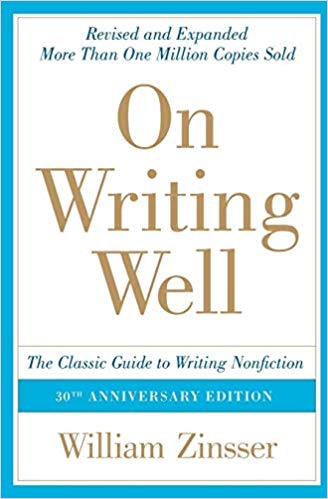
Book Review: On Writing Well

 On Writing Well by William Zinsser is on just about every list of books recommended for writers. The subtitle, which I assume is not originally Zinsser’s and was added later, is “The Classic Guide to Writing Nonfiction.”

Zinsser lived from 1922-2015. He began as a journalist, later wrote for magazines, wrote books on a wide variety of topics, and then began to teach writing. That vast experience informs this book.

On Writing Well was published in 1976 and has been updated numerous times. My copy was published in 2016 with a 2006 introduction by Zinsser explaining the most recent update to include the computer era.

The first of the book’s four parts covers “Principles”: grammar, style, word usage, eliminating clutter, etc.

Part 2 deals with methods: the unity of the piece, the lead and ending, and various other aspects.

Part 3 discusses a variety of forms: the travel article, memoir, science and technology, sports, business, arts, humor. I might have been tempted to skip or at least skim through this section, as most of my writing doesn’t fit those categories. But I have a compulsion to read all of a book. And I am glad I did. A couple of the principles in this section are:

De-jargonize. Almost any field has its own vocabulary. One business hired Zinsser specifically to help them with communication, because even their engineers couldn’t understand each other any more. In one exercise, he had educators rewrite “Evaluative procedures for the objectives were also established based on acceptable criteria,” keeping in mind “clarity, simplicity, brevity, and humanity.” The best result: “At the end of the year we will evaluate our progress” (pp. 171-172).

Focus on the human element no matter what you’re writing about. He gave an example about race car driving, something I have zero interest in. But the piece grabbed me because it shared one person’s story rather than a detailed technical report.

Part 4 explores attitudes: developing confidence and your own style, etc. In one chapter in this section, he gives readers a window into his thought processes by taking them through a longer piece he wrote and discussing why he made the choices he did.

The “clarity, simplicity, brevity, and humanity” mentioned earlier are what the author calls his “four articles of faith” (p. 171). Those are his main themes, demonstrated by example time and again.

This book is chock-full of good instruction and tips. I have markings and sticky tabs on almost every other page. Here are a few of the standout quotes:

Writing is hard work. A clear sentence is no accident. Very few sentences come out right the first time, or even the third time. Remember this in moments of despair. If you find that writing is hard, it’s because it is hard (p. 9).

The race in writing is not to the swift but to the original (p. 34).

Every successful piece of nonfiction should leave the reader with one provocative thought he or she didn’t have before. Not two thoughts, or five—just one. So decide what single point you want to leave in the reader’s mind (p. 52).

Don’t annoy your readers by over-explaining—by telling them something they already know or can figure out. Try not to use words like “surprisingly,” “predictably,” and “of course,” which put a value on a fact before the reader encounters the fact (p. 91).

True wit, however, is rare, and a thousand barbed arrows fall at the feet of the archer for every one that flies (p. 194).

Don’t alter your voice to fit your subject. Develop one voice that readers will recognize when they hear it on the page (p. 231).

Now, if I could only keep all these wonderful helps in mind all the times I’m writing! I generally only read 3-4 pages at a time so I could process as I went. But I think this is a book I’ll need to reread often in the coming years.

Have you read On Writing Well? What was a major takeaway for you?

(Sharing with Booknificent, Carole’s Books You Loved)

Book Review: Engaging the Scripture

I enjoyed Deborah Haddix‘s Journaling for the Soul so much, I bought her new Engaging the Scripture: Encountering God in the Pages of His Word not long after I first saw it.

I love that Deborah emphasized engaging the Scripture—not just reading an assignment, not just searching for information. Rather, “we are to read intentionally with the purpose of hearing from God, knowing Him, deepening our relationship, and nourishing our soul” (p. 28).

Deborah has chapters on the importance of God’s gift of His Word, dealing with distractions, further explanation about what’s involved in engaging the Scripture. Then she has a chapter for each aspect of engaging Scripture: reading, writing, meditating, memorizing, and praying it. A later chapter shares ways to interweave these practices (meditating while memorizing, praying verses while writing them, etc,)

Each chapter is fairly short: three to six pages of text, a page of personal reflection about the chapter, a section on resources for implementing the chapter, and a practice page or two.

Each chapter includes multiple ideas for engaging, with the encouragement to chose which works best with your wiring, schedule, and season of life. Tidbits of advice, encouragement, and wisdom are interspersed throughout the pages. Just a few:

Experiencing distractions during our quiet time does NOT make us a failure (p. 34).

Overwhelm often results in total abandonment. Start small. Experience success. Then incorporate additional ideas as you move forward (p. 39).

The physical food we take into our physical body does not nourish us unless we properly digest it and take it into our cells. Just as physical food is needed for physical strength, spiritual food is necessary for spiritual strength. The Word you read (the spiritual food) must be chewed, digested, taken into your being, and one way to chew your food is by memorization (p. 100).

Deborah has mastered the art of writing the way writers for the Internet are advised to: short paragraphs and lots of white space. The book isn’t long, but its style makes it seem even more manageable.

This is a wonderful resource that I highly recommend.

(Sharing with Carole’s Books You Loved, Recharge Wednesday, Booknificent,
Grace and Truth, Senior Salon, Global Blogging, Inspire Me Monday,
InstaEncouragment, Worth Beyond Rubies, Heart Encouragement)

Book Review: The Swiss Family Robinson

Finding a good translation of Swiss Family Robinson is not as easy as one would think.

The book was written by a Swiss pastor, Johann David Wyss, and originally published in 1812. Wyss wrote the story for his sons to teach about spiritual and family values, industriousness, and wise uses of plants and animals. One of his sons edited the book and one of them illustrated it (both named Johann, like their father, but with different middle names).

After that, the book passed through multiple hands which translated and added to or deleted from the story. I listened to an audiobook version and scanned a Kindle version which were alike at the beginning but had different characters and scenes in the second half.

The story, as I am sure you know, involves a family of two parents and four sons shipwrecked on an island somewhere in the East Indies. The family name is not Robinson: their last name is never mentioned. The book is styled somewhat after Robinson Crusoe: he is even referred to often in the book.

Their first order of business is to get as much as they can off the ship before it sinks and to find suitable shelter. They are able to gather some food from the ship, but then need to search the island to see what they can find.

Fortunately, the father has a wealth of knowledge of botany. He knows the scientific names of plants as well as their uses.  One book I read recently said ministers of a certain era were expected to know a lot about botany. That may be the case here, or it may have just been an interest of Wyss’, or he may have crammed as much as possible into the story as a teaching tool.

They also get acquainted with the fauna as well as the flora. They use some animals as food and tame others to help them in their work.

The first half of the book details how they discovered the resources of the island and made a place for themselves. The only real danger they run into is a pack of jackals.

At the end of this section (what I think is the end of the original book), the family is content on their island and want to remain there. They’ve constructed various building projects and have plans for a sawmill and other industries. The father’s only concern is that his children will be alone when he and his wife pass on.

In the version I listened to, the father then espies a vessel at sea after about four years on the island. He meets a couple of men from the ship and gives them the journal he has kept. The men were exploring the island to see if it was suitable for the ship to land. They plan to put their people on boats and bring them in the next day. But a storm drives them out to sea again, and the family fears they ship is lost.

There’s a lot more drama in the second half: a couple of serious injuries, a massive storm, encounters with “savages” from another island. They discover a European missionary and a widow with two daughters on this island. The ship they had encountered was not lost at sea, but eventually made it home, along with the father’s journal. Another ship comes back to find them, and then decisions are made as to their future.

In the Kindle version, which happened to be the Kingston translation and is apparently more well known, the time jump in the second half is closer to ten years. The family discovers a girl who has been shipwrecked, Jenny Montrose. Eventually a ship comes looking for her, and decisions have to made about everyone’s future.

The first part is interesting, but a little dry, since the only action is discovering certain plants and animals, building a couple of different homes, handling whatever problems come up. The second half drew me in more since there was more action.

The four boys’ personalities are well-drawn and distinct.

Christian values form a major part of the story. The father corrects the children in various ways (especially in manifestations of pride). The family prays together, keeps Sunday set apart, applies Christian principles to life. One example, when they first discover the sailors on the ship have left them behind:

See how those on whose skill and good faith we depended have left us cruelly to our fate in the hour of danger. God will never do so. He has not forsaken us, and we will trust Him still. Only let us bestir ourselves, and each cheerily do his best. Who has anything to propose?

All in all, it was an enjoyable story. It was written for young people, but I wonder how it reads for young people now.

Near the end, the father in the story writes:

And my great wish is that young people who read this record of our lives and adventures, should learn from it how admirably suited is the peaceful, industrious and pious life of a cheerful and united family, to the formation of strong, pure and manly character.

You’re probably familiar with the 1960 Disney film version (which added pirates to the mix). We saw it ages ago, but I’d like to see it again some time now that I’ve read the book. There have been various other film versions as well. When my children were young, we saw a cartoon series version from the viewpoint of a daughter.

Besides Wikipedia, a couple of interesting articles about the book are:

I read this book for the Classics in Translation category of the Back to the Classics challenge.

Have you ever read Swiss Family Robinson? What did you think?

(Sharing with Literary Musing Monday, Carole’s Books You Loved, Booknificent)

Literary Christmas Reading Challenge 2019

A Literary Christmas: Reading Challenge // inthebookcase.blogspot.comTarissa of In the Bookcase hosts the Literary Christmas Reading Challenge each year in November and December. The basic idea is to read Christmas books! Since I like to read Christmas books in December anyway, this challenge was a nice fit. The details of the challenge are here.

One of the requirements of the challenge is to write a post expressing our intent to participate and sharing what we’ll be reading.

I have these books on hand and hope to read as many of them as possible:

Book Review: Canteen Dreams

 Canteen Dreams is a novel based on author Cara Putman’s own grandparents. It was her first book, released eleven years ago. But Cara wanted to fine-tune and re-release it. This edition came out on 2017.

The story opens December 6, 1941. Audrey Stone attends a dance in her home town of North Platte, Nebraska, and is asked to dance by local rancher’s son, Willard Johnson. Willard is interested and wants to get to know Audrey better.

Then Sunday morning, the Japanese attack Pearl Harbor, and everything changes.

Willard’s brother, Andrew, was in the Navy. While the family waits to hear about Andrew, Willard would like nothing better than to enlist immediately.

But Willard’s father won’t let him. Farming and ranching are exempted occupations, since the country needs their work. Willard’s father feels he needs Willard’s help more than the military needs him.

Since North Platte is a railroad hub, and lots of troops come through on their way to service, someone gets the idea to offer the boys food and coffee during their brief stop. The young men are so encouraged and appreciative of the effort that the train stop refreshments grow into a canteen, with a nearby building, music, sandwiches, and a friendly atmosphere.

Audrey throws herself into working the canteen, on top of her full-time job as a teacher. She has little time for anyone or anything else, which doesn’t help her budding relationship with Willard.

Willard’s dissatisfaction with not being able to enlist grows into resentment and jealousy of the young soldiers at the canteen, which further impacts things with Audrey.

Both Willard and Audrey are believers and struggle with seeking God’s will for their lives. I liked their pastor’s counsel, especially these bits:

Let the sure hope we have in Christ build a bedrock of faith in your life. It’s the only way to survive a storm like the one your family has entered.

He is the vine, and we are the branches. We cannot expect to have the strength to lay down our lives, our rights, for others until we are firmly growing in a deep relationship with Christ. A superficial relationship is not sufficient. Without more, we will fail every time in our attempts to die, because we attempt to do it without the strength and love God gives.

This was a sweet story in itself, but knowing it was based on a real couple made it even more enjoyable.

(Sharing with Literary Musing Monday, Carole’s Books You Loved, Booknificent)

Book Review: Jessie’s Hope

 In Jennifer Hallmark’s debut novel, Jessie’s Hope, Jessie is a young woman who lives with her grandparents. An accident that claimed her mother’s life left Jessie in a wheelchair since childhood. Jessie’s father abandoned the family.

Jessie is engaged to Matt and looks forward to their marriage. But she wrestles with several issues. Does Matt really love her, or does he just feel sorry for her? Though she longs to be independent, she worries that she won’t be able to be the wife Matt needs. And she wonders about her father and whether she should try to look him up.

Jessie’s grandfather, Homer, wants to provide Jessie with a beautiful wedding, but funds are limited. He goes to a ritzy wedding shop to see what can be done, but can feel their scorn towards a poor farmer in overalls who couldn’t possibly afford anything in their shop.

The course to a perfect wedding never did run smooth (apologies to Shakespeare), and a variety of problems crop up before the big day.

A secondary story line involves Angeline. She works at the ritzy wedding shop and had a crush on Matt, but he rebuffed her. She’s jealous of Jessie and feels Jessie views her as an enemy. But then they are thrown together in unexpected ways.

This is a sweet story with a number of underlying themes: the difficulty and necessity of forgiveness, the need to yield to God’s control instead of our own and to walk with Him by faith, the need to help others.

I love the strong sense of place Jennifer created. The contemporary Southern setting is distinct without being overly romanticized. The dialogue is just what I grew up with:

“What can I do you for?’

“If it tweren’t one thing, it was another.”

The cover is lovely and fits in well with the story.

My only quibble is that when Jessie us talking with another girl about becoming a Christian, the conversation revolves around accepting God as one’s Father. I think probably the author put it that way because both girls had father issues, and even though earthy fathers fail and forsake us, our heavenly Father never will. However, there are people who call on God as Father who do not trust Christ as Savior. Jesus and his death on the cross isn’t even mentioned in the conversation. Perhaps the author felt this character had been exposed to other aspects of the gospel in earlier encounters with Christianity. But I wish this had been a little more clear.

Otherwise, this is an excellent book. At the moment it’s on sale for the Kindle app for $3.99. You can learn more about Jennifer at Alabama Inspired Fiction.

(Sharing with Carole’s Books You Loved)

Book Review: The Printed Letter Bookshop

The Printed Letter Bookshop is the name of a book store as well as the title of Katherine Reay’s novel.

Madeline’s aunt Maddie, for whom she was named, has just died. Madeline has fond memories of staying with her aunt and uncle years ago and helping out in their bookshop. But some altercation came up between Madeline’s father and his sister. In loyalty to her dad, Madeline has kept her distance from Maddie.

Madeline thought she was going to make partner in her law firm, but she doesn’t. At a crossroads, she learns that Maddie has left her store, home, car, everything to Madeline. Madeline figures she will probably sell everything in a few months. For now she goes to check things out.

Janet was one of Maddie’s employees, the one who stayed with her in the last weeks of her illness. Janet has a kind heart but a crusty exterior, at least at first. Her base-level emotion is anger. Her marriage split up recenty, and her children, blaming her, want little to do with her.

Claire, Maddie’s other main employee, is a wife and mom. Her husband is a busy, successful consultant. Her children are constantly busy with friends, school, and activities. Her once close relationship with her daughter has cooled. Claire feels invisible.

Janet and Claire feel uneasy about Madeline, especially with her distance from her aunt and the uncertainty of her future plans for the shop. For them, the shop is their refuge, the place where they find purpose. But in working together and getting to know each other, the three women eventually form new relationships and gain new insights into themselves and each other.

The chapters rotate between the different womens’ points of view. I thought it odd that Madeline’s and Janet’s chapters were written in the first person and Claire’s in the third until near the end. But as Claire’s story unfolds, the reason for the difference in the story’s points of view becomes clear.

Katherine’s books all contain a wealth of literary references, usually to classics. With this story revolving about a bookshop and stories, literary references flow delightfully freely. Her list of classic and modern works referred to at the end covers three and a third kindle-sized pages.

A couple of my favorite quotes from the book:

That’s what books do, Maddie used to say; they are a conversation, and introduce us to ourselves and others.

You could lose yourself in a book and, paradoxically, find yourself as well.

I am from a different faith community than the main spiritual spokesperson in the book. I have dear friends within that community, but we know there are significant areas where we disagree. While I wish a couple of spiritual aspects were clearer, I felt the book did bring out some good spiritual truths.

I enjoyed the literary references and each woman’s unfolding journey individually and together. And I loved the book cover!

(Sharing with Carole’s Books You Loved, Booknificent)

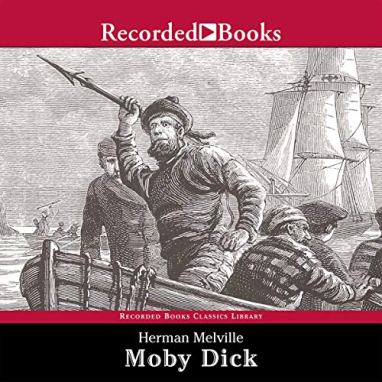
Book Review: Moby Dick

According to Wikipedia, Herman Melville wrote to his publisher that he was working on “a romance of adventure, founded upon certain wild legends in the Southern Sperm Whale Fisheries, and illustrated by the author’s own personal experience, of two years & more, as a harpooneer.” That book was Moby Dick, based on a real whale named Mocha Dick.

Unfortunately, the book did not do well during Melville’s life time. Interest in it was renewed at the centennial of his birth, with many then praising it.

One of literature’s most famous opening lines, “Call me Ishmael,” may indicate that Ismael is not his real name. On the other hand, most of the characters go by one name, first or last, so maybe Ishmael sets the precedent right off the bat. Ishmael is not a full-time seaman. He is a schoolmaster who gets a hankering to go out to sea sometimes when land life gets too much for him. He’s a loquacious narrator, telling minute details of the story, giving several examples of a concept, and going into teacher mode to describe whaling practices, features of the whale, whales depicted in art and why the artists get them wrong, etc. etc.

Ishmael starts off making his way to Nantucket to look for a sailing vessel. He explains that instead of going to sea as a passenger who has to pay, he goes as sailor who gets paid for the voyage. The inns are crowded, so he has to share not only a room, but a bed with a stranger. He’s mortified to discover in the middle of the night that his bedmate is a cannibal, Queequeg. But eventually the two become fast friends.

They are hired for the Pequod, a whaling vessel, by the owners. They don’t meet the captain yet, as he is recovering from an illness.

Even before they set sail, foreshadowings abound that something dire might happen. The preacher in Nantucket gives a sermon about Jonah and a strange man calling himself Elijah gives cryptic warnings.

The sailors meet the three mates with vastly different personalities. Starbuck, the first mate, is 30, thin, serious, pious, a bit superstitious, courageous but not foolish. The second mate, Stubb, was “happy-go-lucky; neither craven nor valiant; taking perils as they came with an indifferent air; and while engaged in the most imminent crisis of the chase, toiling away, calm and collected as a journeyman joiner engaged for the year. Good-humored, easy, and careless, he presided over his whale-boat as if the most deadly encounter were but a dinner, and his crew all invited guests.” It was quite funny to hear how Stubb both scolded and encouraged his crewmen when they were in the thick of capturing a whale. The third mate, Flask, was “short, stout, ruddy young fellow, very pugnacious concerning whales, who somehow seemed to think that the great leviathans had personally and hereditarily affronted him; and therefore it was a sort of point of honor with him, to destroy them whenever encountered.”

We don’t see Captain Ahab until chapter 28. He’s described as grim with grey hair and a scar down one side of his face. He had lost one leg and replaced it with a prosthesis made of whale bone. Later he tells the crew that he had lost his leg in a battle with a legendary white whale named Moby Dick, and his main mission is finding and exacting his revenge on the whale.

As the Pequod meets up with other boats (which meetings are called gams), Ahab has no interest in chatting with the other captains about anything except whether they’ve seen Moby Dick.

If you’re at all familiar with the story, you know the voyage doesn’t end well.

Ahab’s mission is more of an obsession. Though Starbuck tries to talk Ahab out of his vengeance, Ahab won’t listen.

When Melville is telling the story, it’s as exciting, riveting, and hard to put down as anything I’ve ever read. But interspersed between story incidents are detailed explanations and Ismael’s thoughts about everything that could possibly be connected with whales and whaling. Wikipedia cites various theories about the reasons behind the book’s layout. Some of these side excursions are interesting, some boring. With some, you wonder if the narrator is writing tongue in cheek, like when he posits that perhaps St. George’s dragon was actually a whale. He wonders what the stuff the whale spouts is made up of and muses:

He is both ponderous and profound. And I am convinced that from the heads of all ponderous profound beings, such as Plato, Pyrrho, the Devil, Jupiter, Dante, and so on, there always goes up a certain semi-visible steam, while in the act of thinking deep thoughts. While composing a little treatise on Eternity, I had the curiosity to place a mirror before me; and ere long saw reflected there, a curious involved worming and undulation in the atmosphere over my head. The invariable moisture of my hair, while plunged in deep thought, after six cups of hot tea in my thin shingled attic, of an August noon; this seems an additional argument for the above supposition.

When he comments that pirates think themselves above whalers:

I should like to know whether that profession of theirs has any peculiar glory about it. It sometimes ends in uncommon elevation, indeed; but only at the gallows. And besides, when a man is elevated in that odd fashion, he has no proper foundation for his superior altitude. Hence, I conclude, that in boasting himself to be high lifted above a whaleman, in that assertion the pirate has no solid basis to stand on.

Ishmael comments on his own storytelling:

So far as what there may be of a narrative in this book; and, indeed, as indirectly touching one or two very interesting and curious particulars in the habits of sperm whales, the foregoing chapter, in its earlier part, is as important a one as will be found in this volume; but the leading matter of it requires to be still further and more familiarly enlarged upon, in order to be adequately understood, and moreover to take away any incredulity which a profound ignorance of the entire subject may induce in some minds, as to the natural verity of the main points of this affair.

Like a lot of older books, this one has some Christian overtones. But I wouldn’t call it a Christian book. Ismael calls himself a Presbyterian, but I disagreed with Ishmael when he felt that joining in with Queequeg’s worship of a little idol he carried around with him was doing unto his neighbor as he would want his neighbor to do to him—not with all that the Bible says about idols. Starbuck is probably the closest to a genuine Christian. Ahab is full-out blasphemous.

I listened to the audiobook superbly read by Frank Muller. When the narration first started, I was disappointed Muller didn’t give Ishmael and craggy old sea-dog kind of a voice. But then I quickly realized that voice would not have been right for Ishmael as an educated man who was not a full-time sailor. Muller does give that kind of voice to Ahab, though, to great effect. Muller did all the voices and inflections well, and I am thankful I experienced the book with this narration.  I also read some parts online via Project Gutenberg here.

I read (or listened to) Moby Dick for the Back to the Classics Challenge category of a “Classic From Africa, Asia, or Oceania (includes Australia).” Moby Dick covers a lot of territory—in fact a beautifully illustrated map is here. But a great chunk of the plot takes place in the waters between those continents.

(Sharing with Carole’s Books You Loved, Booknificent)