Book Review: How to Understand and Apply the New Testament

I had several reasons for getting How to Understand and Apply the New Testament by Andrew David Naselli. I very much enjoyed his book about the conscience. We attended the same church (though several years apart) in SC (in fact, I’m pretty sure I knew his wife and her parents when she was a little girl). He has respect for two men from that church whose exposition I trust more than anyone else’s. And the book I am writing discusses understanding and applying the Bible, among other things, so I wanted to use this book as a reference.

As I perused the table of contents and flipped through several pages, however, I wondered if perhaps I was in over my head. But I gleaned much that was beneficial for this average suburban homemaker. Even when the author used terms unfamiliar to me, he explained them in a way that was easy to understand.

Naselli starts by explaining the difference between exegesis — drawing the meaning out of the text — and eisegesis — reading meaning into a text. And of course we want to do the former: we want to understand what God said and meant in His Word, not project our own thoughts onto it.

Naselli then details several ways to exegete a text. First you have to consider the genre. For example, poetry has different characteristics from the law and prophecy, etc. Then he advocates comparing the manuscripts or copies of the original text, studying Greek grammar, and comparing translations. He shows different ways to trace the process of thought through a passage. He advocates studying any passage both in its historical and cultural context as well as its literary context (how it fits within the particular book of the Bible). He recommends word studies to help understand words and phrases in the text more clearly. Then he considers different theological aspects: biblical theology, how the passage relates to the Bible and its progression as a whole; historical theology, how Bible scholars have understood the passage through history; systematic theology, how a passage fits into the teaching of the rest of the Bible; and practical theology, how to apply the text to ourselves and others. He devotes a chapter to each of these topics. He doesn’t check all of these off as a list each time he studies, but they each factor into his study to varying degrees.

Admittedly, some of this is beyond many of us. Most Christians don’t study Greek or know how to navigate textual criticism (although he explains textual criticism very well). We rely on a good study Bible to help us out with some of these categories. Nevertheless, there were good points to consider in every chapter. And Naselli ends every chapter with a list of resources for further study and commentary on each one, like which he considers the best, which is more scholarly and which is more accessible, etc. And, as he notes in the chapter about Greek grammar, “at the very least, this chapter can help you better appreciate grammatical issues that interpreters wrestle with” (p. 82). That applies to some of these others issues as well and should motivate us to pray for our pastors, and for ourselves, as we study.

Though I have myriad places marked, one of my biggest takeaways from this book was what he calls argument diagram: not an argument as in a fight, but as in a debate: discerning the line of thought in a passage. We tend to read isolated passages rather than tracing the flow all through a given book and within particular passages. As he says:

The New Testament is not a list of unrelated bullet points. It’s not pearls on a string. No, the New Testament authors argue. They assert truths and support those truths with reasons and evidence. They attempt to persuade others to share their views. Their arguments are always profound and sometimes complex. Connectives such as but, therefore, and because can be hugely important to understanding what an author is arguing. Tracing the argument is not dull. It makes your heart sing” (p. 123).

The last thought he pulls from a letter of C. S. Lewis, in which Lewis speaks of studying

. . . the general drift of whole epistles: short passages, treated devotionally, are of course another matter. And yet the distinction is not, for me, quite a happy one. Devotion is best raised when we intend something else. At least that is my experience. Sit down to meditate devotionally on a single verse, and nothing happens. Hammer your way through a continued argument, just as you would in a profane writer, and the heart will sometimes sing unbidden (p. 123, from The Collected Letters of C. S. Lewis).

Naselli then explains and provides examples of several ways of tracing an argument through a passage: arcing, bracketing, and phrasing. I had never heard of any of these, but they all look beneficial. Phrasing appeals to me the most.

A few quotes that stood out to me:

The Bible doesn’t contradict itself. So a sound principle is that we should interpret less clear passages in light of more clear passages. We shouldn’t zoom in on just one text and interpret it without reference to the rest of the Bible. That’s what heretics do (p. 16).

Don’t view English Bible translations as a competition–in which you choose one as the best and then look down on the rest as inferior in quality. Good Bible translations are incredibly helpful resources, and English readers should benefit from more than one of them. It’s both-and, not either-or (p. 60).

Grammar matters because God chose to reveal himself to us with grammar (p. 82).

Sometimes a New Testament author may write a command to prevent an error rather than to counteract a present error. When you see a command or prohibition in a text, you shouldn’t automatically assume that this reflects a present problem in the church that the author addressed (p. 172).

The beautiful thing about the Bible is that it never gets old. You can read it every day and make connections that you hadn’t made before (or remind yourself of details and connections you had forgotten!). It’s a special book–a book like no other, a book God himself wrote. And we have the pleasure of reading it at this time of salvation history: Jesus the Messiah has come, and he is coming back to consummate his rule. So read every part of the Bible in light of the whole (p. 239).

Christ-centered teaching and preaching is not eisegesis. It’s exegesis that requires biblical theology. It doesn’t creatively make stuff up to imaginatively get to Jesus. It follows themes and trajectories that are right there in the text if God gives you eyes to see them. And when you do see them, you worship God for his wisdom. He breathed out Scripture through individual men who didn’t always understand every nuance of typological trajectories to which they were contributing. And the entire finished product brilliantly coheres (p. 238).

I have no patience for suggestions that preachers need to dumb it down. Preachers need to be clear, and they need to be able to explain things in understandable ways. But human beings do not need the Bible to be dumbed down. If you think that, what you really think is that God the Holy Spirit did not know what He was doing when He inspired the Bible to be the way it is. Not only does the suggestion that the Bible is more than God’s people can handle blaspheme God’s wisdom; it also blasphemes His image bearers. People are made in the image of God. Human beings are endowed with brains and sensibilities of astonishing capacity (p. 258, from a quote from James M. Hamilton Jr.’s Text Driven Preaching: God’s Word at the Heart of Every Sermon).

As you can surmise, this is not a cozy, warm fuzzy type of book. It’s more of a “gird up the loins of your mind” book. But that’s exactly what the Bible tells us to do. And, as the author quotes B. B. Warfield as saying, “pitting doctrine against devotion is a false dichotomy because God intends them to go together” (p. 9). He quotes Warfield further from “Spiritual Culture in Theological Seminary”:

I have heard it said that some men love theology more than they love God. Do not let it be possible to say that of you. Love theology, of course: but love theology for no other reason than that it is THEOLOGY–the knowledge of God–and because it is your meat and drink to know God, to know him truly, and as far as it is given to mortals, to know him whole (p. 10).

(Sharing with Booknificent Thursday, Literary Musing Monday)

Book Review: All the Way Home

Home In the novel All the Way Home by Ann Tatlock, Augie O’Shaughnessy‘s father has died by his own hand in the 1930s. Her mother takes what money they have left and moves her family in with her reluctant brother and his family. But Augie’s mother checks out and seeks respite in alcohol. Augie’s uncle is short-tempered and harsh; her aunt is a little more caring, but busy and distracted. Augie is mostly left to herself.

One day Augie wanders down to a park and meets a Japanese girl named Sunny, who invites Augie home. Augie becomes close with the whole kind and loving Yamagata family, spending more time with them than her own family. She even comes to consider herself Japanese.

Then Japan bombs Pearl Harbor, and the Yamagatas are sent away to an internment camp.

And Augie’s brother comes home from a Japanese prisoner of war camp and is never the same.

Fast forward twenty years, and Augie is a journalist specializing in civil rights stories. She has been asked to travel to Carver, Mississippi, to find out why no Negros have registered to vote even though the law allows them to. She finds more surprises than she bargained for.

I’ve read many WW2 novels, but none of them have touched on the Japanese internment camps. I had not known many details about them. It was interesting, but sad, to learn what happened to them. The fear was understandable: many experienced a similar fear of Middle Eastern people after 9/11. Like young Augie has to wrestle out for herself, no race of people is all good or all bad.

I’d like to tell him that there is no such thing as “they” or “them.” That there are only individuals with layer upon layer of experience, ideas, hopes, dreams, beliefs. That there are some Japanese who are really Americans, some whites who are really Negroes, some Irish-German-Americans who are really Japanese at heart. And that in spite of what a person appears to be or not to be, it’s the heart and not the face that matters.

I could begin again to differentiate, to see the faces of individuals rather than the blur of one large group. The Yamagatas had the eyes but not the soul of the people who had destroyed my brother. And that was what made them different.

Some of the civil rights era stories were both brutal and sad as well. Ann captured the struggles of everyone in the story in a realistic and heartfelt way. Her writing shines as well in a couple of turns of phrases I particularly liked:

I was already well aware of a hollow place inside of me, like an air bubble caught in a pane of glass.

Her painted eyelids were two blue robin’s eggs in a nest of clotted mascara.

The music filled what we would otherwise not have recognized as our parched souls, helping us realize the beauty that we longed for only when we heard it.

This book was a Christy award winner, and I can see why. A very good read.

(Sharing with Literary Musing Monday, Carole’s Books You Loved, Booknificent Thursday)


Book Review: The Pickwick Papers

Charles Dickens was 24 when he was asked to contribute brief anecdotes to go along with some serial illustrations about a club of men falling into comic misadventures hunting and fishing. He didn’t know much about hunting and fishing, but he took up the idea of a men’s club. Before long the stories surpassed the illustrations in the public interest, and Dickens began asking the artists to come up with sketches for his own work. Thus The Pickwick Papers , Dickens’ first novel, was born.

Samuel Pickwick is a kindly older gentleman and the head of the club bearing his name. He decides he and three fellow club members will travel and report their findings and activities back to the club. The other Pickwickians are Nathaniel Winkle, Augustus Snodgrass, and Tracy Tupman. Part of the humor comes from the men’s circumstances not lining up with their reputations. Mr. Winkle is supposed to be a sportsman, yet botches any sportsman-like endeavors. Snodgrass is poet but never produces any verse. Tupman thinks himself something of a lady’s man, yet gets into all kinds of trouble in his romantic endeavors.

The men meet many good folks in their travels, and some of those people provide stories that make up some of the chapters. One story is spooky, another a suspenseful tale of revenge, another full of pathos involving a prodigal son.

And the men get themselves into various fixes. They find themselves right in the middle of opposing forces in a military demonstration. A fellow traveler who turns up in some of their locations cons them in various ways.  A case of mistaken identity leads to the challenge of a duel. A widow misunderstands Mr. Pickwick and thinks he is proposing, and when he doesn’t follow through, she sues him for breach of promise.

A few chapters in, Mr. Pickwick finds a man named Sam Weller working at an inn and hires him as a manservant and assistant. Their relationship has been likened to Don Quixote and Sancho Panza. I didn’t see much of Quixote in Pickwick, but Sam’s “street smarts” and worldly wise ways did seem quite similar to Sancho.

In one section of the book, Pickwick goes to prison rather than pay the damages in a lawsuit. Though there is humor here as well, there’s much more satire over the prison and legal systems, foreshadowing themes that will be developed more fully in Dickens’ future novels.

The comedy of errors is not my favorite humorous style, but I really enjoyed some of Dickens’ wry side comments:

‘Mr. Pickwick!’ exclaimed Mr. Magnus, lost in astonishment, ‘what is the meaning of this, Sir? What is the meaning of it, Sir?’ added Mr. Magnus, in a threatening, and a louder tone.

‘Sir,’ said Mr. Pickwick, somewhat indignant at the very sudden manner in which Mr. Peter Magnus had conjugated himself into the imperative mood, ‘I decline answering that question.’
___

Here Mr. Peter Magnus indulged in a prolonged sneer; and taking off his green spectacles—which he probably found superfluous in his fit of jealousy—rolled his little eyes about, in a manner frightful to behold.
___

[He saw] his venerated leader at some distance off, running after his own hat, which was gambolling playfully away in perspective. There are very few moments in a man’s existence when he experiences so much ludicrous distress, or meets with so little charitable commiseration, as when he is in pursuit of his own hat.

Mr. Pickwick gazed through his spectacles for an instant on the advancing mass, and then fairly turned his back and—we will not say fled; firstly, because it is an ignoble term, and, secondly, because Mr. Pickwick’s figure was by no means adapted for that mode of retreat.

Dickens’ warmth also manifests itself:

Christmas was close at hand, in all his bluff and hearty honesty; it was the season of hospitality, merriment, and open-heartedness; the old year was preparing, like an ancient philosopher, to call his friends around him, and amidst the sound of feasting and revelry to pass gently and calmly away. Gay and merry was the time; and right gay and merry were at least four of the numerous hearts that were gladdened by its coming.

He saw that men who worked hard, and earned their scanty bread with lives of labour, were cheerful and happy; and that to the most ignorant, the sweet face of Nature was a never-failing source of cheerfulness and joy. He saw those who had been delicately nurtured, and tenderly brought up, cheerful under privations, and superior to suffering, that would have crushed many of a rougher grain, because they bore within their own bosoms the materials of happiness, contentment, and peace. He saw that women, the tenderest and most fragile of all God’s creatures, were the oftenest superior to sorrow, adversity, and distress; and he saw that it was because they bore, in their own hearts, an inexhaustible well-spring of affection and devotion.

“I’m afeered I’ve not done by you quite wot I ought to have done; you’re a wery kind-hearted man, and I might ha’ made your home more comfortabler. I begin to see now,” she says, “ven it’s too late, that if a married ‘ooman vishes to be religious, she should begin vith dischargin’ her dooties at home, and makin’ them as is about her cheerful and happy, and that vile she goes to church, or chapel, or wot not, at all proper times, she should be wery careful not to con-wert this sort o’ thing into a excuse for idleness or self-indulgence. I have done this,” she says, “and I’ve vasted time and substance on them as has done it more than me; but I hope ven I’m gone, Veller, that you’ll think on me as I wos afore I know’d them people, and as I raly wos by natur.”

I also enjoyed seeing in seed form what would become classic Dickens: memorable characters, highlighting of the needs for social justice and reform, sweet reunions, comedy and tragedy. He had also already developed a knack for setting up the ends of chapters to foster eagerness for the next.

I listened to the audiobook superbly narrated by Simon Prebble.

While Pickwick doesn’t surpass A Tale of Two Cities and David Copperfield as my favorite Dickens novels, I enjoyed it much more than I thought I would. Mr. Pickwick, Sam, and some of the others will live on in my memory as some of Dickens’ most endearing characters.

(Sharing with Carole’s Books You Loved, Booknificent Thursday)

Louisa May Alcott Reading Challenge

LMA-reading-challenge

Tarissa at In the Bookcase hosts a Louisa May Alcott Reading Challenge every June. The idea is to encourage reading or listening to books by or about Louisa or about her family during June.

I’m planning to read The Other Alcott by Elise Hooper, a fictionalized account of Louisa’s youngest sister, May, on whom Amy was based in the Little Women books.

I just ordered The Little Women Treasury used from Amazon. I am not sure yet if I’ll read it through or just peruse parts of it: I’ll decide when I see it.

I would love to listen to The Inheritance by Louisa – I enjoyed the film version a few years ago. But so far I have not found it available on either audio or Kindle, and I am not sure the library has it (found the title online but the page showed a different book.) If I can’t find this one, I might reread Eight Cousins or Rose in Bloom, as it’s been years since I read either.

Hop on over to Tarissa‘s if you’d like to join in the challenge!


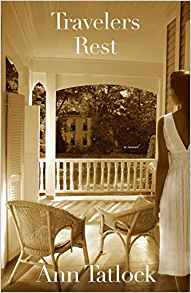
Book Review: Travelers Rest

Travelers Rest Travelers Rest caught my eye first of all because I used to live near a town by that name in SC, and I always thought it was a lovely name for a town. Then, as I started reading books by Ann Tatlock, I wanted to bring this one up from the depths of my accumulated Kindle sale titles and place it high on the TBR list.

In this story, Jane Morrow and Seth Ballantine live in Troy, NC, and are engaged, planning to be married after his tour of duty in Afghanistan. After nearly a year, though, Seth is hit by a sniper and paralyzed. He’s told Jane to stay away, but when he is shipped to the VA hospital in Asheville, she can’t help but go to see him to assure him of her love.

But Seth is no longer the man she knew. Though the physical issues are daunting, Jane thinks they can overcome them. But the mental and emotional hurdles for Seth are a different story. Gradually, though, he gets used to Jane coming around.

Though Jane still loves Seth and wants to marry him, sometimes she’s overwhelmed by the losses they face and by Seth’s extreme emotions. While taking respite in the common rooms, she meets an older black man, Truman, who once was a doctor but now lives at the VA. He still makes “rounds” to encourage the patients and help where he can. He has seen quite a lot, and he helps Jane understand Seth’s perspective. As they talk, Jane learns more of Truman’s life and sorrows. Truman is from Travelers Rest, where events in his twenties changed his course and relationships forever. He doesn’t think he can ever return there.

Jane’s spiritual background is shaky. She knows Truman and Seth and his family are believers, but she doesn’t know what to believe. But she knows her love alone isn’t enough to heal Seth’s internal wounds.

My only reluctance to reading this book beforehand was that I figured I knew how it would end. But I was wrong! Even if the story had gone the way I thought it would, however, I would have loved the unfolding of it. I enjoyed the characters very much. I also enjoyed the setting, as I’m familiar with many of the places mentioned. I liked the different layers of meaning of “Travelers Rest” employed in the book. I wish Jane’s faith journey would have been just a touch more clear. But overall, I loved the story.

(Sharing with Literary Musing Monday, Carole’s Books You Loved, Booknificent Thursday)

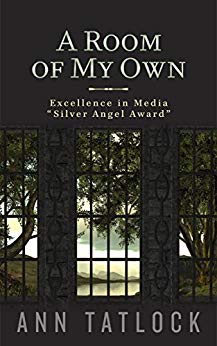
Book Review: A Room of My Own

Room of my ownIn A Room of My Own by Ann Tatlock, Virginia Eide’s family was not rich, by her father’s definition, but they were better off than most during the Depression. He was a doctor, which at least provided steady work, even if some people paid in goods and services rather than cash.

But not everyone had steady work. Ginny’s uncle’s loss of his job led to his whole family living with the Eides, with Ginny having to give up her room and sleep with her younger sisters.

The Depression also led to a shanty camp being set up outside of town called Soo City. People who had lost their jobs had nowhere else to go. They tried to rig up some kind of shelter to stay in while they looked for work.

When Virginia’s father was called to help a woman in labor in Soo City, Virginia’s mother had misgivings. Every time he was called there, she had a feeling that something bad was going to happen.

Of course, there were the usual opinions around town that the Soo City residents were bums, that they could find work if they wanted to. To combat those attitudes and develop Ginny’s empathy, her father asked her to assist him in his rounds there. He didn’t tell her his purpose: he just told her he could use her help. Likewise, when he gave some of their home-canned goods to Soo City residents, he asked if they could take the old jars of food off their hands because his wife was getting ready to start this year’s canning. He made them feel like they were doing him a favor.

Ginny feels important helping her father, and she comes to know many of the residents by name.

Meanwhile, her uncle has become involved with a man trying to set up a labor union, while townspeople accuse strikers and unionists of Communism.

Things come to a head with both the strikers and Soo City, bringing tragedy to Virginia’s world and jolting her out of childhood.

I loved the back-and-forth between Ginny’s girlish activities with her friend and her fledgling forays into being grown up. I loved her father’s gentle and thoughtful example. And I loved Ginny’s coming-of-age in a manner she had not expected.

Some of my favorite quotes:

We can’t help worrying sometimes. But in spite of what we feel, we can still trust God to do what’s right.

Fear, I discovered in that moment, is as contagious as disease–maybe even more so because it takes only a moment, a few words, or a look for it to leap from one person to the next.

Most people might just be glad it was the other fellow hit by hard times, but a sensitive person like you probably can’t look on the suffering of another without feeling guilty that you aren’t suffering in the same way. But you have to look at it this way. If you and I had nothing, we’d have nothing to give. And if we had nothing to give, our friends down in Soo City might be just a little bit worse off.

I was so overwhelmed by feelings that I couldn’t feel anything anymore.

I missed home. I missed the routines of our lives, all the otherwise unnoticed customs–meals together around the kitchen table, and evenings together on the porch or around the radio, all the untroubled hours of work and play and rest. How sweet all those simple things seemed now. How much I longed for that completely unromantic but loveliest of lives.

American flags waved from front porches all up and down our street. I saw the patriotic gesture as ironic–people had been complaining about our country all year long, but now that it was Independence Day, they went right ahead and celebrated as usual. Maybe it wasn’t hypocrisy that led to the flags and the fireworks. Maybe it was hope.

So for a time, with Charlotte at my side, I almost forgot where I was and why I was there. Friends can do that, bring a bit of real comfort in a time of distress like balm on a wound.

I love this one for the description, as one who grew up with oscillating fans before central air-conditioning was common: “The one small fan in the corner turned its head from side to side, giving off mechanical sighs of contentment as it blew warm air across the room.”

When I looked this book up on Amazon, I was surprised to see a note that it was written for the general market but “may contain content of an inspirational nature.” There is a natural faith element woven into the story without being at all preachy.

All in all, a very good book.

(Sharing with Booknificent, Literary Musing Monday, Carole’s Books You Loved)

Book Review: Booked: Literature in the Soul of Me

Karen Swallow Prior is a professor of English at Liberty University. In Booked: Literature in the Soul of Me, she shares how books taught and influenced her throughout her life.

Books have formed the soul of me. I know that spiritual formation is of God, but I also know—mainly because I learned it from books—that there are other kinds of formation, too, everyday gifts, and that God uses the things of this earth to teach us and shape us, and to help us find truth (p. 10).

In commenting on her parents being pretty free in what they allowed her to read, Karen says:

It seems to be to be an entirely negative, not to mention ineffective, strategy to shield children from reality rather than actively expose them to the sort of truth that merges organically from the give-and-take of weighing and reckoning competing ideas against one another (p. 14).

That sounds a lot like Hebrews 5:14 (ESV): “But solid food is for the mature, for those who have their powers of discernment trained by constant practice to distinguish good from evil.” Karen goes on to say:

Books meet with disapproval because of their objectionable content. Wisdom, however, considers not only what a book says (its content), but how it says it (its form). Just as important–or perhaps more important than–whether a book contains questionable themes like sex or violence or drugs or witchcraft or candy is how those topics are portrayed. Are they presented truthfully in terms of their context and their consequences? Are dangerous actions, characters, or ideas glamorized in such a way that makes them enticing? (pp. 14-15).

Karen came to these conclusions not only from her own experience, but also from John Milton’s Areopagitica, a tract against censorship. Milton’s fellow Puritans wanted to ban books that they deemed unworthy. Milton argued instead that books should be “promiscuously read.” “Promiscuous” did not have the sexual connotations then that it does today: it just meant “indiscriminate mixing” (p. 22).

The essence of Milton’s argument is that truth is stronger than falsehood; falsehood prevails through the suppression of countering ideas, but truth triumphs in a free and open exchange that allows truth to shine (p. 10).

Milton goes on to argue that “our faith and knowledge thrives by exercise,” that “Moses, Daniel, and Paul . . . were steeped in the writings of their surrounding pagan cultures,” and even bad books “to a discreet and judicious reader serve in many respects to discover, to confute, to forewarn, to illustrate”(pp. 22-23). He asserts, “Truth is strong . . . Let her and falsehood grapple; who ever knew Truth put to the worse, in a free and open encounter?” (pp. 23-24).

I don’t think either Milton or Karen are saying that “anything goes.” But we don’t have to restrict our reading to just that with which we already agree. Karen quotes 1 Thessalonians 5:21: “Test all things and hold fast that which is good” (p. 22).

I’ve spent the most time on this first chapter because I found it so fascinating. I don’t remember exactly when I started to come to some of these same conclusions– I think maybe during or not long after college. I realized that the Bible itself contains what many would consider objectionable elements, but it handles them in a way that does not glorify sin but exposes truth.

Karen goes on to discuss several different literary works and how they influenced her thinking. Charlotte’s Web had much in common with her own childhood and her grandparents’ farm (though her pet rooster wasn’t granted the same reprieve as Wilbur). Gerald Manley Hopkins’s “Pied Beauty” revealed the unexpected beauty found in surprising places. Jane Eyre’s quest to become her own person rather than Rochester’s mistress or St. John’s missionary wife gave insight to Karen’s emerging self between eighth-grade cliques. Vocation, sexuality, faith, doubt, love, and marriage were likewise informed by Karen’s reading.

I greatly enjoyed Karen’s discussion of books I was familiar with. Her chapter on Gulliver’s Travels helped clear up aspects of the book I had been confused about. Her discussion of Tess of the D’Urbervilles and Madame Bovary made me want to read both of those books. I knew the former was about a girl in Victorian times who got pregnant and the latter was about an adulteress, and I had figured both would be somewhat risque.  But Tess has to do with purity of heart. Either due to naivete or rape, she had gotten pregnant, which at that time meant she was “ruined.” Yet Hardy presents her purer of heart than the society that so harshly judged her. And Madame Bovary shows Emma’s struggle between the idealized life she longed for that would never be true while she missed the joys of everyday reality.

Madame Bovary changed my worldview. It made me realize that happiness is in here, not out there. That the imperfect love of a real person is far greater than the perfect love that exists only in fairy tales or movies. That living happily-ever-after begins with embracing life–not fleeing to fantasies–today (pp. 176-177).

Karen mentions throughout the book that she grew up in a home with believing parents and regular church attendance. Though she “asked Jesus into her heart” at a young age, she led a double life of sex, drugs, and drinking. She realized as an adult that she had never asked Jesus into her mind, and the Bible tells us to love Him with all our heart, soul, and mind. Furthermore, she realized that repentance involves a change of mind that results in a change of actions. While much of the book tells how God brought her to this place step by step, I wish she had included a little more about how this change came about from professing faith to really embracing it for herself.

I will warn some readers that Karen is quite frank about some of her thinking and activities in this split part of her life. But I think it’s important to realize that many young people (and even older people) are the same way, and hearing their stories will help us understand them better.

A few more quotes that stood out to me:

In focusing my attention on things much bigger than myself, ironically, I learned who I was. It’s the lesson, once again, that beholding is becoming (p. 142).

[Jonathan] Swift’s orthodox theology led him to a realistic understanding that all of man is fallen, and this includes man’s reason . . . His method was to expose the errors of rationalism by taking it to its logical extreme (p. 129).

I wanted not only to comfort the young woman, but also to get her to see that talking about such an event in a book was a safe, constructive way of dealing with these issues (pp. 101-102).

I’d love to audit Karen’s classes. I enjoyed the insights she brought out from the various works she cited and how they influenced her own growth.

(Sharing with Carole’s Books You Loved, Booknificent)

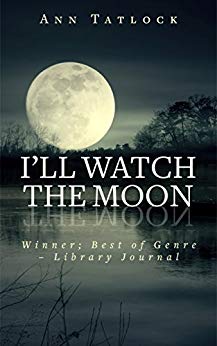
Book Review: I’ll Watch the Moon

MoonIn the novel I’ll Watch the Moon by Ann Tatlock, 9-year-old Nova lives with her mother and 13-year-old brother in her aunt’s boarding house in 1948. Her mother works in a bakery by day and helps at the boarding house afterward. Nova’s mother is usually sad or angry, and Nova doesn’t know why until much later. Nova’s aunt, Dortha, is a woman of faith but has learned to choose her words carefully around her sister.

She was, you see, actually a loving and gentle woman. It’s just that she was lost, hidden way deep down inside somewhere, in a place of no light, the bottom of an ocean of too many hard years. And yet there were moments when she rose to the surface, breaking through the sadness and the anger like a diver coming up through murky waters. When I glimpsed her then, in those moments, I knew that this was the real Catherine Tierney, the good and kind woman, my mother, and someone I wouldn’t see very often because she had to work so very hard to find her way out of that dark inward place.

Nova’s brother, Dewey, is nicknamed Galileo because he loves astronomy and wants to be the first man on the moon. Nova and Dewy are exceptionally close, making it doubly hard for her to accept his going swimming without her. Their mother has strictly forbidden them to swim due to the possibility of getting polio, which was running rampant at the time. Dewy will risk it himself, but will not let Nova.

Other boardinghouse residents are a quiet Polish professor named Josef, a couple of show-business sisters, a middle-aged single lady, and a few others. One theme of the book is that every heart has its secrets sorrows, and some of these are revealed as the story progresses. And, as their stories come to light, and Nova goes through her own set of hard circumstances, another theme emerges: we often can’t explain why things happen the way they do. But we can trust God is with us.

“And if I curse him, Mrs. Tierney? What then? If I turn away from him, what do I turn toward?” Josef paused, shook his head slowly. “No. Better to keep one’s face toward heaven, even if you are angry with God, than to turn away and find nothing at all.”
___

Even a grain of hope can manage to eclipse a whole world of despair.
___

“Until then you can put yourself in the hands of God—he’ll see you through. You can take it from someone who knows, dear. I’ve found his hands to be an easy place to rest.”

I had read this book some years ago, evidently before I had a blog. I couldn’t remember much about it, so I bought a copy during a Kindle sale. Lou Ann’s recent review reminded me of it and brought it to the top of my TBR list. Interestingly, I was reading this just as our church was reading through Ecclesiastes, which often shares a similar theme: some things in this life don’t make sense, but we can trust God for what we can’t understand.

This was a wonderful story on many levels. I am so glad I read it again, and, this time, jotted down some of what I gleaned from it.

(Sharing with Literary Musing Monday, Carole’s Books You Loved, Booknificent)


Book Review: How Green Was My Valley

How Green Was My Valley by Richard Llewellyn is the story of a family in a Welsh mining village in the 1800s. The story begins with the narrator, Huw (pronounced like Hugh), looking back over his time in the valley just as he is getting ready to leave it as an older man.

Huw remembers his somewhat idyllic childhood. Most of the men in the valley worked in the coal mines. They’d come home en masse covered with coal dust, take a bath, and enjoy a fine meal prepared by their wives. Saturdays were special: payday. Every wife would dress in her second-best and bring a chair outside her door. Her husband would put his pay for the week in her lap. After a bath and a good dinner, then they’d go shopping.

Huw was the youngest son. Most of his brothers worked in the mines and contributed to the family coffers, so they were well-off, comparatively, and able to help others when times were hard. Huw was in an accident after which he could not walk for five years. Even after he could walk, his legs were spindly. Huw was educated by a village woman until she had taught him all she could. Then she prepared him for the national school. There he was a target, both because he was so slight and because he was the new kid. When he came home beat up, his father taught him how to defend himself.

Fighting was a big part of life then. People fought over slights, over speaking to a man’s daughter without asking his permission first, over just about any real or perceived infraction.

Huw’s memories trace the progression of his family, his own coming to manhood, Mr. Gruffydd (Griffith), the town minister, troubles and triumphs in town and at school. Trouble with the mines affected most of the families, and arguments flew back and forth about the best way to handle them. Some, including some of Huw’s brothers, were for unions, some for striking. And the slag heap, made up of waste from the mines, continually grew into a bigger blight on the landscape, eventually choking off life from the river and the land.

I’m not one to see symbolism behind every element in literature, but the slag heap is such a presence through the book that it must symbolize something. I’m not sure exactly what, though. Man’s progression, which so often ends up  harming his environment? Man’s inherent corruption, which affects everything he touches? Maybe a bit of both.

Llewellyn is a beautiful writer, with a musical lilt to much of his prose. I listened to the audiobook wonderfully narrated by Ralph Cosham, and enjoyed hearing the lyricism of the book that way. I also checked a print copy from the library and enjoyed rereading a few passages.

There is beauitful to watch a mountain sleeping, and other mountains in the other valleys rising up like bits of blue velvet to make you feel you could cut a piece and wear it for a coat, to dance in above the fat clouds.

O, there is lovely to feel a book, a good book, firm in the hand, for its fatness holds rich promise, and you are hot inside to think of good hours to come.

There is good a cup of tea is when you are feeling low. Thin, and plenty of milk, and brown sugar in the crystal, in a big cup so that when your mouth is used to the heat you can drink instead of sipping. Every part of you inside you that seems to have gone to sleep comes lively again. A good friend of mine is a cup of tea, indeed.

I knew she was laughing, but she looked as though she were crying, with golden tears unsteady in her eyes, and her eyes gone lovely blue to call for pity, big, and round, like a little girl wanting to be carried, and turning down her mouth, only a little not to be ugly, and a tremble in the chin, and with hair almost the colour of a new penny about her face and hanging down three feet, with stray ones shining like the strings of a harp across her eyes and down her cheeks.

There is a wholeness about a woman, of shape, and sound, and colour, and taste, and smell, a quietness that is her, that you will want to hold tightly to you, all, every little bit, without words, in peace, with jealousy for the things that escape the clumsiness of your arms. So you feel, when you love.

Men lose their birthrights for a mess of pottage only if they stop using the gifts given them by God for their betterment. By prayer. That is the first and greatest gift. Use the gift of prayer. Ask for strength of mind, and a clear vision. Then sense. Use your sense. …Think long and well. By prayer and good thought you will conquer all enemies.

Never mind what you feel. Think. Watch. Think again. And then one step at a time to put things right. As a mason puts one block at a time. To build solid and good. So with thought. Think. Build one thought at a time. Think solid. Then act.
____
Well,” my father said to her, and looked at her.

“Well,” my mother said to him, and looked at him.

In that quietness they were speaking their own language, with their eyes, with the way they stood, with what they put into the air about them, each knowing what the other was saying, and having strength one from the other, for they had been learning through forty years of being together, and their minds were one.”

When Huw was sent to take some things to a neighbor having a baby, he thought doctors brought babies in their bags. The daughter of the woman having the baby told him otherwise and brought him to a window to watch to prove her point. Traumatized, he went home, and eventually his parents found out. He thought he was going to get in trouble, but his father just said:

Listen to me. Forget all you saw. Leave it. Take your mind from it. It had nothing to do with you. But use it for experience. Now you know what hurt it brings to women when men come into the world. Remember, and make it up to your Mama and to all women. . . And another thing let it do . . . There is no room for pride in any man. There is no room for unkindness. There is no room for wit at the expense of others. All men are born the same, and equal. As you saw to-day, so come the Captains and the Kings and the Tinkers and the Tailors. Let the memory direct your dealings with men and women. And be sure to take good care of Mama.

Another interesting comment about women came when he and one sister had to do all the dishes for their large family, and he commented, “A man will never know a woman until he knows her work.”

One of the funniest parts was when the village school teacher came to the house to drill Huw before his examination for the English school. She gave him a math problem about how long it would take to fill up a bathtub with so many gallons going in and two holes letting so much out the bottom. Huw’s mother, a smart woman in her own right but not much on “book learning,” can’t get over the silliness of someone pouring water into a tub with holes. Then when they move on to decimals, she wants to know who came up with that idea and who says what that little dot is supposed to do.

One somewhat disturbing part was when a small girl was “ravaged,” and the men of the village sought him out and took his punishment into their own hands.

“To hand her murderer over to the police will give him an extra day to live, which your daughter was denied,” said Mr. Gruffydd. “He shall be fed and housed until the day he meets the rope, but your daughter will lie beneath the dead wreaths long before then, and the rope gives a good quick and clean, without blood, without pain, without torture of the soul and body. Is justice done, then, with a rope about the neck of a man, and his victim, a child of seven years, torn and twisted, long in her grave?”

“No,” said the crowd.

“Shall we burn him?” asked Mr. Gruffydd. “But if we do, he will die a death of honour, for martyrs died in the flame. What then?”

“Give him to me,” said Cynlais Pritchard.

“Is that your common decision?” Mr. Gruffydd asked the crowd.

“Yes,” they all shouted back.

“Take him,” said Mr. Gruffydd, “and as we do with him, so shall we do with the next, if next there is. And remember, if you bury him, however deep, you pollute innocent ground. Burden not the earth with such.”

Though the people were God-fearing, sadly, Huw saw Christ as only a man.

There is a smattering of “damns,” “hells,” and such. There is one description of teenage fondling and another of a sexual encounter that are written metaphorically, but still more graphically than I am comfortable with.

Though much of the book has a nostalgic feel, to me it ended up sad. Nearly everyone has passed on and the slag heap is about to crush what’s left. Huw muses:

But you have gone now, all of you that were so beautiful when you were quick with life. Yet not gone, for you are still a living truth inside my mind. So how are you dead, my brothers and sisters, and all of you, when you live with me as surely as I live with myself.

Llewellyn was of Welsh decent and portrayed this as something of his own history. After his death, it was discovered that he had not been in Wales until well after the book was published. He knew people from Welsh mining families and drew from their conversations.

The 1941 film version with Roddy McDowall and Maureen O’Hara remains popular even today. I saw it years ago but I remember little from it. I’d like to watch it again some time.

Book Review: The Fashion Designer

Fashion designer The Fashion Designer by Nancy Moser is a sequel to her book The Pattern Artist. I think the second book could be understood alone, but I encourage reading both of them.

In The Pattern Artist, which I read and reviewed last year, Annie Wood was a housemaid in England in 1911. She hoped her skill in sewing and designing would move her up to a lady’s handmaid. But the handmaids took credit for her work. Deciding there was no future for her in the Summerfield’s house, she decided on a trip to the US to strike out to pursue her own version of the American dream. She started out in the sewing department of Macy’s, then was hired on as a pattern artist for Butterick.

In the beginning of this new book, The Fashion Designer, Annie and a few friends from Butterick had quit their jobs to start a new company designing practical patterns for the everyday woman. But the lady who had enthusiastically promised to fund their endeavors inexplicably has a change of heart: she wants the women to design for her elite, upper crust friends and wants them to create patterns for a fashion show. At first Annie and her friends comply, but then bow out because their investor’s vision no longer matches their own.

After several discussions with her husband and the other women, they decide to try to open a store with dresses that people can buy off the rack but also have altered to fit if need be. They pool their resources to get started while they look for funding to continue. But all the financial avenues that seem promising end up closing.

Meanwhile, someone from Annie’s past at the manor house in England shows up seeking her own fresh start. Maude, one of Annie’s coworkers and partners, faces struggles in her relationships. She had vowed never to marry, for her own private reasons, but she meets someone who makes her wish she could change her mind. And a difference of opinion with Annie’s husband’s father puts a rift not only in their relationship, but between his parents as well.

Once again Nancy shared at the back of the book how some of her research informed the story and included facts and photos from the era. I especially enjoyed how she tied in Lane Bryant’s true story to intersect with Annie’s fictional one.

I enjoyed following along with Annie and Sean as they struggled to trust God for His wisdom and provision for the plans that they felt had come from Him.

(Sharing with Carole’s Books You Loved, Literary Musing Monday, Booknificent)