The Laura Ingalls Wilder Reading Challenge 2016

Welcome to the fourth annual Laura Ingalls Wilder Reading Challenge! We hold it in February because her birthday  (February 7, 1867) and the day of her death (February 10, 1957) both occurred in February, so this seemed a fitting time to commemorate her.

Many of us grew up reading the Little House books. I don’t know if there has ever been a time when there wasn’t interest in the Little House series since it first came out. They are enjoyable as children’s books, but they are enjoyable for adults as well. It’s fascinating to explore real pioneer roots and heartening to read of the family relationships and values.

For the reading challenge in February, you can read anything by, about, or relating to Laura. You can read alone or with your children or a friend. You can read just one book or several throughout the month — whatever works with your schedule. If you’d like to prepare some food or crafts somehow relating to Laura or her books, that would be really neat too.

If you’d like to read something other than the Little House books, I’ve listed a few others under Books Related to Laura Ingalls Wilder, but that list is by no means exhaustive.

Let us know in the comments whether you’ll be participating and what you think you’d like to read this month. That way we can peek in on each other through the month and see how it’s going (that’s half the fun of a reading challenge). On Feb. 29, I’ll have another post where you can share with us links to your posts or let us know what you read for the month. Of course if you want to post through the month as you read, that would be great. You don’t have to have a blog to participate: you can just leave your impressions in the comments if you like. And I just may have a prize at the end of the month for one participant. 🙂

My own plans are to read Little Town on the Prairie by Laura and Pioneer Girl: The Annotated Autobiography by Laura Ingalls Wilder and Pamela Smith Hill.

I’m looking forward to reading everyone’s plans and impressions! Feel free to grab the button for the challenge to use in your post:

Laura Ingalls Wilder Reading Challenge

Bookish Questions

I just rediscovered a link I had kept on file where someone tagged me in a book-related meme. Thanks to Dancing Books for tagging me, and I apologize for taking so long to respond. I’m afraid I had totally forgotten about it.

According to her post, these are in conjunction with a Sisterhood of the World Bloggers award, and the rules for it are as follows:

  1. Thank the blogger who nominated you, linking back to their site.
  2. Put the award logo on your blog.
  3. Answer the ten questions sent to you.
  4. Make up ten new questions for your nominees to answer.
  5. Nominate ten blogs

sisterhood-of-the-world-bloggers-tag-image-014

I don’t usually do blog awards here any more, for various reasons, but I am doing these mainly for the bookish questions. Dancing Books’ questions for me were:

1. If you were stranded on a desert island with no hope of ever returning, which male or female character would you want to be stranded with?

That would be very hard to say, but off the top of my head, Elinor Dashwood of Sense and Sensibility comes to mind. She’s resourceful, knows how to economize, isn’t flighty, and we’re similar in personality.

2. Who is your favourite villain?

Inspector Javert from Les Miserables. He thinks he’s on the side of right. He stands for the good causes of righteousness and justice but forgets forgiveness and mercy and compassion. He reminds me somewhat of the apostle Paul who persecutes Christians because he thinks they are sinning against the God he thinks he is serving, yet unlike Paul, who is brought prostrate and converted when he is brought face to face with the truth, Javert can’t face it, can’t comprehend it, and sadly destroys himself.

3. Would you prefer to watch the TV show/movie or read the book?

Read the book. Most books take many more hours to complete than a movie, so there’s more time for plot and character development and nuance. The exception would be long classics. Sometimes they’re too daunting to read, or too wordy (by today’s standards), so sometimes a film can give you the essence of it and then help you know whether you’d want to explore the book further.

What’s your preference, eReader or physical books? Why?

Physical books – there’s so much more to the reading experience than just dragging eyes across words. However, now that I have gotten used to an eReader, I do like it a lot. I like the sheer number of books I can put on it, the free or cheap deals I can find for it, and the fact that I can search for a word or phrase. I also like that I can pull up a list of all the places I highlighted – nice for reviewing or reminding myself of them.

What is your all time favourite book? Why?

Oh, that’s such a hard question. As a Christian, naturally the Bible is my ultimate favorite – not just because it’s “supposed” to be. I love reading it and I love its effect in my life. But other than that, probably A Tale of Two Cities by Charles Dickens or Les Miserables by Victor Hugo. Though books set in France or around the French Revolution aren’t my favorites, both of these have a beautiful story line overall plus wonderful individual scenes.

Thinking about your all time favourite book, what would be good songs to listen to while reading it?

I can’t listen to music while reading, but music from the Les Miserables musical would go with either one.

Think about your favourite book again, if it was made into a movie, what character would you want to play?

I’d probably like to play Lucie Manette from Two Cities, but I’d “fit” Miss Pross better. 🙂

If you woke up and found an elephant in your back yard, what would you do?

OK, this is pretty random. 🙂 I’d call animal control and stay inside. Maybe fill up the kiddie pool with water so it would have something to drink.

What’s a funny joke related to books or reading?

Here are a few from Pinterest:

45be8c3e418ef55ee47b40be7a68a3e3

83bfa5d41238377150b3204960da08d5

24738c549b530bd4c4bd5bc66b1ab1e0

244481c192aef74c0102672a9f4a682d

bb2ed14012bc515886b370b3c853602f

c7b75f3aab78bd4037a8f8bb0ecebd4f

fb71e276c78987f4b274e25b640c8390

ce2d13a3cecdd254d693494074cbce67

mockingbird

Aside from reading, what else do you like to do in your spare time?

Write, make cards, cross stitch, organize, decorate, sew…there are too few hours in the day!

Here are my ten questions for others:

  1. Do you remember the first book you read or really liked?
  2. How did your love for reading come about (grew up in a reading family, a certain book captivated you, etc.)?
  3. What is your favorite genre to read?
  4. What genre do you avoid reading?
  5. What is your favorite movie based on a book?
  6. What’s your least favorite movie based on a book?
  7. What is your favorite time and place to read?
  8. Are you in any “real life” book clubs or discussion groups?
  9. How many bookcases do you have?
  10. What is a favorite quote about books or from a book?

My nominees are:

  1. Carrie at Reading to Know
  2. Monica at Adventures in Everyday Life
  3. Melanie at Simply Amazing Grace
  4. Lou Ann at In the Way
  5. Bekah at bekahcubed
  6. Susan at Girls in White Dresses
  7. Rbclibrary at By the Book
  8. Lisa at LisaNotes
  9. Susanne at Living to Tell the Story
  10. Tori at My Home Away From Home

If you don’t like to do these things, my feelings won’t be hurt. Some love them and some don’t. And if you’d like to and, due to the limit of ten, I didn’t name you, please feel free to do them anyway or answer them in the comments if you’d rather not on your blog. Hope you have fun with them. Let me know when and if you do these and I’ll be happy to come read your answers.

What’s On Your Nightstand: January 2016

What's On Your NightstandThe folks at 5 Minutes For Books host What’s On Your Nightstand? the last Tuesday of each month in which we can share about the books we have been reading and/or plan to read.

I always seem to start off Nightstand posts with a comment about how fast time has flown since the last one. I know that must get boring – but, wow, I can’t believe we’ve almost finished a month of 2016! I’m thankful to have had some good reading this month.

Since last time I have completed:

Gilead by Marilynne Robinson, reviewed here. As I have said the last couple of Nightstand posts, it was very hard for me to get into at first, but ultimately it was worth it.

Why Christ Came: 31 Meditations on the Incarnation by Joel R. Beeke, reviewed here.

A Prairie Christmas Collection: 9 Historical Christmas Romances from America’s Great Plains by several authors including Tracie Peterson and Deborah Raney, reviewed here.

SEAL of God by Chad Williams and David Thomas, reviewed here.

Searching for Eternity by Elizabeth Musser, reviewed here. Excellent. Will probably be one of my top ten of the year.

I’m currently reading:

Our Mutual Friend by Charles Dickens, audiobook.

What Are You Afraid Of: Facing Down Your Fears With Faith by David Jeremiah (excellent so far)

Emily’s Quest for Carrie’s Lucy Maud Montgomery Reading Challenge this month. I need to get cracking as this month is almost at an end. I’m afraid I just don’t like Emily very much, so I’m not always motivated except that I do want to complete the series.

The Bronte Plot by Katherine Reay. Love.

Up Next:

Little Town on the Prairie by Laura Ingalls Wilder and Pioneer Girl: The Annotated Autobiography by Laura Ingalls Wilder and Pamela Smith Hill for the Laura Ingalls Wilder Reading Challenge in February.

Narrative of the Life of Frederick Douglass.

Big Love: The Practice of Loving Beyond Your Limits by Kara Tippetts

If I get through all those, I’ll likely choose next something from my reading plans for the year or from the books I got for Christmas.

I want to invite you to join in the aforementioned Laura Ingalls Wilder Reading Challenge. More information is here, and I’ll have a sign-up post on February 1.

Happy Reading!

Book Review: SEAL of God

SEAL of GodI got SEAL of God by Chad Williams and David Thomas a few years ago when it came up on a Kindle app sale without really knowing much about it.

It’s the story of Chad Williams, who, as he was growing up, was talented athletically, played baseball, went on to skateboarding (even making commercials and receiving sponsorships), and then made a lot of money sport fishing, but his interest in each fizzled out after a time. He didn’t do well at school, not because he couldn’t, but because he didn’t like academic work. He was from a Christian home, but was not a believer (beyond the occasional prayer for help out of a jam) and got into drinking, doing drugs, and partying. He liked taking risks, pulling pranks, and doing crazy, senseless (to anyone else) stunts just for the thrill. But at a point in his freshman year of college when the thrill of everything else was gone, and desiring to do “something big,” he decided he wanted to be a Navy SEAL.

His parents were dismayed, not only because of the danger, but because nothing in his life indicated that being a SEAL would work out for him. But he was determined. They had numerous discussions and confrontations that ended in stalemates until his father hit on the idea to ask a former navy SEAL to put him through the toughest workout he could. But that backfired – the SEAL, Scott Helvenston, saw something in Chad and took him on to train him for SEAL tryouts. They developed a close friendship through their time together, and Chad looked on Scott as a mentor.

Before Chad left for the Navy, Scott accepted a contract with a security firm that aided the military to go to Iraq. Only nineteen days before leaving for boot camp, Chad learned that Scott had been one of four Americans killed when Iraqis ambushed their vehicle, beat them, dragged them through the streets, and then hung them upside down from a bridge. Chad was crushed, but his sorrow turned to rage and a desire for revenge.

A good chunk of the book tells of the SEAL training, beyond rigorous both physically and mentally.

Chad continued his drinking, partying, and drug use when he was away from the base. On one trip home, he placated his parents during an argument by agreeing to go to church with them and planning to go to a party afterward. He warned his girlfriend what the service would be like and cautioned her not to raise her hand during the service if the preacher asked if anyone wanted to get right with God because it was a trick – they would then ask anyone who raised their hands to come forward and go to a room and talk with someone. But as Chad listened to the message, something finally clicked. He ended up raising his hand, going forward, and trusting Christ as Savior.

Fairly soon afterward, he had a desire to be an evangelist. He tried to see if there was a way to leave the SEALs early, both because of this desire and because his becoming a Christian and not going with the guys to drink any more put a wedge between them: they thought he was diluting their camaraderie and even physically attacked him. He ended up having to stay but was transferred to another unit. He eventually was “one of only thirteen out of a class of 173 to make it through to graduation.”

The rest of the book tells of some of his missions, his first forays into ministry, and how God led in both his ministry and his personal life.

One aspect that surprised and greatly interested me was that this story touched on two other books I had read. In the Presence of My Enemies by Gracia Burnham tells of her and her husband’s experience being captured by the militant group Abu Sayyaf, and a couple of years after that, Chad’s SEAL group along with some Green Berets helped “lay the groundwork” to overcome them. Also his group almost was part of the SEAL group that rescued Captain Richard Phillips, whose ship was commandeered by Somali pirates.

There is a lot of good spiritual truth in this book, but one that stood out to me was his description of how, during his SEAL training, his instructors would push them to the brink of quitting – not because they wanted anyone to quit, but because they wanted the trainees to be able to resist that temptation when they were in adverse conditions on the field. Instructors would either berate them or tempt them with the nice warm bed and food that would be awaiting them if they quit. Whenever someone wanted to quit during what was called their BUD/S course (Basic Underwater Demolition SEAL) and Hell Week, they’d have to go ring a bell specifically designed for the purpose. One particularly hard night, “the bell kept ringing at the hands of guys who were walking out on their dream for just a little bit of comfort.” I can identify with that. I would not have lasted a day in SEAL training, but in other areas of life, it’s so tempting to go the easy route when God’s help is available for whatever He wants us to do.

I enjoyed the book, especially seeing how God radically changed Chad. There are people for whom I am praying for just such a radical change, and seeing it in Chad’s life when there was no previous inclination bolsters my hope for others.

(Sharing at Semicolon‘s Saturday Review of Books)

Book Review: Searching For Eternity

Searching for EternitySearching for Eternity by Elizabeth Musser grabbed me right away, kept me engaged throughout the book, and made me not want it to end while at the same time eager to know what finally happened with the characters.

The story begins in the 1960s with nearly fourteen year old Emile de Bonnery finding that he and his mother have to suddenly leave France, where they have been staying with his grandmother in her 13th century chateau. Though Emile’s French father has been away “on business” often, this time it’s different. His American mother tells him that his father has found someone else and they must leave France immediately to go back to her native Atlanta. Emile protests, to no avail, and barely keeps control over his anger.

Emile feels that his father is a spy, that he’s merely on a mission, and may even be in trouble. Emile’s father, Jean-Baptiste, had been in the French resistance as a teenager during WWII, along with his parents. On each of Emile’s birthdays since he was five, his father has given him a gift of something he used in his resistance days – a book with pages cut away in which to store a switchblade, a thumbtack tin that once held a radio, etc., and told him the story behind that particular item as well as stories of his experiences. Emile knew that his father particularly hated Klaus Barbie, the “butcher of Lyon,” who was responsible for killing multitudes, including national hero Jean Moulin and Emile’s father’s father. Barbie had been condemned to death in absentia, and it was Emile’s theory that his father was hunting for Barbie. But no one agreed with him.

Meanwhile, he has to get used to life in America, especially to starting a new school. Being small for his age, new, and having an accent all seem to make him a target for the class bullies and friendless. Finally at lunch he sits near a girl named Eternity Jones, who, though somewhat aloof, at least doesn’t rebuff him. Gradually they become friends, and Emile eventually learns that Eternity comes from a broken home with a drunken, abusive mother. Eternity acts as protector for her two younger siblings. Wanting to extend help as well as friendship, Emile invites Eternity and her brother and sister to his grandmother’s home.

His grandmother and mother had been estranged for the 15 years his mother had been in France, and she and Emile showed up on her doorstep with no advance warning when they first left France. His mother had told him that her mother was controlling and they didn’t get along, but she welcomed them both with kindness, and her home radiated peace. His mother notes that her mother has changed in many ways. His mother and grandmother both try to make their home a safe haven for Eternity and her siblings.

There is so much in this book, it’s hard to know what to share. The rest of the book covers the next 23 years of Emile’s life and touches on racism, abuse, bullying, being a victim, faith, second chances, as well as what happens to Eternity and her family, Emile’s father, and even Klaus Barbie. It ended just as I hoped it would, but the author kept me guessing until nearly the last few pages.

Here are a few quotes from the book:

The wrong kind of love grabs and holds and chokes and demands and expects.

It’s a lot harder to hate a whole race of people, like the Negroes, or a type of person, like alcoholics, when you start getting to know individuals. Prejudice likes to make generalizations and stay far away. I wanted to get to know [Eternity’s mother] before I judged her too harshly.

Grandma had always said that suffering etched character into God’s people, making them stronger, better, holier, more useful to God and man. I had believed her for many years, but I did not see it on this night.

“I know it seems wrong and cruel. But this is what you must do. Let go. Give up the control, Emile. Be mad, grieve, accept that you cannot figure it out. Give up.”
“Giving up is weakness!”
“This time it will be strength.”
“How?”
“You must give up, not out of resignation, but out of trust. Trust that God knows and cares and will let you in on all the secrets you need to know in His time.”

There is more to life than looking for answers. Some answers you will never find–some you will. As long as the most important question is answered, the ‘not knowing’ of the others doesn’t seem so unbearable.

“The good thing about following Jesus is that His Word eventually seeps way down into your heart. And then, when you need to respond as He would, somehow that love blooms, watered by years of tears and tended by His Spirit. It blooms. Maybe not all at once, Emile. But eventually. He doesn’t waste your obedience. It counts. It works.” I said nothing, but I was listening, begging God to let her words–His words–penetrate my heart.

Victims could move on, but deep down they were still victims. Maybe there were parts of us that would never recover from the injuries of the past. And maybe that was all right, because we could still be useful in our maimed and injured state. ‘For when I am weak, then am I strong.’ I grabbed on to those words of the apostle Paul.

Elizabeth Musser’s being from Atlanta, being a missionary in France, and her teen boys being “third culture kids” all contribute to the realism in the book. The occasional mentions of eating at the Varsity in Atlanta have me questioning why I never went there the few years we lived in the area!

I don’t feel I have done this book justice at all, but I don’t want to say more about it and give too much away. So I’ll just say, it’s good. You should read it. It comes up occasionally on sale for the Kindle app. So far I have enjoyed all of Elizabeth Musser’s books, and I am eager to read more. And I am going to miss these characters!

(Sharing at Semicolon‘s Saturday Review of Books)

Book Review: Gilead

GileadIn Gilead by Marilynne Robinson, set in the small town of Gilead, Iowa, in 1956, 76 year old John Ames knows that he is dying and wants to leave behind for his seven year old son the things that he would have told him along the way as he grew up.

Part of his writing conveys family history. John’s grandfather was a fiery one-eyed Elijah of a Congregationalist preacher, active in the abolitionist movement, the Civil War, and in raids, encouraging his congregation to go and do likewise. John’s father was also a preacher, but was a pacifist with a very different personality. Thus, though they cared for each other, there was inevitable conflict between his father and grandfather, some of it mild and some drastic. One thing he said of his grandfather, and his tendency to believe his way in anything was the only way, was, “He may, so to speak, have been too dazzled by the great light of his experience to realize that an impressiveness sun shines on us all” (p. 91). Later he says of them, “They loved each other’s company when they weren’t at each other’s throats, which meant when they were silent (p. 192). And in another place, “A man can know his father, or his son, and there might still be nothing between them but loyalty and love and mutual incomprehension.”

Part of his writing tells of his own history, the loss of his first wife and daughter, years of personal loneliness while preaching and ministering, then the unexpected treasure of a second marriage to a much younger woman, and then the birth of his son.

Part of it details his theological musings and conundrums.

When you encounter another person…it is as if a question is being put to you. So you must think, What is the Lord asking of me in this moment, in this situation? If you confront insult or antagonism, your first impulse will be to respond in kind. But if you think, as it were, This is an emissary sent from the Lord, and some benefit is intended for me, first of all the occasion to demonstrate my faithfulness, the chance to show that I do in some small degree participate in the grace that saved me, you are free to act otherwise than as circumstances would seem to dictate. You are free to act by your own lights. You are freed at the same time of the impulse to hate or resent that person. He would probably laugh at the thought that the Lord sent him to you for your benefit (and his), but that is the perfection of the disguise, his own ignorance of it…I am reminded of this precious instruction by my own great failure to live up to it recently…(p. 124)

(Re a secular article about religion) It says 95% of us say we believe in God. But our religion doesn’t meet the writer’s standards, not at all. To his mind, all those people in all those churches are the scribes and the Pharisees. He seems to me to be a bit of a scribe himself, scorning and rebuking the way he does. How do you tell a scribe from a prophet, which is what he clearly takes himself to be? The prophets love the people they chastise, a thing this writer does not appear to me to do (p. 142, emphasis mine). It seems to me that the spirit of religious self-righteousness this article deplores is precisely the spirit in which is is written. Of course he is right about many things, one of them being the destructive potency of religious self-righteousness (p. 146).

I am thinking about that passage in the Institutes where it says the image of the Lord in anyone is much more than reason enough to love him, and that the Lord stands waiting to take our enemies’ sins upon Himself. So it is a rejection of the reality of grace to hold our enemy at fault…People tend to forget that we are to love our enemies…because God their Father loves them (p. 189).

Part of it relates the miseries of aging.

You probably don’t remember much about old Boughton. He is a little cross now from time to time, which is understandable considering his discomfort. It would be a pity if that is what you remembered of him (p. 18).

To be useful was the best thing the old men ever hoped for themselves, and to be aimless was their worst fear (p. 49).

(When someone jumped in to help him) I’d rather drop dead doing for myself than add a day to myself by acting helpless. But he meant well (p. 218).

I feel as if I am being left out, as though I’m some straggler and people can’t quite remember to stay back for me.

Part of it captures the magic of everyday moments, and I think this is where Robinson’s writing shines brightest.

It was the kind of light that rests on your shoulders the way a cat lies on your lap (p. 51).

I feel sometimes as if I were a child who opens its eyes on the world once and sees amazing things it will never know any names for and then has to close its eyes again. I know this is all mere apparition compared to what awaits us, but it is only lovelier for that. There is a human beauty in it. And I can’t believe that, when we have all been changed and put on incorruptibility, we will forget our fantastic condition of mortality and impermanence…(p. 57).

His lovely wife tends her zinnias in the mild morning light and his find young man comes fondly mishandling that perpetually lost sheep of a cat, Soapy, once more back from perdition for the time being, to what would have been general rejoicing” (p. 93, one of my favorite sentences).

Well, but you two are dancing around in your iridescent little downpour, whooping and stomping as sane people ought to do when they encounter a thing so miraculous as water.

Sometimes I have loved the peacefulness of an ordinary Sunday. It is like standing in a newly planted garden after a warm rain. You can feel the silent and invisible life.

I wish I could leave you certain of the images in my mind, because they are so beautiful that I hate to think they will be extinguished when I am. Well, but again, this life has its own mortal loveliness. And memory is not strictly mortal in its nature, either. It is a strange thing, after all, to be able to return to a moment, when it can hardly be said to have any reality at all, even in its passing. A moment is such a slight thing. I mean, that its abiding is a most gracious reprieve.

Part of it goes into great detail about his best friend, a fellow preacher who is known by his last name, Boughton, and his prodigal son and John’s namesake and godson, Jack. Boughton is also dying, and is delighted that Jack is back, but there is a shadow over his visit. John alludes to a major wrong Jack had done, and tells us about it later on as well as the more minor indiscretions of his youth that went beyond mischievousness into pure meanness. John finds it hard to forgive Jack and suspects that the time he’s spending at his home interacting with his wife and son means that Jack is setting himself up to take John’s place in their lives after he dies. Much of John’s theological wrestling is over his attitude toward Jack, not only as a fellow man, but also as a Christian, a pastor, and the friend of his father. After one such session with various thoughts relating to Jack, he writes, “This is not doing me any good at all. I’d better pray” (p. 185). I have said similar things to myself.

Part of it conveys his thoughts about his coming death.

Existence seems to me now the most remarkable thing that could ever be imagined. I’m about to put on imperishability. In an instant, in the twinkling of an eye (p. 55).

Our dream of life will end as dreams do end, abruptly and completely, when the sun rises, when the light comes (p. 104).

I have decided the two choices open to me are (1) to torment myself or (2) to trust the Lord. There is no earthly solution to the problems that confront me. But I can add to my problems, as I believe I have done, by dwelling on them. So, no more of that (p. 126).

I admit I had a hard time getting into this book at first. I think part of that is that I had heard it praised so highly that my expectations were so raised that nothing could have met them. It’s written in the form of letters to his son, though it’s not letters so much as a diary, where he jotted down thoughts here and there as they came to him. Neither epistolary nor stream-of-consciousness narratives are my favorite. And it seemed to set off extremely slowly. Somewhere I read that it “forces us to slow down to the pace of a 76 year old man.” But one of my motivations in persevering with it was that I didn’t want to be the only person in the country not to “get” it. 🙂  And I am glad I continued on. Though it will never be my favorite book, there is a richness and a depth that makes it much worth it.

One of the themes is fathers and sons – John’s grandfather and his son; John’s father and himself; John and his son, Boughton and his son, the prodigal son and his father, and God the Father and his children. Race relations are a prominent factor throughout the book. The contemplation of ordinary moments, of coming to terms with our mortality, of what it means to live as a Christian, especially when it’s not easy, are all intertwining themes as well.

There were numerous places I disagreed with parts of Ames’ theology (e.g., water being “the vehicle of the Holy Spirit” in baptism [p. 24], infant baptism, the taking as figurative some Scriptures that many would take as literal, and various other places), or his logic, such as his thought that the people’s lack of taking meaning from the plague was why they’d had continuous war since (p. 43). But, while not setting aside those issues, I can still see and appreciate much of truth conveyed in these pages.

I’ve marveled that a book that is so clearly religious has been so widely loved. This review in the New York Times is a nicely done example. I think perhaps a large part of it is Ames’ personality – humble, struggling, yet sure of truth but not in a belligerent way.

I’ll close with this quote from John to his son, something I think most parents could echo:

I’m writing this in part to tell you that if you ever wonder what you’ve done in your life, and everyone does wonder sooner or later, you have been God’s grace to me, a miracle, something more than a miracle. You may not remember me very well at all, and it may seem to you to be no great thing to have been the good child of an old man in a shabby little town you will no doubt leave behind. If only I had the words to tell you.

(Sharing at Semicolon‘s Saturday Review of Books)
Book Review: Why Christ Came

Why Christ CameIn the preface of Why Christ Came: 31 Meditations on the Incarnation, authors Joel R. Beeke and William Boekestein state that “Learning the reasons for Christ’s advent will help us more deeply celebrate His birth, allow us to see more clearly how it is connected with the rest of His ministry, and help us understand its importance in our lives.” They add that it also helps when people ask us why Jesus came to have a fuller knowledge of the answer to that question.

They discuss 31 reasons Jesus came but acknowledged there are multitudes more. They range from the familiar, like “To Die,” “To Seek and Save the Lost,” “To Do the Will of the Father,” to others you might not have thought of right away, like “To Bring Peace,” “To Bring a Sword,” and “To Demonstrate True Humility.”

Each selection is only about three pages but is packed with references and thoughts about that day’s subject. The writing is not warm and fuzzy nor what one usually thinks of as “devotional,” but it is a rich treasury.

Here are just a few quotes:

In Christ’s first coming, He implemented a rescue plan conceived in the mind of God before the foundation of the world. He did not come to promote holiday cheer, boost end-of-year sales, or serve as the central figure in a Nativity scene. He came to save sinners. To save sinners, Christ had to put away what makes people sinners–namely, sin.

The Scottish divine Samuel Rutherford was on his deathbed when he was summoned to court for refusing to conform to the new forms of worship decreed by the king. Sensing that his death was near, Rutherford said, “I will soon stand before a greater judge, and this one is my friend!”

Paul refuses to focus on the greatness of others’ sin to minimize his own. He sees his own sins in the light of God’s holy law and perfect character.

Apart from a true incarnation, there is no true atonement.

Christ did not come to earth simply to be our moral teacher. If that were His only mission, He could have come as He did in former times, as the Angel of the Lord, without our flesh and blood to encumber Him. Instead, He had to become like us so that He could raise us up to be like Him.

Some of us have little spiritual vitality because we fail to feed on Christ day by day. Over time, we become spiritually anorexic.

Christ’s advent, in particular, teaches us the joy of anticipating Jesus. The Christian journey is riddled with trials and difficulties, but the brilliance of the One whom we seek turns our mourning into dancing (Ps. 30:11).

As we reflect on the incarnation, we too should be filled with joyous amazement and thanksgiving. Wilhelmus a Brakel explains, “The reason one does not rejoice in the incarnation is for lack of holy meditation upon the subject, its miraculous nature, the promises, the Person, the fruits and this great salvation brought about by His suffering and death. What reason for rejoicing would he who does not attentively reflect upon this have?”

Judgement means to divide truth from error as well as to uphold the good and condemn the evil.

Jesus calls all sinners to repent. True repentance is not a nebulous response of sorrow; it requires definite actions. Repentance so transforms the mind that it results in a changed life. Repentance does not merely say “I’m sorry” (similar to what we say when we accidentally step on someone’s foot). Rather, true repentance says from the heart, “I’ve been wrong and grieve over my sin, but now I see the truth, and I will change my ways accordingly.”

Christ gives us a true thirst for Him by convincing us of sin.

There were just a couple of places I disagreed with the authors. One was “The most important way to seek Christ is in the public worship of His church.” We need that, but equally important is private seeking of Him in His Word in our own homes. Another was the assertion that “Jesus gives us a precious glimpse of His humanity…He experiences the fear of death as we do.” I don’t think it was just a human fear of death that caused His anguish (they quote Calvin as calling this His “cowardice”), but the thought of all that would be involved in taking our sin and its penalty on Himself. They also write from a Reformed/Calvinistic view, and while I agree with a reformed view of faith in many particulars, I disagree on a few.

But mostly I found much food for thought here and enjoyed thinking on its truths during the Christmas season.

(Sharing at Semicolon‘s Saturday Review of Books)

Book Review: A Prairie Collection

Prairie CollectionWhen I first began reading Christian fiction, a great many of its books were set in Western prairies. It also seemed that many of them contained one of three plot lines: a teacher from the East who came West, didn’t like it, and planned to go back home, until she fell in love; a snobby socialite, usually from Boston, who also didn’t like the rougher accommodations and culture of the West and planned to go back home; or a marriage of convenience, where two people who did not love each other and sometimes who had just barely met married each other, usually because one recently lost a spouse and for various reasons needed one, and they ended up coming to love each other by the end. Nothing wrong with any of that, but I just got burned out by it all and didn’t read anything prairie-ish or even Western for a very long time.

So with that background, and the fact that romances and short stories are not my favorites, either, I am not sure why I picked up A Prairie Christmas Collection: 9 Historical Christmas Romances from America’s Great Plains except that it was a good deal for the Kindle app, and I have enjoyed many of Tracie Peterson’s books and have been wanting to read Deborah Raney, two of the authors whose stories are included in this collection. The others are Tracey Bateman, Pamela Griffin, JoAnn, Grote, Maryn Langer, Darlene Mindrup, Janet Spaeth, and Jill Stengl, none of whom I had heard of before.

Sure enough, three stories contain a teacher coming from the East, a snobby Bostonian socialite, and a marriage of convenience. 🙂 But there is enough of a twist in each case that the stories aren’t cliche. Other stories include a widowed father and son moving into a new town and falling for a woman whose heart still belongs to her dead fiance; a woman who has lost everything and is greatly reduced in her circumstances coming to a new town to work as a maid; a woman determined to keep her family home after her mother’s death though her siblings and the railroad want her to sell; a tutor with a troubled background trying to make a new life and taking on a student not at all interested in his subject matter; the wife of a newly married young couple trying to make everything “just right” for her visiting mother-in-law; and a woman with a heart “colder than ice” coming to live with her estranged brother and taking on a job for the preacher. Some characters from the first story appear in the last, but I didn’t catch whether any of the other characters cross over into other stories.

One of the stories probably would have worked a little better as a novel, just because there was so much crammed into it, but overall, I really enjoyed the stories and each character’s journey of faith. They made for very pleasant Christmas and winter reading.

(Sharing at Semicolon‘s Saturday Review of Books)


Reading Plans for 2016

When I’ve mentioned reading challenges recently, a couple of people have commented that they prefer to be free to read whatever they want whenever they want. Believe me, I understand the appeal. That’s how I’ve read for most of my adult life. And there is nothing wrong with that approach.

I’ve found for myself, though, that there are some books I never get to unless I make specific plans to incorporate them into my reading. For instance, I don’t usually read non-fiction, except for biographies, unless I “make” myself, even though I have greatly benefited from them.

I’ve found over the last few years that reading challenges really help with some of those books “I’ve been meaning to get to.” But there has to be a balance: some years I had so many challenges going on that I felt stifled all year. I like to be free to pick up a new release or something on a friend’s recommendation as I feel led without feeling I can’t because of other deadlines. Last year was pretty well balanced, so I am hoping to achieve that again this year. The challenges can overlap, so that helps (one book can be read for different challenges, but not for different categories within a challenge).

There are a few month-long challenges for the year. I’ll be hosting the Laura Ingalls Wilder Reading Challenge in February; Carrie is not hosting her Classic Reading Club this year but will host the Lucy Maud Montgomery Reading Challenge in January and the Narnia challenge in June or July. For the LMM challenge I am planning to read the last of the Emily books, Emily’s Quest. If I have time I may read one of LMM’s stand-alone books. There is also an Emily of New Moon TV series I’d like to try to find on Netflix or somewhere. I honestly didn’t like Emily very well in the second book and I am curious to how her story has been translated into film.

As for year-long challenges, I’ll only be participating in two:

Mount TBR 2016

The Mount TBR Reading Challenge has the goal to read books that you already have on hand prior to 2016 (thus no library books or loans: it’s meant to get to those books you’ve had but haven’t started yet). You can chose different levels, each named after a mountain. I am only going to commit to “Pike’s Peak,” or 12 books, but we’ll see how it goes – I may add more. I’m sure I have enough books on hand and in my Kindle app to go another level or two, but I want to leave some breathing space. Here are the books I am planning to read for this challenge:

  1. True Woman 201: Interior Design by Mary Kassian and Nancy Leigh DeMoss (Finished 4/16/16)
  2. The Renewing of the Mind Project by Barb Raveling (Finished 5/28/16)
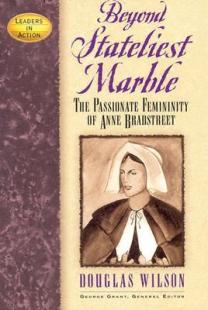
  3. Beyond Stateliest Marble: The Passionate Femininity of Anne Bradstreet by Douglas Wilson (Finished 5/2/16)
  4. Ten Fingers For God: The Life and Work of Dr. Paul Brand by Dorothy Clarke Wilson (Finished 8/26/16)
  5. What Are You Afraid Of? Facing Down Your Fears With Faith by David Jeremiah (Finished 2/22/16)
  6. Home to Chicory Lane by Deborah Raney (Finished 9/18/16)
  7. The Bronte Plot by Katherine Reay (Finished 2/2/16)
  8. Pride, Prejudice, and Cheese Grits by Mary Jane Hathaway (Finished 5/23/16)
  9. Searching for Eternity by Elizabeth Musser (Finished 1/16/16)
  10. Pioneer Girl: The Annotated Autobiography by Laura Ingalls Wilder and Pamela Smith Hill (Finished 7/11/16)
  11. Our Mutual Friend by Charles Dickens (Finished 2/22/16)
  12. A Connecticut Yankee in King Arthur’s Court by Mark Twain (Finished 3/8/16)

As I finish each one I will link the title to my review of it)

You can read more about the rules for the Mount TBR Challenge here; the deadline to sign up is Nov. 1, 2016.

BackToTheClassics2016

The second is the Back to the Classics challenge. I’ve been doing this one for the past two years and have really enjoyed it. I’ve mentioned before that I somehow wasn’t exposed to many classics in my education, and have been making a point to read several in recent years.

Karen has made a list of the following categories and we can choose to read 6, 9, or 12 classics for 1, 2, or 3 entries in a drawing at the end of the year. For this challenge, all books have to be at least 50 years old. The categories and my choices are :

1.  A 19th Century Classic – any book published between 1800 and 1899. Our Mutual Friend by Charles Dickens. I love a couple of Dickens books very much and have been on a quest to read the rest of his books that I am not familiar with. (Finished 2/22/16)

2.  A 20th Century Classic – any book published between 1900 and 1966: The Wind in the Willows. I don’t know that I ever read this, either on my own or with my children. I think we saw part of a video of the story once, and I totally disliked Toad and didn’t finish it. But learning that it was one of C. S. Lewis’s favorite stories and reading some of his remarks about it have encouraged me to give it another try. (Finished 6/3/16)

3.  A classic by a woman author. Little Town on the Prairie by Laura Ingalls Wilder, part of the Little House series. (Finished 2/15/2016)

4.  A classic in translation (originally written in a language other than your own): Around the World in 80 Days by Jules Verne (French) (Finished 3/15/16)

5.  A classic by a non-white author. Narrative of the Life of Frederick Douglass. (Finished 2/29/16)

6.  An adventure classic – can be fiction or non-fiction.Robinson Crusoe by Daniel Defoe (Finished 4/29/16)

7.  A fantasy, science fiction, or dystopian classic. The Sword in the Stone by T. H. White (Finished 3/24/16)

8.  A classic detective novel. The Moonstone by Wilkie Collins is said to be the first English-language detective novel, at least according to this post. (Finished 4/18/16)

9.  A classic which includes the name of a place in the title. A Connecticut Yankee in King Arthur’s Court by Mark Twain. (Finished 3/8/16)

10. A classic which has been banned or censored. Gulliver’s Travels by Jonathan Swift (Finished 6/23/16)

11. Re-read a classic you read in school (high school or college). The Old Man and the Sea by Ernest Hemingway. (Finished 3/26/16)

12. A volume of classic short stories. (One complete volume, at least 8 short stories, single or multiple authors). Great British Short Stories: A Vintage Collection of Classic Tales (Finished 7/5/18)

After spending way too much time looking at lists of classic titles in different categories, I decided to just commit to 9 rather than 12. Thankfully we don’t have to declare exactly what we are going to read, though we’re encouraged to, so I will see how it goes with what I have so far and maybe add the other categories later if I feel inspired to do so and have time. I did end up completing the challenge!

Up to three children’s classics may be included. The rest of the rules and information are here. Karen also has links to book list ideas for some of the categories.

The deadline to sign up for the Back to the Classics challenge is March 1, 2016;

If you are interested in reading challenges, Tim Challies has one with different levels here. I’m still thinking about it – there would be some overlap between what I am planning to read and the different categories on his list. Also, someone has put together a list of several here. The rereading and new release challenges appeal to me…but I think I am going to just stick to these for now.

Do you make reading plans for the year, the month, the season? Jennifer had a good post about How to Make Reading Resolutions. The main key is to plan for what interests you and works with your schedule yet provides a bit of a challenge as well.

(Sharing at Semicolon‘s Saturday Review of Books)

Save

Save

Save

Save

Save

The Laura Ingalls Wilder Reading Challenge 2016

The month of February contains the dates of Laura Ingalls Wilder’s birth and death, so it seems a fitting month to focus on her life and writings. This is our fifth year to do so, and I have enjoyed it each time. Many of us grew up reading the Little House books. I don’t know if there has ever been a time when there wasn’t interest in the Little House series since it first came out. They are enjoyable as children’s books, but they are enjoyable for adults as well. It’s fascinating to explore real pioneer roots and heartening to read of the family relationships and values.

On Feb. 1 I’ll have a sign-up post where you can let us know if you’ll be participating and what you’d like to read. That way we can peek in on each other through the month and see how it’s going (that’s half the fun of a reading challenge). You can read anything by or about Laura. You can read alone or with your children or a friend. You can read just one book or several throughout the month — whatever works with your schedule. If you’d like to prepare some food or crafts or activities somehow relating to Laura or her books, that would be really neat too. In the past I think some have made food or clothing from the styles of the day: Annette even had a Little House-themed birthday party for one of her daughters, (and, unrelated to the challenge but just from her own interest she started the Little House Companion blog: you might find some neat ideas for activities and Laura-related books there.

On Feb 29 I’ll have a wrap-up post so you can link back to any posts you’ve written for the challenge or to a wrap-up post. You do not have to have a blog to participate: if you don’t, you can just share with us in the comments that day what you’ve read.

Need some ideas beyond the Little House books themselves? Annette, as I mentioned, has shared several books for children here. I compiled a list of Books Related to Laura Ingalls Wilder, and some others are listed in the comments. Laura fan extraordinaire and historian Melanie Stringer has a treasure trove of information at Meet Laura Ingalls Wilder.

I don’t know how many more years I will continue to host this challenge – at least the next couple, and I’ll reevaluate then. I encourage you to join in before it’s all over – and this year you even have an extra day in February in which to read! 🙂

Have fun gathering your materials and planning what to read and do, and I’ll see you at the sign-up post on Feb. 1!

I am having trouble making a code that you can use to put the button on your site, but in the meantime, you can rightclick on the button below, click on “Save as”, then save it to your computer to use in your post. I’d appreciate your linking back to this post if you particpate in the challenge. Thanks!