Book Review: Narrative of the Life of Frederick Douglass

F. DouglassFrederick Douglass was originally named Frederick Augustus Washington Bailey around 1817 or 1818–he was never sure of the exact date and year. He was born in Maryland to a black slave mother and an unknown white father, rumored to be his master but never confirmed. It was common practice in that time and place to remove slave children from their mothers at a young age, so his mother was sent away and he lived with his grandmother.

As he grew up, he witnessed the whole gamut of slavery, from kind masters to cruel ones, of savage beatings and even murders with no recourse or help for the slave against an unfair master. Any beatings were felt to be deserved because of something the slave had done or needed to keep him in his place. His master could pass him around to other relatives or even renters. When one master died, Frederick and all the other slaves owned by the master were reckoned up as property alongside the animals. One of his masters bought a slave woman specifically for breeding purposes. Under one of the worst masters, with inadequate clothing, food, and shelter, and being worked beyond endurance all hours of the day, he “was broken in body, soul, and spirit. My natural elasticity was crushed, my intellect languished, the disposition to read departed, the cheerful spark that lingered about my eye died; the dark night of slavery closed in upon me; and behold a man transformed into a brute!” During that time he spent Sundays, his only free time, “in a sort of beast-like stupor, between sleep and wake, under some large tree.”

At one time when he was a child, he was sent to a mistress who had never had slaves before, and she treated him more kindly that any white woman had ever treated him. He was to help take care of her son, and she started to teach him to read alongside her son. But her husband stopped her,

…telling her, among other things, that it was unlawful, as well as unsafe, to teach a slave to read. To use his own words, further, he said, “If you give a n—– an inch, he will take an ell. A n—– should know nothing but to obey his master—to do as he is told to do. Learning would spoil the best n—– in the world. Now,” said he, “if you teach that n—– (speaking of myself) how to read, there would be no keeping him. It would forever unfit him to be a slave. He would at once become unmanageable, and of no value to his master. As to himself, it could do him no good, but a great deal of harm. It would make him discontented and unhappy.” These words sank deep into my heart, stirred up sentiments within that lay slumbering, and called into existence an entirely new train of thought. It was a new and special revelation, explaining dark and mysterious things, with which my youthful understanding had struggled, but struggled in vain. I now understood what had been to me a most perplexing difficulty—to wit, the white man’s power to enslave the black man. It was a grand achievement, and I prized it highly. From that moment, I understood the pathway from slavery to freedom. It was just what I wanted, and I got it at a time when I the least expected it. Whilst I was saddened by the thought of losing the aid of my kind mistress, I was gladdened by the invaluable instruction which, by the merest accident, I had gained from my master. Though conscious of the difficulty of learning without a teacher, I set out with high hope, and a fixed purpose, at whatever cost of trouble, to learn how to read. The very decided manner with which he spoke, and strove to impress his wife with the evil consequences of giving me instruction, served to convince me that he was deeply sensible of the truths he was uttering. It gave me the best assurance that I might rely with the utmost confidence on the results which, he said, would flow from teaching me to read. What he most dreaded, that I most desired. What he most loved, that I most hated. That which to him was a great evil, to be carefully shunned, was to me a great good, to be diligently sought; and the argument which he so warmly urged, against my learning to read, only served to inspire me with a desire and determination to learn. In learning to read, I owe almost as much to the bitter opposition of my master, as to the kindly aid of my mistress. I acknowledge the benefit of both.

He used any means and methods he could to learn to read and write, including asking other white boys to help him:

The plan which I adopted, and the one by which I was most successful, was that of making friends of all the little white boys whom I met in the street. As many of these as I could, I converted into teachers. With their kindly aid, obtained at different times and in different places, I finally succeeded in learning to read. When I was sent of errands, I always took my book with me, and by going one part of my errand quickly, I found time to get a lesson before my return. I used also to carry bread with me, enough of which was always in the house, and to which I was always welcome; for I was much better off in this regard than many of the poor white children in our neighborhood. This bread I used to bestow upon the hungry little urchins, who, in return, would give me that more valuable bread of knowledge. I am strongly tempted to give the names of two or three of those little boys, as a testimonial of the gratitude and affection I bear them; but prudence forbids;—not that it would injure me, but it might embarrass them; for it is almost an unpardonable offence to teach slaves to read in this Christian country.

When he was older and working at a shipyard, he noted that the different boards were marked with the letter for the part of the ship they were meant for (“S” for starboard, etc.). He learned to make those letters, and “After that, when I met with any boy who I knew could write, I would tell him I could write as well as he. The next word would be, ‘I don’t believe you. Let me see you try it.’ I would then make the letters which I had been so fortunate as to learn, and ask him to beat that. In this way I got a good many lessons in writing, which it is quite possible I should never have gotten in any other way. During this time, my copy-book was the board fence, brick wall, and pavement; my pen and ink was a lump of chalk.”

His harshest words were for masters who professed to be Christians, because, sadly, they were often the worst, and because, if they were Christians, they should have known better than to treat people the way they did. In fact, he spoke so strongly against them that at the end of a book he felt he should put an appendix explaining

I have, in several instances, spoken in such a tone and manner, respecting religion, as may possibly lead those unacquainted with my religious views to suppose me an opponent of all religion. To remove the liability of such misapprehension, I deem it proper to append the following brief explanation. What I have said respecting and against religion, I mean strictly to apply to the slaveholding religion of this land, and with no possible reference to Christianity proper; for, between the Christianity of this land, and the Christianity of Christ, I recognize the widest possible difference—so wide, that to receive the one as good, pure, and holy, is of necessity to reject the other as bad, corrupt, and wicked. To be the friend of the one, is of necessity to be the enemy of the other. I love the pure, peaceable, and impartial Christianity of Christ: I therefore hate the corrupt, slaveholding, women-whipping, cradle-plundering, partial and hypocritical Christianity of this land.

Earlier in the book he says of his being sent to the mistress who began to teach him to read:

It is possible, and even quite probable, that but for the mere circumstance of being removed from that plantation to Baltimore, I should have to-day, instead of being here seated by my own table, in the enjoyment of freedom and the happiness of home, writing this Narrative, been confined in the galling chains of slavery. Going to live at Baltimore laid the foundation, and opened the gateway, to all my subsequent prosperity. I have ever regarded it as the first plain manifestation of that kind providence which has ever since attended me, and marked my life with so many favors. I regarded the selection of myself as being somewhat remarkable. There were a number of slave children that might have been sent from the plantation to Baltimore. There were those younger, those older, and those of the same age. I was chosen from among them all, and was the first, last, and only choice.

I may be deemed superstitious, and even egotistical, in regarding this event as a special interposition of divine Providence in my favor. But I should be false to the earliest sentiments of my soul, if I suppressed the opinion. I prefer to be true to myself, even at the hazard of incurring the ridicule of others, rather than to be false, and incur my own abhorrence. From my earliest recollection, I date the entertainment of a deep conviction that slavery would not always be able to hold me within its foul embrace; and in the darkest hours of my career in slavery, this living word of faith and spirit of hope departed not from me, but remained like ministering angels to cheer me through the gloom. This good spirit was from God, and to him I offer thanksgiving and praise.

This quote about singing especially touched me:

I have often been utterly astonished, since I came to the north, to find persons who could speak of the singing, among slaves, as evidence of their contentment and happiness. It is impossible to conceive of a greater mistake. Slaves sing most when they are most unhappy. The songs of the slave represent the sorrows of his heart; and he is relieved by them, only as an aching heart is relieved by its tears. At least, such is my experience. I have often sung to drown my sorrow, but seldom to express my happiness. Crying for joy, and singing for joy, were alike uncommon to me while in the jaws of slavery. The singing of a man cast away upon a desolate island might be as appropriately considered as evidence of contentment and happiness, as the singing of a slave; the songs of the one and of the other are prompted by the same emotion.

He tells of a failed attempt to escape, but shares little detail about the time he succeeded, both to protect those who helped him and to avoid letting masters in on ways that a slave could escape. In his early twenties at this time, he settled in New York, doing any kind of work he could find. Besides feeling”gladness and joy, like the rainbow, defy the skill of pen or pencil,” he noted when visiting a shipyard, “almost every body seemed to be at work, but noiselessly so, compared with what I had been accustomed to in Baltimore. There were no loud songs heard from those engaged in loading and unloading ships. I heard no deep oaths or horrid curses on the laborer. I saw no whipping of men; but all seemed to go smoothly on. Every man appeared to understand his work, and went at it with a sober, yet cheerful earnestness, which betokened the deep interest which he felt in what he was doing, as well as a sense of his own dignity as a man. To me this looked exceedingly strange.” All the wealthy, refined people in the places he had been all had had slaves, so he had thought the North, with no slaves, would be poor and rough. He was surprised to find that was not the case.

He married, changed his last name to Douglass, and got involved in the abolitionist movement. At one meeting he was asked to speak, and people were so taken by his oratory and articulation that some didn’t feel that he could have been a slave. That led to the writing of A Narrative of the Life of Frederick Douglass, an American Slave Written by Himself when he was 27 or 28. This narrative stops at about this time in his life. I wish, when I decided I wanted to read about him, that I had checked into his other writings, because he wrote two later autobiographies which included his life beyond this time. I did enjoy reading about it on the Wikipedia article about him. He spent the rest of his life fighting for freedom for slaves, and after the Civil War, fought for fairness for them as well as others who did not have equal rights.

Several things stood out to me in this book. In reading about slavery, treatment of POWs, and things like this, I am astonished at man’s inhumanity to man and the depths it will go. Just utterly astonished. And sadly it’s still not vanquished: there is still slavery in other parts of the world, and though we have come a long way since this era, there are still negative attitudes that cling to society that need to change.

Douglass’s passion for education and his value of being able to work for himself when he was free also spoke to me. We who have free education and opportunities for work take those gifts so for granted.

I agree with his assessment that “kind providence” led him in the way he should go and gave him opportunities to learn, and then he made the most of them. It was thought at that time by some that slaves couldn’t learn, and he disproved that abundantly. Then he used the rest of his life and his gifts to give a voice to those who were oppressed and to help them. I highly recommend the reading of this inspiring life. The text of this book is free online through Project Gutenberg and is also available as a free Kindle book. I listened to the audiobook but also reread many portion in the Kindle version.

(Sharing at Semicolon‘s Saturday Review of Books)

Laura Ingalls Wilder Reading Challenge 2016 Wrap-Up


It’s the last day of February and so it is time to wrap up our Laura Ingalls Wilder Reading Challenge. If you’ve read anything by, about, or related to Laura this month, please share it with us in the comments. You can share a link back to your book reviews, or if you’ve written a wrap-up post, you can link back to that (the latter might be preferable if you’ve written more than one review — the WordPress spam filter tends to send comments with more than one link to the spam folder. But I’ll try to keep a watch out for them.) If you don’t have a blog, just share in the comments what you read and your thoughts about it. We’d also love to hear if you’ve done any “Little House” related activities.

I like to have some sort of drawing to offer a prize concluding the challenge, and as I thought about it this year, I decided to offer one winner the choice of:

The Little House Cookbook compiled by Barbara M. Walker

OR

Laura’s Album: A Remembrance Scrapbook of Laura Ingalls Wilder by William Anderson

If neither of those suits you, I can substitute a similarly-priced Laura book of your choice. To be eligible, leave a comment on this post by Friday telling us what you read for this challenge. I’ll choose a name through random.org. a week from today to give everyone time to get their last books and posts finished.

Personally, I read and reviewed Little Town on the Prairie here. I am still working on Pioneer Girl: The Annotated Autobiography by Laura Ingalls Wilder and Pamela Smith Hill.

Thanks for participating! I hope you enjoyed your time “on the prairie” this month. It always leaves me with renewed admiration for our forebears and renewed thankfulness that I live in the times I do.

The drawing is closed: the winner is Melanie!

Book Review: Our Mutual Friend

Our Mutual FriendOur Mutual Friend is Charles Dickens’ last completed novel (he was working in The Mystery of Edwin Drood when he passed away, but it was not finished).

The story opens with a man in a boat, who apparently makes his living by fishing things out of the river, finding a man’s body. The deceased is identified as John Harmon, the son of a rich, peculiar miser who had stipulated in his will that John would only get his inheritance if he married a Bella Wilfur, whom John did not know. If he refused, the inheritance would go to Mr. Harmon’s faithful servants, the Boffins. Since he was found dead, the money goes to the Boffins anyway.

The Boffins are kindhearted, yet a bit naive. They do use some money to bring themselves “into fashion,” but they want to take Bella under their wing, since they feel she was “cheated” out of her part in the inheritance. They also want to take in an orphan boy and give him John’s name in his honor, feeling that it would be good “to think that a child will be made brighter, and better, and happier, because of that poor sad child…And isn’t it pleasant to know that the good will be done with the poor sad child’s own money?” But their sudden wealth also brings out people who want to take advantage of them. I love this description of the Boffins:

 These two ignorant and unpolished people had guided themselves so far on in their journey of life, by a religious sense of duty and desire to do right. Ten thousand weaknesses and absurdities might have been detected in the breasts of both; ten thousand vanities additional, possibly, in the breast of the woman. But the hard wrathful and sordid nature that had wrung as much work out of them as could be got in their best days, for as little money as could be paid to hurry on their worst, had never been so warped but that it knew their moral straightness and respected it. In its own despite, in a constant conflict with itself and them, it had done so. And this is the eternal law. For, Evil often stops short at itself and dies with the doer of it; but Good, never.

Through his most inveterate purposes, the dead Jailer of Harmony Jail [a nickname for their boss] had known these two faithful servants to be honest and true. While he raged at them and reviled them for opposing him with the speech of the honest and true, it had scratched his stony heart, and he had perceived the powerlessness of all his wealth to buy them if he had addressed himself to the attempt. So, even while he was their griping taskmaster and never gave them a good word, he had written their names down in his will. So, even while it was his daily declaration that he mistrusted all mankind–and sorely indeed he did mistrust all who bore any resemblance to himself–he was as certain that these two people, surviving him, would be trustworthy in all things from the greatest to the least, as he was that he must surely die.

Bella was disturbed and miffed by being named in someone’s will in that way, especially someone she doesn’t know. But she’s is discontent with her poor home and lack of money and nice things, and the invitation from the Boffins is a welcome one.

As usual with Dickens, there are a plethora of characters and subplots which intersect through the novel and come together in the end. Among them are:

Lizzie Hexam, whose father originally found the body in the river. She desires a better future for her brother, Charley. She has tried to teach him what little she knows, but her father is against education, feeling that a desire for it means they don’t think well of him in his uneducated state. Lizzie finds a way to save up enough money to send Charley off to a school. She’s being pursued by two unsuitable suitors: a lawyer named Eugene Wrayburn, who is above her in station, and Bradley Headstone, Charley’s schoolmaster, who comes across as stiff and strange and has a violent temper.

The Veneerings are among the upper crust of society and constantly host dinner parties for others in their echelon. They are aptly named, as they seem all surface and no depth. Some of Dickens’ most biting sarcasm is reserved for the members of “Society” and their judgments.

The Lammles are newlywed friends of the Veneerings. Alfred and Sophronia Lammle had each deceived the other about the amount of property and money they had, and after they are married they find the other has nothing. So they devise schemes to acquire money to support not only themselves but his gambling habit. I’m not a big fan of sarcasm, but I thought Dickens was pure genius with some of their dialogue when they pretended to be oh, so in love in front of other people. For instance, when Mr Lammle begins a question with, “Could you believe…,” Mrs. Lammle responds, “Of course I could believe, Alfred, anything that you told me.” He responds, “You dear one! And I anything that you told me.” And later:

“I give you my honor, my dear Sophronia—“

“And I know what that is, love.”

Fledgeby is a friend of the Lammles. He secretly runs a business that seems to be primarily involved with money-lending. He operates behind the scenes while his servant, the much-maligned Jew, Mr. Riah, does his dirty work and is sometimes portrayed as the head of the business. Fledgeby delights in getting people in tight places and then calling for their loans.

John Rokesmith comes from seemingly out of nowhere to offer his assistance to the Boffins as a secretary. Despite their lack of knowledge of him, they hire him on, and his expertise is just what they need. He’s attracted to Bella, but she is not at all interested in a mere secretary.

And those are just a handful of the many. I don’t know if Dickens had the specific verse in mind about the love of money being the root of all kinds of evil, but it is an apt theme for this book. A couple of characters have little and are content; a couple have much and aren’t corrupted. But most of the others are either coveting or scheming to increase their wealth, usually at someone else’s expense, or being corrupted by having it or desiring it.

There are also quite a lot of people pretending to be what they’re not. The Lammles and Mr. Fledgby I’ve already mentioned, but there is one character with  two other identities and personas besides his real one, another who disguises himself for a time, and several who misrepresent what they’re about.

There is a mystery involving the body found in the river (which I would dearly love to discuss but I don’t want to give it away.) There are detestable villains and truly kind, decent and good characters. And there are a few who start out one way and then go the other.

And Dickens, as a master weaver, brings the tapestry together as a whole. In an introduction by an Andrew Sanders to a 1994 Alfred A. Knopf edition, he deftly defends criticisms by Henry James towards this book, particularly that Dickens “was a tired old man playing tired old literary tricks” by recycling certain types of characters. Sanders points out definite differences in many of them: for instance, “Who, persuaded to believe in the virtues of poor-boys-made-good by Oliver Twist or in social liberation through education by David Copperfield, is ready for the distortions of Bradley Headstone and Charley Hexam?” He also discusses the different portrayals of London in Dickens’ different works and other things going on in his life at the time of his writing this book. It was very helpful that he explained how someone could become rich in that time by collecting and distributing people’s household waste, as Mr. Harmon had done. Evidently that was not at all uncommon then. I’m glad I happened upon this edition in the library: Mr. Sanders’ introduction greatly enhanced my enjoyment of the novel.

I had been told that the audio recording by Mil Nicholson was excellent, so I looked for it and could only find it at Librivox. Mil’s narration was indeed superb. I primarily listened to the recording but used the library paper copy to refer back to certain sections. I think this may have been my first Librivox recording, which specializes in books in the public domain and offers them for free, which I much appreciate. However, there were some annoyances with the recording. When I was out, either in the car or at the gym, two times I most listen to audiobooks, sometimes a new chapter would not download until I got back to my Wifi at home. And at the end of every chapter the narrator said something like, “End of Book 1, Chapter 1,” then there would be a long pause, and then the narrator would say, “Book 1, Chapter 2 of Our Mutual Friend. This Librivox recording is in the public domain. Recorded by Mil Nicholson. Our Mutual Friend by Charles Dickens. Book 1, The Cup and the Lip. Chapter 2: The Man From Somewhere.” Hearing all of the between every single chapter got on my nerves quite a lot at first, but after a while I got used to it. Plus I didn’t see any way to bookmark a favorite spot or quote one might want to note, as Audible recordings have. So Audible is still my first love as a source for audiobooks, but Librivox is good for free recordings, especially if the book or, in this case, the narrator, is one that can’t be found somewhere else.  I am not opposed to trying them again some time.

I very much enjoyed the story and loved many of the characters, particularly Lizzie, Bella, John Rokesmith, and Mrs. Boffin. I’ve been on a quest to read the Dickens books I am not familiar with, and am glad to now have this one completed. I don’t think it quite ranks up there with my favorites of his, David Copperfield and A Tale of Two Cities, but it is still a wonderful story well told.

(Sharing at Semicolon‘s Saturday Review of Books)

Book Review: What Are You Afraid Of: Facing Down Your Fears With Faith

What Are You Afraid OfI finished What Are You Afraid Of: Facing Down Your Fears With Faith by David Jeremiah a few days ago, and in order to try not to lose the good points I read there, I started outlining the book. Now I have so much of it I would like to share that it’s hard to know where to start.

His introduction is obviously the best place, where he discusses the universality of fear, the different forms it can take, and the Bible’s many references to it. Believers know that God is good, loving, all-powerful, wise, and omnipotent, yet we still wrestle with fear. So how do we deal with it?

Biblical heroes were regular people who had to learn the same things you and I have to learn–to drive out fear by increasing their knowledge of God, to shift their focus from their present fear to the eternal God, to replace what they didn’t know about the future with what they did know about Him.

Dr. Jeremiah takes a different chapter to discuss in detail nine common fears: disaster, disease, debt, defeat (failure), disconnection (being alone), disapproval/rejection, danger, depression, and death. His tenth chapter is an in-depth look at the fear of God.

Each chapter follows a fairly similar arc. The particular fear is explored, Biblical truths are brought to bear to change our thinking about it, a more in-depth study of one person in the Bible is discussed with truth being brought out about that person’s situation, those truths are also brought out or applied to people in more recent times, and tips are shared to help deal with the situation. For instance, the chapter on debt, or financial collapse, primarily studies Psalm 37, with other Scriptures discussed as well. Then the author shares details about the life of Anna Warner, whose family lost everything in the Panic of 1837. The only thing Anna and her sister knew to do to help was to write, and they ended up writing over a hundred books. In one of them, Anna included a poem she has written: “Jesus Loves Me, This I Know,”which has blessed an untold number of people in the years since.

The chapter on disease mentions several people in the Bible who faced illness, but focuses mainly on Hezekiah, his prayer, God’s answer, his praise – and then his fall as his “heart is lifted up with pride” afterward. “His miraculous recovery caused him to lose his near-death humility.” There are things worse than illness. Here the author includes Practical Encouragements When Facing Disease, greatly informed by his own bout with cancer.

Though each chapter focuses on one type of fear, there are truths that apply to them all. Christians are not immune to any of these troubles. But God loves us, despite what the circumstances seem to indicate. He is all-knowing and all-powerful. He can take care of whatever the situation is. He is with His children in everything they do. He has a reason for allowing various trials and will somehow work it for good. He wants us to trust Him, and He wants us to focus on eternal values. This world is just a temporary dwelling place, and we get way too caught up in it and less mindful than we should be about our eternal home. Paul said he learned to be content in whatever state he was in, whether full or hungry, whether having plenty or suffering need. That should be true of us with any of these needs, not just physical provision. For instance, God made us to need and interact with people, but sometimes He allows loneliness and wants to draw us closer to Himself. It’s not wrong to have material things, but sometimes He allows them to be taken away, and that reminds us to hold onto things in this life loosely (I’m not saying that’s the main reason why God allows loss, but loss does remind us that “we brought nothing into this world, and it is certain we can carry nothing out” (1 Timothy 6:7).

“In a very real sense, we’re all nomads — pilgrims bound for an eternal world who are just passing through this physical one. This world is not our home, and when we leave it, any possessions that outlast us will be owned by someone else. The impermanence of this world and all that is in it is actually good news for those of us who have faith in God. It means we’re moving on to better things.” “When we allow the tangible but transient to block our perception of the invisible but imperishable, we’ve lost our perspective on true value.”

“The one great loss we need is the loss of the illusion that we’re in any way self-sufficient. We need the Rock that is higher than we are, higher than this world…at the end of our vain hope lies the beginning of the knowledge of God and His grace.”

“We need to understand that faith in God does not immunize us from financial failure. As long as we live in this fallen world, there will be no such thing as complete financial security. There is no ultimate security in anything but the grace of God. To be human means that loss, including heartbreaking loss, is always possible. As tough as times are, they can and may become much worse. But faith in God assures us that He holds our lives in His powerful, loving hands, which means no collapses, no losses, no fears can truly harm us. As the Lord of this universe, He is, indeed, too big to fail.”

Here are a few of the many quotes that stood out to me:

“Set a clear focus in your life, and fear will be crowded out. The more you fix your eyes on God’s purpose for you, the more you will overcome your fear.”

“Sometimes the majority gets it wrong. The wisdom of God is often found on the narrow path that few travel rather than in the easy and popular choice. Leadership is a great deal more that gauging which way the wind is blowing. It often requires standing firm as the current tries to bend you in another direction.”

“Faith is the act of hanging on to that truth [Heb. 13:5] even when we don’t feel His presence.”

Fear drains us, while love empowers us. We cannot fear people and love people at the same time. We cannot sacrificially and unconditionally love others if all our energy is directed toward protecting ourselves. When we love others (including those who can harm us), life is no longer about us, and fear of disapproval is driven away.”

“It is possible to be humanly afraid without succumbing to fear. It is possible to feel fear and faith at the same time without fear getting the upper hand.”

“We can find ourselves in the middle of God’s perfect will and in the middle of a storm at the same time.”

“Many people believe faith is some kind of insurance against high blood pressure and heartache. Trust God and you’ll have no worries. But a great paradox of Christianity is that trusting Christ doesn’t keep the storms away. In fact, sometimes it pushes us into deep and turbulent waters.”

“Storms are not punishment for lack of obedience; oftentimes they are the result of obedience!”

“The good news is that we need not understand the darkness to recover the light. Job never got the answers he asked for. The extent of the explanation he received was that God is God and Job was not. The mystery endured. Scripture isn’t concerned with solving mysteries but with aligning paths to lead to God.”

“Job wanted answers, Paul wanted relief. But God had the grace to give them what they truly needed – more of Himself.”

The last chapter on fearing God was especially good. Here are just a couple of quotes from it:

“We fear God by honoring, reverencing, and cherishing Him. His greatness and majesty reduce us to an overpowering sense of awe that is not focused only on His wrath and judgment but also on His transcendent glory, which is like nothing else we can confront in this world. It leaves us all but speechless.”

“When we truly fear God, our fear of other things and other people begins to wane. Big fears make little fears go away.”

“It is when other fears take precedence over God that we get into trouble.”

This book is an invaluable resource, one I will turn to time and again.

(Sharing at Semicolon‘s Saturday Review of Books)

What’s On Your Nightstand: February 2016

What's On Your NightstandThe folks at 5 Minutes For Books host What’s On Your Nightstand? the last Tuesday of each month in which we can share about the books we have been reading and/or plan to read.

I almost forgot today is the last Tuesday of February! Since this is a shorter month, we don’t get another Tuesday in which to wrap up our reading progress for the month. But even though this short month flew by, I was able to get some good reading in.

Since last time I have completed:

Big Love: The Practice of Loving Beyond Your Limits by Kara Tippetts, reviewed here.

Emily’s Quest for Carrie’s Lucy Maud Montgomery Reading Challenge last month, reviewed here.

The Bronte Plot by Katherine Reay, reviewed here. Loved it.

Little Town on the Prairie by Laura Ingalls Wilder for the Laura Ingalls Wilder Reading Challenge here this month, reviewed here. It’s kind of a bridge from Laura’s girlhood to the time she starts teaching school and Almanzo starts showing an interest in her.

What Are You Afraid Of: Facing Down Your Fears With Faith by David Jeremiah. I finished it several days ago, and there was so much I wanted to remember and reinforce that I outlined the chapters. Hope to review it in a day or two.

I’m currently reading:

Our Mutual Friend by Charles Dickens, audiobook. Nearly done!

Pioneer Girl: The Annotated Autobiography by Laura Ingalls Wilder and Pamela Smith Hill, also for the Laura Ingalls Wilder Reading Challenge. I don’t know if I will get it finished by the end of the challenge this month, but I’ll do my best.

True Woman 201: Interior Design by Mary Kassian and Nancy Leigh DeMoss.

Sweet Grace: How I Lost 250 Pounds And Stopped Trying To Earn God’s Favor by Teresa Shields Parker, recommended by Melanie.

Up Next:

Narrative of the Life of Frederick Douglass.

Beyond Stateliest Marble: The Passionate Femininity of Anne Bradstreet by Douglas Wilson

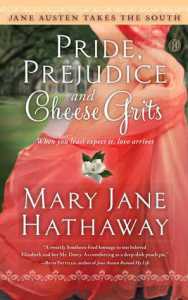
Pride, Prejudice, and Cheese Grits by Mary Jane Hathaway

What are you reading these days?


Book Review: Little Town on the Prairie

Little TownLittle Town on the Prairie is the seventh book in Laura Ingalls Wilder’s Little House series and takes place just after The Long Winter. Laura is 14 as the book opens. Her family is still working the claim her Pa has, but they move into town for the winter in case it’s as bad as the last one, both to be closer to what they need and because the claim isn’t sturdy enough to stay warm the whole winter yet.

As usual, the book tells about the joys and everyday experiences and chores of both of summer on the claim and then winter in the town.

One main focus of the family in this story is trying to earn money to send Mary to a college for the blind. Laura gets a temporary job sewing shirts for a seamstress in town (and sees interactions of a family very different from her own), but her main goal is to qualify for a teaching certificate at age 16, and then teach to earn money for Mary’s college, even though teaching doesn’t sound like a goal she would pursue otherwise.

Laura’s nemesis from an earlier book, Nellie Oleson, is back in this one. Though Nellie’s family is in reduced circumstances, she’s still the proud, scheming person she always was.

In town much of Laura’s time is spent at school. It doesn’t seem like there was a winter or Christmas break as we know them now – they went to school all through winter as long as the weather was good, except for the day of a holiday. One teacher Laura’s school had was Almanzo’s sister, who doesn’t have much control of the class, and the misbehavior escalates to extremes until the school board steps in. Laura doesn’t misbehave herself, but she feels guilty at smiling at (and thereby encouraging) some of the boys after she has a couple of negative interactions with Miss Wilder .

One difference in this book from the others is that the Ingalls’ family is seeming to settle down rather than moving from place to place. One highlight of the winter, when people couldn’t work outdoors, was the “Literaries” – evenings once a week where the townsfolk get together and do something for entertainment. One night it was a town-wide spelling bee, once it was people playing various musical instruments. One that is offensive to modern sensibilities is men (including Pa)  dressing in blackface paint and putting on a minstrel-type show.

One difference between the way they lived then and we live now (besides the obvious differences in technologies and living conditions, etc.) is the expectations of how people should act. For instance, after Pa’s visit with the school board to Laura’s school, at home Laura waits for him to talk to her about it, because”It was not her place to speak of what had happened, until he did” (p. 182). When Mary leaves for college, and little Grace starts crying, Laura hushes her with shame that such a big girl is crying. When the family walks into the church-wide Thanksgiving celebration, “Even Pa and Ma almost halted, though they were too grown-up to show surprise. A grown-up person must never let feelings be shown by voice or manner” (p. 228).

I’ve mentioned before that even when I am reading a book that is not necessarily written from a Christian viewpoint, I still read it with Christian eyes and try to discern where the people are coming from spiritually. I’ve never been quite able to figure that out with the Ingalls family. There was an era in our history when people were what we’d call God-fearing in the sense that they believed there was a God, that the Bible was His Word, that He punished or blessed people, that there was a heaven and hell, etc., yet weren’t truly believing on Christ as Savior (“Thou believest that there is one God; thou doest well: the devils also believe, and tremble” James 2:19). There are many Scriptural references and applications in the books. For instance, during the debacle at Laura’s school, she outwardly is the model student, but “she did not think then of the Bible verse that speaks of the cup and the platter that were clean only on the outside, but the truth is that she was like that cup and platter” (p. 167) because she resented, even hated Miss Wilder for her mistreatment of Laura’s sister, Carrie. She has a discussion with Mary about always feeling that Mary was good, but Mary says she wasn’t, confessing that even when she was trying to be as a child, much of the time it was from the motives of vanity and pride. She reminds Laura that the Bible says we’re “desperately wicked and inclined to evil” (p. 12) and says they shouldn’t think so much about whether they are good or bad, but instead should focus on “being sure of the goodness of God” (p. 13). Yet Laura admits to not listening at church beyond the text, since that’s the only thing Pa quizzes them on at home, and later on, when they attend a church revival, though what the preacher says is sound, it’s done in such a fiery way that it was “dark and frightening” to Laura. Her whole family confesses to preferring Rev. Alden’s more quiet style. I do get that. I prefer “quieter” preachers who speak in conversational tones than “ranting and raving” ones. But they only talk about the style rather than the substance of his message, so it’s not clear what they think of it. Laura does her best to act like she’s supposed to except against Nellie Oleson and Miss Wilder. I’m hoping The Pioneer Girl might shed more light on Laura’s personal beliefs.

This book also introduces Almanzo Wilder’s beginning interest in her when he asks to walk her home after some of the events in town. At first Laura is only confused – he’s 23, a homesteader, and her father’s friend. She doesn’t seem to be thinking romantically towards anyone yet. But she accepts his offers and gradually is able to talk normally with him. He shares here how he got his unusual name, something I had forgotten. I had thought this book went into their courtship and up to their engagement, but I guess that’s in the next book.

I don’t remember quite as much from these later books as I do from the earlier ones – maybe I read the earlier ones more often as a child. But I enjoyed this foray into the prairie again. It was nice to see the family settling down, the community growing, and Laura and her sisters maturing.

Laura Ingalls Wilder Reading Challenge

(Sharing at Semicolon‘s Saturday Review of Books)

Book Review: Big Love: The Practice of Loving Beyond Your Limits

Big LoveWhen Big Love: The Practice of Loving Beyond Your Limits by Kara Tippetts came through on sale for the Kindle app, I didn’t realize it was mainly about parenting. I probably would not have gotten it in that case since my kids are all grown. But I am glad I did, because the principles carry over into any relationship.

You might remember Kara’s name from her journey through cancer and death as shared on her blog, Mundane Faithfulness. I did not read there regularly but caught a few posts here and there when someone linked to them on Facebook. It was the urging of friends to share the contents of this book and the knowledge that her time was growing shorter that led her to write it.

The main theme of the book is Love is kind, from I Corinthians 13:4. The phrase impacted her in a big way when a preacher with a painful childhood shared them when speaking to the children at the school where she was teaching. She confesses she was “not naturally given to kindness,” preferring to feel “strong and successful” and “bent on winning.” She realized her love “was often self-serving, self-fulfilling, and self-centered.” This truth of God’s love “hit [her] at the perfect time and landed on soil that was ready to be planted with truth.”

She had not grown up in a family that practiced repentance, so the idea of walking in humility and confessing wrongs was new to her. She was married and expecting her first child at this time and wanted to interact with both husband and children in kindness and not have a home like the one she was raised in.

She shares a bit of her family background, how she came to believe on Jesus, how she met her husband, and how she was diagnosed with cancer. But for all that it’s a fairly short book. I read it in two sittings and probably could have in one, but wanted to stop and absorb before going on.

A few quotes from the book that stood out to me:

Competition among mothers kills community. I searched for ladies who were willing to be honest about faults. Honesty and a shared heart is such grace. Vulnerability and transparency encourage looking for grace.

Our kids are so often the reflection of sin that brings us to repentance. It was a beauitful, awful moment of light shining on my sin. I thought I was okay, so long as I wasn’t yelling. But what I saw in the face of my daughter was that I had sailed from the shore of kindness, and I needed Jesus to change my heart and return me to gentle kindness.

Discipline should never come as a surprise to a child. I think it is very important for children to always know what is expected of them. When discipline comes as a surprise, I typically find that I am parenting out of anger and not intentionally teaching and shepherding my children. If I know a child is entering a place where they struggle with obeying it is important to set clear boundaries.

That is our high calling as parents, to direct, train, nurture, love, and shepherd our children. It is important we move from irritation with our children and move toward opportunity for training. Whatever you choose to be your consequence, it must not be a surprise. Children should know clearly what is expected, and when they disobey, struggle, and sin, they need to be lovingly directed and disciplined. Disobedience is an opportunity. Children are not trying to embarrass you. Your children are not trying to create chaos in your life. Children need boundaries, direction, and limits that are all surrounded by a truckload of love. They do not come to us trained, obedient, and ready to listen. They need to know they are worth your time, your energy, and your strength to direct their hearts.

If I never point out the sin and struggle in the hearts of my children, and merely direct their behavior to please me, then when will they know they need a Savior?

I…follow through with the discipline and share honestly about my own struggle…I share my own need for forgiveness and grace. Empathy is a powerful tool in helping a child know you are FOR them. Letting your child know you understand their struggle and love them in the midst of it will help them be able to take an honest look at themselves. They will feel safe and not judged by you. They will know your heart is to direct them and not condemn them.

The Book of Romans tells us that it’s God’s kindness that leads us to repentance. I want to love with a kindness that nurtures a hard heart to desire to be soft. God is the only one able to transform someone else’s heart, but if I live a life submitted to Him, then His love will be reflected through me.

I longed to not withhold love when it was inconvenient to give it. Those faces [of her children] helped motivate me to want to know Jesus well, and to live near Him and listen to His Spirit as I walked in faith with my family.

When I am not drinking deeply from the inexhaustible well of love that is Jesus, it is impossible for me to share that love with the community behind closed doors as well as my greater community.

The heart of the gospel is lavish love being placed on me when I least deserved it.

The act of parenting isn’t excuses for bad behavior, it’s seeking reconciliation, redemption, and grace in our days.

The heart of being able to love big, BIG, BIG is being loved. Jesus loves you that big. He loved you so big he died a death He didn’t deserve to bring you to God. Admit you need Him, admit you don’t have it all figured out, and know His love. Quiet your heart enough to feel His love. Let Him teach you the beauty of sacrificial, humble love.

God’s nearness will be the strength to help you parent with kindness.

The sections I’ve emboldened are the ones that especially spoke to me in my current situation of life, including not just parenting but loving anyone I am called to love. Like Kara, too often I find that my love is “self-serving, self-fulfilling, and self-centered,” though that manifests itself a little differently for me than it did for her, as our personalities are very different. I guess the struggle to love as Jesus did will be a lifelong one, since we have our flesh to deal with. But by His grace, resting in His love for us and letting that overflow to others, we can grow.

There were a few formatting problems in the book – I wonder if that’s because it was designed for a different format than the one on which I read it. It was distracting just at first but then I was able to overlook it as I got into the story. I highly recommend the book especially to parents, but also to anyone seeking encouragement to love Biblically.

(Sharing at Literacy Musing Mondays.and at Semicolon‘s Saturday Review of Books)

Just a reminder about the Laura Ingalls Wilder Reading Challenge

Just wanted to send out a reminder about the Laura Ingalls Wilder Reading Challenge this month. You can get more information and sign up for it here. If you know what you’re planning to read, you can mention it when you sign up there, but it’s fine if plans change during the month. You can sign up any time this month but the challenge ends Monday, Feb. 29.

I’m going to close comments on this post so as to keep all the sign-ups on this post. Would love to have you join us!

Book Review: The Bronte Plot

Bronte PlotIn The Bronte Plot by Katherine Reay, Lucy Alling loves working in an antique store, specializing in the books section. But in order to make her beloved books more special and valuable to customers, she incorporates several questionable practices. Her boss has no idea and would not approve if he did know.

When a handsome customer, James, comes in the store to find a gift for his grandmother, they hit it off and begin dating. But he soon finds that Lucy often embellishes the truth. She explains that her father was a con man, and she grew up with his stories. He loved classic stories, but he also made up many of his own. She hasn’t seen him in years. She “promised never to be like him and now…I suddenly hear myself and I am like him,” and her stories don’t sound quite so good when she recounts them to James, yet she feels compelled to make up stories even for things like getting seated at a restaurant without a reservation or getting a needed item for the store. Later when he finds out that she “embellished” the book he had bought for his grandmother, he breaks up with Lucy.

Oddly, however, James’s grandmother, Helen, who was quite taken with Lucy, has decided, against her family’s wishes, to take a trip to London and asks Lucy to go with her as a consultant. Lucy is not excited about the idea but eventually agrees, especially when she realizes there is a possibility they might be traveling near the place where she believes her father is.

As Helen and Lucy travel and each share their stories, Lucy realizes Helen has secrets of her own and a wrong in her past that she is trying to make right. Part of their travel takes them to antique stores, part to places of literary value, like the Bronte sisters’ home, and part to take care of the issue Helen needs to deal with.

As Lucy searches for her father, it almost seems that she feels doomed to follow in his steps since she shares his genes. But she learns that she can make her choices despite what he does, and determines to make things right with her boss and customers as much as she can, despite the risk to her reputation and job.

Reay’s specialty in all her books so far is weaving a plethora of literary references into her stories. I’m sadly not as familiar with the Bronte’s works except for Jane Eyre (one of my favorites), but I enjoyed getting to know more of their background and plan to read more of them in the future. Reay also quotes Dickens, Austen, Gaskell, and Lewis here (and possibly others I am not remembering), but she doesn’t just quote them – she incorporates something of their stories into her heroine’s story. One of my favorite quotes from this book, referencing Jane Eyre, is:

Lucy reached in her bag and pulled out the book, knowing exactly where to search. “I thank my Maker, that, in the midst of judgment, he has remembered mercy. I humbly entreat my Redeemer to give me strength to lead henceforth a purer life than I have done hitherto.” There it was. Mercy. Grace. And just as she’d told James, fiction conveyed change and truth and was loved and digested again and again because it reflected the worst, the best, and all the moments in between of the human experience (p. 267).

A couple of other favorite quotes:

All real lives hold controversy, trials, mistakes, and regrets. What matters is what you do next.

All the books have it . . . That time when you don’t know where you’ll be, but you can’t stay as you are. In life or in literature, that time rarely feels good (p. 31).

I thought all the characters were richly drawn, even the secondary characters like Dillon, their driver in England or Sid, Lucy’s boss. Looking through a few reviews here and there, I saw that many said they didn’t like Lucy. I think that’s because, though all characters should be flawed because no one is perfect, we’re hit with hers right off the bat. But I did like her as a person and sympathized with her in her journey.

It’s kind of ironic that reviews by non-Christians criticized the Christian element and reviews by Christians criticized that there was not much of a faith element. At first I felt the faith element was lacking because I didn’t recall Lucy making changes due to anything like repentance or a regard for having sinned against God, but I had forgotten the quote above referring to mercy and grace. As I went back and looked it up, in context she’s pondering her actions and thinks of Rochester in Jane Eyre: “Rochester couldn’t move–could never move–forward because he hadn’t gone back. He hadn’t laid down his sin and accepted that there was an absolute right” (p. 267). Then comes the quote from Jane about mercy and grace. So I did feel it was there, though perhaps a little more subtle than much Christian fiction. As I’ve mentioned in The Gospel and Christian Fiction and Why Read Christian Fiction?, it’s understandable that the nature of some stories would require more nuance (after all, the book of Esther does not mention God at all, but alert readers will see His hand there). But my only criticism of this book was that I did feel it was a little light in this department.

Nevertheless, all in all I enjoyed it very much. To me one sign of a great book is when you keep thinking of it and uncovering things about it long after turning the last page, and I definitely experienced that with this book.

If you’ve got half an hour, this interview with Katherine Reay was fun to listen to. I really enjoyed it, especially hearing the symbolism behind a scene that I hadn’t caught when I read it and some of the background information behind each of her books.

(Sharing at Semicolon‘s Saturday Review of Books)

Book Review: Emily’s Quest

Emily's QuestI read Emily’s Quest for Carrie’s Lucy Maud Montgomery Reading Challenge this month. It’s the third book in the Emily trilogy, the first two being Emily of New Moon and Emily Climbs (linked to my reviews).

Emily has been raised by a strict maiden aunt since her father died when she was fairly young. In this book, she’s 17, has just finished high school, has just turned down the offer of a position in New York for a magazine publisher, and plans to spend her days at New Moon writing, first for magazines and perhaps later a book.

Life holds a certain loneliness, however, as all of her close friends have gone on to other studies in other places. Those circumstances are expected to be only temporary, and therefore manageable, but as it turns out, they end up spending most of their time away from home for the next few years. She had thought she and Teddy had a basic understanding, but she doesn’t hear from him much as he pursues his career, and subsequent visits find him rather cool toward her.

She throws herself into her work despite her friend Dean’s dislike of it and the townsfolk’s’ misunderstanding and gossip about it and her. She completes a novel but receives nothing but rejection in trying to get it published. When she asks Dean’s opinion, it’s not very high, so she burns the manuscript and looses her desire to write. She has a serious fall and injury resulting in blood poisoning and a long recovery. She accepts the proposal of a close friend, feeling that, since Teddy seems lost to her, the best she can hope for is a close companionship of a marriage rather than one of love. But in some kind of a dream or vision when she rescues Teddy from danger, she realizes she only loves him and breaks off her engagement with her friend even though there is little hope of Teddy loving her in return. She can’t tell her family this, so they are exasperated when she turns down (a ridiculous number of) marriage proposals from “good matches.”

In many ways this is kind of a depressing book (until the ending), but it describes a passage I think many people go through, especially young people in the changes between high school or college and coming into their own stride as an adult. Friendships, jobs, locations change, things sometimes don’t work out as they plan, a potential marriage partner seems nowhere in sight, they don’t know what the future will hold, or the future doesn’t look promising. In Emily’s case, though she loves writing and the place where she lives, with her friends and one true love away, the aunt who has cared for her getting older, and talk of a relative who will inherit their house already planning changes that she doesn’t like, the future looks pretty bleak. But it’s also a maturing, settling time that prepares one for the rest of life.

I’ve mentioned before not liking Emily very much, especially in the last book where I felt she was willful and disrespectful to her relatives (they were at fault as well, but I still felt she responded in a wrong way). There aren’t as many open clashes in this book, but that seems mostly because they’ve learned she is going to do her own thing, so it’s not any use, which is not necessarily as good characteristic. (I’m thinking, from what little I know of LMM’s life, that this might be what she wished she could do, but was not able to). But I did end up liking her better toward the end of the book as she displays restraint for others’ good, kindness, compassion, and maturity.

I’m afraid I liked her friend Ilse even less, though. She had been left to “grow up wild” by a father who has not really in touch for a long time, but some of her behavior here is pretty outrageous. But I found it interesting in one place where Ilse almost marries the wrong guy, that her description of how she felt was similar to what this article says LMM wrote in a journal of her own marriage: “I wanted to be free! I felt like a prisoner—a hopeless prisoner. … But it was too late—and the realization that it was too late fell over me like a black cloud of wretchedness. I sat at that gay bridal feast, in my white veil and orange blossoms, beside the man that I had married—and I was as unhappy as I had ever been in my life.” I think perhaps this series as a whole was somewhat cathartic for her.

There were a couple of places I had trouble with in this book, one being the vision/dream thing, the other being where a former teacher says, “Somehow one needs a spice of evil in every personality. It’s the pinch of salt that brings out the flavor” (p. 23). He says this after commenting negatively on someone who was “a good soul – so good she bores me – no evil in her.” We all do have a pinch (or more) of evil in us, but that’s not what makes us likable!

But even though I’ll never love this series like I do Anne, I felt it came to a fitting end, and Emily became a well-rounded and balanced adult after all.

L. M. Montgomery Reading Challenge

(Sharing at Semicolon‘s Saturday Review of Books)