Book Review: Strait of Hormuz

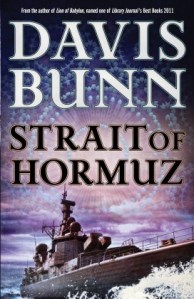
Strait of HormuzStrait of Hormuz by Davis Bunn starts off with a bang and keeps up a steady pace through most of the story. Marc Royce was formerly an intelligence operative for the State Department, but was fired by his boss. Since then, however, his former boss has called him for a couple of missions in which he needs someone off the grid. In this case, there is possible evidence that Iran is up to something involving nuclear bombs. The money trail leads to an art gallery in Geneva, which explodes just after Marc enters it.

Marc is unexpectedly reunited with Kitra Korban, whom he had met and fallen in love with in Israel in Rare Earth. He’s had to break off the relationship: she wanted him to stay and help lead the kibbutz her family led, but his calling was elsewhere. She had been notified by a stranger that she needed to warn Marc that he was in danger, and thus she became embroiled in his latest mission. While they both long to see each other, they also feel awkward and helpless, knowing nothing can change between them.

The Strait of Hormuz is an actual location, a narrow passage from the Persian Gulf to the ocean. In the story, American and other officials want to stop a ship they think contains components of an Iranian bomb before it gets to the Strait, but doing so will be interpreted as an act of war. In Marc’s investigation he finds unanticipated allies and enemies and follows trails that lead nowhere until he finally realizes what the actual Iranian operation and target is. But will he be in time to prevent it? And what casualties might occur in the process?

Action, adventure, espionage, an international flavor, and Christian faith elements woven in a natural and realistic way are hallmarks of this book. The pace is tense, fast most times, but Bunn handles even the stillness or times of uncertainty well. It’s a hard book to lay aside.

Strait of Hormuz is the third in the Marc Royer series, Lion of Babylon being the first and Rare Earth the second. I don’t think you have to have read those books to understand this one – enough information is given to comprehend the connections here – but you would probably enjoy this more fully for having read those.

(This review will also be linked to Semicolon‘s Saturday Review of Books.)

Book Review: The Incorrigible Children of Ashton Place, Book 5: The Unmapped Sea

Unmapped SeaThe Incorrigible Children of Ashton Place, Book 5: The Unmapped Sea by Maryrose Wood is the newest book in the series. It opens not on the best note, with Lady Ashton complaining, but picks up quickly from there. She’s expecting her first baby, and the doctor prescribes sea air for her. But instead of going to Italy, as she would like, Lord Ashton decides to go to Brighton – in the off-season, when it’s cold.

Penelope Lumley, governess to the three Incorrigibles (who are wards of Lord Ashton, having formerly been raised by wolves), jumps at the chance to go to Brighton. Her friend Simon’s Uncle Pudge, who was the cabin boy for Lord Ashton’s great-grandfather, lives there, and she and Lord Ashton hope she can find out more about the wolfish curse that was put on him and reverse it before his baby is born.

While in Brighton, the Ashtons, Incorrigibles, and Penelope meet a quirky Russian family, the Babushkinovs, with whose destiny they become more entwined by the end. And Penelope and the children have another dangerous run-in with the evil Edward Ashton. This time, it seems he has gained the upper hand.

In fact, this book ended on a very sad, but hopeful note. Yet it has a lot of good fun and very clever writing in it, as all the Incorrigible books do. A lot of the threads of previous plot lines come together in this one, yet there are a few more problems to be worked out – a major one, by the end of the book – and a few more questions still unanswered.

A couple of issues parents might want to be aware of, so you can be prepared for discussing them: the Ashton family curse has come up before. If you’ve read the series up til now you’ve probably had discussions about this aspect with your children, whatever your feelings about it. The second issue is a discussion about how babies are born (apparently Lady Constance does not know, content to leave that to the doctor). Nothing explicit is said, but the discussion will probably prompt questions about it, so you might want to be ready for that. 🙂

I listened to the audiobook, once again read wonderfully by Katherine Kellgren.

(This review will also be linked to Semicolon‘s Saturday Review of Books.)

Book Revew: Growing Up Amish

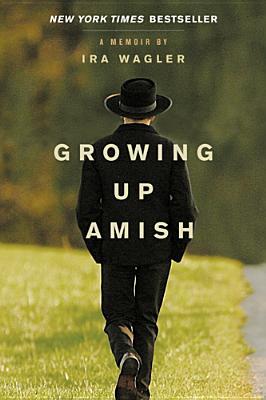
Growing Up AmishI had seen Growing Up Amish: A Memoir by Ira Wagler recommended by a number of people, so when it came through on sale for the Kindle app, I snagged it.

I’ve been somewhat dismayed at the rosy fascination in Christian circles for the Amish, resulting in a multitude of Amish fiction. I suppose there is an air of mystery about them that always piques curiosity. I understand admiration for their work ethic. I know some long for simpler times with less technology and wonder if the Amish might be on to something. I would have no qualms about someone living without electricity and modern conveniences because they felt it would benefit their family time or the ecology. But I do have a problem with deeming anything modern as “worldly” and condemning people to hell over such arbitrary practices as wearing a mustache, having rubber tires on a buggy, varying any degree on dress or hair styles, etc. “Legalism” is such an overused buzzword in Christendom today, but the extreme legalism of the Amish is seemingly overlooked.

Ira Wagler’s memoir strips away the romanticism and gives us a clearer view. He grew up in a prominent Amish family and community in Canada, the ninth of eleven children of a man well-known in Amish circles for his writing. As he grew into his teen years, he felt more and more constricted and constrained, “stuck in a stifling, hostile culture consisting of myriad complex rules and restrictions…arcane laws based on tradition…not to mention the drama, dictatorial decrees, the strife among so-called brothers, and the seemingly endless turmoil that resulted.” At age seventeen he left in the middle of the night and traveled by bus to work for a man who had once visited his father’s farm.

He enjoyed the freedom, but he missed his family and the stability of life at home, plus, after long days of hard work, he wasn’t really getting ahead financially. So he decided to move back home. His family and church accepted him, but the old conflicts rose to the surface again:

And therein lies the paradox that would haunt me for almost ten years: the tug-of-war between two worlds. A world of freedom versus a world of stability and family. A world of dreams versus a world of tradition. And wherever I resided at any given moment, trudging through the tough slog of daily life, the world I had left called me back from the one I inhabited. It was a brutal thing in so many ways, and I seemed helpless to combat it. Torn emotionally, moving back and forth, always following the siren’s call to lush and distant fields of peace that seemed so real but, like shimmering mirages in the desert, always faded away when I approached them.

He ended up leaving home five times altogether, always returning again until the last time, at age 26. People encouraged him to “decide to do what’s right, and then do it,” and assured him that once he just settled down, everything would be ok. He tried hard to make it work, even being baptized and joining the church. But “A mental choice, absent a real heart change, is no choice at all. We couldn’t force ourselves to be something we were not. That just couldn’t happen. And it didn’t.”

Believing that “The Amish way provided my only chance of salvation,” and that if he permanently left the fold, he would end up in hell, still couldn’t provide motive enough to stay, though it grieved him.

Personally, he “probably always believed there was a God, a sort of dark and frowning force. I just didn’t believe in him, to the extent that I thought he could or would make an actual difference in my life. I tried to believe, in my heart. But I couldn’t, in my head. I’d heard about him all my life. But if he was everything the preachers claimed he was, he sure had a strange way of hiding himself from people like me.”

Depressed and desperate, in a “mental trench of darkness from which I could see no way out,” he felt he had no choice but to finally leave the Amish for good. But then ” a sliver of light” came to him. Most of the praying he had ever seen in the Amish community was scripted, but he “decided he could simply talk to God. Ask for his help. Not by reading from a little black book, but by talking to him, man to man. Or man to God.” So he did, merely asking for the desire to do what was right.

Less than a month later, he met and almost instantly meshed with an English man who had joined the Amish, yet was a true believer.

He explained that there was no human penance for my sins. No way I could ever atone for all the things I had done. But…there was someone else who could atone. Who could wipe the past away and give new life. Heal all the wounds — my own and those I had inflicted on so many others through the years…

By quietly showing me Christ’s love, my friend had led me to the Source of that love. For the first time, I truly grasped that Christ had died for me — suffered, bled, and died–and that I could be his through faith. I was amazed at how simple it was. Why had it all seemed so hard, so impossible before?

The book ends with his final departure from the Amish at the age of 26. There’s a short epilogue at the end, but I would have liked to have learned more how about he finally adjusted to the outside world in the twenty years since he left, how his relationships with his family were since the final break, what kind of career he finally chose, etc.

I enjoyed this book quite a lot, not only for the view into what it was like to grow up Amish, but also to marvel again at how God draws people to Himself.

(This review will also be linked to Semicolon‘s Saturday Review of Books.)

Book Review: Christy

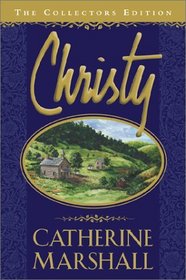
ChristyChristy by Catherine Marshall was the May selection for Carrie‘s Reading to Know Classics Book Club. I had read it decades ago and looked forward to this opportunity to revisit it.

Christy is historical fiction based on the experiences of the author’s mother, who went as a single lady to teach school in an impoverished Appalachian town.

Christy responds to the appeal of the founder of a mission to Cutter Gap, TN. She’s 19 and has not finished college, but she believes she can be a help to the mission. When she gets there, she’s overwhelmed by the poverty, ignorance, and superstition. In her youthful zeal, she’s all fired up to do something and gets frustrated that others haven’t yet. She oversteps her bounds a couple of times, and Miss Alice, a Quaker lady who works at the mission (she seems to be the head under the founder) has to gently remind her that she needs to find out first how the founder wants things done, and she has to learn she can’t come barging in as an outsider telling people how they need to change. Christy clashes at first with Dr. MacNeil, who was actually raised in the area: she feels he needs to correct people’s superstitions, particularly those that are unsafe from a health and medical standpoint. But because he is from the area, he knows that would only alienate people: he feels he has to work within their system, showing better ways and giving advice gently, carefully, and only a bit at a time.

In one sense this is something of a coming-of-age novel as Christy develops from a zealous but immature teenager into a more mature young woman. One part of that coming of age is her faith journey. I don’t think this book was marketed as Christian fiction – I don’t think that was a genre at the time, at least not like it is now – but I believe it’s a natural part of the story that her beliefs would be challenged, matured, and solidified. When she first leaves home, she knows surprisingly little. These days candidates for any mission are examined about their beliefs: maybe that wasn’t done then. But she experiences a few crises of faith. One comes in the face of hardship and evil. the other comes about partly through Dr. MacNeil, an agnostic who looks at God as only something of a “starter-force,” and David Grantland, the minister, who is something of a liberal. One of the saddest scenes is when David and Christy visit a woman who is dying, and she asks him to read portions of the Bible about heaven, which he does, but when she tries to talk about it, it comes out that he doesn’t really believe it, at least not like it says.

In one of the best passages in the book, in which Christy has had a fairly wrenching experience and is wrestling with the evil she has seen, Miss Alice says:

You’re sensitive, Christy. So am I. You want to know why seeing stark evil hasn’t made me rough or bitter?…Remember, I said is was God who was prying the little girl’s hands off her eyes. As if He were saying, ‘I can’t use ivory tower followers. They’re plaster of Paris, they crumble and fall apart in life’s press. So you’ve got to see life the way it really is before you can do anything about evil. You cannot vanquish it. I can. But in My world the battle against evil has to be a joint endeavor. You and Me. I, God, in you, can have the victory every time.’ After that, He was always right there beside me, looking at the dreadful sights with compassion and love and heartbreak. His caring and His love were too real for bitterness to grow in me…

Perceptive people like you wound more easily than others. But if we’re going to work on God’s side, we have to decide to open our hearts to the griefs and pain all around us. It’s not an easy decision. A dangerous one too. And a tiny narrow door to enter into a whole new world.

But in that world a great experience waits for us: meeting the One who’s entered there before us. He suffers more than any of us could because His is the deepest emotion and the highest perception…He doesn’t just leave us and Himself in the anguish. At the point where His ultimate in love meets His total capacity to absorb and feel all our agony, there the miracle happens and the exterior situation changes. I’ve seen that miracle….

Love has mending power. All of us have watched it work in small situations. Well, what I am talking about is a vast multiplication of that power (pp. 94-96)

Later it is revealed that Miss Alice has very personal reasons for these conclusions, having wrestled with the hand of evil leveled against herself.

Besides these issues, feuding between families, battling the moonshine business, handling 67 students from all  different grades and a shortage of supplies, and, later, a typhoid epidemic are all factors. Christy discovers that despite the ignorance and hardships in the mountains, there is also great beauty and dear people.

Quietly, Miss Alice was demonstrating this God of love and beauty too — in small ways and in large. For a few, the concept that life did not have to be all starkness and misery was slowly taking root. Tentatively, timidly – -constantly encouraged by Miss Alice — some of the women were at last reaching out for light and beauty and joy (p. 109).

For a few decades, the plot of a teacher coming from a more civilized area leaving home and going to work in a less civilized one got overworked (usually with a teacher from back East going to the untamed West), to the point that I got pretty tired of it and couldn’t read it any more. But this was one of the first, and the struggles are real.

What do you do when strength is called for and you have no strength? You evoke a power beyond your own and use stamina you did not know you had. You open your eyes in the morning grateful that you can see the sunlight of yet another day. You draw yourself to the edge of the bed and then put one foot in front of the other and keep going. You weep with those who gently close the eyes of the dead, and somehow, from the salt of your tears, comes endurance for them and for you. You pour out that resurgence to minister to the living (p. 471).

Somehow I did not see the TV show from the 90s based on the book, but I am tempted to look it up some time. Kellie Martin does seem well-cast as Christie.

While I would not agree with all the theology in the book (most of it coming from a Quaker perspective), it does contain a good deal of truth. I enjoyed visiting this book once again and retracing Christy’s journey.

(This review will also be linked to Semicolon‘s Saturday Review of Books.)

What’s On Your Nightstand: May 2015

 What's On Your NightstandThe folks at 5 Minutes For Books host What’s On Your Nightstand? the fourth Tuesday of each month in which we can share about the books we have been reading and/or plan to read.

I know the months seem to fly by, but this one just zoomed somehow. But I was able to get in some good reading:

Since last time I have completed:

The Monday Morning Club: You’re Not Alone — Encouragement For Women in Ministry by Claudia Barba, reviewed here. Very helpful.

Feeding Your Appetites: Taking Control of What’s Controlling You by Stephen Arterburn, reviewed here. Good.

His Last Bow: Some Later Reminiscences of Sherlock HolmesThe Valley of Fear, and The Case-Book of Sherlock Holmes by Sir Arthur Conan Doyle, audiobooks, reviewed here, here, and here respectively, which finishes off the good detective’s stories. I think my favorite was The Valley of Fear. I enjoyed getting to know the original Holmes.

Taken, the latest by Dee Henderson, reviewed here. Christian fiction, a kidnap victim’s story from the time she escapes and seeks out a private detective in order to capture the ones responsible for taking her as well as others. Very good.

Gentle Savage Still Seeking the End of the Spear: The Autobiography of a Killer and the Oral History of the Waorani by Menkaye Aenkaedi with Kemo and Dyowe, reviewed here. The authors are Waorani, formerly known as Aucas, who speared to death Jim Elliot and four other missionaries who had tried to make contact to share the gospel, telling their story, what’s happened to their tribe since then, and proposing some excellent ways for the tribe to move ahead in the future.

I’m currently reading:

Walking With God in the Season of Motherhood by Melissa B. Kruger

Christy by Catherine Marshall for Carrie‘s Reading to Know Classics Book Club for May. Almost done – should have a review up later this week.

The Incorrigible Children of Ashton Place, Book 5: The Unmapped Sea by Maryrose Wood, audiobook. A new little Ashton is on the way! Will he or she have the same…issues as its father?

Growing Up Amish: A Memoir by Ira Wagler, nonfiction. Just started this and am thoroughly drawn in.

Next Up:

Pioneer Girl: The Annotated Autobiography by Laura Ingalls Wilder, edited by Pamela Smith Hill.

The Little Prince by Antoine de Saint-Exupéry for Carrie‘s Reading to Know Classics Book Club for June.

Little Dorrit by Charles Dickens

Strait of Hormuz by Davis Bunn

I’m coming along well with my reading plans for the year: I’ve read 5 out of 12 classics for the Back to the Classics Challenge and should finish two more in the next few weeks, and I’ve finished 8 out of 12 for the TBR Pile Challenge. If I finish what I have listed, I can choose from the remaining ones on my reading plan lists, plus I have several new books accumulated on my nightstand and Kindle app. Now I just need a week’s vacation to delve into them. 🙂

Happy Reading!


Book Review: Gentle Savage Still Seeking the End of the Spear: The Autobiography of a Killer and the Oral History of the Waorani

Gentle SavageMenkaye was one of several Waorani (then known as Auca) men responsible for spearing to death Jim Elliot, Nate Saint, Roger Youderian, Pete Fleming, and Ed McCully, five missionaries who had come to try to reach them with the gospel, in what was known as Operation Auca. Gentle Savage Still Seeking the End of the Spear: The Autobiography of a Killer and the Oral History of the Waorani by Menkaye Aenkaedi with Kemo and Dyowe is Menkaye’s effort to tell his story in his own words – at least, as close to his own words as possible. He cannot write, so he shared his story verbally with someone who spoke his language as well as Spanish, and then it was translated from Spanish to English.

Menkaye begins with what could be called “the Moipa years.” Moipa was a highly skilled Waorani hunter who, out of fear of reprisals for the people he had killed, began killing almost everyone who crossed him or who might someday: men, women, children (who might grow up to take revenge), grandparents, anyone. The people lived in constant fear of him, and many attempts on his life did not succeed. When he finally did die, killing at the slightest provocation, for any real, perceived, or potential threat or wrong had become a way of life. That included any outsiders. Their encounters with non-Waorani had not gone well, and what could they want anyway except to encroach on their territory or to steal from them or hurt them? Better to kill them off before they struck first, they reasoned.

The missionaries had known that the Waorani, or Aucas, as they knew them, were violent, but they had learned some Waorani words from Dayuma, a woman who had escaped the tribe some years before, had flown Nate Saint’s plane over them a number of times, shouting out Auca/Waorani phrases, had dropped gifts to them and received some in return, so they thought the people were receptive to meeting them. They set up camp in their territory, and a man and two women  from the tribe came to visit them, the man even going up for a ride. Everything seemed to be going well. But then a group of Waorani came at them and speared them and tore the fabric off the plane.

Years later, when Elisabeth Elliot had come to know them and asked them why they had speared the men, they replied, “For no purpose.” In Olive Fleming Liefeld’s book, Unfolding Destinies, when she went back to visit and asked the same question, they told her they had not understood the photos the men had shown them. They thought the photos of Dayuma meant that she had died, supposedly at the men’s hands. Later still, Steve Saint related in End of the Spear that when he went back to live and work with the Waorani for a time, he was told there was a disagreement between them about one’s man’s wanting to marry one of the women. Some who were involved got angry, and to divert their turning on each other, someone turned their attention to the missionaries, starting a raid. Menkaye relates that all of these are true. One of the men involved in the argument they were having about marriage began to say that the photos meant that the men were cannibals, and they should spear them before the men killed and ate them.

This event that shook the world is given relatively few pages in Menkaye’s book. With all the people they had killed, these men were just a blip on their radar, another threat averted. But some time later, Dayuma came back to the tribe and told them they had made God angry and they needed to stop killing. Amazingly, they were willing to lay down their spears and hear more. Rachel Saint (Nate’s sister) and Elisabeth and Valerie Elliot (Jim’s wife and young daughter) were invited to come and teach them. Though I had read in Through Gates of Splendor and other books that over time several of the Waorani had come to believe on the Lord Jesus Christ as their Savior, it was touching and beautiful to hear this experience described in more detail by Menkaye and to hear him, Kemo, and Dyowe tell of the joy and freedom in their hearts. Dyowe told Rachel:

I want you to know…that I was one of the men…who killed your brother Nathanael when he was on the beach with the others. I know that God wants to forgive me. But I want to tell you too to forgive me for the things that I have done. I didn’t understand anything back then, and I didn’t know who they were. But I will say that I truly know God has forgiven me today. I want to give myself to Him. It was not only your brother who died. Many, many people died besides him at the point of my spear. But today is the last of my own spear for me. I have found a new spear to pierce the hearts of many people (p. 231).

Almost immediately they became concerned for other branches of the tribe that had broken off to live in new areas, and they tried to reach them with the gospel. Some were martyred in the attempt, and most of these other branches are still not believers, thus the second part of Menkaye’s rather bulky title about still seeking the end of the spear. In fact, one of the end notes relates that while the book was in progress, another raid had taken place against oil company employees.

The next part of Menkaye’s book tells of changes that have taken place in the Waoranis, and the last few chapters, some of the most valuable for anyone seeking to work with tribal people, are his vision for his people. He and other Waorani are not opposed to progress and to changes. They see them as inevitable. Menkaye’s own son attended aviation school in Michigan in the US. They don’t want their young people to lose their Waorani skills and heritage completely, though, and they want any future work within the tribe to be handled differently than it has been. In the past, people were sent in who pretty much took over instead of coming under the tribal leadership – even Rachel and Dayuma. Rachel wanted to set Dayuma in charge, but either Dayuma wasn’t quite cut out for it or the authority went to her head or she backslid or something – Menkaye details a number of problems with her leadership. To be generous, this was something Rachel and Dayuma had not been trained for, and mistakes were made. Menkaye and the others are not bitter and they appreciated everything done for them, especially helping them to understand the gospel, but they did want to point out some of the issues and correct them.

The ones who should be choosing the leaders are the Waorani themselves, based upon what we ourselves see in those candidates, young or old, who have demonstrated maturity from a Biblical perspective, and have carefully studied the Bible in order to know the principles in depth that will be taught and lived out. Never should it be a random choice based on a superficial view of any person., especially someone from the Outside (p. 323).

Reading this makes me appreciate even more the emphasis among missionaries our churches have supported in leading rather than driving the people and in training up leaders from within the people group they are ministering to rather than continuing to bring in leadership from the outside.

I’m sure another difficulty in working with tribal people is how to navigate changes. One doesn’t want to unduly influence their culture, but one doesn’t want to hold them back, either. That is all I can figure was going on when the people began to ask Rachel for clothes and boots, and she said they had done fine without them before and didn’t need them now, according to Menkaye. But they had always lived and worked in the jungle before, where it was shady, and Rachel had them out in the open under the hot sun clearing space for an airstrip and didn’t seem to understand they wanted protection from the sun beating on their backs. I think either she was trying not to change them in that way, or she was trying to squelch their looking for handouts, but evidently this is one area where she and Elisabeth disagreed: Elisabeth thought they should have clothes and arranged for them. (They kept wearing clothes but had mixed emotions about shoes. They found that boots protected them from “thorns, ants, and vipers,” but the weight of them felt odd to them, and “when we were climbing the steep mountain ridges, they made us slip in the mud and slide downward” [p. 227].)

I’ve mentioned before in other missionary book reviews (particularly here) that some people think of these primitive tribal communities as simple people frolicking in the sun who shouldn’t be disturbed by missionaries and businesses. Dr. Jim Yost says in the forward, “The tendency to idealize or romanticize ‘primitive’ culture falls to crushing blows here as the reality of life in the upper Amazon rainforest plays out in gruesome details often too explicit or vivid for the cushioned Western mind.” (p. v). How many of us would have wanted our culture to remain as it was hundreds of years ago just to preserve it? Progress has its problems but also its opportunities.

Menkaye and other Waorani are willing to embrace these opportunities while still maintaining the Waorani culture and autonomy. He has great ideas for them to integrate with the “World of the City,” to help his people explore endeavors in which they can make their own money, and to help their young people have the best opportunities for a changing future.

I do not intend to offend the churches of The Outside World who perceive their role as one of coming in to show us how to do things, but in reality, we can learn equally from each other. Is that not true? Do we not have many things to teach each other and to learn from each other? (p. 329).

If you bring us a new idea, we will welcome that, too. But we will always weigh and balance the influences and outcomes of every new component, and determine together what projects are useful and valuable, and which ones may be harmful in some way (p. 338).

The Waorani are storytellers, but their way of sharing stories is different from ours. There is much more detail than I would personally care to know about some issues, much less than I wanted to know about others, and the stories are laid out differently than we would be used to. There is an appendix of Waorani myths and legends at the end: some seem odd, some are gruesome. But then, they would probably think the same way about our fairly tales and Mother Goose rhymes.

I think this book is incredibly valuable to anyone interested in the heritage of the ministries of the Saints, Elliots, and others who initiated “Operation Auca,” and to anyone with an interest in missions, particularly in ministry to tribal peoples. I hope Menkaye lives a long time to carry out his vision and that others take it up as well.

(This review will also be linked to Semicolon‘s Saturday Review of Books.)

Book Review: The Case-Book of Sherlock Holmes

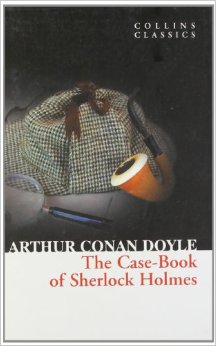
Case Book of SHThe Case-Book of Sherlock Holmes is the last of the Holmes stories by Sir Arthur Conan Doyle. It opens with a preface from Doyle himself, rather than Watson, saying that “I fear that Mr. Sherlock Holmes may become like one of those popular tenors who, having outlived their time, are still tempted to make repeated farewell bows to their indulgent audiences. This must cease and he must go the way of all flesh, material or imaginary.” He says that he “had fully determined at the conclusion of The Memoirs to bring Holmes to an end, as I felt that my literary energies should not be directed too much into one channel,” but he later revived him (reportedly due to public demand, though he doesn’t say so here). He goes on to note:

I have never regretted it, for I have not in actual practice found that these lighter sketches have prevented me from exploring and finding my limitations in such varied branches of literature as history, poetry, historical novels, psychic research, and the drama. Had Holmes never existed I could not have done more, though he may perhaps have stood a little in the way of the recognition of my more serious literary work.

The Wikipedia article on Doyle states that he “wrote seven historical novels, which he and many critics regarded as his best work,” as well as other pieces, but he’s best known for Sherlock Holmes.

A couple of variations in this volume are two stories written as by Holmes himself rather than Watson and one written from a third person point of view. One of the two stories by Holmes occurred when he criticized Watson’s style of storytelling, and Watson told him he should give it a try; the second occurred after Holmes had retired and was no longer in touch with Watson when he came upon an unexpected case.

Twelve stories are included in this book, with some editions arranging them in different orders. The very last Holmes story written was “The Adventure of Shoscombe Old Place” in 1927.

The stories include a variety of cases brought to Holmes’ attention in a variety of ways, most often by someone connected with the case. The include a woman seen only in a veil, a mother accused of vampirism, a missing diamond, the theft of papers from a dead son’s trunk, a man searching for two other men with an unusual last name, a jealous wife, an unusual sea creature, a missing soldier, and a wax effigy of Holmes. In one of them, Holmes says, “In all my chronicles the reader will find no case which brought me so completely to the limit of my powers. Even my imagination could conceive no solution to the mystery.”

They occur in a variety of times as well: some when Watson was rooming with Holmes, some when he was not, one after Holmes retirement.

A few sentences stood out to me concerning Holmes’ regard for Watson. In “The Case of the Blanched Soldier,” one of the stories written from Holmes point of view rather than Watson’s, he says, “Speaking of my old friend and biographer, I would take this opportunity to remark that if I burden myself with a companion in my various little inquiries it is not done out of sentiment or caprice, but it is that Watson has some remarkable characteristics of his own to which in his modesty he has given small attention amid his exaggerated estimates of my own performances.” He says in this same story, “The good Watson had at that time deserted me for a wife, the only selfish action which I can recall in our association. I was alone.” In “The Adventure of the Mazarin Stone,” the one written in the third person, it’s said that, “Watson was always the man of action, and he rose to the occasion.” In one story in which Watson was wounded, Holmes cried out, “You’re not hurt, Watson? For God’s sake, say that you are not hurt!” Watson thought to himself, “It was worth a wound–it was worth many wounds–to know the depth of loyalty and love which lay behind that cold mask. The clear, hard eyes were dimmed for a moment, and the firm lips were shaking. For the one and only time I caught a glimpse of a great heart as well as of a great brain. All my years of humble but single-minded service culminated in that moment of revelation.”

After receiving a note from Holmes in one case which simply read, “Come at once if convenient–if inconvenient come all the same. S.H.,” Watson muses:

The relations between us in those latter days were peculiar. He was a man of habits, narrow and concentrated habits, and I had become one of them. As an institution I was like the violin, the shag tobacco, the old black pipe, the index books, and others perhaps less excusable. When it was a case of active work and a comrade was needed upon whose nerve he could place some reliance, my role was obvious. But apart from this I had uses. I was a whetstone for his mind. I stimulated him. He liked to think aloud in my presence. His remarks could hardly be said to be made to me–many of them would have been as appropriately addressed to his bedstead–but none the less, having formed the habit, it had become in some way helpful that I should register and interject. If I irritated him by a certain methodical slowness in my mentality, that irritation served only to make his own flame-like intuitions and impressions flash up the more vividly and swiftly. Such was my humble role in our alliance.

Other interesting features in this story: in one Holmes refused to eat, and when Watson asked why, he replied, “Because the faculties become refined when you starve them. Why, surely, as a doctor, my dear Watson, you must admit that what your digestion gains in the way of blood supply is so much lost to the brain. I am a brain, Watson. The rest of me is a mere appendix. Therefore, it is the brain I must consider.” I don’t think that’s the wisest course of action for most people, but it is interesting that he thought of himself primarily in terms of his brain. That appears to be a factor in his suppression of emotion and lack of relationships as well. Holmes says in one story: “Women have seldom been an attraction to me, for my brain has always governed my heart, but I could not look upon her perfect clear-cut face, with all the soft freshness of the downlands in her delicate colouring, without realizing that no young man would cross her path unscathed.”

Another observation I thought unusual for Holmes occurred when a man was taking a potion to seem to become more youthful: “There is danger there–a very real danger to humanity. Consider, Watson, that the material, the sensual, the worldly would all prolong their worthless lives. The spiritual would not avoid the call to something higher. It would be the survival of the least fit. What sort of cesspool may not our poor world become?”

One sentence that struck me as particularly clever: “When his castle in the air fell down, it buried him beneath the ruins.”

It’s been fun to read of the “real”…or at least, the original Sherlock Holmes. One of my main curiosities was whether he was really as rude as some modern conceptions of him make him out to be. I was happy to find he wasn’t. He was eccentric in some ways and could be egoistical, but he knew how to interact with people when he needed to and could even be kind and comforting when needed. He was a classic introvert and only had a very few close friends. I was surprised to find that his nemesis, Moriarty, only appeared in two books, with just a mention in one of them. I was also pleased to find that Watson was not a doddering old man, but was vibrant, described as “fleet of foot” in one story, and that Holmes valued him for his medical skills as well as his skills with a revolver, besides his being a good sounding board.

I was concerned, before reading the stories, about his rumored drug addiction, but it wasn’t enough to be an addiction, only appeared in a couple of books, and Watson talked him out of using drugs any more. I was also concerned because I had heard there were instances of spiritism in the book, but I did not find any. I did just read yesterday that Doyle was heavily involved in such, but Holmes, although he was not a religious man, did use various Biblical phrases and did not participate in anything like spiritism. There were a couple of cases where there were evidences of voodoo or something similar, but those involved were always portrayed as being from some island or another.

Here are my reviews of the other Holmes books:

A Study in Scarlet (novel)
The Sign of the Four (novel)
The Adventures of Sherlock Holmes (short stories)
The Memoirs of Sherlock Holmes (short stories)
The Hound of the Baskervilles (novel)
The Return of Sherlock Holmes (short stories)
His Last Bow: Some Reminiscences of Sherlock Holmes (short stories)
The Valley of Fear (novel)

I listened to the first books read by various narrators, and the last ones read by Simon Vance in this collection, who once again did a wonderful job. This edition of all the Holmes stories together came through on a good sale, so I got it, but it was maddening that the divisions weren’t according to the books. They are just run together one after the other, which is fine if you’re listening to them that way, but it’s hard to find a particular book. Thankfully one listener posted a table of contents which shows where the various books begin and end.

I don’t feel all warm and fuzzy toward these stories as I do some other books, so I don’t know that I’d reread or relisten to them, at least not any time soon. But they were fun while they lasted! And Holmes is such an iconic figure with so many cultural references to him, it’s nice to be familiar with him now.

(This review will also be linked to Semicolon‘s Saturday Review of Books.)

Book Review: Taken

TakenWhen a kidnapped victim is released, we tend to think that’s the happy ending to their story, or at least to that chapter or ordeal. But Dee Henderson starts there in her newest novel, Taken. Shannon Bliss had been missing for eleven years, having been abducted at the age of 16. She escaped on her own and sought out private investigator Matthew Dane to help her take the next steps. He’s a former police officer, but he’s also the father of a kidnap victim: his daughter had been missing for a number of years, so Shannon feels Matthew can help her in a unique way that others could not.

I’ve always pictured recovered kidnapping victims as spending their first few days, after a medical check-up, giving their testimony to various officials. I don’t know how it works in real life, but in this book, Shannon shares the details of what happened in small bits at a time. One reason is that she can’t bring herself to lay it all out at once, but there are bigger reasons: the family who took her thinks she is dead, and her life might be in danger if they find out she’s alive, plus she is waiting on one friend who also had plans to escape, plus she has evidence that could put the whole family away if it’s shared at the right time and handled the right way. Her abductors were a large network of family members involved in a number of crimes, so Shannon wants to tread carefully in order to catch as many as possible, especially the most dangerous.

Matthew is friends with FBI Special Agent Paul Falcon (from Dee’s previous novel Full Disclosure) and is able to pass along information as Shannon shares it. His experience with his daughter’s kidnapping is helpful, but he has to learn that Shannon is older and copes in her own way. Still, he recognizes that she is still in survivor mode and that at some point the emotions will hit. For now, he helps her process things, acts as a buffer between her and the public and the police, and advises and protects her.

An added wrinkle is that her brother is running for governor and has mentioned his missing sister in his campaign. Deciding when to tell and meet with him and then when and how he should make the news public requires much thought.

Most of Dee’s books are edge-of-your-seat suspenseful. This was not that way, but I still enjoyed finding out Shannon’s story as it unfolded and seeing what happened afterward.

Of particular interest, and something Matthew is surprised at, is that her faith didn’t suffer through her ordeal. In quite an interesting conversation between them about free will, Shannon says,

“But God decided to create a world where free will was more important than no one ever getting hurt. There must be something stunningly beautiful and remarkable about free will that only God can truly grasp, because God hates, literally abhors, evil, yet He created a world where evil could happen if people chose it. God sees something in free will and choice that’s worth tolerating the horrifying blackness that would appear if evil was chosen rather than good. I find that utterly remarkable” (pp. 107-108).

“God gave Adam and Eve that free will and choice. He gave them one warning: eat of any tree that is here, including the wonderful tree of life, but don’t eat from the tree of the knowledge of good and evil…I wish Adam and Eve had thought more about what knowledge meant. Eve saw it as a good thing, to know more. But how do you really know something? You experience it” (p. 108).

I disagreed when she said “God expected, fully intended, for Adam and Eve to obey what He had said,” since the Bible speaks of “the Lamb slain from the foundation of the world” (Revelation 13:8). That and other verses (besides verses about God’s omniscience) indicate that of course God knew what was going to happen. But I agree with her conclusion that man’s evil choices don’t make God evil, despite the fact that God could have stopped them, and that He gives grace and help in the midst of that pain of people’s wrong choices. “God has been acting honorably throughout history regrading what He wants. We’re the ones at fault. God is good. And I still really, truly like Him” (p. 109).

I’m always reluctant to get to the end of Dee’s books, because the characters feel like friends and I kind of miss them when the story is over. But in the last few, characters from some of her other books make appearances in the newer ones, so it’s neat to feel like you’re touching base with them again.

This was a book I made time for beyond my usual reading times, and I very much enjoyed it.

(This review will also be linked to Semicolon‘s Saturday Review of Books.)
Book Review: The Valley of Fear

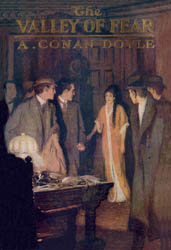
Valley_of_fearThe Valley of Fear is the fourth of Sir Arthur Conan Doyle’s full-length Sherlock Holmes novels. Like most of his other stories, it first appeared serialized in a magazine, this time in The Strand.

The book opens with Holmes and Watson trying to decipher a message from an informant concerning Professor Moriarty. The only other time Moriarty has been mentioned was in the last chapter of The Memoirs of Sherlock Holmes, in which he died. So this story predates that one, but there is a bit of a disconnect in that Watson didn’t know who Moriarty was in Memoirs, and if the events in The Valley of Fear occurred in the timeline before that book, Watson would surely have known the name. But as far as I know that’s the only major slip up in Doyle’s narratives, so we can forgive him: he may have even been aware of the problem and decided to write this story as is anyway.

At any rate, Holmes and Watson are interrupted by the arrival of a Scotland Yard Inspector MacDonald asking Holmes to assist on a case and then being stunned to learn that the message Holmes had just deciphered concerned the very man who had been killed. The victim had been shot in the face with an American sawed-off shotgun. There are a number of odd incidents and clues that do not add up. Holmes fixates on one that the others do not think is important, and, of course, solves the mystery.

The second part of the book is the back-story of what happened leading up to these events and is written in a completely different style, much like the story within a story in A Study in Scarlet. At first nothing seems related at all, but the reader assumes that some of the characters are going by different names than what they’re known as in the first part. In this story, a young John McMurdo is fleeing from the law in Chicago and comes to a Vermissa Valley to start anew. He’s part of an organization called The Eminent Order of Freemen, which primarily engages in charitable works in Chicago. But in Vermissa Valley, it’s a tightly run gang of thieves, murderers, and extortioners called the Scowrers who have the area under their thumb so much that it is nicknamed the Valley of Fear. McMurdo has no choice but to become involved with the gang, even though his landlord kicks him out over it and refuses to let him see his daughter any more.

Events unfold with the Scowrers for several chapters until they learn that a Pinkerton detective is undercover in the area, and their focus turns to finding and dealing with him.

An epilogue ties up the loose ends of the story and brings it back to Moriarty’s involvement.

Though I eventually guessed who McMurdo was (and rereading the first few pages, I saw several clues which caused me to realize I should have guessed it much sooner), I was totally surprised by the twist in the second story. Though some of the first story gets a little boring with the deciphering and then the arguing over which clues mean what, the last couple of chapters were the most exciting of any of Doyle’s work that I have read so far.

After looking around Wikipedia a bit, I saw that the story was based on the real life Molly Maguires in PA and their encounter with Pinkerton Agency detective James McParland. I had heard the term Molly Maguires before but had no recollection of what it meant until reading about it just now.

I listened to the audiobook read by Simon Vance, who did a wonderful job not only with the various English accents and voices in the story, but also with American, Scottish, and Irish accents as well. I also read parts of the story online at Project Gutenberg.

(This review will also be linked to Semicolon‘s Saturday Review of Books.)

Book Review: Feeding Your Appetites

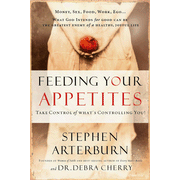
AppetitesFeeding Your Appetites: Taking Control of What’s Controlling You by Stephen Arterburn and Debra Cherry is based on the premise that most of our out-of-control desires are based on God-given appetites that are not wrong in themselves (food, sex, work, rest), but they can wreak havoc when they get out of balance. Even appetites for things that are wrong in themselves (gambling, drugs) can have a basis in a desire that’s not wrong.

Stephen discusses the nature, good purposes, and value of appetites God created within us. But “when pleasure becomes what we are searching for, we will soon learn that there is never enough to satisfy” (p. 33). “Our poor choices are rooted in self-indulgence and obsession with self-entitlement. We indulge to seek pleasure and avoid pain because we think we are entitled to it. The fleshly pleasure we seek is self-serving” (p. 35).

He discusses how change begins (seek forgiveness, stop make excuses, stop blaming others, stop believing falsehoods, and others), the many factors that influence us (including biology, culture, and a host of others), the ways Satan uses our desires against us to tempt us, ways to deal with or redirect our desires, and ways to cultivate a “divine appetite.” The last chapter on “The Surrendered Life” ties it all together in emphasizing that the only way to keep our appetites in their proper places is to walk surrendered to God every day. An appendix and study guide in the back help apply the truth personally.

Sprinkled throughout the book are case studies which are very helpful in fleshing out the principles Stephen is discussing. My only minor quibble with them is that they came in the middle of rather than at the end of sections. I don’t like having to either interrupt the section I am reading to read the case study or read on to finish the section I am in and then turn back to the case study when it could have easily been placed between sections. But, again, that is a relatively minor irritation.

A few quotes I found helpful:

[In Eden] Eve couldn’t overeat because her appetite for food would have been under control and submissive to her primary appetite to obey God” (p. 18).

When we have an out-of-control appetite for food, it signals that we have put that appetite above its rightful place as a necessary and God-given function (p. 18).

The question of how to satisfy our appetites becomes instead a call to seek to obey God in all circumstances and through all appetites and desires. That means making the necessary choices to satisfy our appetites in a manner that honors Him. When we do, true fulfillment is our reward (p. 25).

There were a few little points where I disagreed with his teaching, but not enough to get into long explanations. I will say that I disagreed with his concept of meditation, which he seemed to define as listening to God as opposed to talking to Him in prayer. Meditation is more of a ruminating, thinking over what He has said in His Word, not listening for Him to speak apart from His Word (see next to last paragraph here.)

Overall it’s a very good book. It covers some of the same ground as Taste For Truth by Barb Raveling except it expands to cover about every appetite you could think of whereas Barb’s book focuses on food. Barb’s style is much more direct, which I tend to prefer. I felt Stephen tended to over-explain or use too many words, but that may have been because I had just read many of the same principles in Barb’s book. This book might be especially helpful for a non-Christian or new Christian or a Christian who had not been taught very well along the way. But really, it can benefit anyone. I gleaned much good from it.

(This review will also be linked to Semicolon‘s Saturday Review of Books.)